Part Ten My Friend the Princess
Reading edition

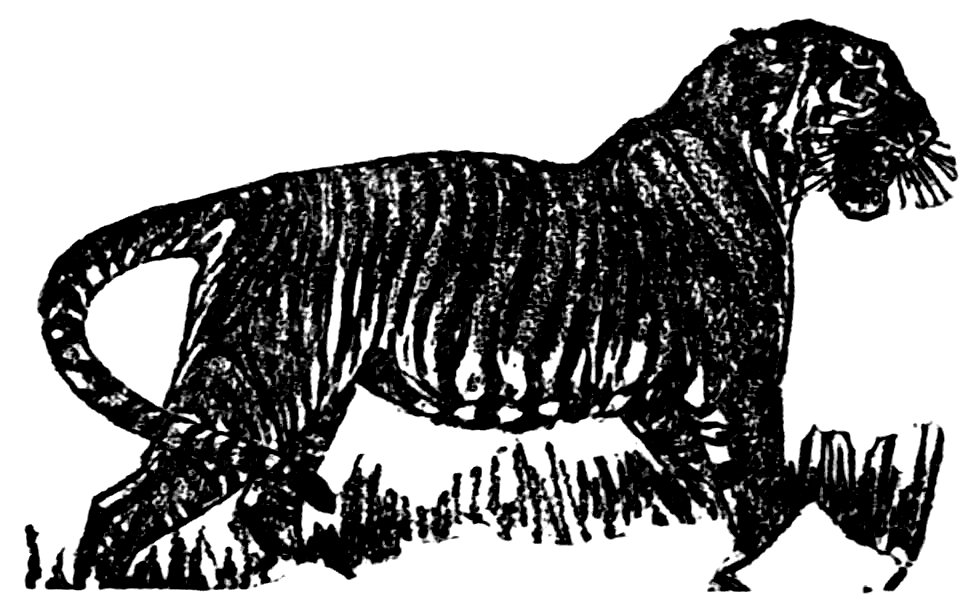
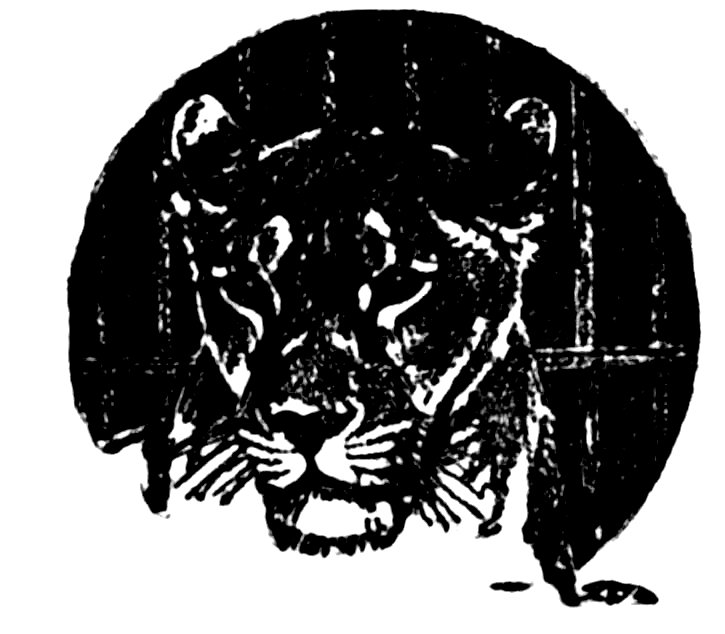
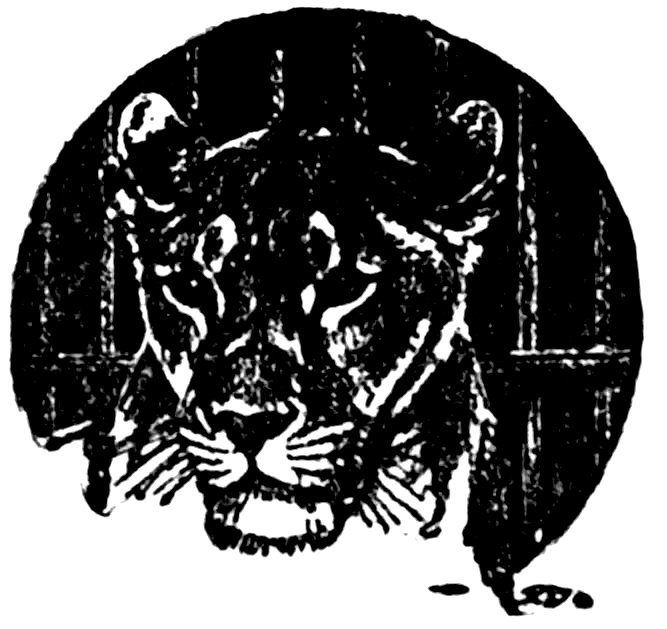
This is not my story, except incidentally. It is the story of a Bengal tigress named Princess, with a coat of dull gold striped with ebony. A restless, sullen tigress, padding the length of her narrow cage, with amber eyes staring out at some 190vision beyond the iron bars, with tawny lips half drawn back from white, pointed fangs. A tigress with something high and noble in her steady pacing, her air of absolute detachment from everything around her. When I met her I was no longer a child living near Puget Sound, but had quite grown up and moved to California, and to city life far from my woodland friends of earlier and sweeter years.
Princess lives in a motion-picture studio’s menagerie now, but there was a time when she knew the hot, marshy smell of the Bengal jungles, when she crouched, tense in every muscle, to spring upon a fat bullock, when she padded through narrow jungle trails to drink at the hidden pool which only the forest creatures knew.
She was caught in a tiger pit, they told me, when little more than a cub. She had been purchased first by a circus, 191and then by the motion-picture company which owns her now. They told me she was fierce and utterly without affection. And indeed she looked so, pacing back and forth in her iron-barred cage, her breath coming in a hissing snarl as she noted our presence, her amber eyes widening ever so little as she caught our scent.
Still I could not think Princess was so terrible. I could not find it in my heart to be afraid of her. I pitied her. There was something unbearably pathetic in her constant pacing. It seemed to me that I could actually feel the longing of her caged heart to be out in the open again, to lope down jungle trails, to lie stretched out on rocks warm with Indian sunshine. There was no enmity in the look she turned on us, only indifference, and—was it pleading?
It was my first visit to the studio. 192And I carried away with me that picture of Princess in her cramped cage, pacing, pausing, sniffing at the air heavy with human scent, her amber eyes seeing something afar off, something we could not understand—
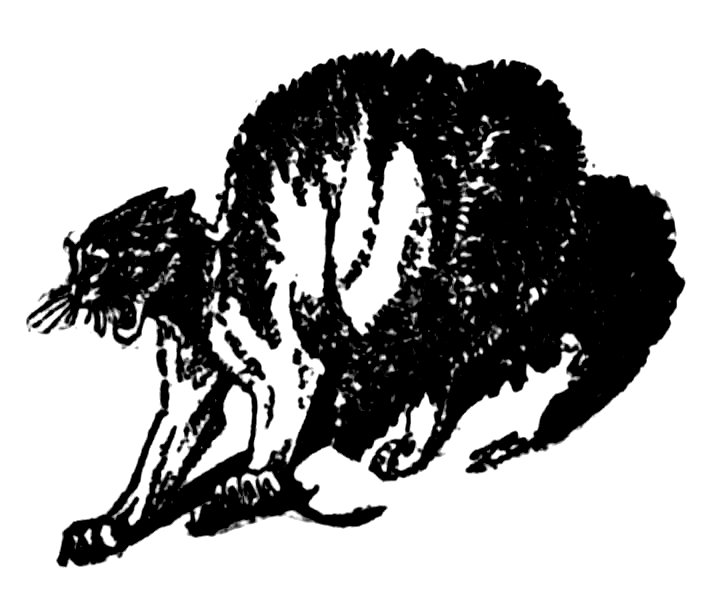
Then I discovered that the keeper of the menagerie was an old friend of mine. “Pudgy” he was nicknamed. He was short and rotund, and trained animals with kindness instead of whips. I had known him in the Puget Sound country when Brother and I were children. A woodsman he had been then, and with a tiny little cabin near Green Point. We had visited him often, for he shared our love for the things of the open. He had had a tame deer whose name was Nellie, and he had nursed back to health a bobcat that he had rescued from a trap in the High Sierras. It was not strange that with his love of animals 193Pudgy should finally come into a position as keeper of a motion-picture menagerie. Many years had passed since we had seen each other, but when we met by chance—I was of the press—we renewed old acquaintance, and found pleasure in talking of Puget Sound and of the woods creatures we had loved.
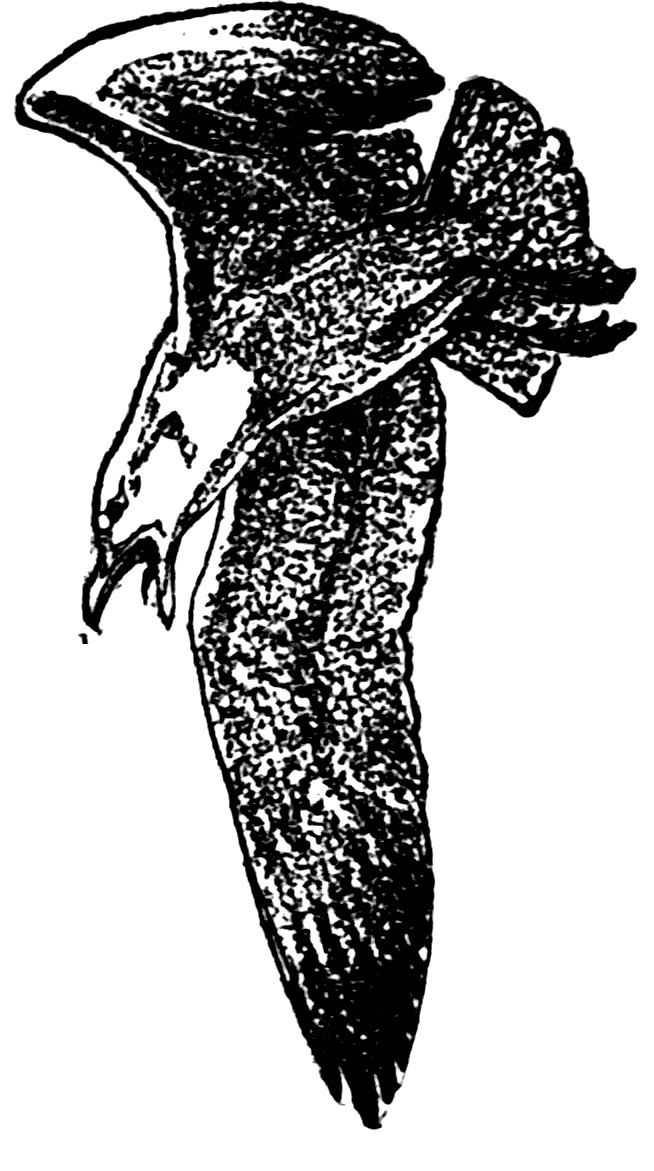
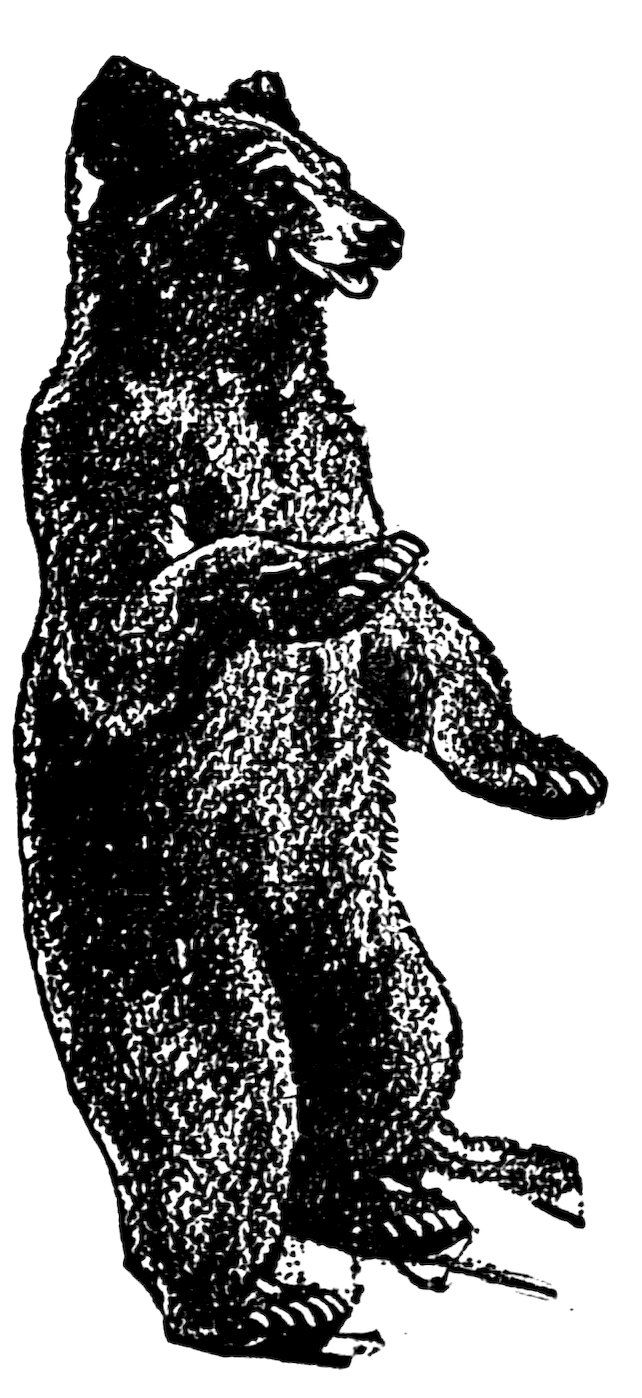
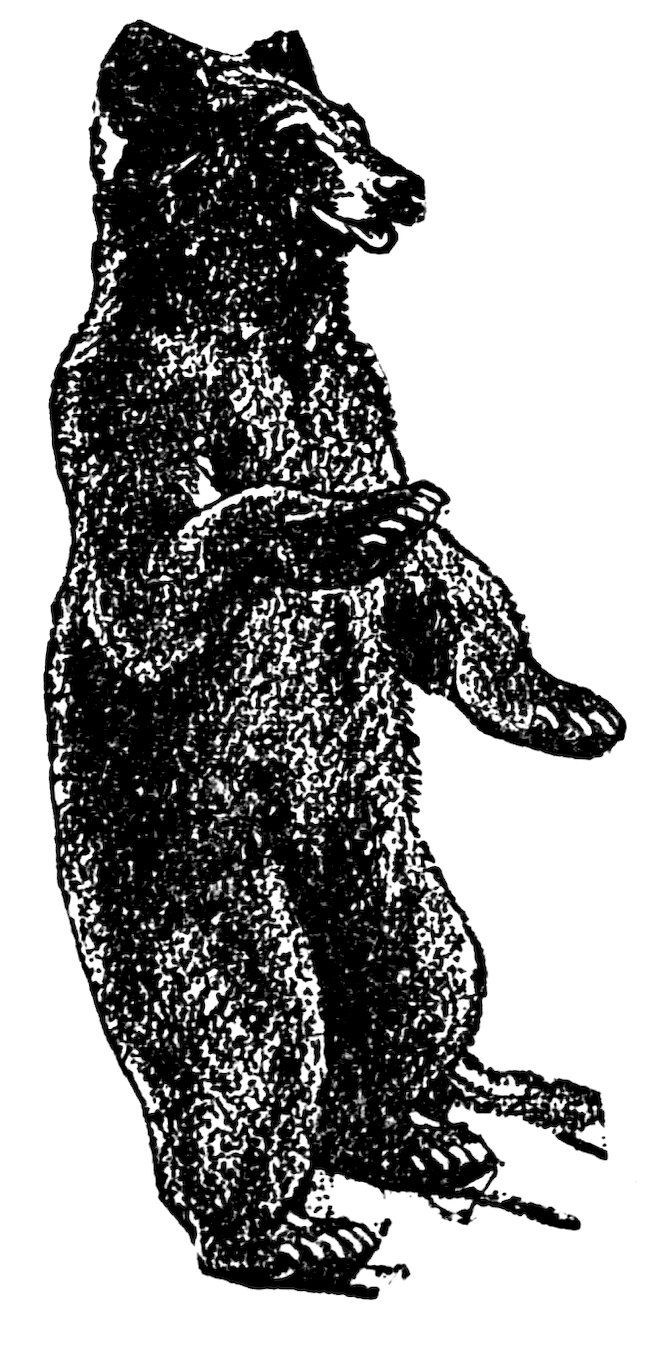
Through him I came to know personally the animals in the menagerie. I was introduced to the Russian wolves, to the lions, to the bears, and to Princess the tigress. I think he liked her best of all the wild things there, and I am sure I did. There was something about her cheated strength, her restrained power, that made my heart go out to her. I never failed to visit her when I went to the studio, and I liked to think that she knew me and recognized me as a friend.
It was several weeks after Pudgy and I renewed our old friendship that 194they told me at the studio that Princess, the glorious Bengal tigress, was to be killed. She had grown unmanageable for picture work, they said, too sullen and too treacherous. The picture in hand called for a tiger hunt. She was to be sacrificed for the sake of reality and shot down. Her pelt, they added, would be worth a great deal of money.
But I could not think of Princess in terms of a pelt that was worth money. I felt as if a human being had been sentenced to death. Because she could not find it in her royal heart to cringe beneath the trainer’s lash, she was to die; because she was queenly, and unafraid, she no longer had the right to live.
I have seen the tortures wild animals go through in making pictures. How they are prodded with pointed sticks, made to jump into water from great heights, and forced to run through 195blazing brush. I have seen lions and tigers struck cruelly on their sensitive noses to make them register rage. All these things had Princess suffered from trainers and directors. I did not blame her for rebelling.
I came upon Pudgy as he sat on a bench near Princess’s cage, his chin in his hand, and he was staring at her while she paced restlessly back and forth with hissing intakes of breath.
“They are going to kill her,” he said slowly, “just because they can’t break her spirit.”
I sat beside him, and together we watched Princess. Pudgy told me how he had tried to ease the fear and hatred of humans in the heart of the jungle tigress by being especially nice to her. How, when she had hurt herself jumping from a springboard into a lake with sharp rocks in it, he had gone into the cage and bathed the swollen 196paw, and how she had licked his hand with her huge, grating tongue. Once she had had a swelling on her throat; he was the only one whom she suffered to minister to it. And again, when she had sickened with fever, he had stayed in her cage a night and a day, moistening her tongue with water and watching until her eyes lost their glazed stare and became normal once more.
“And they’re going to kill her,” he repeated slowly, “just because she can’t understand the treatment they’ve given her—because she’s not afraid of their whips any more.”
His voice almost broke. And my heart went out to him and to the tawny wild thing in the barred cage. If he could only make the Powers understand, I told him. If only he could make them realize that Princess was not wantonly ferocious, only tortured into savagery by unkind treatment. 197He shook his head. The Powers, he said, understood nothing that did not have a dollar mark attached.
So the day was set when Princess was to die. It was to be in the out-of-door arena, an oval piece of ground enclosed in upright bars and strong steel wire. At the back was a miniature thicket of bamboo, ferns, and marsh grass. At the front was the camera cage, strongly barred to prevent danger from the wild animals being photographed in action.
My visit to the menagerie that day was accidental. I did not know that the tigress was to be killed. I had only been told that an interesting picture was being made in the arena. So I pushed my way through the double line of carpenters, actors, and onlookers, to the very bars of the huge out-of-door cage. The camera man was already in his barred enclosure, 198and inside the arena the director, a slim-waisted man with a black mustache, was outlining the action of the scene to the hero of the picture, who, attired in a hunting costume, dabbed at his face with a yellow powder-puff.
“The tiger comes bounding out of the jungle,” the director was saying, “and you shoot from behind that log. Never mind if you don’t get her the first shot. I’ll have my gun on her, and I’ll finish her off. There’s no danger.”
My heart stopped and then thumped painfully. I had stumbled unknowingly on the scene of Princess’s execution. I felt sickened. I could not bear to stay and see her shot at—wounded first by an ill-aimed rifle, then fired upon until she dropped, an inert mass of tawny gold and black—
I turned away, tried to press through the crowd. But there were too many people. Every one from the studio had 199ceased work to come and see the spectacular death of Princess, the Bengal tigress.
I was dimly aware that men were rolling a cage on wheels up to the side entrance of the arena. From between the bars I caught a glint of sunlight on a body of savage beauty. I saw, too, the white, drawn face of Pudgy, standing by the side of the cage.
Some one opened the side gate of the arena. The director and the actor were still talking. The director was showing graphically how the other should come out of the jungle, should listen for the tigress’s coming, should drop behind the log and fire—
What happened then I can scarcely remember. It was all so sudden, so breath-taking. A confusion of signals had been the cause, they told me afterward. The man at the cage thought the opening of the arena gate was the 200signal to release Princess—and he had opened the door of her cage!
There was a shout that died away in a gasp of many breaths, a silence that was like a great commotion—for Princess, the royal Bengal tigress, crashed through the flimsy greenery of the mimic jungle and like a tawny statue stopped short, her head raised, her amber eyes wide.
It was a nightmare, that terrible instant. No one moved. The director’s face went pasty white, the actor’s red-lined mouth had fallen open. There in that oval cage the two puny men faced the magnificent creature of the wilds, faced the animal they had planned to kill—and they were helpless.
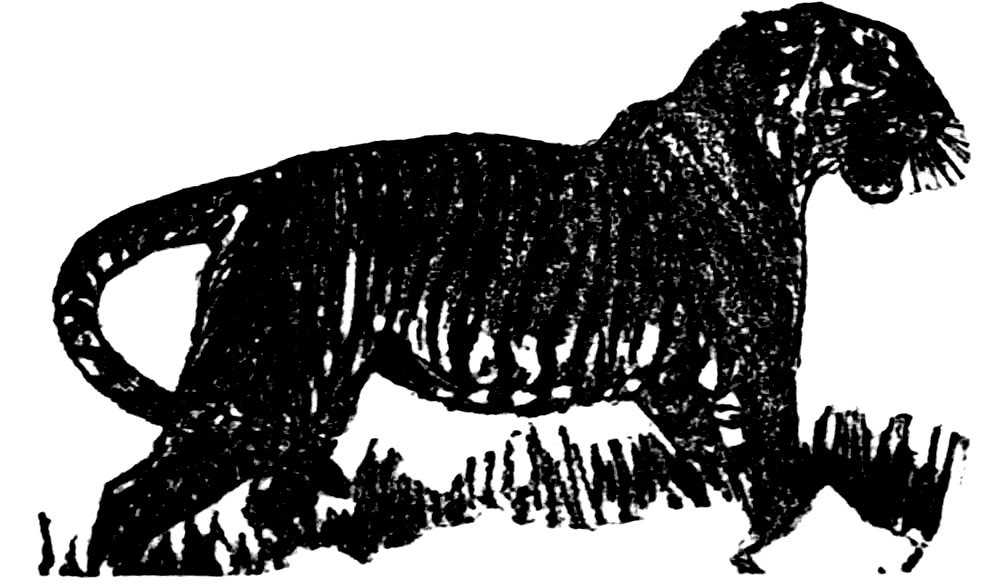
Only the briefest moment did the tableau last. For Princess’s nostrils dilated with the hated human scent, her eyes narrowed to slits, her nose 201wrinkled back, and she snarled. The director was speaking jerkily without moving—saying that no one must scream—telling some one to bring the gun—
At the sound of his voice the tigress dropped to a crouch. Her tail lashed her sides. I could not take my eyes from the arena. My throat was dry. I was vaguely conscious that a man had pushed past me. It was Pudgy, the menagerie keeper.
For a scant second a lower crouch—a long-drawn snarl—then a voice spoke, quietly, sharply.
“Princess!”
At the sound of the keeper’s voice, the tigress lifted her head ever so little, and her amber, black-rimmed eyes turned toward him.
“Princess!” he said again. “Keep back—steady, old girl!”
He had unfastened the front gate 202of the arena and opened it. He was unarmed; he carried not so much as a whip. Yet he went toward her quietly, talking in a gentle monotone, and she snarled at him as he came. But he walked quickly, confidently. He placed himself between the two men and the crouching tigress. Then he planted his feet far apart and smiled down at her.
“Maybe you’re mad at these folks, but you wouldn’t be mad at me—your old pal,” he said softly.
There was a moment of sickening suspense. Then the snarl died on Princess’s lips, her tail ceased its frenzied lashing, and she rose from her crouching position.
“The danger is over,” Pudgy said quietly to the men behind him. “Just move out toward the door. Take your time. Don’t run.”
Then he spoke to the tigress again:
203“Into your cage, old girl, right out through the same door you came in—Out you go—It’s all right, lady—Don’t be frightened—You know your old pal wouldn’t do anything to hurt you—”
He was stepping forward toward her, urging her gently but firmly back through the side gate of the enclosure. She snarled as she went, and stopped once to roar full-throated defiance. But the mild little man talked to her always, caressing her with his voice, comforting her with the assurance that she was not to be hurt. The tawny body slipped through the door into the wagon cage—the door clanged after her—it was over.
Pudgy came out of the arena at the gate where he had entered. His face was calm, his hands untrembling. I pushed past the people in front of me and in a moment was beside him.
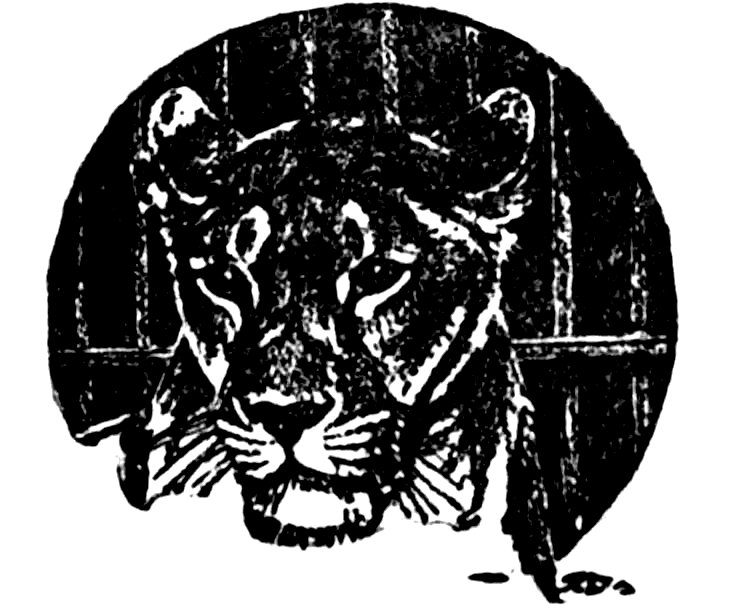
“Tell them, oh, tell them now!” I 204whispered. And Pudgy, because he, too, loved the things of the wild, understood me.
“Do you think it would do any good?” he questioned under his breath, and I nodded, being almost past speech.
Together we sought the director of the picture. He was one of the Powers. His word would mean much.
He was still white-lipped and breathless, but he attempted a wan smile as he shook Pudgy’s hand.
“Well, she almost got us,” he spoke with forced cheerfulness. “If it hadn’t been for you—” He shuddered in spite of himself. “If there’s anything I can do, old-man, to show my gratitude—”
Pudgy’s eyes turned toward the wagon cage where Princess had commenced her endless pacing. She was still snarling softly, as if dreaming of the vengeance on man which had almost been hers.
205
“Maybe you don’t know it,” he said slowly, “but the real reason Princess obeyed me was because she knows me and likes me. She knows I like her, too, and she wouldn’t do anything to make me feel bad. And if you really mean what you say—about doing something—why, let Princess live. She—she’s a friend of mine.”
There was a short silence. The director was staring at him curiously.
“That tiger—that bloodthirsty beast—a friend of yours?” he said incredulously.
“Yes,” answered Pudgy simply. “She’s just that, and I don’t want her killed.”
The director turned away, walked a few short steps, and halted. “All right,” he said briefly, “if that’s the way of it—I’ll see what I can do.”
As I said before, this is not my story. I wish it were. I should love to have 206the friendship of that wonderful tigress as Pudgy has it. But at least I always make it a point, when at the studio, to pay a brief visit to Princess, the Royal Bengal. She paces unceasingly and stares at something beyond the bars which humans may not see. But because Pudgy has let me come inside the railing, and has told Princess that I helped, a very little bit, in obtaining her reprieve from the death sentence, I like to think that her amber eyes as they rest on me are not fierce, but kindly, and that she knows that I love her and wish her well.
207
Part Eleven
Ethel of the Wild Heart
208
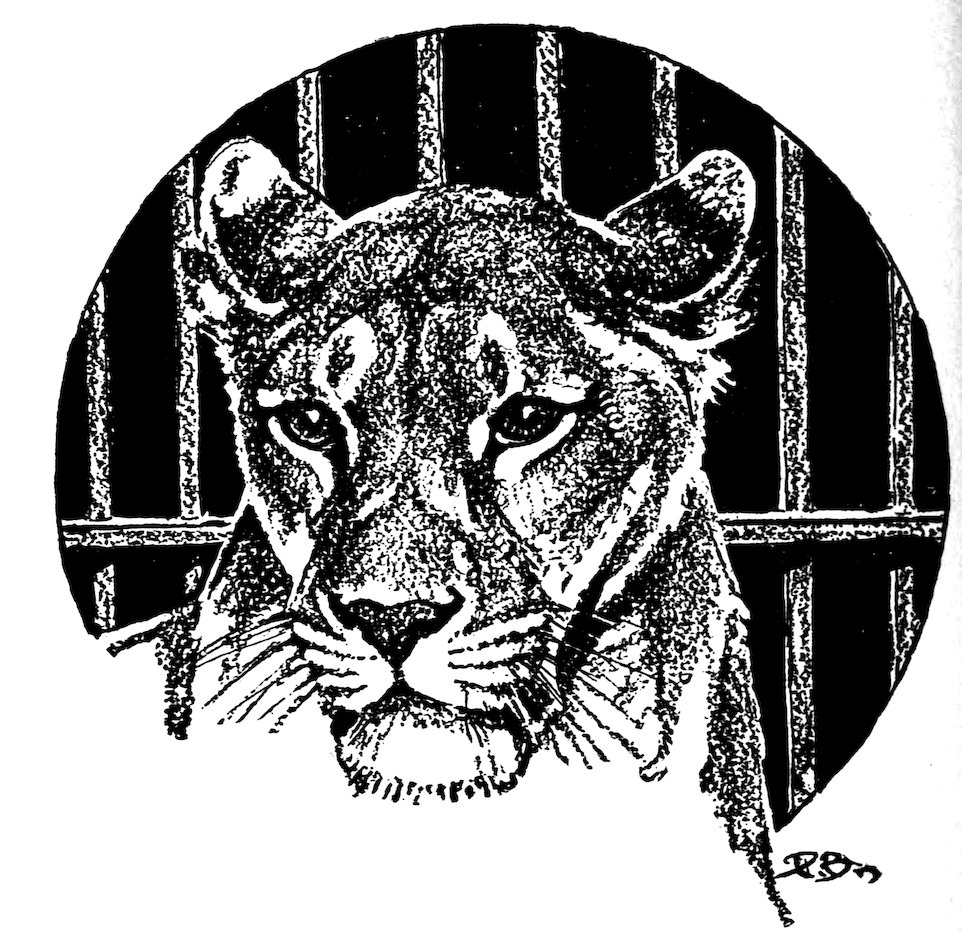
For I saw her, not a savage, bloodthirsty beast, but a wild thing of the deep woods, ruled by pain instead of kindliness.
209