Part Five The Friendship That Failed
Reading edition
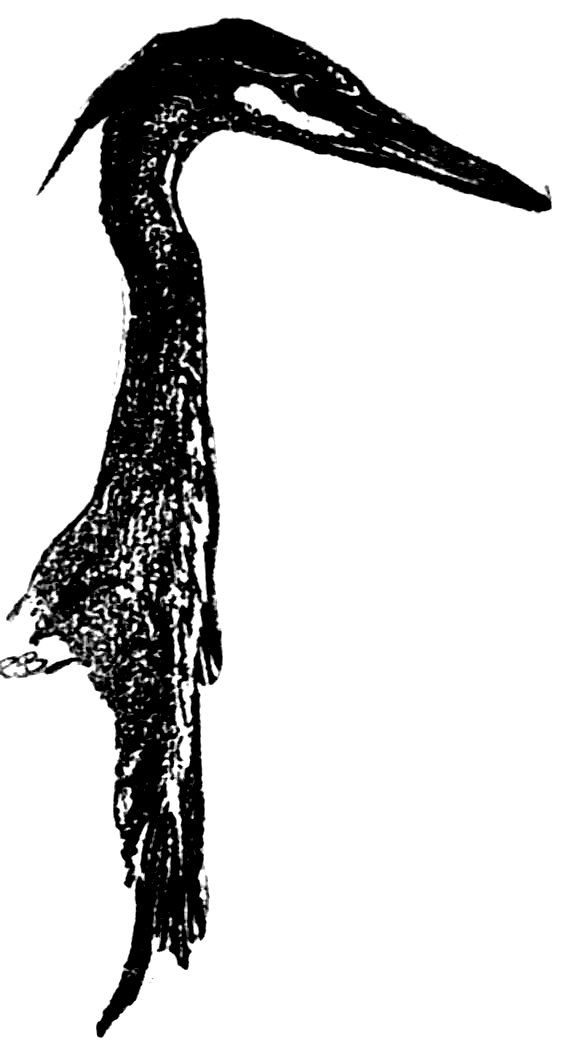
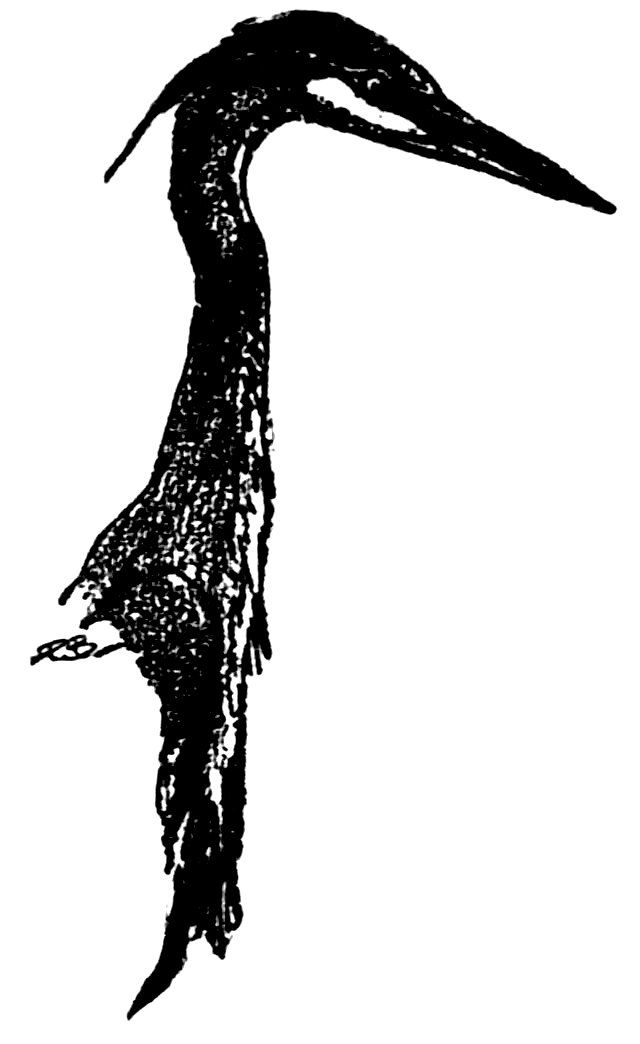
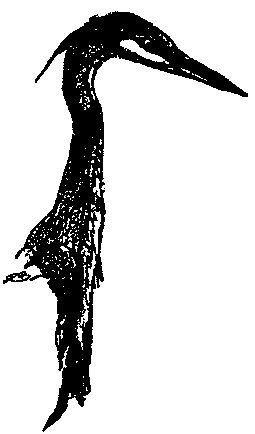
On the shores of Puget Sound, where the woods come down to the shore to fraternize with the little white-capped waves of the bay, lived Henry, the heron. How old he was before Brother and I came to know him, we could not tell. But an old-man bird he must have been surely, for his was a knowledge of fishing that comes from long experience.
Every day we would watch him 83from our little log cabin—watch him sail majestically toward the float, pause directly above, and flap down upon it, using his lanky legs as balancing weights. He would stand there for many moments, turning his head slightly from side to side as if revolving in his mind whether he had done the wise thing in coming, and what his next move ought to be.
Cannon came charging in a whirlwind of feathers.
Such a deliberate bird Henry seemed, but this apparent deliberation was only one of the tricks of his trade. I am sure that had I been a fish, I would have believed there was nothing 84to fear from the immobile bunch of gray feathers balanced on two skinny stilt legs, and I would have swum merrily under the very tip of his beak. But Henry’s sharp, black eyes missed nothing, as the hapless fish found to their cost when they ventured too near the surface. With one lightning swoop the great bill cleaved the water, and the next instant a shiny fish was wriggling in his beak.
Sometimes he did his fishing while standing in the water up to his knees—or where his knees would be if herons had such things. With his head drawn in between his feathered shoulders and his long beak sticking out at right angles like a lance at rest, he seemed to be taking a siesta, and only the occasional plunge of his long bill into the water, and the accompanying twinkle of a small silver fish as it flapped in amazement before it slid down into his 85gullet, proved that he was awake—and hungry.
We gave Henry his name when he was but an acquaintance of ours. We never really hoped to have him for a friend, but we liked him, and we felt that he liked us, too. So when he did his fishing on our float or knee-deep in the water of the little cove before the cabin, we threw scraps of bread to him, which he accepted gravely and always dipped in the salt water before swallowing.
We used to hear his strange, mournful cry late at night as he flew northward past the cove on his way to the pine tree where he lived, and we always pretended he was giving us a greeting before he turned in for the night.
We found out, too, where he made his home. We had often seen him land on a bony, fallen tree half a mile up the 86beach, which jutted straight out into the water and which we called “the Pointing Finger.” Once, in our explorations along the beach trail, we saw Henry standing on the gray shaft of the dead tree, and as we watched, he stooped slightly, then flapped upward and flew into a tall pine tree almost in front of us. When we stood under it, we could distinguish the outlines of a nest high up in the branches. Perhaps at that time there was a Mrs. Henry and maybe some young Henrys—I do not know. But certain it was that when he became a friend of ours by reason of a happening which might have ended in tragedy for him, he seemed to be without family cares or responsibilities.
During the season when the salmon were running, the Old Fisherman, who was at once our mentor and playfellow, spread his nets from the shore-line 87straight out into the bay for a hundred yards, leaving them there the night through to catch the large silver salmon on their way to the creeks to spawn. One of these nights he had laid his net near the Pointing Finger, and Brother and I, going with him in his creaky, flat-bottomed boat to see the result of the haul, heard ahead of us a great splashing, and saw dimly outlined in the midst of the cork floats a dark body that flapped and struggled.
We whispered excitedly that perhaps a seal had become entangled in the net, but the Old Fisherman thought it only a salmon, or perhaps a dogfish whose pointed snout had been caught in the meshes of the cords.
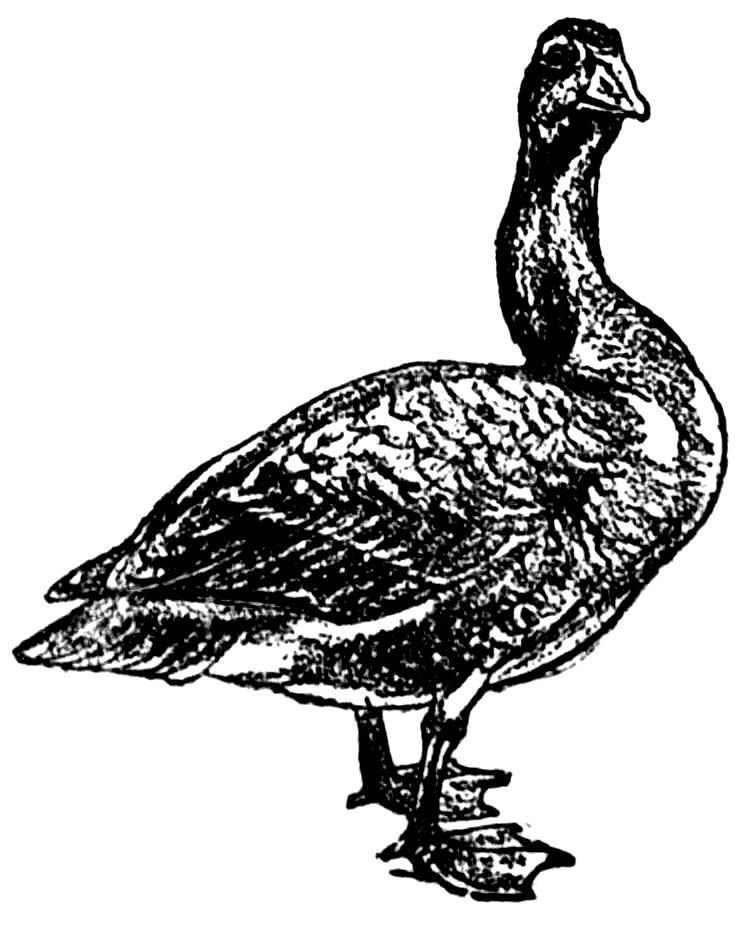
But it was neither seal nor salmon, for on rowing close to the net we saw by the light of the Old Fisherman’s lantern a huge, gray bird with flapping wings and slashing beak. It was 88Henry, the heron, who had alighted on one of the cork floaters, perhaps thinking it safe footing, and had thus become hopelessly snared in the net.
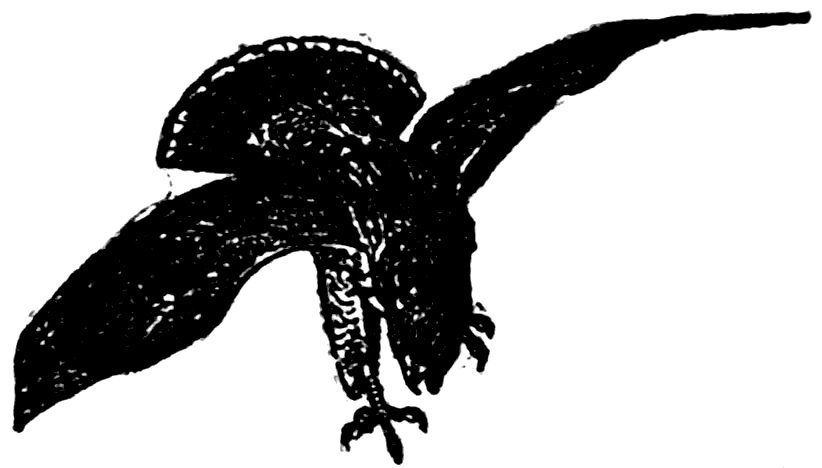
What was even worse, he had hurt himself cruelly in his struggles, for one long leg was dangling helplessly, and one of his wide gray wings hung limp at his side. When the Old Fisherman, with gruff words but tender hands, released him from the cords which bound him, he could not fly, but flapped helplessly upon the water. And so it was that we lifted him into the boat and tied a gunnysack around him so that he should not injure himself further, for he did not understand that our intentions were kindly and snapped at us fiercely with his huge beak.
The Old Fisherman, who had lived with the Indians and who had acquired their curative gifts, took Henry, the heron, in charge when we reached 89the little cabin in the cove, first muzzling him by tying a stout cord about his beak. Then he set the broken wing and put the leg in splints. The grown-ups suggested putting Henry in the hen-house for the night, but Brother and I would not have it so, and with their help we constructed a pen behind the kitchen stove where he could be warm and comfortable. We left him moving his head jerkily from side to side, blinking his beady eyes now and then and snapping his bill as if in troubled retrospect.
But during the next week Henry, the heron, came to know that we were his friends and that he had nothing to fear from us. He allowed us to stroke him and would accept morsels of food from our fingers, even taking care not to nip us with his powerful beak.
When he had finally ceased to fear us, we gave him the liberty of the back-yard, 90and he would stalk about stiffly like a peg-legged veteran of the wars. But most of the time he would stand with his head drawn in between his shoulders, the picture of dejection, and Brother and I knew he was longing for the freedom of the air and the water which had been his. He was longing for the cool lapping of little waves against his legs, for the silver gleam of fish in the blue depths; and he wanted to fly once more—to circle over the bay, to flap down upon the Pointing Finger. Perhaps he was even lonesome for the nest in the pine tree. At any rate we were sorry for his sadness and set about to remedy it as best we could. We fished indefatigably from the float, and the Old Fisherman brought us smelts and silver perch from his nets.
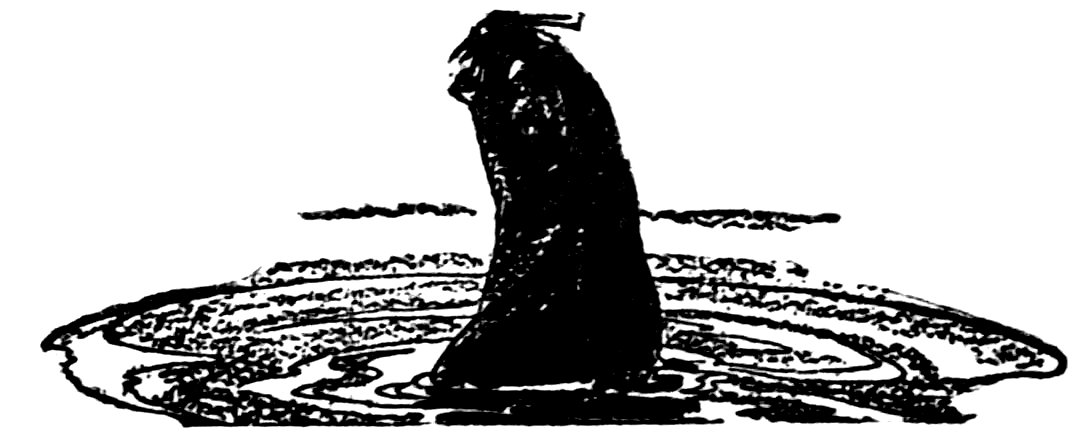
Then, to make our guest feel more at home, we would put our catch in a 91washtub filled with water, and Henry would fish for them choosing his prey with calculating eye and gobbling it up with one great peck. It was the best we could do for him, and we felt that he appreciated that, too, for he obligingly hunted down every fish in the tub, and then would turn his grave head toward us, giving us the broadside effect of one shiny eye, whether in thanks or in petition for more we could not determine.
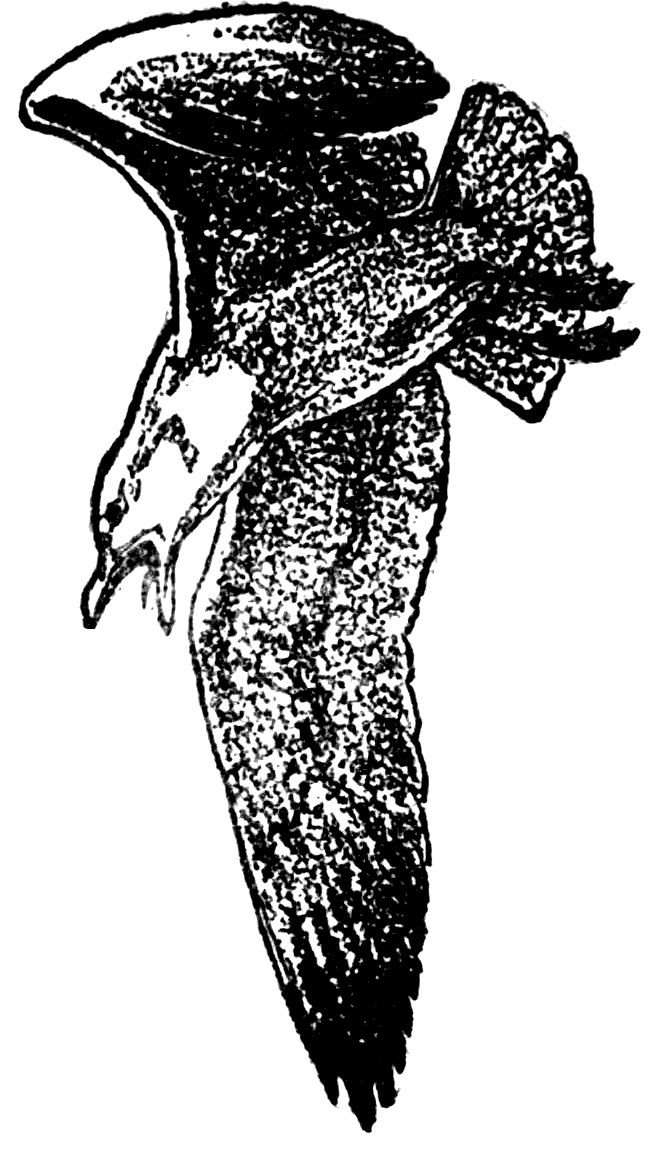
But it was really due to Cannon, our bantam rooster, that Henry’s convalescence was not entirely unendurable. Cannon was the eldest son of Liberty, a small bantam hen who had brought forth her brood on the fourth of July—hence her name and his. He was the undisputed king of the poultry yard, for a strain of game cock in his blood had made him fearless of everything and an unspeakable bully. There was 92no hen or cock of twice his size who dared come near his end of the feed trough, and even Prince, the mammoth White Rock rooster, stood in awe of him. Perhaps he was merely amused at the airs Cannon gave himself, and so let the tiny cock have his way, but at any rate his record of combat was unsullied by a single defeat.
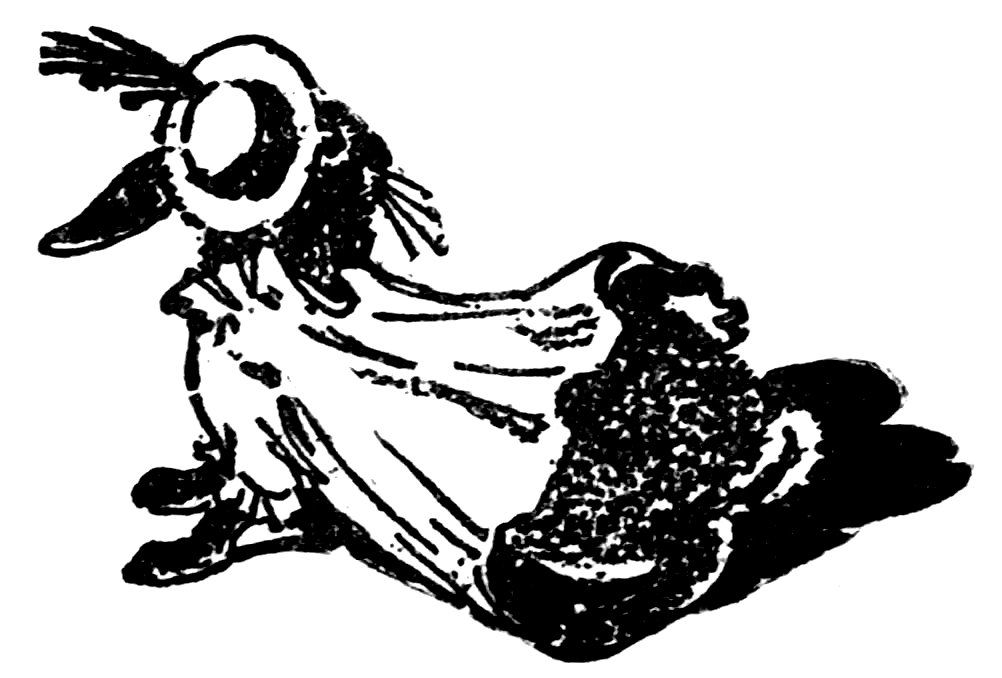
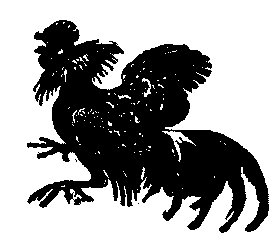
I have seen many a strange friendship between animals and between birds, too, but never one so curious as that of Henry, the heron, and Cannon, the bantam rooster. For friends they were, and real friends, too. They became acquainted when Cannon, flying into the back-yard one day, spied the stiff-legged Henry and immediately decided to do battle with him. He ruffled up his neck feathers, whirled round and round with one wing dusting the ground, and advancing on Henry, dared him to come on 93and fight. At first Brother and I thought to rescue Cannon from what we believed would be his sure death. But we were wrong; for Henry regarded the little brown cock contemplatively, snapped his bill in warning, then blinked and turned away as if overcome with boredom. But Cannon was not used to being ignored. If his enemies would not fight, they must at least give way before him. So his neck ruff distended more and more, his tiny comb glowed an angry red, and in his best game-cock fashion he hopped up and down stiffly, trying to strike at the heron’s broad, feathered breast above him.
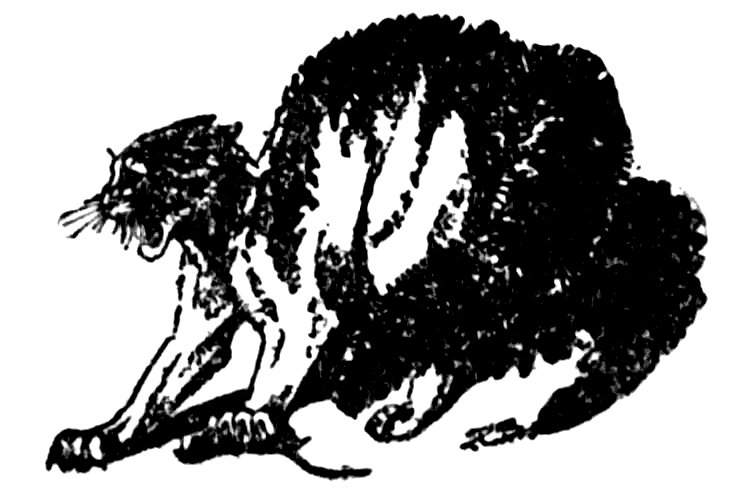
Henry eyed him curiously, almost saturninely, and at last with a sort of wearied annoyance gave one sweep of his broad bill, and Cannon was sent tumbling in a scurry of brown feathers and outraged squawks. But he was a 94warrior; back he came in a series of frenzied leaps, and once more Henry’s massive bill swept him lightly but conclusively aside.
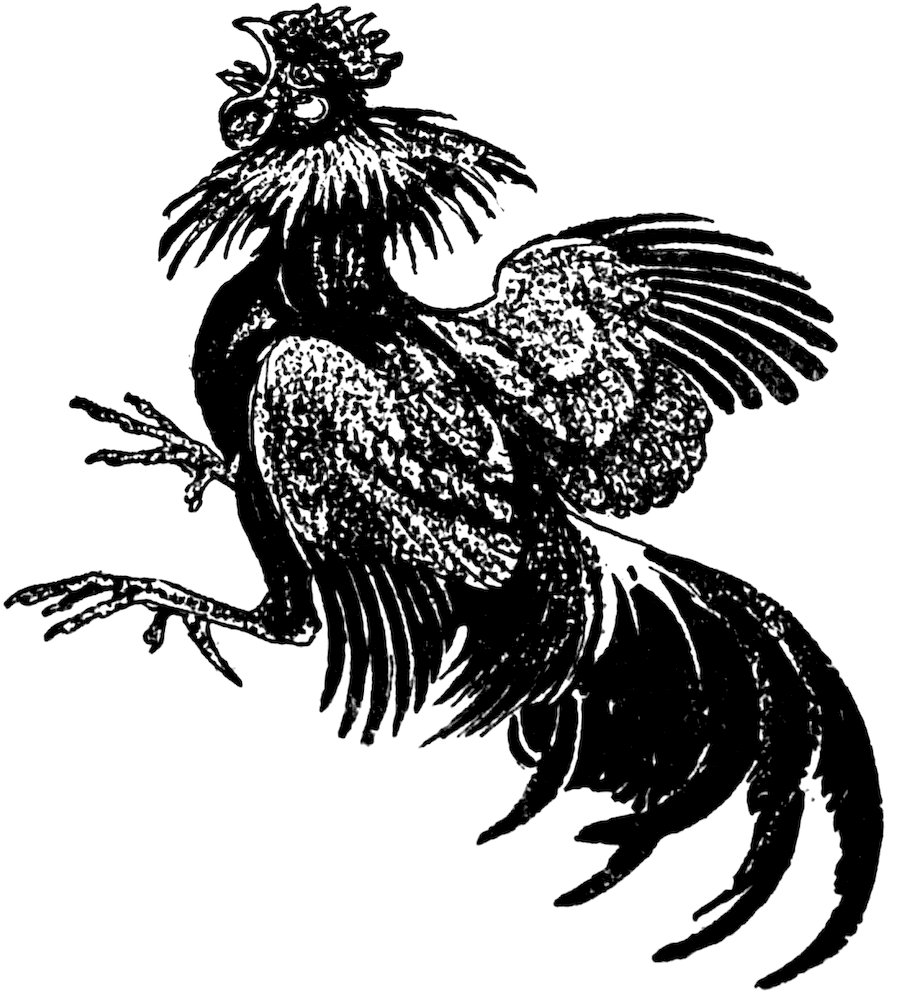
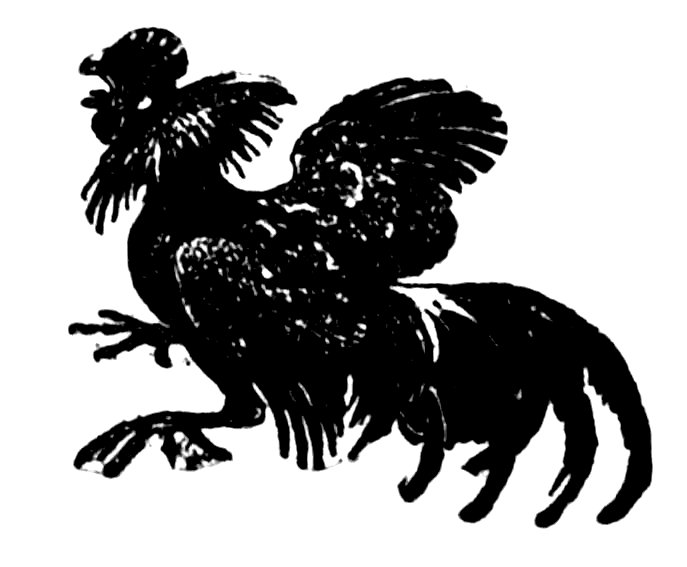
Time after time, to the number of twelve, Cannon came charging in a whirlwind of feathers, trying to slash the feathered breast of his passive enemy, always to be met by the calm but decisive buffet of Henry’s beak. At last it was a wearied little bantam cock who stopped pantingly and turned his back upon the gray heron, owning himself defeated.
Perhaps it was respect for Henry’s superior prowess which actuated Cannon, and perhaps the merry little bantam’s pluck appealed to the grave fisher bird, for they became almost at once inseparable friends. Cannon deserted his feathered acquaintances and spent his time in the back-yard with Henry. When finally the invalid was 95well enough to hobble down on the float, Cannon went with him and would stand beside him while Henry, the heron, swooped joyfully upon minnows and silver smelt and gobbled them down with a zest he had never displayed when fishing in the washtub. Such became the intimacy of the tall Henry and the diminutive Cannon that Henry would even share his catch with Cannon, dropping down upon the float a small, wriggling fish for Cannon’s delectation.
We noticed that at first the bantam rooster eyed askance the flapping tidbits offered by his friend. He was not accustomed to such lively food, but little by little he learned to peck and devour the fish with the same relish that Henry showed for them. He became a feathered parasite, depending almost entirely upon the heron for his meals.
96It was such a pleasant friendship—comradeship between man and man always is—and it was broken up, I am sorry to say, in the usual way—by a woman.
As Henry grew stronger, his leg and wing knit rapidly. And on the day when the Old Fisherman removed the bandages and pronounced the patient out of danger, we feared our heron friend would leave us. But he did not. He had become accustomed to the float, to the cabin, to the yard, and to Brother and me. Above all, there was Cannon, the bantam rooster. So he stayed with us, flapping up into the firtree in the front yard at night to roost, and fishing from the float or the beach in the daytime. It was an idyllic state of affairs which might have lasted indefinitely had it not been for Sironda, the Black Minorca hen.
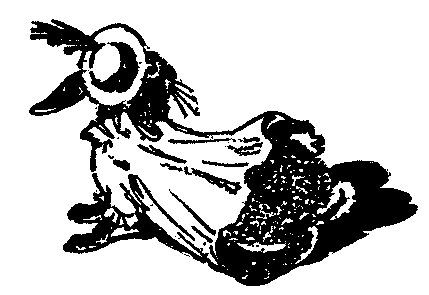
“Si” we sometimes called her for 97short, and we had known her from the day of her birth. Even before that; for Brother and I had set the very egg in the incubator from which she was hatched. She was a trim little hen with shiny black feathers, a red comb that fell coquettishly over one eye, and a “singing voice” that made her the prima donna among the poultry. She was in every respect fitted to make an impressionable cockerel forget the ties of friendship, and Brother and I have always believed that she mapped out a campaign to that end after seeing how well Cannon fared by trailing at Henry’s heels.
She took to wandering down upon the float, singing softly to herself and ostensibly on the lookout for bugs, but, as we noticed, keeping an eye upon Cannon and his fisher friend and always drawing nearer and nearer to the pair.
98Finally she grew so bold as to come up to Cannon’s side, and when Henry, the heron, next dropped a shining smelt upon the float, the bantam, innately chivalrous, voiced a high-pitched invitation to Sironda to partake of the dainty.
Cannon, watching her, was content to have her devour the juicy morsel, but not so was Henry. He would fish willingly for Cannon, but not for his lady friends, and with one hair-raising scream he opened his huge bill, spread his wings and lunged for Sironda, who dropped the remnants of the fish and fled down the float, half running, half flying, and uttering hysterical cackles.
Cannon watched her precipitous retreat with a surprised and worried countenance; then he turned upon Henry. And though Brother and I could not hear what was said, I am sure that there were fierce words between 99them, for Henry had to knock Cannon down three times in rapid succession before the irate bantam turned heel and followed Sironda up the float and into the yard.
The rift in the lute had come, and it grew wider. For Sironda became bolder in her advances, and Cannon, flattered by her feminine wiles, laid his fish—of Henry’s catching—at her feet. It was a triangle situation which could end only in one way. For at the end of each one-sided fight Cannon would stalk away with outraged dignity in every ruffled feather, and Henry would gaze after him sadly and would thereafter peck at the swarms of silver smelt solemnly and without zest.
And so he left us. One day he tried his massive wings and sailed upward and outward into the blue sky, circled in midair as if trying his strength, and then flapped quietly away toward the 100Pointing Finger, and as he flew, he uttered a mournful cry that trailed behind him like a wisp of smoke.
And Cannon, the thankless one, did not even know that he had gone. He was scratching worms for Sironda. But I really think it broke Henry’s heart, for he never came to our float again. And I am positive that he became a woman-hater and remained a bachelor the rest of his life.
101
His constant barking set the grown-ups against him.