Part Two U-Chu-Ka
Reading edition

Upon the Hill Trail, which Brother and I called ours because we loved it so, you may yet see a little clearing made in the midst of red huckleberry bushes, Oregon grape, and dark green salal shrubs. As long as we lived in the little cabin by the bay, we never allowed underbrush to creep into this spot on the Hill Trail, for it was sacred to the memory of U-Chu-Ka, the only monument we could give him.
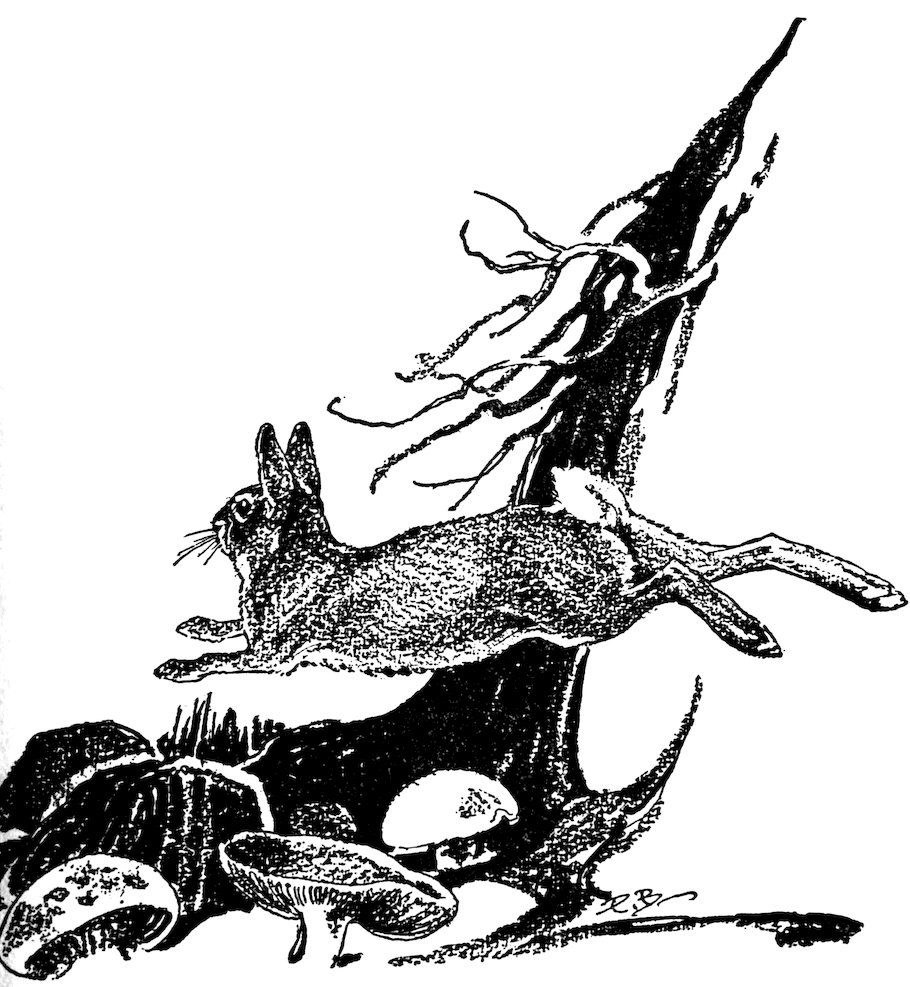
U-Chu-Ka was a tiny rabbit—a “jack-rabbit,” I suppose natural historians would have called him. But we gave him the name that in the Chinook language means “the jumper,” and we never called him anything else.
35
Part Two
U-Chu-Ka
THE JUMPER
He never failed to answer our call
36I remember the day we first saw him—a wee baby rabbit he was, escaped somehow from his mother’s vigilance, and so much interested in the big world outside the burrow where he had spent his short life that he hardly knew whether to be afraid of us or merely curious. In such a case he no doubt remembered his mother’s warning, for he “froze.” By this I mean that he remained rigid, the tan of his fur blending with the mottled greenery and the brown tones of the forest undergrowth. But Brother and I could “freeze” too, having learned the art from the woods creatures whom we knew and loved. So we stood perfectly still, and then it was a case of seeing who could hold out the longer.
It was U-Chu-Ka who finally capitulated in the battle of freezing. His curiosity became greater than his fear, and he sat up on his haunches, his tiny forefeet held primly over his stomach, his ears—much too long for him—tilted 37questioningly in our direction, and his black dot of a nose twitching ceaselessly.
We were, I am sure, the first human beings U-Chu-Ka had seen, and although behind him were countless rabbit traditions as to what fearful creatures humans were, U-Chu-Ka, being so young, was possessed of optimism and confidence. Brother and I were so happy when the little fellow with his soft brown eyes decided that we were friends to be trusted! Oh, if we had only realized that there were other people not so friendly to little brown rabbits, whom U-Chu-Ka might have the misfortune to meet!
But we never thought of that. Our one realization was that here was a new woods friend, and we set ourselves to the task of winning his heart.
It was not hard. Indeed, when I think of it now, it seems so pitifully 38easy. And I wonder, if every one knew just how easy it was, if men would carry sticks that shoot flame and death into the domain of the woods creatures—if they would not carry apples instead.
It was an apple that first won U-Chu-Ka’s heart. Brother had one, of course, and we nibbled bites off and placed the juicy morsels on the trail in front of us. Then, walking quietly backward, we waited at a safe distance for the wind to carry the delectable apple fragrance to U-Chu-Ka’s wiggling nose.
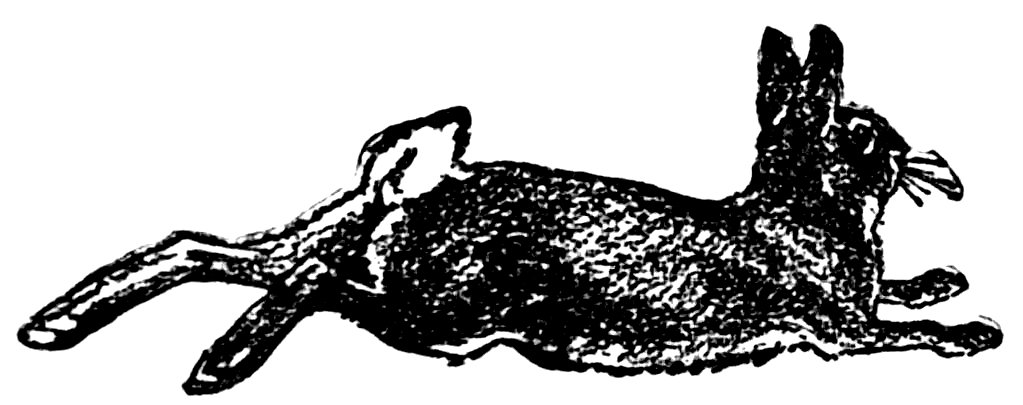
Nor was it long before one satiny ear—so fragile that it was almost transparent—drooped and then rose again. The twitching nose worked harder; U-Chu-Ka sat up straighter than ever; and then, with funny little hops, he came toward us, hesitating occasionally, once pausing to sit up on 39his haunches as if asking himself if he were doing the right thing in approaching thus boldly.
Finally he came to the bits of apple and promptly forgot his fear in his delight at the unknown dainty. By the time he had eaten the few morsels we had spread out for him, we had others ready, this time only at arm’s length.
Later we proffered bits of the fruit in our hands, held very steadily so that no jerking should alarm the little brown rabbit. At first he was undecided whether to accept the morsels so close to the big human creatures, but something, I am sure, told him that there was no harm in us. In the end he hopped over to my outstretched hand and nibbled daintily at the apple, while I held my arm so still it ached.
What Mother Rabbit would have said of the way we stuffed U-Chu-Ka, that day, I do not know, but I am sure 40she would not have approved. We fed him until his small stomach was round as a ball. When the apple diet seemed to pall, we gathered tender blades of grass, and very soon the little brown one would not take alarm at our movements, but would watch us with solemn baby dignity, sitting up on his haunches or squatting in a round ball, his tiny ears laid over his back—a sure sign that he was no longer nervous.
How we hated to leave him that day! We didn’t take him down the hill and make him a home by the log cabin, for we had no wish to frighten him, and as for foraging for himself in the woods, we were sure U-Chu-Ka knew how to go about it. So we left him at the bend of the trail where we had first seen him. We called it U-Chu-Ka’s corner, and we left the core of the apple for him to nibble on after we had gone.
41
The next afternoon about the same time—for the woods creatures are apt to do certain things at certain hours—we came up the Hill Trail, whistling, and were almost at U-Chu-Ka’s corner before it occurred to us that the sound might frighten him away if he were still in that neighborhood. But curiosity is a rabbit’s strongest trait, and suddenly there he was, hopping out of the underbrush into the little clearing as if in response to our call—indeed as if he had been waiting.
We had brought offerings of lettuce and cabbage leaves, and this time it was not half so long before U-Chu-Ka would eat from our hands and permit us to fondle his velvet softness.
We came every day after that, always whistling, with choicest tidbits for our little friend. He would come into his “corner” hopping out from the greenery like a tiny puffball, 42sit up very primly, ears tilted, his nose wiggling, until he was sure it was his friends. Then down the trail toward us he would bound, with such long hops that his hind feet seemed to go above his head. Oh, U-Chu-Ka, little brown one, if we only had not taught you to have confidence in humans—to come unafraid when we whistled!
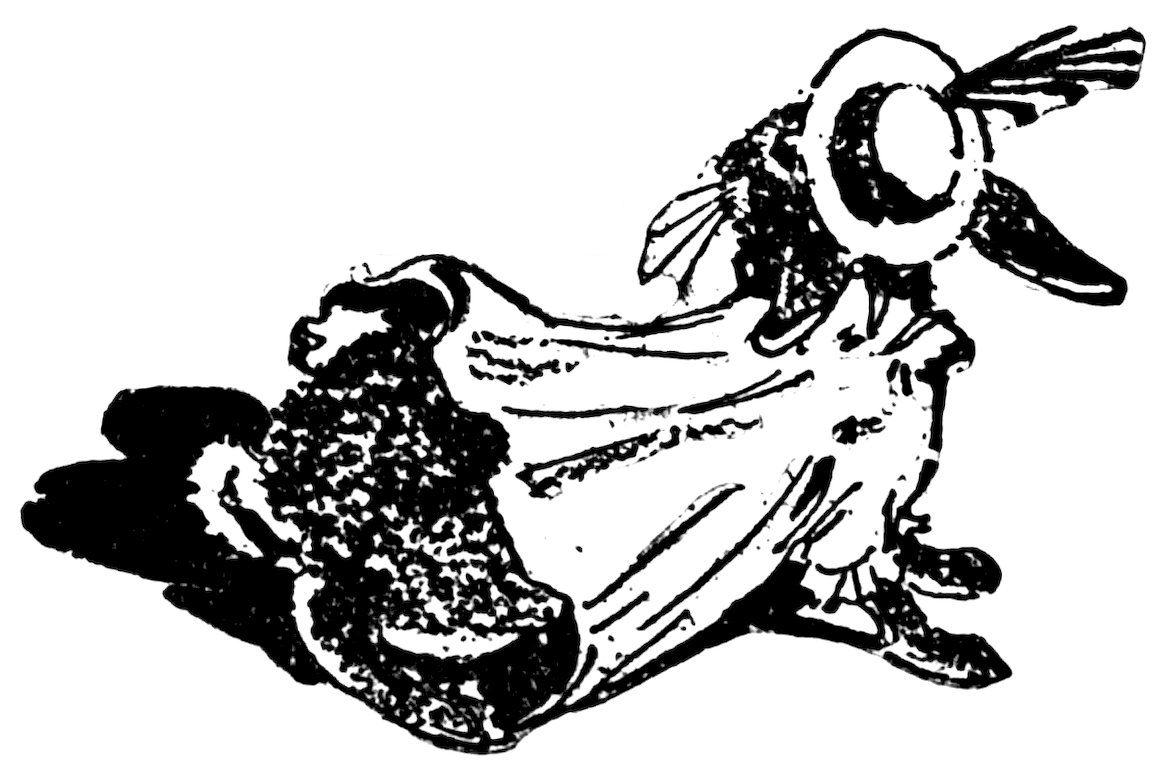
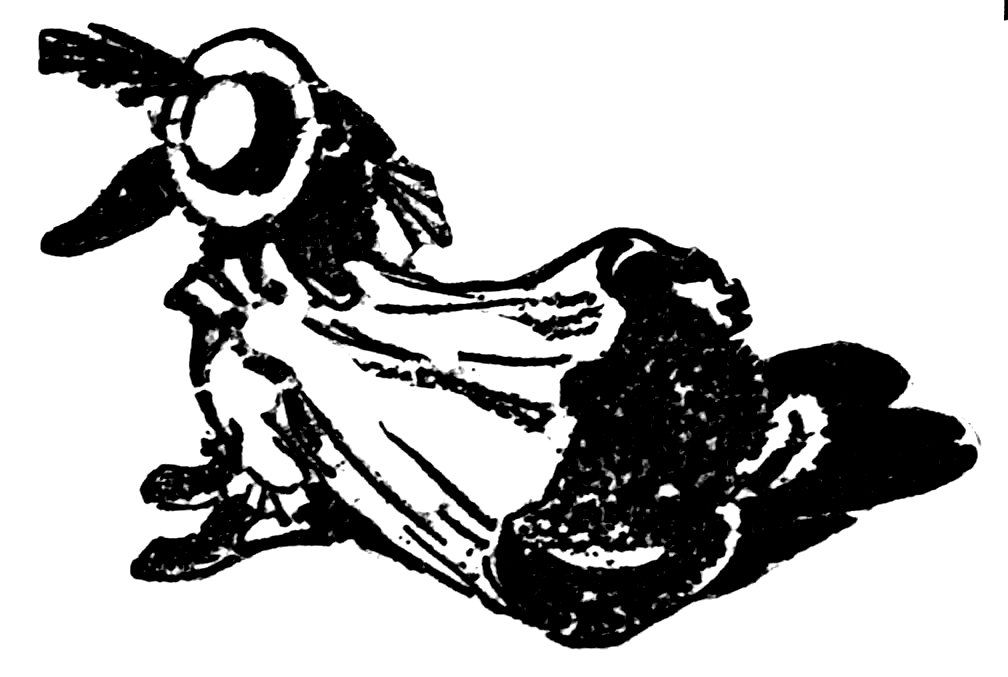
As the summer went by, U-Chu-Ka grew and grew. From a baby rabbit he became a half-grown rabbit, and we realized that before long he would be a very large rabbit indeed. But he never failed to answer our call, and through the long summer afternoons we would play upon the hill, the three of us. We played house, U-Chu-Ka submitting without protest to being dressed in a doll’s frock, with a tiny hat tying back his ears. He was our child, and we rocked him to sleep, sent him to school, disciplined him at 43times, and pretended that he talked to us. If I could only give you a picture of U-Chu-Ka, half-grown now, in a blue gingham doll dress, his brown paws stuck through the short sleeves, his white knob of a tail flashing impudently from behind when he hopped about, and his soft brown eyes grotesquely large under the white hat tied under his chin!
And then, one day—it is a day I do not like to think of—we decided that U-Chu-Ka should have a birthday party. So we took cookies, apples, and lettuce sandwiches up the hill. It was hot, with scarcely a breeze, and sounds carried distinctly. From far away we heard a whistled tune, and we knew that some infrequent passer-by was on the Hill Trail. The sound grew louder as we climbed, and then—a single shot that sent echoes vibrating against the startled hills.
44A gunshot! It was not such an infrequent sound through the woods that skirted the Bay, but our hearts suddenly contracted as if a hand had clutched them.
We said not a word to each other, but broke into a jogging trot that brought us hot and panting to the top of the hill. From there it was but a hundred yards or so to U-Chu-Ka’s corner, and we ran doggedly, with a great fear tearing at our hearts.
Oh, that moment! U-Chu-Ka’s corner was empty—but perhaps he would come if we whistled! We tried to form our dry lips for the sound, but none came. For we saw simultaneously, in the little clearing, a bright red patch on the low-hanging ferns—a little tuft of brown fur and a bit of white down.
The hunter had come and gone. U-Chu-Ka could not have known that 45the long stick pointed at him was filled with flame and death. We could picture the scene so well—the man, swinging carelessly down along the trail whistling, the gun over his shoulder—a sudden halt as a little brown rabbit hopped out from the underbrush into the small clearing and raised himself inquisitively on his haunches—a flash—a bundle of limp fur, blood-stained—a little brown pelt dangling pathetically down from a leather belt. Perhaps the man whistled again as he went down the trail. He could not know that two children, back by the little clearing, were sobbing their hearts out with their faces buried in the cool, green moss, because of a playmate who would come no more.
We tamed no more rabbits, Brother and I. We felt that we had been the cause of our friend’s death, and the least we could do was to refrain from 46putting confidence into other woods creatures, to be shattered by humans who did not know or care about the wild heart.
And so we planted twin-flower vines in the little clearing, and edged it with yellow Johnny-jump-up plants. It was our futile way of saying to U-Chu-Ka how sorry we were—how we loved him and how we missed him.
And today on the Hill Trail you may see U-Chu-Ka’s corner, grown over a bit now, because no one chops away the underbrush. But still the twin-flowers and the Johnny-jump-up’s bloom there in memory of U-Chu-Ka, the little brown friend who lives on in our hearts and our loving memory.
47
For the dogs had lost the lighter scent