Volume 2 — D.
Reading edition
Dabgar—(Sans: darvakâra, “a maker of any spoon-shaped vessel”).—The caste who make the raw hide jars in which oil, clarified butter, etc., are carried.
They are also known as Kuppêsâz, from kuppa, the leather vessel which they make (Sans: kûpa, kutupa). They have a Hindu and Muhammadan section, but no regular sub-castes. They are divided into gotras, of which the most common to the east of the Province is the Sribâstab, who take their name from the old town of Srâvasti, in the Gonda District.
Others are Dehliwâl, Dari, Mochi, Sripat, and Bengar. The Census lists give for the Hindu branch Bankar, Benbansi, Dhâlgar or “Shield-makers,” Goliwâla, Jâti, Kanaujiya, and Sribâstab, and for the Muhammadan Panjâbi.
It is possible that they are an occupational offshoot from the Chamârs.
Marriage and social customs. 3. There is nothing peculiar in their marriage customs, and their rule of exogamy is of the ordinary type. To the east of the Province they are worshippers of the Pânchonpîr, to whom they offer a mixture of pepper and sugar (mirchwân), which is poured on the shrine, and the remainder drunk by the worshippers. Sometimes they also offer in the same way cakes (pûri), sweets, and, when serious trouble comes, a he-goat.
Distribution of Dabgars according to the Census of 1891.
Districts. Hindus. Muhammadans. Total.
Sahâranpur … 5 5
Mathura … 1 1
Etâwah … 65 65
Shâhjahânpur 32 … 32
Pilibhît 83 … 83
Cawnpur 53 … 53
Fatehpur 5 21 26
Hamîrpur … 5 5
Allahâbâd 41 10 51
Jâlaun … 16 16
Ghâzipur 132 … 132
Ballia 230 … 230
Gorakhpur 330 … 330
Basti 88 … 88
Azamgarh 223 … 223
Kheri 76 … 76
Gonda … 6 6
Bahrâich 60 … 60
Total 1,353 129 1,482
Dâdupanthi.—A Vaishnava sect which derives its name from Dâdu, a Dhuniya or cotton-carder by caste, who died in 1703 A.D. He was, according to popular belief, a direct successor of Râmanand, and the line of descent is given—Râmanand, Kabîr, Kamâl, Jamâl, Budhdhan, and Dâdu. Dâdu was born at Ahmadâbâd, in Gujarât, and at the age of twelve migrated to Sambhar, and then to a place called Naraina, about fifty miles south-west of Jaypur. There, at the age of thirty-seven, a voice from heaven enjoined him to renounce the world and pass his life in doing good to mankind and in devotion. His biographer, Jân Gopâl, in a biography containing 2,864 lines, describes how he spent his life in the country between Ahmadâbâd, Delhi and Agra, teaching, discussing, and making many disciples. He seems to have lived a good deal at Amber, the old capital of Jaypur. He had frequent interviews with the Emperor Akbar at Fatehpur Sikri, and some wonderful stories are told of his miracles and adventures there. Finally in the neighbourhood of Naraina he was absorbed into the godhead in 1603 A.D. He is said to have had fifty-two disciples who spread his doctrines through Râjputâna and the neighbouring Provinces.
The chief of these were Rajab, Gharîb Dâs, and Sundar Dâs, and others also are named, such as Jaisa, Prayâg Dâs, Bakhnagi, Sankar Dâs, Bâba Sânwari Dâs, and Mâdho Dâs. Of these Rajab, the first disciple of Dâdu, was a Musalmân, and his Hindu followers are sometimes known by the name Uttarâdhi, as distinguished from the Nâga, who are Hindus. The latter take their name from the Sanskrit nagnaka, “a naked ascetic.”
2. The Dâdupanthis are usually divided into the Virakta, or “those void of attachment to worldly objects,” who go bare-headed, wear only a single garment, and carry a drinking vessel; the Nâga or “naked ascetics,” and the Vastradhâri, or “those who wear clothes” and lead a family life. They have, in fact, like most religious communities in India, an exoteric and an esoteric order. The exoteric or uninitiated are the householders and disciples of the Swâmi Sâdhu, or initiated order. These householders (grihastha) read, believe, and practise certain of the doctrines of the Bâni or book of songs, which embody the rules of the sect, and furnish the Dâdupanthi Swâmi with food and accommodation when he visits their villages. They are not put out of caste for becoming disciples (chela), and so retain all their marriage and social rights and privileges.
Those of high caste retain their Brâhmanical cord (janeû) and other charms, and are frequently found in the temples at idol worship. They regularly attend the fairs (mela) of the sect and provide for the support of the mendicant members of the community.
3. The esoteric branch are known as Swâmi, “master;” Sâdhu, “saint;” Sant, “holy man,” or Guru, “teacher.” They renounce the world and live under rules of celibacy and chastity, which are very strictly enforced. Some of them are teachers (guru), of whom many are good scholars and have a large following of disciples to whom they teach the bâni. These wander about the country and are entertained by the faithful. Others are mere beggars without any learning. They usually beg from door to door, wear ochre-coloured clothes, and the bead necklace which is forbidden by the strict rules of the order. Others practise worldly professions. Thus some of the richest money-lenders in Jaypur are Dâdupanthis; others are doctors, who have no knowledge of scientific surgery or physic, and merely know some Sanskrit verses and charms for the treatment of disease; a few keep grocery shops; others sell milk.
4. The Nâga or Military Dâdupanthis live in seven camps or villages in the neighbourhood of Jaypur. Their pay is one anna per able-bodied man a day. They are occasionally sent out to coerce revenue defaulters. They are never all out on duty at the same time, and while they are employed they are paid at the rate of two annas per diem. Those left at home cultivate land, breed camels or lend money. Their founder is said to have been Bhîm Sinh, a younger brother of one of the Râjas of Bikâner. They have done good service to the State in former times, and were faithful in the Mutiny. They are simple, quiet men, but now hardly deserve the name of soldier. They are recruited by adoption from all the higher Hindu castes, and as a natural result of a generation of peace their numbers have much reduced.
6. At the Census of 1891 there were only five members of this sect recorded in these Provinces, of whom four were found in the Sahâranpur and one in the Muzaffarnagar District.
Distribution of the Nâgas and Dâdupanthis according to the Census of 1891.
Districts. Dâdupanthis. Nâgas. Total.
Dehra Dûn … 3 3
Sahâranpur 4 14 18
Muzaffarnagar 1 4 5
Aligarh … 25 25
Agra … 43 43
Mainpuri … 2 2
Etah … 4 4
Shâhjahânpur … 7 7
Fatehpur … 2 2
Bânda … 1 1
Hamîrpur … 5 5
Allahâbâd … 3 3
Gorakhpur … 4 4
Basti … 280 280
Garhwâl … 13 13
Tarâi … 1 1
Total 5 411 416
Males 335
Females 76
Tribal organisation. 2. In the Census Returns they are recorded under sixty-seven sections: but these appear to have no influence on marriages. Some of these are purely Muhammadan titles, as Ansâri, Quraishi, Lodi, Madariya, Mirâsi, Mujâwir, Sadîqi, and Sunni: others are Hindu names, as Jât, Jhojha, Râjput, Rânghar: others are local, as Bahrâichi, Dakkhinâha, and Uttarâha. They have a council (panchâyat) under a hereditary president (chaudhari), which generally meets at marriages and funerals and settles cases of breach of tribal rules. Offenders are usually fined in sums varying from five to ten annas. The money thus collected is spent in feeding the clansmen.
Marriage rules. 3. They practise the ordinary Muhammadan law of exogamy, but object to marry their daughters into families which reverence different saints or godlings. A man cannot marry a second wife in the lifetime of the first without her consent. Divorce is permitted for infidelity, and also if one party become an idiot, lunatic, or suffer serious mutilation. But in all cases the divorce must be with the sanction of the tribal council. Widow-marriage and the levirate with the usual restrictions are both allowed. Divorced persons can remarry in the tribe, provided they were not divorced for any serious violation of caste custom. The usual service (sharah) is read at marriages by one of the tribe who is known for the nonce as Maulavi.
Marriage ceremonies. 5. As an instance of a low caste Muhammadan wedding that of a Dafâli may be described. The betrothal is arranged by some friend of both parties. When both parties agree, on an auspicious day selected by the village Pandit the bride’s father takes to the house of the bridegroom a ring and handkerchief on her behalf. These are accepted, and the boy’s father announces to the assembled friends that the marriage will take place. On this the girl’s father pays two and-a-half annas, and the boy’s father five annas, and with this sugar is bought and served round, after being offered to God and the Prophet. Next morning the girl’s father returns home. Some time after the boy’s father pays a visit to the bride and makes her a present of bangles (chûri), a suit of clothes (tul kapra), a boddice (choli), and some sweets. After a meeting of the tribesmen the wedding day is fixed. Poor people, however, send the girl beforehand to her husband, and any ceremony they can afford to do is done at his house. On the day before the wedding is the ratjaga, when the women sit up all night and spend their time making sweet cakes (gulgula). These are offered next morning to God and the Prophet, and to the spirits of the ancestors of the family. They are then distributed among the guests. The bridegroom is bathed and dressed in a yellow coat (jâma), trousers, and a turban. A large chaplet (sehra) hangs down from head to knee. He rides to the bride’s house followed by his friends playing on the dafla. They halt under a tree near the village, and from there the boy’s father sends a present of bangles, clothes, curds, oil, and henna. Then they come to the girl’s house, where the service is read by some old man of the tribe who can read or repeat the words. Some sugar is put close by which is distributed among the guests, and the marriage feast, consisting of sugar, rice, and curds, is served. This is known as shakarâna, or “the sugar feast.” Next day the bride’s father gives presents to her barber, bangle-maker, water-woman, and the village watchman, and then starts for the place where the bridegroom’s party are staying, with a basket containing vessels, grain and anything else he can afford to give as the dowry of his daughter. He places these before the father of the bridegroom, and asks his forgiveness for not being able to give more. The bridegroom’s father says the same, and they exchange compliments. After this the dowry basket is passed round, and all the friends present contribute as far as their means will go. This is termed “the giving of the dowry” (jahez dilâna). The husband then takes his wife away, and when he returns home he entertains his clansmen on curds, sugar, and rice, and next day gives them a regular dinner of bread and meat.
Every one present contributes two annas as dowry. After this the Ganga pujaiya is done, as already described at births, and the whole business ends with an offering of rice, curds, and sugar to Ghâzi Miyân, which is divided among the audience.
Death ceremonies. 6. The funeral is carried out in the usual way of Muhammadans. When it is over the mourners assemble at the house of the deceased and drink sharbat. On the fourth day they again assemble, and some verses of the Qurân are read over a vessel containing some sweets (batâsha), grain, and oil. This is known as kul parhan, and the contents of the vessel are divided among the audience. The clansmen are fed on urad pulse and rice, and the faqîr in charge of the grave is given a present. On the tenth and twentieth day bread and meat are offered to the spirit of the dead man, and on the fortieth day a final dinner is given, and next morning they put the clothes, beads, and water vessel (badhana) of the deceased on his bed and take them to his grave, where they are left for any one who wishes to carry them away. An offering of food is made to the family dead at the Shab-i-barât.
Religion. 7. Their tribal deities are chiefly Kâlika, Sahjâdi, and Ghâzi Miyân, three of the quintette of the Pânch Pîr. To Kâlika are offered in the month of Aghan bread and rice cooked in milk. Sahjâdi is worshipped at the same time. Ghâzi Miyân’s day is the first Sunday in the month of Jeth, when his wedding is celebrated. Animal sacrifices are made, and the meat is consumed by the worshippers. They also worship a number of local martyrs (shahîd), and they are in great fear of various demons and ghosts.
Occupation. 8. The Dafâli is a beggar, and goes about with a wallet (jhori) in which he collects what he can get. But he also acts as a sort of hedge priest to the lower class Musalmâns, and officiates at marriages, funerals, and the like, for people who cannot afford to pay for the services of the regular Qâzi. They beg in beats, and each house has its body of parishioners (jajmân). One of their chief duties is the exorcising of evil spirits by beating the drum, and driving the effects of the Evil Eye from children. When a man’s children do not live he gets the Dafâli to tie a string (baddhi) round the neck of the baby. They are particularly conspicuous at the fairs of Ghâzi Miyân, whose shrines they tend, act as his priests, and receive the offerings.
Distribution of the Dafâlis according to the Census of 1891.
Districts. Number.
Dehra Dûn 98
Sahâranpur 4,151
Muzaffarnagar 1,797
Meerut 1,733
Bulandshahr 11
Aligarh 211
Mathura 52
Agra 118
Farrukhâbâd 360
Mainpuri 153
Etâwah 209
Etah 408
Bareilly 1,813
Bijnor 162
Budâun 788
Morâdâbâd 315
Shâhjahânpur 666
Pilibhît 472
Cawnpur 149
Fatehpur 289
Bânda 250
Hamîrpur 121
Allahâbâd 1,998
Jhânsi 21
Jâlaun 83
Lalitpur …
Benares 2,012
Mirzapur 1,739
Jaunpur 2,442
Ghâzipur 652
Ballia 439
Gorakhpur 2,205
Basti 2,416
Azamgarh 1,189
Tarâi 216
Lucknow 378
Unâo 355
Râê Bareli 882
Sîtapur 677
Hardoi 287
Kheri 90
Faizâbâd 1,934
Gonda 2,214
Bahrâich 1,770
Sultânpur 1,836
Partâbgarh …
Bârabanki 1,335
Total 42,075
2. Their sections, of which the last Census Returns enumerate forty-four, do not throw much light on their origin. Many are derived from well-known tribes, as Bais, Barai, Bargûjar, Chauhân, Chiryamâr, Gurkha, Jâdubansi, Kânhpuriya, Mallâh.
Marriage rules. 3. Some of these are perhaps of totemistic origin, such as the Sirisiya of Bareilly, who will not cut or injure the siris tree (acacia sirisa). Their marriages are carried out according to the standard ritual in force among the higher Hindu castes.
Methods of thieving. 4. The Daleras will not thieve at night, and carry on their operations principally at fairs, bathing places, and the like. At such places a Dalera takes his seat near a pilgrim and pretends to cook. While his neighbour’s attention is occupied, the Dalera steals his vessels or other property. When he steals a brass pot, he goes into the water and with an iron spike he carries, makes holes in it, which prevent the possibility of identification. Sometimes they make a mock disturbance in a bâzâr, and in the confusion snatch articles from shops which they rapidly pass into the hands of a confederate. Or they go dressed as Thâkurs or Brâhmans and make a boy steal while they keep the shop-keeper engaged. If the lads are caught they never give their correct age or address. The thief gets a double share of the booty, and most of the gains are spent in drink. If a boy is arrested his well-dressed companions intercede for him. In their methods of crime they closely resemble those of the Barwârs and Sanaurhiyas.
Distribution of the Daleras according to the Census of 1891.
Districts. Number.
Bareilly 2,009
Bijnor 23
Morâdâbâd 29
Pilibhît 6
Gorakhpur 1
Tarâi 165
Total 2,233
Sub-divisions. 2. They have no sub-tribes, but are divided into a number of exogamous gotras, among which we find in Jhânsi the Patra, Nirveriya, Disauriya, Chakauriya, Madhpuriya, Dhauriya, and Pariya. Of these the Nirveriya is derived from Nirver, their original settlement, and though local enquiries have failed to explain the meaning of the other terms, they are probably of similar local origin. Of the sixty-seven names given in the Census lists very few can be connected with those of other tribes, except perhaps the Basoriya, Luniya, Niyâriya, Pahriya, and Sarwariya. The others appear to be of purely local origin, and this would lead to the inference that the tribe has been little, if at all, exposed to foreign influence.
Tribal council. 3. There is no regular tribal council; but there are certain persons who are regarded in each group of villages as headmen (mukhiya), and they assemble a meeting of the adult householders whenever a case occurs demanding enquiry. They deal principally with questions of marriage, excommunication, and restoration to caste privileges.
Marriage rules. 4. Marriage is forbidden between members of the same gotra and between first cousins. There are no prohibitions of intermarriage based on difference of social status, geographical or local position, worship or occupation. But intermarriage of persons belonging to different religions is not permitted. When the bride arrives at her husband’s house, his kinsmen make her small presents, which are known as muchâi or munhdikhâi, “the showing of her face.” There is no restriction on the number of wives: a man marries as many as he can afford to keep. All the wives are much on the same footing; but the first wife is known as Jethi or senior, and is held in more respect in the family than those junior to her. They all live together unless they quarrel, which is very unusual: in fact the senior wife often urges her husband to marry again, as she thus obtains an assistant in house and field work. North of the River Betwa at least concubinage is permitted. Polyandry is prohibited. Little girls are allowed a considerable amount of freedom; but if an unmarried girl is detected in immorality, she is excommunicated, and her whole family as well, unless they discard her. The age for marriage is, for girls seven or eight; for boys twelve or thirteen. After betrothal the engagement is not voidable on account of disease or physical defect. The match is arranged by the parents, but those a little higher in the social scale employ a Brâhman and barber. The consent of the parents is absolutely necessary, and the parties have no freedom of choice. No price is paid for either bride or bridegroom, but when the betrothal (tîka) is being performed, the friends of the bride are expected to give the boy a present. Even idiocy, lunacy or impotence appearing after marriage are not grounds for annulling it. Divorce is permitted on the ground of adultery in the wife. It is generally done by word of mouth, and the woman is turned out of the house. But usually, even if there be no regular tribal enquiry, the husband does not divorce his wife without taking the opinion of four or five of the leading clansmen in an informal way. A divorced woman cannot be remarried in the regular way, but another man may take her as his concubine, in which case he must give a dinner (roti) to the clansmen. Children by concubines, provided that they are women of the caste, have the same rights as offspring by regular marriages; but children who are the result of illicit connections which have not been condoned, or whose mothers were not members of the caste, are not admitted to tribal privileges and cannot marry in the caste.
Widow marriage. 5. Remarriage of widows is prohibited; but a man may take a widow of the caste to live with him without any ceremony, except the assent of the leading clansmen and the giving of a tribal feast. The levirate is allowed with the usual limitation, that it is only the younger brother who can claim the woman. But the widow is not compelled to live with her brother-in-law, and may set up house with an outsider, in which case the children of her first husband remain with his relations, and she loses all rights of maintenance in the household of her former husband. Her children by the first husband inherit his estate. If the first husband was childless his brothers inherit. There is no fiction that the children by the levir are supposed to belong to his dead brother.
Birth ceremonies. 6. There are no special observances during pregnancy. The Chamârin midwife attends and cuts the cord. During accouchement the mother adopts a sitting posture, and is held by the women of the family. After parturition is over the wife of the village barber acts as nurse. On the Dashtaun or tenth day the clansmen and friends are fed; the relations of the mother send her presents (pûch) and soaked gram is distributed. There is no indication of the couvade. For ten days the women and her relations are considered impure and are not allowed to touch other people or engage in worship of the gods. There are no special customs in connection with twins.
Adoption. Puberty. 7. There is no special ritual in force at adoption. The clan people are invited; the men are fed on sweets and the women on soaked gram. There are no observances at the attainment of puberty.
Marriage ceremonies. 8. The person who goes to the boy’s house to arrange the betrothal gives a cocoanut, some money, and a packet of betel (pân). This is the binding part of the ceremony, and the betrothal is then irreversible. Betrothal generally takes place when the girl is five or six years of age, and the consent of both parents is essential. There is no rule for the repayment of the expenses if the marriage does not take place.
9. Seven days before the actual marriage ceremony the bride’s father sends a letter (lagan ki chitthi) to the bridegroom’s father fixing the date and hour of the marriage. A sum of money already agreed on accompanies this letter. When the procession starts to fetch the bride, they halt outside her village at a place prepared for them called the Janwânsa. In the evening they march in procession to the bride’s house, being met half-way by her friends. At the door the tîka ceremony is performed, and another present in money equal to that sent with the lagan is made to the bridegroom. The bridegroom is then taken inside, where he throws a fan on the marriage shed (mandap) and returns to his party. Next day, after the dinner, and generally at night, the actual Bhanwar or perambulation of the bride and bridegroom round the sacred fire and the “giving away” of the girl (kanyâdân) are performed. The parents of the bride are not allowed to be present at the Bhanwar ceremony. On the third day the third dinner (roti) is given, and the ceremony of permitting the girl to go with her husband (bidâi) is done. Here, again, the bride’s father makes a third present equal in value to the previous two, which is known as bela or “cup.” It is optional with the parties to perform the ceremony of changing the seats of the married pair (lautpatta). In case this ceremony is performed at the marriage it is not necessary to repeat it when the bride is leaving for her husband’s house. If done, then it is known as Chauka, and the presents made at it by the father of the bride must equal in value half the presents made at the marriage. The binding part of the marriage ceremony is the perambulations round the fire and the giving away of the bride. The only apparent survival of marriage by capture is the ceremony of tîka or darwâza performed the first day. In this his maternal uncle takes the bridegroom in his arms inside the house of the bride, and there he strikes the marriage hut with a fan. As he is going away the women of the family beat the man who is carrying him with their fists and shout, “He has struck the mandap and is going away.”
Death ceremonies. 9. The dead are cremated and the ashes finally consigned to the Ganges. Immediately after death the corpse is covered with a piece of calico, white for men and red for women, and a few pân leaves are put over the head and breast. No offerings are made, nor is the body washed at the house. When they reach the cremation ground (ghât) a fire is lighted and the corpse laid with the head facing the south. Offerings of sesamum (til) and barley are made, and sesamum, barley and honey placed on the eyes of the corpse. The pyre is then lit by the heir, and he finally breaks the skull (kapâl kriya) to release the spirit. On the third day the relatives and clansmen are shaved. In the case of males the obsequies go on for thirteen days, and on the last day at least thirteen Brâhmans or more are feasted. The usual Srâddha is performed at the Kanâgat or Pitrapaksha in the month of Kuâr. It is incumbent on the headman of the family during each of the sixteen days to pour a libation of water in honour of his deceased ancestors before he touches food or drink. The death ceremonies are carried out by the family priest, and in his absence by any Brâhman. There is no trace of the sister’s son or other relatives on the female side exercising religious functions.
Purification. 10. The rules of ceremonial purification are carefully obeyed. Thus, if a person commit suicide on account of the misconduct of another, the offender is rigorously boycotted and is considered to bear the guilt (hatya) of the death. The same is the case with a man who has killed a cow, buffalo, or cat. The impurity after child-birth lasts for ten days. The death impurity lasts for ten days, except in the case of infants, when it is reduced to three days. The period of menstrual impurity extends to five days. The impurity due to death, child-birth, and menstruation is removed by the performance of the stated ceremonies, and by bathing after the expiration of the fixed period. But in the case of impurity due, as above described, to suicide or the killing of a cow, the matter is much more serious. The offender in order to purify himself is obliged to bathe in the Ganges, to feed the clansmen and Brâhmans, to perform the marriage ceremony of the Tulasi plant and the Sâlagrâma, or to pay all the expenses of the marriage of a pair of poor children in the caste. The interdict lasts until this expiation is undergone.
Religion. 11. Dângis are Hindus and worship all the ordinary deities, such as Râmchandra, Krishna, Mahâdeva, Durga, etc. They also worship the village godlings. Thus Sîtala is worshipped in the months of Asârh, Kuâr, and Chait, with an offering of boiled rice and cakes, pice and cowries; the food is taken by a Brâhman, the cash by a Mâli. Hardaul, the cholera godling, is worshipped in Asârh, and during epidemics of the disease. His offerings are cakes, sweetmeats, and packets of betel. All these things, except the cakes, are taken by a Brâhman. Sîtala has usually a regular masonry shrine, while Hardaul has only a platform. These deities are chiefly worshipped by women and children, adult males seldom visit their shrines. At marriages they propitiate the sainted dead, whom they call deva pitra, but they have no definite idea of their nature or functions. An old snake represents Bhûmiya or the godling of the hamlet, and is worshipped in the month of Asârh (June–July). Their sacred trees are the pîpal (Ficus religiosa) and the chhonkar (Prosopis spicigera). Evil spirits (bhût, pret) are propitiated in cases of sickness supposed to be due to demoniacal agency. It is said that Brâhmans have no objection to eating pakki roti from the hands of Dângis. Their priests are Dûbê or Tiwâri Brâhmans, and are received on the same footing as other Brâhmans. Sometimes they have a Guru in addition to a Purohit; sometimes the same man fulfils both functions. They have a special festival known as the maur chhût or “loosing of the marriage crown,” when in the month of Bhâdon the marriage crown of a pair who have been married during the year is thrown into the water. The only festival at which drunkenness is permitted is the Holi. The cows of the family are worshipped at the Diwâli and horses at the Dasahra.
Oaths and exorcism. 12. Oaths are made in the name of the Ganges and the Tulasi plant; in the name of the gods; by holding a lota full of Ganges water; by holding a son or grandson in the arms; by going to a shrine and opening the door at the time of swearing. Taking a false oath involves loss of property, disease, and death. Exorcism of evil spirits is in the hands of the Syâna, or “cunning man.” Sickness due to the Evil Eye is relieved by waving some mustard and salt round the head of the patient, and then throwing it into the fire.
Social rules.
13. Meat is forbidden; some will not eat onions. They will not touch a Bhangi or Basor, or a person guilty of Hatya, as above described. Women are not allowed to touch the Sâlagrâma, and children under ten are not permitted to join in any religious celebration. They observe the usual taboo against the wife calling her husband by his name. It is said that at the Akhtîj festival, on the third of the light half of Baisâkh, the wife, in order to bring luck on the house, is obliged to call her husband once by his name. They abstain from wine, the flesh of monkeys, beef, pork, flesh of cloven-footed and uncloven-footed animals, fowls, fish, and all kinds of vermin. The head of the family does not eat the baingan or egg-plant (Solanum melongena) from Asârh till the Deouthân feast in Kârttik, and this vegetable is not eaten on the eleventh day of the light and dark fortnights in each month. Women and men eat apart, and before eating two morsels are offered to the gods with folded hands, and a libation of water is poured on the ground. The use of intoxicating drugs is not forbidden, but excess use of them is considered disgraceful.
Salutation. 14. Their form of salutation is Râm! Râm! with the hand raised to the forehead.
Food. 15. They will eat close to Ahîrs, but not out of the same dish. They will take food cooked by a Brâhman and will drink water from the hands of a Mâli, Kâchhi, Dhîmar, or Nâu. They will not smoke out of the pipe of a Basor, Bhangi, or Chamâr.
Occupation. 16. The Dângis are ordinary cultivators and practise no handicrafts.
Distribution of the
Dângis
according to the Census of 1891.
Districts. Number.
Shâhjahânpur 9
Jhânsi 2,186
Jâlaun 74
Lalitpur 94
Total 2,363
Distribution of the Darvesh according to the Census of 1891.
Districts. Number.
Farrukhâbâd 390
Mainpuri 2
Etâwah 3
Pilibhît 3
Allahâbâd 13
Jaunpur 75
Sîtapur 498
Kheri 92
Total 1,076
Daryadâsi.—A Vaishnava sect in the Ghâzipur district, founded by one Darya Dâs, a Vaishnava mendicant of the Koeri caste, whose followers now number 2,310.
Darzi.—(Persian darz, “a seam”) The tailor caste: pedantically known as Khaiyât (Arabic khaiyât, “to sew”).—The caste is purely occupational and consists of a Hindu as well as a Muhammadan branch. Like all similar so-called castes it shows a tendency to break up into endogamous occupational branches, such as the Rafugar or darner of old clothes, the Khaimadoz or tent-maker, and the Dastarband or maker of the elaborate turbans, such as are worn by office clerks and native servants. The patron saint of the Muhammadan branch is Ibrahîm or Abraham, who, according to them, practised the craft. In the month of Sâwan they make offerings to him of rice stew (pulâo) and cakes. These Musalmân Darzis take the titles of Shaikh and Khalîfa.
2. The Hindu Darzis are made up, as is shown by their exogamous sub-divisions, of various elements. Thus, among the five hundred and twenty-six sections of the Hindu and one hundred and forty-six of the Muhammadan branch, we find the names of many well-known tribes and castes, such as Agariya, Agarwâla, Atishbâz, Bâchhal, Baddhik, Baid, Bais, Baiswâr, Bâmhan, Baniyâna, Bargûjar, Benbans, Bhât, Chamâr, Chandeli, Chauhân, Chhatri, Dhânuk, Gûjar, Gaur, Jâdon, Janwâr, Kachhwâhiya, Kâyasth, Kharwâr, Koli, Marâtha, Mukeri, Ojha, Panwâr, Râjput, Râthaur, Raghubansi, Sakarwâr, Solankhi, Sûrajbansi, Taga, Tânk, Tomar, and Turkiya. With these are many local titles, such as Bareli, Bathmi, or Srivâtsav, Bhadwariya, Bhâgalpuriya, Dilliwâl, Hardwâriya, Jaiswâr, Jalâlpuriya, Kânhpuriya, Mathur or Mathuriya, and Sarwariya. The Kâyasth caste has contributed many recruits to them who call themselves Sribâstab or Sribâstak Kâyasths from Dundiya Khera, the head-quarters of the Bais Râjputs. The name is derived from the town of Srâvasti, now Sahet Mahet in the Gonda district. In Garhwâl the Hindu Darzi is known as Bora, most of whom seem to be of the Dom tribe. In the Western Districts their endogamous sub-divisions are Râthaur, Mathuriya, Mahor, and Saksena (from Sankisa): of these the Râthaur, who claim descent from the Râjput tribe of that name, are the highest, and Mathuriya and Mahor, who are often contemptuously termed Chamar Sujiya or Chamârs’ tailors, are the lowest. In Benares, according to Mr. Sherring, their sub-divisions are Sribâstav, Nâmdeo, Tânchara, Dhanesh, Panjâbi, Gaur, Kantak, and Saksena. Among sections locally important we find the Zahûri of Sahâranpur: the Chauhân and Jogi of Muzaffarnagar: the Sadîqi of Sîtapur: the Turkiya of Kheri, and the Pîrzâda of Gonda. The Musalmân Darzis follow the ordinary rules of Muhammadan exogamy; but it is said that there is now-a-days a tendency to replace these by the usual standard Hindu formula. Widows remarry by the sagâi or kâj form, and the levirate is optional.
Distribution of Darzis according to the Census of 1891.
Districts. Chhîpi. Kaithiya. Mathuriya. Nâmdeobansi. Râthaur. Saksena. Sribâstab. Others. Muhammadans. Total.
Dehra Dûn 123 … … … … 8 … 89 27 247
Sahâranpur 789 … … … … … … 1,079 1,170 3,038
Muzaffarnagar 1,032 … … … … … … 727 2,487 4,246
Meerut … … … … … … … 364 9,385 9,749
Bulandshahr … 35 10 … 33 … … 2,265 2,267 4,610
Aligarh … … … … 238 … … 4,811 132 5,181
Mathura 1 … 70 … 16 … … 3,220 125 3,432
Agra 254 12 66 258 842 … … 2,940 80 4,452
Farrukhâbâd … 889 88 … … 563 69 48 2,666 4,323
Mainpuri 17 464 674 … 230 127 154 1,625 49 3,340
Etâwah … 927 602 44 12 135 550 606 98 2,974
Etah … 476 454 … 735 243 2 1,170 515 3,595
Bareilly … 1,723 … … … 29 214 1,603 3,896 7,465
Bijnor … 2 … … … … … 123 5,877 6,002
Morâdâbâd … 247 19 4 … 571 16 687 3,456 5,000
Budâun … 622 835 … 60 760 86 657 1,465 4,485
Shâhjahânpur … 919 361 … 9 850 225 324 3,450 6,138
Pilibhît … 710 20 … … 1,408 8 113 1,383 3,642
Cawnpur 12 1,126 17 … … 44 2,651 747 1,706 6,303
Fatehpur … … … 9 … 107 2,799 746 443 4,104
Bânda … … … 106 … 898 2,225 1,249 15 4,493
Hamîrpur 4 26 … 15 … 337 107 1,646 4 2,139
Allahâbâd … … … 149 … … 2,868 1,457 3,928 8,402
Jhânsi … … 13 147 5 … 27 2,168 7 2,367
Jâlaun … 350 … 299 … 7 542 866 … 2,064
Lalitpur … … … 137 … … … 1,417 … 1,554
Benares … 8 … … … … 344 236 1,942 2,530
Mirzapur … … … … … … 120 421 2,642 3,183
Jaunpur … … … … … … 246 102 4,506 4,854
Ghâzipur … … … … … 16 102 10 2,619 2,747
Ballia … … … … … … … … 2,503 2,503
Gorakhpur … … … … … … 173 120 8,273 8,566
Basti … … … … … 34 338 3 8,765 9,140
Azamgarh … … … … … … … … 5,416 5,416
Tarâi … 162 … … … … … 194 810 1,166
Lucknow … … … 13 … … 580 201 3,362 4,156
Unâo … 30 … … … 1 2,359 373 1,799 4,562
Râê Bareli … 17 … 6 … … 1,625 577 3,417 5,642
Sîtapur … 93 … … … 132 412 64 6,884 7,585
Hardoi … 132 … … … … 16 157 5,579 5,884
Kheri … 157 … … … 6 212 204 6,625 7,204
Faizâbâd … … … … … … 111 47 4,938 5,096
Gonda … … … … … … 824 … 8,640 9,464
Bahrâich … … … … … … 33 28 7,698 7,759
Sultânpur … … … … … … 303 229 5,425 5,957
Partâbgarh … … … … … … 1,181 304 2,660 4,145
Bârabanki … … … … … … 376 … 6,569 6,945
Total 2,232 9,127 3,229 1,187 2,180 6,276 21,898 36,017 1,45,703 2,27,849
Distribution of Dasnâmi Gusâîns according to the Census of 1891.
Districts. Number.
Dehra Dûn 158
Sahâranpur 5
Muzaffarnagar 1,119
Meerut 5,083
Bulandshahr 2,271
Aligarh 996
Agra 1,124
Farrukhâbâd 399
Mainpuri 1,159
Etâwah 277
Etah 1,315
Bareilly 4,023
Bijnor 667
Budâun 2,755
Morâdâbâd 2,018
Shâhjahânpur 1,483
Pilibhît 1,522
Cawnpur 1,335
Fatehpur 709
Bânda 296
Hamîrpur 438
Allahâbâd 1,061
Jhânsi 279
Jâlaun 377
Lalitpur 25
Benares 1,899
Mirzapur 4,258
Jaunpur 3,638
Ghâzipur 2,891
Ballia 3,804
Gorakhpur 7,010
Basti 2,693
Kumâun 2,944
Tarâi 724
Lucknow 738
Unâo 2,289
Râê Bareli 2,521
Sîtapur 4,414
Hardoi 1,128
Kheri 3,631
Faizâbâd 5,371
Gonda 11,478
Bahrâich 3,634
Sultânpur 2,048
Partâbgarh 1,307
Bârabanki 4,006
Total 103,320
Males 55,347
Females 47,973
2. In Unâo the Dhâkara give girls to the Gaur, Panwâr, Chandel, Gaharwâr, Bâchhal, Janwâr, Nikumbh, Ahban, and Kachhwâha: they take girls of the Gaur, Chandel, Ahban, Janwâr, Chauhân and Bais, and claim to belong to the Bhâradvâja gotra. In Aligarh they receive brides from the Gahlot, Pundîr, Chauhân and Bargûjar septs; and give girls to the Chauhân, Gahlot, Sakarwâr, Panwâr, and Râthaur.
Distribution of the Dhâkara Râjputs according to the Census of 1891.
Districts. Number.
Meerut 3
Bulandshahr 256
Aligarh 251
Mathura 233
Agra 6,178
Farrukhâbâd 170
Mainpuri 1,432
Etâwah 957
Etah 494
Bareilly 3
Budâun 289
Morâdâbâd 37
Shâhjahânpur 22
Pilibhît 2
Cawnpur 25
Allahâbâd 3
Jâlaun 150
Lalitpur 2
Basti 11
Sîtapur 29
Hardoi 1,101
Kheri 47
Total 11,695
Dhâlgar—(Sans: dhâlakâra).—A small occupational caste who make leather shields, a profession now almost extinct. They are allied to the Dabgar (q.v.). The Census Returns show their sections as Bankar, Benbansi, Daras, Dhaba, Koliwâla, Sribâstav, and Phâdu.
Distribution of the Dhâlgars according to the Census of 1891.
District. Number.
Faizâbâd 40
Gonda 5
Total 45
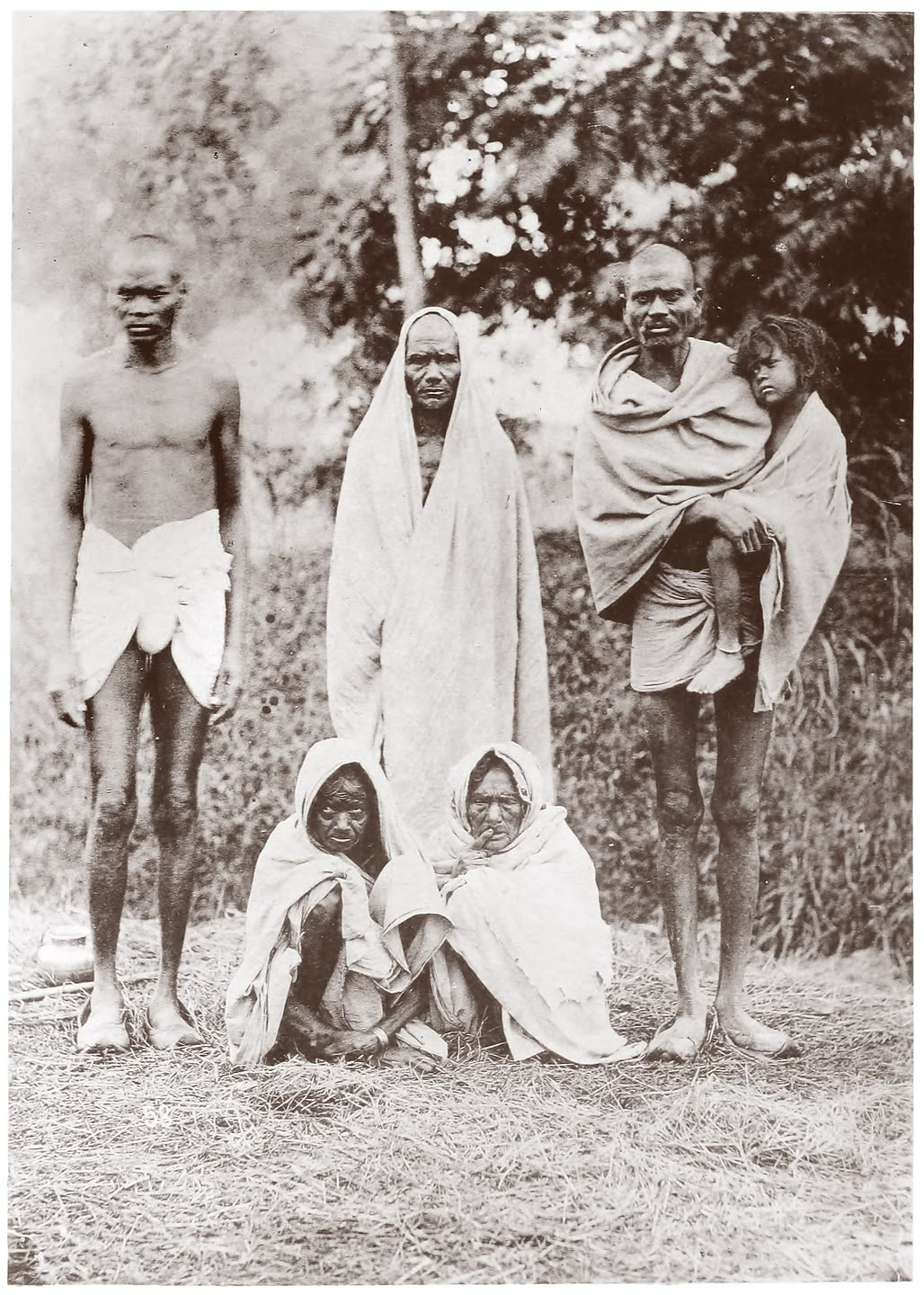
DHÂNGAR.
Traditions. 4. The Mirzapur Dhângars say they emigrated from a place named Barwai somewhere to the south about nine or ten generations ago. They say that they occupied a narrow valley called Sathorwa, where they used to beset and rob travellers. At last a General of the Emperor made terms with their leaders, Jura Mahto and Buddhu Bhagat, and on promise of giving them a rent-free estate (jâgîr) induced the tribe to lay down their arms, and then ordered a general massacre. The few survivors escaped to Mirzapur. These two leaders, Jura and Buddhu, are the deified heroes of the tribe. It is said that their heads spoke seven days after they were decapitated, and advised them to emigrate.
Tribal council. 5. They have a tribal council (panchâyat) presided over by a hereditary president, the Chaudhari, which meets for caste business on occasions of marriages and deaths. For caste offences the punishment is usually the providing of a feast including rice, one or two goats and ten bottles of liquor. If a girl intrigues with a clansman, her father has to provide two dinners to the clansmen, and she is then restored to caste. Her lover has to provide the same feast if he seduces an unmarried girl in the tribe. The pair are then married. If a girl is detected in an intrigue with an outsider she is permanently expelled, and so with a man who intrigues with a strange woman.
Widow-marriage and the levirate. 7. The levirate prevails, and a widow can marry an outsider by sagâi only when her younger brother-in-law gives up his claim to her. The only ceremony is that the lover comes with a yellow sheet to the widow’s house. She puts it on and comes home with him, when he gives a feast to his clansmen, and it is essential that the cooking should be done by the new-made wife. By remarriage a widow loses all right to the property of her first husband.
In the case of the levirate the property of the first husband passes to the levir, and when they grow up, the sons by the first marriage are entitled to a share in all the property of their step-father on the same scale as his sons. There is no fiction of attributing the sons of the levir to his deceased elder brother.
Succession. 8. Adoption is unknown. The heirs of a man are his sons: but the eldest son gets something more than the others. When the father and sons live jointly and distribution takes place after the father’s death, all the sons share equally, no matter whether any part of the property may have been acquired by any particular son.
Grandsons get their proportion of the share that would have fallen to their fathers. The widow has a sort of life interest in her husband’s estate, but is liable to expulsion for unchastity. Daughters have no right of succession. But a girl who is ill-treated by her husband is entitled to return to her own home and be maintained by her brothers.
Domestic ceremonies. Birth. 9. The birth ceremonies resemble those among Bhuiyârs (q.v.). On the sixth day the chhathi ceremony is performed, and after this the mother is pure. The husband does not cohabit with his wife for two months after her confinement.
Festivals. 13. In Bhâdon they observe the Nâgpanchami by eating better food than usual, but they do not make any special worship of the snake as Hindus do. In Mâgh they have the Khichari, when they eat pulse, parched grain, and sesamum. They do not light the Holi fire, but they celebrate the Phagua by drunken revelry and foul abuse of women, particularly of the brother’s wife (bhaujâi).
Demonology and ancestor worship. 14. Old wells and tanks are the special abode of malevolent ghosts. These are propitiated through the Ojha, who is believed to have special control over them. They have no special ancestor worship, because they consider the spirits finally disposed of by the pig-sacrifice already described.
Distribution of the Dhângars according to the Census of 1891.
District. Benbansi. Janwâr. Panwâr. Others. Total.
Gorakhpur 218 292 200 73 783
Marriage rules. 3. The rule of exogamy as stated by the Dhânuks of Etâwah is that (a) no man or woman can marry in their own sub-division; (b) no child can be married in a family in which the father or mother have been married. The age of marriage is usually between seven and eleven. No one can have more than two wives at the same time. Unchastity on the part of an unmarried girl is punished by a fine imposed on the parents by the tribal council. A man can get rid of his wife for adultery, but a wife cannot abandon her husband for this cause. Divorced women and widows can be remarried by the form known as dharauna or dharukh. The levirate under the usual restrictions is permitted. If a widow marry an outsider she loses all right to the goods of her first husband. If he leave children they are his heirs; if he dies childless his elder brother, or if he himself be the eldest, then the brother next to him in age succeeds. If she marry the levir he takes the goods of his deceased elder brother unless he has left children. There is no fiction that children by the levir are attributed to his late brother.
Birth. 4. There are no ceremonies during pregnancy. The mother is attended by some old woman of the tribe. The only purificatory ceremony is the chhathi on the sixth day after delivery. There is no trace of the couvade. The only observance at adoption is the feeding of the clansmen.
Marriage. 5. The marriage ceremonies are of the common low caste type. In the respectable form (shâdi, biwâh) the ceremony, the binding part of which is the revolutions (bhanwar), is done at the house of the bride; in dola it is done at that of the bridegroom.
Death. 6. They burn their adult and bury the unmarried dead. The ashes are thrown into any river or stream. They perform srâddha for the repose of the souls of the dead. The malevolent dead are propitiated in the months of Mâgh and Bhâdon. The service is done in the daytime but secretly with all the doors closed. A fire is lighted and to it cakes (pûri) are offered, and then eaten by the worshippers. On this occasion if the house-holder be a rich man, he entertains the brotherhood; if he is poor, he feeds only his sister’s or daughter’s husband—a custom which may be a survival of descent in the female line. The ashes of the fire made on this occasion are carefully preserved, and if any sickness come upon the household during the year, they are rubbed on the part affected, and a vow is made to repeat the service when the next anniversary comes round. During the first fifteen days of the month of Kuâr water is thrown daily on the ground, in honour of the dead, and flour, butter, etc., are given to Brâhmans that they by consuming them may convey them to the hungry dead in the other world. A fire is lighted and cakes offered to it, and a piece of a cake is attached to the wall in the place where marks have been made representing the deceased ancestors of the family.
Religion. 7. The Dhânuks are Hindu by religion and are classed as Sâktas because they are worshippers of Devi. But none of them are ever regularly initiated. They make pilgrimages to the tomb of Madâr Sâhib at Makhanpur, in the Cawnpur District, and in the month of Mâgh offer a sort of pudding (malîda) and money which are taken by the Khâdims in charge of the shrine. They also worship the two Miyâns: the great or Bara Miyân has his tomb at Jalesar, in the Etah District, and the little or Chhota at Amroha, in Morâdâbâd. These saints are worshipped after child-birth; if the child happened to be a son they offer a he-goat; for a daughter the offering is a kind of cake (gulgula). These are consumed by the worshippers, and so is the goat, which is the right of Devi. They are firm believers in the demoniacal theory of disease. In such cases a sorcerer is sent for; he sits down with a broom in his hand, which he waves while he smokes a huqqa, and thus drives off the evil spirit which is the cause of the mischief. In cases of disease caused by the Evil Eye the procedure is similar with this addition that some chillies are waved seven times round the head of the patient and then thrown on the fire, when the evil influence incontinently disappears in the stench. Another plan is for the magician to summon one of his domesticated spirits, which puts him under its influence, and he is then able to announce with certainty the evil spirit which has affected the patient. Another approved plan is to burn a hair from the patient’s head, and this invariably gives relief.
Agricultural customs. 8. When they sink a well they erect an image of Hanumân near the spot, and on the completion of the work feed Brâhmans and distribute charity. Before sowing a little grain is sifted through a sieve, and when the work is done the oxen are washed and the plough worshipped. Before the grain is garnered a little is given to the poor and to Brâhmans.
Social rules. 9. Dhânuks will eat mutton, pork, the flesh of the cloven-footed animals, and fish. They drink freely. They will not eat the flesh of monkeys, beef, flesh of uncloven-footed animals, fowls, crocodiles, snakes, lizards, jackals, rats, vermin, or the leavings of other people. Their salutation is Râm! Râm! They have the usual ceremonial taboos. Elder relatives are addressed not by their names but by their title of relationship. Younger persons and all male strangers are addressed by name. All female strangers are addressed by name when spoken to by women; but when men address them they call them “so-and-so’s wife” or “so and-so’s mother.” If they are unmarried they are addressed by name. So a husband calls his wife “so-and-so’s mother.”
Occupation. 10. Their occupation is playing on trumpets at weddings and other occasions of festivity. They act as servants, day-labourers, village watchmen, and their women do midwifery. Some hold land as tenants and work as field labourers. Many receive a patch of land rent-free in lieu of wages.
Distribution of Dhânuks and their sub-castes by the Census of 1891.
Districts. Dhâkrê. Dusâdh. Kaithiya. Kathariya. Kori. Râwat. Others. Total.
Dehra Dûn … … … 169 … … 45 214
Sahâranpur … … … … … … 50 50
Muzaffarnagar … … … … … … … …
Meerut … … … … 13,758 … 11,263 25,021
Bulandshahr … … … … … … 1 1
Aligarh … … … … … 286 354 640
Mathura … … … … … … 20 20
Agra 216 … … 222 … 156 1,150 1,744
Farrukhâbâd … … … 3,094 … 227 12,524 15,845
Mainpuri 273 … 28 13,946 … … 1,293 15,540
Etâwah 554 … … 8,829 … 423 6,897 16,703
Etah 99 86 1,070 965 113 506 973 3,812
Bareilly … 1,832 … … … 372 399 2,603
Bijnor … … … … … … 5 5
Shâhjahânpur … 379 … 8,925 … 2,503 1,140 12,947
Pilibhît … 180 5 2,133 … 1,925 331 4,574
Cawnpur … … … 439 3 … 19,452 19,894
Hamîrpur … … … … … … 1 1
Allahâbâd … … … … … 4 … 4
Jhânsi … … … … … 5 5 10
Jâlaun 10 … … 45 … … 2,439 2,494
Lalitpur … … … … … … … …
Benares … … … … … … 5 5
Ghâzipur … … … … … … 1 1
Ballia … … … … … … 1 1
Tarâi … … … 2 … 92 5 99
Lucknow … 1 … … … … 788 789
Unâo 296 … … … … … 5,213 5,509
Sîtapur … … … 467 … … 2,235 2,702
Hardoi … … … 8,088 … … 3,314 11,402
Kheri … … … 1,121 … 1,005 1,405 3,531
Faizâbâd … … … 1 … … 14 15
Bahrâich … … … … … … 10 10
Sultânpur … … … … … … 3 3
Total 1,448 2,478 1,103 48,446 13,874 7,504 71,336 146,188
Dhârhi (possibly from Sans. dhrista, “impudent”), a tribe of dancers and singers of whom there is a Hindu and a Muhammadan branch. They have been described under one of their many names, Kingariya or Kingriya, in another place. Another name for them is Pâwariya or Pâwanriya (from the foot (pânw) carpet (pânwara) they use). In the hills, though socially ranked with Doms, they do not belong to them, for they properly include only those Khasiyas who have been put out of caste for some offence or other and their offspring form a new caste with the special avocation of singing and dancing.
Internal structure. 2. The Census lists show forty sections. Many of these are local as Audhiya, Balrâmpuri, Chaurasiya, Desi, Gujarâti, Jaunpuri, Haripuriya, Kanaujiya, Madhesiya, Pachhwâhan, and Sarwariya. Others connect them with well-known castes or tribes, as Bânsphor, Boriya, Dhelphor, Dusâdh, Ghosi, Kewat.
Occupation. 3. The Dhârhi has two distinct functions. In the first place he is a musician and singer, and appears at houses on occasions of festivity, such as a marriage or when a woman is purified after the birth pollution and rejoins the household. He and the women who accompany him, who are usually of equivocal reputation, sing and play the double drum (mridang) or the guitar (tambûra), for which he gets presents of grain, money or clothes. Secondly, the Hindu Dhârhi keeps swine and acts in many villages as the priest of the local god (Gânwdeota, deohâr) cleans and plasters his platform, and takes anything in the way of an offering which is not consumed by the worshippers themselves.
Social rules. 4. The Dhârhi from his habits of begging and going about with women of bad character has rather an unsavoury reputation, and socially ranks very little above the Chamâr. They permit widow-marriage, divorce and remarriage of divorced women, but if a woman separate from her husband without cause she must repay through her second husband any charges which may have been incurred in her first marriage. Muhammadan Dhârhis have their marriages done, if they are well-off, by the Qâzi; if they are poor, by the village Dafâli.
The Hindu Dhârhis seldom or never employ a Brâhman except to take the auspices and fix a lucky day for the wedding. Two common proverbs show the opinion generally held of the Dhârhi—Dena lena kâm Dom Dhârhiyon ka, muhabbat dusri chîs hai.—“Taking presents is the way of pimps and buffoons; true love is quite a different thing.” Randi ki kamâi, ya khâe Dhârhi, ya khâe gâri. “The prostitute’s earnings go to the pimp or cabman.”
Distribution of Dhârhis according to the Census of 1891.
Districts. Hindus. Muhammadans. Total.
Dusâdh. Madhesya. Others.
Bulandshahr … … … 3 3
Mathura … … … 5 5
Agra … … … 86 86
Farrukhâbâd … … 12 67 79
Mainpuri … … … 16 16
Etah … … … 32 32
Budâun … … 1 … 1
Shâhjahânpur … … … 180 180
Cawnpur … … … 38 38
Bânda … … … 31 31
Hamîrpur … … 3 3 6
Allahâbâd … … 1 48 49
Jhânsi … … … 2 2
Jâlaun … … … 4 4
Benares … … 8 … 8
Ghâzipur … … … 34 34
Gorakhpur 1,490 943 1,502 2 3,937
Basti … … 2,294 … 2,294
Azamgarh … 17 54 … 71
Lucknow … … … 107 107
Unâo … … … 35 35
Râê Bareli … … … 115 115
Sîtapur … … … 80 80
Hardoi … … … 91 91
Kheri … … … 128 128
Faizâbâd … … … 36 36
Gonda 988 4,273 1,384 93 6,738
Bahrâich … … 2 5 7
Sultânpur … … … 74 74
Partâbgarh … … … 7 7
Total 2,478 5,233 5,261 1,322 14,294
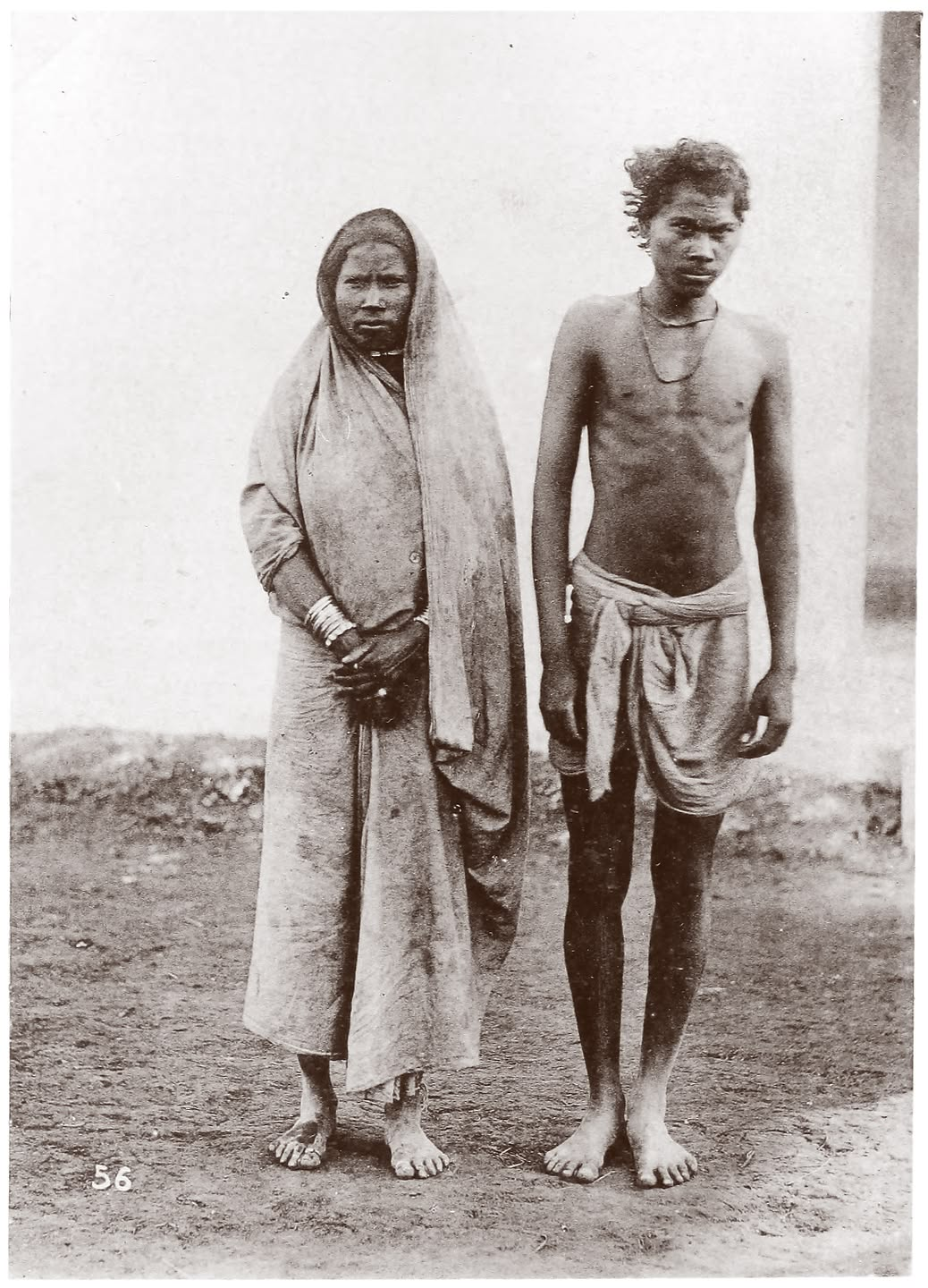
DHARKÂR.
The Mirzapur Dharkârs say that when Parameswar created their ancestor he seated him under a bamboo and gave him the curved knife (bânka) with which he was to make his living by basket making, etc.
Marriage rules. 3. A man may have as many wives as he can afford: but monogamy is the rule. In Oudh they say that no man can have more than seven wives at one time; but it is needless to say that very few Dharkârs can afford more than one. If a man marries more than one wife, the senior wife (jethi mehrâru) rules the household. Concubinage and polyandry are prohibited. Women have considerable freedom, and intertribal fornication is visited by a fine of a two days’ feast to the clansmen. The lover has to pay the girl’s father in such cases eight rupees in cash and to give her mother a cloth—an arrangement so common apparently that there is a special name for it,—mâi kâpar, or “the mother’s cloth.” He then feeds the council on goat’s flesh and rice, and after this the young couple are recognized as man and wife. Dharkârs practise adult marriage, the age being seventeen or eighteen. The marriage is arranged by the father’s sister’s husband (phûpha) of the bridegroom. The bride-price paid by the boy’s father is fixed—eight rupees in cash, one loin cloth (dhoti), and one hundred cakes (pûri). This is used in the marriage feast, and the cloth goes to the girl. The parties are so carefully examined before marriage that no physical defect subsequently ascertained is a bar to marriage. If the wife without reason shown to the satisfaction of the council refuse to live with her husband, her father has to refund the cash bride-price. If the husband refuses to keep his wife, the council will punish him and compel him to bring her home. If either husband or wife habitually commit adultery, the injured party may divorce the other, but before they can do so the case must be heard by the council and the Mahto must give his permission, which will not be granted unless the fact is proved by the evidence of eye-witnesses. If a woman is divorced, she may be remarried in the tribe by the form known as sagâi or dharauna. The children of a regular wife and a widow taken in sagâi rank equally as heirs. If a man keep a concubine or even eat from her hand, he is put out of caste and not restored till he gives a tribal feast. Illegitimate children follow the father, but such a child cannot eat or marry in the tribe. Only a widower can marry a woman by the sagâi form. He goes to the widow’s house and proposes for her in a regular form—hamâr ghar basâdê, “make my home inhabited.” Her father receives the same bride-price as in a regular marriage. Her father gives a feast and assembles the council. If at this meeting any person entitled to claim the right of the levirate comes forward and says,—“Why are you giving my woman to a stranger?” the council order her father to pay him the bride-price. Then her lover takes her home, puts red lead on her forehead and palm leaf ornaments (tarki) in her ears, and after feeding the clansmen on goat’s flesh and rice the connection is legalised. The levirate is recognised under the usual restrictions, and there is no fiction of the affiliation of the children to the former husband. A childless man can adopt his brother’s son. The sons are heirs, but the eldest son gets something in excess as determined by the council. Daughters have no rights, and after marriage even the claim to maintenance is not recognized. The mother has a life interest if there are no brothers of the deceased. The heirs of a sonless man are his associated brothers and they are supposed to give the widow something unless she is remarried, which is usually the case, unless she is disabled by age or infirmity.
Relationship. 4. The father is called dauwa: the grandfather bâba: the mother dâi: the grandmother barki dâi: the father’s elder brother bara or barka (“great”). The wife is always called “the mother of so-and-so,” her son. They call a daughter bahin or sister, which perhaps points to loose ideas of family life. The wife’s father is mahto, “leader.”
Relations generally are mit or yâr (“friends”). In particular they call mit all persons who have the same name as themselves, and with such they are particularly friendly. People resident in the same village are gaunwa pariwâr.
Ancestor worship. 8. They are in great fear of the ghosts of the dead who appear in dreams and worry people if they are not propitiated. Their sacrifice is done at the Phagua (Holi) festival when a goat, fowl, and some spirits are offered to them. When people are sick they make vows to the sainted dead (purkha log), and, when they recover, make offerings to them. In Oudh they are beginning to get a low Brâhman to perform a sort of Srâddha.
Religion. 9. The Dharkârs call themselves Hindus but have a special pantheon of their own, the functions of which are exceedingly vague. Pahâr Pando is a sort of mountain god. Dûrasin is possibly a local development of Jarasandha, the deified King of Magadha. Banhiya Bîr (the hero of the arm—bânh) and Deonâth are deified tribal worthies. Angârmati Bhawâni (“the goddess of the blazing charcoal”) is a vague female divinity. Further north towards the Ganges they worship Birtiya, a vague deity who is apparently merely a guardian godling (Sans. vritti, “support, maintenance”), Dulha Deo, the god of marriage, and the five saints of Islâm (Pânchonpîr), especially Parihâr. Dulha Deo is worshipped on a Saturday in the light half of Kârttik or Baisâkh, when a castrated goat (khasi) is offered in the house and the worshippers consume the flesh. He is also propitiated with a loin-cloth dyed in turmeric: and when the worshipper puts this on he gets into a state of frenzy, shakes his head and announces oracles. If Dulha Deo is not worshipped he sends fever and sundry other diseases. The Pânchonpîr are worshipped with the sacrifice of a cock and cakes (rot); all who worship them keep a house shrine in their honour. In Oudh they worship Devi with an offering of a goat.
10. The more Southern Dharkârs worship the pantheon above described collectively every second or third year in the house. First they make a burnt sacrifice (hom) with butter and treacle, then offer a goat and cock, and pour spirits on the ground. Any one can do this worship, and no Brâhman or Baiga is employed. They worship the sainted dead at the Holi, Dasahra, and in the month of Kuâr. On these occasions they all get drunk and dance in a special way with rattling bangles (ghungru) attached to their ankles to the music of the tambourine (dafla) and the flute (bânsuli). Then they visit in procession the houses of the respectable people in the village, dance, and receive fees (phirihri). The usual allowance is a sieve (sûp) full of any kind of grain. They believe sunstroke to be due to the attack of Angârmati Bhawâni, who rides in her chariot through the sky in the hot weather. She is appeased on such occasions with a burnt offering (hom) and the sacrifice of a goat. All the collective godlings of their pantheon have their abode in a mud platform (chaura) erected in the dwelling house. Traces of tree worship are found in their adoration at marriages of a branch of the cotton tree which has the special name of Kalyâni or “the auspicious one.” Among the myriad ghosts which surround them they particularly fear the ghosts of drowned people (bûrna) who infest tanks where people have been drowned and push in unwary travellers.
11. Fields have also their special Bhûts, and the shrine of a person killed by a tiger (baghaut) is specially reverenced. Their special worship of the bamboo consists in their cutting one bamboo in the month of Aghan when the general cutting begins. This they bring home with marked respect and make a burnt offering (hom) before it with butter and treacle. After this bamboo-cutting and basket-making go on. The women tattoo themselves in the usual way: if they do not, Bhagwân brands them with a torch when they die. Friday is their lucky day, and on that day they commence bamboo-cutting. They have the usual meeting omens and the ordinary ideas about the quarters of the heavens. They believe in the demoniacal theory of disease. In such cases they get the Baiga to do a sacrifice to the collective village gods (deohâr): a goat or cock is the usual offering. In specially bad cases of illness the Baiga or Ojha is called in and recognises the particular Bhût, which causes trouble, by shaking about and counting some grains of barley in a sieve. When a person is attacked by the Evil Eye they get some cow-dung ashes, blow into it five times in the name of the sainted dead, and then rub it on the child. In very bad cases a special offering is made to the spirits of the dead (purkha log).
Social customs. 12. The women wear pewter anklets (pairi), glass or lac bangles (chûri) on the wrists, and brass rings (churla) on the upper arm, with a pewter ring on the big toe. They abandon this ring on widowhood, and, as has been seen in treating of the death ceremonies, it is supposed to have some mystic significance. On the toe next the big toe women wear a small pewter ring (chhutki). This is also taken off at widowhood. On their foreheads they wear spangles (tikuli), palm leaf ornaments (tarki) in the ears, and beads (guriya) round the neck. They swear by putting a bamboo on the head, and think that if they forswear themselves they lose their children and property. They have now prohibited eating beef and punish its use by excommunication: but this is quite recent, and hardly prevails generally among the less Hinduised branch of the tribe south of the Son. In Oudh some of them will not eat meat during the fortnight (pitrapaksha) sacred to the dead. They will not eat food cooked in butter (pakka khâna) if touched by a Chamâr, Dhobi, Patâri, Bhuiya, or Dom. They consider themselves much superior to the Doms, as they have abandoned the filthy habits common to the ordinary Doms. Food cooked in water (kachcha khâna) they will eat only if cooked by one of their own caste. They have the usual Dom prejudice against the Dhobi. They will not touch their younger brother’s wife, their wife’s elder sister or the mother (samdhin) of their sons’ or daughters’ wives and husbands. They use spirits and tobacco freely. Men and women eat apart; men first and women after them: but a very old woman is allowed to eat with the men. Seniors they salute in the pâêlagi form, and receive the blessing (asîs) in return. They are very hospitable and will borrow to entertain a guest. As a rule they treat women fairly well, but beat them if they misbehave themselves. They are respectful to the old. No Dharkâr was ever known to read or write. They have a very strong tribal council, and very seldom come before the courts. They work only in bamboo, not in reed (sentha). They make winnowing fans (sûp), baskets (dauri), boxes (petâra), betel boxes (bilahra), and red lead boxes (pauti). These in the villages are made always on grain wages, and it is only in towns that they are paid in cash.
Distribution of Dharkârs according to the Census of 1891.
Districts. Bânsphor. Benbansi. Others. Total.
Dehra Dûn … … 13 13
Sahâranpur … … 32 32
Allahâbâd 198 986 4,050 5,234
Benares … 1,559 323 1,882
Ghâzipur … … 1 1
Gorakhpur 102 3,588 1,538 5,228
Basti 213 4,712 379 5,304
Azamgarh 798 2,505 431 3,734
Lucknow 28 1 40 69
Faizâbâd 144 2,274 278 2,696
Gonda … 1,311 485 1,796
Bahrâich … 66 16 82
Sultânpur 285 1,453 636 2,374
Partâbgarh 37 555 602 1,194
Total 1,805 19,010 8,824 29,639
Internal Organisation. 2. Like many castes of the same social grade Dhobis assert that there are seven endogamous divisions or sub-castes. Thus Sir H. M. Elliot gives the sub-castes as Kanaujiya, Magahiya, Pagahiya, Belwâr, Bâtham, and Sribâtham (who take their name from Srâvasti) and Bharka. The last Census gives eleven—Ajudhyabâsi, Bais, Chithoriya, Deswâr, Kaithiya, Kanaujiya, Kathariya, Mathuriya, Purbiya or Purabiya, and Sribâstab. A list from Mirzapur gives them as Kanaujiya, Belwâr, Magahiya, Sribâstab, Musalmân Dhobi, Baiswâra, and Bhojpuriya. Another from Agra gives—Mathuriya, Bharka, Mârwâri, Purbiya, and Purbiya Kampu. In Bareilly we find Kathariya, Dehliwâla, Kampûwâla, and Musalmân. All these are endogamous. Their rule of exogamy, as stated by them, at Mirzapur is that they will not marry in the family of their maternal uncle, father’s sister or their own family (kul) as long as any connection by marriage is remembered. The complete Census Return shows no less than 925 sub-divisions of the Hindu and 216 of the Muhammadan branch. Of these the most important locally are the Chauhân, Chhonkar and Gaur of Muzaffarnagar, the Chhonkar of Meerut, the Purabiya of Agra, the Deswâli of Farrukhâbâd, the Sakarwâr of Mainpuri, the Bakhar, Jalchhatri, Magadhiya, Mangasha and Pâthak of Bareilly, the Râjput of Morâdâbâd, the Bhadauriya, Jalkhatri, and Mahadwâr of Shâhjahânpur, the Deswâli and Purbiya of Pilibhît, the Amethiya and Belwâr of Cawnpur, the Mâthur of Fatehpur, the Belwâr and Mâthur of Bânda, the Dakkhinâha, Sarwariya and Uttarâha of Basti, the Dakkhinâha, Deswâli, Sarwariya and Uttarâha of Azamgarh, the Purabiya of Lucknow, the Jalpachhar, Magaraha and Sarwariya of Râê Bareli, the Jaiswâr of Faizâbâd, the Ujjaini of Gonda, the Bahrâichiya of Bahrâich, the Jaiswâr of Sultânpur, and the Mangaraha of Bârabanki.
Marriage ceremonies. 3. To the east of the Province the age for marriage is twelve for girls and fourteen for boys. A match maker (agua) at the request of the girl’s father looks out for a suitable match. When the auspicious time (sa’at) has been fixed by the Brâhman, he casts the horoscopes (gauna girâna), and when these are found to correspond, the parents meet and the rite of kori katori is performed. In this the girl’s father fills a glass full of liquor, puts into it a silver coin and passes it over to the boy’s father with the words Râm! Râm! When he has drunk he hands it back to the girl’s father, who also drinks out of it, and then liquor is served to the clansmen present. This constitutes the betrothal (mangni). Then a Brâhman is called in for the dhân pân. In this the girl’s father takes one ser of paddy, two packets of betel and two betel-nuts. Both fathers hold a cloth in their hands. The Brâhman first throws one packet of betel and one betel-nut into the cloth where it is held by the boy’s father, and does the same for the girl’s father. He next throws a handful of paddy five times into each side of the cloth. Both parents tie this up, and it is parched and used for throwing over the pair at the wedding. Then the Brâhman explains to both the fathers the lucky days for the collection of the sacred earth (matmangara) and for the anointing (tel hardi), and the proper date for the wedding. For this service each gives the Brâhman a pice and a ration of uncooked grain. The girl is feasted that night and returns home the following morning.
4. On the day of the matmangara the women assemble and sing after they have anointed their heads with oil. Then the sacred earth is collected in the way already described in the case of the Bhuiyas. On the day of the anointing five men of the tribe erect the marriage pavilion in the usual manner. The barber’s wife rubs the boy with a sprig of dûb grass soaked in oil and turmeric. No Brâhman attends. On the bhatwân day the clansmen are fed on rice and pulse, and at night they get drunk and sing the song known as birha. When the bridegroom, dressed in his wedding garments, starts with his procession, he is carried out as far as the door in the arms of his brother-in-law. When he gets outside the village his wedding clothes are taken off, and he does the rest of the journey on foot until he approaches the house of the bride, when he is dressed again. His brother-in-law again carries him in his arms to the door of the bride’s house, where the wave ceremony (parachhan) is done by his future mother-in-law, who moves a rice pounder, sieve and a lota full of water round his head. During this time a Dhârhi plays the mridang or double drum, and the women beat earthen saucers (thiliya) with pieces of stone. Then men sing the birha and the women the lâchâri songs. The wedding party then retire to the reception place (janwânsa) where all the clansmen assemble. There some food is sent for the bridegroom from the bride. Then the bridegroom and another boy who acts as his best man (shâhbâla) eat together. This food is brought by the girl’s brother-in-law, who receives one anna as his perquisite. Then the clansmen have a drink and salute each other. When the lucky time arrives for the marriage, they take the bridegroom to the pavilion and seat him on a stool facing the east. The friends sit on each side. A piece of mango wood is lighted and some clarified butter dropped on it with mango leaves (tallo). The men recite the auspicious marriage songs (sumangala swâha) and then the bride is brought into the pavilion by her sister or sister-in-law and she knots together the clothes of the pair. Then the bride’s father washes the great toes of the pair in a tray full of Ganges water, which he drinks, and throws a little of the water on his head. Then behind the shelter of a sheet which is held up before them the boy applies red lead to the parting of the girl’s hair, and they walk five times round the marriage pavilion. The boy’s elder brother throws parched rice over them, and puts a necklace round the bride’s neck. Then her sister-in-law escorts the pair into the retiring room (kohabar) and makes them bow to the family god. After this the boy’s wedding crown is removed and he returns to the wedding party.
5. Next comes the wedding feast (byâh ka bhât). Unmarried boys among Dhobis do not eat boiled rice (bhât). They taste it first after they are married. The next day the bride goes off with her husband. On the third day is the panwpheri, when, if the two houses are near, the bride goes alone back to her father’s house and comes home by herself to her husband. Widows are married in the ordinary way by the sagâi or dharauna form and the levirate is allowed, but it is not compulsory on the widow to take the younger brother of her late husband.
Birth and death ceremonies. 6. The ceremonies at birth and death are of the usual type common among tribes of the same social standing. The ceremonial shaving (mûnran) is not usually done unless the parents have been blessed with a son in answer to a vow (manauti).
Religion. 7. Dhobis usually worship the Pânchonpîr and Devi. They are much given to the worship of ghosts, one of whom named Ghatoriya has a great reputation in Bundelkhand. They have a very strong tribal council and are very severe on breaches of caste custom. They rank of course very low in the social scale, and no respectable Hindu will take anything from their hands. He is the subject of many proverbs:
Nai dhobiniya aweli,
Chirkutwe sâbun laweli.
Distribution of Dhobis according to the Census of 1891.
Districts. Ajudhiyabâsi. Bais. Bâtham. Chithoriya. Deswâr. Kaithiya. Kanaujiya. Kathariya. Mathuriya. Purbiya. Sribâstab. Others. Musalmân Dhobis. Total.
Dehra Dûn … … … … … … 629 … … … … 719 313 1,661
Sahâranpur … … … … … … 211 … … … … 3,652 4,340 8,203
Muzaffarnagar … … 12 … … … … … … … … 821 5,413 6,246
Meerut … … … … … … … … … … … 2,110 8,684 10,794
Bulandshahr … … … … … … 19 60 186 … … 7,982 1,906 10,153
Aligarh … … … … … … … … 4,665 … … 10,015 1,187 15,867
Mathura … … 609 1 347 … 109 105 1,488 … … 4,031 1,046 7,736
Agra … … 2,951 38 1,229 … 264 … 2,380 648 … 4,998 675 13,183
Farrukhâbâd … 142 1,491 … … 4,435 2,866 76 115 … 142 3,031 239 12,537
Mainpuri … 129 1,208 11 … 2,621 297 … 5,523 … … 3,674 18 13,481
Etâwah … … 7,198 … … 920 319 … 510 … 88 2,480 3 11,518
Etah … … 6 138 … 645 15 7 9,781 … … 1,406 379 12,377
Bareilly … … … … … … 113 8,604 … … … 9,546 3,838 22,101
Bijnor … … … … … … 152 … … … … 1,445 7,030 8,627
Budâun … … … … … 95 37 715 8,110 … … 2,400 4,174 15,531
Morâdâbâd … … … … … … 17 … 884 … … 5,967 7,384 14,252
Shâhjahânpur … 107 8,470 … … 390 1,384 382 1,760 … 376 6,427 325 19,571
Pilibhît … 60 1,563 … … … 1,621 293 734 … 571 4,819 314 9,975
Cawnpur … 39 8,202 … … 125 1,528 47 … … 2,173 5,170 117 17,401
Fatehpur … 276 4,740 … … … 105 … … … 1,645 1,795 708 9,269
Bânda … … 2,159 … … … 15 … … … 5,506 1,057 172 8,909
Hamîrpur … 249 182 … … … 7 … 10 … 5,806 1,698 377 8,329
Allahâbâd … … 9,195 … … … 4,840 … … … 809 5,715 715 21,274
Jhânsi … … 4,314 … … … 315 … 25 … 637 1,250 15 6,556
Jâlaun … 14 4,443 … … … 9 … … … 108 1,667 144 6,385
Lalitpur … 20 3,771 … … … 1 … … … … 625 … 4,417
Benares … … … … … … 6,878 … … … … 344 818 8,040
Mirzapur … … … … … 442 9,044 … … … … 2,308 672 12,466
Jaunpur … … … … … … … … 12,776 … … 1,783 1,080 15,639
Ghâzipur … … … … … … 7,076 … … … … 396 1,250 8,722
Ballia … … … … … … 7,947 … … … … 280 6 8,233
Gorakhpur 117 … … … … … 37,238 … … … … 9,174 2,971 49,500
Basti 4,128 … … … … … 17,425 … … … … 12,367 1,795 35,715
Azamgarh … … … 22 … … 14,071 … 68 … … 1,115 2,212 14,488
Kumâun … … … … … … 11 … … … … 195 … 206
Garhwâl … … … … … … … … … … … 32 29 61
Tarâi … … … … … … 38 1,258 … … … 526 2,096 3,918
Lucknow 140 82 1,034 … … … 2,052 … … … 2,092 6,624 769 12,793
Unâo … 447 1,781 … … … 1,991 … … … 7,784 3,828 311 16,142
Râê Bareli 24 33 1,098 … … 62 3,258 43 1,715 … … 6,408 474 13,115
Sîtapur 318 … 5,558 … … … 1,143 27 81 … 3,768 8,616 889 20,400
Hardoi … … 14,628 … … … 497 … … … … 3,955 452 19,532
Kheri 27 19 8,874 71 … 74 499 126 5 … 347 3,017 1,755 16,814
Faizâbâd 1,094 … 14 … … … 12,698 … … … 141 2,632 638 17,217
Gonda 6,619 … … … … 283 1,906 … … … … 14,377 2,450 25,635
Bahrâich 2,958 2 428 … … … 2,634 … … … 259 9,476 3,469 19,226
Sultânpur 165 54 1,163 … … … 6,612 … … … 674 3,951 1,319 13,938
Partâbgarh … … … … … … 2,632 … … … 862 5,557 1,385 10,436
Bârabanki 19 78 370 … … … 7,200 … … … 763 6,124 2,591 17,145
Total 15,609 1,751 95,462 281 1,576 10,092 157,723 11,693 50,816 648 36,551 197,585 78,947 658,734
Dhuniya, Dhuna (Hindi dhunna, “to card:” Sans. dhu, “to agitate”), the cotton-carding caste. Other names for them are Behna (Sans. vija, “seed”), who is properly the man who removes the cotton seed from the fibre; Katera (kâtna “to spin”), Kandera (Sans. karsha, “dragging,” kâra, “doer”); if he is a Muhammadan or the speaker a pedant he is called Naddâf, which in Arabic means “separator.” There are some Hindus who carry on this occupation; but most of them are Muhammadans, and these alone find an entry in the returns of the last Census.
The Hindu Dhuniyas. 2. To the west of the Province the Hindu Dhuniyas claim to be of Râjput origin. They are divided into five endogamous sub-castes—Chauhân and Bargûjar, which are well-known Râjput septs; and the Dhakeri, Bargali and Chhunkari, which take their names from the dhâk tree (butea frondosa), the bar (Ficus Indica), and the chhonkar (prosopis spicigera), all of which are sacred trees and regarded with special respect by those Dhuniyas who take their names from them. This idea is probably of totemistic origin. The sub-castes are endogamous, and though there does not appear to be any regular formula of exogamy, marriage is usually forbidden in the families of the uncles and aunts on both sides. Their marriage, birth, and death customs are of the usual type common to low castes in the same social grade. Their deities are Mâta, the small-pox goddess, Mîrân Sâhib, the saint of Amroha, Châmar, Devi, and the Ganges. They employ Brâhmans in their religious ceremonies and perform the srâddha for deceased ancestors. They drink spirits and eat the flesh of goats, sheep and fish, but not beef, pork, fowls, or carrion.
The Muhammadan Dhuniyas. 3. These were recorded in the general Census Report under only one main sub-caste, the Mansûri, who take their name from a tribal saint, Khwâja Mansûr, of whom they can give no account, save that he was a faqîr of wondrous piety, who had the power of working miracles. He is believed to have been a native of Rûm or Constantinople, and to have accompanied the Dhuniyas when they entered the country in the train of the early Muhammadan invaders. To the east of the Province they call themselves Sunni Muhammadans, but they have retained in their domestic ceremonies many of the forms of the Hindu ritual of the lower castes from which most of them are probably converts. Thus they collect the sacred earth (matmangara) at marriages, carry out the night watch (ratjaga) before marriage, and there is a distinct survival of marriage by capture in the observance by which the bride, when the bridegroom arrives at the house for the marriage, is furnished with a small stick with which she gives him two or three slight blows on the head as he enters the door. The marriage service is read by the Qâzi if the parties are well-off; by the Dafâli if they are poor. At death if there is an educated Muhammadan present he reads the Fâtiha; but this is not indispensable. They are usually worshippers of the Pânchonpîr, and they have one special usage, known as the Piyâla or “cup,” when on a Tuesday in the month of Aghan the men and women go to the riverside and offer up some spirits and sweetmeats to Sahjamâi, one of the quintette of the Pânchonpîr; this is consumed by the Dafâli who acts as priest. They spend the whole night by the river listening to the songs sung in honour of the goddess by the Dafâli.
4. The complete Census Returns show 152 sections of the Muhammadan branch of the tribe. Many of them are local terms, such as the Ajudhyabâsi, Audhiya, Bahrâichi, Baksariya, Gangapâri, Mathuriya, Purabiya; others are taken from well-known castes or septs, such as the Baheliya, Banjâra, Bargûjar, Chauhân, Dhângar, Gaur, Gorakhi, Gûjar, Kharebindi, Madâri, Mukeri, Naddâf, Panwâr, Pathân, Râjput, Râthaur, Râwat; others are purely Muhammadan in form as Ansâri, Châryâri, Jalâli, Khwâja-mahar, Khwâja-mansûri, Khwâja-Muhammadi, Khwâja-Sarâi, Muhammad Hanfi, Muhammadi, Momîn, Sayyid, Shâhmansûri, Shaikh Shiah, Sunni, Turkiya, and Usmâni.
Occupation. 5. The primary business of the Dhuniya is the carding or rather scutching of cotton. This is done by subjecting it to the vibration produced by a bow string (dhanuhi, Sanskrit, dhanus). The bow is usually suspended from the roof so as to hang at a convenient height above the pile of loose cotton. The string is then twanged with a wooden catch so as to strike a small portion of the cotton, the fibre of which is scattered by the impact and thrown off in an uniform condition of soft fluff. At the same time any dirt which is entangled in the fibre falls out and the clean cotton is made up into balls, some of which are passed on to the spinner and some are used for the padding of quilts and wraps (razâi, lihâf) and the warm-padded garments used in the cold weather. The Dhuniya also sometimes keeps a small shop where he sells thread and various articles, such as pewter bangles, forehead spangles, and similar things. Another trade which he often follows is the making of the little charcoal balls (tikiya) used for lighting the tobacco in the huqqa.
Distribution of the Dhuniyas according to the Census of 1891.
Districts. Mansûri. Others. Total.
Dehra Dûn … 179 179
Sahâranpur … 2,799 2,799
Muzaffarnagar … 3,013 3,013
Meerut … 4,422 4,422
Bulandshahr … 1,500 1,500
Aligarh 1,330 5,041 6,371
Mathura … 64 64
Agra 11 399 410
Farrukhâbâd 1 7,329 7,330
Mainpuri … 3,263 3,263
Etâwah 51 3,737 3,788
Etah … 4,525 4,525
Bareilly 1,520 11,708 13,228
Bijnor … 11,056 11,056
Budâun 44 1,808 1,852
Morâdâbâd … 7,862 7,862
Shâhjahânpur 118 8,589 8,707
Pilibhît 15 5,932 5,947
Cawnpur 126 8,383 8,509
Fatehpur 1,639 3,756 5,395
Bânda 2,681 4,724 7,405
Hamîrpur … 8,341 8,341
Allahâbâd 2,238 15,841 18,079
Jhânsi 228 4,374 4,602
Jâlaun 70 2,894 2,964
Lalitpur … 1,116 1,116
Benares 703 4,553 5,256
Mirzapur 372 6,003 6,375
Jaunpur 11,710 2,049 13,759
Ghâzipur 2,055 2,318 4,373
Ballia 608 3,042 3,650
Gorakhpur 30,520 9,949 40,469
Basti 28,559 1,024 29,583
Azamgarh 2,256 17,428 19,684
Tarâi … 1,745 1,745
Lucknow 1,460 4,186 5,646
Unâo 566 7,344 7,910
Râê Bareli 115 9,035 9,150
Sîtapur 5,845 7,749 13,594
Hardoi 50 10,708 10,758
Kheri 511 11,127 11,638
Faizâbâd 1 12,787 12,788
Gonda 699 12,264 16,963
Bahrâich 1,096 15,037 16,133
Sultânpur … 7,909 7,909
Partâbgarh 258 7,369 7,627
Bârabanki 1,064 13,186 14,250
Total 98,520 303,467 401,987
4. Dhûsars are all Vaishnavas, and in these Provinces at least none of them are Sarâogis. They regulate their lives by the most orthodox rules of Hinduism and are particularly careful in the observance of Hindu ceremonies. They are a rising, ambitious, thriving class, excellent clerks and men of business. They are also noted for their skill in music.
5. The Bhârgava Sabha of Jaypur has supplied an account of the caste which represents that the Dhûsars were formerly family priests (Purohit) of various Râjas, but they now, since the Muhammadan invasions, have discontinued these functions. Other usages (âchâr) they practise like Brâhmans. Only those who are noted for Sanskrit learning are known by the title Pandit. Like other Brâhmans they worship the Rishis, from whom these eponymous gotras are derived. Some do the oblation (tarpana) daily: others at the Pitrapaksha, or fortnight devoted to the dead. They worship the ordinary Pâncha Devata or five greater gods.
The main saints of the creed are Charandâsji, Navaldâsji and Nârâyandâsji, who flourished at Delhi, Mathura and Bindraban, respectively.
6. Their gotras are—
(1) Vid or Bandlas, with the Pravaras, Bhârgava, Chivan, Aptvân, Aurab, Bayidît.
(2) Bâchhlas or Vatsa, with Pravaras, Bhârgava, Chivan, Aptvân, Aurab, and Jâmdagna.
(3) Bâchhlas or Vatsa, with Pravaras, Bâchhal, Arjuna and Batsat.
(4) Kâsib or Kâship with Pravaras, Kâship, Kutsa, Bhârgava, Chivan, Aptvân, Aurab, Jâmdagna.
(5) Gârglas or Gâglas, with Pravaras, Gârgal, Dhriti, Mândava, Chivan, Vaishama, or Vinait.
(6) Kutsa or Kuchlas, with Pravaras, Kutsa, Aurab, Jâmdagna.
(7) Gâlas or Golas, with Pravaras, Bhârgava, Chivan, and Jâmdagna. All follow the ritual of the Yajur Veda. They claim to belong to the Pancha Gauda stock. They are invested with the Brâhmanical cord in the ordinary way. Each family has its own household god (Kula devata).
Dikhit; Dikhshit (Sans. dikhshita, “initiated, consecrated”), a functional division of Brâhmans.—“The priest specially employed to initiate a Hindu boy into the performance of his religious duties, and to give him the second birth is called a Dikhshit. The word is simply a corruption of Dikhshitri, “one who initiates.” It is only boys of the upper castes, that is those who are called “the twice-born” (dvija) who are entitled to the privilege of Diksha. But Brâhmanism has for the last thousand years and more been steadily descending into lower and lower strata of the population, absorbing one indigenous tribe after another; and hence the possession of this privilege cannot now be considered a mark of twice-born ancestry. The orthodox age for undergoing the rite of diksha is on the completion of the seventh year. The Hindu book of ceremonies, known as Karam Kand, calls it the eighth, but the figure is raised to eight by counting the nine months preceding birth as an additional year. At the present day the orthodox age is not always observed, and a boy can be initiated a year or two after if it suits the convenience of the parents to postpone incurring the expenditure which these rites entail. A boy, whatever his parentage may be, is not a full Hindu until the diksha has been performed. Up till then he is little better than a Sûdra or unregenerated person. But on and after that day he incurs the religious responsibilities to which his parents have all along intended to dedicate him, as a Christian boy does by the double rite of baptism and confirmation. Girls are never initiated as boys are; and thus a high caste woman who marries a man of the Sûdra rank cannot but become a Sûdra herself. This, I suspect, is the real explanation of the abhorrence felt by Hindus to a woman being married into a caste lower than her own. The same abhorrence has never been felt to a “twice-born” man marrying or cohabiting with a Sûdra woman; for the woman can rise to the rank of her husband, but as she has never been initiated she cannot raise the husband to her own. Thus in Manu’s Code a Brâhman was allowed to take a Sûdra woman into his house; but if a Sûdra man married a Brâhman woman, the son became a Chandâla, a sinful and abominable wretch.
2. The Dikhtiyâna territory is said to have extended from the borders of Baiswâra on the east, to Sandi Pâli on the west, and from the Gomati to the Ganges, including fourteen parganas. Whatever be their claim to an extensive dominion in the west, there can be no doubt that during this period the Dikhit Râja held a very high position in the country, and that this was the time when Dikhtiyâna became famous as a geographical expression. The list of marriages preserved by the bard proves this, containing, as it does, the names of the daughters of the Jângra Râja of Dhaurahra, the Bachgoti of Korar, the Gautam of Argal, the Bandhalgoti of Garh Amethi, and the Bisen of Mânikpur. With an Oudh Râjput it is always an object of ambition to marry his daughters into a family of a higher rank and position than his own, whatever the attendant expense may be. The chiefs of Eastern Oudh make it their ambition to marry their daughters only into the great Kachhwâha and Chauhân clans of Mainpuri and Etâwah; that they should have chosen the Râja of Dikhtiyâna for their son-in-law is a proof that at that time his rank and influence were as great as those of the older Western Râjas are now.
Marriage connections. 4. In Unâo the Dikhits generally give brides to the Chauhân, Bhadauriya, Kachhwâha, Sengar, and Râthaur septs beyond the Ganges, and occasionally to the Panwâr: they generally marry their sons in the Janwâr, Bisen, Mahror, Gautam or Chauhân septs of the district, Sombansi, Raghubansi, Amethiya, Gaharwâr, Kath, Bais, Gahlot, Panwâr, or Solankhi septs.
Distribution of the Dikhit Râjputs according to the Census of 1891.
Districts. Number.
Sahâranpur 12
Bulandshahr 2
Mathura 7
Agra 9
Farrukhâbâd 7
Mainpuri 32
Etâwah 117
Etah 2
Bareilly 36
Budâun 30
Morâdâbâd 219
Shâhjahânpur 14
Cawnpur 868
Fatehpur 5,560
Bânda 8,159
Hamîrpur 3,546
Allahâbâd 813
Jhânsi 369
Jâlaun 55
Lalitpur 4
Benares 532
Mirzapur 162
Jaunpur 799
Ghâzipur 15,176
Ballia 1,090
Gorakhpur 3,613
Azamgarh 5,158
Lucknow 984
Unâo 9,024
Râê Bareli 2,099
Sîtapur 299
Hardoi 284
Kheri 222
Faizâbâd 13
Gonda 5
Bahrâich 69
Sultânpur 364
Partâbgarh 593
Bârabanki 410
Total 60,727
Diwâna, “those possessed of an evil spirit (dev, div), mad”,—a term applied in these Provinces to an order of Muhammadan faqîrs, who have not been separately enumerated in the returns of the last Census.
In the Panjâb they are Hindus, wear uncut hair, a necklace of shells, and a large feather in their turbans. There is a considerable colony of them in connection with the shrine of the saint Qâsim Sulaimâni, near the fort of Chunâr, in the Mirzapur district.
2. Those at Chunâr call themselves the disciples of one Jamâl Diwâna. Boys are usually initiated into the order at the age of twelve. His friends take the candidate to the head faqîr of the order, who says,—“Are you ready to drink of my cup (piyâla) and obey me in all things?” If he agrees five articles of dress of an ochre colour are prepared for him, viz., a head covering (pheta), a robe (kafani), a neck handkerchief (guluband), and waist cloths (lung, langot). A barber is sent for and his head completely shaved; he is bathed and invested with the garments of the order. Then the Murshid or preceptor sits facing the north, and the Murîd or disciple opposite him. An earthen cup containing one and-a-quarter sers of sharbat made of sugar and water is brought. First the Murshid recites the Dârûd or benediction and drinks a little. Then he passes it to the Murîd, who drinks, and while doing so keeps his eyes fixed on the Murshid. During this part of the rite he must not even wink. The Murshid then says to him,—“I am now responsible for your sins. Take care and fix your attention on me. Do not close your eyes.” When he has drank the draught the Murshid gives him a necklace made of jaitun wood or of earth from Makka known as khâk safa or of the seed of the Canna Indica (‘aqîq’ l-bahr), a handkerchief of ochre-coloured cloth, a thin walking stick made of the wood of the peach tree (âru), and a wooden begging bowl (kajkol). With this he begs from all the company. He also receives a wooden scraper (phâora), which he ties to his waist. This over, he salutes the other members of the order present in the word Miyân; and they reply Haqq Miyân. When he is thus initiated he gets a station (takya), and the Sajjâda-nashin or Abbot gives him daily for his food two cakes in the morning and three in the evening with some pulse. If the disciple does not care to live in the Dargâh or head-quarters of the order, he can remain with his friends by leave of the Murshid. Those who live in the Dargâh remain celibate; if they live with their friends they can marry.