Volume 2 — C
Reading edition
In January they go to the hills to collect catechu (khair). They worship the monkey-god Mahâbîr, Satnârâyan, and Devi Pâtan: to the first they offer rice-milk (khîr) in October; to the second a mixture of cooked rice and vetch (urad), called phâra; to the third, cakes (pûri) and new rice, coriander, and molasses to Mahâbîr. They eat pork and drink spirits. A woman who sins with one of her own tribe may be absolved by feeding the brethren; but not so if her paramour is of another caste. They are thimble-riggers, ornament-snatchers, swindlers, and impostors. According to Mr. Risley they rank with Binds, Nuniyas, and Pâsis, but nowhere do they rise to the distinction which Binds and Nuniyas sometimes attain, of giving water and certain kinds of sweetmeats to Brâhmans.
3. In Kheri the rule of exogamy bars the line of the maternal uncle and father’s sister. They can marry two sisters in succession, but polygamy is forbidden. Infidelity, even intertribal, is reprobated. Marriage takes place at the age of ten or twelve, and is settled by the caste Chaudhari. No money is paid by the relations of either party. Widow-marriage is prohibited; but they can live with a man of the tribe, the phrase used being ghar-baithna. The children of such connections are recognised as legitimate, but they are not admitted to full caste privileges. The levirate on the usual terms is permitted. There is no custom of adoption or initiation into caste. Betrothals are made in infancy, and the marriage ceremony is of the standard type, the bhanwari or walking round the sacred fire being the binding portion of it. They worship Mahâdeva, Sûrajnârâyan, and Kâli, who receive sacrifices of goats and rams on a Monday. They will not take any food or water from, or smoke with, any other caste. They have given up their occupation of mat-making, and now live by fishing and thieving at fairs.
4. In the returns of the last Census they are classed as a sub-caste of Mallâh. The Châin is what is known as an Uchakka, Uthaigîra, or Jebkatra—one who picks pockets and cuts with a little knife or sharp piece of glass the knots in their sheets in which natives tie up their valuables. They frequent fairs and bathing places, and the boys are put on to steal, while the men act as “fences” and engage the attention of the victim, or facilitate the escape of the thief.
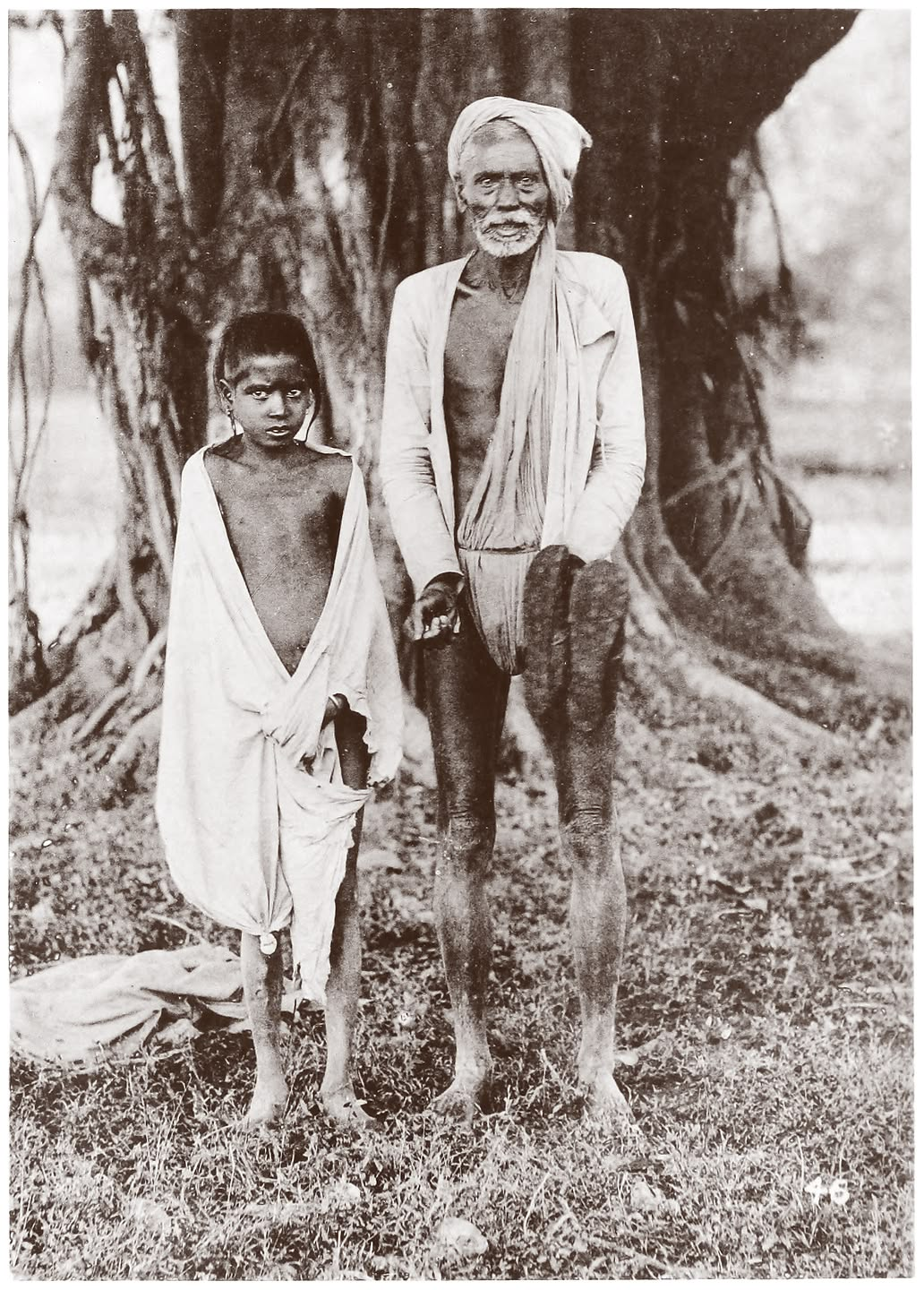
CHAMÂR.
Internal structure. 3. The Census Returns show eleven hundred and fifty-six sub-divisions of Chamârs: of these the most important locally are—
Sahâranpur—Ajmar, Baliyân, Dharaun, Mochi, Sagahiya, Sirswâl.
Bulandshahr—Bharwariya, Chandauliya or Chandauriya, Lâlman.
Aligarh—Chandauliya, Harphor, Kathiyâra, Mochi, Ojha.
Mathura—Chaurasiya, Kadam, Tingar.
Mainpuri—Loniyân, Pajhasiya, Suji.
Etâwah—Amrutiya, Bisaili, Nakchhikna.
Etah—Nagar, Nunera.
Bareilly—Bardwâri, Bhusiya, Chandauliya, Nona.
Bijnor—Sakt.
Budâun—Baharwâr, Chauhân, Kokapâsi, Uriya.
Morâdâbâd—Bhayâr, Râmanandi.
Cawnpur—Gangapâri, Rangiya.
Fatehpur—Desi, Dhuman, Domar, Panwâr, Rangiya, Turkatwa.
Bânda—Barjatwa, Dhaman, Dhûndhiya, Dhindhor, Janwâr, Rangiya, Seth, Sorahiya, Ujjain.
Hamîrpur—Dhindhor, Rangiya, Umrê.
Allahâbâd—Autarbedi, Chand Râê, Ghatiya, Kahâr, Turkiya.
Lalitpur—Bhadauriya.
Benares—Dhuriya.
Mirzapur—Turkiya.
Jaunpur—Banaudhiya, Turkiya.
Ghâzipur—Kanaujiya.
Ballia—Kanaujiya.
Gorakhpur—Bamhaniya, Belbhariya, Birhariya, Dakkhinâha, Desi, Ghorcharha, Ghosiya, Kanaujiya, Mohahar, Râjkumâri, Sarwariya, Siudas, Tatwa, Uttarâha.
Basti—Birhariya, Chhagoriya, Chamarmangta, Dakkhinâha, Desi, Mohahar, Sarwariya, Tanbuna, Uttarâha.
Azamgarh—Guâl, Kanaujiya.
Lucknow—Chauhân, Dusâdh.
Unâo—Chauhân.
Râê Bareli—Chandel, Dhaman, Dhundhar, Dhuriya, Ghorcharha, Gorait, Harphor, Khalkatiya, Kulha, Nona, Tanbuna.
Sîtapur—Chauhân, Pachhwâhân.
Sultânpur—Banaudhiya, Dhaman, Nona, Tanbuna.
Partâbgarh—Banaudhiya, Chandel, Dhaman, Dhingariya, Jogeya, Nona, Surahiya, Tanbuna, Turkiya.
Bârabanki—Jogiya, Pachhwâhân.
4. In the detailed lists we find the Chamârs of the Province classified into sixteen main sub-castes. Aharwâr (principally found in the Allahâbâd Division), Chamâr (chiefly in Meerut); Chamkatiyas (mostly in Bareilly); Dhusiyas (in Meerut and Benares); Dohars (in Agra, Rohilkhand, Allahâbâd, Lucknow); Golê (in Etâwah); Jaiswâras (strongest in Benares, Allahâbâd, Gorakhpur, and Faizâbâd); Jatwas (in Meerut, Agra and Rohilkhand); Koris (in Faizâbâd, and Gorakhpur); Korchamras (in Lucknow); Kurils (in Lucknow and Allahâbâd); Nigoti (a small sub-caste chiefly in Mainpuri); Patthargotis (in Agra); Purabiyas (in Lucknow and Faizâbâd); Râêdâsis (tolerably evenly distributed throughout the Province), and Sakarwârs (in Agra and Allahâbâd). But there is hardly a District which does not possess, or pretend to possess, the sevenfold division which is so characteristic of castes of this social standing. Thus, in Ballia, we find Dhusiyas, Jaiswâras, Kanaujiyas, Jhojhiyas, Jatuas, Chamartantos, and Nonas; in Agra, Mathuriya, Jadua, Domara, Sakarwâr, Batariya, Guliya, and Chandauriya. Some of these sub-castes are of local origin, some are occupational, and some take their name from their eponymous founder. Thus the Aharwâr are connected with the old town of Ahâr, in the Bulandshahr District, or with the Ahar tribe; the Chamkatiyas take their name from their trade of cutting hides (châm kâtna). This sub-caste claims to have produced the saints Râê Dâs and Lona Chamârin. The Jatua or Jatiya have, it is said, some unexplained connection with the tribe of Jâts. The Kaiyân is also a sub-caste of the Bohras, and is said to be derived from their habit of always saying kahê, “what?” “when?” The Jaiswâras trace their origin to the old town of Jais, though some have a ridiculous story that it is a corruption of Jinswâr, in the sense that they are agriculturists and grow various crops (jins). The Koli or Kori, a term usually applied to the Hindu weaver, as contrasted with the Julâha or Muhammadan weaver, are connected by some with the Kols; by others with the Sanskrit Kaulika, in the sense of “ancestral” or a “weaver.” They say themselves that they take their name from their custom of wearing unbleached (kora) clothes. The Jhusiya, and also perhaps the Dhusiyas, have traditions connecting them with the old town of Jhûsi, near Allahâbâd. There are again the Azamgarhiya of Azamgarh; the Jatlot of Rohilkhand, who like the Jatiya say they are kinsfolk of the Jâts; the Sakarwâr connect themselves with Fatehpur Sikri; in the Central Duâb are the Saksena, who say they come from Sankisa, and the Chanderiya from Chanderi. In Mirzapur we find the Jaiswâra, Jhusiya, Kanaujiya, Kurla, Dusâdhu, kinsmen of the Dusâdhs, the Kori, the Mangta or “beggars,” the Dolidhauwa or “palanquin carriers,” the Azamgarhiya, and the Banaudhiya, who are residents of Banaudha,—a term which includes the western parts of Jaunpur, Azamgarh and Benares, and the south of Oudh. To these Mr. Sherring adds:—In Benares the Rangua (rang, “colour”) who are dyers; the Katua or “cutters,” (kâtna) of leather; and the Tantua, who manufacture strips or strings of leather known as tânt. According to the same authority some of these sub-castes are differentiated by function. Thus, many of the Jaiswâra are servants; the Dhusiya or Jhusiya, who trace their origin to Sayyidpur, in Ghâzipur, are shoe-makers and harness makers; the Kori, weavers, grooms, and field labourers; the Kuril, workers in leather; and the Jatua or Jatiya, labourers. The Jaiswâras will not carry burdens on their shoulders, but on their heads, and are liable to excommunication if they violate this rule. They supply most of our syces, and are liable to be expelled if they tie up a dog with a halter, which they worship. Any one who offends in this way is fined five rupees and a dinner to the brethren. The Mangatiyas or Mangtas live on alms, which they take only from the Jaiswârs. In Mirzapur they describe these functions somewhat differently. There the Jaiswâras make shoes and work as day labourers; the Jhusiyas are labourers and keep pigs, which is also the occupation of the Dusâdhu; the Koris make shoes and weave cloth; the Dolidhauwas carry palanquins, the Azamgarhiyas are menial servants of Europeans, and tend swine. The Banaudhiyas tend swine and are day labourers. There is again another local division of the Eastern Chamârs into Uttarâhas or “Northerners,” and Dakkinâha or “Southerners,” who live respectively north and south of the River Sarju, and do not intermarry. The Chandaur or Chandauriya, of the Central Duâb, claim to be descended from Chânûra, the famous wrestler of Kansa, who was killed by Krishna.
Rules of exogamy. 5. These sub-castes are now all, or practically all, endogamous; but there seems reason for believing that this fissure into endogamous groups may be comparatively recent. Thus there seems no reason to doubt that in the east of the Province the Dhusiya and Kanaujiya intermarry. The rule of exogamy within the sub-caste seems to vary. Those who are more advanced say that marriage is prohibited within seven degrees in the descending line. Others say that they do not intermarry as long as any previous relationship between the parties is known or ascertainable. In Ballia, a careful observer states that they do not marry in a family from which their mother, grandmother, or great grandmother has come; nor do they marry in the family of their parent’s sister. A man may marry two sisters, but not a daughter of a brother-in-law. The descendants of one common stock are called Dayâd, and among them marriage is prohibited. Besides, this occupation plays a very important part in marriage alliances: thus, those who remove manure or night-soil cannot intermarry with those who practise the cleanlier duty of horse-keeping. As a rule they marry locally within their own neighbourhood, if a suitable match can be so arranged. If a Chamâr entice away the wife of a clansman, in addition to the punishment inflicted by the tribal council, he is obliged to repay her marriage expenses. If a girl is detected in an intrigue with a caste-fellow, her parents are fined one and-a-quarter rupees, and in Mirzapur the same is the punishment inflicted on a man who marries again while his first wife is alive. In fact, polygamy is discouraged unless the first wife be barren, when a second marriage will usually be sanctioned by the council. Among Chamârs in particular it seems to be believed that rival wives do not get on together; and this sort of quarreling has the special name sautya dâh—“the ill-will between the co-wives.” Other sayings to the same purport are Kâth ki saut bhi buri hoti hai,—“Even a co-wife of wood is an evil;” and when one wife is being carried to the burning ground, the other says:—Mor jiya na patiâwe; saut ka pair hilta jâwê,—“I cannot believe that she is dead; I am sure her legs are shaking still.” In Ballia it is said that if a Chamâr marries a second time, the first wife usually leaves him, and that her desertion for this reason is recognised as according to tribal custom.
Tribal council. 6. Chamârs have a particularly well organised and influential tribal council or panchâyat. The head of every family is supposed to be a member of the panchâyat, and nearly every village has a headman (pradhân, jamadâr). In large towns there is often more than one headman. In small matters the village council is competent to decide; but for the settlement of weightier questions the councils of several villages assemble under their own headman, and then a general meeting is formed. Custom varies as to whether the headman is a permanent official or not. The most usual rule is that, if the son of the late headman is competent, he is generally appointed; if he be found guilty of misconduct, the headman is as liable as any of the members to fine and excommunication. The cases which come before the council may be classified as (a) cases of illicit sexual relations or violation of tribal rules concerning food, etc.; (b) matrimonial disputes; (c) petty quarrels, which would not come under the cognizance of a Court; (d) disputes about small money transactions; (e) cases in connection with Jajmâni: this last is very common. Every Chamâr family has assigned to it a certain number of families of higher caste, which are known as its Jajmân (Sans. Yajamâna): for which its members perform the duties of cutting the cord at births, playing the drum at marriages and other festive occasions, removing and disposing of the carcasses of dead cattle, and in return for these services they receive money fees, cooked food, and sometimes grain, flour, etc. In return they sometimes supply shoes at marriages, a certain number of shoes annually in proportion to the hides they receive, and also do repairs to leather articles, such as well buckets used in cultivation. These rights are very jealously watched, and any interference with the recognised constituents of a family is strongly resented and brought before the tribal council. These orders of the council in the way of fine or entertainment of the clansmen are enforced under penalty of excommunication, of which the most serious result is that, until the ban is removed, all marriage alliances with the family of the offender are barred, and if any one marries a member of such a family, he at once becomes liable to the same punishment as that which they are undergoing. Every council has a mace-bearer (chharidâr), who goes round and calls the members to the meetings, and he is allowed a small money fee for this service. The amount of fine varies from one to five rupees, and it is very seldom that the process of excommunication has to be used to enforce payment. If a person think fit to lay a charge before the council he has to pay a fee of one and-a-quarter rupees to the chairman, who will not take up the case until the fee is paid. This money, which to the east of the Province is known as nâlbandi or lehri, is spent in purchasing spirits for the refreshment of the members.
Marriage. 7. Chamârs show an increasing tendency to the adoption of infant marriage. The usual age to the east of the Province is between four and eight, and it is not uncommon in Ballia for little girls of three to be married. It is very seldom that a girl remains unmarried after the age of eight. There are no regular marriage brokers employed; the negotiations are conducted by a member of the family who is known as agua. As among other Hindu castes marriage is looked upon as a sacrament, and not based on contract. It is complete and binding once the prescribed ceremonies are gone through, and its validity does not depend on the express or implied consent of the parties. But no marriage is carried out without the consent of all the relations, even those who are distant, and the descent and family connections of both bride and bridegroom are carefully enquired into before the engagement is made. In Mirzapur the bride-price payable to her relations is two rupees and five sers of coarse sugar. In Ballia they deny that there is a bride-price; but it is admitted that, if the parents of the bride are very poor, the father of the bridegroom may give as much as four rupees to defray the marriage expenses. As has been said, both bride and bridegroom are carefully examined as to whether they are free from any physical defect, and, as a general rule, if such be subsequently ascertained, it would not be a valid ground for annulling the marriage. If the husband become a lunatic after marriage, the wife in Ballia would not be entitled to leave him, provided his relations continued to support her; and in the same way the husband of a mad wife is held bound to support her. Impotence or such mutilation as renders sexual intercourse impossible is valid grounds for dissolving the marriage. But, as a matter of fact, impotency, proved to the satisfaction of the council, is the only valid reason for a wife abandoning her husband. Divorce in the strict sense of the term is unknown; but a husband may turn his wife out of the house for proved infidelity, while she cannot leave him even if he be unfaithful to her, provided he gives her food and clothes. A woman, whose expulsion has been recognised by the council, can remarry by the sagâi or karâo form. The offspring of such informal marriages rank equally for purposes of inheritance with those of regularly-married virgin brides. As regards the offspring of illicit connections they follow the caste and tribe of the father unless the mother was a Musalmân, or of some tribe lower than a Chamâr in the social scale. Such people are known by the name of Suratwâl or Suratwâla. When a Chamâr takes a woman from a caste superior to his own, their children will be recognised as members of the caste; but if she be inferior to him, their children are considered illegitimate, and will not inherit. This is always the case when the woman is a Bhangi, Dom, Dhobi, Kûnchbandhua, or Musahar.
The child of a Chamâr at Ballia by a Dusâdh woman is known as Chamar Dusâdha, and this is the only case in which a similar fusion of castes is known to have been recognised. The importance of such facts in connection with the problem of the origin of the mixed castes is obvious.
Widow-marriage and the levirate. 8. Widow-marriage is, as has been said, fully recognised; but among Chamârs, who have, like those at Cawnpur, risen in the world, there seems a tendency to prohibit it. The levirate is recognised, but the widow can live only with the younger brother of her late husband. If the widow be young, and her younger brother-in-law of a suitable age, they usually arrange to live together; if this cannot be arranged, she usually marries some widower of the tribe by the sagâi or karâo form. In this case the brother and father of her late husband have a right to the custody of the children of the first marriage: this rule is relaxed in the case of a baby, which accompanies its mother. In some cases the widow is allowed to take with her to her new home all the children of the first marriage. Any dispute as to matters of this sort is settled by the tribal council. If a widow marry an outsider she loses all claim to the estate of her first husband, and so do any children she takes with her to the house of her new husband.
In such cases the property passes to the brothers of her first husband. If, on the contrary, she marry her husband’s brother, she or her husband will inherit only if there was no male heir by the first marriage. At the same time, though Chamârs are quite ready to lay down definite rules on this subject, the tribal custom does not appear to be quite settled, and when there are in the case of the levirate or widow-marriage two families, the matter is usually left to the council, who make a partition.
Birth ceremonies. 9. Among some branches of the tribe, as, for instance, at Sultânpur, when the first pregnancy of a wife is announced, a ceremony known as sathâi is performed, which consists of the distribution of cakes (pûri) to the clansmen at their houses. But as Chamârs are particularly exposed to fear of witchcraft and diabolical agency generally, careful precautions are taken to guard the woman from evil. To the east of the Province promises of offerings are made to Vindhyabâsini Devi of Bindhâchal, Bânru Bîr, Birtiya, and to the sainted dead of the family if they vouchsafe an easy delivery. Thorny branches of the bel tree (Aegle marmelos) are hung at the door of the delivery room to intercept evil spirits, who are also scared away by the smoke from an old shoe, which is burnt for that purpose. The woman sits on her heels during accouchment, and is supported by her female relatives. She is attended by a woman of the caste for six or twelve days, which is the period for impurity. When it is announced that the child is a boy, the women sing the sohar or song of rejoicing. Much of this consists of the invocation of Mâta, the goddess of small-pox. After the cord is cut, if the child be a boy, the mother is bathed in warm water; if a girl, she gets a cold bath. After the mother and baby are bathed, she gets a meal consisting of molasses, turmeric, and oil, and after twelve hours she is given some halwa sweetmeat. Next day she gets her ordinary food. All through the period of impurity the singing of the sohar is repeated. At the door of the delivery room (sauri; Sans.: sutaka) a fire is kept constantly burning, and into it some ajwain (lingusticum ajowan) is occasionally thrown. At least for the first six days a light is kept constantly burning. On the night of the sixth day the women sit up all night and worship Shashthi or Chhathi, the goddess of the sixth, with an offering of cakes made of barley-flour and rice boiled with sugar. These are presented in a leaf platter (dauna), and then eaten by the members of the household. An iron cutting instrument is also kept near the mother and child during the period of pollution. If the child be a boy the father is expected to entertain his friends which is usually done on the twelfth day.
On that day the parents or brothers of the mother—if they can afford it—send her a coat and cap made of red cloth for the baby, and a yellow loin-cloth for the mother. This present is sometimes accompanied by a special sort of sweetmeat known as suthaura (sonth, dry ginger) made of sugar, ginger, and other spices; sometimes with the suthaura is sent some caudle (achhwâni). There is no distinct trace of the couvade, except that the husband has to take the first sup of the cleansing draught given to the mother, and that he does not shave for six days after his wife’s delivery. There are no special ceremonies in connection with twins, but they are considered inauspicious. If during the pregnancy of a woman an eclipse happen to occur, she is made to sit quiet while it lasts with a stone pestle in her hand, and is not allowed to move or touch any cutting instrument. If she move, it is believed that her child will be deformed, and if she touch a cutting implement that it will be born mutilated. The child is named by the senior member of the family. On the fourth or fifth day after the mother rejoins her family, the child’s head is shaved (mûnran), and when about six months old, it is fed for the first time on grain (annaprâsana); it is at this time that it is usually named. At the age of five or seven its ears are bored (kanchhedan), and this constitutes the initiation: after this the child must conform to the rules of the tribe regarding food.
Adoption. 10. When it is proposed to adopt a boy, the clansmen are invited and in their presence the parents make over the boy to the adopter with these words,—“You were my son by a deed of evil (pâp); now you are the son of so-and-so by a virtuous act (dharm).” As the boy is accepted, the members of the caste sprinkle rice over him, and the adopter gives a feast.
Betrothal. 11. The customs of betrothal vary somewhat in different places. Thus, in Mirzapur, when a marriage is proposed, the bridegroom’s father with his uncle and other near relations visit the bride. She is carefully examined to make sure that she has no physical defect, and, if approved, the boy’s father gives her a rupee, and some coarse sugar is distributed. Then her father entertains the party. Next follows the regular betrothal (barrekhi). This generally takes place at the village liquor shop, where the two fathers exchange platters (dauna) full of liquor five times, and at the last turn the bride’s father puts a rupee into the cup of his relation-to-be. Liquor is served round, two-thirds of the cost of which is paid by the father of the boy, and one-third by the father of the girl. On this day the date of the wedding is fixed by the Pandit. In Ballia, on the contrary, the parents and relations of the girl go to the boy’s house and present him with a rupee and loin-cloth. This is known as paupûja, or “the worshipping of the feet” of the bridegroom.
When these presents are received in the presence of the members of the caste the engagement is complete.
13. The dola marriage is done in quite a different way. The following is the ritual at Ballia. The friends and relations are invited to attend at the bridegroom’s house, and they are supplied with a meal known as kalewa, which ordinarily consists of rice and pulse or parched grain (sattu) or wheat cakes. The men then proceed to the bride’s house and halt about a mile off to take refreshment. The boy’s father subscribes twelve pice and the others two pice each with which liquor is purchased. The sum given by the boy’s father is known as batsâri or nisâri, and that contributed by his friends behri. After drinking they go to the bride’s house, which they reach usually about sunset. There the guardian of the boy pays twenty-four pice, known as neg, to the father of the bride, who supplements it with sufficient to provide another drink for the party. Then they are all fed, and next morning they go away with the bride. The boy’s guardian presents two sheets (sâri), one for the bride and one for her mother, and gives a couple of rupees to her father, who in return gives a loin cloth (dhoti) and a sort of handkerchief worn over the shoulder (kandhâwar) to the boy, as well as a sheet for his mother. The barber, washerman and village watchman receive a present of two annas each on this occasion. Sometimes the owner of the village charges a rupee as marwachh or marwâna, (mânro, the nuptial shed), which is paid by the father of the bridegroom, and may perhaps be a survival of a commutation of the jus primae noctis, but is more probably one of the ordinary village dues levied from tenants by the landlord. This, however, is not invariably taken, and in return he usually supplies some wood, etc., for the wedding. The bride is supplied by her guardian with a sheet (sâri), brass bracelets (mâthi), and anklets (pairi), made of bell metal. Her brother or some other person as her representative accompanies her to the house of the bridegroom. It is a peculiar custom that on this occasion he always walks behind the bride. In the dola form of marriage the bridegroom or his father very seldom goes to the house of the bride. The duty of escorting the bride home is left to some relation or clansman.
14. After the bride has arrived that very day or very soon after the date of the wedding (lagan) is fixed. The family barber takes ten pieces of turmeric, of which he gives five to the bride and five to the bridegroom. With this he brings one and-a-quarter sers of paddy, which he divides equally between them. The turmeric is ground into a paste, which is rubbed on the foreheads of the pair, and the paddy is parched and made into lawa for use in the ceremony of lawa parachhana. This part of the ritual is called haldi or haldidhân. The next day or a day after comes the ceremony of matkor or “the digging of the earth.” This commences by the bridegroom’s mother worshipping a drum (dhol). If his mother be dead, this is done by his aunt or some other elderly female relation.
Turmeric and rice are ground into a paste (aipan). The woman smears her hand in this and applies it to the drum. This is known as thappa lagâna. A leaf of betel, a betel nut, and two pice are also placed on the drum, which are the perquisite of the owner. Five marks (tîka) are then made on the drum with vermilion, and the women form a procession and go into a field, led by the drummer playing away vigorously. The senior woman then worships Dharti Mâta or Mother Earth, and digs five spadesful of earth, which are brought home and placed in the courtyard. In the middle of the yard are placed an earthen pot full of water with its top covered with a mango leaf and an earthen lid. Near it is a ploughbeam (haris) and a green bamboo fixed in the earth. The earthen pot is known as kalsa. In the evening there is a feast known as matkora. It may be noticed here that there are in all five marriage feasts—the haldidhân and matkora already described and the byâh, marjâd and kankan or bidâi. From the commencement of the haldi ceremony up to the end of the marriage ceremonies the women sing songs both morning and evening.
15. The actual marriage always takes place at night. No Brâhman is called in, but the village Pandit is consulted as to the auspicious time, and he receives two pice for his trouble. For the marriage a square (chauk) is marked out in the courtyard with barley-flour, and the bride and bridegroom are seated within it, the bridegroom on a stool (pîrha) or on a mat made of leaves (patal). The service is done by some one in the caste who knows the ritual. He begins by the gotra uchchâra or recital of the names of the couple, their fathers, grandfathers and great-grandfathers. Then the marriage jar (kalsa) is worshipped, and an offering of butter, rice, and barley is made to the fire which is lighted close beside the jar, and a similar offering is made to a fire which is lighted in the oratory (deokuri) sacred to the household god. The bride’s father then gives her away to the bridegroom (kanyâdân). He accepts the gift and marks her forehead with a line of vermilion, which is the binding part of the ceremony. The ceremonies in the dola and charhaua marriage are practically identical. The only difference is that in the former the ceremony is performed at the house of the bridegroom; in the latter at that of the bride.
Death ceremonies. 16. Those who have been initiated into the Siva Nârâyani or Sri Nârâyani, Kabîrpanthi or Râmanandi sects are buried, unless before death they have expressed a wish to be cremated. Their corpses are removed to the burial-ground on a gaily decorated bier without any marks of mourning and accompanied with shouts of Râm! Râm! Sat hai. “The Lord is the Lord of Truth.” Ordinary Châmars are burnt in the usual way. Those who are poor only scorch the face of the corpse (mukhâg). The ashes, when the body is properly cremated, are thrown into some neighbouring stream. The chief mourner who has fired the pyre on the day after the cremation places outside the house an earthen pot full of milk and rice gruel (mânr) with a pitcher of water for the use of the disembodied spirit. On the third day after death comes the tirâtri ceremony which consists of the offering of oblations and cakes of barley-flour (pinda) to the departed soul. On the tenth day (daswân), this ceremony is repeated, and the castemen are fed. On that day the person who fired the pyre (dagiha) is purified by being shaved. On the eleventh the utensils and private property of the dead man are made over to his sister’s husband (bahnoi), who acts as the officiant priest—perhaps a survival of the matriarchate. In some places, however, and particularly where Chamârs are becoming rich and influential, the Mahâbrâhman offers the sacred balls (pinda). When the service is done by a member of the tribe he says,—Âr Ganga, pâr Ganga; Bihâri ka beta, Râmbakhsh ka nâti, pinda det; Ganga Mâi bujbuji det—“Ganges on this side, Ganges on that side; the son of Bihâri (or whatever his name may be) the grandson of Râmbakhsh offers the cakes, but mother Ganges gives only bubbles in return.” Some plant a few stalks of grass near a tank as an abode for the spirit which wanders about until the funeral ceremonies are complete. On this water is poured daily for ten days. Some again give a tribal feast on the twelfth, some on the sixteenth day after death. On the anniversary of a death twelve balls are offered, and, if the family can afford it, the clansmen are fed. Some, again, after the usual balls and oblations during the fortnight (pitrapaksha) sacred to the dead, join in removing the corpse, and each of the five touches his mouth with a burning brand. By this procedure none of the five incurs any personal defilement.
Religion. 17. Chamârs in the main conform to the popular type of village Hinduism. To the east of the Province all, except the richer and more advanced members of the caste, dispense with the services of Brâhmans, except in so far as they usually consult them about the marriage auspices. To the west their marriage ceremonies are performed under the guidance of the low Gurra or Chamarwa Brâhmans. To the east, as they become rich and influential, they employ Sarwariya or Kanaujiya Brâhmans of a degraded type. To the west the mourners accompanying the corpse address the Creator in the words—Tûhi hai; tain ne paida kiya, aur tain ne mâr liya. “Thou art He; Thou hast created and then destroyed.” In Rohilkhand their clan deities are Bhawâni, Jagiswâr or “the lord of the world,” Kâla Deo, Gaja Dewat, Zâhir Pîr, and Nagarsen. In Agra they call themselves of the Gorakhi sect, and worship Devi, Chamara, and Kuânwâla, “he of the well.” In Ballia they usually worship a deity whom they call Parameswar or “the Supreme Being.” The godling is supposed to dwell in a mound of earth erected in a room of the house. On the day of the Dasahra festival seven wheaten cakes and some halwa are offered, and some cloves and cardamoms are ground up and mixed in water, which is poured on the ground. This is known as chhâk. Sometimes the offering consists of a young pig and some spirits. When a person is absent from home, he does not erect any mound or oratory (deokuri) until he returns. In Mirzapur they have a special deity known as Terha Deva or “the crooked one;” they also worship the Vindhyabâsini Devi, of Bindhâchal; Bânru Bîr, a demon of whom they know nothing but the name; Sairi Devi, Birtiya, and the sainted dead (purkha log). All these deities are worshipped in times of trouble with the sacrifice of a young pig, the meat of which is eaten by the worshippers and with a libation of spirits. On the Pachainyân festival milk and parched grain are offered at the hole occupied by the domestic snake. Those who have no children fast and worship the sun godling, Sûraj Nârâyan, in the hope of offspring. Fire and the moon are also occasionally worshipped. To the east their chief festivals are the snake feast at the Pachainyân; the Kajari, which is a sort of saturnalia held in the rainy season, when women drink and the rules of modesty are held in abeyance; the Tîj, on which women fast for the welfare of their husbands and sons, and next day eat cakes (pûri); the Phagua or Holi. A second wife wears an image representing the deceased, known as sirajna, round the neck, and when she puts on fresh clothes or jewelry she touches them first with the image as a sign that they have been offered to the spirit of her predecessor. If this be not done, it is believed that the offended spirit of the first wife will bring disease or death.
19. Râêdâs was summoned before the Râja and ordered to exhibit his miraculous powers. He replied that he could do only one miracle—that the Sâlagrâma or ammonite representing Vishnu would at his word leave its place and come down on the palm of his hand. The Râja ordered the Brâhmans to perform a similar miracle. They failed and Râêdâs succeeded. This miracle so affected the Râni Jhâli, whom one version of the legend makes out to have been a Princess of Chithor, that she became initiated. On this the Brâhmans refused to eat in the palace, on the ground that it had been defiled, and some raw grain was given them which they began to cook in the garden. But as they were eating they suddenly saw Râêdâs sitting and eating between two Brâhmans. So they fell at his feet, and then he cut his skin and showed them under it his Brâhmanical cord; so he was proved to have been a Brâhman in his former life.
22. The title Bhagat which they take does not imply that they abstain from flesh and spirits, but they are monotheists (Sans: bhakta, “devoted”). They say that their chief conventicle is at a place called Barsari, in the Ghâzipur District, about which they repeat the verse,—“As pâs Chandrawâr men, Ghâzipur Sarkâr; Bindu nirauni karat sab Bâgh Râê ke pâs.” “In the neighbourhood of Chandrawâr, in the Ghâzipur District, all meet together and discuss the doctrine of Unity. This place is near the Râê’s garden.”
Demonology. 24. The ordinary Chamâr believes that disease, death, and all troubles are due to demoniacal influence. When a person falls ill a sorcerer (ojha) is called in, and he points out the particular evil spirit which is responsible for the mischief, and the appropriate sacrifice by means of which he can be appeased. In the same way barrenness in women is held to be due to her possession by some demon. A widow is very careful to worship the spirit of her deceased husband. In this case, as with a deceased wife, no image is used, but a piece of ground is plastered, and on it is placed a new loin-cloth (dhoti) and a waist chain (kardhani). Sometimes a pig is sacrificed. The soul of a dead husband is called manushya deva or “the man-god.” Persons who die in any sudden or unusual way become malevolent spirits (bhût), and must be carefully propitiated. Their offering is a young pig and an oblation of spirits. Chickens are offered to Ghâzi Miyân, goats to Devi, and pigs to the family godlings and evil spirits. These are offered at the house shrine, while offerings to godlings and saints are made at their temples or tombs. The regular feast in honour of the dead is the Mahâlâya Amâwas, Pitrbisarjan, or Pitrasaunan. Among trees they respect the pîpal, tulasi, and nîm. The pîpal is the abode of Vasudeva, the tulasi of Lakshmi, the nîm of Sîtala. Mother Ganges (Ganga mâi) is a special object of reverence. The favourite method of propitiating evil spirits of those who have died by accident is to pour spirits near the place occupied by the Bhût, and to light some gânja in a pipe-bowl. For ghosts of high caste persons, the proper offering is a fire sacrifice (hom). The ordinary malignant evil spirit is called Bhût or Daitya; that of a Muhammadan Shahîd Mard; the Jinn is higher and more powerful than these. To the Shahîd Mard and Jinn the sacrifice is not a pig but a fowl and flowers.
Social regulations. 25. The Chamâr from his occupation and origin ranks even below the non-Aryan tribes who have been quite recently adopted into Hinduism. He is considered impure because he eats beef, pork, and fowls, all abomination to the orthodox Hindu. He will eat cattle which die a natural death, and numerous cases have occurred where Chamârs have poisoned cattle for the sake of the hides and flesh. He keeps herds of pigs, and the Chamrauti or Chamâr quarter in a Hindu village is generally a synonym for a place abounding in all kinds of abominable filth, where a clean living Hindu seldom, unless for urgent necessity, cares to intrude. One proverb describes a man setting up to be Gopâl, a respectable Krishna worshipper, while his pots and pans are as filthy as those of a Chamâr (Nem tem Gopâl aisan; hânri charui Chamâr aisan), and another says,—“The worthy are dying and the unworthy living because Chamârs are drinking Ganges water,”—Lajâlu marê, dhithau jiyê; Ganga jal Chamârân piyê). This repugnance to him is increased by his eating the leavings of almost any caste except Dhobis and Doms, and by the pollution which attaches to his wife (Chamârin, Chamâin), who acts as midwife and cuts the umbilical cord. But in spite of his degraded social position, the Chamâr is proud and punctilious and very conservative as regards the rights and privileges which he receives in the village community. Their women wear, at least in the east of the Province, no noserings; they have metal bangles (mathiya) on their wrists; arm ornaments (bâju) and heavy bell-metal anklets (pairi). Chamârs swear by Râma, the Guru, the Ganges, Mahâdeva Bâba, the shoemaker’s last (pharuhi), and their sons’ heads. They will not touch a Dom or Dhobi, nor the wife of a younger brother or nephew, nor will they call their wives by their names. Women eat after the men. They salute relatives and clansmen in the forms Râm! Râm! and pâêlagi.
Occupations. 26. The Chamâr practises a variety of occupations. His primary business is curing skins and shoemaking, and the latter business has developed what is really a separate caste, that of the Mochi (Sans: mochika); in a village he provides all leathern articles used in husbandry, such as whips, thongs, well buckets, and the like. As a rule, he has a circle of constituents (jajmân) whose dead cattle he receives, and to whom he gives leather and a certain number of shoes in return. His wife has similarly a certain number of families to whom she acts as midwife and performs various menial services at marriages and festivals. The Chamâr himself is the general village drudge (begâr, pharait), runs messages, and does odd jobs, such as thatching when he is called Gharâmi, and the like. Sometimes he receives wages in cash or kind, but perhaps more generally an allowance of grain per plough belonging to the family he serves, or a patch of rent-free land. Another part of his duties is to beat drums and blow trumpets during a marriage or when cholera or other epidemic disease is being exorcised from the village. Large numbers of Chamârs take to field labour, act as ploughmen, carters, grooms, or emigrate to towns, where they do various kinds of unskilled work. In Partâbgarh they are said to have usurped the business of carrying palanquins, the hereditary occupation of Kahârs. The extension of the leather trade at Cawnpur has made it a great Chamâr centre. Many of them have become wealthy and aim at a standard of social respectability much higher than their rural brethren, and some have begun even to seclude their women which every native does as soon as he commences to rise in the world.
Distribution of Chamârs by sub-castes according to the Census of 1891.
District. Aharwâr. Chamâr. Chamkatiya. Dhusiya. Dohar. Gola. Jaiswâr. Jatwa. Kori. Korchamra. Kuril. Nigoti. Pathargoti. Purabiya. Râêdâsi. Sakarwâr. Others. Total.
Dehra Dûn 358 4,356 … … 48 … 759 622 530 107 127 … … … 1,478 … 8,108 16,493
Sahâranpur … 145,175 … 8,118 … … 812 3,092 20 … 47 … … … 1,400 … 29,062 187,726
Muzaffarnagar … 87,595 … 5 … … 17 16,478 … … 2 … … 3 5,152 … 2,005 111,257
Meerut … 31,219 … 666 … … 2,014 175,159 … 9 … … … … 68 … 7,900 217,035
Bulandshahr 5,185 6,068 … 3,914 … … … 87,319 … … … … … … 15,860 … 44,732 163,078
Aligarh … 800 … … … … … 64,523 … … … … … … 3,697 … 94,614 163,634
Mathura 34 78 … … … … 1,013 101,714 … … 331 … 51 246 366 … 3,155 107,024
Agra … … … 36 239 … 1,546 159,093 8 … 53 214 522 45 450 746 10,649 164,565
Farrukhâbâd 15,550 … … 30 23,038 … 625 47,919 408 324 378 … … … 12 … 932 89,216
Mainpuri 549 … … 359 73 … 23 84,207 … 68 19 521 19 … 1 612 14,751 101,202
Etâwah 499 … 601 159 56,427 3,861 1 45,991 … … 584 … … … 4 1,078 2,225 111,430
Etah 22 … … … … 11 … 88,156 … … 34 … … 9 351 … 797 89,380
Bareilly 1,430 … 65,925 … 6 … … 19,713 … … … … … … 4,061 … 4,007 95,142
Bijnor … 113,971 … … … … 20 8,743 … … 1 … … … 994 … 959 124,688
Budâun … … … … … … 629 120,350 … … … … … … 762 … 2,290 124,031
Morâdâbâd … 12,631 … … … … 111 157,964 95 … … … … … 1,438 … 6,308 178,547
Shâhjahânpur … … … … 51,632 … 8,418 35,252 … … 5 … … 358 90 … 1,044 96,799
Pilibhît … … … … 14,600 … 184 17,600 … … … … … 404 … … 150 32,938
Cawnpur 1,197 … … … 26,082 … 2,446 1,953 … 9 66,890 … … … 11,804 … 39,478 149,889
Fatehpur 29 … 1,882 … … … 25,016 642 … 1,117 14,713 … … … 5,711 … 22,615 71,731
Bânda 11,220 … … … 5,589 … 107 … … … 3,652 … … … 8,888 421 80,847 110,716
Hamîrpur 67,619 … … 24 697 … 95 290 … … 2,470 … … … 65 1,962 1,721 74,919
Allahâbâd 2 … 137 … … … 60,438 … 685 2,654 139 … … … 17,355 … 64,508 145,942
Jhânsi 49,940 … 27 … 2,505 … 468 1,261 … … 7 … … … 228 … 1,942 56,378
Jâlaun 2,417 … … … 27,280 … 17 6,220 … … 14 … … … 128 23 25,500 61,599
Lalitpur 32,419 … … … … … 9 … 1 … … … 43 … 184 … 1,112 33,768
Benares … … … 31,377 … … 67,071 … … … 232 … … … 1,113 … 4,475 104,268
Mirzapur … … … 154 48 … 117,900 … … … 1 … … … 6,295 … 22,897 147,295
Jaunpur … … … 344 … … 184,538 … … … 250 … … 1,012 643 … 1,180 187,967
Ghâzipur … … … … … … 6,766 … … … … … … … 576 … 126,629 133,971
Ballia … … … 44,932 … … 276 … … … … … … … 101 … 23,483 68,792
Gorakhpur … … 69 11,445 … … 42,798 580 1,756 … 1,944 … … … 1,829 … 300,810 361,231
Basti … … 1,034 192 … … 77,285 … 50,931 4,253 1,049 … … 261 53,763 … 88,238 276,966
Azamgarh … … … 502 151 … 162,916 … … 372 607 … … … 2,473 … 131,842 298,863
Kumâun … … … … … … … … … … … … … … … … 203 203
Garhwâl … … … … … … … … … … … … … … 24 … … 24
Tarâi … 482 … … … … 198 18,786 … … … … … … 142 … 1,937 21,545
Lucknow 92 … 40 609 … … 125 372 28 47 58,688 … … 3,605 898 97 4,242 68,848
Unâo … … … … … … 46 … 171 … 95,079 … … 2,023 … … 1,372 98,691
Râê Bareli 1,671 1,224 6,754 … 1,465 … 14,610 2,877 1,339 15,727 23,850 … … 1,135 16,503 … 9,508 96,663
Sîtapur … … 906 … 4 … 231 891 86 34 1,594 … … 121,998 162 … 19,164 145,070
Hardoi 3,715 … … … 103,635 … 47 4,513 … … 67,058 … … 8,513 57 … 433 187,971
Kheri … … … … 35,932 … 231 408 … 11 163 … … 77,354 8 … 3,748 117,855
Faizâbâd … … 1,743 … … … 97,781 1,177 42,260 … 987 … … 2,367 15,599 … 5,821 165,735
Gonda … … 62 … … … … … … … 2,170 … … 14,634 6,439 … 18,330 41,635
Bahrâich … … … … … … 79 7 1 … 194 … … 20,475 14 … 50,571 73,341
Sultânpur … … 5,017 … … … 22,983 … 96,342 107 … … … … 15,197 … 8,934 148,473
Partâbgarh … … 143 … … … 15,464 … 39,961 886 301 … … … 15,108 … 38,904 109,988
Bârabanki … … 325 … … … 12 … … … 24,280 … … 35,205 2,590 … 18,438 81,536
Total 193,948 403,599 84,665 102,806 349,451 3,872 916,125 1,264,878 234,622 25,515 367,913 735 635 289,647 220,073 4,939 1,352,570 5,816,058
Distribution of the Chamar Gaur Râjputs according to the Census of 1891.
District. Number.
Agra 15
Farrukhâbâd 352
Mainpuri 72
Etâwah 185
Shâhjahânpur 32
Cawnpur 1,351
Fatehpur 103
Bânda 2,121
Hamîrpur 226
Allahâbâd 1
Jhânsi 14
Jâlaun 59
Lalitpur 10
Benares 6
Gorakhpur 26
Basti 11
Lucknow 76
Râê Bareli 57
Sîtapur 9
Hardoi 118
Kheri 102
Faizâbâd 55
Bahrâich 1
Sultânpur 5
Partâbgarh 29
Bârabanki 12
Total 5,048
2. By another version their original birthplace was Kalinjar. The King of that fort one day asked his family priest what was the day of the month. He answered that it was the full moon (pûranmâsi), whereas it was really the Amâvas or the last day of the dark fortnight. When the Pandit became aware of the mistake which he had committed, he went home and fell into deep distress. When his daughter learned the cause of his sorrow, she prayed to the moon to appear at once full, and thus justify her father’s words. The moon appeared, and as a reward lay with her, and when her father heard of this he expelled her from his house; so she wandered into the jungle, and there her child was born. There a Banâphar Râjput saw her and took her home. Her father was so ashamed of the affair that he turned himself into a stone, and as his name was Mani Râm, he is now worshipped as Maniya Deva. The Chandel ascendancy in Bundelkhand between the supremacy of the Gonds and the advent of the Muhammadans is a well-known historical fact; it was during this period that the great irrigation works in the Hamîrpur District, the forts of Kalinjar and Ajaygarh, and the noble temples of Khajurâhu and Mahoba were built.
5. When the pregnancy of a woman is announced the ceremony of chauk is performed in the fifth or seventh month. The husband and wife are seated in a sacred enclosure (chauk), while a Brâhman recites texts. After the ceremony parched rice and sweetmeats are distributed to the brethren. At her confinement the mother is attended by a sweeper woman for three days, and by a barber woman for forty days. When the delivery takes place, an old woman of the family smears her hand with oil and makes a mark on the wall of the room, after which the cord is cut. The mother bathes on the third day, after which the ceremony of charua is done, and this is followed by the usual sixth day observance (chhathi).
6. The betrothal (mangni) consists in the bride’s barber coming to the house of the bridegroom and marking his forehead (tîka). Their marriage and death ceremonies are of the ordinary orthodox form.
7. Their special god is Mahâdeva, who is worshipped by men, and Devi by women and children.
8. In Oudh the Chandels take brides from the Chauhân, Gaharwâr, Raikwâr, Janwâr, and Dhâkrê septs: and give wives to the Gaur, Sombansi, and Punwâr. In Azamgarh they receive wives from the Baranwâr, Kâkan, Singhel, Udmatiya, Donwâr and Gaharwâr septs: and give their daughters to the Gargbansi Gautam, Palwâr, Sirnet, Râjkumâr, Bachgoti, Kausik, Raghubansi, Bais and Chandrabansi.
Distribution of Chandel Râjputs according to the Census of 1891.
District. Hindus. Muhammadans. Total.
Sahâranpur 18 24 42
Muzaffarnagar 17 … 17
Meerut 2 … 2
Bulandshahr 265 1 266
Aligarh 45 … 45
Mathura 32 10 42
Agra 119 … 119
Farrukhâbâd 1,349 16 1,365
Mainpuri 220 45 265
Etâwah 681 … 681
Etah 82 … 82
Bareilly 342 … 342
Budâun 1,038 29 1,067
Morâdâbâd 60 … 60
Shâhjahânpur 5,632 85 5,717
Pilibhît 228 … 228
Cawnpur 12,868 … 12,868
Fatehpur 1,755 4 1,759
Bânda 958 … 958
Hamîrpur 554 94 648
Allahâbâd 1,659 27 1,686
Jhânsi 84 31 115
Jâlaun 978 117 1,095
Lalitpur 125 … 125
Benares 1,944 58 2,002
Mirzapur 4,947 … 4,947
Jaunpur 7,901 8 7,909
Ghâzipur 806 257 1,063
Ballia 3,109 … 3,109
Gorakhpur 3,429 60 3,489
Basti 228 602 830
Azamgarh 5,186 88 5,274
Lucknow 810 15 825
Unâo 2,834 74 2,908
Râê Bareli 1,037 51 1,088
Sîtapur 491 267 758
Hardoi 5,379 37 5,416
Kheri 490 121 611
Faizâbâd 906 21 927
Gonda 391 … 391
Bahrâich 195 40 235
Sultânpur 751 131 882
Partâbgarh 315 12 327
Bârabanki 886 19 905
Total 71,146 2,344 73,490
Chandrabansi.—Properly the race of the moon (Chandravansa). One of the two great divisions of the Kshatriya race, of whom a full account is given in the second chapter of Colonel Tod’s “Annals of Rajasthân.” In these Provinces it is the title of a separate sept, who are quite distinct from the Chandels who claim to represent the ancient children of the moon. They are most numerous in the Bulandshahr District.
2. In Azamgarh they claim to belong to the Bhârgava gotra; they receive brides from the Bisen, Sakarwâr, Nandwak, Râthaur, Palwâr, Gautam, Ujjaini, Chandel, Bais, Udmatiya, Singhel, and Kausik septs; and marry their daughters to the Gargbansi, Raghubansi, Sûrajbansi, Chauhân, and Sirnet. In Aligarh they take girls from the Gahlot, Kachhwâha, Râthaur, Bargûjar, Solankhi, Bâchhal, Jais, Janghâra, and Pundîr, and give brides to the Chauhân, Gahlot, Bargûjar, Punwâr, Tomar, Râthaur, Kachhwâha, Janghâra, and Dhâkra septs.
Distribution of the Chandrabansi Râjputs according to the Census of 1891.
District. Number.
Sahâranpur 7
Muzaffarnagar 2
Meerut 40
Bulandshahr 2,340
Aligarh 1,007
Mathura 205
Agra 60
Farrukhâbâd 411
Mainpuri 14
Etâwah 10
Etah 16
Morâdâbâd 13
Shâhjahânpur 32
Cawnpur 14
Fatehpur 26
Bânda 1
Jhânsi 81
Jâlaun 3
Benares 509
Ghâzipur 12
Ballia 79
Gorakhpur 121
Basti 94
Azamgarh 383
Kumâun 25
Tarâi 51
Râê Bareli 22
Sîtapur 7
Hardoi 63
Kheri 126
Sultânpur 13
Bârabanki 1
Total 5,788
3. “The followers of Charan Dâs are both clerical and secular; the latter are chiefly of the mercantile order, the former lead a mendicant and ascetic life, and are distinguished by wearing yellow garments, and a single streak of sandal or gopichandana down the forehead; the necklace and rosary are of Tulasi beads. They wear also a small, pointed cap, round the lower part of which they wrap a yellow turban. Their appearance in general is decent, and their deportment decorous; in fact, though they profess mendicity they are well supported by the opulence of their disciples. It is possible, indeed, that this sect, considering its origin and the class by which it is professed, arose out of an attempt to shake off the authority of the Gokulastha Gusâîns. The authorities of the sect are the Sri Bhâgwat and Gîta, of which they have Bhâsha translations; that of the former is ascribed, at least in parts, to Charan Dâs himself; he has also left original works, as the Sandeha Sâgar and Dharma Jihâj, in a dialogue between him and his teacher, Sukhdeva, the same, according to Charan Dâsis, as the pupil of Vyâsa and narrator of the Purânas. The first disciple of Charan Dâs was his own sister, Sahaji Bâi, and she succeeded to her brother’s authority as well as learning, having written the Sahaj Prakâsh and Solah Tat Nirnâya. They have both left many Sabdas and Kavits. Other works in Bhâsha have been composed by various teachers of the sect. The chief seat of the Charan Dâsis is at Delhi, where is the Samâdh or monument of the founder. This establishment consists of about twenty resident members. There are also five or six similar Mathas at Delhi and others in the upper part of the Duâb, and their numbers are said to be rapidly increasing.”
Distribution of the Charandâsis according to the Census of 1891.
District. Number.
Muzaffarnagar 11
Meerut 47
Bulandshahr 25
Agra 7
Bijnor 22
Morâdâbâd 6
Shâhjahânpur 2
Cawnpur 11
Bânda 7
Hamîrpur 10
Jhânsi 1
Jâlaun 10
Tarâi 2
Total 161
Chaubê—[Sans.: Chaturvedika—“one skilled in the four Vedas;” according to others because they use four fire-pits (vedi)].—A sub-caste of Brâhmans who have their head-quarters at Mathura, whence they are very commonly known as Mathura ke Chaubê, Mathur or Mathuriya.
3. The local legend tells that during the Varâha incarnation of Vishnu, the Daitya Hiranyâksha, twin brother of Hiranya-Kasipu, the hero of the Holi legend, came to fight with the deity. Varâha killed him, but was smitten with remorse, as his antagonist had been a Brâhman. So he sat down on the Visrânt Ghât at Mathura, and began to meditate how he could atone for the sin which he had committed. From the perspiration which the deity rubbed from his body sprang the Chaubês of Mathura. With their aid he performed a sacrifice and cleansed himself from his iniquity.
4. The Chaubês of Mathura are endogamous. It is said that their women can never live beyond the land of Braj. Hence the verse,—Mathura ki beti, Gokul ki gâê, Karam phûtê to ant jâê. “Mathura girls and Gokul cows will never move while fate allows.”
Distribution of Chaubê Brâhmans according to the Census of 1891.
District. Number.
Dehra Dûn 9
Sahâranpur 17
Muzaffarnagar 3
Meerut 19
Bulandshahr 243
Aligarh 109
Mathura 5,036
Agra 2,293
Farrukhâbâd 90
Mainpuri 1,061
Etâwah 122
Etah 320
Bareilly 249
Budâun 300
Morâdâbâd 388
Pilibhît 20
Cawnpur 166
Allahâbâd 135
Jhânsi 1
Lalitpur 4
Benares 27
Mirzapur 33
Ghâzipur 79
Gorakhpur 114
Kumâun 2
Tarâi 3
Lucknow 9
Sîtapur 129
Bahrâich 34
Sultânpur 5
Total 11,020
Males 5,452
Females 5,568
Distribution of
Chauhân
Râjputs according to the Census of 1891.
Districts. Hindus. Muhammadans. Total.
Dehra Dûn 4,046 248 4,294
Sahâranpur 13,250 7,766 21,016
Muzaffarnagar 7,041 4,056 11,097
Meerut 19,529 179 19,708
Bulandshahr 13,944 7,236 21,180
Aligarh 16,344 51 16,395
Mathura 3,825 416 4,241
Agra 11,939 154 12,093
Farrukhâbâd 5,495 7 5,502
Mainpuri 24,680 15 24,695
Etâwah 9,897 168 10,065
Etah 13,706 943 14,649
Bareilly 7,011 239 7,250
Bijnor 77,890 … 77,890
Budâun 6,368 283 6,651
Morâdâbâd 37,836 1,228 39,064
Shâhjahânpur 9,016 375 9,391
Pilibhît 2,082 13 2,095
Cawnpur 8,794 106 8,900
Fatehpur 2,847 76 2,923
Bânda 1,498 43 1,541
Hamîrpur 533 19 552
Allahâbâd 1,483 523 2,006
Jhânsi 753 39 792
Jâlaun 5,515 9 5,524
Lalitpur 578 24 602
Benares 591 253 844
Mirzapur 1,675 23 1,698
Jaunpur 1,680 989 2,669
Ghâzipur 1,356 656 2,012
Ballia 2,131 357 2,488
Gorakhpur 3,461 4,649 8,110
Basti 1,749 10,453 12,202
Azamgarh 2,925 3,926 6,851
Kumâun 134 … 134
Tarâi 7,987 … 7,987
Lucknow 5,745 151 5,896
Unâo 10,540 16 10,556
Râê Bareli 6,189 797 6,986
Sîtapur 5,562 3,424 8,986
Hardoi 6,712 … 6,712
Kheri 4,627 2,766 7,393
Faizâbâd 5,858 1,978 7,836
Gonda 8,997 402 3,799
Bahrâich 2,678 6,845 9,523
Sultânpur 4,425 1,478 5,903
Partâbgarh 3,065 144 3,269
Bârabanki 3,356 840 4,196
Total 397,343 64,363 461,706
Chauseni—(Chahu, four; sena, an army).—A sub-caste of Banyas found principally in the Meerut, Agra, and Rohilkhand Divisions. They are said to be a spurious branch of the Bârahseni (q.v.). They hold very low rank among Banyas. Till recently all the higher castes refused to eat and drink things touched by them. They say they came from Mathura, and claim descent from Chânûra, the wrestler of Râja Kansa, from whom Chamârs also say they are sprung. Another story is that they are descended from one Râja Phonda of Chanderi by an unmarried woman named Kundaliya.
Distribution of Chauseni Banyas according to the Census of 1891.
District. Number.
Muzaffarnagar 30
Meerut 85
Bulandshahr 5,244
Aligarh 2,177
Mathura 423
Agra 106
Farrukhâbâd 75
Mainpuri 6
Etâwah 3
Etah 783
Bareilly 424
Bijnor 6
Budâun 1,261
Morâdâbâd 1,022
Shâhjahânpur 2
Pilibhît 150
Cawnpur 6
Total 11,803
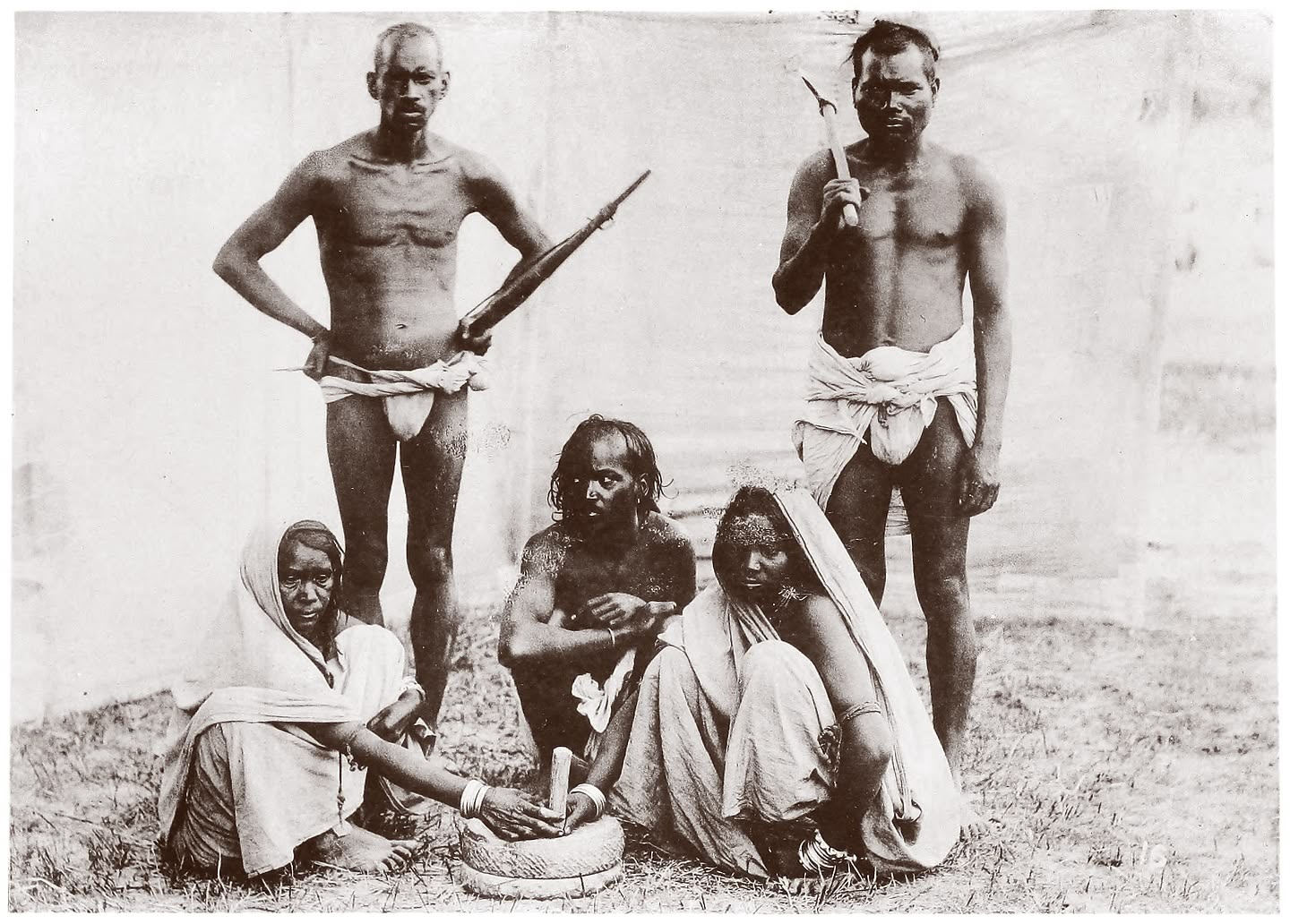
CHERO.
Exogamy. 7. Their custom of exogamy even is uncertain. By one account first cousins on the father’s side cannot intermarry, while marriage of cousins on the mother’s side is permitted, and a paternal uncle’s son can marry a maternal uncle’s daughter, but not vice versâ. On the other hand, the more Hinduised Cheros profess to regulate exogamy by the stock formula—chachera, mamera, phuphera, mausera, which bars the line of the paternal uncle, maternal uncle, paternal aunt, maternal aunt. There can be very little doubt that until comparatively recently they used to intermarry with Bhuiyas, as is proved by numerous local traditions. The Bhuiyas, on the other hand, say that they have given up intermarrying with Cheros since the Cheros have taken to intermarry with Kols, and the Cheros at any rate give Kol as one of their sections. South of the Son it is generally asserted that Bhuiyas and Cheros are the same. From all which it would appear that Kols, Cheros and Bhuiyas are of one parent-stock, and have separated by a process of abscission in comparatively recent times.
Relationship. 9. The general scheme of relationship agrees with that of the Kols. A father is bâba, dâda; father’s brother, kâka; mother, dîdi; sister, bahin; father’s mother, âji; elder paternal uncle’s wife, barki kâki, younger paternal uncle’s wife, chhutki kâki; elder brother’s wife, bhauji; younger brother’s wife, dulhin; or bride, son’s wife, patohiya; maternal uncle, mâmu; mother’s mother, nâni; mother’s sister, mausi; mother’s father, nâna; mother’s grandfather, parnâna; wife’s father, mahto, or “leader;” wife’s father’s wife, mahtoâin; sister’s husband, âr (yâr, friend); brother-in-law’s father, mahto; younger brother of wife, bâbu. A man names his wife by his son—Lallu ki mahtâri—“Lallu’s mother.” A father is sometimes addressed as bhaiyya or “brother.” They remember genealogies only to three generations, and in the case of females only as far as the grandmother. They call clansmen living in the same village ganwân bhâi.
Birth ceremonies. 10. The Cheros mark their approach to Hinduism by having puberty ceremonies which are not usual among the allied Dravidian races. On each occasion they sacrifice to Durga Devi and the collective village gods (deohâr). Cocks, hens, pigs, goats, and liquor constitute the offering which is made by the village Baiga, who first bathes and then before the platform of the deity makes a cowdung fire, into which he pours a mixture of sugar, butter, sesamum and rice, and says,—Dih bâba hamâr kâraj toharê kirpa se ho gail; se jânab; ham manaulê rahlê, so leh—“Village Lord! Our business has been completed through thy favour! Know this! Accept the offering we owed.” After this he sacrifices the victim, which the brethren divide, the head being the Baiga’s perquisite. The worship is supposed to keep evil spirits from the mother and her expected baby. The other birth ceremonies are the same as among the Kols.
Betrothal. 11. The binding part of the betrothal ceremony is the payment of the bride-price, five rupees. If the father of the girl annul the engagement he is forced to return the bride-price, and is severely dealt with by the tribal council besides.
Marriage. 12. There are three varieties of marriage,—Charhauwa, which is the respectable form; dola, which is used by poor people and in which the ceremonies are done at the house of the bridegroom, and sagâi, for widows. The ritual is the same as among the Kols, but the Cheros make more use than they do of Brâhmans in fixing the lucky time, and even now in respectable families Brâhmans attend, but do not carry out the service. Such people are clearly in rapid progress towards complete Hinduism.
Death. 12. Similarly in the case of funeral ceremonies they are beginning to employ Brâhmans and to do the regular srâddha, while they still retain some of the non-Aryan practices noticed in the case of the allied Dravidian races.
Festivals. 14. Their festivals are the Anant Chaudas, on the 14th day of the light half of Bhâdon; the Jiutiya, during the fortnight sacred to the dead (pitra paksha), in Kuâr, when women fast for a day and night to procure long life (jiw) for their sons and husbands; and the Phagua or Holi. Some Sundays are consecrated to the spirits of the dead, and are called pretak, when a fast is imposed, and on Sundays generally as well as at the Anant Chaudas, they do not eat salt. They do the Phagua like ordinary Hindus. In the Pitrapaksha for ten days they pour water on the ground in the name of the dead, and on the eleventh day shave and put on clean clothes. On that day each family gives the Brâhman two and a-half sers of uncooked grain (sîdha). The only family festival is the Jiutiya, which some observe to bring good luck on the family, and some in the hope of male offspring. One platform in the house is the residence of the sainted dead and the Devi. They are much afraid of the ghosts of persons drowned (bûrna), and whenever they pass a place where such an accident occurred they raise hands in an attitude of supplication.
Internal structure. 2. The internal structure of the caste is very intricate. In Mirzapur they name seven endogamous sub-castes—Palhariya (from palihanda, the stand on which the dye-pots are placed); Bulbulha (from bulbul, the nightingale); Dunsua (said to mean “a large needle”); Sâdh or “saints,” who pretend to special purity and will not eat meat or kill animals; Sûrajbans, “children of the Sun”; Kanaujiya or Kanaujiha, who say they come from Kanauj; and Pariya, or “those who keep young buffalo calves.” These are the explanations current among the members of the caste, and must, of course, be accepted with caution. In Fatehgarh there are two endogamous sub-castes—Reli or Dilwâri, that is Dehliwâl or “residents of Delhi;” Gola, “mixed,” or Mârwâri or Sanganeri, who take their name from a place called Sanganer, which is said to be somewhere near Jaypur. These, again, are divided into a number of sections. Thus of the Reli are named the Milku; Chhuriyapel; Ajudhiya; Nauchhirak; Sunawâr; Pânisap; Kupendiya; Kachhot; Banawâr; Gadhaiya, and many others. The Golas are said to have seven hundred and fifty sections, such as the Dharâvnê; Dûsayê; Mertwâr, and Gothalwâr. In Fatehgarh the rule of exogamy appears to be that a man cannot marry in his own section nor in a section in which a near female relation is already married. In Bulandshahr they are reported to have three endogamous sub-castes—Jeni or Jaini, Reliya, and Tânk, and they do not marry in their own family or in that of the maternal uncle. The Eastern Chhîpis state that they follow the standard formula chachera, mamera, phuphera, mausera, which bars the line of the paternal uncle, maternal uncle, maternal aunt, and paternal aunt.
3. According to the Census lists which record two hundred and two sub-divisions of the Hindu and twenty-one of the Muhammadan branch, their sections follow the rule so common in these occupational castes. Some are of local origin and others imply some real or supposed connection with other tribes. Thus among local terms we find Ajudhyabâsi, Chhatarpuriya, Deswâri, Kanaujiya, Mârwâri, Mathuriya, Pachhâin, Panjâbi, Purabiya, Sribâstav; while in the second class come Agarwâl, Agrahari, Bais, Baiswâr, Bâgri, Chamâr, Chauhân, Chhatri, Chiryamâr, Chûrihâr, Darji, Dhakarya, Jâdu, Kachhiya, Koliya, Kori, Râjput, Râthaur, Râwat, Ruhela, Sakarwâr, Sûrajbansi, Tânk, Tomar, and Ummar, most of which are derived from the names of tribes and sub-castes or septs of Banyas and Râjputs.
Marriage customs. 4. They marry their children in infancy. To the east polygamy is allowed to the extent of having two wives at one time if the first be barren. To the west, though polygamy is tolerated, it is said to be rare. There is nothing peculiar about their marriages, which are conducted in the orthodox way. Intertribal adultery seems to be little regarded, but an intrigue with a stranger involves expulsion from caste. There is among the Hindu branch at least no regular form of divorce, but a man with the leave of the tribal council can expel his wife for infidelity. Divorced women can marry again with permission of the tribal council. The levirate is recognized, but is not compulsory on the widow.
Distribution of the Chhîpis according to the Census of 1891.
Districts. Gole. Nâmdeobansi. Reli. Tânk. Others. Muhammadans. Total.
Dehra Dûn … 49 … … 32 … 81
Sahâranpur … … 337 1,643 1,474 8 3,462
Muzaffarnagar … … 116 1,366 204 302 1,988
Meerut … … 698 1,020 2,176 105 3,999
Bulandshahr … 260 488 49 558 … 1,355
Aligarh … … … … 1,357 … 1,357
Mathura 227 27 … 124 914 … 1,342
Agra … 31 … … 1,215 … 1,246
Farrukhâbâd … … … … 75 … 75
Mainpuri … … … … 7 39 46
Etâwah … … … … 54 5 59
Etah … … … … 70 31 101
Bareilly … … 322 … 419 … 741
Bijnor … … 237 958 190 5,391 6,776
Budâun … 8 … 29 210 1 248
Morâdâbâd … 130 1,219 123 674 1,444 3,590
Shâhjahânpur … … … … 31 221 225
Pilibhît … 4 21 … 33 23 81
Cawnpur … … … … 30 131 161
Fatehpur … … … … … 508 508
Bânda … … … … … 380 380
Hamîrpur … 50 … … 1,341 192 1,583
Allahâbâd … … … … 29 530 559
Jhânsi … 17 … … 695 30 742
Jâlaun … 77 … … 409 … 486
Lalitpur … 89 … … 209 … 298
Benares … … … … 19 … 19
Jaunpur … … … … … 42 42
Basti … … … … 156 … 156
Tarâi … … 171 … 26 2,425 2,622
Lucknow … … … … 5 6 11
Unâo … … … … 17 … 17
Râê Bareli … … … … 137 … 137
Sîtapur … … … … 73 … 73
Kheri … 17 … … 294 2 313
Faizâbâd … … … … 9 1 10
Gonda … … … … 149 … 149
Bahrâich … … … … 1 3 4
Partâbgarh … … … … … 51 51
Total 227 759 3,609 5,312 13,292 11,871 35,120
3. “The Chishtis in repeating the profession of faith lay a particular stress on the words Illa ‘llâhu, repeating these with great violence, and shaking, at the same time their heads and the upper parts of their bodies. The sect is said to be specially affected by Shiahs, and it is distinguished by its adoption of vocal music in its religious services. The members of the order are worked up by these religious songs to a high pitch of excitement, and often sink down exhausted. They frequently wear coloured clothes, especially clothes dyed with ochre or with the bark of the acacia tree. Their principal shrines in the Panjâb are the tomb of Nizâm-ud-dîn Auliya at Delhi, the Khângâh of Mîrân Bhîk in Ambâla, the shrine of Bâba Farîd at Pâkpatan, and the Khângâh of Hazrat Sulaimân at Taunsa in the Dera Ghâzi Khân District.”
5. Another famous place of Chishti pilgrimage is the tomb of the saint Salîm Chishti, by whose intercession a son was born at Fatehpur Sikri to the Emperor Akbar, and named Salîm after the saint. He was subsequently Emperor in the name of Jahângîr.
Distribution of the Chishtis according to the Census of 1891.
District. Number.
Dehra Dûn 108
Sahâranpur 486
Muzaffarnagar 16
Meerut 6
Bulandshahr 260
Aligarh 88
Mathura 20
Agra 52
Farrukhâbâd 3
Mainpuri 32
Etâwah 17
Etah 44
Bareilly 175
Bijnor 115
Budâun 98
Morâdâbâd 53
Shâhjahânpur 20
Pilibhît 76
Cawnpur 2
Fatehpur 44
Bânda 45
Hamîrpur 312
Allahâbâd 153
Lalitpur 14
Jaunpur 183
Ghâzipur 152
Ballia 19
Basti 337
Azamgarh 955
Lucknow 45
Unâo 2
Râê Bareli 117
Sîtapur 68
Kheri 18
Faizâbâd 38
Gonda 377
Bahrâich 36
Sultânpur 328
Bârabanki 227
Total 5,141
Marriage rules. 3. They practise infant marriage, marrying children between the ages of five and ten. They have the usual three forms of marriage—charhauwa, where the bridegroom goes in procession to the bride’s house and marries her there; dola, practised by poor people, where the bride is brought home quietly and the clansmen entertained; and sagâi for widows. Marriage is performed in the usual Muhammadan form, and the binding portion of the ceremony is the reading of the Sharah by the Qâzi or some literate person representing him. A widow may marry the younger brother of her deceased husband, but the levirate is not enforced. If a woman commit adultery or is habitually disobedient to the orders of her husband, he can divorce her by leave of the tribal council (panchâyat). A woman cannot divorce her husband, but can complain to the council if he is faithless to her or ill-treats her. When a husband divorces his wife he gives her three and-a-half rupees. They have a special tribal rule of succession, partly following Hindu and partly Muhammadan rules, but adhering closely to the former.
Distribution of the Chûrihârs by the Census of 1891.
District. Number.
Mathura 21
Agra 155
Bânda 232
Allahâbâd 7
Jhânsi 92
Lalitpur 113
Faizâbâd 54
Bahrâich 29
Total 703