Part 7 — INDEX (continued 2)
Reading edition
Thado, xxx n. 1; language, xvi n. 1; origin, xvii; position of chiefs, xxxiii; detach head of celebrity, xxiv; belief in vampires, xxxiv n. 2
Thangwe Eni clan, 88; iron-workers, 42; possible origin of, 42 n. 1, 90
Thatch, materials used, 24, 30; blown off roof of perjurers, 103, 104
Thatching, of house, 33; of champo, 27 grass (lishu), 24, 30; use in Thruven, 47; in Liritang, 54
Thekronoma, xxxi
Themoketsa (Honohoyanto), village, xiv, 4
Thendu, S. Konyak group, xxxi; hereditary chiefs, xxxiii
Thenkoh, S. Konyak group, xxxi; no chiefs, xxxiii
Thevo, xxxii
Thevoma, Angami linguistic group, xxxi, xxxii
Thirty, associated with offerings in ceremonies, 6, 124, 129, 151, 152
Thread, spinning of, 36, 37; measuring of, 229; bobbins of, in marriage ceremonies, 149, 150, 154; divorced wife carries off, 156; from clothes, thrown away by those present at “apotia” death, 161
Three days’ emung and chastity in Opya ceremonies, 123
Threshold (likingko), carrying-string cut on, in case of difficult death, 157; —— of field-house, rice offering placed on, 54
Thruven, sowing ceremonies, 53, 132; described, 47–49
Thruvenphen, traditional place of performing Thruven ceremonies, 47
Tibet, immigration from, xvi
Ticho, bamboo, connection with Thangwe Eni clan, 90
Tiger (mharr), hunting of, 66, 67; helmet worn during, 18; decapitation of and consequent tabus, 67; flesh not eaten, 74; beliefs about —— of common origin with man, xxxiv; regarding spear-shaft broken by, 66, 163; regarding descendants of man killed by, 66, 163; funeral of man killed by, 162; stories of, 175, 177, 190, 198 slayer, insignia of, 12, 17; dog killed at funeral of, 157; effigy of, placed over grave, 158
Tiger’s kill, meat from, unclean, 163; not brought into village, 26, 130; not eaten by household during Rangsikam, 52; during calf-birth “genna,” 60; by cultivator on day of selecting jhum, 46; by direct descendants of man killed by, 163
Tiger-men, Lhota form of belief in, 164, 165; Chang belief, 163 n. 1; Sema belief, 164; story about, 187–190
Ti-Ho (Nantaleik) river, possible home of Kalyo-Kengyu, xix; line of contact of northern and southern movements, xxxvi; Kukis prevented crossing, xvii
Tizu river, xviii n. 2, 4, 15
Tobacco (mukuyo), cultivation of, 58; manufacture, 81
Tobu village, daos made in, 116 n. 2
Toes, of enemy as trophies, 106; hung in mingetung, 108
Tompyaktserre (phratry), xxxviii; origin of, 88; clans in, 88, 89; use of special terms for mother, 94, 95; may not eat Hornbill, 77
Tongti, senior Sotsoi, 97
Top (phiro), 84
Tortoise, tabus regarding, during pregnancy, 144
Toys, 84, 85
Trade, 44; inter-tribal, 15, 17, 42, 60; external, 15, 41, 60
Trap, triangular (tsiri), 67, 68; box —— for leopard, 68; for monkeys, 68
Tree burial at Yacham, xxv n. 1; in case of man killed by tiger or leopard, 162 head ——, mingetung, q.v. michem tree, after-birth hung on, 146; Ponyiratsen’s tree, 152; —— from which man falls fatally abandoned, 160; —— struck by lightning abandoned, 163; in rheumatism cure, 166
Trough (wokochakpfu), 35
Trumpet (phupphu), bird-scaring, 52; musical instrument, 85
Tsandhramo: see Spirit, Evil.
Tsandhramo epang, exorcist, 34, 35
Tsandhrammozü (devil’s medicine), leaves as poultice, 80
Tsangchüman, sixth item in marriage price, 155
Tsangle clan, 88; origin, 91
Tsangsükikung clan, 88: origin, 89
Tsansao, thanked for help, vi
Tseminyu, xxxi
Tsingaki village, vi; khels in, 24; punished, 25; leads in war against Semas, 96; Wokchung in, 126; in story of Kithang clan, 187
Tsirotsoala, fourth social “genna,” 140
Tsoboi clan, 88, 89
Tsombhondhro, leaves of, stuffed in dead tiger’s mouth, 66
Tsonak (axe-shaped dao), cultural connections of, xv, 15, 16 n. 1
Tsori, 22
Tsoroman, eighth item in marriage price, 155
Tsoyuta, portion of marriage ceremony described, 148, 149; of S. Lhotas, 153, 154, 155
Tsungta, chungas in Ponyiratsen’s ceremony, 151
Tuensang village, 22
Tukahu, Sema name for Japvo mountain, xxxiv n. 3, 117
Tukko: see Tukahu.
Tuku “genna” closes year, described, 129, 130; graves dismantled at, 129, 130, 159; spirits of dead finally depart, 159; export of rice prohibited between Oyantsoa and ——, 125
Turanian origin of certain tribes, xvii n. 4.
Tushes, wild boar’s, as necklet, 12; on helmet, 19; ill luck attaching to, 44
Twelve pieces of burnt wood in soul-calling, 134
Twenty-three pieces of pork offered in Epuetha, 132
Type, physical, varieties of, xxi; tribal, xxi, xxii; of Lhota, 7
U Loh Ryndi, story of, xv n. 2
Ung, Chang clan, xxxiii n. 1
Ungma village, corrupt judge of, 102; wind god’s shrine, 103
Unmarried man lends dao at opya consecration, 123; men and boys bring in opya post, 123; boys and men sleep in champo, 24
Vampires, xxxiv n. 2.
Vangkoseng, erections put up at Lanvung, 52
Vat (ochen), 35; in earthquake, 172
Vegetables, cultivation of, 56–58; cooking of, 78
Vekohomi village, trans-Tizu origin of clans in, xviii n. 2.
Village, described, 23 et seq.; selection of site, 5; position, naming, defences, 21, 22; fortunes of, linked with mingetung, 29; ceremonies of founding, 5, 6; of making, 122; polity, 96, 97 fence, marked out at Pikuchak, 22; pig sacrificed outside, 129; omen ceremony outside, 133; man killed in war buried outside 160 spring, care of, xi, 29; described, 29; ceremonies at village founding, 5, 6; to increase flow of, 131
Wa tribe, use of drum, xxviii n. 1; memorial posts, defences, xxxvi n. 3
Wanching village, xxxi n. 1
War, formerly the normal state of Nagas, 104; between Lhota villages rare, 22, 104; methods of, 105; see also Head-hunting.
Warrior, insignia of (Southern Konyak), xxxi; gained by joining in mock fight, 111; gained by slaughter of slave, 110 n. 1 of note, insignia of, 12, 14, 18; decapitates tiger, 66; drives stake through enemy’s head, 108; allowed to spear head of opya post, 123 finest —— sacrifices dog at champo rebuilding, 28. See also Head-taking.
Wart, medicine for, 80
Washing of hands, after Rangsikam, 51; in Ponyiratsen, 151; before entering village after an “apotia” death, 161; before and after handling oha stones, 168 of hands and dao in Tsirotsoala, 141; of faces and hands of Stone-dragger’s wife and of her attendants, 143
Water, poured into village spring to ensure supply, 6, 126, 131; led to path in bamboos, 29, 30 master: see Tchhüpfu. melon (hmeliti), 58
Weapons, 15–19; give clues to origins of tribes, xxvi; carried at village founding, 6
Weaving, process described, 38–40; women’s work, 36; man may only help in setting warp, 39; prohibited during an emung, 26, 123; while husband is on war-path, 40, 108
Weaving sword, miniature in girl’s first carrying ceremony, 146
Weeder, 49
Weight, standard for village, stone (ephwa), 228
West, souls of unsatisfactory dead go, xxxiv
White-capped Redstart, not eaten, 75
White-headed Babbler, not eaten, 75
Widdershins, sacrificer walks —— round mithan, 141; bridegroom waves spear ——, 150
Widow, support of, 98, 99; marriage of father’s and brother’s, 95, 155; remarriage into another clan, and vow of widowhood, 155
Wife, each —— has separate cubicle, 31; terms used for, 95; duties of, position of, treatment of, 111, 112; loan of, 154; —— of sacrificer’s duty in Tsirotsoala, 140; —— of Stone-dragger, 143
Wig, worn by old men, 8; ceremonial (thongko), 13; hung over grave, 158
Wind god of Ungma, 103
Winnowing, 56 fan (saveng), 56
Withers, Dr. W. E., assistance acknowledged, vi, 207
Witchcraft, 168–169
Wives, number of, and husband’s relation with, 154
Wokchung (pig-sacrificer), duties and qualifications, 126; duties in Shishang, 138, 139; in Osoniwoala, 140; in Tsirotsoala, 140; in stone-dragging, 141, 142, 143; ceremonial spear (phui), 17, 126
Wokha, 4; stockade established at, 2; rain-compelling, 131
Wokha Hill, 1, 4, 21
Women, position of, 111, 112; hair-dressing, 8; dress, 9; ornaments, 13; women’s work, spinning, 36; dyeing, 36, 37; weaving, 36; pot-making, 41; bead-making, 44; knowledge of poisons, may not inherit property, 98, 99; make mock assault on champo, 28; may not: enter champo, 24, do basket-work, 43, be present at fish-poisoning, 71, take part in opya ceremonies, 123, represent patient in soul-calling, 133; food tabus of, while dyeing, 38; pot-making, 41; during pregnancy, 77, 144, 140. See also Young Women.
Wonchamo, 137
Wood, work, 43; burnt —— placed in nest when chickens first removed, 63; offered in soul-calling, 34, 135
Wood-louse (sharhi), as medicine, 80
Woods, Colonel, on Lhota’s character, xiii; on Chang customs as to disposal of dead, xxv n. 2, 92 n. 1.
Woodthorpe, Lt.-Col. R. G., sketch of Phiro mingetung, 29 n. 1.
Working companies (yengaten), system, 97; kill pig at Lanvung, feast together, 130
Worm-casts, magic use of, by ratsen, 165
Worms, medicine for, 79
Worore (bird clan), 88; origin of, do not eat hornbill, 89
Worosaeromo kindred, 89
Worosanromo kindred, 89
Wothang, “announcers,” 140–142
Wounds, medicines for, 80
Wozakumrr (bird clan), 89
Wozütana, first social “genna,” 137; described, 138
Wozüyua, S. Lhota, second social “genna,” 138; also see Shishang.
Wrestling, 82
Wristlet (khekap), 12
Yacham village, tradition of migration, xviii; method of disposal of dead, xxv
Yachungr, bury dead, xxiv; hoe, xxvii; drum, xxviii; mock fighting, 110 n. 2
Yamphentangre kindred, 92
Yampongo, Phiro notable, 106 n. 1.
Yanasao thanked for help, vi
Yanthamo (“new village”), an affix, 21
Yanthamo, village, 49
Yanthang, clan, 88; origin, 91
Yanthang, dao, cultural connection of, xv, xxvi; heirlooms, 3, 16; described, 16; Ramphan’s ——, 16, 197
Yanungshari, chant, 27, 28
Yanzo, mythical hero, 185–187
Yeast (vamhe), 79, 80
Yekhum village, 23; Y-shaped posts in, xxx, 144, 168, 184 n. 1; troubled over Semas’ appropriation of money of “apotia,” 162
Yemkha village, 120, 90, 144
Yemkhashandre kindred, 92
Yemphuhore kindred, 92
Yemtsore kindred, 92
Yenga, Puthi’s assistant, qualifications necessary and duties, 126; duties in champo rebuilding, 26; removes and replaces oha, duties in Amungkam, 50; in Motharatsen, 49; Mshe etak, 53; in Tuku, 129
Yenga’s wife in Amungkam, 50
Yepothomi clan, 92
Yhandra, bark for rope, 32
Yimbang village, 21, 89
Young, food tabus more important for the —— than the old, 74 et seq. men, unlucky to saw elephant tusks, 12; do not eat pig in stone-dragging, 142 women, special food tabus of, 77 and n. 1
Yuso, supporter Stone-dragger, 142
Yutso, leaves with magical properties, use in ceremonials, 48, 49, 50, 139, 142, 151, 152
Zambomo, uses rice descended from “dead men’s rice,” 120
Züchanpen, place in stone-dragging proceedings, 142
Printed in Great Britain by Richard Clay & Sons, Limited, Bungay, Suffolk.
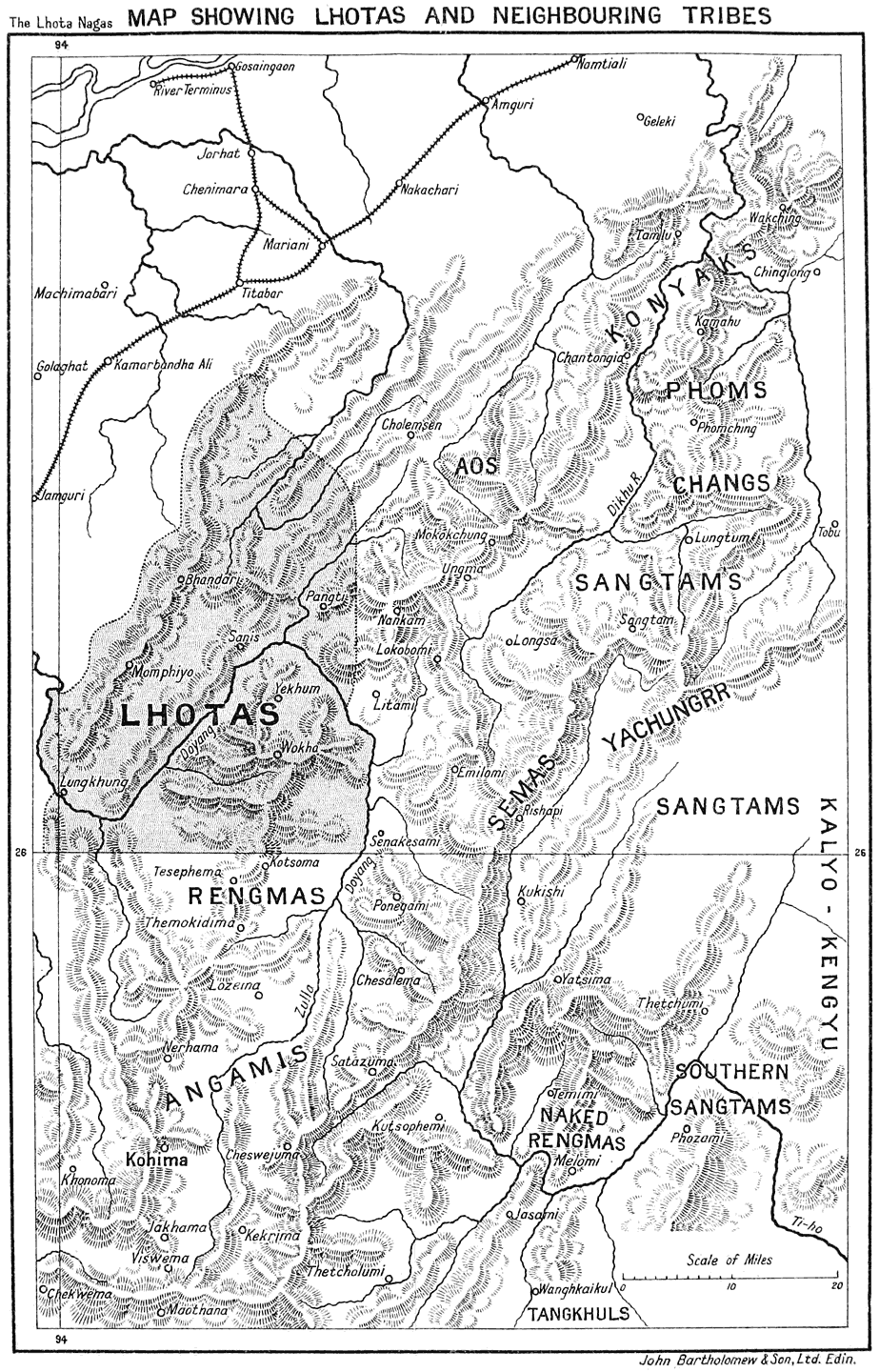
The Lhota Nagas
John Bartholomew & Son, Ltd. Edin.
MAP SHOWING LHOTAS AND NEIGHBOURING TRIBES
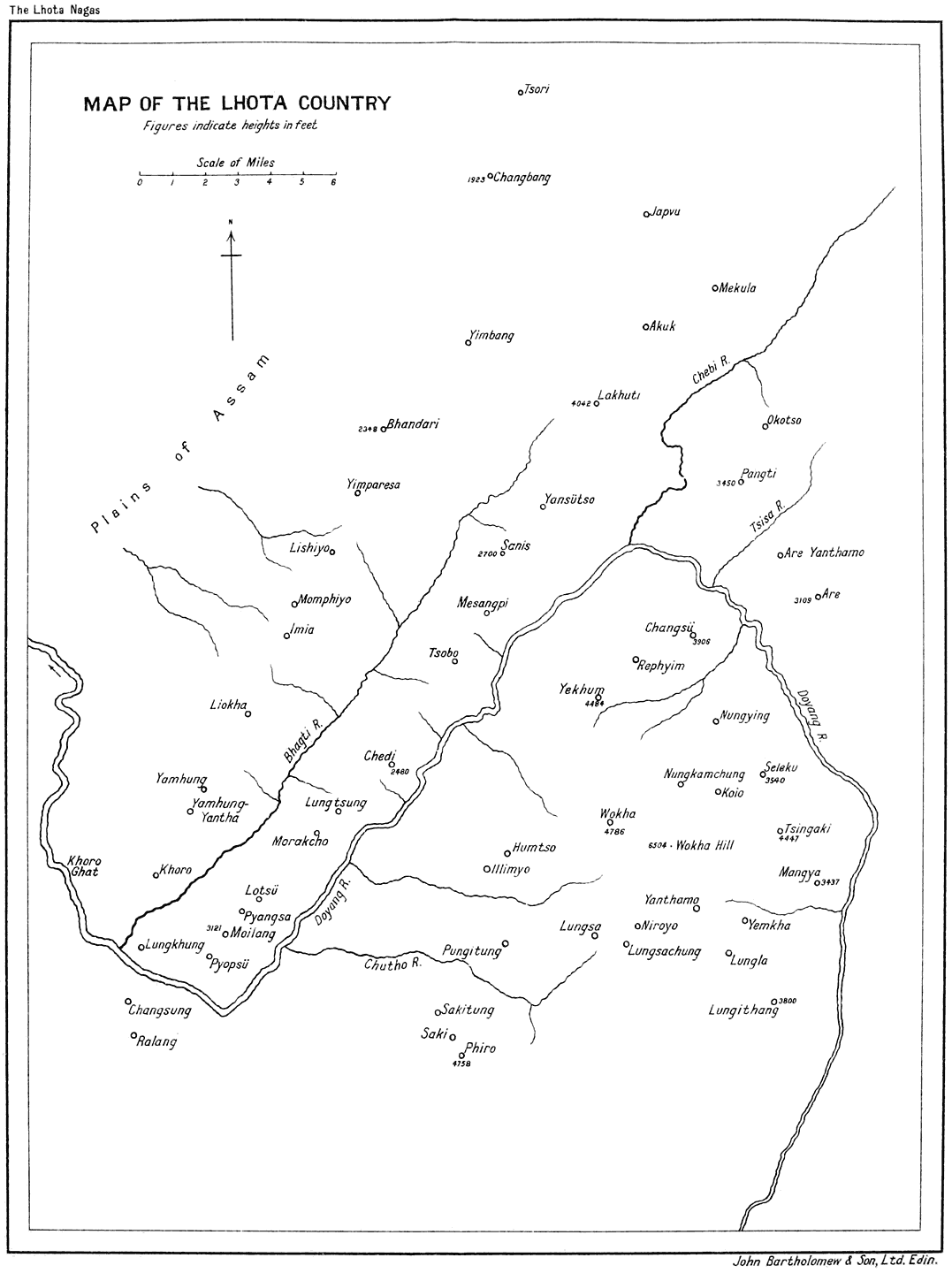
The Lhota Nagas
John Bartholomew & Son, Ltd. Edin.
MAP OF THE LHOTA COUNTRY