Front matter (continued 4)
Reading edition
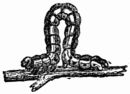
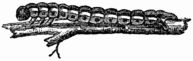
Fig. 98.—Caterpillar curved into an arch. Fig. 99.—Caterpillar at full length.
This sort of gait has gained for them the name of Geometers, because they seem to measure the road over which they travel. When they make a step, they apply the part of their body which they have just curved up to the ground, in exactly the same way as a land surveyor applies his chain to it.
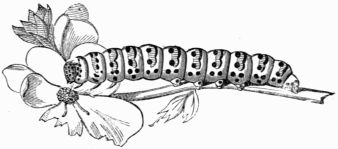
Fig. 100.—Caterpillar of the Canary-shouldered Thorn (Eugonia alniaria).
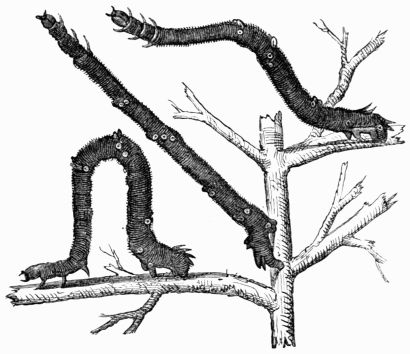
These looper caterpillars cannot shorten nor lengthen their segments at will, as other caterpillars, but only bend their bodies. There are many species whose bodies are cylindrical, stiff, and of the same colour as bark. Their attitudes deceive even the close observer. They embrace the stem of a leaf or twig with their hinder and intermediate legs, whilst the rest of their body, vertically elevated, remains stiff and immovable for hours together. Fig. 100 shows the caterpillar of the Canary-shouldered Thorn (Eugonia alniaria) in this strange position. Now, this is a feat of strength which the most skilful of our acrobats, ordinary and extraordinary, which all the Leotards of the present day, and those who are to succeed them, can never accomplish. With such a persistency, this caterpillar can sustain its body in the air for a considerable time, in all the positions imaginable, between the vertical and the horizontal, and downwards again in any incline from the horizontal to the vertical. "If one considers," says Réaumur, "how far we are from having in the muscles of our arms a force capable of supporting us in such attitudes as these, we must own that the power of the muscles in these insects is prodigious."
We will not dwell now on the variableness of the length of the body of caterpillars; on the fleshy appendages which are to be observed on them; on the hairs which either beautify or render them hideous, according to the fancy of the observer; nor on the various colours with which they are decorated. We will notice these various characteristics when giving the history of some species of remarkable Lepidoptera.
Many caterpillars are solitary; others live in companies more or less numerous, either when young, or during the whole of their existence.
With the exception of a great number of moths, which live at the expense of our furs, or woollen stuffs, and leather or fatty matters, all caterpillars feed on plants. From the root to the seeds, no part of the vegetable is safe from their attacks. The greatest number of the species, however, prefer the leaves. Those of the most acrid and poisonous are no more spared than those of the most harmless plants. There are caterpillars which eat the leaves of the Euphorbia, or spurge, for instance.
"I wished to try," says Réaumur, "the milk of this plant on my tongue. It produced hardly any effect upon it at first; but after a quarter of an hour I found my mouth on fire, and it was a heat which reiterated garglings with water during many hours in succession could not quench. This continued till the next day. The heat passed successively from one part of my mouth to another. I, however, saw many of my caterpillars drinking greedily the great drops of milk which were at the end of the broken stem I had presented to them."
Is it not extraordinary that there are caterpillars which live on the nettle?—that they eat the leaves of this plant, armed as it is with stinging bristles, which cause such smarting and itching to the skin, and produce blisters upon it.
It has often been said that each plant has its own peculiar species of caterpillar. All we can say is, that a certain number of vegetables only suit certain caterpillars. The species which eat roots are few; those which live in the interior of stalks or stems which they feed on are numerous, and those which nourish themselves on the pulp of fruits are rare. In general, after the leaves, the caterpillars prefer the flowers: in this they certainly do not show bad taste. Their growth is more or less rapid, according to the species, according to the nourishment they take, and according to the season of the year. Those whose food is succulent grow more rapidly than those which have for their food dry gramineous plants and coriaceous lichens. Most of them eat at night, and remain during the day motionless, and as it were in a state of torpor; others are so voracious that they are constantly eating. This voracity is indeed sometimes surprising. Malpighi has observed that a silkworm often eats in a day mulberry leaves equal to its own weight. How could we provide our horses and oxen with provender, if they required each day their own weight of hay and grass? There are even some caterpillars which are still more voracious than that. Réaumur weighed several caterpillars of a species which lives on the cabbage, and gave them bits of cabbage-leaves which weighed twice as much as their bodies. In less than twenty-four hours they had entirely consumed them. In this space of time their weight increased one-tenth. Fancy a man whose weight is 180 lbs. eating in one day 360 lbs. of meat, and gaining 18 lbs. in weight! Caterpillars eat by the aid of two jaws or mandibles so broad and solid that, considering the smallness of the insect, they are equivalent to all the teeth with which large animals are furnished. It is by the alternate movement of these mandibles that the caterpillars devour the leaves with so much greediness and ease.
Fig. 101.—Looper Caterpillar eating the leaves of the Apricot (after Réaumur).
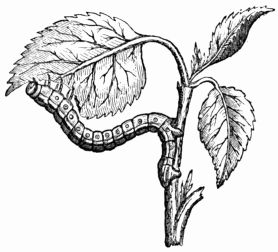
"A caterpillar, when it wants to gnaw the edge of a leaf," says Réaumur, "twists its body in such a way that at least one portion of the edge of this leaf is passed between its legs. These legs hold fast that portion of the leaf which is to be cut by the insect's jaws (Fig. 101). To give the first bite the caterpillar elongates its body, and carries its head as far forward as possible. The portion of the leaf which is between the open jaws is cut through the instant the teeth meet each other; the bites succeed each other quickly; there is not one, or scarcely one of them, that does not detach a bit, and each bit is swallowed almost as soon as cut off. At each fresh bite the head approaches the legs in such a way that during the succession of bites it describes an arc; it hollows out the portion of the leaf in a segment of a circle, and it is always in this order that it gnaws it."
But there is a phenomenon in the life of caterpillars which we ought to point out, and which has attracted the attention of the most illustrious observers. All caterpillars change their skins many times during their life. It is not, indeed, enough to say that they change their skins; the skins or cases they cast are so complete that they might be taken for entire caterpillars. The hairs, the case of the legs, the claws with which the legs are provided, the hard and solid parts which cover the head, the jaws—all these are found in the skin which the insect abandons. What an operation for the poor little animal! This labour is so enormous, so troublesome, that one cannot form a just idea of it. One or two days before this grand crisis, the caterpillar leaves off eating, loses its usual activity, and becomes motionless and languid. Their colour fades, their skin dries little by little, they bow their backs, swell out their segments. At last this dried-up skin splits below the back, on the second or third ring, and lets us have a glimpse of a small portion of the new skin, easily to be recognised by the freshness and brightness of its colours.
"When once the split has been begun," says Réaumur, "it is easy for the insect to extend it; it continues to swell out that part of its body which is opposite the slit. Very soon this part raises itself above the sides of the split; it does the work of a wedge, which elongates it; thus the split soon extends from the end or the commencement of the first ring as far as the other side of the end of the fourth. The upper portion of the body which corresponds to these four rings is then laid bare, and the caterpillar has an opening sufficiently large to serve it as an egress through which it can entirely leave its old skin. It curves its fore part, and draws it backwards; by this movement it disengages its head from under its old envelope, and brings it up to the beginning of the slit; at once it raises it, and puts it out through this slit. The moment afterwards it stretches out its fore part and lowers its head. There now remains for the caterpillar nothing but to draw its hinder part from the old case."
This excessively laborious operation is finished in less than a minute. The new livery which the caterpillar has just put on is fresh and bright in colour. But the animal is exhausted by its fast, and the efforts which it has made. It requires a few hours in which to regain its equilibrium, and at the same time its former activity and voracity.
The Chrysalis, or Pupa.
Having attained its full development, the caterpillar ceases to eat, as at the approach of a moult, it empties its intestinal canal by copious ejections; it loses its colours, and becomes dull and livid, and thus prepares itself to enter a new phase of its existence.
Some, when about to transform themselves into chrysalides, suspend themselves to foreign bodies. Others spin a cocoon, composed of silk and other substances, which secures them against the attacks of their enemies and the action of the atmosphere. Those which suspend themselves can be divided under two heads, according to the mode of their suspension:—1. Those which suspend themselves perpendicularly by the tail. 2. Those which, after having fixed themselves by the same part, suspend themselves horizontally, by means of a silk thread passed round the body.
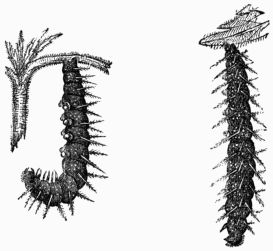
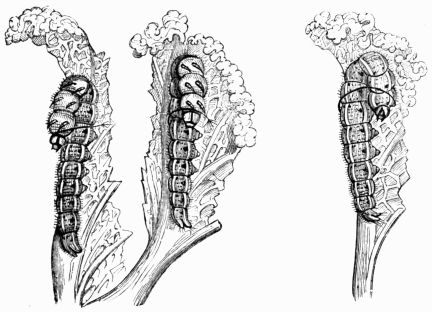
Figs. 102, 103.—Caterpillars of the small Tortoise-shell
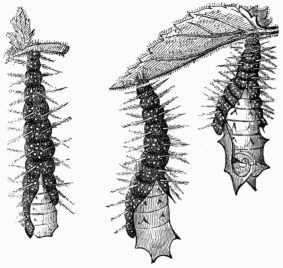
Figs. 104, 105.—Chrysalides of the small Tortoise-shell Butterfly freeing themselves from the Caterpillar skin.
To understand the difficulty which the first of these operations presents, we must consider the problem which the caterpillar has to solve. In this problem there are two unknown quantities to be discovered. Firstly, the caterpillar must suspend itself firmly; and secondly, the pupa, having no communication with the object which supports it, must be suspended in the same manner. This problem is difficult, apparently impossible, to solve. It is only by watching these insects at work that one can discover the wonderful mysteries of their lives. Swammerdam, Valisnieri, and other observers who have studied insects, had not, however, observed the manœuvres of caterpillars in this curious phase of their existence. It is to Réaumur again that science is indebted for the most charming and valuable observations on this point. He got together a great number of caterpillars of the small Tortoise-shell Butterfly (Vanessa urticæ), black prickly caterpillars which are common on the stinging-nettle, where they live in companies, and suspend themselves by the tail. When the time approaches at which the caterpillars of this species ought to undergo their transformations, they usually leave the plant which had up to that time served them as food. After having wandered about a little, they select some convenient spot, where they hang themselves up head downwards (Figs. 102, 103).
In order to hang itself in this way, the caterpillar begins by covering, with threads drawn in different directions, a pretty large extent of the surface of the body against which it wishes to fix itself. After having covered it thus with a kind of thin cobweb, it adds different layers of threads on a small portion of this surface, in such a manner that the upper one is always smaller than that upon which it is laid. In this manner a small hillock of silk is formed, the tissue of which is not at all compact. It resembles an assemblage of loose or badly interwoven threads. The membranous feet of the caterpillar are armed with hooks of different lengths, with the aid of which it suspends itself. By alternately contracting and elongating its body, it pushes its hindermost legs against the hillock of silk, presses against it the hooks of its feet, so as to get them better entangled, and lets its body fall in a vertical position.
It remains hanging thus, often for twenty-four hours, during which time it is occupied in a difficult task, that of splitting its skin. In order to effect this, it incessantly curves and recurves its body (Fig. 102), until at last a split appears on the skin of the back, and through this split emerges a part of the body of the chrysalis. This acts as a wedge, and little by little the split widens from the head to the last of the true legs, and beyond them. Then the opening is sufficient to allow of the chrysalis drawing out its anterior portion from the envelope, which it immediately does. To set itself entirely free, the chrysalis lengthens and shortens itself alternately (Fig. 105). Each time that it shortens itself, and when it consequently distends the part of its body which is outside the old skin, that part acts against the edges of the slit, and gradually pushes the old skin upwards. Thus the caterpillar skin ascends, its plaits are pushed nearer and nearer together, and it is soon reduced to a packet so small that it covers only the end of the tail of the chrysalis (Fig. 106).
But here comes the culminating point, the most difficult part of the operation. The chrysalis, which is shorter than the caterpillar, is at some distance from the silky network to which it must fix itself; it is only supported by that extremity of the caterpillar's skin which had not been split open. It has neither legs nor arms, and yet it must free itself from this remaining part of the skin, and reach the threads to which it is to suspend itself.
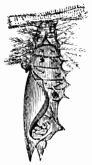
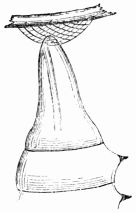
Fig. 106.—Chrysalis of the small Tortoise-shell Butterfly completing the operation of casting its larval skin. Fig. 107.—Chrysalis divested of the larva skin.
The supple and contractile segments of the chrysalis serve for the limbs which are wanting to it. Between two of these segments, as with a pair of pincers, the insect seizes a portion of the folded skin, and with such a firm hold that it is able to support the whole of its body on it. It now curves its hinder parts slightly, and draws its tail entirely out of the sheath in which it was enclosed. It then reposes for an instant only, for it has not yet finished the laborious operation of its deliverance. It must free itself entirely from the dry skin which surrounds the extremity of its body.
The insect curves the part which is below its tail in such a manner that that part can embrace and seize the packet to which it holds on. It then gives to its body a violent shock, which makes it spin round many times on its tail, and that with great rapidity. During all these pirouettes the chrysalis acts against the skin; the hooks of its legs fray the threads, and break them or disentangle themselves from them. Sometimes the threads do not break at once. Then the animal recommences its revolutions in an opposite direction, and this time it is almost certain to succeed. Réaumur, however, saw a chrysalis which, after having tired itself in vain in its endeavours to get entirely free of its old skin, despairing of ever being able to manage it, abandoned it where it was so solidly fixed. We represent (Fig. 107), rather magnified, the chrysalis arrived at its final state, and suspended to a branch of a tree by a network of silk. [38]
We come now to the mode of suspension employed by those caterpillars, which, after having fixed themselves by the tail, strengthen the support by means of a small silk cord passed round their body.
It is again to Réaumur, that indefatigable observer of the habits of insects, that we go for the details of this manner of suspension. According to Réaumur, these caterpillars make and put on this belt in three different ways. But of these three ways the simplest, and the least liable to meet with accident, is that employed by the larva of the Cabbage Butterfly (Pieris brassicæ). When the time for its metamorphosis is only a few days distant, one may observe this caterpillar engaged in stretching threads on different parts of the case in which it is confined. It then chooses a spot, which it covers entirely with threads, some more compact than the others, and disposed in layers, which cross each other in different directions. These threads form a thin white cloth, against which the belly of the caterpillar and later that of the chrysalis are applied. Very soon we see a small hillock of silk rising. The caterpillar hooks itself on to this by the claws of its hinder feet, and sets to work to secure itself.
To understand this process, it suffices to know that after having lengthened its body to a certain point, this caterpillar can turn back its head on to its back, and reach to the fifth ring, having its three pairs of true legs in the air. But without putting the caterpillar into such an unnatural position, let us take it in a position in which it is simply bent sideways in such a manner that its head, with the thread-spinning apparatus, which is below, can be applied opposite and pretty near to one of the legs belonging to the first pair of membranous legs. Our caterpillar begins by fixing on this point a thread, which is the first of those that are intended to tie it up securely.
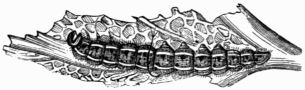
Fig. 108.—Caterpillars of the Cabbage Butterfly (Pieris brassicæ).
"This thread," says the illustrious author of the "Mémoires pour servir à l'Histoire des Insectes, "must pass over the caterpillar's body, and be attached by its other end near the leg corresponding to that near which the first end was fastened. To spin the thread the proper length, and at the same time to fix it in its proper place, the caterpillar has only to bring round its head to the fifth segment. The thread will be drawn from the spinning apparatus as the head advances over half the circumference of the circle which it has to describe; and when it has described this, there will only remain for it to secure the second end of the thread against the support. Thus the head, which was at first placed against one of the legs, advances little by little on the outline of the fifth ring as far as to its middle (Fig. 108). It is the facility the caterpillar has of reversing its body that enables it to make its head perform this journey, in proportion as it moves it over the circumference of the ring, it twists its body. And at last, when it has brought it over the top of the segment, its body is exactly folded in two; it draws it little by little from this situation by bending towards the other side, and by causing its head to pass gently over the last quarter of the circle. At last the caterpillar finds itself bound on the second side; the head rests on the thread-covered plane, and the insect fixes the second end of the thread."
Fig. 109.—Caterpillar of the Pieris brassicæ.
It has only to repeat the same manœuvre as many times as there are threads wanted to make a strong band. But each thread embraces the head, or rather the lower part of the head, for it knows how to make each thread it spins glide into the bend or crease of its neck by a little movement of its head. It must disengage its head from under the band, not a difficult operation. It causes it to slide along the threads near one of the places where they are fixed, and it is then in the position indicated by the foregoing engraving (Fig. 109).
Fig. 110.—Pupæ of Pieris brassicæ.
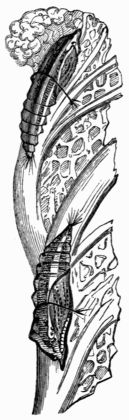
About thirty hours after the caterpillars have succeeded in making themselves fast, they have completed their transformation into chrysalides (Fig. 110), where the chrysalis of the above-mentioned caterpillar is seen in two different positions, and held by the same band which first supported the caterpillar.
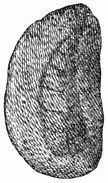
Those caterpillars which construct cocoons make them of silk and other substances. These cocoons are, for the most part, oval or elliptical, sometimes boat-shaped, and ordinarily white, yellow, or brown in colour. The threads may very slightly adhere together, or be closely united by a gummy substance with which the caterpillar lines the interior of the cocoon, and which it expels from the anus. Some cocoons are composed of a double envelope, others are of a uniform texture. Some are of a tissue so close that they entirely hide the chrysalis contained within; others form a very light covering, through which the chrysalis can be easily perceived (Fig. 111).
Fig. 111.—Cocoon, after Réaumur.
Among caterpillars that make a very slight cocoon, some, as the Catocalas, gather together two or three leaves into a ball, to protect them. Others strengthen their cocoons, and render them opaque by adding earth or other substances, often obtained from their own bodies. Some, after having spun their cocoon, cast forth through the anus three or four masses of a matter resembling paste, which they apply with their head to the inside of the cocoon, and which, drying quickly, becomes pulverulent. Others employ for the same purpose the hairs with which their bodies are covered.
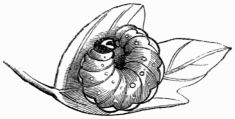
The larva of Acronycta aceris (Fig. 113) is covered with tufts of yellow hair. Réaumur made these caterpillars work under his own eye in glass vases. They make the layer which is to form the exterior surface of their shell, or cocoon, of pure silk, and when it is thick enough, tear out their hair, now from one place, now from another. But we will leave the illustrious observer to relate this operation himself, which must without doubt be painful to the poor animal:—
Fig. 112.—Larvæ of Catocala fraxini.
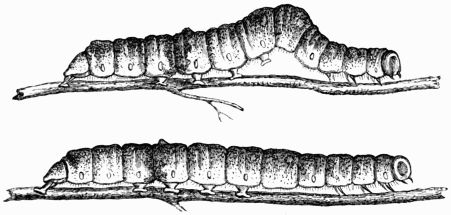
Fig. 113.—Larva of Acronycta aceris.
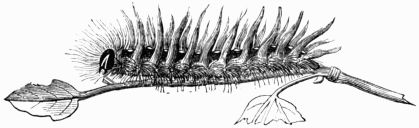
Fig. 114.—Larva of Acronycta aceris.
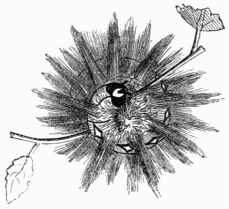
Fig. 115.—Larva of Acronycta aceris taken out of its cocoon.
"Its two jaws are the pincers the caterpillar uses in seizing a portion of one or other of the tufts of hair; and when it has seized it, it tears it out without much difficulty. It at once places this against the tissue it has already commenced, in which it entangles it at first simply by pressure; it fixes it then more securely by spinning over it. It does not leave off tearing out its hairs till it has entirely stripped them off. When the caterpillar has taken between its jaws and torn out a whole tuft of hair, the head carries it and deposits it on some part of the lower surface of the cocoon; but it does not leave the hairs of such a large parcel together. The next moment one sees its head moving about very quickly; then taking a portion of the hairs from the little heap, it distributes them about on the neighbouring parts of the cocoon. If one opens one of these shells before the caterpillar has become a chrysalis, the larva, which is quite naked, and which was only known by its hair, can be no longer recognised."
Fig. 116.—Larva of Chelonia caja.
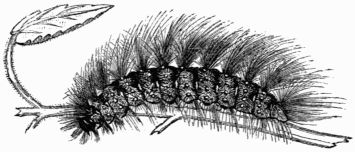
The caterpillar of the Tiger Moth, or Woolly Bear, called by Réaumur Marte or Herisson (Chelonia caja, Fig. 116), is covered with long inclined hairs. This caterpillar also makes use of its hairs for strengthening the tissue of its cocoon; but whether it feels the pain more acutely than the former, or whether it would suffer more, it does not tear out its hairs. It adopts another system; it cuts them. The caterpillar is then enveloped on all sides in its hair, which is to serve in the construction of its cocoon.
Fig. 117.—Larva of Chelonia caja forming its cocoon.
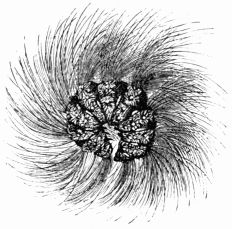
Another species uses its hairs in the composition of its cocoon; but it adopts an entirely peculiar way of tearing them out, when the tissue of its cocoon has become a species of network of pretty closely packed rings. Réaumur one day saw one part of the cocoon bristling with hairs. These were the hairs of a part of the back of the caterpillar, which it had pushed through the rings of its cocoon. The caterpillar then moved about as if rubbing this part of its back successively in opposite directions against the interior surface of the cocoon. In this way the hairs were very soon torn out and kept retained in the rings of the cocoon. This cocoon is then bristly inside, and does not at all suit the future chrysalis, which does not like to be touched by any but smooth surfaces. The caterpillar then works with its head, to lay the hairs along the interior surface, and to keep them down by threads, which it draws over them. At another time Réaumur saw a small hairy caterpillar, which appeared to live on lichens, using its hair in another way. It tore them out to make its cocoon, but it was not to lay them down and work them into a tissue. It set them straight up like the stakes of palisades, on the circumference of an oval space, in which it was placed. Shut up within this palisade, it spun a light white web. This web supports the hairs, causing the greater part of them to curve at their upper extremity, in such a manner as to form a sort of cradle.
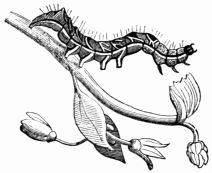
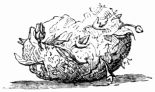
Fig. 118.—Small Caterpillar of the Pimpernel. Fig. 119.—Cocoon of the same.
It remains for us now to speak of the caterpillars that make their cocoons of silk, together with other materials. Réaumur saw the Pimpernel caterpillar arranging and sticking together the leaves of that plant, and spinning underneath them a thin cocoon of white silk (Fig. 119).
Fig. 120.—Larva of Cucullia verbasci.
Some caterpillars make their cocoons on the surface of the earth, and even with earth. These cocoons are spherical or oblong. Their exterior is more or less well shaped, but their interior is always smooth, polished, shining like moistened earth, worked up together into a kind of paste, and carefully smoothed out. This cocoon is besides lined with a covering of silk of variable thickness. The shell is not made of earth alone; threads of silk may be seen in it, crossing each other, and binding together the particles of earth.
Fig. 121.—Cocoon of the Cucullia verbasci.
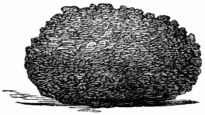
These subterranean workers do not allow their proceedings to be easily observed. Réaumur was fortunate enough to be able to notice their skill in the construction of their shells or cocoons. The Cucullia verbasci (Fig. 120) makes itself a thick and very compact cocoon of the form of an egg (Fig. 121). Réaumur took one of these out of the ground before it is fortified. He tore it partially open, and placed it in a glass vase containing sand, but the poor insect was not long in repairing the disorder caused by the rough hand of our naturalist. It only took four hours to restore its cocoon to its former state.
"It began," says Réaumur, "by coming almost entirely out, and left only its hinder part within. It moved its head forwards as far as was necessary to enable it to seize a particle of earth. As soon as it had got its load, it re-entered the interior of the cocoon. It deposited the grain of earth, and came out again immediately, as it did at first, to pick up another grain, which it carried likewise into the interior of the cocoon. This operation it continued for more than an hour.... The provision of materials being got together, the caterpillar now devoted his whole attention to working them up. It began by spinning over one part of the edges of the opening. After having put over this a small band of very loose web, the caterpillar's head left the opening, the insect went right back again into its cocoon, and the head returned to the opening loaded with a little grain of earth, which it entangled in the silky threads. It then entangled in them two or three, or a greater number of grains, according to the quantity of threads it had spun. It bound them into these with other threads, after which it drew threads over the edges of another part. By thus going round the whole rim of the opening, and by carrying and fixing the grains of earth in the threads which were the last stretched over the opening, it rendered its diameter smaller and smaller."
It was by working with its head that our mason gave to the new wall of its cocoon the necessary curvature. It was interesting to know how, as it could no longer put out its head, it could stop up the orifice.
"It knew how to change its manœuvres. When the opening was reduced to a circle of only a few lines in diameter, it drew threads from a point on the circumference to another on the other side.... Thus the opening was covered in with a rather open network.... As soon as this web was finished, it got a grain of earth (which it had laid by until it was wanted), brought it up, placed it against the web, and by pushing and pressing it, made it pass through the web until it reached the exterior, and so in succession the whole of the web was covered with grains of earth.... It was not satisfied with rendering the exterior of this place exactly like the rest of the shell; it fortified it thoroughly; it added to it, one after another, layers of grains of earth, till it was as solid and as thick as the rest."
The larva of Pyralis corticalis, which is found on oak trees in the month of May, shows to what a point these little insects carry their industry in the construction of their cocoons, in the choice of their materials, in their manner of working them up, and in the forms they cause them to assume. Réaumur one day saw this caterpillar on a small branch, between two triangular appendages (Figs. 122, 123). This was the beginning of a cocoon. Each triangular blade was composed of a great number of small, thin, rectangular plates, taken from the bark of the twig. The caterpillar detached with its jaws a small band of bark, and fitted it on, and adjusted it with admirable precision against the edge already formed. It then fixed it securely with silk threads. Réaumur saw this caterpillar work and erect in this way a large blade during an hour and a half.
Figs. 122, 123.—Cocoon of Pyralis corticalis (magnified, proper size 2/3 inch).
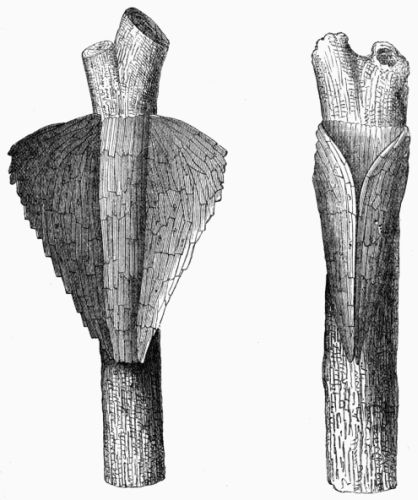
"When one sees," he says,[39] "an insect which, to construct a cocoon, begins by collecting together an infinite number of small plates of bark in order to compose of them two flat triangular blades; which, to gain its end, takes means that seem so roundabout, although they are the most suitable and the quickest it could adopt, one is very much tempted to consider such an insect, when one sees it thus acting, possessed of reason."
These two blades are at last transformed into a regular cocoon. The little animal, which is at the same time architect, cabinet-maker, and weaver, arranges it in such a way as to form a hollow cone, which it only remains for it to shut. Réaumur calls this sort of cocoon or shell, la coque en bateau, the boat-shaped cocoon. Some caterpillars weave cocoons of the same form with pure silk.
To bring this subject to an end, we will mention the industry of the Puss Moth (Dicranura vinula), and that of a small Tinea, which eats the barley stored away in our granaries.
The larva of the puss moth employs in the construction of its shell the wood of the tree on which it has lived. It bites it up, and mixing it with a glutinous fluid which it secretes from its mouth, reduces it to a sort of paste, which it then uses in the formation of an envelope, of such hardness that a knife can hardly cut into it.
The Tinea lines the interior of a grain, of which it has previously devoured the contents, with a coating of silk, and divides it thus into two different chambers. In one of these it is to change into a pupa; in the other it places its excrement. And so the little careful architect constructs its house in such a manner as to find in it tranquillity, cleanliness, and comfort.
When caterpillars have not within their reach the materials they are in the habit of employing, like good workmen, they content themselves with what they can get. Réaumur reared a caterpillar which formed its cocoon of pieces of the paper of which the box was made in which it was imprisoned.
What an extraordinary condition! what a strange phase of vitality does the chrysalis present to us—a being occupying the middle state between the caterpillar and the perfect insect! How little does it resemble that which it previously was, and what it will become! In appearance it is scarcely a living being; it takes no nourishment, and has no digestive organs; can neither walk nor drag itself along, and hardly bends the joints of its body. The outside skin of the chrysalis appears to be cartilaginous; it is generally smooth, although some species have hairs scattered over their bodies.
We distinguish in chrysalides two opposite sides. The one is the insect's back, the other its under side. On the upper part of the latter (Fig. 124) we perceive various raised portions, formed and arranged like the bands round the heads of mummies; the back is plain and rounded in a great number of pupæ; but a great many others have on the upper part, along the edges which separate the two sides, little humps, eminences broader than they are thick, ending in a sharp point (Fig. 125).
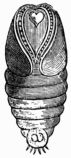
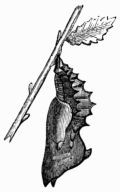
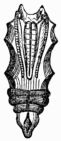
Fig. 124. A conical pupa. Fig. 125. Pupa having angular projections. Fig. 126. Angular pupa of a Butterfly.
The head of the angular pupæ terminates sometimes in two angular parts, which diverge from each other like two horns (Fig. 126). In some other cases they are curved into the form of a crescent. These appendages sometimes give to the pupa the appearance of a mask, especially as an eminence placed on the middle of the back is rather like a nose, and the small cavities may represent the eyes (Fig. 125).
The colours of angular pupæ attract our attention. Some are superbly tinted; they appear to be wrapped in silk and gold. Others have only spots of gold and silver on their belly or their back. All, however, have not this remarkable splendour, not these metallic spots. Some are green, yellow, and spotted with gold. Generally they are brown. Réaumur has shown that this golden colour is not due, as was thought for a long while, to colouring matter, but to a little whitish membrane, placed under the skin, which reflects the light through the thin outer pellicle, in such a manner as to produce the optical illusion which imparts to the robe of the chrysalis the golden hues of a princess in grand costume. All is not gold that glitters, Réaumur proves literally, in the case of chrysalis. [40]
Let us add that the chrysalis remains thus superbly dressed as long as it is tenanted, but loses its colour as soon as the butterfly has quitted it.
The cone-shaped pupæ belong to the twilight and night-flying Lepidoptera, and to those butterflies whose caterpillars are onisciform, or in shape resembling a wood-louse. They are generally oval, rounded at the head, and more or less conical at the lower end. Their colour is generally of a uniform chestnut brown.
What a mystery is that which is accomplished in the transition from the chrysalis to the perfect state! Those great changes from the larva state to that of the pupa, and from the pupa to that of the imago, are accomplished with such rapidity, that the phenomena were looked on as sudden metamorphoses, like those related in mythology. It has been thought also that there was in these changes from one state to another a sort of resurrection. There is here neither sudden metamorphosis, nor, as we will show, resurrection. In fact, the chrysalis is a living being; it indeed shows its vitality by exterior movements. Under the old skin of a caterpillar about to moult, under the envelope which is soon to be cast off, the new integuments are being prepared.
Fig. 127. Chrysalis of the large Tortoise-shell Butterfly (Vanessa polychloros), magnified, seen from the lower side.
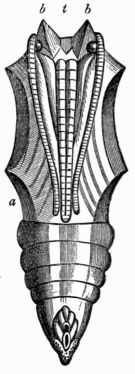
Some days before the moult, split the caterpillar's skin, and you will find the skin which is to take its place already beneath. If, some days before the transformation of the caterpillar into a chrysalis, it is dissected, the rudiments of wings and antennæ may be discovered. If a chrysalis is examined on the outside, all the parts of the future insect can be distinguished under the skin: the wings, the legs, the antennæ, the proboscis, &c.; only, these parts are folded and packed away in such a manner that the chrysalis can make no use of them. It could not, moreover, make use of them on account of their incomplete development. Fig. 127 shows, after Réaumur,[41] a chrysalis magnified and seen from its lower side, on which we observe:—a, the wings; b b, the antennæ; t, the trunk or proboscis.
There is a moment when these parts, pressed one against each other, and as it were swathed up like a mummy, are very easily seen, for they are, as we may say, laid bare. This moment is that in which the pupa has just quitted the caterpillar's skin. It is then still soft and tender. Its body is moistened with a liquid, which, drying rapidly, becomes opaque, coloured, and of a membranous consistency. The result is that the parts which did not cohere in the least when the chrysalis made its first appearance, are fastened together, so that although they could at first be seen, through a layer of transparent fluid, they are now hidden under a sort of veil or cloak. It is necessary to seize then the moment of the birth of the chrysalis, to observe it accurately.
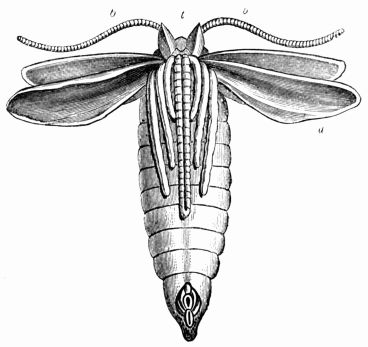
On examining the pupa before the liquid which pervades these parts has had time to dry, it resembles the perfect insect. All the exterior parts which belong to the imago can be distinguished. One recognises the head, which is then resting on the thorax; the two eyes and the antennæ (Fig. 128), which are brought forward like two ribbons; the wings also brought over the thorax, but these are separated artificially in the drawing we have given after Réaumur; [42] and lastly in the space left between the wings, the six legs, and the body of the insect.
Fig. 128.—Chrysalis of the Large Tortoise-shell Butterfly (Vanessa polychloros) whose different parts have been opened before they were fastened down. (a, wings; b b, antennæ; t, trunk, or proboscis.)
To sum up: the pupa, when it approaches the period for being hatched is only a swaddled butterfly. Directly it has strength enough to rid itself of its wrapping, the insect frees itself from its fetters; it flies away, brilliant and free, and its many-coloured wings glitter in the sun.
The duration of the pupa state is variable, according to the species and the temperature. Réaumur placed in a hot-house, in the month of January, some pupæ which, in the ordinary course of things, would not have been hatched till the month of May, and a fortnight afterwards the imagos had appeared. On the other hand, he shut up some pupæ in an ice-house during the whole of a summer, and thus retarded their being hatched by a whole year. The influence of the temperature on the period of emerging, and, consequently, the influence of the seasons on the length of this period, are completely brought to light by these experiments. [43]
We will now see how the insect delivers itself from the last skin. To quit the pupa case is not so laborious an operation as it was for the same insect to quit the caterpillar's skin. This is because the pupa case is drier; it does not adhere to every part of the body, and is brittle. Those insects which are enclosed in a cocoon free themselves of the pupa envelope in the cocoon itself. To witness the last operation, the cocoon may be opened, and the pupa drawn out of it with care. If it is then placed in a box, the metamorphosis may be observed. To study this last evolution more at his ease, Réaumur covered a large extent of the wall of his study with pupæ of the Vanessa polychloros and other species.
When the parts of the body of the insect have attained a certain degree of solidity within the envelope, it has no great difficulty in making the thin and friable membrane which surrounds it split in different places. If it even distends itself or moves, a small opening will be made in the dried skin. If the movements persist, the opening increases in size, and very soon allows the imago to emerge.
Fig. 129. Moth just emerged.
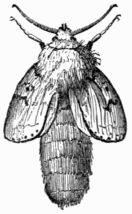
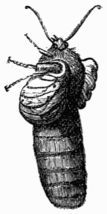
Fig. 130. Moth whose wings are folded up.
It is on the middle of the upper part of the thorax that the envelope begins to split. The split extends over the middle of the forehead and back. The pieces of the thorax open, separate themselves from the other parts to which they were fixed, and the insect can take advantage of the opening which is made, and escape. Little by little also it advances its head. The head is the first out of the old skin, and the insect sets itself entirely free.
This occupies rather a long time; for we must remember that, under the pupal envelope, its legs, its antennæ, its wings, and many other parts, are enclosed in special cases. These peculiar circumstances show that the animal has much trouble and must employ some time in setting free all the parts.
At last our prisoner has come out of its narrow cell, and is delivered from its old covering. What poet can describe to us the sensations of this charming and frail creature which has just risen from the tomb, and for the first time is enjoying the splendid light of day, the radiant sky, and the flowers redolent with delicious perfumes, which are inviting it to kiss and caress them!
The wings strike one most. They are very small at the time of birth.
Fig. 129 represents, after Réaumur, [44] a moth at the moment in which it has just emerged from the pupa. But at the end of a short period the wings become developed; only they are wrinkled, as Fig. 130, given by Réaumur, represents.
Réaumur having taken between his fingers a very short wing of a butterfly which was just hatched, drew it about gently in all directions. He succeeded thus in giving it the whole extent it would have assumed naturally. According to Réaumur the wing of a butterfly just born, which appears so small, is really already provided with all its parts, only it is folded and re-folded on itself. He supposes that what his hands did to lengthen the butterfly's wings, is done naturally by the liquids which are contained in the insect which has just emerged, and whose wings are no longer confined in their cases. At the time of its birth the wings are flat and thick; as they grow, little by little they spread themselves out and become curled up. When they are completely developed and flattened the wings become firm and hard imperceptibly, and this firmness extends at the same time to the whole of the body.
Figs. 131 and 132, borrowed, like the preceding, from the 14th Memoir of Réaumur (sur la transformation des chrysalides en papillons), show the states through which the wings of the same moth pass, before they are thoroughly developed.
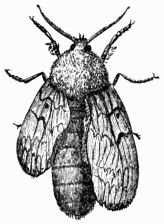
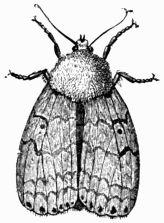
Fig. 131.—Moth whose wings are developing. Fig. 132.—Moth whose wings are developed.
Those pupæ enclosed in cocoons free themselves entirely or in part from their old skin, in the shell itself; but the imago is still a prisoner. It has broken through a first enclosure; it must open itself a way through the second. How does it manage to bore through the often very solid walls of this second prison, so as to regain its liberty? Réaumur states that in the Lackey Moth (Bombyx neustria) the head is the only instrument of which the insect makes use in opening a passage, the compound eyes then acting like files. These files cut the very fine threads of which the cocoon is composed, and as soon as the end of the cocoon is pierced through, the insect uses its thorax like a wedge, to enlarge the hole. It very soon manages to get its two front legs out, fixes itself by them on to the outside, and little by little emerges from its prison.
The Perfect Insect.
Who does not admire the extraordinary splendour, the vivacity, the prodigious variety of colours of these brilliant inhabitants of the air? Some amateurs have devoted to the purchase of certain butterflies large sums of money. "Diamonds," says Réaumur on the subject, "have perhaps beauties no more real than those of a butterfly's wings; but they have a beauty which is more acknowledged by the world in general, and which is more recognised in commerce." The essential character of butterflies and moths makes them very easily recognisable among all other insects. All have four wings, which are covered with scales, that communicate to them the brilliant colours with which they are decorated. It is these scales which adhere to the fingers when we seize one of these charming creatures.
Fig. 133.—Different forms of the scales of Butterflies, after Réaumur.
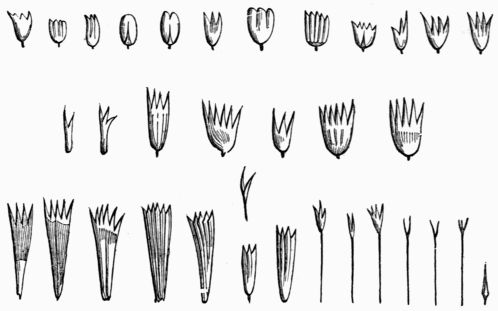
For a long time this dust was thought to be formed of very small feathers, but Réaumur showed that it is composed of little scales. Their form varies singularly, as we may see in Fig. 133, borrowed from the Memoirs of Réaumur, [45] which represents the different forms of the scales which cover the wings of Lepidoptera. M. Bernard Deschamps has closely studied them. According to this naturalist, they are composed of three membranes, or plates, superposed one on the other, of which the first is covered with granulations of a rounded form, which give to these scales their splendid and varied colours; the second plate is covered with silk, forming sometimes curious designs; the third plate, viz., that which is applied to the membrane of the wing, has the peculiar property of reflecting colours the most brilliant and the most varied, although the surface of the scales visible to the eye is often dull and colourless.
"Supposing," says M. Bernard Deschamps, "that a painter was possessed of colours rich enough to represent on canvas with all their splendour, gold, silver, the opal, the ruby, the sapphire, the emerald, and the other precious stones which the East produces, that with these colours he formed all the shades which could result from their combination, one might affirm without the chance of contradiction, that he would have none of these colours and of their various shades, whatever might be the number, which could not be discovered by the microscope on part of the scales of the Lepidoptera, which Nature has been pleased to conceal from our gaze."
Fig. 134.—Portion of the wing of a Moth (Saturnia pavonia major), magnified.
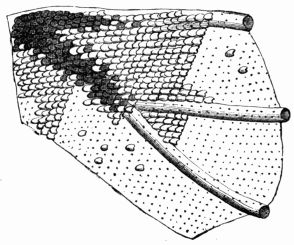
Each of these scales adheres to the membrane of the wing by a small tube, which is solidly fixed to it. Réaumur has called our attention to the admirable arrangement of these scales, which are disposed like those of fish, that is to say, in such a manner that those of a row shall partially overlap those in the following one.
In Fig. 134, representing a portion of the wing of the Saturnia pavonia major, magnified, which we borrow from Réaumur's Memoir, the scales are arranged in rows; isolated scales, and the points where other scales were fixed before they were taken off, are represented.
The membranous frame which supports the coloured scales of butterflies and moths is well worth a moment's consideration. It consists of two membranes intimately united by their interior surfaces, and divided into many distinct parts by horny, fistulous threads, more or less ramified, which seem intended to support the two membranes mentioned above, and which branch out from the base to the edge of the wing. Their number, counting from the exterior edge, is not always the same in the upper and lower wings. It varies from eight to twelve.
With its large and light wings, the butterfly can fly for a long time. But this flight is not in the least regular; it is not made in a straight line. When the insect has to go some distance, it flies alternately up and down. The line it takes is composed of an infinity of zig-zags, going up and down, and from right to left. This irregularity of flight saves the little insect from falling a prey to birds. "I saw one day with pleasure," says Réaumur, "a sparrow which pursued in the air a butterfly for nearly ten minutes without being able to catch it. The flight of the bird was nevertheless considerably more rapid than that of the butterfly, but the butterfly was always higher or lower than the place to which the bird flew, and where it thought it would catch it."
But let us leave the wings to pass on to the other parts of the butterfly. These other parts are the thorax or chest, the body or abdomen, and the head.
The thorax is solidly put together, so as to bear the movements of the wings and legs. These latter are composed, as in other insects, of five parts: the coxa, the trochanter, the thigh, the shank, and the tarsus.
Many butterflies have all their six legs of equal length. In others, the two fore legs are very small, and are not suited for walking. In others, again, they are rudimentary, being deprived of hooks, very hairy, and applied on to the front of the breast.

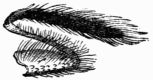
Fig. 135.—Leg of Butterfly armed with hooks. Fig. 136.—Leg not suitable for walking.
This difference of structure may be seen in Figs. 135 and 136, one of which represents, after Réaumur, a leg unsuited for walking, very hairy, and terminated in a sort of brush resembling the tail on a tippet; and the other a leg furnished with hooks.
The abdomen has the form of an elongated, or—in the majority of species—an almost cylindrical oval. It is composed of five segments, each formed of an upper and a lower ring, joined together by a membrane. The first are larger than the others, and generally overlap the edges, which gives to this part of the body the power of dilating considerably.
We must dwell longer on the head. It is generally rounded, compressed in front, longer than it is broad, and furnished with fine or scaly hairs. The important organs of which this part is the seat are the eyes, the antennæ, the palpi, and the proboscis or trunk.
The eyes are more or less spherical, surrounded by hairs, and composed of innumerable facettes. Colours are seen on these as various as those of the rainbow. But the colour which serves as a base to all, is black in some, grey in others; then again there are different gold or bronze colours of the greatest splendour, inclining sometimes to red, sometimes to yellow, sometimes to green. On the compound eye of a butterfly as many as 17,325 facettes have been counted. Simple eyes, or stemmata, are moreover observed in certain species, and are generally more or less hidden by scales.
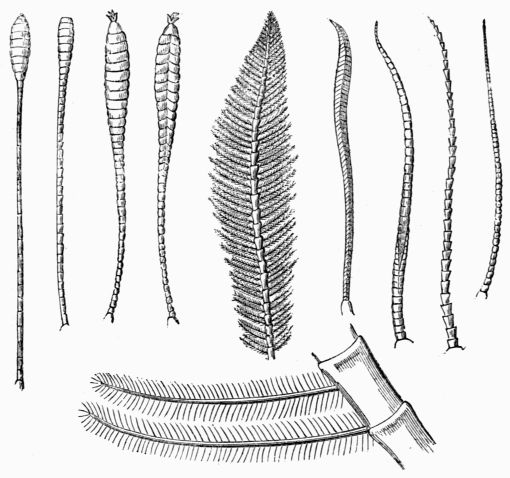
The antennæ are situated near the upper rim or border of each eye. Réaumur has pointed out six principal shapes. One terminates in a little knob, and belongs to the butterflies. The others are variously shaped, and belong to the moths. Some are prismatic, or like beading. And lastly, others are shaped like feathers. We represent, in Fig. 137, the different forms of the antennæ, which Réaumur collected together in plates 8 and 9 of his fifth Memoir. [46]
The palpi are four in number, two maxillary and two labial. The first are generally excessively small; one can only ascertain their existence by the aid of a strong magnifying glass: the second are in general very apparent, straight, cylindrical, covered with scales, and formed of three joints, of which the last is often very small and sometimes very pointed. They also sometimes bristle with stiff or silky hairs.
The trunk is placed exactly between the two eyes. As long as the butterfly does not want to take nourishment, the trunk remains rolled in a spiral. Some are so short, that they scarcely make one turn and a half or two turns; some larger sized make three turns and a half or four turns; lastly, some very long are curled as many as eight or ten times.
This is how the butterfly makes use of its trunk: When fluttering around a flower, it will very soon settle on or quite close to it. The trunk is then brought forward entirely or almost entirely unrolled; very soon afterwards it is almost straightened, then directed downwards, and plunged into the flower. Sometimes the insect draws it out a moment after, curves it, twists it a little, and sometimes even curls it partially up. Immediately it straightens it again, to plunge it a second time into the same flower. It repeats the same manœuvre seven or eight times, and then flies on to another flower.
Fig. 137.—Antennæ of Lepidoptera.
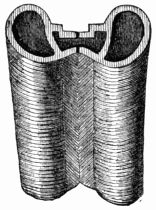
This trunk, of which the butterfly makes such good use, is composed of two filaments more or less long, horny, concave in their interior surfaces, and fastened together by their edges. When cut transversely, one sees, according to Réaumur, [47] that the interior is composed of three small rings. Consequently, there are three canals in the trunk: one central, the other two lateral (Fig. 138). Are all these three used to conduct the juice of flowers into the butterfly's body? Réaumur has made some very interesting observations on this subject, by observing a moth which was sucking a lump of sugar whilst its portrait was being taken.
Fig. 138. Section of a Butterfly's Trunk, after Réaumur.
"I held in one hand," says Réaumur, "a powerful magnifying glass, which I brought near to that part of the trunk I wished to examine; I was sometimes half a minute, or nearly a minute, without perceiving anything, after which I saw clearly a little column of liquid mounting quickly along the whole length of the trunk. Often this column appeared to be intersected by little balls, which seemed to be globules of air which had been drawn up with the liquid.
"This liquid ascended thus during three or four seconds, and then ceased. At the end of an interval of a greater number of seconds, or sometimes after an interval as short, I saw some fresh liquid mounting up along the trunk. But it was straight up the middle of the trunk that it seemed to ascend.
"The Author of Nature has given to insects means of working, which, though very simple, we cannot divine, and which often we are not able even to perceive. Whilst I was observing the trunk of our butterfly, between the columns of liquid which I saw ascending, there were, but more rarely, times when I saw, on the contrary, liquid descending from the base of the trunk to the point. The descending liquid occupied half or two-thirds of the tube. It was no longer difficult to perceive how the butterfly is able to nourish itself on honey, the thickest syrup, and even the most solid sugar. The fluid it sends down is probably very liquid; it drives against the sugar, moistens, and dissolves it. The butterfly pumps this liquid up again when it is charged with sugar, and conducts it along as far as the base of its trunk, and beyond it."
The life of the perfect insect is generally very short. Like nearly all other insects, they die as soon as they have propagated their species. The female lays her eggs, which vary in shape, on the plant which is to nourish her progeny. The colour is also very various, and passes through all sorts of shades. At the moment they are laid, many are covered with a gummy substance, insoluble in water, which serves to stick them on the plant.
In some species the mother lays her eggs on the trunks of trees, and covers them with down or with the hairs which clothe her abdomen, so as to preserve them from cold and damp. She may also hide them entirely under a whitish foamy substance. Some do not lay more than a hundred eggs; others lay some thousands.
To bring the history of the Lepidoptera to an end, it only remains for us to give a sketch of their classification, and to point out some species remarkable, either on account of their beauty or their utility.
We see during the day butterflies flying in our gardens, in meadows full of flowers, or in the alleys of woods. Towards evening, at the sombre hour of twilight, the stroller is sometimes surprised to see pass near him large moths, with a heavy and unequal flight; or, if we go into a garden on a beautiful calm summer's night, bearing a light, we see a crowd of moths flying from all parts towards it.
It is on account of these different hours at which the Lepidoptera show themselves, that naturalists for a long time divided them into diurnal, crepuscular, and nocturnal. This division was simple, convenient, and seemed founded on Nature. Unfortunately, the night fliers of the old authors do not all fly by night: some species, classed by the old naturalists among the crepuscular, or nocturnal, show themselves in the very middle of the day, seeking their food in the hottest rays of the sun. In the regions near the poles they appear during the day, and in other countries they are more or less friends of the twilight.
So as not to multiply methodical divisions, we will confine ourselves to classing the Lepidoptera into two sections.
The first section contains those which fly during the day, which have club-shaped antennæ, and which have their four wings entirely free, and standing perpendicularly [48] when the insect is at rest. They are called Butterflies, or Rhopalocera. This section is divided into a number of families, which comprise many genera. We will content ourselves with calling the attention of the reader to some of the most remarkable of these groups, and to those species which, either on account of their beauty or abundance, strike, or ought to strike, the attention of every one.
Fig. 139.—Swallow-tailed Butterfly (Papilio machaon).
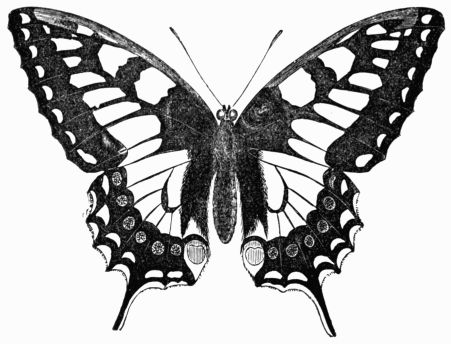
In the family of the Papilionidi, we will mention the genera Papilio, to which belong the Swallow-tailed Butterfly (Papilio machaon), Papilio podalirius, &c., and Parnassius, of which we will notice Parnassius Apollo, and Parnassius Mnemosyne.
Fig. 140.—Larva and Chrysalis of Papilio machaon.
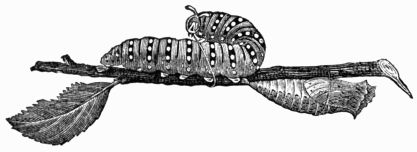
The swallow-tailed butterfly is found plentifully in the fens of Cambridgeshire, and Norfolk and Suffolk, and very commonly in the environs of Paris. It is seen from the beginning of May till towards the middle of June; then from the end of July till September. It frequents gardens, woods, and, above all, fields of lucerne. It is easily taken when settled, particularly at sunset.
This is one of the largest and the most beautiful of the European butterflies. The wings are variegated with yellow and black; the eyes, antennæ, and trunk are black. The body is yellow on the sides and underneath, and black above. The front wings have rounded edges; the hind ones, on the contrary, are notched, and one of these notches is prolonged into a sort of tail. The first are black, spotted and striped with yellow; the second have their upper part and middle yellow, with some touches only of black. Near the margin is a broad black band, dusted with blue; lastly, six yellow spots in the form of a crescent run along the border, and end in a magnificent eye of a reddish colour, bordered with blue.
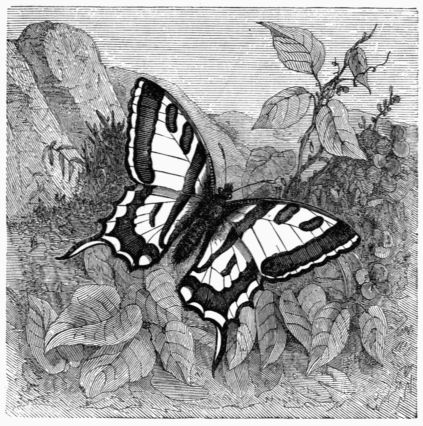
Fig. 141.—Papilio Alexanor.
The caterpillar of this species is large, smooth, and of a beautiful light green, with a transverse black band on each ring. These bands are sprinkled with orange spots. It lives on the fennel, carrot, and other Umbelliferæ. If teased, it thrusts from the first ring after the head a fleshy, orange-coloured tentacle. The chrysalis, attached to a stalk of grass, is sometimes light green, sometimes greyish.
In the low Alps, on the plains near the environs of Digne and Barcelonette, is found in the months of May and July the Papilio Alexanor (Fig. 141), and in Corsica and Sardinia is found the Papilio hospiton, a rare species, nearly related to our swallow-tailed butterfly, but which we will here content ourselves with mentioning.
Fig. 142.—The scarce Swallow-tailed Butterfly (Papilio podalirius).
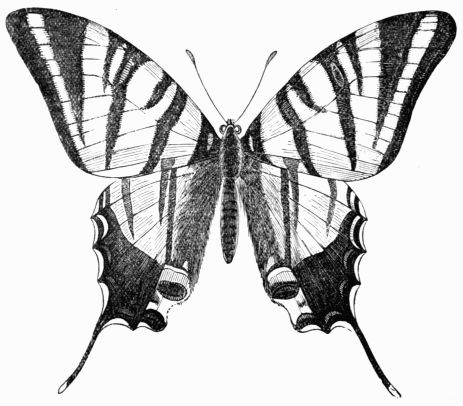
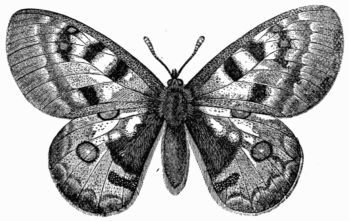
The Papilio podalirius (Fig. 142) is in form very analogous to Papilio machaon. It is of a rather pale yellow colour, marked with black, as if singed. The lower wings have tails longer and narrower than those of the latter, and are magnificently ornamented with blue crescent-shaped spots and an orange-coloured eye bordered below with blue. This beautiful species is not rare at Montmorency, at Ile-Adam, and at St. Germain. It is said to have been taken in England, and is called the scarce Swallow-tail, but its capture is considered as very questionable. It appears for the first time at the end of April, and for the second in July and August. The Parnassius Apollo (Fig. 143), is a beautiful butterfly, which appears in June and July, and is found commonly enough in the Alps, the Pyrenees, and the Cévennes. Its wings are of a yellowish white. The upper part of the fore wings presents five nearly round black spots; the base and the costa, or front edge, of these wings are sprinkled with black atoms. The upper part of the hind wings presents two eyes of a vermilion red, the inner border furnished with whitish hairs amply dotted with black, and marked towards the extremity with two black spots. The under part of the fore wings is very similar to the upper. But the under part of the hind wings presents four red spots bordered by black, forming a transverse band near the base. The body is black, furnished with russety hairs, and the antennæ white, with the club black.
Fig. 143.—Parnassius Apollo.
The larva of the Apollo lives on saxifrages. To affect its transformation it surrounds itself with a slight network of silk in which are confined one or more leaves. This caterpillar is thick, smooth, cylindrical, and covered with small slightly hairy warts, and ornamented on the first ring with a fleshy tentacle in the shape of a Y. The chrysalis is conical, sprinkled over with a bluish efflorescence resembling the bloom on a plum. The Parnassius Mnemosyne is found in the month of June in the mountains of Dauphiné, in Switzerland, Sicily, Hungary, Sweden, and in the Pyrenees.
In the family of the Pieridi we will mention many species remarkable in different ways, such as Pieris cratægi, the black-veined White, Pieris brassicæ, the Cabbage Butterfly, Pieris napi, Pieris callidice, Anthocharis cardamines, the Orange-tip, Rhodocera (Gonepteryx) rhamni, and Colias edusa, or Clouded-yellow. Pieris cratægi is white both above and below; the veins only of the wings are black, and become a little broader at the edge of the upper wings. These black veins on a rather transparent white ground make this butterfly resemble a gauze veil, hence its French name, le gaze. It flies in spring and summer in meadows and gardens, but is not generally common in England. In the first volume of his "Travels in the North of Russia," Pallas relates that he saw insects of this species flying in great numbers in the environs of Winofka, and that he at first took them for flakes of snow. The Pieris cratægi fixes itself at sunset on flowers, where it is easily taken by the hand. During the day, on the contrary, it is difficult to catch. The larva, black at first, afterwards assumes short yellow and white hairs, but it varies much. They live in companies, under a silky web, in which they pass the winter. The leaves of the hawthorn, the sloe, the cherry tree, and of many other fruit trees, serve them for food. The pupa, yellow or white, and sometimes of both colours with little stripes and spots of black, is angular and terminated in front by a blunt point.
Fig. 144.—Pieris brassicæ.
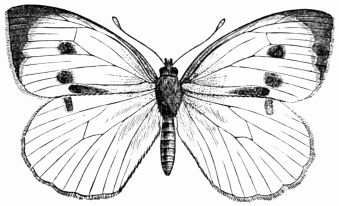
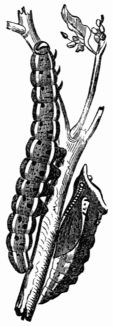
Fig. 145.—Caterpillar and Chrysalis of Pieris brassicæ.
The Pieris brassicæ (Fig. 144), or Cabbage Butterfly, is perhaps the commonest of all butterflies. From the beginning of spring till the end of autumn one sees it flying about everywhere, in the gardens, sometimes near and almost in the interior of towns. It is of a dull white, spotted and veined with black, and it can be seen at a long distance, when flitting from flower to flower, in a meadow or garden. And so children wage desperate war against this flying prey. The pursuit of the cabbage butterfly through the alleys of parks, along the outskirts of woods, or on the green turf of meadows, is the first joy and the first passion of children in the country.
The caterpillar (Fig. 145) is of a yellowish green, or rather greenish yellow, with three yellow longitudinal stripes separated by little black points, from each of which springs a whitish hair. It lives in groups on the cabbages in gardens, and on many other Cruciferæ. It is so voracious that it consumes in a day more than double its own weight, and, as it multiplies very quickly, commits great ravages in the vegetable garden. Its pupa (Fig. 145) is of an ashy white, spotted with black and yellow.
The Pieris rapæ, or Small White Butterfly, differs but little from the preceding except in size. The caterpillar, which lives on the cabbage, turnip, mignonette, nasturtium, &c., is green, with three yellow lines. It does not do these much harm. In France it is called le ver du cœur (the heartworm), because it penetrates in between leaves pressed closely together.
The Pieris napi (Fig. 146), the Green-veined White, is very like the two preceding, but the wings, the lower one especially, have underneath broad veins, or bands, of a greenish colour. The Pieris callidice, the wings of which are white spotted with black, is common in the Alps of France, in Savoy and Switzerland, and in the Pyrenees. Its caterpillar lives near the regions of perpetual snow, on small cruciferous plants.
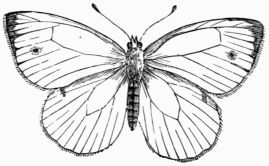
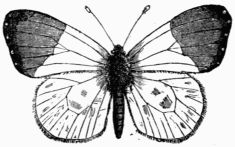
Fig. 146.—Pieris napi. Fig. 147.—Anthocharis cardamines.
The Orange-tips have, in the males, the extremity of the upper wings of a beautiful orange yellow. The rest of the wings is white in the only British species (Fig. 147), which is to be seen in meadows from the end of April till the end of May, and sulphur-coloured in some other species.
One species, extremely common, and which appears with but short interruption from the beginning of spring till the end of autumn, is the Brimstone Butterfly (Rhodocera [Gonepteryx] rhamni). The wings are a lemon yellow, with an orange-coloured spot in the middle of each, and the front border terminated in a series of very small iron-coloured spots. The body of the butterfly is black with silvery hairs.
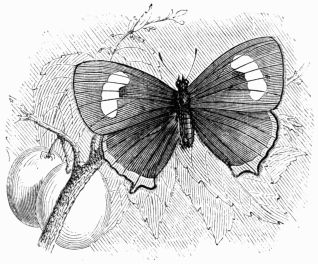
Fig. 148.—Thecla betulæ.
The Colias edusa, or Clouded-yellow, so called from the colour of the upper part of its wings, is not uncommon in meadows and fields in early autumn throughout Europe. The upper side of the wings is of a marigold yellow; the upper ones having towards the middle a large spot of black. At the extremity of each wing is a broad black band, continuous in the case of the male, interrupted by yellow spots in the female. The back of the body is yellow; the legs, as well as the antennæ, rosy.
The family of the Lycænidæ comprises a great number of species, some of which we will mention.
The Theclæ, or Hair-streaks, which the French call Petits Porte-queues, on account of the tails which grace the hind margin of the hind wings, inhabit woods, their larvæ feeding, according to the species, on the birch, the oak, the plum-tree, the bramble, &c.
The Thecla betulæ (Fig. 148), or Brown Hair-streak, is somewhat rare in this country.
Fig. 149.—Thecla quercus.
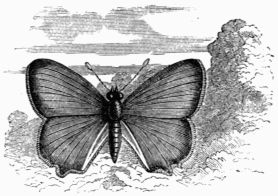
The Purple Hair-streak (Thecla quercus, Fig. 149), which Geoffroy calls the "Porte-queue bleu à une bande blanche," is not rare in woods; but it is very difficult to catch, as it flies nearly always by couples at the tops of trees. We still further represent here the Black Hair-streak (Thecla pruni, Fig. 150), and the Green Hair-streak (Thecla rubi, Fig. 151).
Fig. 150.—Thecla pruni.
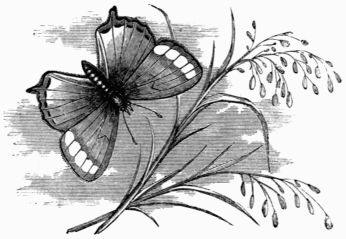
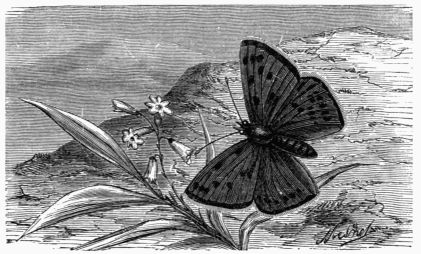
In the meadows are found the Copper Butterflies; butterflies with wings of a bright, tawny colour, with black marks on the upper side. Such is the Polyommatus (Lycæna) phlæas (Fig. 152), which is very common from the end of May until late in the autumn. The upper part of the wing is coppery, spotted with black, the under side of a grey colour, sprinkled with small eyes, and bordered by a zone of tawny spots. Linnæus counted forty-two little black eyes on the under side of the wings.
Fig. 151.—Thecla rubi.
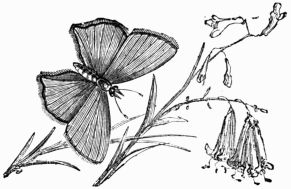
We also figure Polyommatus (Lycæna) virgaureæ (Fig. 153), and Polyommatus (Lycæna) gordius (Fig. 154), neither of which occurs in this country.
Fig. 152.—Small Copper (Polyommatus [Lycæna] phlæas.)
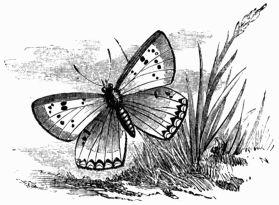
In the meadows, the gardens, and the lucerne and clover fields, are found the charming Blue Butterflies, the wings on the upper side, in the majority of instances, blue in the case of the males, brown in the females.
Fig. 153.—Polyommatus (Lycæna) virgaureæ.
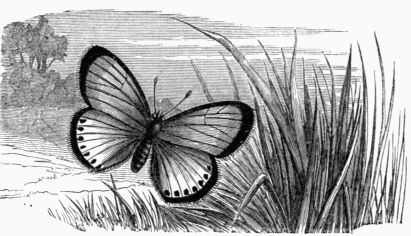
They comprise the genus Lycæna, or, as it is frequently called, Polyommatus,[49] though that name is now generally given to the preceding. We will content ourselves here by giving drawings of a few species of the genus, namely, the Lycæna (Polyommatus) Corydon, or Blue Argus (Fig. 155), which is not uncommon wherever there is chalk, in May and August; the Lycæna (Polyommatus) battus, or Brown Argus (Fig. 156), which does not occur here; the Lycæna (Polyommatus) ægan, which flies about our sandy heaths.
Fig. 154.—Polyommatus (Lycæna) gordius.
The caterpillars of this genus, as also those of the preceding, are broad and flat, resembling wood-lice, with very short legs, and are very slow in their movements.
Fig. 155.—Lycæna (Polyommatus) Corydon.
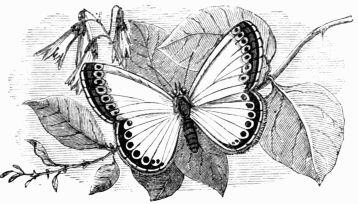
In the numerous family of the Vanessidæ are placed the beautiful species known as the large and small Tortoise-shell, the Peacock, &c.
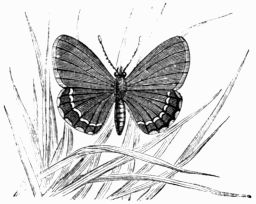
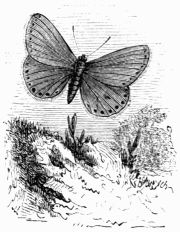
Fig. 156.—Lycæna (Polyommatus) battus. Fig. 157.—Lycæna (Polyommatus) ægon.
The large Tortoise-shell Butterfly (Vanessa polychloros, Fig. 158) has the wings of a tawny colour above, and of a blackish brown below, with darker spots, bordered by a black band, with a stripe of yellowish colour running down the middle. It is found in July and September on the oak, the elm, the willow, and many fruit trees.
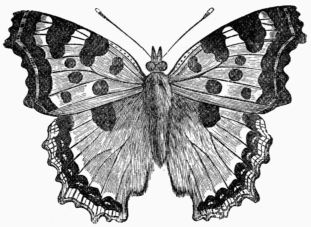
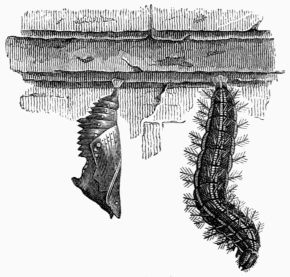
Fig. 158.—Large Tortoise-shell Butterfly (Vanessa polychloros). Fig. 159.—Larva and chrysalis of the large Tortoise-shell (Vanessa polychloros).
The larva (Fig. 159) is bluish or brownish, with an orange-coloured lateral line, bristling with yellowish hairs. The chrysalis, which is angular, and of a red tint, is ornamented with golden metallic spots.
Fig. 160.—Small Tortoise-shell Butterfly (Vanessa urticæ).
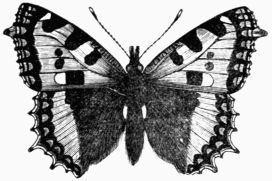
Fig. 161.—Peacock Butterfly (Vanessa Io).
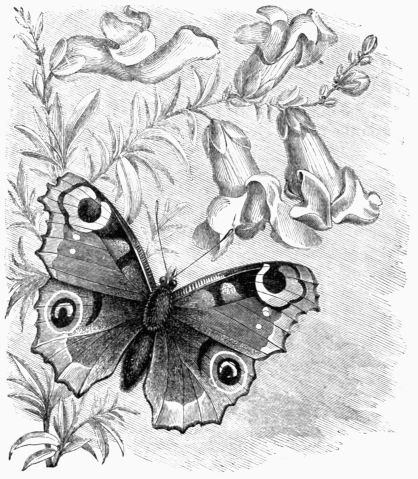
We give here a drawing of the small Tortoise-shell (Vanessa urticæ, Fig. 160), which resembles the preceding, but is smaller. Its caterpillar, bristly, blackish, with four yellowish lines, lives in companies on the nettle. The Peacock Butterfly (Vanessa Io, Fig. 161) is very easily recognised by the peacock's eyes—to the number of four, one on each wing—which have gained for it the name it bears. The eye on the upper wings is reddish in the middle and surrounded by a yellowish circle. That on the lower ones is blackish, with a grey circle round it, and contains bluish spots. The upper part of the wings is of a russety brown, the under part blackish. This Vanessa is met with in the woods, in lucerne fields, and in gardens. Its spiny caterpillar is of a shiny black with white dots, and lives in companies on nettles. The chrysalis, at first greenish, then brownish, is ornamented with golden spots.
Fig. 162.—Camberwell Beauty (Vanessa Antiopa).
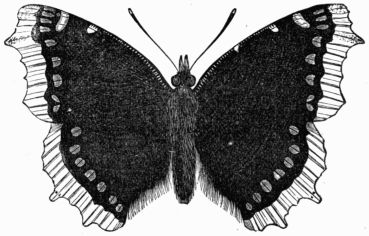
The Vanessa Antiopa (Fig. 162), one of the greatest of entomological rarities in England, is not very common in the woods about Paris, but it is frequently found in the environs of Bordeaux, and, above all, at the Grande Chartreuse (in the department of Isère). The Parisian collectors go as far as Fontainebleau in pursuit of this beautiful species, with angular wings, of a dark purple black, with a yellowish or whitish band on the hind border and a succession of blue spots above it. The caterpillar is black, and bristly, with red spots. It lives in companies on the birch, the aspen, the elm, and different kinds of willows. The pupa is blackish, sprinkled with a bluish powder, and has ferruginous-coloured dots. The butterfly, which emerges from the chrysalis in July and August, is found, after hybernation, at the end of February and until May. It flies very rapidly, and is very difficult to catch.
Fig. 163.—Red Admiral Butterfly (Vanessa Atalanta).
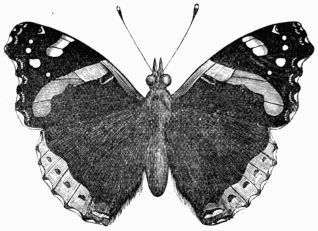
Fig. 164.—Painted Lady Butterfly (Vanessa [Cynthia] cardui).
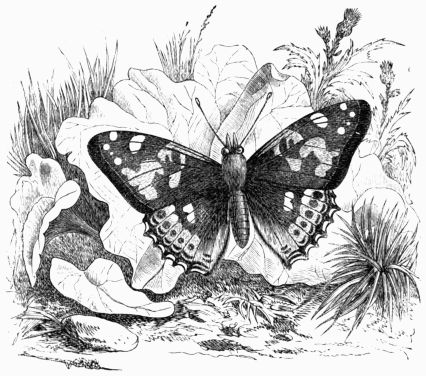
The Red Admiral Butterfly (Vanessa Atalanta, Fig. 163) has bands of vermilion colour on the upper side of its wings, which are black above, and variegated beneath with different colours. The caterpillar is bristly and blackish, with a succession of spots of lemon- colour on its sides. It lives in solitude on the stinging-nettle (Urtica dioica). Its chrysalis is blackish, with golden spots. This magnificent insect is common at the end of summer, and easy to catch. If missed once it comes back again almost immediately, and almost alights on the net of the collector.
The Painted Lady (Vanessa [Cynthia] cardui, Fig. 164) owes its vernacular name to the beauty of its colours. The upper wings are covered above with tawny spots, rather cerise coloured towards the interior, and with white spots on the hind margin towards the tip of the wing; the whole on a lightish ground. The lower wings are of a reddish tawny colour with many black spots, a circular row of which borders the wing. The caterpillar is bristly, brownish, with yellow lateral broken lines. It lives in solitude on many species of thistle, on the artichoke, the milfoil or yarrow, &c. It makes for itself a web, rather like a spider's nest, and lives therein. The chrysalis is greyish, with numerous golden dots. The perfect insect shows itself almost without interruption, from spring till autumn. It flies rapidly, and in certain seasons is abundant.
Fig. 165. The Comma Butterfly (Vanessa C. album).
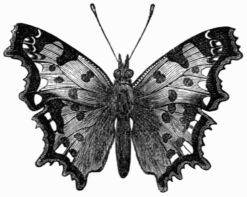
The Vanessa (Grapta) C. album (Fig. 165), or Comma Butterfly, is common in parts of England. Above, its wings are tawny, spotted with black. Below, they are more or less brown, with different tints, and sometimes a little blue. On the under side of the lower wings is a white spot of the form of a C. "This spot," says old Geoffroy, "caused this butterfly to have the name of gamma given to it, and its colour of Diable enrhumé (sic), as also the singular cut of its wings, has caused it to be called by others Robert le Diable." Its caterpillar lives on the nettle, the honeysuckle, the currant, the hazel, and the elm. It is of a reddish brown, with a white band on the back. Réaumur calls it the Beadle, comparing it to the church beadles, who usually dress in glaring colours.
The brilliant Vanessæ, of which we have just briefly described some remarkable species, have been the cause of superstitious terror. This must at first sight seem incredible, but it has arisen thus: When they have just quitted the pupa, a red-coloured liquid drops from them. If a great many butterflies are hatched at the same time, and in the same place, the ground becomes, as it were, sprinkled with drops of blood. Hence the origin of some of those pretended showers of blood, which, at different periods, have terrified the ignorant, too much imbued with religious superstitions.
At the beginning of the month of July, 1608, one of these supposed showers of blood fell on the outskirts of Aix, in Provence, and this rain extended for the distance of half a league from the town. Some priests of the town deceived themselves, or, desirous of turning to account the credulity of the people, did not hesitate to attribute this event to Satanic agency. Fortunately, a learned man, M. de Peiresc, who was not only well versed in the knowledge of ancient literature, but who was, moreover, familiar with the natural sciences, discovered that a prodigious multitude of butterflies were flying about in the places which were thus miraculously covered with blood. He collected some chrysalides and put them into a box, and letting them hatch there, observed the blood-like liquid, and hastened to make it known to the friends of the miraculous. He established the fact that the supposed drops of blood were only found in cavities, in interstices, under the copings of walls, &c., and never on the surface of stones turned upwards; and proved by these observations that they were drops of a red liquid deposited by the butterflies.
However, in spite of the reassuring remarks of the learned Peiresc, the people in the outskirts of Aix continued to feel a genuine terror at the sight of these tears of blood which stained the soil. Peiresc attributes to this same cause some other showers of blood related by historians, and which took place about the same season. Such was a shower which was supposed to have fallen in the time of Childebert, at Paris, and in a house in the territory of Senlis. Such again was a so-called bloody shower which showed itself towards the end of June, during the reign of King Robert of France. Réaumur points out the large Tortoise-shell as being the most capable of spreading these sorts of alarms, founded on a deplorable ignorance and the spirit of superstition.
"Thousands," says he, "change into pupæ towards the end of May or the beginning of June. Before their transformation they leave the trees, often fastening themselves to walls, and, making their way into country-houses, they suspend themselves to the frames of doors, &c. If the butterflies which come out of them towards the end of June or the beginning of July were all to fly together, there would be enough of them to form little clouds or swarms, and consequently there would be enough to cover the stones in certain localities with spots of a blood-red colour, and to make those who only seek to terrify themselves, and to see prodigies in everything, believe that during the night it had rained blood."
Fig. 166.—White Admiral (Limenitis sibilla).
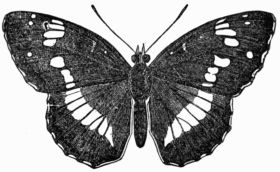
In the family of Nymphalidæ, we will first mention the White Admiral (Fig. 166). The upper side of its wings is of a dark brown, almost black, traversed in the middle by a white band divided into spots very close to each other. The lower part of the wings is ferruginous, with a band and spots of white, as on the upper, besides which it has a double hinder transverse row of black dots. These dots are followed on the hind wings by some white spots, and the whole of the inner margin is of a glossy ashy blue, with the base spotted with black. This butterfly is not rare in the month of July in woods in the south of England, where it flies round and settles upon the branches of the underwood. The caterpillar is of a delicate green, with a lateral white stripe, and rather bristly. It feeds on honeysuckle. The pupa is angular, of greenish colour, with golden spots.
Fig. 167.—Limenitis camilla.
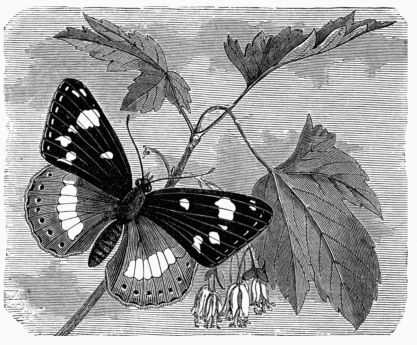
The Limenitis camilla (Fig. 167), of which the black on the wings is shot with blue, is not found in England.
In the month of July the Apatura ilia (Fig. 168) and the Purple Emperor (Apatura iris), sylvan insects of strong flight, whose wings are beautifully shot with violet blue when examined in certain lights—the latter resembling Ilia, but wanting the eye-like spots on the front wings—are met with. Iris only is found in this country. Both species occur in the environs of Paris.
Fig. 168.—Apatura ilia.
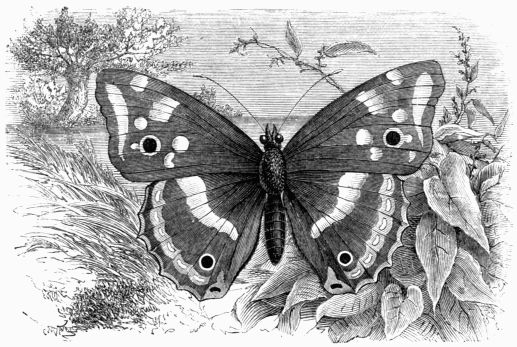
The Charaxes jasius (Fig. 169), which is found along the whole of the Mediterranean coast, has its lower wings terminated in two points, whence the peasants call this butterfly the Pacha with two tails. The upper part of its wings is of a brown colour of changing hues. The hind margin of the fore wings has along it a tawny band with a fine black line running round. The hind wings have their hinder margin black, and garnished with a little white fringe. The two tails are black, and the groove of the inner margin is of an ashy grey. The underneath of the wings is ferruginous, with spots of an olive brown set in a framework of white towards the base.
Fig. 169.—Charaxes jasius.
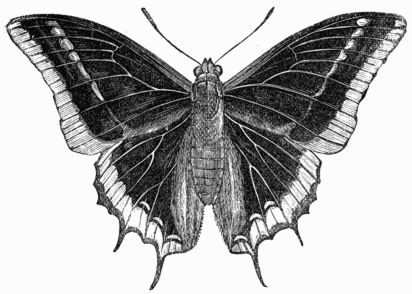
The caterpillar is green, and flat like a slug, with four yellow horns bordered with red (Fig. 170). It lives on the arbutus, a shrub common enough on the hills and mountains of the coast of the Mediterranean.
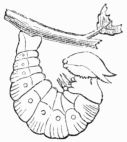
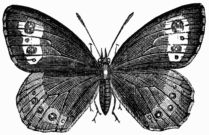
Fig. 170.—Larva of Charaxes jasius about to change to a pupa. Fig. 171.—Erebia Euryale.
To the family of the Satyridi belongs the Erebia Euryale (Fig. 171), which is found in the month of July in sub-alpine regions; the Chionobas aello (Fig. 172), which is found in the Alps of Switzerland, of the Tyrol, and of Savoy, and which is common enough, in the month of July, on the summit of Montanvers, near the mer de glace; the Satyrus janira, or Meadow Brown (Fig. 173), which is very common, in the months of June and July, in woods and fields.
Fig. 172.—Chionobas aello.
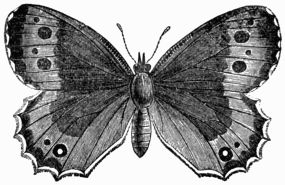
We now pass on to the second section of Lepidoptera.
Fig. 173.—Meadow brown (Satyrus [Hipparchia janira).
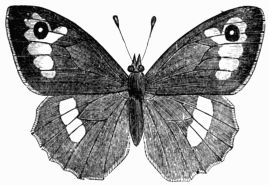
It contains those whose flight in the majority of species is nocturnal or by twilight, but by day in some species. The antennæ are more or less swollen out in the middle or before their extremities, and, independently of that, sometimes prismatic, sometimes cylindrical, sometimes pectinated or indented. The body—which was small in comparison to the wings, and which was remarkably thin between the thorax and the abdomen in the first section of Lepidoptera—is in this section very much larger in proportion to the wings, and is not drawn tightly in between the thorax and the abdomen. The wings are horizontal or slightly inclined when the insect is at rest; the upper then cover the lower, which are generally comparatively short and kept back by a bridle on the first, in the case of the males only.
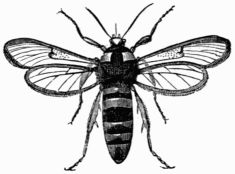
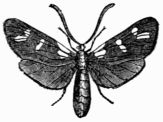
Fig. 174.—Sesia apiformis. Fig. 175.—Six-spot Burnet Moth (Zygæna filipendulæ).
Fig. 176.—Cocoon of the Zygæna filipendulæ.
We will take the genus Sesia as the representative of the Sesiidæ. These singular insects have membranous wings, and resemble various species of Hymenoptera. The largest species is the Sesia apiformis (Fig. 174), that is, bee-like, which is found in this country, resting on the trunks of willows and poplar-trees, from the end of May till the middle of July. It resembles a hornet, and is of the same size and has the same colours; only they are not quite so bright. When this moth is just hatched its wings are ferruginous; but its scales, light and caducous, fall as soon as the insect begins to fly. The caterpillar, which lives in the trunks or roots of willows and poplar-trees, is of a yellowish colour. The pupa is long, of a brownish colour, enclosed in a cocoon composed of agglutinated saw-dust, the product of the caterpillar's erosions.
In the middle of summer the meadows are frequented by moths, with brilliant black and velvety wings, marked with red, which fly heavily, and only for a short time together. They remain motionless during the great heat of the day. These are the Zygænæ, or Burnets, of the family of the Zygænidæ. The Ram Sphinx of Geoffroy, or the Six-spot Burnet Moth (Zygæna filipendulæ, Fig. 175), is common from the end of June till the beginning of August. Its legs, antennæ, head, and body are black and rather hairy; its upper wings are of a brilliant bluish green, with six spots of a beautiful red on each, bordered by a little green. The caterpillar is yellow, spotted with black; its cocoon is boat-shaped, with longitudinal furrows, and is straw colour (Fig. 176).
Next to Zygæna comes Procris, the species of which fly during the day in damp fields. We will mention particularly the Procris statices (Fig. 177), which is plentiful enough where it occurs between the middle of June and the middle of July, on the sides of hills. Its fore wings, antennæ, and the whole of its body, are of a blue green above. The same wings are of the same colour below, and the surfaces of the lower ones are of an ashy brown.
Fig. 177.—The Forester (Procris [Ino] statices)
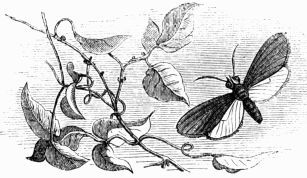
The Sphinges, that is, those species that form the family of the Sphingidæ, have received this general name from the attitude which their caterpillars often assume. Raising the fore part of the body, which attitude resembles the Sphinx of mythology, they keep for a very long time this state of immobility. They fly very rapidly and briskly, and only make their appearance for the most part after sunset. The caterpillars, which in this group are without hair, and have almost always a horn on the eleventh segment of the body, metamorphose themselves in the earth, without forming hard cocoons. The chrysalis are sometimes enveloped in a very slight shell, or cocoon, which when it exists is formed of particles of earth or of vegetable débris bound together by threads. This family comprises species generally remarkable for their size and beauty.
The genus Macroglossa contains some species which fly rapidly and for a long time together during the day. We will mention particularly the Humming-bird Sphinx (Macroglossa stellatarum). This moth (Fig. 178) has attracted the attention of all who have ever spent much time in a flower garden. In Burgundy the children call it bird-fly. In passing from one flower to another it has brisk and rapid movements, but it remains suspended in the air before each; it does not alight upon any, it is always flying, thrusting its long trunk the while into the corollæ of flowers, counterbalancing the action of its weight by the continuous vibration of its wings.
We will describe in a few words this robust inhabitant of the air, this charming bird-fly. The Macroglossa stellatarum shows itself during the whole of the fine season, and till the middle of autumn, in our climate. It often penetrates in the middle of the day into our houses, and knocking itself against the window-panes, falls an easy prey to children. Its front wings are of an ashy brown, of changing hues above, with three black, transverse, undulating lines. The lower, shorter than the others, are of a rusty-yellow colour. All the wings are yellowish below near the body, ferruginous in the middle, and of a dark brown at their extremities.
Fig. 178.—Humming-bird Hawk-Moth (Macroglossa stellatarum).
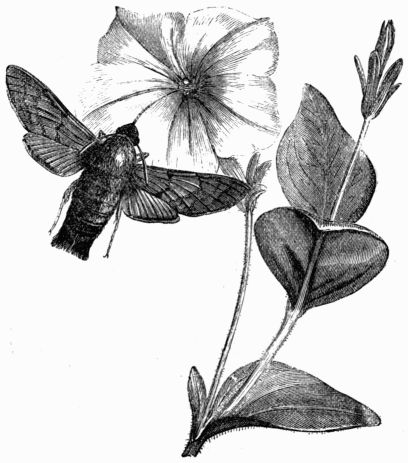
Fig. 179.—Caterpillar of Humming-bird Hawk-Moth (Macroglossa stellatarum).
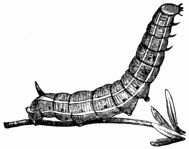
The body is long, brown, hairy, and terminating in a tuft of divergent hairs, reminding one of a bird's tail. It is for this reason that it has been called by the French Sphinx Moineau, or Sparrow Sphinx. This resemblance is so great, that Mr. Bates, in his book on the Amazons, says he often shot species of this genus in mistake for humming-birds. The caterpillar of this remarkable Lepidopteron (Fig. 179) is of a pale green, with eight transversal rows of small white dots and four longitudinal rows, of which two are white and two yellowish. It has a dark blue horn, with an orange-coloured tip. It lives on different species of bed-straw, but by preference on the Galium mollugo. Before its metamorphosis, it encloses itself in a shapeless cocoon, made of the débris of leaves held together by threads, and placed on the surface of the ground. The pupa (Fig. 180) is of a light grey, sprinkled over with brown dots, and striped with black. Its skin is so thin and transparent that one can follow it through all the phases of transformation to the imago.
Fig. 180.—Pupa of Macroglossa stellatarum.
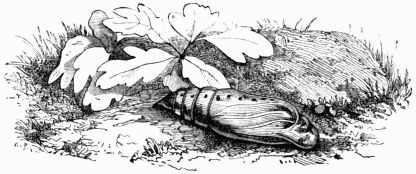
The genus Deilephila is composed of species whose flight is rapid, and after sunset. Such are the Deilephila euphorbiæ, the Oleander Hawk-Moth (Deilephila [Chærocampa] nerii), and the large Elephant Hawk-Moth (Deilephila [Chærocampa] elpenor).
Fig. 181.—Deilephila euphorbiæ.
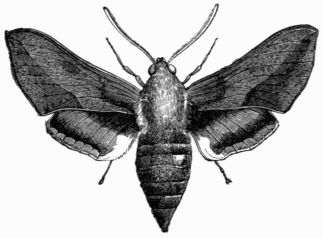
The Deilephila euphorbiæ (Fig. 181) has the upper wings of a reddish grey, with three spots of greenish or olive colour along the costa, or front margin, and a broad black oblique band along the hind margin. The lower wings are red, with the base black, and a transverse black band towards the edge; they have, moreover, a large round white spot on the inside; beneath the wings are red, as also is the body, which is covered above with greenish hairs. This species is exceedingly rare here, but is plentiful on the Continent during the months of June and September.
Fig. 182.—Larva of Deilephila euphorbiæ.
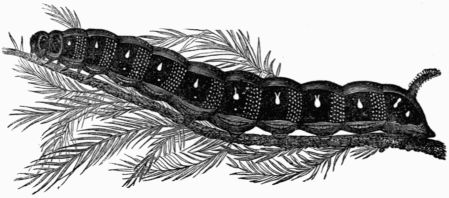
The larva (Fig. 182) is one of the most remarkable of the genus on account of the splendour and the vividness of its colours, and appears to be covered with varnish. It has a number of small yellow dots very close to each other on a glossy black ground, which are ranged in circles. On each side of the body are two longitudinal rows of spots generally of the same colour as the dots, and a narrow band of carmine runs down the middle of the back, and a similar band, which is intersected by yellow, is to be seen above the legs. This caterpillar is almost always found on the Cyprus-leafed spurge. It is found first at the end of June. Generally the chrysalis passes through the winter, and the moth emerges in the following year.
Fig. 183.—Deilephila (Chærocampa) nerii.
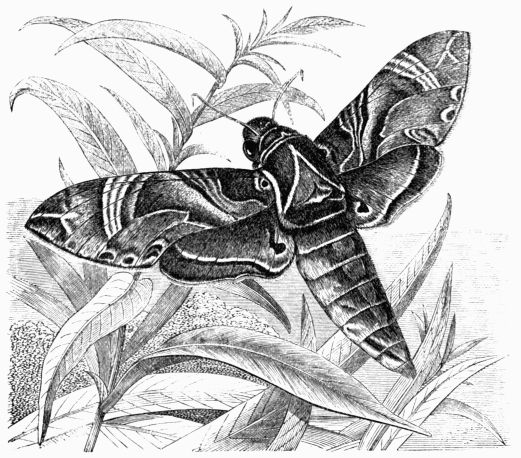
The Deilephila (Chærocampa) nerii (Fig. 183), or Oleander Hawk-Moth, is a charming species almost peculiar to hot countries, where the shrub from which it derives its name grows spontaneously—that is to say, in Africa, in the southern parts of Asia, in Greece, in Spain, &c. Carried forward by its rapid flight, and assisted by atmospheric currents, these beautiful insects sometimes come accidentally into the countries of Central Europe. They have been met with many times in Paris, in the garden of the Luxembourg, where the oleander is cultivated under glass. But those which are hatched in the environs of Paris never reproduce their species, on account of the coldness of the climate. Both larva and imago—the former on periwinkle—have been found in the same locality.
Fig. 184.—Larva of Deilephila (Chærocampa) nerii.
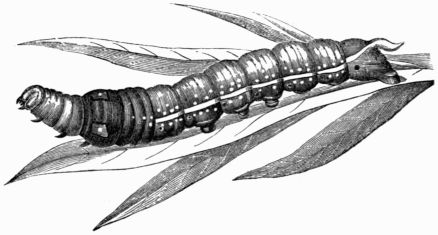
The caterpillar of this species (Fig. 184) is one of those called by the French Cochonnes, because their two first rings, which are retractile and drawn back under the third when the insect is at rest, taper in such a way as to resemble the snout of a pig, hence the English name "Elephant," when they change their place or are engaged in eating. It is of a beautiful green, with white stripes and dots on the sides, and marked on the third segment with two large spots like eyes, of an azure blue, encircled with black, and having white pupils. A short orange-coloured horn rises at the extremity of the body. A few days before its transformation, this caterpillar entirely loses its rich livery, it becomes brown on the back, and of a dirty yellow on the rest of its body, and constructs for itself a cocoon at the foot of the shrub on which it lived, with the débris of leaves fastened together with threads.
Fig. 185.—Pupa of Deilephila (Chærocampa) nerii.
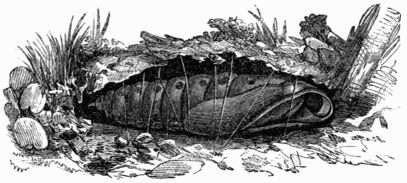
The cocoon contains a chrysalis (Fig. 185) of a hazel brown, delicately streaked with a darker brown, and with a very conspicuous black spot on each of its stigmata.
The Elephant Hawk-Moth (Deilephila [Chærocampa] elpenor, Fig. 186) is not rare during the month of June. Its fore wings are purple red, glossy above, with three bands of a light olive green, having at the base a small black spot. The inner margin is garnished with white hairs. The hind wings are of a dark rose colour above, with the base black, and the hind margin bordered with white. The four wings are rose coloured below, with the costa and the middle of an olive green; the upper ones have their interior border tinged with a blackish colour. The body is rose colour, with two longitudinal bands of an olive green over the abdomen, and five diverging lines of this colour on the thorax. The sides of the abdomen have along them a double series of yellowish points.