Front matter (continued 10)
Reading edition
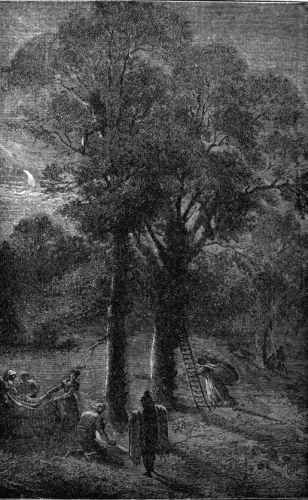
XII.—Gathering Cantharides.
The Stylopidæ, for which Kirby, [122] in 1811, instituted a distinct Order, which he called Strepsiptera, in allusion to the contortion of the elytra, and to which Latreille [123] subsequently applied the name of Rhipiptera, are, perhaps, the most anomalous of all insects. Great diversity of opinion has existed respecting their affinities; but modern systematists, with but few exceptions, concur in referring them to the Order Coleoptera, and locating them in proximity to Meloë. In the larva state, all the known species of the family inhabit the bodies of hymenopterous insects of the genera Andrena, Polistes, &c., in this particular resembling the dipterous genus Conops, which inhabits the body of humble bees, [124] and apparently in no way inconveniencing their victims; a fact which has been accounted for on the supposition that their existence in the larva state is but short, and that their attacks being directed against the abdomen, and not the thorax, the seat of life in insects, their presence does not affect the activity of the victim. The larva has a soft fusiform body, surmounted by a somewhat globose head. While feeding, the head is towards the base of the abdomen; but on changing to a pupa, this position is reversed, and the head—at first of light brown, but which after a short time becomes black—thrust out between the plates of the abdomen.
The imagos, which are of small size, namely, about the eighth of an inch long, are found during May and June. They have four wings, but the anterior pair, of hard texture, somewhat resembling elytra, but hardly answering to them in structure, are very poorly developed, and curled round the front pair of legs, hence the name bestowed, by Kirby, from [Greek: strepssis], a twisting, and [Greek: pteron], a wing; the posterior wings are fully developed, and fold up like a fan, whence the Order received the name of Rhipiptera from Latreille. The eyes, the facettes of which are few in number, are placed on a footstalk, whence the name of the genus Stylops. The parts of the mouth connect the Strepsiptera with the mandibulated insects, although by some supposed to bear analogy by their functions to those parts in the Diptera. The male only is winged; the female is very like an apodal larva, the larva being an active hexapod.
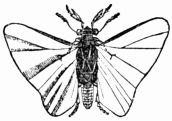
The family Stylopidæ is divided into four genera, of which two only, Xenos and Stylops, were described by Kirby in the essay referred to above. First, Xenos, from [Greek: xenos], a guest, the most prolific in species, of which Xenos Rossii, sometimes called vesparum, may be taken as the type. Secondly, Elenchus, of which Elenchus Walkeri is the type. Thirdly, Stylops (Fig. 543), parasitical on various species of Andrenæ, of which Stylops Melittæ, having a fleshy abdomen and the wings longer than the body, may be considered typical: and lastly, Halictophagus, of which only one species, infesting Halictus æratus[125] named Halictophagus Curtisii, is known to exist, and which makes its appearance in the month of August.
Fig. 543.—Stylops (magnified).
These singular insects are found in various parts of the world—Europe, Australia, and America. They were discovered by Professor Peck almost simultaneously with Mr. Kirby's discovery in this country, and to whom he sent specimens of a species which has received the name of Xenos Peckii lately, in New Zealand and elsewhere.
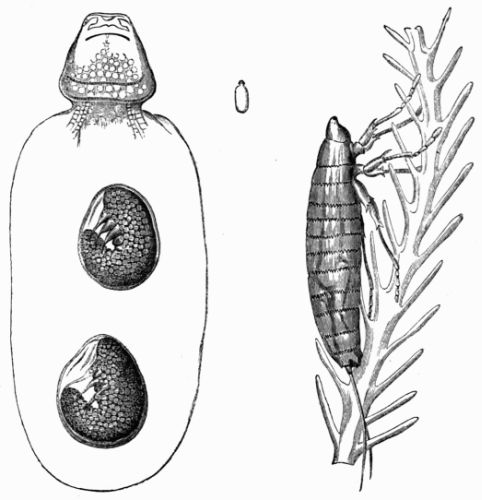
Siebold, in 1843, having obtained some eggs, was able to observe the larvæ, and he soon discovered that the females of Stylops, one of the Strepsiptera, were blind, had no legs, and always retained the appearance of larvæ, and that they never quitted the bodies of those insects, in which they pass a parasitic existence. George Newport paid great attention to the history of these curious insects, and when he wrote his article, "Insecta," in the "Cyclopædia of Anatomy and Physiology," four distinct genera of these minute parasites had already been discovered. One of the largest species (Stylops Spencii) is scarcely more than two lines in length, while the smallest species yet known is not more than two-thirds of a line, or scarcely a line in breadth with its wings expanded. They undergo metamorphosis; and the males, when they have become perfect insects, fly and roam about, but the females are condemned to a perfectly quiet life. The head and the thoracic segments of the bodies of these last are united completely, but the abdomen, which is very large, always remains soft, so that the whole of the body only appears to be formed of two portions. They are ovo-viviparous insects, and the young larvæ escape as such from the body of the mother. They are active creatures, and, being furnished with long legs, crawl over the hairs and skin of the hymenopterous insect they are parasitic upon. They behave like the larvæ of Meloë and Sitaris, whose peculiar methods of life have been noticed in our description of the Coleoptera. Clinging on to a wasp or a bee, they are carried off, and finally arrive in the nest or hive, as the case may be, and there they attack the larvæ. When once fixed upon the hymenopterous larvæ, they undergo a change of skin, and their shape then becomes totally different, and their legs are atrophied. But these parasites being exceedingly small, do not kill the larvæ; they suck their juices, after the manner of the Ichneumons, and do not interfere with the metamorphoses of the insects upon which they are parasitic. On the right hand, in the accompanying engraving (Fig. 544), there is a larva much magnified, lately born, and climbing upon the hair of one of the Hymenoptera, and on the left hand there is a perfect female insect, very much magnified, with ovo-viviparous larvæ within its abdomen, and between the two figures there is a representation of a larva of the natural size. It is evident, however, that ova may be expelled from the mother before they are hatched.
Fig. 544.—Female and Larva of Stylops.
Packard describes the curious history of the female Stylops, which he found parasitic on one of the bees. He caught the bee, and on examining it he noticed a pale reddish-brown triangular mark on the abdomen, and this was the flattened head and thorax of a female Stylops. The creature is included in the body of the bee, and is nourished by its juices. The head and thorax of the parasite were noticed to be soldered into a single flattened mass, the baggy hind body being greatly enlarged, like that of the female white ant. On carefully drawing out the whole body from the bee the mass was found to be very extensible, soft, and baggy, and on examining it under a high power of the microscope, multitudes of very minute larvæ were observed, and they began to issue out from the body of the parent all alive, and not as eggs. The male of this Stylops childreni is totally unlike its partner, having large hind wings, and being able to fly, as has already been noticed. It appears, then, that the larvæ are hatched or crawl out of the body of the mother on to the body of the bee, and are then transported to its nest; then they enter the body of the bee larva, and live upon its fatty matter. The male Stylops is turned into a pupa within the bee, and so is the female; but after the second metamorphosis the male flies off, leaving his wingless partner imprisoned for life, and she usually dies immediately after giving birth to her myriad offspring (Packard). The female respires by peculiarly arranged tracheæ, and absorbs nourishment through her skin as well as by means of an alimentary canal, which ends in a blind sac. All the beauties of the female, so far as they are visible to the male, consist in the tiny patch which appears just without the body of the unfortunate bee, and the ova collect in a space which opens between the united head and body and the abdomen.
The genus Mylabris corresponds most in structure, in appearance, and in properties, to Cantharis, whose place they take in the East, in China, and in the south of Europe. They are found in clusters on the flowers of chicory, thistles, &c. The Mylabris chicorii, common enough in France, especially in the south, is of small size, whilst the other species are rather large. It is black, hairy, with a large yellowish spot at the base of each elytron, and two transverse bands of the same colour.
Another genus of this family is Meloë, with very short elytra, and without wings. They walk slowly and with difficulty on low plants, the female dragging along an enormous abdomen filled with eggs. They are generally observed in spring. In Germany they give them the name of Maiwurm (Mayworm). Their succulence would expose them, without doubt, to the voracity of birds and of insect-eating Mammifers if they had not the power of exuding at will, in the moment of danger, from all their articulations, an unctuous humour of a reddish-yellow colour, the odour and probably also the caustic properties of which repel the aggressor. The females lay their eggs underground, and out of these come forth larvæ of a strange shape. Swallowed by cattle, they cause them to swell and die. It is for this reason that Latreille has given it as his opinion that these insects are the Buprestis of the ancients, of which the law of Cornelius speaks, "Lex Cornelia de sicariis et veneficis." But the name of Buprestis was applied by Linnæus to a genus of which we shall treat farther on, and it has been generally adopted by naturalists.
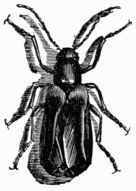
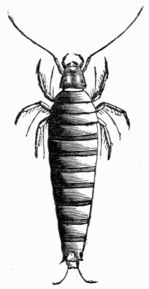
Fig. 545.—Sitaris humeralis. Fig. 546.—First larva of Sitaris humeralis (magnified).
The commonest among the Meloës is the Meloë proscarabæus, which is to be found in abundance, in the month of April, in the meadows near the bridge of Ivry in the environs of Paris. The metamorphoses of the insects of this family had remained for a long time surrounded with an impenetrable veil of mystery, but the researches of Newport in England, and of M. Fabre (of Avignon) in France, has made known in our days, phases, extremely curious, under which are accomplished the metamorphoses of the Meloë cicatricosus, and of the Sitaris humeralis, a species which belongs to the same family.[126] These observations, of which we are about to give a rapid summary, will probably help towards unravelling the first states of Cantharis.
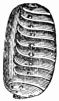
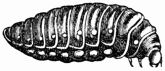
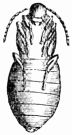
Fig. 547.—Pseudo-nymph of Sitaris humeralis. Fig. 548.—Third larva of Sitaris humeralis. Fig. 549.—Pupa of Sitaris humeralis.
The Sitaris humeralis (Fig. 545) takes no nourishment when arrived at the perfect state. When the female has been impregnated, she lays at the entrance of the nest of a solitary bee from 2,000 to 3,000 small whitish eggs, stuck together in shapeless masses. A month afterwards there come out of these eggs very small larvæ, of a shiny dark green, hard-skinned, armed with strong jaws, and long legs and antennæ (Fig. 546). These are the first larvæ. They remain motionless, and without taking food, till the following spring. At this period are hatched the male bees, which precede the appearance of the females by a month. As the bees come out of their nests, these larvæ hook themselves on to their hairs, and pass them to the females, at the coupling period. When the male bees have built the cells, and furnished them with honey, the female, as we know, deposits in each an egg. Immediately the larvæ of the Sitaris let themselves fall on these eggs, open them, and suck their contents. Then they change their skin, and the second larva appears. This one gets into the honey, on which it feeds for six weeks. It is blind, whereas the first larva was provided with four eyes, no doubt to enable it to see the bees which were to serve as its conductors, in like manner as the companions of Ulysses watched the sheep of Polyphemus, so as to escape out of the cave in which they were retained as prisoners. A few days later, and this second larva contracts, and detaches from its body a transparent skin, which discloses a mass, at first soft, which very soon hardens, and becomes of a bright tawny colour; it is called the pseudo-nymph (Fig. 547). It goes through the winter in this state. In the spring comes forth a third larva (Fig. 548), resembling the second. This one does not eat, and moults after a time. It very soon changes into an ordinary pupa (Fig. 549), of a yellowish-white, from which comes forth the adult Sitaris, which lives only a few days, to ensure the propagation of its species, as is observed in the case of the Ephemeræ. The larvæ of the Sitaris had for a long time been remarked clinging on to the hairs of the Anthophoras, but they were always taken for Acari, and they had been described as such.
Fig. 550.—Lampyris noctiluca (male and female).
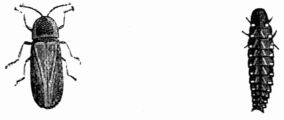
The Lampyridæ have the elytra weak and soft, like the insects of the preceding tribe. In their perfect state they frequent flowers. The larvæ are carnivorous, attacking other insects or worms. It is to this group that the Lampyris noctiluca, or glow-worm, which one sees shining during summer nights on grass and bushes, belongs. It has the power of making this natural torch shine or disappear at will.
The luminous properties with which these insects are endowed have for their object to reveal their presence to the opposite sex, for the females alone possess these properties. In the same way as sounds or odours exhaling from some insects attract the one towards the other sex, so with the Lampyris a phosphorescent light shows the females to the males. The seat of the phosphorescent substance varies according to the species. It exists generally under the three last rings of the abdomen, and the light is produced by the slow combustion of a peculiar secretion. It has been stated that it is evolved quickly when the animal contracts its muscles, either spontaneously or under the influence of artificial excitement. Some chemical experiments have been made to ascertain the nature or the composition of the humour which produces this strange effect; but up to this moment, they have only enabled us to discover that the luminous action is more powerful in oxygen, and ceases in gases incapable of supporting combustion. In the most common species, the Lampyris noctiluca, or glow-worm, the phosphorescence is of a greenish tint: it assumes at certain moments the brightness of white-hot coal.
The females have no wings, while the males have them, and possess very well-developed elytra. The females resemble the larvæ much, only they have the head more conspicuous, and the thorax buckler-shaped, like the male. The larvæ feed on small molluscs, hiding in the snails' shells, after having devoured the inhabitant. They also possess the phosphorescent property in a less degree than the adult females. The female pupa resembles the larva; the pupa of the male, on the contrary, has the wings folded back under a thin skin. The perfect insect appears towards the autumn.
The Glow-worm (Lampyris noctiluca, Fig. 550) is of a brownish yellow. It is common in England. In a kindred species, the Luciola Italica, the two sexes are winged, of a tawny-brown, and equally phosphorescent. They are met with in great numbers in Italy, and the lawns are covered with them. Other insects of this family are without the faculty of emitting light; as, for example, the genus Lycus, of brilliant colours, which are met with in Africa and India. One of the finest is the Lycus latissimus.
Drilus is another genus, comprising insects of very singular habits. The type is the Drilus flavescens. The male—a quarter of an inch long, black and hairy, with elytra of a testaceous yellow, and with pectinated antennæ—for a long time was alone known. The female—from ten to fifteen times as large, without wings and elytra, of a yellowish brown—was not discovered till much later, having apparently nothing in common with the male in shape or colour. The metamorphoses of these curious insects are now perfectly understood. Mielzinsky, a Polish naturalist established at Geneva, found the Drilus in the larva state in the shell of the Helix nemoralis. These larvæ devour the snail whose dwelling they occupy, as do the larvæ of the Lampyris. Mielzinsky saw them emerge, but obtained only females, which differed scarcely at all from the larvæ from which they proceeded. He made a separate genus of them, under the denomination of Cochleoctonus, and called the species Vorax. Later, Desmarest resumed these observations. He provided himself, at the Veterinary College of Alfort, with a number of shells of the Helix filled with the same larvæ. He saw come out of them, not only Cochleoctoni, but also Drili, and he watched their coupling. It was then proved, by this unanswerable argument, that these two insects, so unlike each other, belong to the same species.
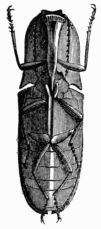
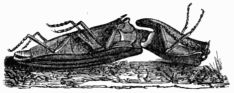
Fig. 552.—Jumping organ of the Elater, seen sideways.
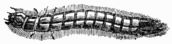
Fig. 551.—Jumping organ of the Elater. Fig. 553.—Larva of the Elater.
The larva of the Drilus flavescens fixes itself upon the shell of the snail by a sort of sucker, like a leech. Little by little it slips in between the mollusc and its house, and devours it entirely. To change into a pupa, it shuts up the entrance to the shell with its old skin; and when arrived at the perfect state, quits the shell which served it as a temporary dwelling. The females of the Drilus flavescens take refuge under stones and dry leaves, or crawl slowly along the ground; whilst the males, which fly with great ease, are on the plants and brushwood. These insects are not rare in the environs of Paris. M. H. Lucas has observed, in Algeria, near to Oran, another curious species, the Drilus Mauritanicus. The larva of this insect lives at the expense of the animal of the Cyclostoma Volzianum, which closes the entrance to its shell with a covering of some calcareous substance. It fixes itself on the edge of the shell, with the aid of its sucker, and directs its strong mandibles to the side on which the snail is obliged to raise the covering, either to breathe the air or to walk. In this position it has the patience to wait for many days at the door. The snail puts off for as long a time as he is able the fatal moment. But when, overcome by hunger or nearly stifled in his prison, he decides at last to open the door, the Drilus profits immediately by this opportunity, and cuts the muscle which keeps back the foot of the snail. The breach being made, nothing more opposes itself to the entrance of the enemy. He slips in, and sets to work to eat at his leisure the unfortunate inoffensive mollusc, which affords him board and lodging. The Ptilodadylides, the Eucinetides, and the Cebrionides belong to the same family. The first is exotic.
The Elateridæ are rather large insects, often of hard texture, having the prosternum prolonged into a point (Figs. 551 and 552), and the antennæ indented saw-wise. They have the power of jumping when placed on their backs, and of alighting again on their legs. Hence their name of Elater (derived from the same root as the word elastic). They produce, in leaping, one sharp rap, and often knock many raps when they are prevented from projecting themselves. This is the mechanism which permits the skip-jack to execute these movements. It bends itself upwards by resting on the ground by its head and the extremity of the abdomen, and then it unbends itself suddenly, like a spring. The point at the end of the thorax penetrates into a hollow of the next ring; the back then strikes with force against the plane on which it rests, and the animal is projected into the air. It repeats this manœuvre till it finds itself on its belly, for its legs are too short to allow of its turning over. Its structure supplies it with the means and the strength of rebounding as many times as it falls on its back, and it can thus raise itself more than twelve times the length of its body.
The larvæ of the genus Elateridæ (Fig. 553) are cylindrical, with a scaly skin and very short legs. They live in rotten wood or in the roots of plants. According to M. Goureau, they pass five years in this state.
The larvæ of the genus Agriotes occasion considerable damage to wheat-fields. They have much resemblance to the meal-worm, or larva of the Tenebrio. The Tetralobides are the largest of the Elateridæ, attaining to a length of two inches; and are inhabitants of Africa and Australia.
In America are found phosphorescent Elateridæ. These are the Pyrophori, which the Spaniards of South America call by the name of Cucuyos. They have, at the base of their thorax, two small, smooth, and brilliant spots, which sparkle during the night; the rings of the abdomen also emit a light. They give light sufficient to enable one to read at a little distance from them. The Pyrophorus noctilucus (Fig. 554) is very common in Havannah, in Brazil, in Guyana, in Mexico, &c., and may be seen at night in great numbers, amongst the foliage of trees. At the time of the Spanish conquest, a battalion, just disembarked, did not dare to engage with the natives, because it took the Cucuyos which were shining on the neighbouring trees for the matches of the arquebuses ready to fire. "In these countries," says M. Michelet, "one travels much by night, to escape the heat. But one would not dare to plunge into the peopled shades of the deep forests if these insects did not reassure the traveller. He sees them shining afar off, dancing, twisting about; he sees them near at hand on the bushes by his side; he takes them with him; he fixes them on his boots, so that they may show him his road and put to flight the serpents; but when the sun rises, gratefully and carefully he places them on a shrub, and restores them to their amorous occupations. It is a beautiful Indian proverb that says, 'Carry away the fire-fly, but restore it from whence thou tookest it'" [127] The Creole women make use of the Cucuyos to increase the splendour of their toilettes. Strange jewels! which must be fed, which must be bathed twice a day, and must be incessantly taken care of, to prevent them from dying. The Indians catch these insects by balancing hot coals in the air, at the end of a stick, to attract them, which proves that the light which these insects diffuse is to attract. Once in the hands of the women, the Cucuyos are shut up in little cages of very fine wire, and fed on fragments of sugar-cane. When the Mexican ladies wish to adorn themselves with these living diamonds, they place them in little bags of light tulle, which they arrange with taste on their skirts. There is another way of mounting the Cucuyos. They pass a pin, without hurting them, under the thorax, and stick this pin in their hair. The refinement of elegance consists in combining with the Cucuyos, humming-birds and real diamonds, which produce a dazzling head-dress. Sometimes, imprisoning these animated flames in gauze, the graceful Mexican women twist them into ardent necklaces, or else roll them round their waists, like a fiery girdle. They go to the ball under a diadem of living topazes, of animated emeralds, and this diadem blazes or pales according as the insect is fresh or fatigued. When they return home, after the soirée, they make them take a bath, which refreshes them, and put them back again into the cage, which sheds during the whole night a soft light in the chamber. In 1766, a Cucuyo, brought alive from America to Paris, probably in some old piece of wood which happened to be on the vessel, caused great terror to the inhabitants of the Faubourg St. Antoine, when they saw it flying in the evening, glittering in the air. In 1864 a number of Cucuyos were brought from Mexico to Paris by M. Laurent, captain of the frigate La Floride. An experiment, made in the laboratory of the École Normal, showed that the spectrum of their light is continuous, without any black rays; it differs, besides, from the spectrum of the solar light by a greater intensity of the yellow colour. The light is produced probably as it is in the case of the Lampyris, by the slow combustion of a substance secreted by the animal. The Cucuyo can, nevertheless, at will, increase or diminish the splendour of this light by means of membranes which it superposes, like screens, in front of the phosphorescent bumps which it has on its thorax.
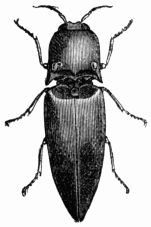
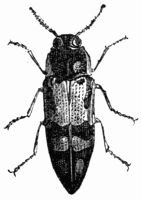
Fig. 554. The Cucuyo (Pyrophorus noctilucus). Fig. 555. Buprestis (Cyria) imperialis.
In the Indies, and in China, the women use for dressing their hair with, or as ear-rings, another Coleopteron of the same tribe, which begins even to be employed for this purpose by the women of the south of France. It is a Buprestis, of splendid colours, and of metallic brightness. Linnæus, as we said above, gave to it, wrongly, the name of Buprestis, which among the ancients served to designate a very different insect, the Meloë, of the family of the Cantharidæ; but modern naturalists have allowed this illegitimate title.
The Buprestidæ walk heavily, but fly with the greatest ease during the heat of the sun, and settle on the trunks of trees exposed to its rays. In Europe, and especially in the North, they are very rare, and of very small size. They must be looked for on birch-trees, whose white colour seems to attract them. In the hottest parts of the world they are very abundant, of large dimensions, and adorned with sparkling colours. They do not jump, and are not endowed with the phosphorescent property. Their larvæ have no legs, are elongate, whitish, of a fleshy consistency, with the first ring of their bodies very much broadened. They live in the trunks of trees, between the bark and the wood, hollowing out for themselves irregular galleries, and remaining sometimes in this state for ten years before metamorphosing. Laporte de Castelnau and Gory have described and made drawings of about 1,300 species of Buprestidæ. Fig. 555 represents the Buprestis imperialis. The Buprestis albosparsa, the genera Julodis, the Chrysochroas, and the Trachys belong also to the great family of Buprestidæ. The Cleridæ are connected with the preceding. They have the thorax narrower than the elytra, and rather long; their integuments are less solid than those of the Elateridæ and the Buprestidæ. The latter are phytophagous, the former carnivorous. The principal type of this family is the Clerus formicarius, russety, with the head and legs black, whose larva lives at the expense of the larvæ of the weevil. Another genus, the Necrobia, which lives on dried animal matter, has become celebrated, as it was the cause of the salvation of the greatest entomologist of France. The name of Necrobia (from [Greek: nekros] and [Greek: biôs]) does not mean "which lives on dead bodies," but it means "life in death." Here is the story of which this name is destined to preserve the remembrance, and which Latreille himself has related in his "Histoire des Insectes." Before 1792, Latreille was known only from some memoirs which he had published on insects. He was then priest at Brives-la-Gaillarde, and was arrested with the curés of Limousin, who had not taken the oath. These unfortunates were then taken to Bordeaux in carts, to be transported to Guyana. Arrived at Bordeaux in the month of June, they were incarcerated in the prison of the Grand Séminaire till a ship should be ready to take them on board. In the meanwhile, the 9th Thermidor arrived, and caused the execution of the sentence which condemned the priests who had not taken the oath to transportation to be for a while suspended. However, the prisons emptied themselves but slowly, and those who had been condemned had none the less to go into exile, only their transportation had been put off till the spring.
"Latreille remained detained at the prison of the Grand Séminaire. In the same chamber which he occupied there was at the time an old sick bishop, whose wounds a surgeon came each morning to dress. One day as the surgeon was dressing the bishop's wounds, an insect came out of a crack in the boards. Latreille seized it immediately, examined it, stuck it on a cork with a pin, and seemed enchanted at what he had found.
"Is it a rare insect, then?" said the surgeon.
"Yes," replied the ecclesiastic.
"In that case you should give it to me."
"Why?"
"Because I have a friend who has a fine collection of insects, who would be pleased with it."
"Very well, take him this insect; tell him how you came by it, and beg him to tell me its name."
The surgeon went quickly to his friend's house. This friend was Bory de Saint Vincent, a naturalist who became celebrated afterwards, but who was very young at that time. He already occupied himself much with the natural sciences, and in particular with the classing of insects. The surgeon delivered to him the one found by the priest, but in spite of all his researches, he was unable to class it.
Next day the surgeon having seen Latreille again in his prison, was obliged to confess to him that in his friend's opinion this Coleopteron had never been described. Latreille knew by this answer that Bory de Saint Vincent was an adept. As they gave the prisoner neither pen nor paper, he said to his messenger, "I see plainly that M. Bory de Saint Vincent must know my name. You tell him that I am the Abbé Latreille, and that I am going to die at Guyana, before having published my 'Examen des Genres de Fabricius.'"
Bory, on receiving this piece of news, took active steps, and obtained leave for Latreille to come out of his prison, as a convalescent, his uncle Dayclas and his father being bail for him, and pledging themselves formally to deliver up the prisoner the moment they were summoned to do so by the authorities. The vessel which was to have conducted Latreille to exile, or rather to death, was getting ready whilst these steps were being taken, and while Bory and Dayclas were obtaining leave for him to come out of prison. This was quite providential, for it foundered in sight of Cordova, and the sailors alone were able to save themselves. A little time afterwards his friends managed to have his name scratched out from the list of exiles. It is thus that the Necrobia ruficollis was the saving of Latreille.
The tribe of weevils is even much more numerous than that of the Elateridæ and the Buprestidæ. One may know them by their head prolonged into a snout or trunk, by their rudimentary mouth, and by their elbowed antennæ. About twenty thousand species are said to exist. They feed on vegetables. Their larvæ are soft, whitish worms, without legs, with very small heads, and live in the interior of the stalks or seeds of plants, often occasioning enormous damage. They are one of the plagues of agriculture. Each of our dry vegetables, each variety of our cereals, has in this immense family its particular enemy.
First are the Bruchi. The Pea Weevil (Bruchus pisi, Fig. 556), which is brown with white spots, comes out of the pea at the end of the summer. The female lays her eggs on peas which are ripe, and still standing, in which the larva scoops out a habitation, and then makes its exit by a circular hole (Fig. 557). It remains at rest all the winter, and is not hatched till towards the following spring. The Bean Weevil (Bruchus rufimanus) marks each bean with many black spots. The vetch has also its special Bruchus. The Wheat Weevil (Calandra granaria), of a darkish brown, lays its eggs on the grains, of which the larvæ then eat the interior. A host of ways of getting rid of the weevil have been proposed. The best means is to store corn properly, and to keep the heap well aired. Let us mention further, the Clover Weevil, belonging to the genus Apion, the Weevil of the Rape (Ceutorhynchus brassicæ), the Turnip Weevil, &c., &c.
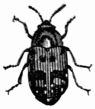

Fig. 556.—Pea Weevil (Bruchus pisi), magnified. Fig. 557.—Pea pierced by the larva.
All vegetables, the vine, fruit trees, the ash, pines, &c., are eaten by some weevil or other. As an example we give a figure of the spotted Pissodes pini, which, as the figure shows, takes the precaution of cutting half through the young stems and the stalks of the buds of the pine, "so as," says M. Maurice Girard, [128] "that the sap flows only with difficulty into the withered organ, and cannot suffocate the young larvæ."
Fig. 558.—Pissodes pini.
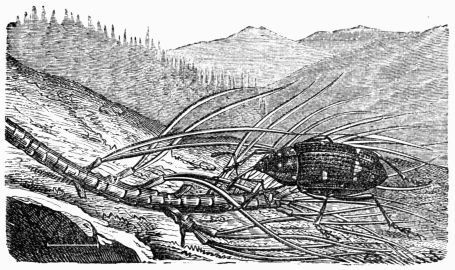
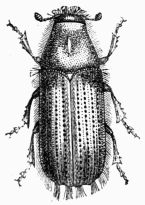

Fig. 559.—Hylesinus piniperda. Fig. 560.—Larva of Scolytus.
Scolytus, Hylesinus, and Bostrichus, which are connected with the weevils, hollow out galleries between the wood and the bark of different trees, when in the larva state, and devour the leaves in the adult state. Fig. 559 represents the Hylesinus piniperda. The Scolyti are sometimes so numerous in the forests, that the trees are tattooed all over by the larvæ. In 1837, they were obliged to cut down, in the Bois de Vincennes, 20,000 feet of oak trees, aged from thirty to forty years, completely ruined by the ravages of the Scolytus, whose larva is here represented (Fig. 560). The genus Tomicus, hairy, and of a tawny colour, are a terrible plague to pine forests. In 1783, in the Forest of Hartz, 1,500,000 of trees were destroyed by these insects. Often have the priests implored, in the churches, the Divine clemency, to put an end to the devastations made by them.
We arrive at the tribe of the Longicornes, which contains beautiful insects, of elegant shape and varied colours, sometimes also of rather large dimensions.
Fig. 561.—Imago and pupa of Cerambyx heros.
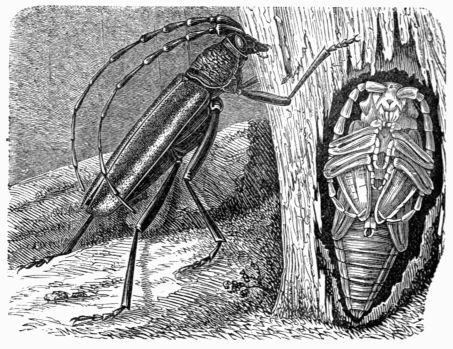
The genus Cerambyx has the antennæ very long; they exceed in some of the species two or three times the length of the body. The larvæ are large whitish worms, which live in the wood of trees, the adult insects frequenting flowers, rotten trees, &c. In the month of June, on the Continent, one meets on the oaks with the Great Capricorne (Cerambyx heros, Fig. 561), of a dark brown, whose larva (Fig. 562) scoops out its galleries in the interior of the tree, and often occasions much damage.
Fig. 562.—Larva of Cerambyx heros.
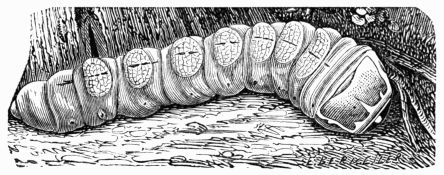
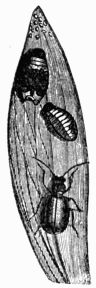

Fig. 565.—Lady-bird (Coccinella septempunctata).
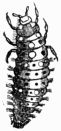
Fig. 563.—Larva of Lina populi. Fig. 564.—Larva and imago of Crioceris merdigera. Fig. 566.—Larva of the Lady-bird.
The Chrysomelidæ are other phytophagous insects, dressed in the brightest colours, having short and thick-set bodies. The larvæ, soft and ovoid, devour the leaves of trees. One of the best known species is Lina populi, of a bronzed colour, with red elytra, whose larva (Fig. 563), of a greenish grey, devours the leaves of the poplar-tree. The Galerucæ and the Alticæ belong to the same family, as also do the Cassidæ, the Crioceres, and the Donaciæ. The Cassida viridis frequents nettles and artichokes; the elytra are of rounded form. Fig. 564 represents the Crioceris merdigera, a great rarity in this country. The Crioceris asparagi, or Asparagus Beetle, tawny, and barred with black, resembles it in habit.
The last tribe of Coleoptera comprises the Coccinellidæ, or Lady-birds (Fig. 565). These little globular, smooth insects, red or yellow, with black spots, are very useful to us, for they clear the trees of the aphides and other mischievous insects. Their larvæ (Fig. 566) make use of their front legs to carry their prey to their mouths. When danger threatens a Coccinella, it hides its feet under its body, and remains sticking to the stem of the bush. If you touch it, it allows itself to fall to the ground, but sometimes opens its elytra, and flies off rapidly. It also exudes from the articulations of its abdomen a yellow mucilaginous liquid, of a pungent and disagreeable odour. This is the only means of defence possessed by this little inoffensive being, which deserves in all respects the name of "Bête à bon Dieu," which the French children give it.
INDEX.
** * ITALICS ARE WOODCUT ILLUSTRATIONS.
Abdomen, The, 1, 167. Abdominal Cavity, contraction and dilation of, 16. Abraxas grossulariata, 268. Acalyptera, 70, 85. Acanthia ciliata, 94. " lectularia, 92. Acanthops, 291. Acherontia Atropos, 203, 204. Acilius fasciatus, 480. " Male and Female, 480. " sulcatus, 480. " " Male and Female, 480. Acridium, 300. " migratorium, 301. Acrocinus longimanus, Thorax of, 6. Acronycta aceris, Larva of, 151. " " Larvæ of, 152, 153 (three figs.). Ædia pusiella, 269. " pusiella, 269. Ædipoda migratorium, 301. Agrion, 423. Agriotes, Larvæ of the Genus, 512. Ailanthus Silkworm, 245. Alimentary Canal of Insects, 8, et seq. Alticæ, 520. Alucita granella, The, 279. Amphidasis betularia, 268. Andrenæ, Gallery of an, 367. " The, 367. Anomala, 456. " Vitis, 456. Anostostomæ, The, 300. Ant, 313, 377. " Ashy, 382. " " Male, Female, and Worker, 382. " Ashy-black, 382. " " Male, Female, and Worker, 382. " Black, 382. " Blood-red, 382, 393. " Blood-red, 390. " Brazilian Umbrella, 379. " Brown, 382. " Ant, Hill, section of, 381. " Jet, 382. " Mason, 382. " Mining, 382, 392. " " Male, Female, and Worker, 392. " Nest, sections of, 379. " Red, 380, 382, 383, 390. " " Larva of, 383. " " Male, magnified, 378. " " Pupa of, 383. " " Pupa of, 383. " Russety, 382, 390. " Russet, 390. " Turf, 382. " Yellow, 382. " White, see Termes. " " Nests of, 403, 410. Antennæ, 5; Function of, 5. Antennæ, 169. Anthia, 489. " thoracica, 491. Anthocharis cardamines, 177, 178. " cardamines, 177. Anthocopas, The, 367. " papaveris, 367. Anthomyia, 84. " pluvialis, 84. " pluvialis, 84. Anthomyzides, 70, 84. Anthophora parietina, 364. " parietina, 363. Anthophoras, The, 364. Anthrax, 51. " sinuata, 52. Anthrenus museorum, 475. Antithesia salicana, 269, 271. " salicana, 271. Ant-lion, 402, 425. " Ant-lion, 424. " Funnel of, 425. " Larva, Cocoon, and Pupa of, 425. Apatura Ilia, 190. " Ilia, 190. " Iris, 190. Aphidæ, The, 101. Aphides and Ants, 128, 389. " and Ant, 128. " Ant Milking, 389. " Winged, 117. " Wingless, 117. Aphis, Charles Bonnet on the, 120; of the Apple, 118; of the Oak, 121; of the Plantain, 120. Aphrophora, The, 112. " Larva of the, 113. " spumaria, 114. Apiariæ, The, 314. Apis fasciata, 356. " mellifica, 356. " Peronii, 356. Aptera, Probable Dismemberment of the Order, 27. Argyrolepia æneana, 269, 271. " æneana, 271. Articulate Animals, egg state common to, 20. Ascalaphus, 427; Larva of, 427. " Larva of, 427. " meridionalis, 427. " meridionalis, 427. Asida, Antennæ of a Species of, 5. Asilidæ, 49. Asilus crabroniformis, 50. " crabroniformis, 50. Ateuchus, 458. " Egyptiorum, 460. " sacer, 460. Attacus, the genus, 210, 241; of the Ailanthus, 245; of the Castor-oil, 247. " Atlas, 249, 250. " Atlas, 250. " Cynthia, 245. " Cynthia, Eggs, Larvæ, and Cocoons of, 246. " Mylitta, 241, 243. " Mylitta, 244. " " Cocoon of, 245. " Pernyi, 241, 243. " Pernyi, 244. " " Cocoon of, 243. " ricini, 247. " yama-maï, 241. " yama-maï, 242. " " Cocoon of, 242. " " Larva of, 241. Attagenus pellio, 475. " pellio, 475. Bee, 313; Cells constructed by, 324; Bellows used to Stupefy, 355; Bellows used to Stupefy, 355. " Cells constructed by, 325. " Banded, 356. " Carding, 358. " Carpenter, 364. " Cluster of, hanging to a branch, 323, 337. " Larva of, 331. " Leg of a, 318. " seen through a Magnifying Glass, 322. " taking a Swarm of, 350. " Trunk of, 318. " Common, 317, 356. " Humble, 313, 357; Male, 358. " Larva of, 331. " Leaf-cutting, 367. " Ligurian, 356. " Male, 319. " Mason, 366. " Mining, 367. " Moss, 360. " Queen, 319. " Solitary, 362. " Upholsterer, 367. " Wood-piercer, 364. " Worker, 317. Beetle, Asparagus, 521. " Bacon, 475. " Bacon, 475. " Bee, 441. " Burying, interring the body of a rat, 471. " Clock, Dumbledor, Shard-born, 458. " Rose, 436. " Stag, 461. " Tiger, 494. " Water, 477. " Whirligig, 478. Bittacus tipularis, 428. " tipularis, 429. Blaps, 497. " obtusa, 498. " obtusa, 499. " sulcata, 498. Blatta, 285. " Germanica, 286. " Laponica, 286. " Orientalis, 287. Blepharis, 291. " mendica, 291. " mendica, and its Larva, 290. Blue-bottle Fly, magnified, 79. " " Retractile Proboscis of, 80. Boatman, The, 97. Bocydium globulare, 115. Bombus muscorum, 358. Bombycidæ, 249. Bombycina, 209. Bombylidæ, 49. Bombylius major, 51. " major, 50. Bombyx, 210; Caterpillar of, 220; of the Ailanthus, 245; of the Castor-oil, 247. " Atlas, 249. " Cynthia, 245. " mori, 210, 220; Apparatus for Stifling the Chrysalides of, 236; Cocoon of, 237, 238; Larva, Pupa, and Moth of, 236. " mori, Cocoon of, 235. " " Larva, Pupa, Cocoon, and Moth of, 236. " " Spherical Cocoon of, 235. " neustria, 249. " Pernyi, 241. " processionea, 249. " ricini, 247. " yama-maï, 241. Boreus hyemalis, 429, 430. " hyemalis, 429. Bostrichus, 518. " capucinus, 397. Bot-fly, The, 54, 60. " Bot-fly, 60. " Bumps produced on Cattle by Larvæ of, 64. " Herd of Cattle Attacked by, 61. " Imago of, emerging, 65. " Ovipositor of the, 65. Brachycera, meaning of the word, 47. Brachycola robusta, 288. Breeze-fly of the Sheep, 66. Bruchus, 517. " pisi, 517. " rufimanus, 517. Bug, 91; Egg of, 93; Means of Destroying, 94; Moquin-Tandon on, 93. " Bed, 92. " Bed, 93. " Egg of, 93. " Fly, 94. " Needle, 97. " Red Cabbage, 91. " Red Garden, 92. " Water, 90, 97. " Wood, 91. Buprestidæ, 514. Buprestis, 514. " albosparsa, 515. " imperialis, 515. " imperialis, 514. Burnet Moth, 193. " Six-spot, 193. Butalis, 279. Butterflies, Copper, 179. " Different Forms of the Scales of, 165. " Hair-streak, 178. Butterfly, Definition of, 165; Eyes of, 168; Flight of, 167; Scales of, 165. " Black Hair-streak, 178. " Black-veined White, 175. " Blue Argus, 181. " Brimstone, 178. " Brown Argus, 182. " Brown Hair-streak, 178. " Cabbage, 149, 176. " Clouded Yellow, 178. " Comma, 187. " Green Hair-streak, 179. " Green-veined White, 177. " Large Tortoise-shell, 182, 183. " Leg of, armed with hooks, 167. " Leg not suitable for Walking, 167. " Meadow Brown, 192. " Orange-tip, 177. " Painted Lady, 187. " Peacock, 182. " Purple Emperor, 190. " Purple Hair-streak, 179. " Red Admiral, 186. " Scarce Swallow-tailed, 174. " Small Tortoise-shell, 182. " Small White, 177. " Swallow-tailed, 172. " White Admiral, 189. " Trunk, Section of, 170. Cabbage Butterfly, Caterpillars of the, 150. Caddis Flies, 402, 430, 431. Calandra granaria, 517. Calepteryx, 423. Callidium, 397. " sanguineum, 397. Calliphora, 77. " vomitoria, 77; Réaumur on, 77. Calosoma, 487. " auropunctata, 486. " auropunctata, 486. " " Pupa and Larva of, 486. " inquisitor, 489. " sycophanta, 487. " sycophanta pursuing a Bombardier Beetle, 487. Camberwell Beauty, 185. Campylocnemis, 489. " Schrœteri, 489. " Schrœteri, 491. Canary-shouldered Thorn, Caterpillar of, 142. Canary-shouldered Thorn, Caterpillar of, 142. Cantharadine, 500. Cantharides, 498. " Gathering, 501. Cantharis, 498. " vesicatoria, 499. Capricorne, Great, 519. Carabus Adonis, 485. " Adonis, 485. " auratus, 484; Nervous System of, 18. " auratus, 485. " " Digestive Apparatus of, 9. " " Nervous System of, 19. " " Secretory Apparatus of, 11. " auronitens, Larva of, 486. " auronitens, Larva of, 486. " canaliculatus, 485. " nodulosus, 486. " rutilans, 487. " smaragdinus, 487. " splendens, 487. " Vietinghovii, 487. " violaceus, 485. " violaceus, 485. Carpenter Bee, Pupæ, Eggs, Galleries, and Nests, 363. Cassida, 520. " viridis, 520. Castor-oil Plant, Silkworm of the, 247. Caterpillar, food of, 143; Description of, ib.; Scaly Legs of the Gipsy Moth, 139; Looper, 141, 265. " Membranous Legs of a Large, 140. Catocala, 151. " Americana, The, 260, 262. " Americana, 262. " fraxini, 260, 262; Larvæ of, 152. " fraxini, 262. " " Larvæ of, 152. " nupta, 261, 263. " nupta, 263. " paranympha, 260. " paranympha, 263. Cebrionides, 512. Cecidomyia, 43, note. Centrotus cornutus, 116. " cornutus, 115. Cephalemyia ovis, 66. " ovis, 66. " " Sheep attacked by, 67. Cerambyx, 519. " heros, 519. " " Imago and Pupa of, 519. " " Larva of, 520. Cetonia argentea, 440. " argentea, 440. " aurata, 437. " hirtella, 439. " splendidula, 438. " stictica, 439. Cetoniadæ, 437. Ceutorhynchus brassicæ, 517. Chærocampa Elpenor, 196, 200. " nerii, 196. Chafers, 436. Chalcididæ, The, 288; Larvæ of, 314. Chalicodoma, 366; Nests of, 367. Charaxes Jasius, 190, 191. " Jasius, 191. " " Larva of, 191. Chartergus lecheguana, 376. " nidulans, 376. Chelonia caja, 153; Larva of, 153. Chelonia caja, Larva of, 153. " forming its Cocoon, 154. Chermes variegatus, 129. Chiasognathus Grantii, 466. " Grantii, 469. Chigo, The, 30; Eggs not Hatched in the Wound made by, 30. Chimatobia brumata, 267, 268. " " Male and Female, 268. Chionobas aello, 191, 192. " allo, 192. Chlorion compressum, 288. Choreutes dolosana, 269, 271. " dolosana, 271. Chrysalis, 19, 146; meaning of the word, 160, note. Chrysides, The, 314. Chrysochroa, the genus, 515. Chrysomelidæ, 520. Chrysops cæcutiens, 48. " cæcutiens, 49. Chylific Ventricle, 9; its Appendages, 9. Chylific Ventricle, Posterior Extremity of, 10. Cicada, 101. " (male), 103. " Ash, 108. " Larva of, 107. " (female) laying her eggs, 106. " (male) Musical Apparatus of, 105. " orni, 109. " plebeia, 108. " Pupa of, 107. Cicadæ, 101. Cicindela campestris, 494. " Larva of, 495. " Ambush of Larva of, 495. " capensis, 494. " capensis, 495. " Dumoulinii, 494. " Dumoulinii, 494. " heros, 494. " heros, 495. " hybrida, 494. " maritima, 494. " Pupa of, 496. " quadrilineata, 494. " quadrilineata, 495. " rugosa, 494. " rugosa, 494. " scalaris, 494. " scalaris, 494. " sylvatica, 494. Cicindelidæ, 484, 491. Cimex lectularius, 92. Circulation in Insects, 12, et seq.; Incomplete, 25. Claviger, 473. " foveolatus, 473. " foveolatus, 474. Cleptes, 314. Cleridæ, 515. Clerus formicarius, 515. Cloëon, 419. " diptera, 419. " diptera, 420. Coccinella septempunctata, 520. Coccinellidæ, 521. Coccus, 129. " cacti, 129. " ilicis, 136. " lacca, 136. " manniparus, 137. " polonicus, 136. " sinensis, 139. Cochineal, 129. " Insects (male and female), 130. " Branch of Cactus with, 134. " Gathering in Algeria, 132. " oak-tree, 129. Cochleoctonus, 510. " vorax, 510. Cochylis francilana, 269, 271. " francilana, 271. Cockchafer, 445, 446; Larva of, 452; Pupa of, 452. Cockchafer, 447. " Diligence surrounded by, 450. " Larva of, 452. " Pupa of, 452. Cockroach, 284, 285, 286. " The, 287. Cocoon, after Réaumur, 152. Cocoons, Sheets of Paper prepared for Moths with rows of, 238 (two figs.). " Apparatus for Stifling the Chrysalides in, 237. Colias edusa, 176, 178. Colymbetes cinereus, 481. " cinereus, 481. " notatus, 481. " notatus, 481. " striatus, 481. " striatus, 481. Comma Butterfly, 187. Conops, 54, 59. Conops, 69. " rufipes, The, 69. Convolvulus Sphinx, The, 204. Copiphora, 300. Copris, 458. " lunaris, 458. Corixa, 98. " femorata, 99. " mercenaria, 99. " striata, 98. " striata, 98. Cornea, a compound, 2. Corydia, the species of, 288. Cossus, the genus, 257. " ligniperda, 257. Crachat de Coucou, 112. Creophili, The, 70. Cricket, The, 284, 293. " Field, 293. " House, 294. " Mole, 296. Crioceris, 520. " asparagi, 521. " merdigera, 520. " merdigera, Larva and Imago of, 520. Crop, The, 8. Ctenostoma, 497. " rugosa, 499. Cuckoo's Spittle, 112. Cucullia verbasci, 155; Cocoon of, 165; Larva of, 165. Cucullia verbasci, Cocoon of, 155. " Larva of, 155. Cucuyo, 512. " The, 514. Culex, The, 35. Culicidæ, The, 35. Cursoria, 293. Cybister, 477, 480. " Ræselii, 479. " Ræselii, 479. Cynips, The, 394. " insana, 395. " quercusfolii, 395. Cynthia cardui, 187. Cyphocrana gigas, 291. Cyphonia furcata, 115. Cyria imperialis, 514. Dacus, 85. " oleæ, 86; M. Guérin-Méneville on, 86. " oleæ, 86. " Gallery formed by, 88. " Larvæ of, 88. " Olives attacked by, 87. Daddy Longlegs, 45. Damaster, 489. " blaptoides, 490. Death's-Head Hawk-Moth, 205. " Chrysalis of, 207. " Larvæ of, 206. Decticus verrucivorus, 299. " verrucivorus, 299. Deilephila, the genus, 196. " Elpenor, 196, 200. " Elpenor, 200. " " Larva of, 201. " " Pupa of, 201. " Euphorbiæ, 196. " Euphorbiæ, 197. " " Larva of, 197. " nerii, 196, 198. " nerii, 198. " " Larva of, 199. " " Pupa of, 199. Dermaptera, the Order, 284, note. Dermestes lardarius, 475. " vulpinus, 475. Dermestidæ, 474. Dichæta, The, 54. Dicranura verbasci, 259. " verbasci, 259. " vinula, Larva of, 158, 259. " vinula, 258. " " Larva of, 258. Diptera, Fecundity of the, 34; Divisions of the Order, 34; Meaning of the Name, 33; Organs of the, ib.; Immense Numbers of Species of, 34; the Office of the, ib.; Strength in the, 24. Dom Allou, Réaumur's mention of, 39. Donacia nymphea, 23. Donaciæ, 520. Dorcus Titan, 466. " Titan, 468. Dragon-fly, 402, 419; Common, 422. Drilus, the genus, 510. " flavescens, 510. " Mauritanicus, 511. Drone, or Male Bee, 319. Dynastes Hercules, 457, 461. " Hercules, 464. Dytiscus, 477. " latissimus, 480. " latissimus, 479. " marginalis, 480. " " Male and Female, 478. " " Pupa and Larva of, 479. Earwig, Common, 284, 285. " " Larva, Pupa, and Imago, 285. Echinomyia, the genus, 70. " grossa, 70. Écume printanière, 112. Elater, Jumping Organ of, 511 (two figs.) " Larva of the, 511. Elateridæ, 511. " phosphorescent, 512. Elenchus, 504. " Walkeri, 504. Emperor Moth, 249. Empidæ, M. Macquart on the, 50, 51. Empusa, 291. " gongylodes, 291. Enema infundibulum, 460. Ephemera, 402, 418; Larva of an, 419; Pupa of an, ib. " Common, 418. " Larva of an, 419. " Pupa of an, 419. " Respiratory Apparatus of, 17. " vulgata, 418. " " imago, 418. Ephemeræ, 51. Ephemeridæ, 417. Ephippiger, 300. " vitium, 300. Epinectus, 483. " sulcatus, 483. " sulcatus, 483. Erebia Euryale, 191. " Euryale, 191. Erebus strix, 261, 264. " strix, 264. Eremiaphila, 291. Eremobia, The, 311. Euchlora, 456. Eugonia alniaria, Larva of, 142. Eyed Hawk-Moth, 208. Eyes, 2; Compound, ib.; Number of Facettes in Various Insects, ib.; in the Genus Scarabæus, ib.; Crystalline of, 3; Pigment of, ib.; Simple, 4. Femur, 6. Field Cricket, 294. Flea, 27; Jump of a, 22; Strength of, 28; Eggs of, 29; the Learned, ib.; Metamorphosis of, 29; Larva of, ib. " Flea, 27. " Grasshopper, 114. Flies, a beggar eaten by, 73. Fly, Extremity on the Proboscis of, 80. " Lancet of a, 82. " Executioner. 83. " House, 83. " Lantern 109. " Lips of the Proboscis of, 81. " Ox, 83. " Spanish, 499. Forester, The, 194. Forficula, 285. " auricularia, 285. Formica cunicularia, 392. Formicæ, 378. Formica flava, 382. " fuliginosa, 382. " fusca, 390. " sanguinea, 390, 393. Formicariæ, 314. Fossores, 393. Fossorial Hymenoptera, 393. Froghopper, 114. " The, 114. Fulgora lanternaria, 109. Gad-flies, Herd of Horses attacked by, 56. Gad-fly, 54; M. Joly on, ib. " Eggs of, 57. Galerita, 490. " Lecontei, 492. " Lecontei, 492. " Larva of, 492. Galerucæ, 520. Gall Insect, 395. Galleria, Bee-hive, or Wax, 278, 348. " cerella, 278. Gallicolæ, 314. Gallinsecta, 129. Gall-insects, The, 314, 395. Gall, Interior of a, 395. Galls, Oak, 395. " produced by Insect, 395. Ganglions, Cephalic, 18. " Lacordaire, M., on, 18. Geocorisæ, The, 90. Geometers, 142, 264. Geometrinæ, the Family of the, 264. " Caterpillars of the, 264. Geotrupes, 457. " stercorarius, 24, 458. Ghost Moth, The, 257. Gipsey-Moth, Scaly Legs of the Caterpillar of, 139. Gizzard, The, 9. Glossina morsitans, 74. Glow-worm, 509 Gnat, The, 35; Water good for the Cure of Bites, 38. Gnat, The, 35. " Antennæ of, 36. " Eggs of, magnified, 42. " Head of, 36. " Lancets of, 37. " Larva of, 38. " Pupa of, 39. " Trunk of, magnified, 37. Gnats emerging, 41. Gnorimus nobilis, 445. Goat Moth, 255. " The, 256. Goliathus, 439. " cacicus, 440. " " Male and Female, 442, 443. " Derbyana, 440. " Derbyana, 441. " Druryi, 440. " Druryi, 444. " Polyphemus, 440. " Polyphemus, 441. Golofa claviger, 458. " claviger, 458. " Porteri, 459. Gonepteryx rhamni, 178. Grapta, C. album, The, 187. Grasshopper, 284, 293. " Great Green, 299. Grave-diggers, 470. Gryllacris, the genus, 300. Gryllo-talpa vulgaris, The, 295; Nest of the, 297. Gryllus campestris, The, 293. " domesticus, The, 294. " sylvestris, The, 295. Guérin-Méneville, M., on the Sciara, 46. Gullet, 8. Gyrinidæ, 477. Gyrinus, 482. " distinctus, 483. " distinctus, 483. " natator, 482. " natator, 482. " Larva of, 482. " striatus, 483. " striatus, 483. Hair-Moth, 282. Halictophagus, 504. " Curtisii, 504. Haliplus fulvus, 481. Harpalidæ, 490. Harpalus æneus, 490. " æneus, 492. Hautle, M. Virlet d'Aoust's description of, 98. Hawk-Moth, Elephant, 196, 200. " Eyed, 208. " Lime-tree, 209. " Oleander, 196, 197. " Poplar, 209. Head, The, 1. Heart, 13. Helomyza, 85. " a Species of, 85. Helophilus, 52. " Larvæ of a, 53. " Species of, 53. Hemerobidæ, 428. Hemerobius, 427. Hepialus, the Genus, 257. " humuli, 257. Herisson, 153. Heterocera. See Moth. Heterocerus, Hind Legs of a, 7. Hipparcia Janira, 192. Hister, 467. " rugosus, 470. Hive, Bell-shaped, 351. " Bell-shaped, 351. " Cells of, 326. " English, 351. " English, 351. " Garden, 354. " Garden, 354. " in Leaves, 322. " Interior of a, 327. " Interior of a, 327. " Polish, 353. " Polish, 353. " Swiss, 352. " Swiss, 352. " under Shade of Trees, 355. Homoderus Mellyi, 466. Honeycomb, Portion of, with Eggs in Cells, 330. Hop-dog, The, 253. Hornet, The, 370, 375. " The, 370. Hornet's Nest, Hanging, 375. Horse-fly, Male and Female, 57. " Larvæ of, in Stomach of Horse, 58. House-fly, 83. Humble Bee, 313; Nest of, 358. " Male, 358. " Nest of the Moss, 360. Humble Bee's Nest, Cells from, 359. Humming-Bird Hawk-Moth, 195. " Caterpillar of, 196. Hybernia defoliaria, 267. " leucophearia, 267. " leucophearia, Male, 267. Hydaticus grammicus, 482. " grammicus, 482. Hydrocorisæ, The, 90, 97. Hydrometræ, The, 91, 96. Hydrometra stagnorum, 97. " stagnorum, 97. Hydrophili, 476. Hydrophilus, Four Stages of the, 20. " piceus, 476. " in its Four Stages, 21. " Abdomen of, 477. " piceus, 476. " Pupa of the, 477. Hydroporus confluens, 481. " confluens, 481. " griseo-striatus, 481. " griseo-striatus, 481. Hydropsyche, 432. " atomaria, 433. " atomaria, Larva, Pupa, &c., 433. Hydrous caraboides, 477. Hylesinus, 518. " piniperda, 518. " piniperda, 518. Hymenoptera, Fossorial, 393. " Power of Flight in the, 24. Hypsauchenia balista, 115. Iassus devastans, 114. Ichneumons, The, 394; Larvæ of, 314. Imago, 19. Inca, 445. " clathrata, 445. " clathrata, 446. Insect, Names of the Principal Parts of an, 1; Various Stages of, 20; Strength of, 21; Power of Traction in, 23; Classes of, 26. " Leaf, 285. " The Adult, 400. " Head of, 1. " Mouth of a Masticating, 6. " Organs of Circulation, 8. " " Breathing in an, 14. Intestine, Large and Small, 8. Julodis, The Genus, 515. Jumping Insect, Posterior Leg of a, 7. Kakerlac Americana, 287. " insignis, 288. Kermes, 136. " Polish, 136. Laccophilus minutus, 482. " minutus, 482. " variegatus, 481. " variegatus, 481. Lackey Moth, The, 249. " The, 250. Lady-bird, 520. " Larva of the, 520. Lady-birds, 521. Lamellicornes, The, 436. Lampyridæ, 509. Lampyris noctiluca, 509. " " Male and Female, 509. Lantern Fly, The, 110. Larva, 19; Meaning of the Word, 20. " The, 400. " Aquatic, Branchiæ of, 17. Leaf-rollers, 272. Lecheguana, The, 376. Legs of Insects, 6, et seq. Leopard, Wood, 257. Le petit Diable, 116. Lepidoptera, Meaning of the Word, 138; Antennæ of, 169. Leptidæ, 49. Libellula, 402, 419. " depressa, 422. " depressa, 422. " Larva of perfect Insect emerging, 421. Lime Hawk-Moth, 207. " Larva of, 208. Limenitis Camilla, 189. " Camilla, 189. " Sibilla, 189. Lina populi, 520. " Larva of, 520. Lions des Pucerons, 427. Liparis, The Genus, 210. " chrysorrhœa, 253. " chrysorrhœa, 254. Lobster Moth, 259. " Larva of, 259. Locust, 284, 293, 301. Locust, 301. " A Cloud of in Algeria, 303. Locusta viridissima, 299. Longicornes, 519. Looper Caterpillar, 141, 144 (four figs.). " Hanging by its Thread, 265 (five figs.). Lophyrus pini, 399. " pini, 399. Louse, 31; Means Employed to Kill, 31; of the Bee, 348. " magnified, 31. " Plant, 101, 116. Lucanus, 465. " bellicosus, 466. " bellicosus, 467. " cervus, 466. " Mellyi, 466. " Mellyi, 466. Lucilia Cæsar, The, 72. " hominivorax, The, 72. " hominivorax, 72. Luciola Italica, 510. Lycæna, Genus, 180. " Ægon, 182. " Ægon, 182. " Battus, 181. " Battus, 182. " Corydon, 181. " Corydon, 182. " See Polyommatus. Lycænidæ, Family of the, 178. Lycus, The Genus, 510. " latissimus, 510. Lygæus, Genus, 91, 92. Lytta, 498. " vesicatoria, 499. Macroglossa, The Genus, 194. " stellatarum, 194. " " Pupa of, 196. Malpighian Vessels, 11. Mandibles, Nerves of the, 18. Manticora, 497. " tuberculata, 498. " tuberculata, 498. Mantidæ, The, 288. Mantis, The Genus, 284, 285. " oratoria, 289. " religiosa, 289, 290. " religiosa, and its Larva, 290. Mantispa, 423. " pagana, 423. " pagana, 423. Marte, Le, 153. Mason Bee, Nest of, 364. " and Nest, 364. " Interior of the Nest of the, 365. May-fly, 418; Respiratory Apparatus of, 418. Meadow Brown, 192. Meal-worm, 498. Meat-fly, Eggs of, 77. " Lancet of, 83. " Trunk of, 79 (two figs.). Megacerus chorinæus, 463. Megachile, 367. " centuncularis, 366. " Rose, 366. Megalosoma anubis, 461, 463. " Male and Female, 463, 464. Melasoma, 497. Melipona, 356, 357. " a Species of, 357. " scutellaris, Nest of, 357. Meloë, 507. " proscarabæus, 507. Melolontha, 445. " fullo, 456. " Hippocastani, 456. " vulgaris, 447; Larva of, 452; Pupa of, ib. Membracis foliata, 115. Mérian, Mdlle. Sybille de, 111. Metamorphoses, 21. Migratory Locust, 301. Mole Cricket, 295. " Nest of the, 297. " Nest of the, 297. Mormolyce phyllodes, 491. " phyllodes, 493. " " Larva and Pupa of, 493. Moth, Definition of, 193. " Bee-hive, 270. " Brown-tailed, 253. " Burdock, 282. " Carpet, 282. " Cherry-tree, 282. " Clothes, 270. " Currant, 268. " Emperor, 249. " Fur, or Skin, 279, 282. " Hair, 279, 282. " Hawthorn, 282. " Peppered, 268. " Procession, 249. " Rustic, 282. " Winter, 267. " Woollen, 279. " attached to piece of cloth, 282. " just emerged, 163. " whose wings are developing, 164. " whose wings are developed, 164. " whose wings are folded up, 163. " portion of wing of, magnified, 166. Mouches Papilionacées, 431. Mouth of Insects, 1, 5. Mulberry Leaves, the Empress Si-ling-chi Gathering, 213. Musca bovina, 83. " carnifex, 83. " domestica, 83. Muscides, The, 70; M. Macquart on the, 70. Mutilla Europæa, 393. " Male and Female, 393. Mylabris chicorii, 500. Myrmeleo, 424. " formicarius, 425. " libelluloides, 426; Larva of, 427. " libelluloides, 426. " " Larva of, 427. Myrmeleonidæ, 424. Myrmeleonides, 402. Myrmicæ, The, 378. Myrmica rubra, The, 378, 382; Larva of, 383; Pupa of, 383. Myzoxylus mali, 118. Nebria, 489. " arenaria, 489. " arenaria, 488. " brevicollis, 23. Necrobia, Genus, 515; Meaning of the Name, ib. " ruficollis, 516. Necrodes, 469. " lacrymosa, 470. " lacrymosa, 470. " littoralis, 470. " " Male and Female, 470. Necrophorus, 467, 470. " Germanicus, 472. " Germanicus, 472. " vespillo, 23, 471. " vespillo, 472. Nemobius sylvestris, 295. Nemoptera, 427. " Coa, 428. " Coa, 428. Nemoura, 416. " Larva of a, 416. " variegata, 417. " variegata, 417. " " Larva of, 417. Nepa, 97. " cinerea, 97. " cinerea, 97. Nervous System in Insects, 18. Neuroptera, Strength of, 24. Noctua brunnea, The, 260. " brunnea, 261. " musiva, 260. " musiva, 261. " nebulosa, 260. " nebulosa, 260. " tegamon, 260. " tegamon, 260. Noctuina, The Group, 259; Caterpillars of the, 261. Noterus crassicornis, 480. " crassicornis, 480. Notonecta, 97, 99. " glauca, M. Léon Dufour on the, 99, 100. " glauca, 100. Nymph, 19. Nymphalidæ, The Family, 189. Nyssia zonaria, The, 268. " " Male and Female, 268. Oak leaf rolled perpendicularly, 272. " rolled sideways, 272. Ocelli, 2, 4. Ocypus olens, 473. Odynerus, 376. " Larvæ of, 377. " Nest of, 377. " Pupa of, 377. " Species of, 377. Œcanthus, 296. Œcophora, 270; Caterpillars of the Genus, 282. Œsophagus, 8. Œstrus, 54; Parasitical on Man, ib.; M. Joly on, 54, 59. " bovis, 60. " equi, 54. " ovis, 66. Ommexeca, 312. Omophron, 489. " libatum, 488. Omus, 497. Onthophagus nuchicornis, 24. Ophion, 394. " a Species of, 395. Orange-tipped Butterfly, 177. Orgyia, 210, 252. " pudibunda, 253. " pudibunda, 253. Ortalidæ, 85. Ortalis, the Cherry-tree, 86. Oryctes nasicornis, 23, 456. " Male, 457. " " Head of, 457. " Female, Head of, 457. Osmia, 366. " bicornis, 366, note. Osmoderma eremita, 443. Osmylus maculatus, 428. " maculatus, 428. Ovipositor, 20. Painted Lady Butterfly, 186. Palpi, 6. Panorpas, 428. Panorpa, Male and Female, 428. " (Female) Laying, 429. " (Male), Pincer of, 429. Panorpatæ, 402, 428. Papilio, 172. " Alexanor, 173, 174. " Alexanor, 173. " Hospiton, 174. " Machaon, 172; Larva of, 172. " " Larva and Chrysalis of, 172. " Podalirius, 172, 174. Papilionidæ, Family of the, 171. Parnassius, The Genus, 171. " Apollo, 171, 175. " Apollo, 175. " Mnemosyne, 171, 175. Pea Pierced by the Larva, 517. Pea Weevil, magnified, 517. Peacock Butterfly, 184. Pediculus capitis, 31. Pegomyas, The, 84. Pelobius Hermanni, 482. " Hermannii, 482. Pentatoma, 91. " Blue, 92. " Grey, 91. " Grey, 91. " ornata, 91. Penthina pruniana, 269. " pruniana, 269. Perla, 416. " bicaudata, 416. " bicaudata, 417. " " Larva of, 416. " marginata, 416. " marginata, 416. Phalanges of the foot, 6. Phaneroptera, 300. Phasma, 285, 291. " gigas, 291. " Rossia, 291. " " Male, Female, and Larva, 292. Philanthus, 393. " triangulum, 393. " triangulum, 393. Philobacera fagana, 269. " fagana, 270. Phryganea, 51, 425. " atomaria, 433. " flavicornis, 431. " pilosa, 432. " rhombica, 430, 431. " Regular Cases of, 431. " pilosa, 432. " " Pupa of, magnified, 432. " rhombica, 430. " Larva of, 430. Phryganea in repose, 430. Phryganidæ, 402, 424, 430. Phthiriasis, the Disease called, 32. Phyllium, The Genus, 291. Pieridæ, The Family of the, 175. Pieris brassicæ, 149, 176; Pupæ of the, 151. " brassicæ, 176. " " Caterpillar and Chrysalis of, 151, 177. " " Pupæ of, 151. " Callidice, 175, 176, 177. " cratægi, 175. " napi, 175, 177. " napi, 177. " rapæ, 177. Pimelia bipunctata, 498. Pimelides, 498. Pimpernel, small Caterpillar of, 154. " Cocoon of the, 154. Pimpla, a Species of, 394. Pissodes pini, 517. " pini, 518. Platydactylus, 296. Pneumoræ, 312. Pœdisca autumnana, The, 269. " autumnana, 270. " occultana, The, 269, 271. " occultana, 271. Pogonostoma, 497. " gracilis, 498. Polistes, 375. " gallica, 370; Nest of, 376. " gallica, 370. " " Nest of, 376. Polyergus, 379. " rufescens, 382, 390. Polyommatus, 181. " Gordius, The, 180. " Gordius, 181. " phlæas, 179. " Small Copper, 180. " virgaureæ, 181. " virgaureæ, 181. " See Lycæna. Pompilus, 393. Ponera, 378. Poplar Hawk-Moth, 209. " Larva of, 210. Privet Hawk-Moth, 202. " Larva of, 203. Procerus, 489. " gigas, 489. " gigas, 488. Procession Moth, Larvæ of the, 252. " Larvæ of, 252. Procris, 194. " statices, 194. Procrustes, 489. " coriaceus, 489. " coriaceus, 488. Pselaphus, 473. " Heisii, 473. " Heisii, 474. Psithyrus, 362. Psyche, 254. " graminella, 254. " graminella, 254. " " Case of, 254. " " Larva of, 254. " muscella, 254. " muscella, 254. " " Case of, 254. " rubicolella, 254. " rubicolella, Case of, 254. Ptilodactylides, 512. Pulex irritans, 27. " penetrans, 30. Pupa, 19. " a Conical, 159. " having Angular Projections, 159. " of a Butterfly, Angular, 159. Puss Moth, Larva of the, 158. Pyralina, the Section, 268. Pyralis of the Vines, 270, 275, 276; Caterpillar of, 276; Chrysalis of the, 276. " corticalis, Cocoon of, 157. " corticalis, Cocoon of, 157. Pyrophorus, 512. " noctilucus, 513. Queen (or Female) Bee, 319. Ram Sphinx of Geoffroy, 193. Ranatra, 98. Raphidia, 423. " Larva of a, 423. " Male, 423. " Pupa of a, 423. Raphigaster griseus, 91. Rat-tailed Maggot, 53. Red Admiral Butterfly, 186. Red Underwing Moth, 261. Reduvius, 91. " personatus, 94; De Geer on, 95. " personatus, Pupa of, 96 (two figs.) Régnier's Dynamometer, 22. Respiratory System, 13; Lyonet's Discovery of, in the Caterpillar of the Goat-Moth, 15; M. Milne-Edwards on, 16; of Aquatic Insects, 16. Rhipiptera, 503. Rhizotrogus, 456. Rhodocera rhamni, 176, 178. Rhopalocera, 171. Rhyacophilus, 432. " vulgatus, 433. " Larva, Pupa, Cocoon, and Imago, 433. Robin's Cushion, 395. Rose Beetle, 437. " Larva and Cocoon of, 438. Rose Megachile, 366. Saga, 300. Saltatoria, The, 293. Sarcophaga, 71; the Females Viviparous, ib. Sarrothripa revayana, 269, 271. " revayana, 271. Saturnia carpini, 249. " Pavonia-major, 248; Magnified Wing of, 166. " Pavonia-major, 248. Satyridi, The Family of the, 191. Satyrus janira, 192. Sauterelles-Puces, 114. Saw-flies, 314; Larvæ of, 398. Saw-fly, Larva of, 399. Scarabæides, 436, 456. Scarabæus, 436; Number of Eyes in the Genus, 2. " of the Egyptians, Sacred, 462. " enema, 461. " enema, 460. " Sacred, 460. " Porteri, 459. Scarites lævigatus, 489. " lævigatus, 492. Scatophagus, 85. Sciara, The, 46; Superstitions Connected with, 47. Scolytus, 518. " Larva of, 518. Secretion of various fluids used as defences, &c., Apparatus for, 11. Semblis, 424. " lutarius, 424. " lutarius, Imago, Pupa, and Larva, 424. " Mud, 424. Sentinel Bees guarding Hive, 347. Sericaria, The Genus, 210. Sericoris Zinkenana, 269, 271. " Zinkenana, 271. Sesia, 193. " apiformis, 193. " apiformis, 193. Sesiidæ, The, 193. Silk, kinds of, 235; Winding Establishment, 240. Silk-secreting Apparatus, 221. Silk-winding Establishment, 239. Silkworm, 220. " during Moulting, Head of, 222. " Position of, 222. " Eggs and Five Ages of, 223, 224 (five figs.). " Membranous Legs of, 140. " Moth, Male and Female, 226. " Rearing Establishment, 228. Silkworms, Lozenge-shaped Net for, 232. " Square Net for, 232. " Sprigs of Heather for, 234. Silpha, 467. " obscura, 468. " quadripunctata, 468. " quadripunctata, 470. " thoracica, 469. " thoracica, 470. Silphales, 466. Sirex, 396. " Giant, 396. " gigas, 396, 398. " gigas, 396. " juvencus, 398. Sitaris humeralis, 507. " humeralis, 507. " Larvæ of, 507, 508. " Pseudo-nymph of, 508. " Pupa of, 508. Six-spot Burnet Moth, 193. Skeleton, Exterior of Insects, 8, 25. Smerinthus, 208. " ocellatus, The, 209. " populi, 209, 210. " tiliæ, 209. Sorrel, Leaf of, cut and rolled by Caterpillars, 273. Sphæria, The, 296. Sphex, The, 393. Sphingidæ, The Family, 194. Sphinx convolvuli, 203. " Convolvulus, The, 204. " Humming-bird, 194. " ligustri, The, 201. " ligustri, Pupa of, 203. " Privet, 201. Spider, Water, 97. Spiracles, 14, 16, 25. Spring Froth, 112. Stag Beetle, 466. " " Common, 466. Staphylinidæ, 472. Staphylinus hirtus, 473. " hirtus, 474. " maxillosus, 473. " maxillosus, 474. " olens, 473. " (Ocypus) olens, 473. " Imago, Pupa and Larva, 472. Stauropus fagi, 259. Stemmata, 4. Stomoxys, 72. " calcitrans, 72. Strength of Insects, M. Felix Plateau on, 21, 24. Stylopidæ, 503. Stylops, 503. Stylops, 504, 505. " Melittæ, 504. Sugar Acarus, 348. Suphis cimicoides, 481. " cimicoides, 481. Swallow-tailed Butterfly, 172. " Scarce, 174. Swarm of Bees, 349. Syndesus cornutus, 466. " cornutus, 469. Syromastes, 92. Syrphidæ, 52. Tabanidæ, The, 48. Tabanus, 48, 58. " autumnalis, 48. " autumnalis, 49. " bovinus, 48. Tanystomæ, 49. Tarsus, 6, 31; of Lepidoptera, 167. Tefflus, Genus, 489. " Megerlei, 490. " Megerlei, 490. Tenebrio, 498; Larva of, 498. " molitor, 499. " molitor, 499. Tenthredinetæ, 314, 395, 398. Tenthredo, 399. Termes, 22, 402. " of La Rochelle, M. de. Quatrefages on, 415. " atrox, 411. " bellicosus, 406. " flavicollis, 413. " lucifugus, 406, 413. " lucifugus, 407. " mordax, 411. Tetracha bifasciata, 497. Tetracha Klugii, 496. " Klugii, 496. " oxychiloides, 496. Tetralobides, 512. Tetrix, 312. Tettigonia fraxini, 108. Thecla, 178. " betulæ, 178. " betulæ, 178. " pruni, 179. " pruni, 179. " quercus, 179. " quercus, 179. " rubi, 179, 180. " rubi, 180. Therates, 497. " labiata, 499. Thorax, the, 1, 6, 25. Thrips, 400. Thyreophoræ, 85. Thysanura, 32. Tibia, 6. Tiger Beetle, 493. Tiger Moth, The, 153. Tinea cerasiella, 282. " cratægella, 282. " granella, 279. " lapella, 282. " rusticella, 282. " tapezella, 280. " walking, Larva of, 281. Tineina, 279. Tipula culiciformis, The, 44. " oleracea, 45. Tipulidæ, 35, 43. Tomicus, Genus, 519. Tortoise-shell Butterfly, Large, 113. " " Chrysalis of, 161, 162. " " Larva of, 183. " " Small, 184. " " Caterpillars of, 147. " " Chrysalides of, 147, 148 (three figs.). Tortrix, Green, 270. " roborana, 269, 270. " roborana, 270. " sorbiana, 269. " sorbiana, 270. " viridana, 270. Tracheæ, 14, 15, 25. Trachys, The Genus, 515. Trichidæ, 440. Trichius fasciatus, 23, 441. Trichoptera, Order, 402. Tridactylus, The Genus, 298. Trochanter, 6; of Lepidoptera, 167. Trox, 458. Truxales, 312. Tsetse Fly, The, 74; Livingstone on the, 75. " The, 74. Umbonia Spinosa, 115. Urocerata, The, 395. Valgus hemipterus, 445. Vanessa antiopa, 185. " Atalanta, 186. " C. album, 187. " cardui, 187. " Io, 185. " polychloros, 182, 183; Chrysalis of, 162. " urticæ, 147, 184, 185. Vapourer Moth, 252. Vermileo, 52. " de Geeri, 52. " de Geeri, 52. Vespa crabo, 370. " Norvegica, 370. " vulgaris, The, 369. Vespiariæ, 314. Vine Pyralis, 276. " Caterpillar of, 276. " Chrysalis of, 276. " Three States of, 277. Visceral cavity, 15. Volucella, The, 52, 53. " a Species of, 52. Wasp, 313, 367; Pupa of Common, 371; Nest of, Exterior, 372; Interior of, 373. " Bush, 370. " Bush, 369. " Card-making, 376. " Card-making, 376. " Common, 370. " Common, 369. " Pupa of, 371. Wasp's Nest, 368. " Exterior of, 372. " Interior of, 373. Water Scorpions, 97. Weevil, 517. " Bean, 517. " Clover, 517. " Pea, 517. " Rape, 517. " Turnip, 517. " Vetch, 517. " Wheat, 517. Whirligig Beetle, 478. White Admiral, 189. White Ant. See Termes. Willow Leaves rolled by Caterpillar, 274. Wings of Insects, 8. Winter Moth, Male and Female, 267. Woolly Bear Caterpillar, 153. Woollen Moth, 280. " Larvæ of, 280. Working Bee, 317. Xenos Peckii, 504. " Rossii, 503. " vesparum, 503. Xylocopa, 364. Xylopoda fabriciana, 269. " fabriciana, 269. Xylotrupes dichotomus, 456. " dichotomus, 457. Zeuzera æsculi, 257. " æsculi, 257. Zophosis, Front Leg of a, 7. Zygæna filipendulæ, 193. " Cocoon of the, 193. Zygænidæ, 193. Zygia oblonga, Antennæ of, 5.
Footnotes