Chapter VIII · THE GRAPES OF WRATH
Reading edition
Though all this time out of the sight of his enemies in Manila, he seems never to have been out of their minds; authoritative evidence that in his novel he had told the truth about them. Theirs was a hatred not unmixed with reasonable fears of his popularity and of his powerful pen. They waited until he was at a safe distance before they moved against him, and then in a way that verified the ancient adage concerning the union of the essential qualities of bully and coward. They struck at him through his family, left now without defense.
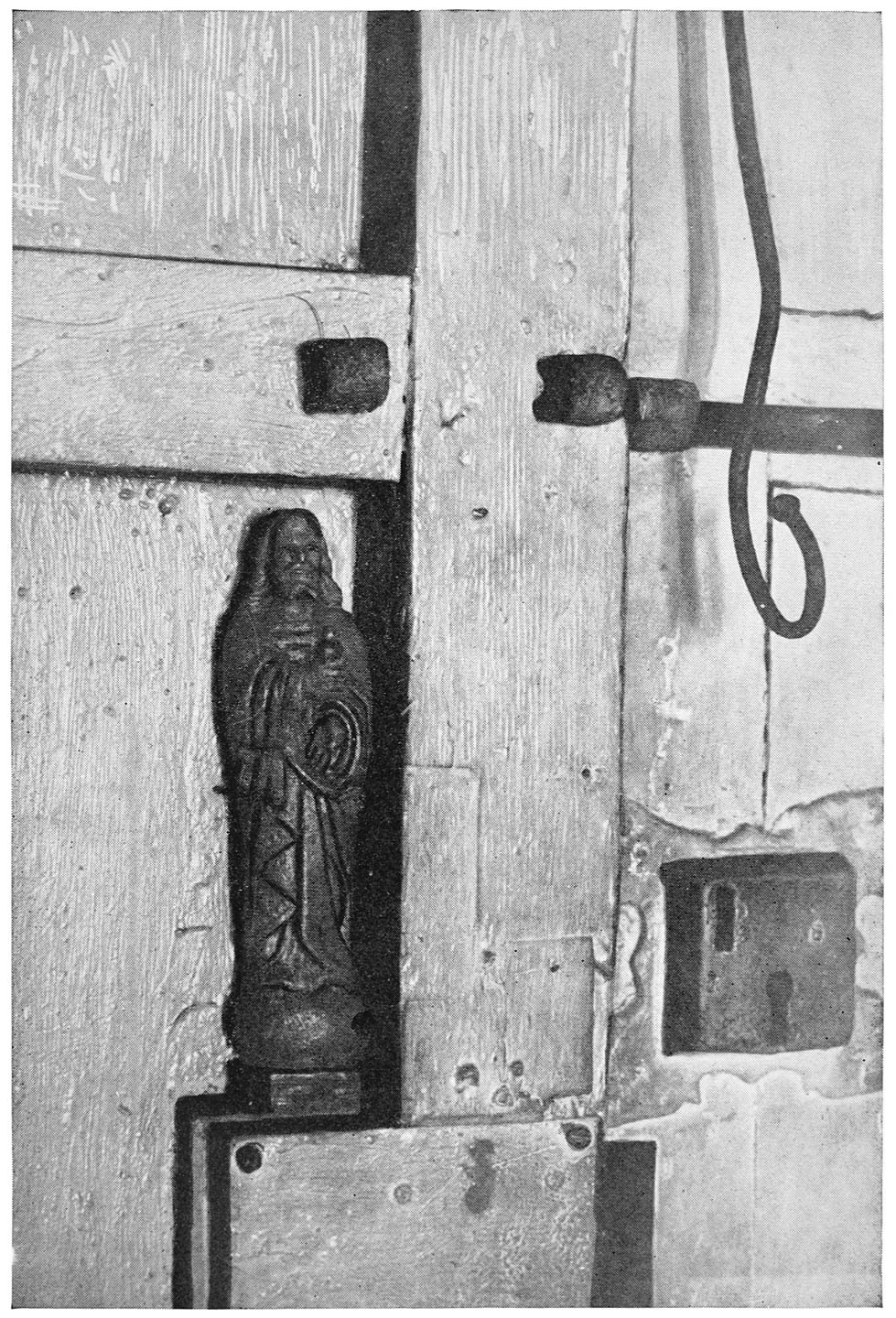
WOOD CARVING BY RIZAL
His famous statue of the Holy Cross
Next two of Rizal’s sisters fell into the same net. Sedition and sacrilege were handy offenses. They could be preferred against anybody for anything.
His father was the next victim. In his case the plain purpose was ruin, to be achieved by means suggested to ill minds through an out-cropping of one man’s childish malice. Mr. Mercado raised prize turkeys. The intendant, or manager, of the Dominican estate, which claimed ownership in all the land in the region of the Mercado homestead, had a nice taste in these birds when skilfully cooked, and it was his pleasing habit to demand from time to time gifts of the choicest of the Mercado turkeys to adorn his own table. The time came when it was no longer possible thus to propitiate the petty tyrant; disease had carried off the firstlings of the flock, and what were left were absolutely needed to replenish the breed.
Aggrieved members of the governing class must have joyed to learn of so excellent an opportunity to salve their hurts, also, in this medicament of revenge. Here was the father of the hated José Rizal delivered into their hands. They took the case from the justice of the peace at Calamba, in whose jurisdiction it rightfully belonged, and sent it before a judge whose decision they must have felt sure they could control. There had now become involved in the case a question of broader moment. Mr. Mercado’s sturdy resistance had heartened the other tenants to revive the ancient and unsettled issue of the title to the lands. For many years careful men had held that the Dominicans, who assumed to own all this region and to collect all rents from it, had no right to any of it. The select judge before whom came these questions lost no time in deciding them against Mercado and the other tenants. Mercado appealed, and thereby precipitated one of the strangest incidents of the story.
In the spot from which it had been thus evicted the Mercado family had lived for many years. There could have come upon these kinsfolk of Rizal no sterner test of their fortitude. Before it they went their way undaunted. At Los Baños was a small house to which Mr. Mercado had title. There he led his family to a refuge and continued his fight against the friars.
But before they quarreled Rizal had written much for del Pilar and “La Solidaridad;” poems, articles, editorials, all directed toward Philippine reforms. When he heard of the indignity put for his sake upon the name and clay of Herbosa, he took up his pen and poured out for his journal an account of the incident and his feelings about it that scalded the church authorities with a flood of the short, hot sentences he knew so well how to write—scoriæ and hot lava from the volcano. When the news of the attack upon his father came he was living in Ghent, whither he had retired to write his new novel “El Filibusterismo.” The effect upon him of the persecution of his family is to be observed in the work he was doing at the time; in one place he makes direct reference to it. He has been telling the story of Cabesang Tales, a peaceful Filipino farmer, driven to brigandage by the extortions of the friars and the savageries of the Civil Guards. Then he says, with mingled rage and sarcasm:
It is the bitter sarcasm of a soul stung beyond endurance with the sense of great wrong.
Evidence of the change in his essential point of view may be found even in the dedication of the new book. It is boldly and uncompromisingly to the men that, perishing on Bagumbayan Field, in 1872, the gored victims of the System, made their names immortal.
To the memory of the priests [it reads], Don Mariano Gomez (85 years old), Don José Burgos (30 years old), and Don Jacinto Zamora (35 years old), executed in Bagumbayan Field, February 28, 1872.
The church, by refusing to degrade you, has placed in doubt the crime that has been imputed to you; the Government, by surrounding your trials with mystery and shadows, causes the belief that there was some error, committed in fatal moments; and all the Philippines, by worshiping your memory and calling you martyrs, in no sense recognizes your culpability. In so far, therefore, as your complicity in the Cavite mutiny is not clearly proved, as you may or may not have been patriots, and as you may or may not have cherished sentiments for justice and for liberty, I have the right to dedicate my work to you as victims of the evil that I undertake to combat. And while we await expectantly under Spain some day to restore your good name and cease to be answerable for your death, let these pages serve as a tardy wreath of dried leaves over your unknown tombs, and let it be understood that every one that without clear proof attacks your memory, stains his hands in your blood!