Chapter III
Reading edition
THE DAWN OF HASKALAH
1794-1840
A glimmer of light pierced the Russian sky at the accession of Catherine II (1762-1796). This "Semiramis of the North," the admirer of Buffon, Montesquieu, Diderot, and, more especially, Voltaire, whose motto, N'en croyez rien, she adopted, endeavored, and for a while not without success, to introduce into her own country the spirit of tolerance which pervaded France. Her ukases were intended for all alike, "without distinction of religion and nationality." Her regard for her Jewish citizens she showed by allowing them to settle in the interior, establish printing-presses (January 27, 1783), and become civil and Government officers (April 2, 1785). In the edict promulgated by Governor-General Chernyshev it is stated that "religious liberty and inviolability of property are hereby granted to all subjects of Russia and certainly to the Jews; for the humanitarian principles of her Majesty do not permit the exclusion of the Jews alone from the favors shown to all, so long as they, as faithful subjects, continue to employ themselves, as hitherto, with commerce and trade, each according to his vocation." That she remained true to her promise, we see from the numerous privileges enjoyed by many Jews, who began to frequent Moscow and St. Petersburg and reside there for business purposes.
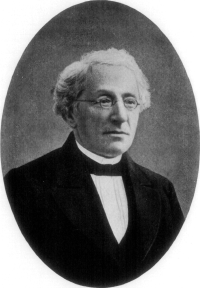
Max Lilienthal, 1815-1882
Grant us, who, like you, worship the God above,
Also on earth to enjoy equality with you!
To-day, while your hearts are open to love,
Still, Alexander I approached his object only tentatively. Haskalah during his reign was like the Leviathan in the Talmud legend which resembled an island, so that wayfarers approached it to moor under its lee and find shelter in its shade, but as soon as they began to walk and cook on it, it would turn and submerge them in the stormy and bottomless sea. The Jews were invited or induced to forsake their religion, and only the less discerning were caught in the snare. It remained for the "terrible incarnation of autocracy," Nicholas I (1825-1855), or, as his Jewish subjects called him, Haman II, to fill their cup of woe to overflowing and employ every available means to convert them to his own religion.
Nicholas's one aim was "to diminish the number of Jews in the empire," but not by expulsion, the means employed by Ferdinand and Isabella. He knew too well their value as citizens to allow them to migrate. He would diminish their numbers by forced baptism. Baptized Jews were exempted from the payment of taxes for three years; Jewish criminals could have their punishment commuted or could obtain a pardon by ceasing to be Jews. But as these inducements could naturally appeal only to comparatively few, more stringent measures were resorted to. Hitherto the Jews had been excused from military service, paying an annual sum of money for the privilege. On September 7, 1827, an ukase was issued requiring them not only to pay the same amount as theretofore, but also to serve in the army; and while Christians had to furnish only seven recruits per thousand, and only at certain intervals, the Jews had to contribute ten recruits for each thousand, and that at every conscription. The only exception was made in the case of the Karaites, who, according to Nicholas's decision, had emigrated from Palestine before the Christian era, and could not therefore have participated in the crucifixion of Jesus. Jews found outside of their native towns without passports, and those in arrears with their taxes, frequently even those who, having lagged behind in their payment to the Government, eventually discharged their obligations, were to be seized and sentenced to serve in the army, and this meant a lifetime, or at least twenty-five years, of the most abject slavery imaginable. This grievous measure caused the utmost misery. No Jewish youth leaving home could be sure of returning and seeing his dear ones again. The scum of the Jewish population (poimshchiki, or "catchers") made it their profession to ensnare helpless young men or poor itinerant students suspected of the Haskalah heresy, destroy their passports, and deliver them up as poimaniki (recruits), to spare the rich who paid for the substitutes. To form an idea of the time we need but read some of the numerous folk-songs of that day. Here is one of many:
Quietly I walk in the street, When behind me I hear the rush of feet. Woes have come and sought me, Alas, had I bethought me. "Your passport," they ask. Alas, it is lost! "Then serve the White Czar!" that is the cost. Woe has come and sought me, Alas, had I bethought me. There are many rooms, they take me to one, And strip from my body the poor homespun. Woe has come and sought me, Alas, had I bethought me. They take me to another room, The uniform,—that is my doom. Woe has come and sought me, Alas, had I bethought me. Rather than wear the cap of the czar, To study the Torah were better by far. Woe has come and sought me, Alas, had I bethought me. Rather than eat of the czar's black bread, I'd study the Scriptures head by head. Woes have come and sought me, Alas, had I bethought me.
One of these Cantonists, the first to give a description of the life of his fellow-sufferers, was Wolf Nachlass, or Alexander Alekseyev. For many years he remained faithful to the religion of his forefathers, though he had been pressed into the service at the age of ten. About 1845 he changed his views, became an ardent Greek Catholic, and converted five hundred Cantonists, to the great delight of Nicholas I, who thanked him in person for his zeal. He lost his leg, and during the long illness that followed Nachlass settled in Novgorod, and wrote several works on Jewish customs and on missionary topics.
Less horrifying, but equally aiming at disintegration, was Nicholas's scheme of colonization. What better means was there for "diminishing the number of Jews" than to scatter them over the wilderness of Russia and leave them to shift for themselves? This, of course, was necessarily a slow process and one involving some expense, but it was fraught with great importance not only for the Russian Church, but for Russian trade and agriculture as well.
Who lives so free As the farmer on his land? His farm his companion is, His never-failing friend. His sleep to him is sweet After a hearty meal; Neither grief nor worry The farmer-man doth feel. He rises very early To start betimes his toil, Healthy and very happy On his ever-smiling soil. O blessings on our czar, Czar Nikolai, then be, Who granted us this gladness, And bade the Jews be free.
Alas, this joy was of short duration! Very soon Nicholas became suspicious of his Siberian colonization scheme, that it was in reality a philanthropic measure, and in place of saving the Jew's soul it only promoted his physical well-being. This suspicion grew into a conviction when he learned that the Jewish community at Tomsk, still faithful to the heritage of Israel, applied for permission to appoint a spiritual leader. The autocrat, therefore, signed an ukase checking settlement in the hitherto free land, depriving honest men of the privilege enjoyed by the worst of criminals, and enrolling the children of those already there among the military Cantonists (January 5, 1837).
Then began real misery. Believing at first that the czar's intentions were sincere, many Jews had sold their hut and land and left for Siberia. No sooner were they there than they were sent, on foot, to Kherson. The decree of the "little father" was executed in—no other phrase can describe it so well—Russian fashion. The innocent Jews who had come to Siberia by invitation were seized, treated as vagabonds, and deported to their destination. Want and suffering produced contagious diseases, and many became a burden to the Jews of Kremenchug and such Christians as could not witness unmoved the infernal comedy played by the defender of the Greek Catholic Church. Help could be rendered only secretly, and those who dared complain were severely punished.
In his efforts to curb the stiff-necked Jews by all manner of fiendish persecution, Nicholas did not neglect to try the efficacy of some of the plans advocated by Lewis Way. Undismayed by the failure of the Committee of Guardians for Israelitish Christians, in which Alexander I had put so much confidence, a "Jewish Committee," all the members of which were Christians, was organized by imperial decree (May 22, 1825). This committee established, in 1829, a school at Warsaw where Christian divinity students were to be instructed in rabbinical literature and in Judeo-German, in order to be fully equipped for missionary work among the Jews. It appointed Abbé Luigi Chiarini to translate, or rather expose, the Babylonian Talmud, to which undertaking the Government contributed twelve thousand thalers.
The crusade against the Talmud, thus headed and backed by the Government, now broke out in all its fury. Anti-Talmudic works in English, French, and German were imported into Russia, translated into Hebrew, and scattered among the people. The Old Paths, by Alexander McCaul, a countryman and colleague of Lewis Way, but surpassing him in zeal for the conversion of Jews, was translated into Hebrew and German (Frankfort-on-the-Main, 1839) for the edification of those who knew no English. Jews themselves, either out of revenge or because they sought to ingratiate themselves with the high authorities, joined the movement, and openly came out against the Talmud in works modelled after Eisenmenger's Entdecktes Judenthum. Such were Buchner, author of Worthlessness of the Talmud (Der Talmud in seiner Nichtigkeit, 2 vols., Warsaw, 1848), and Temkin, who wrote The Straight Road (Derek Selulah, St. Petersburg, 1835). The former was instructor in Hebrew and Holy Writ in the rabbinical seminary in Warsaw; the latter was a zealous convert to the Greek Catholic faith, who spared no effort to make Judaism disliked among his former coreligionists.
All these desperate attempts proved of no avail. Judaism was practiced, and the Talmud was studied during the reign of Nicholas I more ardently than ever before. Their sacred treasures attacked by the Government without and by renegades and detractors within, the Russian Jews nevertheless clung to them with a tenacity unparalleled even in their own history. Danzig's Life of Man (Hayye Adam, Vilna, 1810), containing all Jewish ritual ceremonies, was followed out to the least minutiae. Despite the poverty of the Jews and the comparatively exorbitant price the publisher had to charge for the Talmud, and, aside from the many sets of former editions in the country and those continually imported, and in addition to the Responsa, commentaries, Midrashim, and other works directly and indirectly bearing on it, more than a dozen editions of the Talmud had appeared in Russia alone since the ukase of Catherine II (October 30, 1795) permitting Russian Jews to publish Hebrew works in their own country. This ukase had been intended originally to exclude seditious literature from Russia, but what was unfavorable for the rebellious Poles proved, in a measure, very beneficial to the law-abiding Jews. Under the supervision of a censor, and with but slight interruptions, the Jews published their own books, and in 1806 Slavuta, in Volhynia, saw the first complete edition of the Talmud on Russian soil. Then followed another edition in the same place (1808-1813), a third in Kopys (1816-1828), and a fourth in Slavuta (1817-1822), and several others elsewhere.
The numerous Talmud editions indicate the demand for the work, and the multiplicity of yeshibot explains the cause of the demand. We have seen how the yeshibot destroyed by Chmielnicki were re-established soon after the massacres ceased. Their number increased when the Hasidic movement threatened to render the knowledge of the Talmud unpopular; and when the Maskilim, too, made them a target for their attacks, there was hardly a town in which such institutions were not to be found. But surpassing all the yeshibot of the nineteenth century, if not of all centuries, was the Yeshibah Tree of Life (Yeshibat 'Ez Hayyim) in the townlet of Volozhin. There the cherished hopes of the Gaon were finally realized. Within its walls gathered the elect of the Russo-Jewish youth for almost a century.
The founder of this famous yeshibah was Rabbi Hayyim Volozhin, the greatest of the Gaon's disciples (1749-1821). A prominent Talmudist at twenty-five, he, nevertheless, left his business and household at that age, and went to Vilna to become the humble pupil of the Gaon, whose method he had followed from the beginning. When he felt himself proficient enough in his studies, he returned to his native place, and founded (1803) the Tree of Life College, with an enrollment of ten students, whom he maintained at his own expense. But soon the fame of the yeshibah and its founder spread far and wide, and students flocked to it from all corners of Russia and outside of it. In response to Rabbi Hayyim's appeal contributions came pouring in, a new and spacious school-house was erected, and Volozhin became a Talmudic Oxford. To be a student there was both an indication of superiority and a means to proficiency. Rabbi Hayyim did away with the "Tag-essen," or "Freitisch" custom, and introduced a stipendiary system in its stead, thus fostering the self-respect of the students. But they did not as a rule require much to satisfy them with their lot. They came to Volozhin "to learn," and they well knew the Talmudic statement, that "no one can attain eminence in the Torah unless he is willing to die for its sake."
Thus all the schemes and machinations of the Russian Government respecting the Jews proved ineffectual. Nicholas I, with the possible exception of Ivan the Terrible, the greatest autocrat in Russian history, at whose wish seemingly insuperable obstacles were instantly removed, the wink of whose eye was sufficient to kill or revive the millions of his crouching slaves—Nicholas I, with all his herculean strength, yet found himself helpless in the presence of a handful of wretched Jews. Furious at his defeat, he expressed the intention to reduce all Jews to Governmental servitude or to make them, like the Cossacks, lifelong soldiers. Being advised to postpone the execution of this plan and to employ less severe measures meanwhile, he issued the Exportation Law of 1843, ordering the expulsion of Jews from the fifty-vyerst boundary zone and from the villages within the Pale, thereby depriving fifty thousand families at once of their homes and their support.
This Exportation Law of Nicholas I, the result of a lawsuit between a Jew and a nobleman living on the eastern frontier, which had been decided by the supreme court in favor of the former, aroused much excitement in every civilized country of Europe. It was before anti-Semitism was in flower, and the people of the time were more responsive even than during the later Kishinev massacres. Indignation meetings were held. Both Jews and Gentiles, not only abroad, but even in Russia, protested. Prayers were offered for the unfortunate. Crémieux in France and Rabbi Philippson in Germany appealed to the public. All to no effect. Grief was especially manifest among English Jews, always the first to feel when their fellow-Jews in other countries suffer, and Grace Aguilar, like Rachel weeping over her children, lamented over her Russian brethren:
Ay, death! for such is exile—fearful doom, From homes expelled yet still to Poland chain'd; Till want and famine mind and life consume, And sorrow's poison'd chalice all is drained. O God, that this should be! that one frail man Hath power to crush a nation 'neath his ban.
Yet, though his visit did not, as Sir Moses had anticipated, "raise the Jews in the estimation of the people," it was not without beneficent effect on the Jews themselves. It cemented the "traditional friendship" which has always existed between Anglo-Jews and Russo-Jews more than between any sets of Jews of the dispersion. It disclosed to the latter that there were happier Jews and better countries than their own; that there were men who sympathized with them as effectively as could be. Above all, it convinced them that a Jew may be highly educated and wealthy, and take his place among the noble ones of the earth, and still remain a faithful Jew and a loyal son of his persecuted people. "I leave you," Sir Moses called to them at parting, "but my heart will ever remain with you. When my brethren suffer, I feel it painfully; when they have reason to weep, my eyes shed tears." Had Montefiore's visit resulted merely in arousing his brethren's self-consciousness, he had earned a place in the history of Haskalah, for self-consciousness is the most potent factor in the culture of mankind.
Jews from other lands also came to the rescue of their Russian coreligionists. Jacques Isaac Altaras, the ship-builder of Marseilles, petitioned the czar to allow forty thousand Jewish families to emigrate to Algeria. Rabbi Ludwig Philippson, editor of the Allgemeine Zeitung des Judenthums, appealed to his countrymen to help the Russian Jews to settle in America, Australia, Africa, anywhere away from Russia. But all attempts were ineffectual. Though Count Kissilyef assured Montefiore that the czar "did not wish to keep them [the Jews], five or six hundred thousand might leave altogether," emigration was next to impossible. Russia was constantly playing the game of the cat with the mouse. Her nails were set and her eyes fixed upon her prey, and yet she made it appear to the outside world that she was anxious about the welfare of the Jews. For Russian tactics have always been, and still are, the despair of the diplomat, a labyrinth through which only they who hold the clue can ever hope to find their way.
The condition of the Jews in Russo-Poland was, if possible, even worse than in Lithuania and Russia proper. Nothing, in fact, but the auto-da-fé was needed to give it the stamp of medieval Spain. As before the division of Poland, the Poles suspected the Jews of disloyalty to Poland, while the Russians suspected them of disloyalty to Russia. Hitherto too proud to soil his hand with a manual or mercantile pursuit, the Polish pan, now that the glory of his country had departed, and he was deprived of his lordly estates, began to engage in business of all kinds, and, finding in the Jewish trader a rival with whose skill and diligence he could seldom compete, he became embittered against the entire race. This was the cause of the innumerable restrictions, the extortion, and exploitation in Russo-Poland, which surpassed those of Russia proper.
Such is the background upon which the picture of Haskalah is to be drawn—black enough to throw into relief the faintest ray of light. The Russian Jews, during the reign of Nicholas I, found themselves in a position possible only in Russia. They were not allowed to emigrate, nor suffered to stay. In 1823 they were expelled from the farms, and had to crowd into the cities; in 1838 they were expelled from the cities, and forced to go back to the country. Then Siberia was opened to them, but when it was found that even the land of the outcasts was hailed as a place of refuge by the Jews, they were told to go to Kherson. At last arrangements were perfected to allow them to colonize Lithuania—all at once even this was interdicted. They had been conquered with the Poles, yet were left unprotected against the Poles. Could they help suspecting the tyrant of what he really intended to do—of seeking to diminish their numbers by conversion? Is it surprising that when he determined to open public schools and establish rabbinical seminaries, Jews looked upon these, too, as the sugared poison with which he intended to extirpate Judaism? Or can we blame them for being determined to the last to baffle him? Nicholas did not understand the great lesson taught by the history of the Jews and inculcated in the old song,
To destroy all these people You should let them alone.
Little boys and little girls Together had been mated, Tishah be-Ab, the wedding day,— Not a soul invited. Only the father and the mother, And also uncle Elye— In his lengthy delye (caftan), With his scanty beard— Jump and jig with each other Like a colt afeared.
(Notes, pp. 314-317.)