LIFE AND DEATH
Mary J. (Mary Joanna) Safford translation
At the foot of a giant mountain, with a snow-capped head, lay a quiet valley, through which flowed a swift little stream. Its waves bathed the roots of an ancient oak, which was reflected in the water. Under the shadow of the tree grew masses of blue gentians and other flowers, and in its top a very wise old raven had built a nest.
It was a midsummer day, the gentians were in bloom, and their petals began to droop in the heat. Then one blossom, whose neighbor had already lost half its leaves, began to complain: “How miserable we poor flowers are, and what a sad fate we have! We enjoy our lives only during one short spring. A few kisses from the sun, a few beautiful nights under the dew and the moonbeams, a few caresses from the evening breeze, a few visits from the moths and pretty gold beetles, a few bird songs, then all the pleasure is over, and it never comes back again. Before we fairly have time to enjoy our lives, they are ended. How much happier is this oak, whose branches rustle above us! It has seen thousands of generations of gentians bloom and fade away, yet it still lives and perhaps will enjoy the pleasures of spring a thousand years more.”
She paused and hung her little head sorrowfully. But a roaring noise passed through the boughs of the old oak, and the tree in a dry, grating voice answered:—
“Little fool, you talk as you understand. Yes, I live longer than you do. But you are very much mistaken if you imagine that I am to be envied on that account. The spring sun kisses you awake, as a mother rouses her child. You grow without any troubles, and your life is all pleasure. You know nothing except the joy of spring and the happiness of summer, you do not have to bear the sorrows of autumn. You have no enemies, you don’t know what it is to struggle and to suffer, you see nothing in the world except beauty and pleasure. But I—all through my youth I had to defend myself against numberless enemies who wanted to take my life. I was attacked by grubs and worms, caterpillars and beetles, the greedy teeth of grazing animals, and the poison of tiny fungi. After I had escaped all these perils and grew up, what was my fate? Storms vented their fury on me, tossed me about, and even broke my branches. The lightning tore my bark in long strips from my body, and gave me cruel wounds. Look at me—I am completely covered with scars.
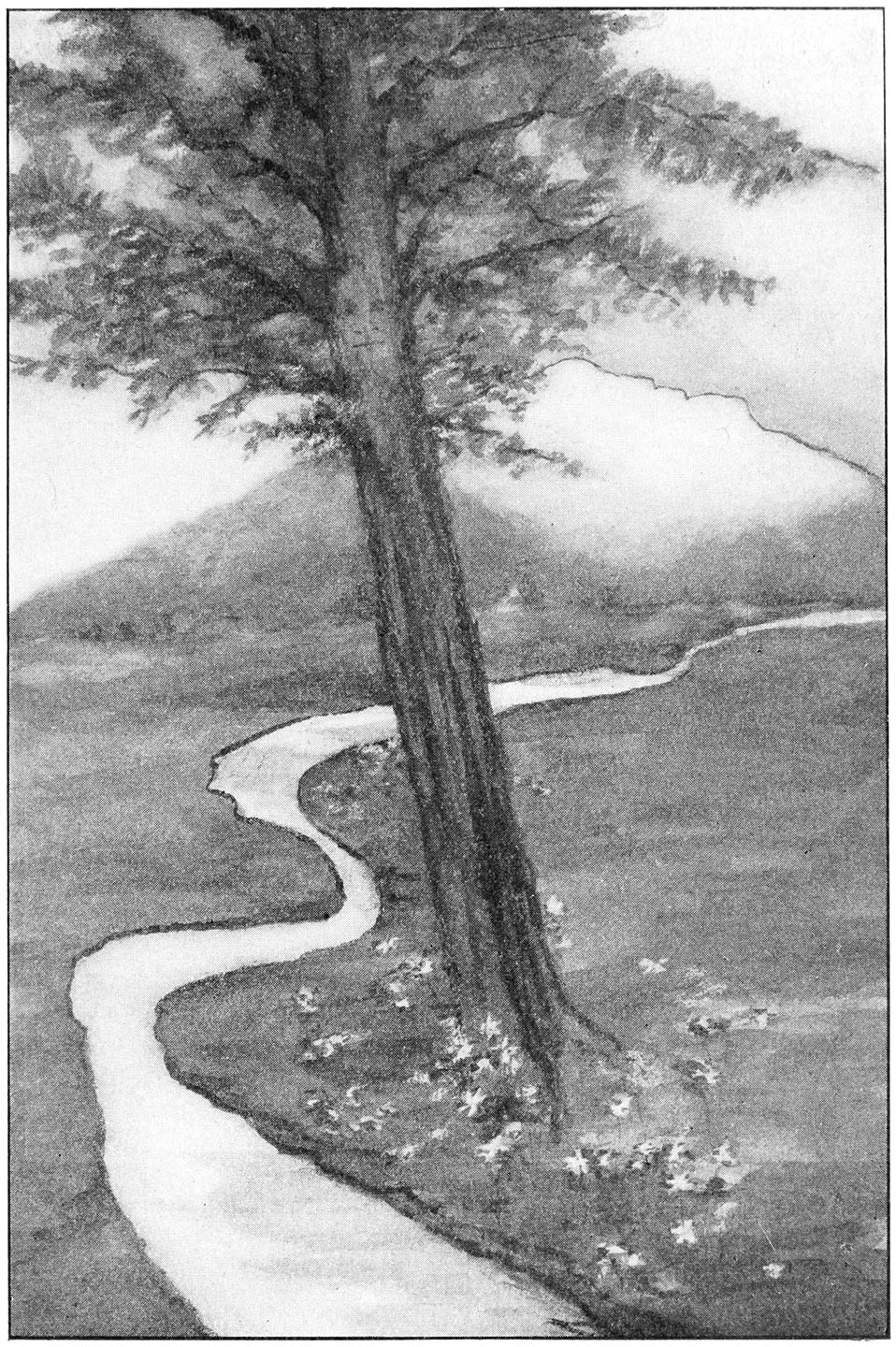
“ ‘Look at me, I am completely covered with scars.’ ”
“Autumn plucked off all my leaves every year, and winter pierced me to my inmost heart with cold. Long after you were sunning yourselves happily in the spring, I was scarcely thawed out, and still felt the pricking of the sap as it began to ascend into the frozen boughs. Even during the few pleasant weeks that my scanty blossoms adorned me, I could not help thinking anxiously of the coming winter and its tortures. So what do I gain by living longer than you? I have already been here a thousand years, and when I look back, it seems but a single day. The moments of happiness were rare, and all the rest was trouble, toil, and suffering. If I loved a bird that built its nest in my branches, or a flower that grew at my foot, I saw them disappear and had to mourn them. Now I am old, my trunk is hollow, worms are gnawing my roots, my branches are dying. Bit by bit my mouldering body will fall into ruin, until pitiless time has entirely destroyed me. I envy you the unvarying beauty and happiness of your life and its swift, easy end. If we must die, it makes no difference whether it is a little sooner or a little later. Ah, if we never grew old, if we could live forever like the mountain giant above us! If you wish a different lot, wish for his, not mine.”
All was still for a time, then the mountain shook with rumbling, groaning noises, and in deep, yawning sounds it spoke slowly, in short sentences, interrupted by long pauses:—
“Oak, oak, have you no more sense than the blue thing yonder, the little gentian? Nonsense about my eternity. I, too, shall some day perish. Nothing in the world is eternal. The earth itself is not—nor the sun. The air and the water both gnaw at me. They wear me away continually. You are growing. I am constantly becoming smaller. Some day there will be nothing left. Then it will be as if I never had existed, even though I have lasted so long. True, I feel no sorrow over it. What does it matter whether I live a long or a short time? There is no pleasure in my existence. Here I stand year after year, staring out into the world. Everything is the same to me, summer and winter, day and night. Nothing stirs within me. I feel nothing. I hope for nothing. I am afraid of nothing. I do not grow as you do. I do not draw up joyously, with thirsty roots, the juices of the earth. I put forth no leaves and blossoms. I ripen no fruits. No descendants spring up around me. I experience nothing pleasant, and nothing unpleasant.
“I think little, I dream dully, am terribly bored, and scarcely notice what is going on around me. Everything is stupid and uninteresting. How gladly I would change places with you! Or even with the gentians that live only one summer. You feel something. I—nothing.”
At this moment the raven in the top of the tree croaked loudly. “Look there!” he called to the mountain, the oak, and the flowers, pointing with his beak and wings to the brook which rippled through the valley. Above the little stream rose countless tiny, winged creatures, which hovered over it like a thick cloud. It was a swarm of ephemeræ. They spread their delicate, transparent wings, breathed the fresh air, bathed their dainty bodies in the warm sunbeams. Intoxicated by the light and the warmth, the sweet air, thrilling in every nerve with joy and excitement, they began to dance: singly, in couples, in bands. They darted to and fro, swung in circles, whirled around hither and thither, up and down, with twitching legs and beating wings. Their eyes shone with pleasure. Their shrill buzzing expressed the greatest joy. They felt neither hunger nor thirst, but feasted on the air and sunshine. They did not think of what might be before them. They did not puzzle their brains about what might happen after. The present hour was theirs, and that was enough. They were alive now, they were enjoying all the pleasures of the summer world, they were perfectly happy.
The sun reached his noonday height and sank toward the west, but the ephemeræ did not heed it. They went on dancing, absorbed in their wild whirl, rejoicing in their mutual happiness, until the day was nearly over and the evening shadows began to gather in the valley. Then a delightful weariness stole over them, a pleasant, drowsy feeling destroyed their joy in dancing and dulled their senses. They drew up their legs, folded their wings, and sank down from the air upon the brook. The wonderful memories of the happy day, which filled their little heads, grew less distinct, everything around them became misty, and they fell asleep sweetly, like children who have played until they are tired. But they were not asleep. They were dead.
When their little bodies covered the surface of the stream, the wise raven said to the mountain, the oak, and the gentian: “A long life, a short life, matters nothing. A beautiful life. That is happiness.”
Tommy-Anne and the Three Hearts
By MABEL OSGOOD WRIGHT
Author of “Dogtown,” “Citizen Bird,” etc.
With illustrations by Albert Blashfield
Cloth 12mo $1.50
“The more of such books as these, the better for the children. One Tommy-Anne is worth a whole shelf of the average juvenile literature.”
—The Critic.
“A better gift book for the little folks there could not be than this charming work.… Genius of this rare order is decidedly one of Mrs. Wright’s gifts, and this is proven by the fascinated interest that gray-haired readers cannot help feeling in the book.”
—The American, Philadelphia.
“The child who reads will be charmed while he is instructed, and led on to make new discoveries for himself.”—The Nation.
Wabeno, the Magician
The sequel to “Tommy-Anne and the Three Hearts”
By MABEL OSGOOD WRIGHT
Author of “Four-footed Americans,” etc.
With illustrations by Joseph M. Gleeson
Cloth 12mo $1.50
“Only positive genius could weave such subtle webs of fancy, poetical in warp and woof, yet practical in knowledge. The book is interestingly illustrated.”—The Chautauquan.
Aunt Jimmy’s Will
By MABEL OSGOOD WRIGHT
Author of “Tommy-Anne and the Three Hearts,” etc., etc.
With illustrations by Florence Scovel Shinn
Cloth 12mo $1.20 net
“ ‘Aunt Jimmy’s Will’ is, I think, one of the most engaging stories for young girls that has appeared this year …; it is, in fact, the best-constructed narrative Mrs. Wright has produced, and Bird O’More is her most captivating heroine.”—The Toronto Globe.
“It’s such a charmingly natural little story about natural folks and by no means unnatural doings that there is little doubt of its making many friends among young people—among older ones, too, for that matter, as this is one of the stories for young folk that readers of maturer years like well to take a dip into … a very interesting and entertaining drama of common folk.”—The Boston Transcript.
The Dream Fox Story Book
By MABEL OSGOOD WRIGHT
Author of “Citizen Bird,” “Birdcraft,” etc.
With eighty drawings by Oliver Herford
Cloth Small Quarto $1.50 net
“There is fun enough on every page to make the reader wish he had the dream habit himself.”—The Dial.
“One of the most entertaining efforts of the season.”—The Argonaut.
An Island in the Air
A story of singular adventures in the Mesa Country
By ERNEST INGERSOLL
Author of “Wild Neighbors,” “The Ice Queen,” etc.
Illustrated with a frontispiece in colors, full-page half-tones, and many drawings in the text.
Cloth 12mo $1.50
A story of real adventure on the real frontier,—the Far West of fifty years ago, when life was large and free, with game for the shooting; with bears and wolves and cougars; with Indians and soldiers and emigrant trains, and all the picturesque furniture of a land of promise for healthy sport. It was neither sport nor romance, however, that these young people—boys and girls—were in search of down there on the borders of the Navajo country—they came because they had to. Nothing was further from their minds than to get separated from their elders by a strange yet perfectly natural accident, and to find themselves marooned upon a desert island in a sea of blue air, and then to get away by aid of a lot of Mokis, dead and alive. But so it happened; and being brave, resourceful, and jolly, the youngsters met their adventures halfway, acquitted themselves with credit, and so escaped from difficulties which might have daunted older heads and hands.
The Phœnix and the Carpet
By E. NESBIT
With illustrations by H. R. Millar
Cloth 12mo $1.50
E. Nesbit is one of the most delightful writers for children of the present day. The five children in “The Phœnix and the Carpet” are as real and genuine and delightful as any to be met in modern literature. Unrolling a strip of carpet bought by mother, they found a curious egg. Robert dropped it into the fire! it blazed up, cracked, and out of it came a flame-colored bird which announced to the children that it was the Phœnix. The carpet, it further told them, was the famous magic carpet, that takes you anywhere you wish. Immediately begin adventures. Under the guidance of the genial and informing Phœnix, the children cross to France on the wishing carpet. Later, the cook wishes them in the South Sea Islands, where she reigns as queen; at another time they have adventures in India. Through it all, they are healthy, lively, full of fun, good humor, and ideas.
THE MACMILLAN COMPANY
64–66 Fifth Avenue, New York