LAST YEAR’S FLY
Mary J. (Mary Joanna) Safford translation
You know what becomes of the flies in autumn. As soon as it begins to grow cold, they are weak, stay on the window-panes, don’t fly off even when you touch them with your finger, and some morning they stick motionless and are dead.
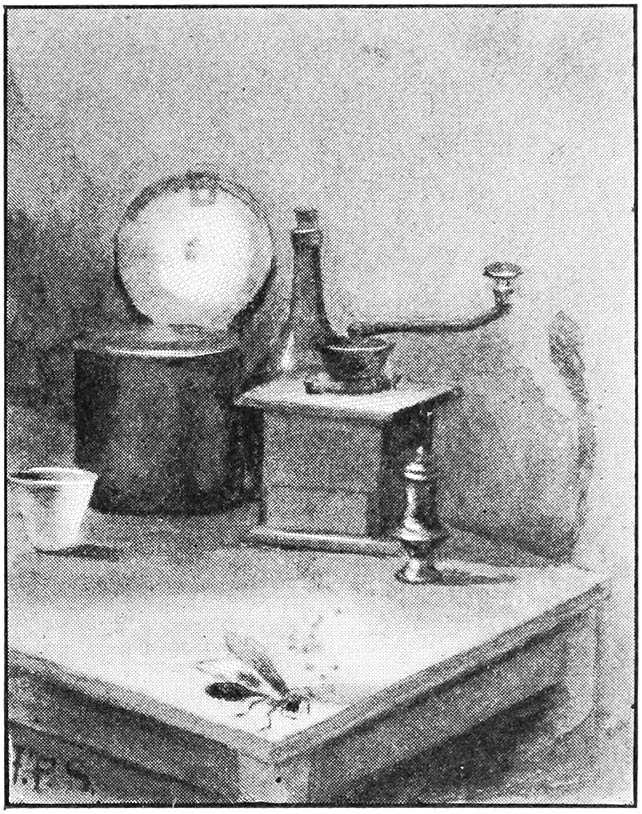
Now once upon a time there was a big brown fly, whose name was Buzz-Buzz. One warm summer day, when the window stood open, she had flown into the kitchen and did not leave it again; for it was a comfortable place, and suited her very well. There were always grains of sugar in the cupboard, and milk and dregs of coffee on the table, so that she had plenty to eat and drink. When she was not licking and nibbling, she was cleaning her wings and back with her fore-legs; and when she was not making herself beautiful, she was watching, curious to see what Marie was doing at the hearth, how she lighted the fire, put on the pots, salted and spiced, stirred and beat, and tried to guess what nice things there would be to taste that day.
When Marie was not in the kitchen, she chatted with the cricket that lived in a crack of the chimney, with whom she had quickly made friends. The cricket was a very lively creature, and never grew tired of talking and gossiping, asking questions, and telling stories. There were plenty of visitors, too. As soon as Marie opened the window in the morning, whole swarms of flies flew in,—sisters, cousins, and neighbors,—who told Buzz-Buzz all the news, while she politely offered them coffee and cakes. She had them, and could easily do it. It was a perpetual feast, and, before she knew it, summer had passed and autumn came.
At first Buzz-Buzz did not notice it. She was too comfortable. Why should she care, if the frost fell night after night outside? It was pleasant in her warm kitchen. But she gradually found that some change had taken place in the world. Marie opened the window more and more seldom, and the relatives and acquaintances no longer came to call. If a friend flew in now and then, she seemed strangely dull, scarcely touched the dainties Buzz-Buzz offered, answered questions indifferently, and sometimes, to the horror of Buzz-Buzz, suddenly dropped down in the middle of a word and did not stir again.
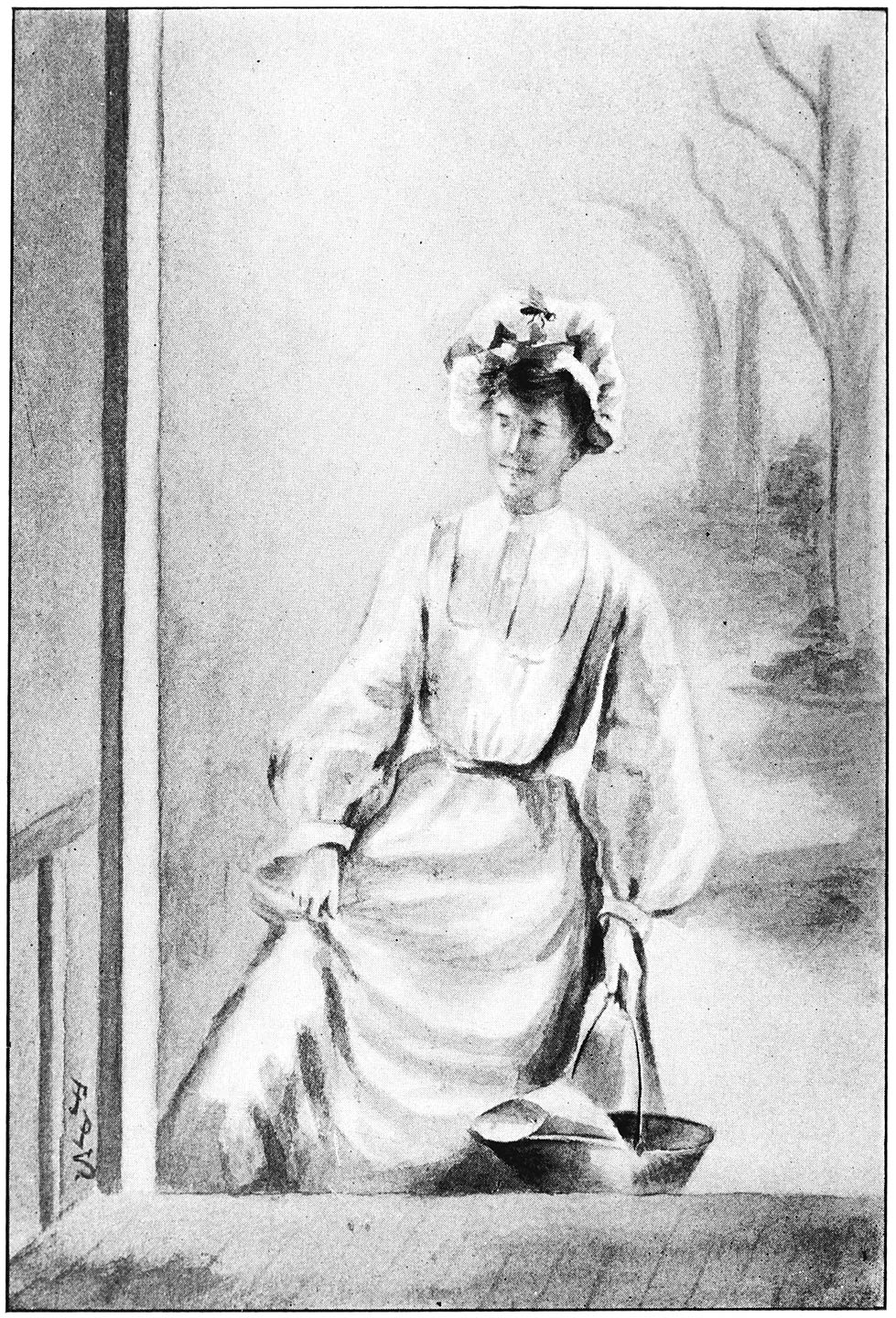
“She had barely enough strength left to light on Marie’s cap, and let her carry her home.”
Buzz-Buzz asked the cricket what this meant, but the cricket made no answer. When Buzz-Buzz crawled to the crack and peeped in, she saw the cricket lying stretched out, asleep. It slept all the time now, from morning till night, and from night till morning. Buzz-Buzz could not understand it and began to feel very uneasy. She waited till Marie went out, and flew out with her, to look about a little and perhaps discover why no more visitors came, and why the few who did were so dull and feeble, why they so often grew sick and died while they were sitting in the kitchen with her, drinking coffee.
Out of doors Buzz-Buzz came near faring very badly. She had scarcely had time to notice how different everything looked from usual, when the cold chilled every limb, her wings grew heavy, her legs became stiff, darkness surrounded her, and she had barely enough strength left to light on Marie’s cap, and let her carry her home. If Marie had not been there, Buzz-Buzz would never have reached her kitchen alive.
It was some time before Buzz-Buzz recovered entirely. By degrees the recollection of what she had and had not seen, during her brief flight, came back to her. Why did it look so dreary out of doors? True, there were no terrible swallows, always trying to kill the poor flies, but there were no flies, no gnats, no butterflies, no sign of the usual gay life of noonday. There was not even a patch of blue sky, not a sunbeam, not a single green leaf. Bare trees, gray clouds, and an icy air, which pierced through the unprotected body like a knife. How fortunate that she had the warm kitchen! There the closed windows did not let the cold enter, and it was as comfortable by the hearth as on the most beautiful summer day, only one mustn’t go too near the fire. Buzz-Buzz took care not to do that.
She had escaped a great danger. This Buzz-Buzz knew very well. She rejoiced over it, and rubbed her fore-legs together with much satisfaction. But she did not think only of herself. She remembered the others,—the sisters, cousins, aunts, neighbors, friends, and acquaintances with whom, in fair weather, she had spent so many pleasant hours. They must all be dead. Otherwise, one or another would surely come to visit her. But no one called. This made Buzz-Buzz very sad, and though she herself was comfortable, she often sat still in a corner, sighing and grieving for the dead. Perhaps she often wept, too; but I can’t say so positively, because a fly’s tears are so small that we cannot see them unless we watch very carefully.
Buzz-Buzz ate and drank well, and she slept well, too, only a little too much, so that she grew fat and lazy, and would rather sit quiet or crawl a little on the wall or ceiling than to fly. Flying was growing too hard for her. She wondered why, after being so nimble, she was now such a clumsy person, but gradually became used to it. People get used to everything—even to loneliness. True, that is the hardest of all. The winter was long and, though the days were short, Buzz-Buzz had more than time enough to think over everything. Especially whether there would ever again be flies in the world. To live all alone in the wide world is surely worse than death. It would be altogether too terrible, if she were always to be the only fly. True, she still had one dear friend, the cricket. But the cricket just slept and slept, and she could make nothing of it. Would the lively little creature ever wake up again? Even if it did, though a beloved friend, the cricket was no relation, and could not take the place of one’s own flesh and blood. When she pondered over these sad thoughts, her heart grew heavy, and even sugar cakes and coffee did not taste right. What is the use of wealth, if we can share it with no one?
At last the winter was over, spring came, the sun again shone brilliantly, and there was a shade of green on the dry branches of the two trees in the garden.
Then one morning a strange thing happened. Marie threw the kitchen window wide open, a cool, fragrant breeze blew in, which at first made Buzz-Buzz shiver, but soon gave her new strength and vigor. After some hesitation, she ventured to leave her corner between the wall and the ceiling and fly to the open window—and lo! almost before she reached it, she heard around her the beloved buzzing of her relatives, which she had missed so long. A whole swarm of beautiful, glittering young flies were whirling, dancing, and playing in the sunshine, and Buzz-Buzz, wild with joy, rushed into the circle and, with outspread wings, darted from one to another that were nearest, trying to clasp and kiss them, exclaiming in a half-stifled voice: “Sisters, dear sisters! Oh, how glad I am that I have lived to see you again!”
But the flies scattered, circling around at a distance, and staring at her. Then one cried out, “Who is this scarecrow?” And another giggled, “Look at the fat pigeon,” while a third called, “Madam, your wings haven’t been brushed to-day.” Then they all laughed.
Buzz-Buzz was puzzled and offended. It was hard for her to stay in the air so long, and she rested on the window-sill, saying mournfully: “Do none of you know me? I am Buzz-Buzz.” And she named many sisters, cousins, and friends who had been young and enjoyed life with her the year before.
But the new generation of flies had no knowledge of these names, and the more poor Buzz-Buzz mentioned, the more suspicious and unfriendly the young flies became. They buzzed together, “Let us take care, she is a swindler.”
“Oh, come! Do believe me!” Buzz-Buzz coaxed anxiously. “I had so many sisters and friends last year. Then we were a great swarm, as you are now. And I was the gayest one of all. But the autumn came and they all died, and then the winter followed and I was left all alone, and believed the world had gone to ruin. But now spring has returned and I see my relatives again, and they are just as merry as ever. I am so glad to see you, why are you so unkind, and keep away, and do not want to own me for your sister?”
The young flies had come nearer, and listened with greater and greater astonishment. They let her go on until her breath failed and she began to cough. Then one fly, with gold and ruby eyes, that seemed to be the sauciest of them all, answered: “Madam, you’re talking nonsense. You think us more stupid than we are. We are not to be fooled. What do you mean by last year? Every fly knows that the world began with us. There was nothing before us. And no one ever saw a fly die, unless a swallow or a sparrow ate it. Autumn and winter? Nobody ever heard of such things. As far as flies can remember, everything has always been just as it is now. You ought to be ashamed of yourself for trying to impose upon us.”
The others buzzed approvingly, and one called loudly: “Don’t you see that she is crazy? Let the silly chatterbox alone, and come back to our dance.” They all waved their gleaming mother-of-pearl wings, and buzzed away.
“Sisters! Dear sisters!” pleaded Buzz-Buzz, panting for breath, but not a fly listened and, in an instant, she was alone on the window-sill, and the others were far away whirling about in the golden sunshine. Buzz-Buzz sat still a short time, as if she was dazed. She could not understand why her young sisters were so unkind to her, when she had been longing for them all winter. At last she determined to go back to her kitchen and see whether the cricket was awake, so that she could tell her adventures and bewail her troubles.
The cricket really was awake, but another cricket had called, and the two were chirping busily to each other, so, when Buzz-Buzz came to the chimney and put in her head, her friend called somewhat roughly: “What do you want here? Don’t you see I have a visitor? I’ve no time for you now!”
Buzz-Buzz, without saying a word, went back to her old corner between the wall and the ceiling, and sat there quietly with drooping wings.
Something had again changed in the world, and it was full of new life. But what did it avail poor Buzz-Buzz?
She had grown old and did not suit this new world. I ought to have died in the autumn, like all my sisters, she thought sorrowfully, staring at the thin column of smoke which rose from the fire, whirling upward through the chimney out above the roof, above the house, into the sunny air, to the blue sky. She gazed at the floating bluish pillar, and a great longing seized her to mount upward with the smoke, and be borne by its soft, warm breath out into the sunny air, to the blue sky. She crept nearer and nearer. Suddenly she could resist no longer and, with one bound, leaped into the midst of the pillar of smoke and disappeared.
She did not know what had happened, she grew dazed, her senses failed, she sank down, and the next moment was a little heap of ashes on the burning coals. She had felt no pain, for she was senseless when she fell into the fire.
The cricket in the chimney chirped secrets to the visitor, and outside the open window danced the flies, sure that they would live forever, unless a swallow ate them.