Volume 1 — CHAPTER XI. (continued 2)
Reading edition
In 1775 Champion advertised his works as “Patent China, at the Manufactory in Castle Green.” In 1776 he advertised it thus:—
“Established by Act of Parliament, The Bristol China Manufactory in Castle Green. This China is greatly superior to every other English Manufactory (sic). Its texture is fine, exceeding the East India and its strength so great that water may be boiled in it. It is a true Porcelain composed of a native clay and is thus distinguished from every other English China which being composed of a Number of Ingredients mix’d together the principal part being Glass occasions it soon to get dirty in the wear renders it continually liable to Accidents and in every respect only an Imitation and therefore stiled by Chemists, a false Porcelain.”
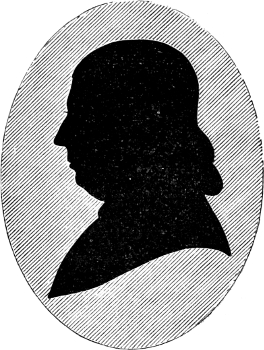
Fig. 746.—Joseph Fry.
In 1778, Josiah Wedgwood, in a letter, dated August 24th in that year, says, “Poor Champion, you may have heard is quite demolished; it was never likely to be otherwise, as he had neither professional knowledge, sufficient capital, nor scarcely any real acquaintance with the materials he was working upon. I suppose we might buy some growan stone and growan clay now upon easy terms, for they have prepared a large quantity this last year.” This curious letter, whose sympathy was certainly left-handed, did but little credit to Wedgwood—the man who of all others had worked hard to crush him, and had succeeded in so doing. His hope now that Champion was “quite demolished” was that he might be able to gain his point and get the growan stone and clay on easy terms! It is lamentable to feel that a great name could sink so low. It does not appear, however, that Champion ever became bankrupt, or even appealed to his creditors.
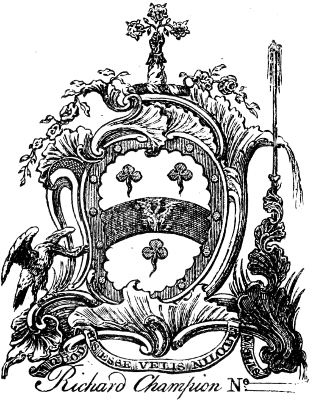
Fig. 747.—Book Plate, with Arms of Champion.
In his Bristol works, although only his own name appears in the various documents to which I have alluded, Champion had friends who assisted pecuniarily in his undertaking. One of these friends was Joseph Fry, the grandfather of the present Mr. Francis Fry, F.S.A., of Bristol, whose name is as well known among biblists and connoisseurs in china for his fine collection of old bibles and choice porcelain as the firm to which he belongs is to the general public for the “Fry’s Chocolate” which they manufacture to so large an extent. Mr. Joseph Fry, the friend of Champion, died in 1786, about nine years after the works had been closed on their removal into Staffordshire; and it appears that the only return he got for the capital he had sunk in the concern, was the beautiful set of vases now in the possession of his grandson.
The patent right was sold by Champion, in 1781—not 1777, as stated by Shaw—to a company of Staffordshire potters, who continued the manufacture at New Hall (which see for a continuation of this narrative) for some time, when the ordinary soft-paste china was allowed to supersede it. Thus the works at Bristol were brought to a close, and the manufacture of porcelain was lost to the locality. Champion himself with his family removed for a time into Staffordshire, fixing themselves at Newcastle-under-Lyne, in November, 1781, and there remained until April, 1782, when, having been appointed a Deputy Paymaster-General of the Forces, by Edmund Burke, he left Staffordshire “at a day’s notice,” and removed to London, having apartments at Chelsea Hospital. This appointment he only held till 1784. In October of that year he sailed for Charleston, in South Carolina, and there he died, in 1791.
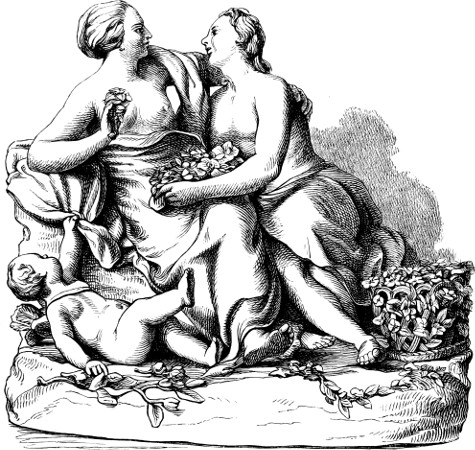
Fig. 748.—Venus and Adonis, belonging to Lady Charlotte Schreiber.
Bristol china (marked), every description of which, owing to the short time the works were in operation, and other causes, is scarce, is particularly rare in the finer and more highly finished varieties. Fortunately, however, examples of these different varieties, of the very finest kind, are still preserved, and attest most strongly to the extreme perfection to which Champion succeeded in bringing his works. Much discrimination is, nevertheless, required in appropriating examples, and it is well to caution collectors against placing too much reliance on the sweeping way in which, by some writers, all examples are hauled into the Bristol net; and by others into those of Lowestoft and other places.
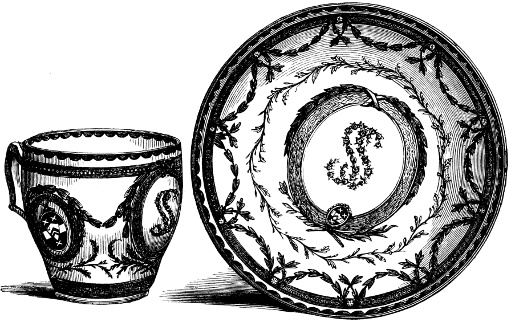
Fig. 749.
One of the choicest examples of the highest class of art in Bristol porcelain existing at the present day, is the tea-service of which the cup and saucer engraved on Fig. 749 forms a part. This splendid service, of which, through the courtesy of Miss Smith, this cup and saucer passed into my hands, possesses a double interest, first from its being made “the best that the manufactory could produce;” and, second, from the historical associations which are connected with it. This example is also highly important as showing the perfection to which the manufacture of porcelain had been brought by Champion in 1774–5. It seems that in 1774 Edmund Burke, while the contested election for Bristol was going on, remained in that city, and for a month was the guest of Mr. and Mrs. Smith, who were his warm friends and zealous supporters, and he presented this splendid set of china, made expressly, by his own order, by Mr. Champion, to Mrs. Smith, and the remains of the set are now the property of that lady’s daughter, Miss Smith, of Berkeley Crescent. This set, it is fair to presume, was ordered by Burke while remaining in Bristol, or at all events about that time, which would be the very year in which the transfer of the Plymouth works to Champion of Bristol was completed. As a service of such exquisite beauty and such minute detail in painting would necessarily be a work of time, the absolute date of its completion may be set down to the beginning of the year 1775. The decorations of Burke’s service are of chaste and elaborate design and delicate workmanship. It is profusely and massively gilt in both dead and burnished gold, the wreaths of laurel, &c., being in green, which was Burke’s electioneering colour. Each piece bears the monogram of Mrs. Smith, S S conjoined, formed of wreaths of roses in pink and gold, and also the arms of Smith, sable, a fesse between three saltiers or; on an escutcheon of pretence the arms of Pope, or, two chevronels and a canton gules, the latter charged with a mullet of the first; and the crest of Smith, a saltier or. The pieces of this service are marked with the usual cross. In the Museum of Practical Geology is a cup and saucer of the same form, presented by the Duchess of Northumberland, in which the festoons and borders are of similar character, but of very inferior workmanship to those just described. Another remarkably fine and, of course, unique service was brought under the hammer in 1871, and deserves more than a passing notice. This service had been made by Champion and presented by him and his wife to Mrs. Burke. On the larger pieces were the arms of Burke impaling Nugent on a pedestal, supported, dexter, by a figure of Liberty; and, sinister, by a figure of Plenty. On the top of the pedestal is Cupid with a flaming torch, and at the base the inscription, “I. BVRKE, OPT. B. M. R. ET. I. CHAMPION. D. D.D. PIGNVS. AMICITÆ. III. NON. NOV. MDCCLXXIV.” Other decorations also are introduced. Portions of this service (which it is a pity was ever dispersed) are in possession of Mr. Callender, of Mr. Edkins, of Mr. Fry, and others. I am indebted to Mr. Owen for permission to reproduce from his admirable volume the engraving of a portion of this service (Fig. 750), and for the use of several other woodcuts.
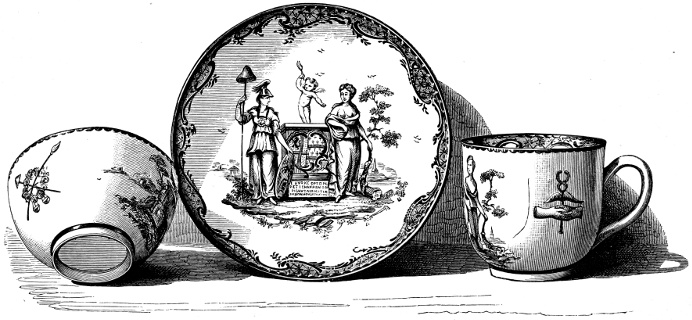
Fig. 750.—Part of the Service presented to Edmund Burke by Mr. and Mrs. Champion.
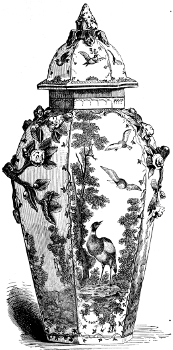
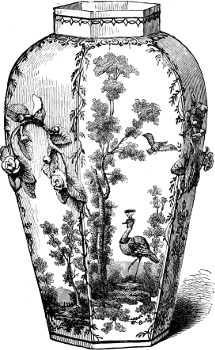
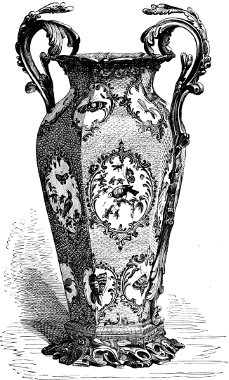
Figs. 751 to 753.—Bristol Vases, belonging to Mr. Fry, Mr. Nightingale, and Mr. Callender.
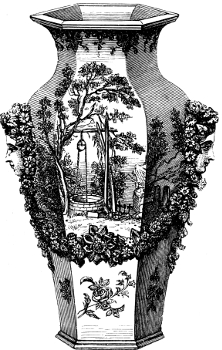
Fig. 754.—Bristol Vase, belonging to Mr. Francis Fry.
Amongst the finest known productions of the Bristol works are the series of splendid vases in the possession of Mr. Francis Fry, F.S.A., to which I alluded in my account of Plymouth china. One of these is engraved on Fig. 754; it is 12¼ inches in height, and of hexangular form. The landscapes are exquisitely painted, and it has well modelled female busts on two of its sides, from which hang festoons of raised coloured flowers. The other vases in Mr. Fry’s possession, one of which has a perforated neck, though differing in form, style, and ornamentation, exhibit the same excellence and skill in workmanship and in decoration which are so remarkable on this specimen. That these vases were painted by the same artists as the highest class of Plymouth china is very apparent to those who are conversant with their works. The birds are clearly “of the same family,” and the general style of decoration bears evident mark of coming from the same hands. They are not marked, and therefore a doubt very naturally arises as to whether they were made before the works were removed from Plymouth, and so brought as part of the “stock” to Bristol, or whether they were really made after their establishment in that city. They are, however, of a finer and higher quality than the marked Plymouth example, and therefore there can be no reasonable doubt that they are Champion’s production. Vases are distinctly spoken of in the evidence of John Britain before the House of Commons in 1774. He said “that he has great experience in several China manufactories, and has made several Trials upon all those which had been manufactured in England, and finds that all of them, except that of Bristol, were destroyed in the same Fire that brings the Bristol to Perfection. And he produced to your Committee several Samples of the said kinds of China, which shewed the effects upon china severally; and said, that they have not been able to bring the Bristol China to a marketable commodity, so as to furnish an Order, until within the last Six Months, but that sometimes they succeeded, and at other Times not, but that now they can execute any order. That they have lately made considerable improvements in the said Manufacture, and particularly are endeavouring to perfect the Blue, in which they have not as yet entirely succeeded, though they have now a Gentleman who has succeeded in a small Way, in which they have been at a considerable Expense; that the witness thinks the Manufacture is capable of further improvements; that they can afford it at a price equal to Foreign China of equal Goodness, and that they have made some Specimens equal to good Dresden; that he has not seen any Dresden ornamental China equal to the Vases produced to your Committee, nor any Thing in Biscuit equal to the Biscuit in those Vases, and other Ornaments; that the Gilding stands well; that the Seve China differs from this; the Ornamental is more of a Cream colour, but the Glaze is so soft that it will not bear using; that he believed the enamel of the Bristol China is as hard as the Dresden, and harder than the Chinese,” &c. Mr. Champion also spoke very markedly upon this improvement when he wrote these words; “Mr. Champion can assert, with truth, that his hazard and expense were many times greater than those of the original inventor. Mr. Champion mentions this without the least disparagement to the worthy gentleman, Mr. Cookworthy, who is his particular friend; he gives him all the merit which is due to so great a discovery; he deserves it for finding out the means of a manufacture, which will, in all probability, be a very great advantage to this country; but yet Mr. Champion claims the merit of supporting the work, and, when the inventor declined the undertaking himself, with his time, his labour, and his fortune, improved it from a very imperfect to an almost perfect manufacture; and he hopes, soon, with proper encouragement, to one altogether perfect.”
The vases under notice fell to the lot of Mr. Fry’s grandfather at the time of the close of the works, and have never been out of the possession of the family. They are therefore attested as coming from Champion’s establishment. In Mr. Fry’s possession is also a remarkably interesting “waster” vase of the same general form and character, which has apparently been spoiled by smoke in the kiln. This vase, I believe, was purchased by its present possessor from a family in Bristol, in whose possession it was stated to have been for seventy years. Other vases of equal merit, all said to be Bristol, are in the possession of Mr. Edkins, Mr. Nightingale, and Mr. Walker. Of services, and portions of services, many fine examples exist in various private as well as in the national collections. Many of these are of extreme beauty in design and of remarkably good workmanship.
Of these marvels of ceramic beauty Mr. Owen thus speaks:—
“Some of these are painted with exotic birds of brilliant colour and landscape backgrounds, delicately panelled. The design of others exhibits considerable ingenuity. One painted with Chinese figures in medallions has a pencilled ground selected with good taste from a natural object—shagreen, or dressed shark-skin—often chosen by the Chinese for a similar purpose; the hexagonal pattern of which has been felicitously used as a ground with singular success. There is such a similarity in the colour and handling when compared with similar pieces of ware bearing the Plymouth mark, that some of them must have been from the same pencil. One of these vases is of special character, with perforated neck. It is hexagonal, with landscapes exquisitely painted in monochrome,—two in lake, two in blue, and two in green on several sides with good effect. Besides these, Mr. Fry has another series that cannot be doubted are Champion’s, although they want the same undeniable evidence of having passed directly from the factory into the possession of his family. We engrave one of them that has a cover, Fig. 751; it is so artistically identical in paste and glaze, touch and colour, with those preserved by Mr. Joseph Fry as to need no other voucher for its paternity. The same opinion may be given of a fine vase, Fig. 752, the property of Mr. J. E. Nightingale, The Mount, Wilton, with a strong additional argument in support of it—one side bears the same design enamelled in blue—the draw-well—that is painted on Mr. Fry’s vase, Fig. 754. Mr. Edkins also has a Bristol vase, similar to some in Mr. Fry’s collection, though somewhat different in decoration. It is identical in form with Fig. 752, but without the modelled sprays and leaves. Four of the sides are painted with landscapes in colour, two others in blue monochrome, all exquisitely pencilled. The gilded border round the upper portion beneath the neck is a rich arabesque of elegant design. This is a charming example, in perfect condition. The vase engraved (Fig. 753), is one of a pair, exquisitely decorated with birds and insects in panels on a blue salmon-scale ground. They are similar in character to Mr. Fry’s example, with a shagreen ground, already described. Some former proprietor has had them mounted in ormolu. The design of the metal work is rich and graceful, and in perfect harmony with the gilded arabesque borders, framing with panels. The height of all these vases is about twelve inches, and, with cover, sixteen inches.”
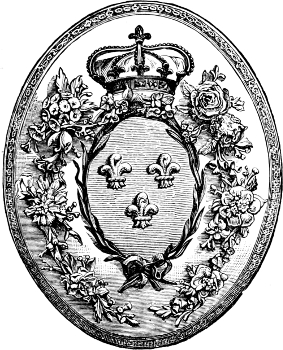
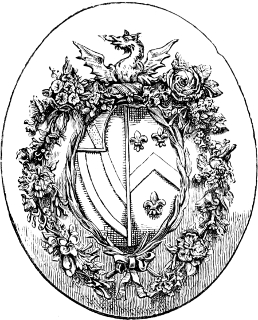
Figs. 755 and 756.—Bristol Bisque Plaques.
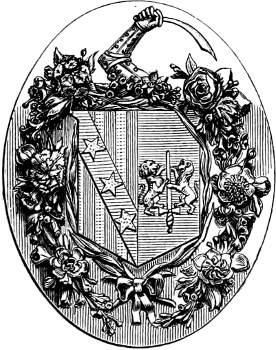
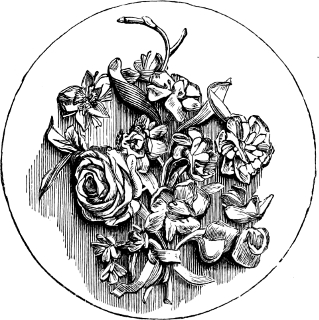
Figs. 757 and 758.—Bristol Bisque Plaques.
Another notable and beautiful feature of the Bristol works was the production of plaques, bouquets of flowers, wreaths, and armorial bearings, in biscuit. Of these examples are given in Figs. 755 to 758. One of these (Fig. 757), lately in the possession of Mr. Baller, but now of Mr. Nightingale, bears the arms and crest of the Eltons (who were connected with Bristol for the last two centuries as bankers, members of parliament, and mayors, and of which the present representative is Sir Arthur Hallam Elton, Bart.) impaling Tierney. The arms are paly of six, or and gules, on a bend sable, three mullets of the first, for Elton; impaling azure, between two lions combatant a sword argent, for Tierney. The shield is surrounded by a wreath of exquisitely and delicately modelled leaves and flowers. The plaque is oval, 5¼ inches in height by 4¼ inches in breadth. Another heraldic plaque is in the possession of Miss Smith, of Bristol. It is of about the same size as the one just described, and bears the arms of Smith, with escutcheon of Pope, as described as appearing on the tea-service engraved (Fig. 749). It is surrounded with a wreath of raised flowers of surpassing beauty.
This interesting and valuable piece was some years ago stolen from the late Mr. Smith, but, after about thirty years, was purchased by its former owner at a sale along with some other examples of Bristol make. In the possession of the late Mr. Edwin James, of Bristol, and in other hands, are circular and oval plaques with wreaths or bouquets of raised flowers, modelled in the same delicate and masterly manner, and undoubtedly by the same artist. Another (Fig. 755), in Mr. Fry’s collection, has the arms of France beautifully surrounded by a crowned wreath of elaborately modelled flowers—the crown, wreath, and border of which are of dead and burnished gold. Fig. 756, also in Mr. Fry’s possession, is an exquisite heraldic plaque, having the arms of Harford impaling Lloyd, surrounded by a finely modelled wreath of flowers. In the Edkins collection was also a plaque with a delicate border of flowers enclosing a medallion profile of Franklin; and another, a simple group of flowers, and other examples, belong to Mr. Owen, Mr. Rawlins, Mr. Gwyn, and others. In her Majesty’s possession are two remarkably fine examples with medallion profiles of George III. and Queen Charlotte, presented to that queen by Champion himself in 1775, together with a pair of smaller flower plaques of exquisite finish and delicacy.
Figures were, to some extent, as is shown by the advertisements already quoted, made at Bristol, and in Mr. James’s possession were a pair—a man with a bird, and a woman with a barrel and a pig—bearing an incised cross on the bottom. Other figures are in the possession of Mr. Fry, Mr. Edkins, Lady Charlotte Schreiber, Mr. Castle, and others. (See Figs. 759 to 770).
Mr. Owen gives in his admirable work a fac-simile of a letter, in Champion’s own handwriting, addressed to the same modeller (whose name unfortunately does not appear) who produced the “Four Elements” for the Derby works, ordering from him a set of the same subjects, and also the “Four Seasons,” treated in a way which he fully describes. The letter is so interesting, and bears so strongly on the point of figure producing at Bristol, that I here reprint it.
27 Feb. 1772.
“To
“Mr. Brillait shew’d me your Letter of ye 18 Ins, which I chose to answer myself as a few thoughts had struck me which pleas’d me, & which will with your Execution have a very good Effect.
“As I have an Inclination to fancys of this kind, I chose to write you as wish to have some elegant Designs. I have seen the four Elements which are made at Derby they are very Beautifull the dress easy, the forms fine, two in particular Air and Water are the charming figures. I apprehend that you made ye models & therefore hope that from your Execution the following fancies will not look amiss.
“The Elements
“Fire. A Vulcan forging a Thunderbolt in the attitude of striking with his anvil & Hammer, some pieces of Iron or coals or anything peculiar to a Blackmith’s Shop to be scatter’d about.
“Water. A Naiad crown’d with rushes, leaning with her arm on an urn from whence gushes out Water. In the other hand she holds a fishing Net, with Fishes enclos’d in it, the ground ornamented with rushes, shells, Fish or the Fancies peculiar to Water.
“Earth. An Husbandman digging with a spade a Baskett fill’d with Implements of Husbandry on ye Ground. The ground ornamented, with corn, acorns or Fruits.
“Air. A Winged Zephyr crown’d with Flowr’s treding on clouds, which rise naturally about him, his robes flowing & flying behind him he holds in one Hand a Branch of a Tree, if any ornaments behind are wanting, some Cherubim’s heads blowing would not be amiss.
“The Seasons
“Spring. A Nymph with a Coronet of Flow’rs on her head in Flowing Robes rather flying behind her, approaching with a smiling countenance as she advances the flow’rs appear to start up before her those at her feet higher those at a distance, which seems to be just Budding out, on the side after a Plough or Harrow, which she points to with one Hand, and with the other holds a small open Baskett fill’d with Seeds which she offers, from the Baskett falls a kind of Zone or Belt, on which are represented, the sign of the Zodiac Aries Taurus Germinæ.
“Summer. A man in the Prime of Life, loosely dress’d with a Bakt round his Body, on which are represented the Signs of the Zodiac Cancer Leo Virgo APs a shear (made use of in shearing Sheep) in one hand, and with the other Supports a Baskett of wool on his shoulders—on the Ground a scythe with Trusses of Hay schatter’d about.
“Autumn. A Matron with a kind of Coronet on her head, from whence spring Ears of Corn. Her robes not so flow as spring being of a graver Cast, in one Hand a Sickle, she leans on a Thyrsis round which are twin’d Baskett of grapes,[96] & a Zone or Belt falling from it, on which are represented the three signs of ye Zodiac, Libra, Scorpia, Sagittarius, the grounds she treads on full of Corn, & on a side of her a Baskett of fruit overturn’d.
“Winter. A Descriped old man his head bald and a Long Beard leaning a Staff under one arm a Bundle of Sticks, his robe schatter’d and clasp’d with a Belt, on which are represented The three signs of the Zodiac, Capricorn, Aquarius, Pisces, the ground cover’d with bare branches of Trees, Frost & Snow & icicles hanging down in different Places.
“All these figures to be about 10 Inches high. After having seen the Derby Figures I did not recommend Ease & Elegance in the Shape & dress, but the latter I shall just mention as the antique Robes, are very easy and have a Propriety which is not to be met with in foreign Dresses, & as these figures are of a serious cast I think such dresses will carry woth them a greater Elegance, I shall be oblig’d to you to carry the designs into Execution as soon as possible, &c.”
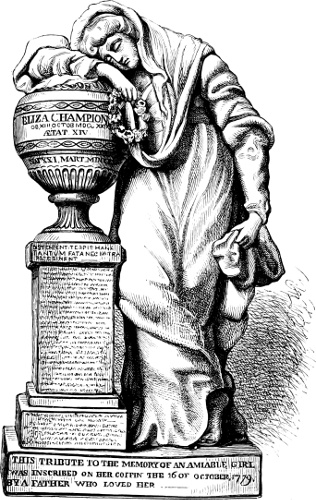
Fig. 759.—Champion’s Memorial to his daughter Eliza, belonging to Mr. Desaussure, of South Carolina.
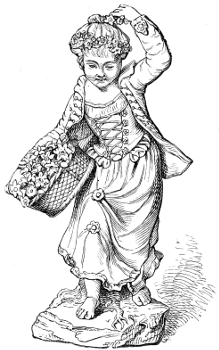
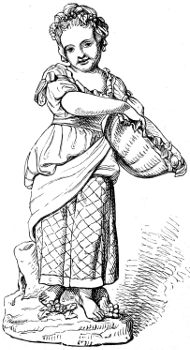
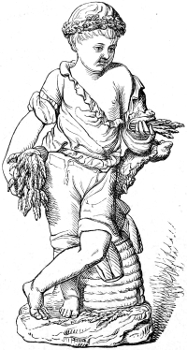
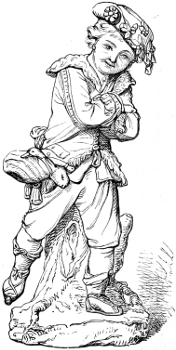
Figs. 760 to 763.—The Four Seasons, from the Edkins Collection.
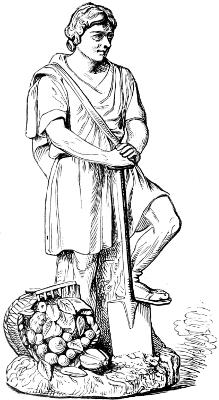
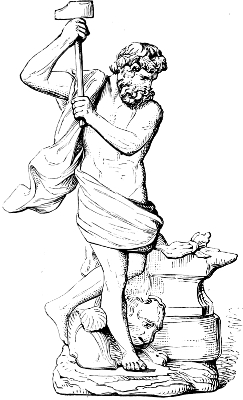
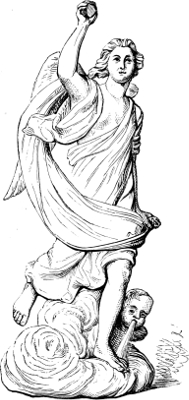
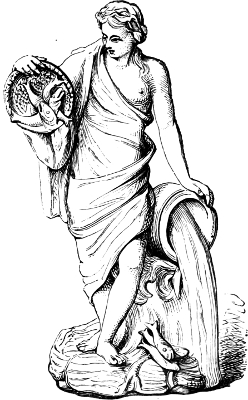
Figs. 764 to 767.—The Four Elements, belonging to Mr. Boddam Castle.]
These series were accordingly executed, and all bear, in the examples now remaining, the mark T o[sideways ‘o’ symbol];. It would thus appear to be the modeller’s own mark, or contraction of his name.
The most authentic and interesting figure is a memorial to Richard Champion’s daughter Eliza, who died Oct. 13, 1779, aged fourteen. The figure is a monumental statuette of a mourning female figure, leaning on an urn, holding in her right hand a votive wreath and her left closed on the drapery. The urn and pedestal bear a long and very touching inscription. This interesting relic stands thirteen inches in height; it is in the possession of Mr. J. M. Desaussure, of Camden, South Carolina, who married a granddaughter of Champion. It is engraved on Fig. 759, through the courtesy of Mr. Owen. Two admirable figures (Figs. 768 and 769) of a shepherd and milkmaid, marked with the To marks, are in the possession of Mr. Francis Fry, and a set of the four seasons in rustic juvenile figures, bearing the same mark, were in the Edkins collection (Figs. 760 to 763). Another fine group is “Love subdued by Time,” in the Edkins collection (Fig. 770). Busts were also made; but as these and the examples made at Plymouth are not marked, and are made of the same body, and by the same workmen, it is manifestly impossible to correctly appropriate them.
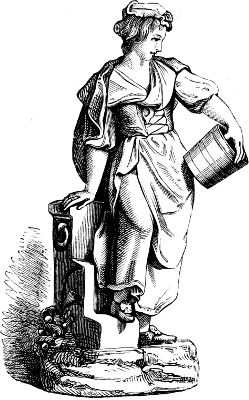
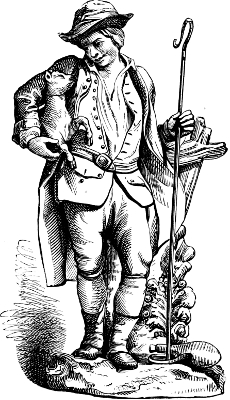
Figs. 768 and 769.—Belonging to Mr. Francis Fry, F.S.A.
A cup, part of the Harford service, bears in the bottom in the inside the +, the initials J H (of Joseph Harford), and the date 1774, and is the earliest known dated example of Bristol china. Another excellent dated example, bearing the repeated monogram W C on the inside, has on the bottom the +, 1776, and figure 1. The pounce-box (Fig. 772) bears the × and figure 3.
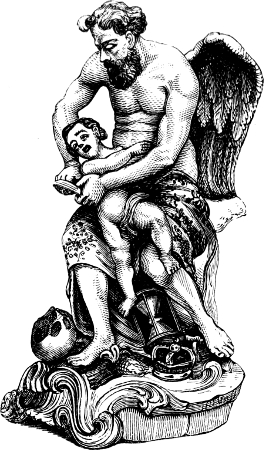
Fig. 770.
The mark which usually denotes Bristol porcelain is a plain saltire, or cross, in blue, neutral tint, or red, sometimes with the addition of figures or other marks, but more commonly by itself. The figures probably denoted the workman, not the pattern, as on the same sets different numbers appear, which would not be the case if the design was denoted. The following are varieties of the mark, the cross being sometimes in one colour, and the figure or character in another. One, it will be seen, bears, besides the saltire, the sign for a drachm (or perhaps figure 3), and another the Greek character epsilon (ε). These marks occur the one on a teapot, the other on a saucer lately in the possession of Mr. Norman. The letter B also sometimes occurs painted in the same manner as the cross, and also in combination with figures, &c. (Figs. 783 to 786.) Other marks have been ascribed to Bristol, but many of them, I believe, wrongly. In Mr. James’s collection was a small fluted cream-boat, blue and white, with an unusual mark, the blue cross, above which is an embossed letter T, as shown on Fig. 789. The same mark occurs on a specimen in the Nightingale collection. Another mark variously ascribed to Bristol and Bow is To (Fig. 790), and one very early trial piece in the Edkins collection bears the unique mark of the word B r i s t o l l in relief. The Dresden mark of crossed daggers occasionally occurs in connection with the cross or the letter B; the latter marks being in some instance painted over the former, and in others close by (Figs. 791 to 796). Other marks said to be Bristol are shown on Figs. 799 and 800.

Fig. 771.
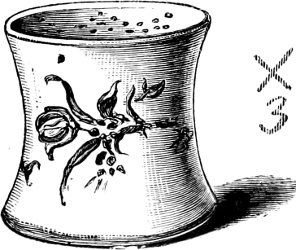
Fig. 772.
The ꝝ mark of Plymouth and the + of Bristol are on one or two known pieces, found in combination thus (Fig. 798), from the Schreiber collection.
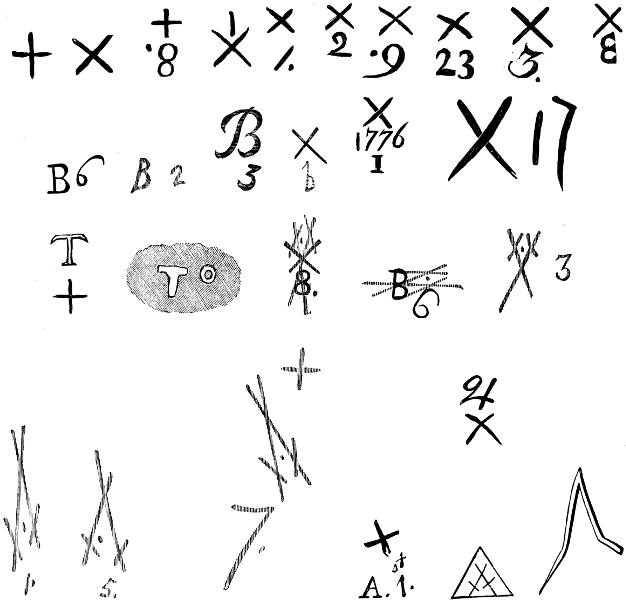
Figs. 773 to 800.
Mr. Owen, to whom I have had occasion many times to refer in the course of this chapter on Bristol china, and to whom I must offer my congratulations on the successful issue of his labours and on the boon he has conferred on the literature of ceramics by his researches and by the elegant volume in which those researches are recorded, gives many interesting particulars regarding Champion’s workmen and apprentices. The following notes upon workmen may be useful for reference:—
Anthony Amatt; a thrower and meritorious painter, who died in 1851, aged 92. He is said to have been born at Derby in 1759, and to have been apprenticed to a thrower who worked at Champions, and to have worked there till their close.
Moses Hill; a china maker, 1775–6 (probably from Derby).
John Britain; foreman, whose initials appear on some pieces.

Thomas Briand (probably Bryan); a flower modeller in 1777, who came from Derby.
B. Proeffell; a German, supposed to be engaged on the “blue and white ware.”
M. Saqui (not Le Quoi, as Mr. Owen supposes); a clever painter and modeller.
William Fifield; a painter. He worked as an enameller at the Water Lane Pottery, and died in 1857, aged 80. Mr. Owen, carefully correcting Marryatt, says: “He is said to have worked for Champion, but this is simply impossible, as he was not born till 1777, and Champion’s labours concluded in 1781,” when he was only four years old.
Philip James; a china painter in 1775.
Mrs. James; modeller, mother of the late well-known and respected collector, Mr. Edwin James, of Bristol.
Henry Bone (the celebrated enameller). He is shown, by Mr. Owen, to have been apprenticed on the 20th of January, 1772, to “Richard Champion, China Manufacturer, & Judith his wife, for seven years.” He was born at Truro, in February, 1755, so that at the date of his apprenticeship to Champion he would be seventeen years old. The presumption is that young Bone, whose father was a cabinet-maker at Plymouth, was originally apprenticed to Cookworthy at Plymouth, and became a “turn-over,” with re-apprenticeship, to Champion. He became an R.A. in 1811, and died full of honours in 1834.
William Stephens; son of William Stephens, of Plymouth, and, in 1771, of Bristol. Apprenticed to Champion on the same day as Bone, and probably also a “turn-over” from Cookworthy. He was a china painter.
John Hayden; china painter, of the same family as Benjamin Hayden, R.A. He was the son of John Hayden, of Plymouth, shoemaker, and was apprenticed to Champion on the same day as Bone and Stephens, and the probability certainly is that these three Plymouth youths, all apprenticed on the same day to Richard Champion, who succeeded to the Plymouth works, were transferred to him by Cookworthy and re-apprenticed.
Samuel Daw, apprenticed January 23rd, 1772.
Samuel Andrews Lloyd, apprenticed December 31st, 1772. He was son of Edward Lloyd, merchant, of Bristol, and nephew of Mrs. Champion.
Jacob Alsop, apprenticed as a china painter June 18th, 1773. Son of Uriah Alsop, coalminer, of Stapleton.
Samuel Banford, apprenticed as a china painter same day. Son of Thomas Banford, of Berkeley.
John Garland, apprenticed as a china painter same day. Son of Richard Garland, of Bristol, labourer.
William Wright, apprenticed as a china painter April 8th, 1775. Son of Wm. Wright, of Wotton-under-Edge.
John Parrot, apprenticed as a “burner of china” November 22nd, 1775. Son of John Parrot, of Bristol, house painter.
Benjamin Lewis, apprenticed as a china painter December 5th, 1775. Son of John Lewis, of Llandoger.
Samuel Begnon, apprenticed January 29th, 1776. Son of John Begnon, late of Bristol, joiner.
Thomas Williams, apprenticed September 19th, 1776. Son of Thos. Williams, of Bristol, labourer.
John Jones, apprenticed same day. Son of Samuel Jones, of Bristol, carpenter.
Samuel Fiander Pagler, apprenticed as a china painter October 24th, 1776. Son of Thos. Paglar, of Bristol, mason.
John Webb, apprenticed as a china painter July 26th, 1777. Son of John Webb, of Bristol, shoemaker.
William Webb, apprenticed as a china painter same day. Son of Isaac Webb, of Bristol, stocking-maker.
James Saunders, apprenticed as a china painter same day. Son of James Saunders, of Bristol, potter.
Edward Stephens, apprenticed July 17, 1776, to John Britain, foreman to Champion. Son of William Stephens, and brother to William Stephens already apprenticed to Champion.
William Lyne, apprenticed July, 1778. The last apprentice to the works.
Bristol Earthenware.
Temple Backs.—In 1786 the pottery for fine earthenware was established at No. 9, Water Lane, Temple Street, called “Temple Back,” by Joseph Ring, as I have shown in my notice of that potter and his delft-ware productions on page 354. In January, 1787, the following highly interesting advertisement appeared in the Bristol Gazette and Public Advertiser:—
“Bristol Pottery, Temple Back.—Joseph Ring[97] takes this opportunity to inform merchants and others that he has established a manufactory of the Queen’s and other earthenware, which he will sell on as low terms, wholesale and retail, as any of the best manufacturers in Staffordshire can render the same to Bristol.”
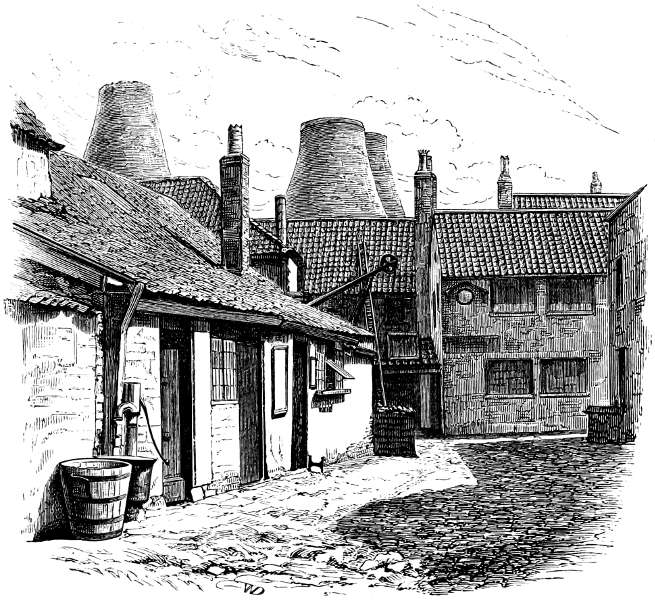
Fig. 801.—Bristol Pottery in 1869.
In December of the same year, as is shown by an invoice of goods, the following goodly variety of articles was made: “oval dishes,” 10, 11, 12, 13, and 14 inches respectively; “table plates;” “soups;” “suppers;” “twifflers;” “tureens;” “quart jugs;” “pint jugs;” “sallad dishes;” “coffee-pots;” “sugar dishes with covers;” “coffee cups;” “bowles;” “coffee cups and saucers, paynted;” “table plates, paynted;” “twifflers paynted;” “quart mugs variagated;” and “pint mugs variagated.” Mr. Ring’s friend and assistant, John Bettington, commemorated the establishment of this new manufacture by writing some songs for the Martinmas hiring festivities of the workmen. Two of these are printed by Mr. Owen. The first is entitled “The Bristol Pottery, by J. Bettington,” and is as follows:—
“Ye Gentleman all, I beg your attention, Unto a few lines which now I shall mention, A comical ditty of Bristol you’l hear, And I hope that each man in chorus will bear. Derry Down, &c. Its of the new Pottery I mean now to sing, And I hope to this city great wealth it will bring. For we are deserving, of many things clever, Our names are immortal, and shall be for ever. Derry Down, &c. Then let me explain a little of our merit, Which now I will do with a generous spirit, Great troble we have had to bring it to bear, But now, my dear Boys, we make cream colour ware. Derry Down, &c. It’s true our noble Queen has patron’d this trade, And many by it great fortunes has made; Then let us all hope that it may flourish here As well as it has in famed Staffordshire. Derry Down, &c. I now can inform you a trial is made Which gives us great hope of a flurishing trade; This being the Case then, let us jovially sing Success to the pottery and health to Joseph Ring. Derry Down, &c.”
The second song, called “Bristol Pottery Martinmas Ditty” concludes thus:—
“Then fill up your glasses, let mirth now abound, And Joy in each Countenance appear all around, Here’s a Health to His Majesty George our King, And riches in store to our friend Joseph Ring. Huzza for this Pottery! Huzza! my boys, I call, Each striving to merrit Will animate your spirit. So long life to its Founder And family all.”
On the 5th of April, 1788, “Mr. Joseph Ring, potter, in Temple Street was unfortunately killed by the falling in of a warehouse. He has left a widow and nine children to lament his loss.”[98] He was superintending some alterations at the time, when the roof fell in, and he was killed in the presence of his wife. The business was carried on as usual “by the widow of the late Joseph Ring, and late partners, under the firm of Ring, Taylor, and Carter.” The commemorative song of this year is curious. It is as follows:—
“Come cheer up my lads & let us all be gay, For now we are meet & it’s Martlemas Day, Of this Bristol Pottery I mean for to sing, For wealth to our masters I hope it will bring. Huza for this Pottery!—Huza! my Boys, I call, Each striving to merit—Will animate your spirit, So long live our masters—Their family’s all. I need not inform you good ware we have made, And that we have now got a flurishing Trade, Great Wealth to the City I am sure it will Bring, So join My Brave Boys & let all of us Sing Huza, &c. Then Let us all Strive My Brave Lads to Excell, that when we are Gone our Children may Tell What Labour We had for to Bring it to Bare before that we Could make good Cream Colour ware. Huza, &c. Now fill up your Glasses, and let Mirth abound, and Joy in our faces appear to all Round, hears a health to hise Majesty Grate George our King, To our Worthy Masters, & Mistress Ring. Huza, &c.”
In 1797 these works are described as “a large pottery,” so they must at that time have been very extensive. In that year a curious reference to “two gentlemen of the name of Ring,” sons, no doubt, to Joseph Ring, occurs in the account of the death of James Doe, a potter who worked there under them, which I have given under the head of Lambeth (see page 137, ante). A mug bearing his name, “J. Doe, Sept. 1797,” is engraved in Mr. Owen’s book. In 1813 a deed of partnership between Joseph Ring (son of the late owner), Henry Carter, and John D. Pountney was drawn up, but through the death of the first-named was not executed. The business was therefore carried on by Pountney and Carter, under the style of Elizabeth Ring & Co., until 1816, when Carter retired and was succeeded by Edward Allies, the style being Pountney and Allies. In 1825–6 it was, according to Chilcott’s and Matthews’ Guides, worked by the firm of Pountney and Allies, and at that time gave employment to about two hundred persons. Mr. Allies retired in 1835, and in the following year Mr. Pountney took into partnership Mr. Gabriel Goldney, who retired in 1850. Mr. Pountney died in 1852, and the works were then carried on by his widow under the style of “Pountney & Co.,” under the management of Mr. Clowes. In 1872, in which year Mrs. Pountney died, the works were purchased by Mr. Halsted Sayer Cobden, who also owns the Victoria Pottery, in Bristol, and by whom they have been much extended, and give employment to about four hundred hands. The goods produced are the ordinary classes of white and printed earthenware, principally for exportation. During Mr. Pountney’s lifetime, some parian figures, &c., were made at these works; and some exquisite examples, made by one of the workmen named Raby, who removed into Staffordshire, were in the possession of the late Mrs. Pountney, as were also some excellent imitations of the Etruscan and other styles. Examples of the early productions of these works are scarce, and it is interesting to state that the good old Bristol mark of the cross was used on some of the pieces of earthenware here made. The mark is sometimes in blue, and sometimes impressed. A name well known in connection with these works is that of William Fifield (and his son John), who was a painter of some merit. One of his plaques—a sportsman with dog, gun, and glass—is, with other examples, in my own possession. It bears on the back his initials, “W. F.,” and the words, “Here’s to my Dog and my Gun, 1855.” The view of the works, painted on four large tiles, and dated May 15th, 1820, now on the wall of the office of the Water Lane Pottery (Fig. 802), was also painted by him.
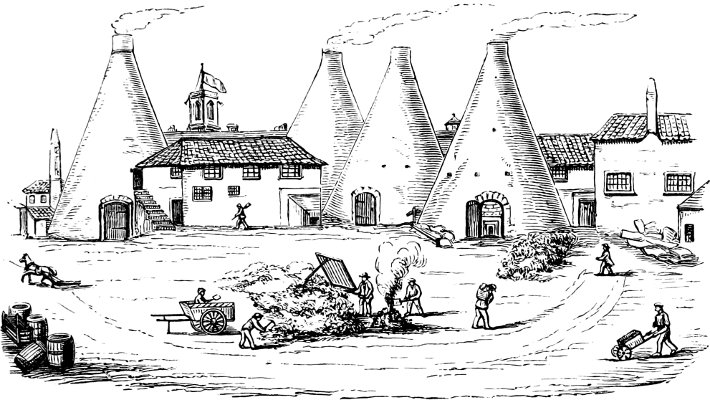
Fig. 802.

Fig. 803.
The Temple and St. Thomas’s Street Works.—The oldest stoneware pottery in Bristol is that of Mr. J. and C. Price and Brothers, in St. Thomas’s Street and Temple Street, where their famous glazed stoneware is made. It was established about 1735 or 1740, and has been continued in work by three generations of the same family until the present day. The old “Salt Glaze” was used till 1842, when great improvements having been made through the long-continued and successful experiments of Mr. Powell (as named in the notice of his works), it was at that time found practicable to dip the stoneware into liquid glaze in its green state, instead of first burning and then “smearing,” as formerly practised. Messrs. Price, having adopted the new method, continued to improve their works, and built much larger kilns than usual in potteries of the kind. The superiority of “Bristol stoneware” over others became so well established, that the metropolitan makers bought their glaze from that city until very recently, and, indeed, I believe some of them do so at the present day. The stoneware goods produced by Messrs. Price are of the highest quality, and, besides the more homely and useful articles, they have succeeded in making some excellent imitations of the antique, of very fine body, faultless glaze, and elegant form. Many of these are admirable copies from the antique, and are perfect in shape and in firing. Among the goods produced by this firm are filters of a remarkably simple but excellent construction and of elegant form; feet and carriage warmers; barrels and churns; bread, cheese, and other pans, and every other kind of domestic vessel, as well as every possible size and variety of bottles, jugs, &c. They do an immense export trade for bottles for ale, stout, &c., these being found for the purpose far superior to glass. Messrs. Price also make all the other usual varieties of stoneware goods, and all are of faultless quality both in body and glaze.
Other stoneware potters besides those already named were, in former times, John Hope,[99] in Temple Street; Thomas Patience,[100] in the same district; James Alsop, first at 9, Water Lane, and afterwards at Temple Street, and others, as well as at Baptist Mills, Easton, and Westbury.
Temple Gate Pottery.—At Temple Gate a stoneware pottery has long been established, and is still successfully carried on by Messrs. William and Septimus Powell, the sons of its founder. The goods manufactured at this establishment are what are generally termed “Bristol ware” or “Improved stone,” which was invented and perfected some forty years ago by the late Mr. Powell. “Its peculiarity consists in its being coated with a glaze which is produced simultaneously with the ware itself, so that one firing only is needed.” So great was Mr. Powell’s success in his discovery, that “shortly after its introduction at the Temple Gate Pottery almost every other manufacturer of stoneware adopted it, and it has now, in a large measure, superseded the old salt-glazed ware.” The goods principally made by the present proprietors, Messrs. W. & S. Powell, are bread-pans, filters, foot-warmers, and other domestic vessels, as well as bottles and jars of every size, shape, and use. Messrs. Powell have a registered arrangement for fitting, fastening, and keeping air-tight, by means of a three-pronged, or tripod, iron clamp furnished with an elastic washer, the lids of preserve and other jars—thus doing away with the necessity of any other covering. At these works, too, vases and bottles of classic shape are occasionally made, as are also enormous jugs—one of which, capable of holding twenty-five gallons, has been exhibited by the firm.
Wilder Street Pottery.—About 1820 a pottery on a small scale was worked in Wilder Street by a family named Macken, a descendant of the owner of the old pottery at St. Ann’s, at Brislington, where flower-pots and other coarse brown ware was made. Macken afterwards went to America.
Bristol Glass.
As the manufacture of enamelled glass in Bristol is so intimately mixed up with that of pottery and china, it may be interesting to add a few words concerning it. In 1761 there appears to have been, according to Evans, “fifteen large houses employed in that manufacture.” The main source of information concerning the manufacture is gained from the books and papers of Michael Edkins, to whom I have referred in my notice of the delft-ware pottery. For the particulars gleaned from these papers I am indebted to his descendant, Mr. William Edkins. The ledger commences in May, 1761.
The glass made at Bristol appears to have been principally white, of different shades, and was made in a great variety of articles, including teapots, jugs, cream ewers, beakers, &c. The commoner varieties of decorative glass were painted in a rapid style with varnish colour, and submitted to a gentle heat, just sufficient to fix it on the surface. This, of course, soon rubbed off in use, and on the examples which are still remaining the patterns have almost disappeared.
The highest class of goods produced by Mr. Edkins was beautifully and perfectly enamelled, the colours were remarkably good, and thoroughly incorporated into the glass. Examples of this kind are very rare, but one or two specimens still remain in the family and are highly prized.
As the prices charged by Michael Edkins for painting on glass, and for enamelling, naturally become a guide to the prices he had been paid as a painter on delft-ware, and further as a guide to the prices of painting on china at that time, I append a few extracts from his ledger, which will be read with interest by collectors. For these extracts I am indebted to Mr. William Edkins, of Bristol, grandson of the painter, who has the original book in his possession. The accounts for painting and enamelling on glass extend from April, 1762, to December, 1787. The following are a few of the items:—
1762. £ s. d.
April 26. To 5 long dozn. Aml.[101] Beakers 0 10 0
May 3. To 3 do. basons, cans, & cream jugs 0 6 0
„ 5. To 3 Do. sorted blue ware 0 12 0
„ 10. To 2 Lg. dzn. Amell ware 0 4 0
„ 12. To 1 Lg. dzn. Aml. Beakers 0 2 0
„ 14. To 20 Sugar dishes & covers 0 2 6
June 12. To 5 Lg. dzn. Aml. ware 0 10 0
„ 17. To 1 Dn. blue pint bowls 0 8 0
„ 19. To 1 sett Jar & Beakers 5 in a Sett 0 2 6
July 15. To 8½ Long dzn. Amell sorted 0 17 0
„ 19. To 4 blue jars & Beakers with Mosaick border, to match a large sett for Mr. Wilson 0 2 0
„ 20. To 1 do do Amell cans 0 2 0
„ 26. To 1 pint blue can ornamented with gold and letters 0 0 8
„ 30. To Amell 12 pint cans 0 2 0
Sept. 4. To 6 setts blue jars and Beakers with mosaick borders 1s. 6d. sett 0 9 0
„ 13. To 12 blue quart canns 6d. each 0 6 0
Dec. 3. To 3 long Dozen cream Bucketts 2s. 0 6 0
„ 3. To 12 sett large blue Jars & Beakers 0 18 0
1763.
Feb. 11. To 15 long dozn. sorted Blue ware 1 0 0
April 13. To 10 „ „ Do. Do. 2 0 0
May 31. To 12 small blue jars & covers 4d. 0 4 0
June 24. To 1 pint Blue Can with name John Vowell 0 0 6
Aug. 18. To 6 Enamell pint Cans—wrote “Liberty & no Excise” 4d. 0 2 0
„ „ To 6 Cannisterrs blue 6d. 0 3 0
Oct. 18. To 1 dozn. Canns & Milk jugs 0 1 1
Nov. 12. To 12 Wash hand Tumblers 4d. 0 4 0
„ „ To 12 Saucers 4d. 0 4 0
„ „ To 6 Flower bottles 0 1 0
1765.
May 28. To 2 blue pints “Mary & John Vowell” 0 1 0
1766.
Aug. 20. To 12 long Dozen fine Wine—wrote “Pitt & Liberty” 3s. Dozen 1 16 0
1767.
Dec. 4. To 3 large setts Enamell richly ornamented with Gold and Flowers 5s. sett 0 15 0
1769.
Sept. 22. To 3 pair blue Cornucopias ornamented with gold 1s. pair 0 3 0
1773.
Aug. 25. To 84 blue wash hand basons & Plates 0 14 0
1775.
Aug. 23. To 24 large Shades, with a large gold border at top and the bottom rim gilded 3 0 0
1787.
Dec. 10. To Ornamenting 1 Enamell Jar with Gold [last Entry in Ledger] 0 1 0
Salt Glaze.
It is said that the delft-ware potteries were preceded by a maker of salt-glazed stoneware—a German named Wrede or Read—and a curious story is told in connection with him and the difficulty he had in establishing his works. It appears that the people being surprised at the glaze he produced on his ware, and at the secrecy he endeavoured to preserve regarding his pottery, and noticing the dense clouds of vapour which every now and then arose from his kiln (caused, of course, by the throwing in of the salt through the fire holes when the ware had arrived at a certain degree of heat), believed that he had called in supernatural aid, and that the fumes which ascended were caused by the visits of the devil. He was “mobbed” by the people, his place injured, and he was forced to fly the town.
Brislington.
About a century ago, I am informed, there was a pottery at St. Ann’s, in this parish, conducted by a family named Macken. The older productions are described as “a drab-coloured ware with a plum-coloured glaze; the more modern were the same ware covered with a layer resembling porcelain; white, and apparently of felspar, this kind has almost invariably a rough blue pattern.” One of the Macken family had a pottery in Bristol.
A manufactory formerly existed at this place, and the ware produced may be described as very closely approaching, in general appearance and effect, the common descriptions of Turkish pottery. The patterns were produced, in coarse and rude designs, in a kind of copper or red lustre, on the plain buff clay ground. Examples are somewhat rare. The works were carried on by Richard Frank, of Bristol, and his family, but were closed in the latter part of last century. The works, which were of course but small, still stand, but are converted into cottages. “They are situated at the bottom of St. Ann’s Wood, between St. Ann’s Vale and the river, on a line about half a mile beyond Netham Dam,” and opposite to Crewshole. Some good examples of this ware, which is remarkably clumsy and coarse, but very curious, are preserved in the Bristol Museum (Fig. 804). The circular dish is fourteen inches in diameter with a small centre of nine inches. On its back is the rude monogram (Fig. 805) of Richard Frank, its maker.
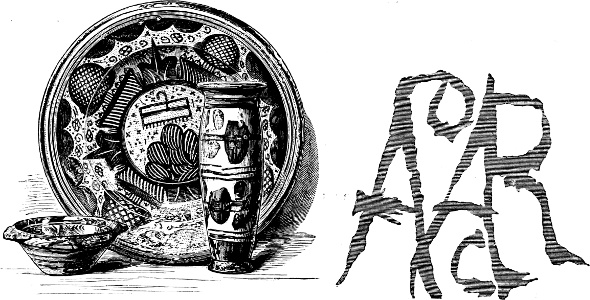
Figs. 804 and 805.
Crews-Hole.
A small stoneware pottery was established here by a clever but somewhat peripatetic potter, Anthony Amatt, originally of Derby, who was one of the workmen employed by Richard Champion at the famous Bristol china works. His works were merely a wooden shed or two, and the bulk of his productions were flower-pots. He afterwards, I believe, had a small pottery at Temple Gate, which came into the hands of Mr. Powell when Mr. Amatt entered into his employ. Previous to this it is believed a small pottery for producing the same kind of ware as that of Brislington had existed at Crewshole. In 1794–5 Amatt was living at Twerton, in Somersetshire; in those years he was extensively engaged in painting on earthenware and china for Mr. Egan, of Bath, brother-in-law of the second William Duesbury, of the Derby China Works. The original bills are in my own possession. He was afterwards a stocking weaver.
Westbury.
The Sugar House Pottery at Westbury, which had been for many years carried on by George Hart, passed, on the 8th of December, 1775, into the hands of Stephen Fricker, potter and publican, who was host of the Fountain tavern in High Street, Bristol. Besides sugar bakers’ moulds, which gave the name of “Sugar-house Pottery” to the works, the usual classes of flower-pots, chimney-tops, puncheons, pitchers, and other domestic coarse brown ware articles were made.
Easton.
A small manufactory was established here for the manufacture of various articles by a process for using the magnesian limestone of the district in its body. Many very creditable and artistic articles were produced, but the whole affair proved a failure, and the works were closed. The spill case (Fig. 806) is said to have been made here.
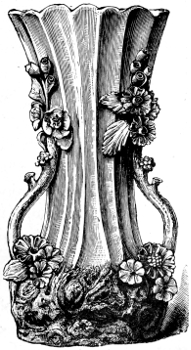
Fig. 806.
Weston-super-Mare.
The Royal Pottery was established in 1836 by Mr. Charles Phillips as a brick and tile manufactory. In the following year glazed ware, for domestic vessels, was introduced, as was also, to a small extent, the manufacture of flower-pots, &c. In 1840 the production of glazed ware was discontinued; and, the clay of the locality being found to be admirably adapted for horticultural vessels, vases, statuary, &c., special attention was directed to them, and with such marked effect that, at the Great Exhibition of 1851, medals and certificates of merit were awarded for them. In 1870 Mr. Phillips retired from the business, which was at that time purchased from him by the present proprietor, Mr. John Matthews, by whom it has been very considerably extended. By Mr. Matthews, too, several new branches have been added to the business, and a new and better taste has been infused into the art decorations. Notably among the new introductions are rustic-work, baskets of artificial flowers, busts, vases, suspenders, &c. Flower-pots, of which from 20,000 to 30,000 are made weekly, and of all sizes, from 1¾ inches to 30 inches in diameter, are a staple production of the “Royal Pottery,” and are supplied to her Majesty’s garden at Windsor Castle, H.M. Commissioners of Works at Kew, Hampton Court, the Parks, &c., the Royal Horticultural Society, Chiswick, &c., and to most of the principal gardens in this country, as well as being exported in large quantities to New Zealand, Port Natal, and Chili. They have the reputation of being the best, most compact, and most durable of any manufacture; and, although of such enormous size, are turned with marvellous precision, and fired without running or casting. Two great, and registered, specialities] are the “Oxford Pot” with perforated rim for training pelargoniums, azaleas, roses, &c., without the aid of sticks, and the “Alpine-plant pot”—a kind of double pot so arranged that the space between the outer one and the inner one (in which, of course, the plant is set) can be filled with water or moist moss. The more notable ornamental productions of the “Royal Pottery” are figure, shell, and other fountains, of various tiers in height; life-size figures and groups of figures; statuettes and busts; reproductions of ancient statuary; eagles, lions, and other gigantic figures on artificial rocks and pedestals; flower and other brackets in considerable variety; vases and tazzas of every conceivable form, many of which, peculiar to these works, are of remarkable elegance; pedestals and garden-seats; flower-vases and flower-stands, elaborately and elegantly decorated in relief; fern-stands and flower and fern-baskets, with and without handles, charmingly decorated in relief with wicker-work, fern-leaves, and other ornamentation; cut flower-baskets and vases; crocus pots; elegant suspenders for flowers, for use in conservatories, entrance-halls, archways, &c.; orchid pots, of greatly improved form and construction; window-boxes for flowers; stump or rustic arborettes, of various sizes, for lawns, rockeries, parterres, &c., of the most striking and novel character; rockery arborettes for ferns, lychopods, &c., of various sizes, either for out or in-door use; and architectural decorations, &c. The general colour of these productions is a delicate red, which is calculated to harmonize well with surrounding foliage. The designs of the vases, &c., are remarkably good, bold, and effective; the body durable and hard; the colour pleasing, and the workmanship faultless. The greatest achievement of Art in terra-cotta which has ever been gained is the production of baskets of flowers, each individual leaf or flower modelled from nature; and vases decorated in the same manner. Those who are acquainted with the exquisite beauty of the groups of porcelain bisque flowers produced at the old Bristol and Derby works, will scarcely be prepared to believe that they are successfully vied in the coarser material by Mr. Matthews. But such is the case, and hence it is that I call attention to these new and beautiful ceramic productions. So true to nature are many of the flowers, and so delicately modelled in all their minutest details, that the most skilful botanist can scarce find a deviation from nature in leaf or flower. The basket engraved on Fig. 807 is a fair specimen of the Matthews’ reproduction of flowers; but the most exquisitely beautiful group yet produced is an example in my own possession—the chef-d’œuvre of the works. It is unsurpassed by any production in terra-cotta. These floral baskets are a speciality of the Royal Pottery, and are among the most beautiful of art productions.
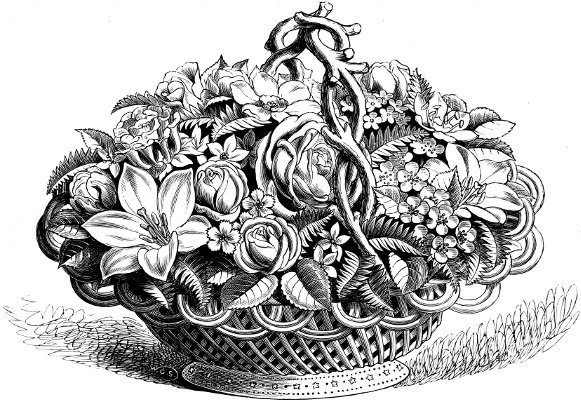
Fig. 807.—Group of Flowers in Weston-super-Mare Terra-Cotta.
The clay from which the various terra-cotta and other objects are made is the native clay of the place, and is produced in the field in which the works are situated. It is a fine plastic clay, of light colour, and admirably adapted for the various purposes to which it is being applied. The first six or eight feet in depth is this fine plastic clay, from which the vases, statuary, busts, fern-stands, flower-baskets, and other finer goods are made. Below this are several feet in depth of blue clay, from which bricks, drain-pipes, &c., are made, and which lies in a bed of peat about fifteen inches in depth. Below this peat is a considerable depth of soft clay, from which the ordinary bricks are made. Roofing and flooring tiles, and garden-edgings, are also made in large quantities. The following is an analysis of the plastic clay made for the purpose of this account.
“Before analyzing, the clay was dried at the temperature of boiling water.
“Silica 57·29
Alumina 13·55
Ferric Oxide 4·90
Manganese Oxide 0·46
Lime 8·84
Magnesia 2·27
Potash 3·62
Loss on calculation (Water and Carbonic Acid) 10·06
100·99
“The greater part of the lime shown above exists in the raw clay as carbonate. The high character which the clay bears as regards its suitability for ‘Terra-Cotta’ work is fully borne out by the analysis. (Signed), Edward G. Tosh, F.C.S., Chemical Laboratory, Whitehaven.”
They possess the advantage of not turning green while in use.
JOHN MATTHEWS, LATE PHILLIPS, ROYAL POTTERY, WESTON-SUPER-MARE.
The mark of the Royal Pottery is sometimes the Royal Arms alone, and at others the Royal Arms surmounting a tablet with the name. There are also other potteries, where coarse common ware is produced, in the same neighbourhood.
Poole, Dorset.
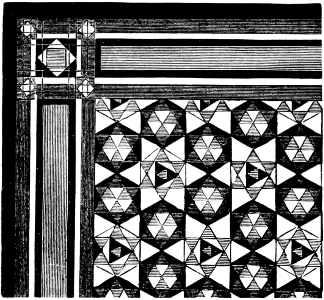
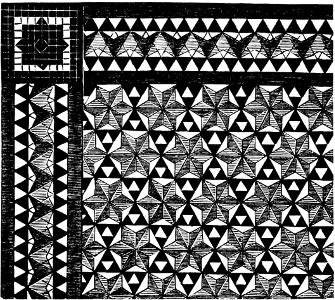
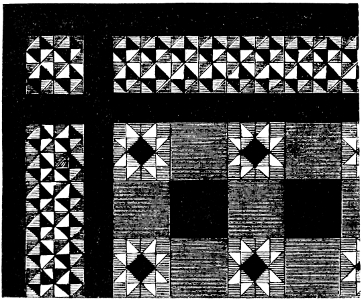
The Architectural Pottery Company’s works were established in 1854 by Messrs. Thomas Sanders Ball, John Ridgway (china manufacturer, of Cauldon Place, Hanley), Thomas Richard Sanders, and Frederick George Sanders. In 1857, Mr. Ridgway retired from the concern and it was carried on by the remaining partners until 1861, when Mr. Thomas Sanders Ball also retired. Since then the works have been continued by Messrs. T. R. and F. G. Sanders alone. The Company produce patent coloured and glazed bricks and mouldings, semi-perforated and pressed; patent mosaic, tessellated, encaustic, vitreous, and white, blue, and other glazed wall tiles; embossed and perforated tiles; quarries and fire-clay goods, and other articles—the clays used being Purbeck clay, Cornish china clay, and Fareham clay, while those for plain quarries are from the Canford estate.
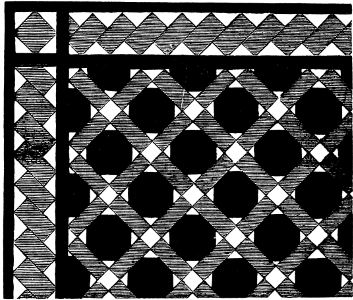
Figs. 808 to 811.
The encaustic paving tiles are of good design, many being carefully copied from mediæval examples, while others are new and of extremely good character—some being classic and others gothic. The colours used in the encaustic tiles are very varied and, in some instances, rich; red, buff, blue, chocolate, black, white, brown, green, &c., of different shades and of harmonious combinations. A speciality of these works are the tessellated tiles, under Bale’s patent process. These are literally formed of thin tesseræ of various colours, laid on and forming a part of the quarry itself. By this means all the richness and intricacy of the geometrical designs of tessellated pavements is produced, and at small trouble in laying down. Their character, as a rule, is better than the Italian tiles produced on the same general principle. These “tessellated tiles” possess every quality for general adoption, and no doubt will, in time, become, so to speak, acclimatised to this country. In quality the Architectural Pottery Company’s decorated tiles are not so hard and compact in body as some others are, but doubtless this can be improved upon.
The marks used by the company are:—
ARCHITECTURAL POTTERY COMPANY POOLE DORSET REGISTERED
ARCHITECTURAL POTTERY CO POOLE : DORSET
ARCHITECTURAL POTTERY CO. POOLE DORSET PATENT · INLAID MOSAIC
PATENT ARCHITECTURAL POTTERY . CO POOLE · DORSET
PATENT ARCHITECTURAL POTTERY CO POOLE,—DORSET BALE’S PATENT INLAID MOSAIC
A P · CO POOLE PATENT
A. P. CO.
A. P · CO POOLE
Bourne Valley Pottery.—At this pottery, worked by Messrs. Standing and Marten, who have an establishment at Bourne Valley Wharf, Nine Elms, London, glazed stoneware sewage and sanitary pipes, on Creshes’ patent, and terra-cotta vases, figures, chimney-tops, garden edgings, and architectural enrichments are made.
Branksea Pottery.—These potteries were built by Col. Waugh for the manufacture of stoneware sanitary goods and terra-cotta, in 1855, who also established alum works here. Fire-clay goods of the usual quality of the district are made, and the sanitary pipes are of a hard and durable nature. The works have the advantage of a large bed of excellent clay close at hand.
Kinson.
The works at Kinson, near Poole (with a wharf at the Albert Embankment, Lambeth), were established in the middle of the present century, and consisted of twelve kilns with boiler, engine-house, drying-sheds, stables, offices, &c. After a few years they were closed, and so remained until 1867, when the property was purchased and came into the hands of the present “Kinson Pottery Company,” who commenced making stoneware drain-pipes. Shortly afterwards the company introduced the making of terra-cotta goods, in which they have been very successful, and fire-bricks, which they manufacture to a very considerable extent. The estate consists of about twenty-seven acres of freehold land, which is underlaid through its whole area with a thick compact bed of clay, in layers of various descriptions. It is (roughly speaking) of three qualities, about 40 feet thick, lying in nearly equal beds of each description. The quality is shown in the following copy of Herapath’s analysis, taken some years ago, for the original company:—
No. 1, Dark. No. 2, Grey. No. 3, White. No. 4, Grey. No. 1, White. L. White.
Silica 51·40 59·10 66·20 54·40 58·70 65·40
Alumina, total 30·00 35·16 28·00 37·00 34·80 25·40
Magnesia ·60 — — — ·50 —
Carbon 2·10 — — ·20 ·30 —
Protoxide of iron 12·60 4·60 1·60 5·40 3·50 5·00
Sulphate of lime 3·40 1·24 4·40 3·00 2·00 4·00
100·10 100·10 100·20 100·00 99·30 99·80
Alumina out of the above soluble in acid 12·75 12·50 8·70 13·20 12·10 4·46
The above alumina is that portion which is soluble in boiling nitro-caloric acid, and therefore considered as not in combination with the silica.
(Signed) William Herapath, F.C.S.
The clays lie in the mine as follows:—
No. 1. Stock-brick Clay.
2. Top White Loam.
3. Top Black Loam.
4. Top Blue White Vein.
5. Top Blue Red Vein.
6. White Loamy Pottery Clay, Red Vein.
7. White Loamy ditto.
8. Best London, for bottle ware.
9. Best Blue Vein.

10. Best Bottom Black.
The productions of the Kinson Pottery, in stoneware, are sanitary and drain-pipes of every description, traps, syphons, and pans, and other articles; they are highly vitrified, strong, and durable, and of excellent quality. In terra-cotta, vases, rustic seats, brackets, garden edgings, chimney-pots, architectural enrichments, and other goods are produced, as are also fire-bricks, arch and wedge bricks, &c. The quality of the terra-cotta is extremely good and durable.