GAZETTEER OF ISLANDS OF MICRONESIA
Reading edition
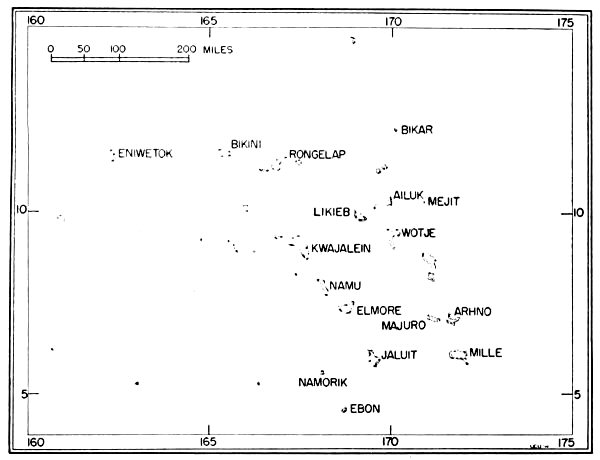
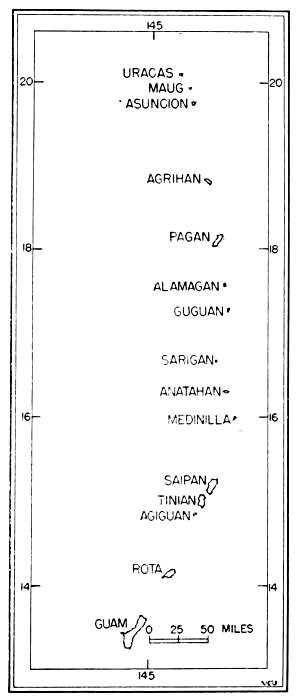
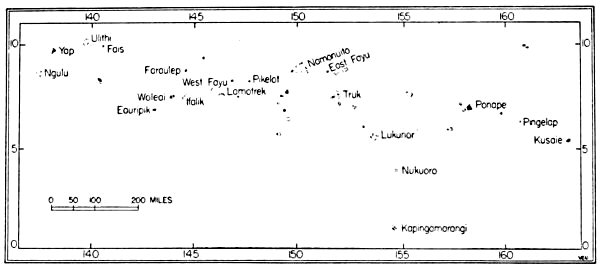
In the following list the name in current usage for each island or island group in Micronesia is followed by other names which have been used. There is no attempt made to list the names of the small islands of each atoll or those of the myriads of small islets that lie offshore from the larger volcanic islands. Collections have not been made on most of the smaller islands. For the few on which a species has been collected, the islet is adequately described in the account of the particular species concerned. The reader may refer to Brigham (1900) for a listing of the islands of the Pacific Ocean. Most of the islands included in the following list may be located on the map of Micronesia as shown in figures 2, 3, 4, and 5. These listings follow in order of arrangement those in the Civil Affairs Handbooks, published by the United States Navy Department (1943, 1944a, 1944b, and 1944c).
Mariana Islands
The Mariana Islands (also called Ladrone, Marianne, Marian) consist of 14 single islands and one group of three islands. The Marianas are all "high" or volcanic islands. The islands, shown in figure 2, are listed as follows:
Agrihan (also called Agrigan, Arijan, Francisco Xavier, Granger, Gregus, Grigan, San Francisco Javier).
Agiguan (also called Agaigan, Agiigan, Agiguan, Agigwan, Aguigan, Aguijan, Aguyan, Guigan, Saint Ange, Santa Angel).
Alamagan (also called Almagan, Aramagan, Concepcion).
Anatahan (also called Anatagen, Anatajen, Anataxan, San Joaquin).
Asuncion (also called Asonson, Assongsong, Assumption).
Guam (also called Guaham, Guahan).
Guguan (also called Guguwan, Guugwan, Piedras, San Felipe, St. Philippe).
Maug (also called Mang, Mangs, Mauga, Monjas, Mougu, Saint Laurent, San Lorenzo, Tunas).
Medinilla (also called Bade, Bird, Farallon de Medinilla, Rocher).
Pagan (also called Pagon, Paygan, St. Ignace, San Ignacio).
Rota (also called Luta, St. Anne, Santa Ana, Sarpan, Satpana, Suta, Zarpane).
Saipan (also called (Saepan, St. Joseph, San José, Saypan, Siepan, Serpan, Seypan).
Sarigan (also called St. Charles, San Carlos, Sariguan, Sarigwan).
Tinian (also called Bona Vista, Buenavista, Temean, Tenian, Tiniamou).
Uracas (also called Guy Rock, Farallon de Pájaros, Pájaros, Urakasu).
Fig. 2. The Mariana Islands.
Palau Islands
Fig. 3. The Palau Islands.
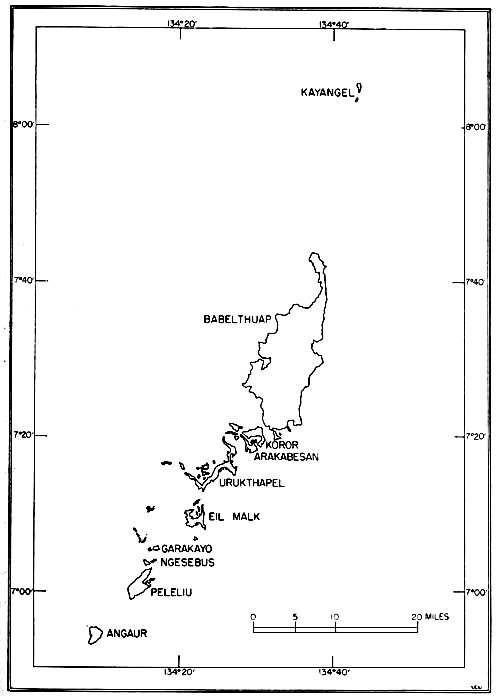
The Palau Islands (also called Arrecifos, Palaos, Paleu, Pally, Paloc, Pannog, Parao, Pelew) consist of 8 large islands, 18 smaller islands, and a large number of minute islets, all enclosed in a single reef system. The northern islands (Babelthuap and Koror) are of volcanic origin; the southern islands (Peleliu and others) are of coralline formation. Angaur, to the south of Peleliu, may be included with the Palau Archipelago. From the standpoint of the avian zoogeography, the coral islands or atolls of Kayangel, Merir, Pulo Anna, Sonsorol, and Tobi are also included. The principal islands, shown in figure 3, are listed below:
Arakabesan (also called Ngarekobasang).
Aurapushekaru (also called Aburashokoru, Auluptagel, Oluksakel, Oropu-shakaru).
Babelthuap (also called Babeldzuap, Babel Taob, Babelthouap, Baberthaob, Baberudaobu, Babldaob).
Eil Malk (also called Amototi, Cogeal, Irakong, Makarakaru).
Garakayo
Koror (also called Coror, Goreor, Kororu).
Malakal (also called Amalakell, Malaccan, Marakaru, Nanalake).
Ngabad
Ngesebus (also called Guadokusu).
Peleliu (also called Pelelew, Periryu, Pililer, Peliliu, Uler).
Urukthapel (also called Cape, Kuapasungasu, Ngurukdapel, Ulugeang, Uruk-taaburu, Uruktapi).
Included with the Palau group because of proximity and relationships of the avifauna are the following:
Angaur (also called Angauru, Angyaur, Ngaur, Ngeour, N'Yaur).
Kayangel (also called Kadjangle, Kajanguru, Kazyanguru, Kianguel, Kreiangel, Moore, Ngajangel, Ngeiangel).
Merir (also called Marir, Meliel, Meriel, Meriru, Pulo Marier, Warren Hastings).
Pulo Anna (also called Anna, Bul, Bur, Current, Paola, Pul, Puru, Wull).
Sonsorol (also called St. Andrew, San Andreas, Sonesor, Songosor, Sonseron, Sonsol, Sonsoru, Tschontil).
Tobi (also called Codopuei, Johnstone, Kadogubi, Lectobis, Lord North, Nevil, Togobei, Tokobei).
Caroline Islands
The Caroline Islands consist of 41 island clusters or isolated islands (exclusive of submerged coral reefs). These are of coral formation. They are atolls or single islands except for Yap, which is of sedimentary rock, and Kusaie, Ponapé, and Truk, which are of volcanic rock. The principal islands are shown in figure 4 and are listed as follows:
East Fayu (also called Fajo, Faliao, Lutké, Rukutee).
Eauripik (also called Aurepik, Eourpyg, Iuripik, Kama, Low, Yorupikku, Yuripik).
Fais (also called Astrolabe, Feis, Feys, Fuhaesu, Huhaesu, Tromelin, Woaje).
Faraulep (also called Faraulip, Faroilap, Fattoilap, Foroilap, Furaarappu, Gardner, Huraarappu).
Ifalik (also called Evalook, Faloc, Furukku, Hurukku, Ifalouk, Ifelug, Two Sisters, Wilson).
Kapingamarangi (also called Bakiramarang, Constantine, Greenwich, Guriinitchi, Kabeneylon, Kapenmailang, Makarama, Pikiram, Tenuv).
Kusaie (also called Arao, Armstrong, Experiment, Hope, Kusai, Kuschai, Kushai, Kuthiu, Oualan, Quollen, Strong, Teyoa, Ualan, Walang).
Lamotrek (also called Lamorsu, Lamureck, Lamutrik, Low, Namotik, Namotikku, Manochikku, Namurrek, Swede).
Lukunor (also called Lemarafat, Lougoullos, Lougounor, Luganor, Lugunor, Lugunoz, Mortlock, Namonefeng, Rukunoru, Youngwilliam).
Namonuito (also called Anonyma, Baxos de San Bartolomeo, Bunkey, Las Hermanas, Livingstone, Lost Jardines, Lutké, Namenwita, Olol, Omun, Onon, Ororu, Remp, Ueito, Ulul).
Ngulu (also called Angegul, Anolul, Goulou, Kurru, Lamoliao, Lamoliork, Lamuliur, Lamuniur, Matelotas, Ngilu, Ngoli, Ngolog, Spencer Keys, Ulu).
Nukuoro (also called Dunkin, Matakema, Menteverde, Nugoru, Nukor, Nukuor).
Pikelot (also called Bigali, Biguela, Coquille, Lydia, Pigela, Pigerotto, Pigouelao, Pik, Pyghella).
Pingelap (also called Macaskill, Musgrave, Pelelap, Piigerappu, Punlap, Sailrocks, Tucks Reef).
Ponapé (also called Ascension, Bonabee, Bonybay, Faloupet, Faounoupei, Funopet, Niponpei, Painipete, Ponapi, Piunipet, Puynipet, Quirosa, Seniavin, William IV). Ponapé is the largest island of the Senyavin Islands.
Truk (also called Djuk, Hogoleu, Hogolu, Hoguleu, Lugulus, Ola, Rough, Ruck, Ruk, Torakku, Tuck, Ugulut). The Truk group includes approximately 100 islands.
Ulithi (also called Mackenzie, Mogmog, Mogumogu, Mokomok, Ouluthy, Uluthi, Uluti, Urushi).
West Fayu (also called Faiyao, Fajahu, Faliau, Huiyao, West Faiu).
Woleai (also called Anagai, Mereyon, Oleai, Ouleyai, Thirteen Islands, Uala, Ulea, Uola, Ulie, Wolea).
Yap (also called Eap, Guap, Heap, Jap, Ouap, Uap, Wuap, Yappu).
Fig. 4. The Caroline Islands.
Marshall Islands
The Marshall Islands consist of 29 atolls and 5 coral islands without lagoons arranged in two chains, the Ralik and the Radak chains, which extend in a northwesterly to southeasterly direction. No volcanic rocks are exposed in these islands. The principal islands shown in figure 5 are as follows:
Ailuk (also called Ailu, Fisher, Krusenstern, Tindall, Watts).
Arhno (also called Arno, Aruno, Auru).
Bikar
Bikini
Ebon (also called Boston Atoll).
Elmore (also called Ailinglap, Ailinglapalap, Iringlob).
Eniwetok
Jaluit (also called Bonham, Taluit).
Kwajalein
Likieb (also called Likiep).
Majuro (also called Arrowsmith, Mezyuro).
Mejit
Maloelab
Mille (also called Mulgrave).
Namorik
Namu (also called Musquillo, Namo).
Rongelap
Wotje (also called Romanzov, Wotze, Wozzie).
Fig. 5. The Marshall Islands.