HANS VON BÜLOW AS TEACHER AND INTERPRETER
Reading edition
Those who heard Hans von Bülow in recital during his American tour, in 1876, listened to piano playing that was at once learned and convincing. A few years before, in 1872, Rubinstein had come and conquered. The torrential splendor of his pianism, his mighty crescendos and whispering diminuendos, his marvelous variety of tone—all were in the nature of a revelation; his personal magnetism carried everything before it. American audiences were at his feet.
HANS VON BÜLOW
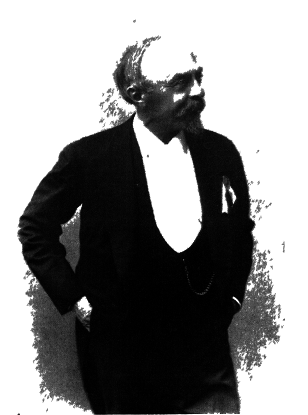
In Von Bülow was found a player of quite a different caliber. Clarity of touch, careful exactness down to the minutest detail caused the critics to call him cold. He was a deep thinker and analyzer; as he played one saw, as though reflected in a mirror, each note, phrase and dynamic mark of expression to be found in the work. From a Rubinstein recital the listener came away subdued, awed, inspired, uplifted, but disinclined to open the piano or touch the keys that had been made to burn and scintillate under those wonderful hands. After hearing Von Bülow, on the other hand, the impulse was to hasten to the instrument and reproduce what had just seemed so clear and logical, so simple and attainable. It did not seem to be such a difficult thing to play the piano—like that! It was as though he had said: "Any of you can do what I am doing, if you will give the same amount of time and study to it that I have done. Listen and I will teach you!"
Von Bülow was a profound student of the works of Beethoven; his edition of the sonatas is noted for recondite learning, clearness and exactness in the smallest details. Through his recitals in America he did much to make these works better known and understood. Nor did he neglect Chopin, and though his readings of the music of the great Pole may have lacked in sensuous beauty of touch and tone, their interpretation was always sane, healthy, and beautiful.
Toward the end of a season during the eighties, it was announced that Von Bülow would come to Berlin and teach an artist class in the Klindworth Conservatory. This was an unusual opportunity to obtain lessons from so famous a musician and pedagogue, and about twenty pianists were enrolled for the class. A few of these came with the master from Frankfort, where he was then located.
Carl Klindworth, pianist, teacher, critic, editor of Chopin and Beethoven, was then the Director of the school. The two men were close friends, which is proved by the fact that Von Bülow was willing to recommend the Klindworth Edition of Beethoven, in spite of the fact that he himself had edited many of the sonatas. Another proof is that he was ready to leave his work in Frankfort, and come to Berlin, in order to shed the luster of his name and fame upon the Klindworth school—the youngest of the many musical institutions of that music-ridden, music-saturated capital.
It was a bright May morning when the Director entered the music-room with his guest, and presented him to the class. They saw in him a man rather below medium height, with large intellectual head, beneath whose high, wide forehead shone piercing dark eyes, hidden behind glasses.
He bowed to the class, saying he was pleased to see so many industrious students. His movements, as he looked around the room, were quick and alert; he seemed to see everything at once, and the students saw that nothing could escape that active mentality.
The class met four days in each week, and the lessons continued from nine in the morning until well on toward one o'clock. It was announced that only the works of Brahms, Raff, Mendelssohn and Liszt would be taught and played, so nothing else need be brought to the class; indeed Brahms was to have the place of honor.
While many interesting compositions were discussed and played, perhaps the most helpful thing about these hours spent with the great pedagogue was the running fire of comment and suggestion regarding technic, interpretation, and music and musicians in general. Von Bülow spoke in rapid, nervous fashion, with a mixture of German and English, often repeating in the latter tongue what he had said in the former, out of consideration for the Americans and English present.
In teaching, Von Bülow required the same qualities which were so patent in his playing. Clearness of touch, exactness in phrasing and fingering were the first requirements; the delivery of the composer's idea must be just as he had indicated it—no liberties with the text were ever permitted. He was so honest, so upright in his attitude toward the makers of good music, that it was a sin in his eyes to alter anything in the score, though he believed in adding any marks of phrasing or expression which would elucidate the intentions of the composer. Everything he said or did showed his intellectual grasp of the subject; and he looked for some of the same sort of intelligence on the part of the student. A failure in this respect, an inability to apprehend at once the ideas he endeavored to convey, would annoy the sensitive and nervous little Doctor; he would become impatient, sarcastic and begin to pace the floor with hasty strides. When in this state he could see little that was worthy in the student's performance, for a small error would be so magnified as to dwarf everything that was excellent. When the lion began to roar, it behooved the players to be circumspect and meek. At other times, when the weather was fair in the class-room, things went with tolerable smoothness. He did not trouble himself much about technic, as of course a pupil coming to him was expected to be well equipped on the technical side; his chief concern was to make clear the content and interpretation of the composition. In the lessons he often played detached phrases and passages for and with the student, but never played an entire composition.
One of the most remarkable things about this eccentric man was his prodigious memory. Nearly every work for piano which could be mentioned he knew and could play from memory. He often expressed the opinion that no pianist could be considered an artist unless he or she could play at least two hundred pieces by heart. He, of course, more than fulfilled this requirement, not only for piano but for orchestral music. As conductor of the famous Meiningen orchestra, he directed every work given without a note of score before him—considered a great feat in those days. He was a ceaseless worker, and his eminence in the world of music was more largely due to unremitting labor than to genius.
From the many suggestions to the Berlin class, the following have been culled.
"To play correctly is of the first importance; to play beautifully is the second requirement. A healthy touch is the main thing. Some people play the piano as if their fingers had migrane and their wrists were rheumatic. Do not play on the sides of the finger nor with a sideways stroke, for then the touch will be weak and uncertain.
"Clearness we must first have; every line and measure, every note must be analyzed for touch, tone, content and expression.
"You are always your first hearer; to be one's own critic is the most difficult of all.
"When a new theme enters you must make it plain to the listener; all the features of the new theme, the new figure, must be plastically brought out.
"Brilliancy does not depend on velocity but on clarity. What is not clear cannot scintillate nor sparkle. Make use of your strongest fingers in brilliant passages, leaving out the fourth when possible. A scale to be brilliant and powerful must not be too rapid. Every note must be round and full and not too legato—rather a mezzo legato—so that single tones, played hands together, shall sound like octaves. One of the most difficult things in rhythm, is to play passages where two notes alternate with triplets. Scales may be practised in this way alternating three notes with two.
"We must make things sound well—agreeably, in a way to be admired. A seemingly discordant passage can be made to sound well by ingeniously seeking out the best that is in it and holding that up in the most favorable light. Practise dissonant chords until they please the ear in spite of their sharpness. Think of the instruments of the orchestra and their different qualities of tone, and try to imitate them on the piano. Think of every octave on the piano as having a different color; then shade and color your playing. (Also bitte coloriren)!"
If Bülow's musical trinity, Bach, Beethoven, and Brahms, had a fourth divinity added, it would surely have been Liszt. The first day's program contained chiefly works by the Hungarian master; among them Au bord d'une Source, Scherzo and March, and the Ballades. The player who rendered the Scherzo was advised to practise octaves with light, flexible wrist; the Kullak Octave School was recommended, especially the third book; the other books could be read through, practising whatever seemed difficult and passing over what was easy. Of the Ballades the first was termed more popular, the second finer and more earnest—though neither makes very much noise.
The Annees de Pelerinage received much attention. Among the pieces played were, Les Cloches, Chasse Neige, Eclogue, Cloches de Geneva, Eroica, Feux Follets and Mazeppa. Also the big Polonaise in E, the two Études, Waldesrauschen and Gnomenreigen; the Mazourka, Valse Impromptu, and the first Étude, of which last he remarked: "You can all play this; thirty years have passed since it was composed and people are only just finding out how fine it is. Such is the case with many of Liszt's works. We wonder how they ever could have been considered unmusical. Yet the way some people play Liszt the hearer is forced to exclaim, 'What an unmusical fellow Liszt was, to be sure, to write like that!'
"Exactness in everything is of the greatest importance," he was fond of saying. "We must make the piano speak. As in speaking we use a separate movement of the lips for each word, so in certain kinds of melody playing, the hand is taken up after each note. Then, too, we cannot make the piano speak without very careful use of the pedals."
The Mazourka of Liszt was recommended as one of the most delightful of his lighter pieces. The Waldesrauschen also, was termed charming, an excellent concert number. "Begin the first figure somewhat louder and slightly slower, then increase the movement and subdue the tone. Everything which is to be played softly should be practised forte."
Of Joachim Raff the Suite Op. 91 held the most important place. Each number received minute attention, the Giga being played by Ethelbert Nevin. The Metamorphosen received a hearing, also the Valse Caprice, Op. 116, of which the master was particular about the staccato left hand against the legato right. Then came the Scherzo Op. 74, the Valse Caprice and the Polka, from Suite Op. 71. Von Bülow described the little group of notes in left hand of middle section as a place where the dancers made an unexpected slip on the floor, and suggested it be somewhat emphasized. "We must make this little witticism," he said, as he illustrated the passage at the piano.
"Raff showed himself a pupil of Mendelssohn in his earlier compositions; his symphonies will find more appreciation in the coming century—which cannot be said of the Ocean Symphony, for instance."
Of Mendelssohn the Capriccios Op. 5 and 22 were played, also the Prelude and Fugue in E. Von Bülow deplored the neglect which was overtaking the works of Mendelssohn, and spoke of the many beauties of his piano compositions. "There should be no sentimentality about the playing of Mendelssohn's music," he said; "the notes speak for themselves.
"The return to a theme, in every song or instrumental work of his is particularly to be noticed, for it is always interesting; this Fugue in E should begin as though with the softest register of the organ."
The subject of Brahms has been deferred only that it may be spoken of as a whole. His music was the theme of the second, and a number of the following lessons. Bülow was a close friend of the Hamburg master, and kept in touch with him while in Berlin. One morning he came in with a beaming face, holding up a sheet of music paper in Beethoven's handwriting, which Brahms had discovered and forwarded to him. It seemed that nothing could have given Bülow greater pleasure than to receive this relic.
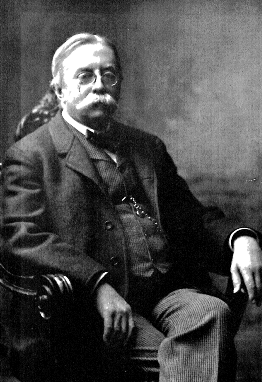
DR. WILLIAM MASON
The first work taken up in class was Brahms' Variations on a Handel theme. Von Bülow was in perfect sympathy with this noble work of Brahms and illumined many passages with clear explanations. He was very exact about the phrasing, "What cannot be sung in one breath cannot be played in one breath," he said; "many composers have their own terms for expression and interpretation; Brahms is very exact in these points—next to him comes Mendelssohn. Beethoven not at all careful about markings and Schumann extremely careless. Brahms, Beethoven, and Wagner have the right to use their own terms. Brahms frequently uses the word sostenuto where others would use ritardando."
Of the Clavier Stücke, Op. 76, Von Bülow said: "The Capriccio, No. 1 must not be taken too fast. First page is merely a prelude, the story begins at the second page. How wonderfully is this melody formed, so original yet so regular. Compare it with a Bach gigue. Remember, andante does not mean dragging (schleppando), it means going (gehend)." To the player who gave the Capriccio, No. 5 he said: "You play that as if it were a Tarantelle of Stephan Heller's. Agitation in piano playing must be carefully thought out; the natural sort will not do at all. We do not want blind agitation, but seeing agitation (aufregung). A diminuendo of several measures should be divided into stations, one each for F, MF, M, P, and PP. Visit the Zoological Gardens, where you can learn much about legato and staccato from the kangaroos."
The Ballades were taken up in these lessons, and the light thrown upon their poetical content was often a revelation. The gloomy character of the Edward Ballade, Op. 10, No. 1, the source of the Scottish poem, the poetic story, were dwelt upon. The opening of this first Ballade is sad, sinister and mysterious, like the old Scotch story. The master insisted on great smoothness in playing it—the chords to sound like muffled but throbbing heartbeats. A strong climax is worked up on the second page, which dies away on the third to a pianissimo of utter despair. From the middle of this page on to the end, the descending chords and octaves were likened to ghostly footsteps, while the broken triplets in the left hand accompaniment seem to indicate drops of blood.
The third Ballade also received an illumination from Von Bülow. This is a vivid tone picture, though without motto or verse. Starting with those fateful fifths in the bass, it moves over two pages fitfully gloomy and gay, till at the end of the second page a descending passage leads to three chords so full of grim despair as to impart the atmosphere of a dungeon. The player was hastily turning the leaf. "Stop!" cried the excited voice of the master, who had been pacing restlessly up and down, and now hurried from the end of the salon. "Wait! We have been in prison—but now a ray of sunshine pierces the darkness. You must always pause here to make the contrast more impressive. There is more music in this little piece than in whole symphonies by some of the modern composers."
Both Rhapsodies Op. 79 were played; the second, he said, has parts as passionate as anything in the Götterdammerung. Both are fine and interesting works.
Again and again the players were counseled to make everything sound well. Some intervals, fourths for instance, are harsh; make them as mild as possible. For one can play correctly, but horribly! Some staccatos should be shaken out of the sleeve as it were.
The first time a great work is heard there is so much to occupy the attention that only a small amount of pleasure can be derived from it. At the second hearing things are easier and by the twelfth time one's pleasure is complete. The pianist must consider the listener in a first rendering, and endeavor to soften the sharp discords.
With a group of five notes, play two and then three—it sounds more distinguished. Remember that unlearning gives much more trouble than learning.
In this brief résumé of the Von Bülow lessons, the desire has been to convey some of the hints and remarks concerning the music and its interpretation. The master's fleeting sentences were hurriedly jotted down during the lessons, with no thought of their ever being seen except by the owner. But as Bülow's fame as a teacher became so great, these brief notes may now be of some value to both teacher and student.
If it were only possible to create a picture of that Berlin music-room, with its long windows opening out to a green garden—the May sunshine streaming in; the two grand pianos in the center, a row of anxious, absorbed students about the edge of the room—and the short figure of the little Doctor, pacing up and down the polished floor, or seating himself at one piano now and then, to illustrate his instruction. This mental picture is the lifelong possession of each of those players who were so fortunate as to be present at the sessions. It can safely be affirmed, I think, that the principles of artistic rectitude, of exactness and thorough musicianship which were there inculcated, ever remained with the members of that class, as a constant incentive and inspiration.