Part 1 — Refuse Pits
Reading edition
“James Citty,” like all other settlements in all ages, had to have places for disposal of refuse. That much refuse was disposed of by casting it in the James River is unlikely, since before the dawn of history it has been a trait of man to live on top of his own refuse rather than litter a shore with it. While it may be that no pits were dug purposely for refuse disposal, pits opened for brick or ceramic clay (or dug for ice houses, wells, or other purposes and later abandoned) were used for dumping trash. In 1955 a refuse pit almost 40 feet square was discovered in the “industrial area” near the workshop, ironworking pit, and pottery kilns. Filled with trash from the first half of the 17th century, this pit contained such artifacts as a swepthilt rapier (made about 1600), a cutlass, the breastplate and backpiece of a light suit of armor, a number of utensils of metal, ceramics, and glass, to add to the collection of early 17th-century arts and crafts. Several smaller refuse pits were noted, and it is worth commenting that many ditches finally became trash accumulation areas.
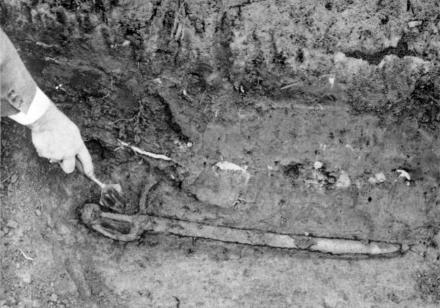
A cutlass in excellent preservation and many other objects from 17th-century Jamestown were found in a large clay borrow pit filled with refuse.