Part 1 — Ironworking Pits
Reading edition
Also in the “industrial area” near Pitch and Tar Swamp, there is a circular pit in which lime, bog iron, and charcoal suggest the manufacture of iron. The previously mentioned pit within the area of the Confederate Fort yielded sword parts, gun parts, bar iron, and small tools, indicating a forge site, perhaps an armorer’s forge.
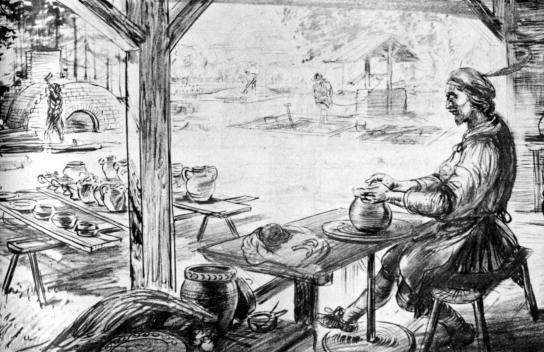
Making pottery at Jamestown. (Conjectural sketch by Sidney E. King.)
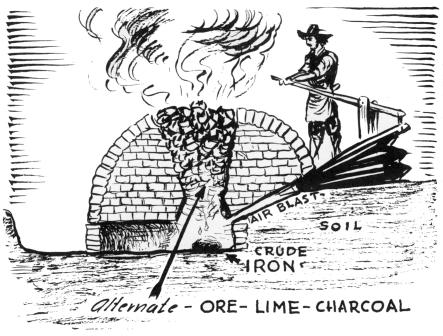
How an ironworking pit was used. (From contemporary sources.)
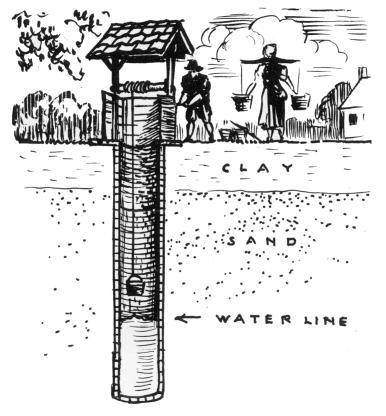
Cross section of a brick-cased well at Jamestown. (Conjectural sketch by Sidney E. King.)
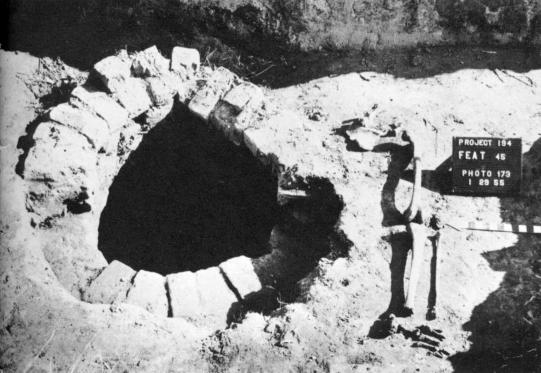
One of the intriguing mysteries of Jamestown is how the left leg and left half of a human pelvis came to be thrown with other refuse into a well behind the row house. The logical inference is that a rebel or criminal had been hanged, drawn, and quartered.