PREPARING FOR WAR
Reading edition
A Memorandum containing a list of rules to be observed during the autumn manœuvres has just been issued. By some strange mistake, the following regulations (which evidently must have appeared in the original document) have been omitted. They are now published for the first time:—
1. Recruits of tender years will not be allowed to draw their bayonets. This rule does not apply to fine growing lads of twelve years old.
2. Buglers will not sound their bugles except by special command of Generals of Divisions. The above-mentioned officers are reminded (for their instruction and guidance) that copper is expensive and should be used as little as possible.
3. Boots will not be worn by the infantry on any march exceeding three miles. Commanding officers are cautioned that shoe-leather has recently greatly increased in value.
4. In the event of two members of the umpire staff being unable to come to an agreement about the respective colours of black and white, they will "draw lots;" id est, one of them will throw into the air a coin of the realm, and before the coin is able to reach the ground, the other will give the word either "heads" or "tails." The choice of cries will be optional. Gold coins will be used by general officers, silver by field officers, and halfpence by all other ranks.
5. Dismounted cavalry will not be allowed to pursue retiring infantry on horseback, unless so ordered by the Commanding Officers of the 83rd (County of Dublin), 85th (the King's County Down), the Connaught Rangers, and the Royal Irish Fusiliers.
6. Should a regiment of infantry halt within two hundred yards of six hostile batteries of artillery to watch the practice, or for any other purpose of instruction, one-tenth of the battalion will be marched to the rear, and will be considered hors de combat during the remainder of the campaign.
7. A village containing one pioneer, one drummer (or bugler) and a quarter-master-sergeant, will be considered fully garrisoned. It will be seen that rules of war are to be followed in every particular, down to the very smallest details, by all concerned in the campaign.
8. As in the previous series of autumn manœuvres, at least, "five minutes' notice" will be given when the army is required to march five miles, or to perform any other military duty requiring zeal, steadiness, and an intimate acquaintance with "Field Exercises, Edition of 1874, Part I."
Solved at Last.
Jawkins. Why do they always call sailors "tars"?
Pawkins.—Because they're so accustomed to the pitching of the ship.
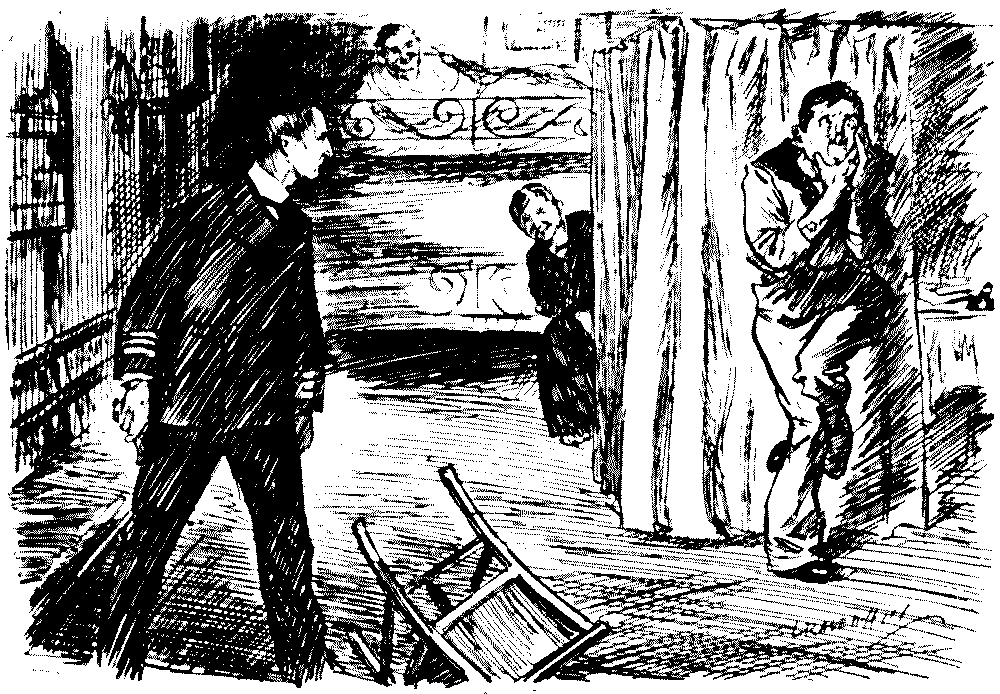
Bluejacket (who has been hauled twice round the sick bay, yelling inarticulately, by the surgeon with the forceps). "Why, you 'ad me by the tongue!"
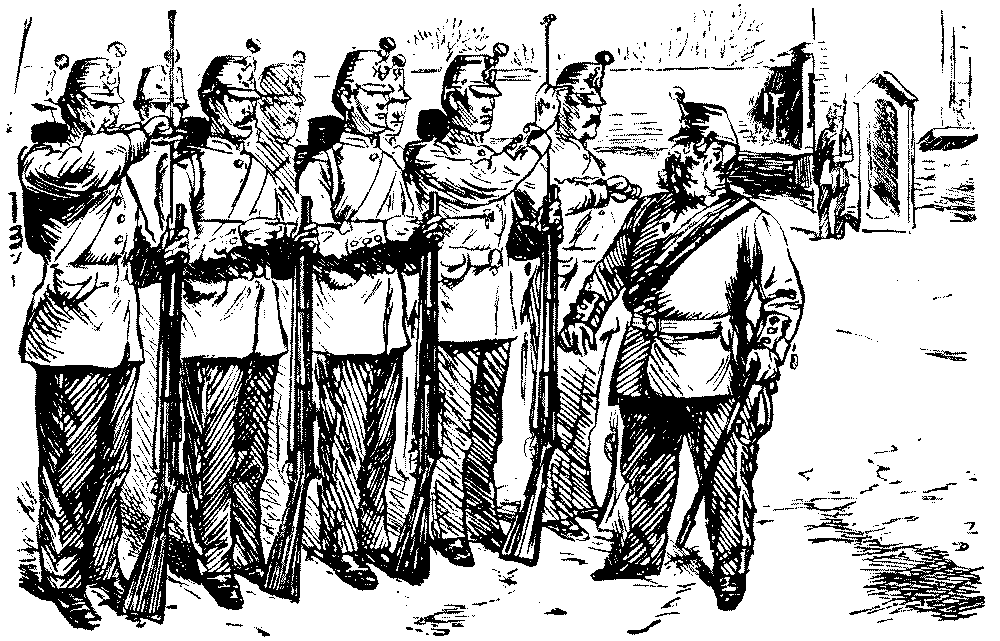
A Verbal Difficulty.
Irritable Captain. "Your barrel's disgracefully dirty, sir, and it's not the first time; I've a good mind to——"
Private Flannigan. "Shure, sor, I niver——" Captain (Irish too). "Silence, sir, when you spake to an officer!"
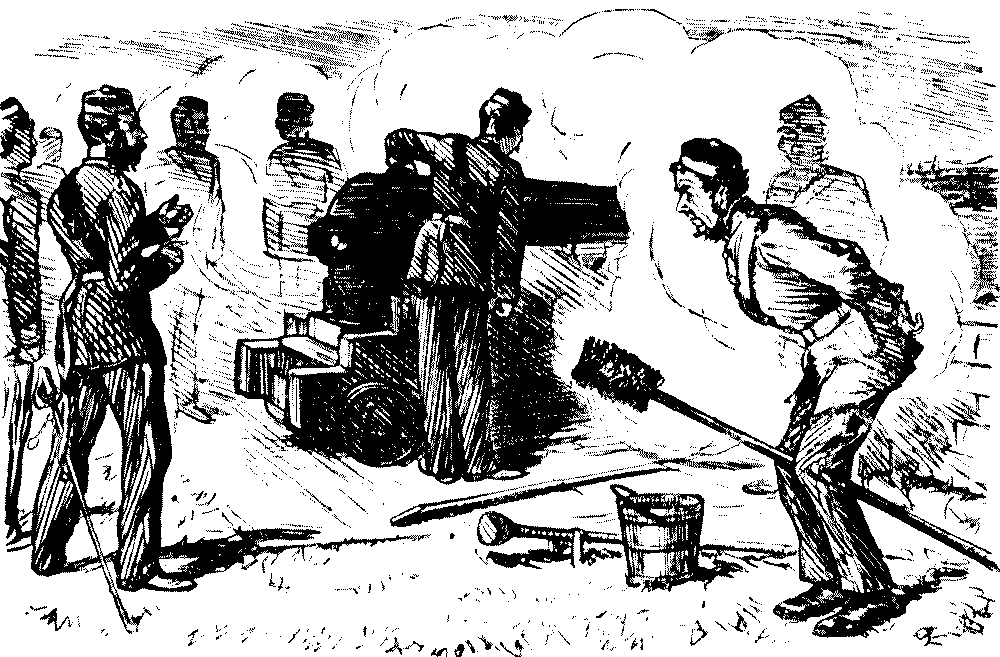
The Royal Salute.
Officer in charge of battery (in a fever lest the time of firing should be a second late). "Why, what are you about, No. 6? Why don't you serve the sponge?"
Bombardier McGuttle. "Hoots toots! Can na' a body blaw their nose?"
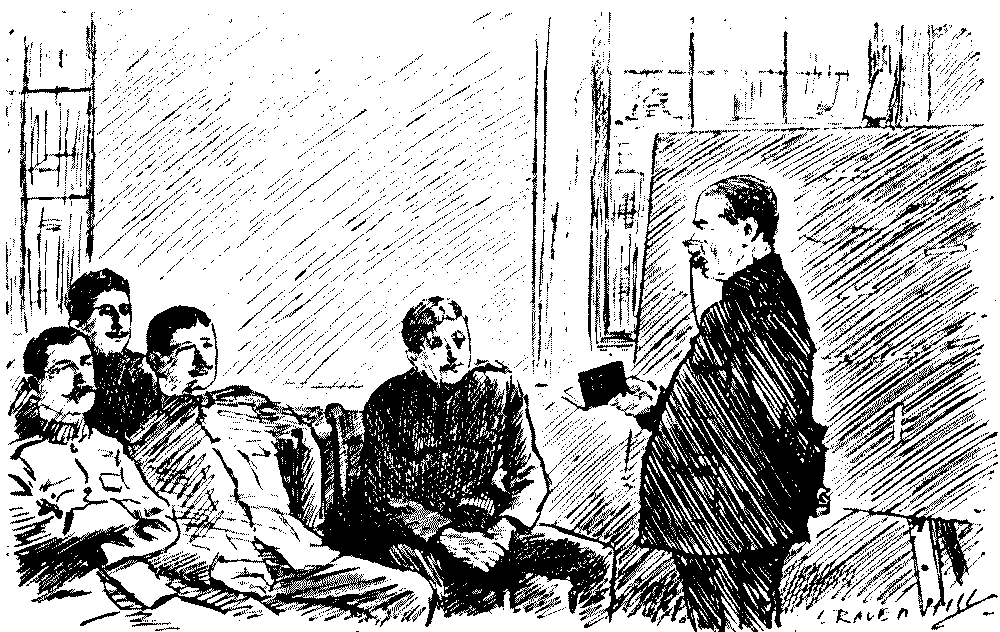
Tactics.
Instructor. "Well, gentlemen, I have endeavoured to explain to you the theoretical principles governing the movements of the various portions of a combined force; but I must warn you, that, in practice on an ordinary field-day, you will probably find it result in hopeless confusion; while on active service it will be ten times worse!"
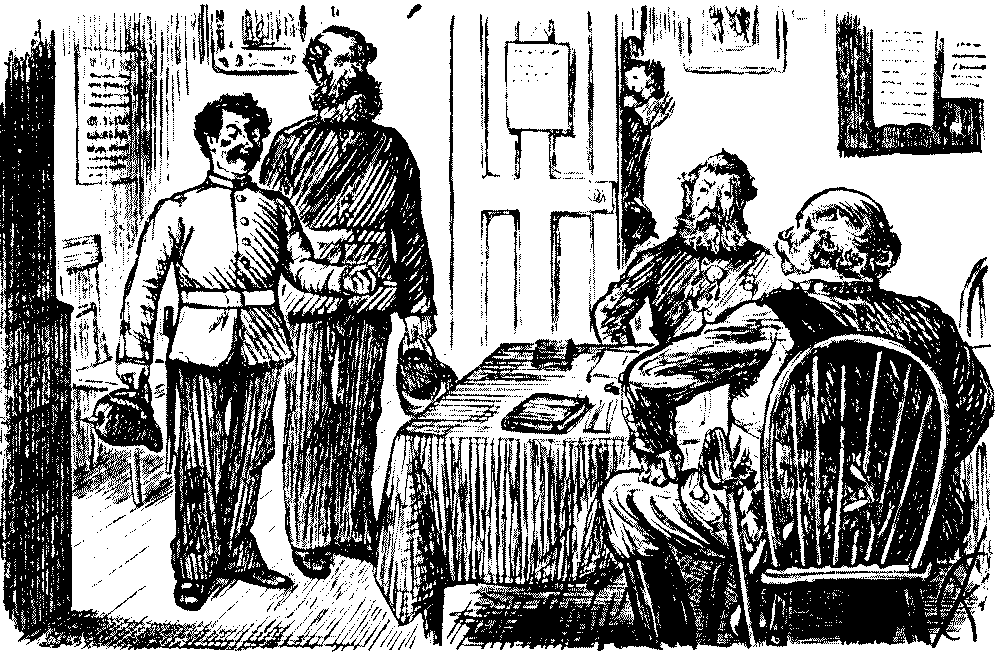
Conclusive!
Volunteer Colonel (swell brewer). "I'm afraid, Mr. Jenkins, you had been indulging in potations that were too strong for you!"
[Private J. was being "called over the coals" for insubordination at the inspection.
Private Jenkins (who is still wearing his bayonet on the wrong side). "Oh, I couldn't have been drunk, sir, for I never had no more than one pint o' your ale all the blessed day!"
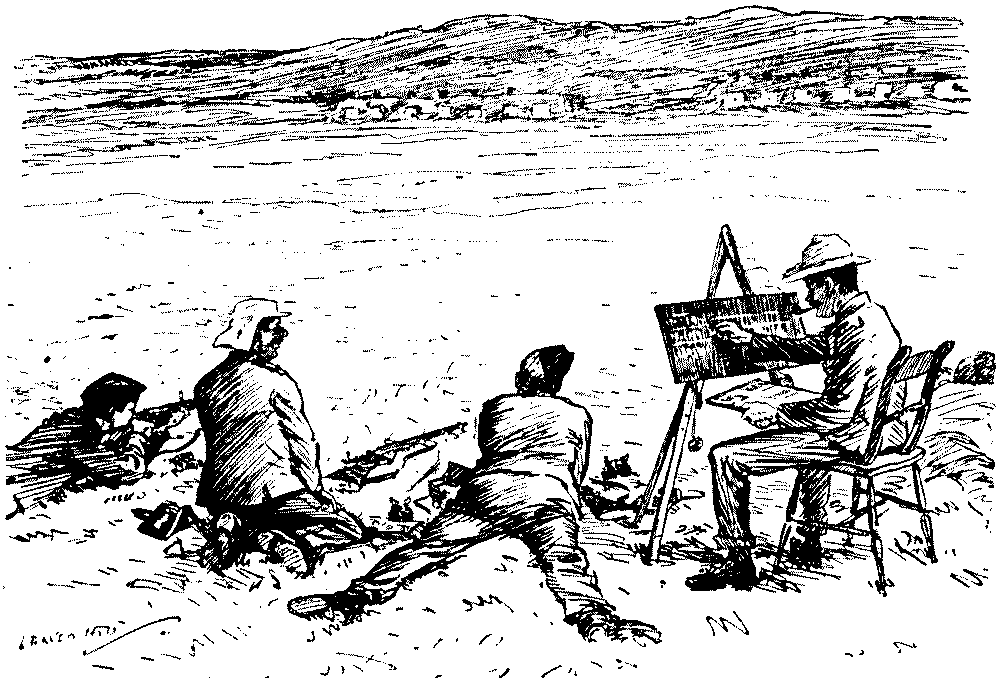
Register-keeper. "Major Jones first to count. A miss—nothing."
Major Jones. "I say, sergeant, that's almost an Irish bull, I fancy!"
Register-keeper. "No, sorr, just a simple English miss!"
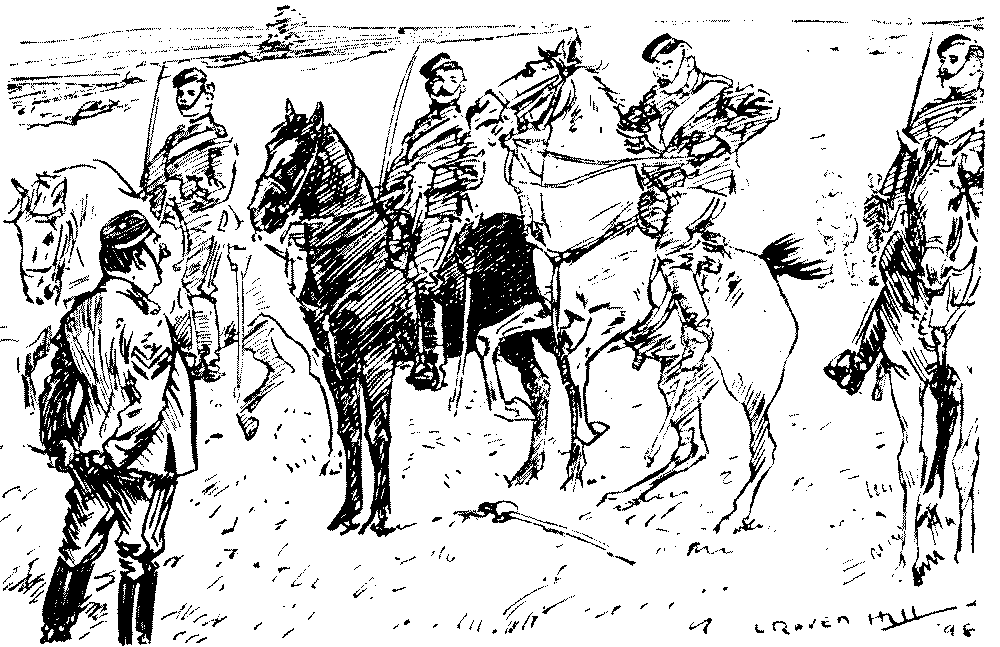
Our Yeomanry.
Sergeant Major. "Number three, where's your sword?"
Recruit (who finds practice very different from theory). "On the ground. Carn't see 'un?"