HOW TO BE AN AUTHOR
Reading edition
Mr. Punch, having read the latest book on the way to write for the press, feels that there is at least one important subject not properly explained therein: to wit, the covering letter. He therefore proceeds to supplement this and similar books.... It is, however, when your story is written that the difficulties begin. Having selected a suitable editor, you send him your contribution accompanied by a covering letter. The writing of this letter is the most important part of the whole business. One story, after all, is very much like another (in your case, probably, exactly like another), but you can at least in your covering letter show that you are a person of originality.
Your letter must be one of three kinds: pleading, peremptory, or corruptive. I proceed to give examples of each.
I.—The Pleading Letter.
199, Berkeley Square, W.
Dear Mr. Editor,—I have a wife and seven starving children; can you possibly help us by accepting this little story of only 18,000 (eighteen thousand) words? Not only would you be doing a work of charity to one who has suffered much, but you would also, I venture to say, be conferring a real benefit upon English literature—as I have already received the thanks of no fewer than thirty-three editors for having allowed them to peruse this manuscript.
Yours humbly,
The McHardy.
P.S.—My youngest boy, aged three, pointed to his little sister's Gazeka toy last night and cried "De editor!" These are literally the first words that have passed his lips for three days. Can you stand by and see the children starve?
II.—The Peremptory Letter.
Sir,—Kindly publish at once and oblige
Yours faithfully,
Eugene Hackenkick.
P.S.—I shall be round at your office to-morrow about an advertisement for some 600 lb. bar-bells, and will look you up.
III.—The Corruptive Letter.
Middlesex House, Park Lane, IV.
Dear Mr. Smith,—Can you come and dine with us quite in a friendly way on Thursday at eight? I want to introduce you to the Princess of Holdwig-Schlosstein and Mr. Alfred Austin, who are so eager to meet you. Do you know I am really a little frightened at the thought of meeting such a famous editor? Isn't it silly of me?
Yours very sincerely,
Emma Middlesex.
P.S.—I wonder if you could find room in your splendid little paper for a silly story I am sending you. It would be such a surprise for the Duke's birthday (on Monday).—E. M.
Before concluding the question of the covering letter I must mention the sad case of my friend Halibut. Halibut had a series of lithographed letters of all kinds, one of which he would enclose with every story he sent out. On a certain occasion he wrote a problem story of the most advanced kind; what, in fact, the reviewers call a "strong" story. In sending this to the editor of a famous magazine his secretary carelessly slipped in the wrong letter:
"Dear Mr. Editor," it ran, "I am trying to rite you a littel story, I do hope you will like my little storey, I want to tell you about my kanary and my pussy cat, it's name is Peggy and it has seven kitens, have you any kitens, I will give you one if you print my story,
"Your loving little friend,
"Flossie."
Proverb for the Council of the Royal Academy.—"Hanging goes by favour."
The Enraged Musician.—(A Duologue.)
Composer. Did you stay late at Lady Tittup's?
Friend. Yes. Heard Miss Bang play again. I was delighted with her execution.
Composer. Her execution! That would have pleased me; she deserved it for having brutally murdered a piece of mine.
[Exeunt.
The Gentility of Speech.—At the music halls visitors now call for "another acrobat," when they want a second tumbler.
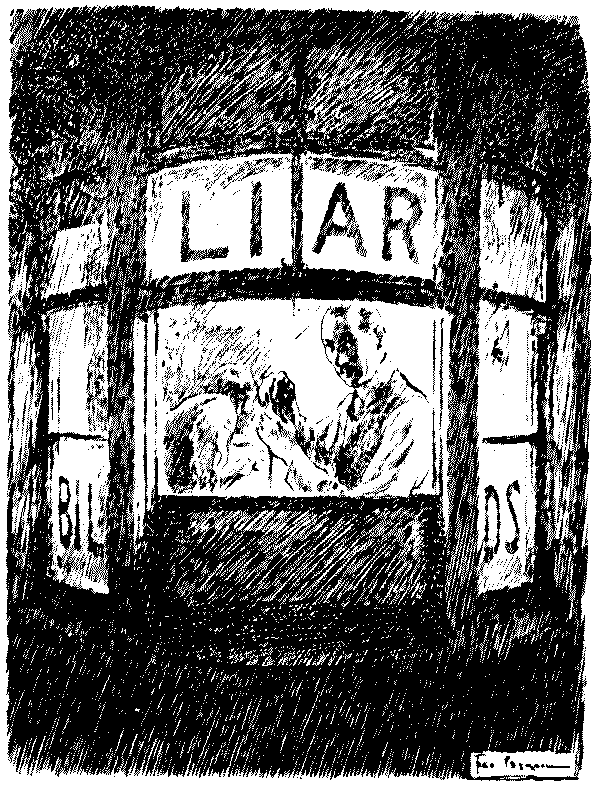
THE WRITING ON THE WINDOW
Portrait of a gentleman who proposes to say he was detained in town on important business.
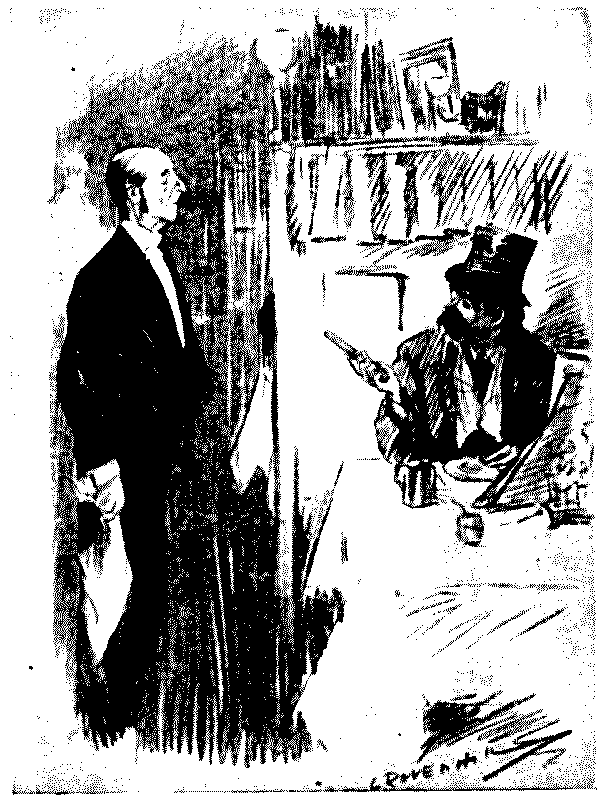
AWARDING THE BISCUIT
Dingy Bohemian. "I want a bath Oliver."
Immaculate Servitor. "My name is not Oliver!"
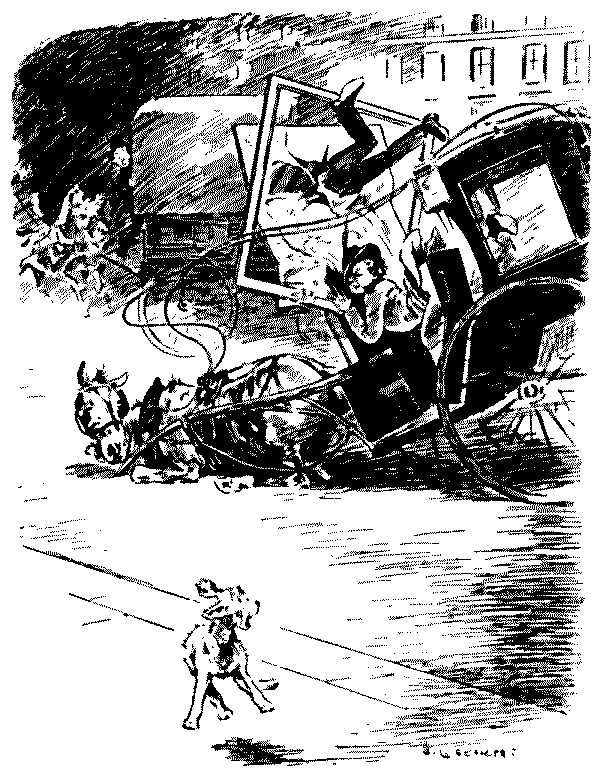
"Sending-in" Day.
Indigo Brown takes his picture, entitled "Peace and Comfort," to the R.A. himself, as he says, "Those picture carts are certain to scratch it," and, with the assistance of his cabby, adds the finishing touches on his way there!
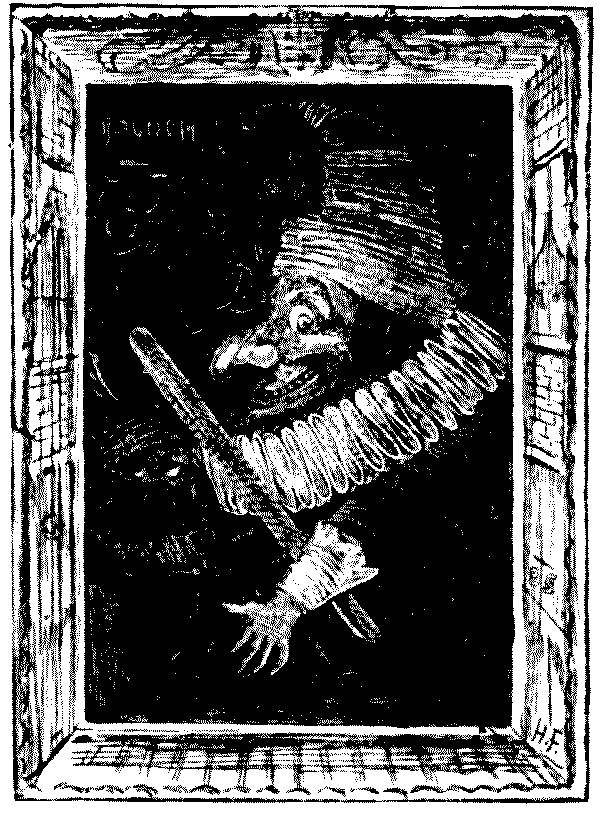
AN UNDOUBTED OLD MASTER
(By Himself)
Laying it on with a Palette-knife.
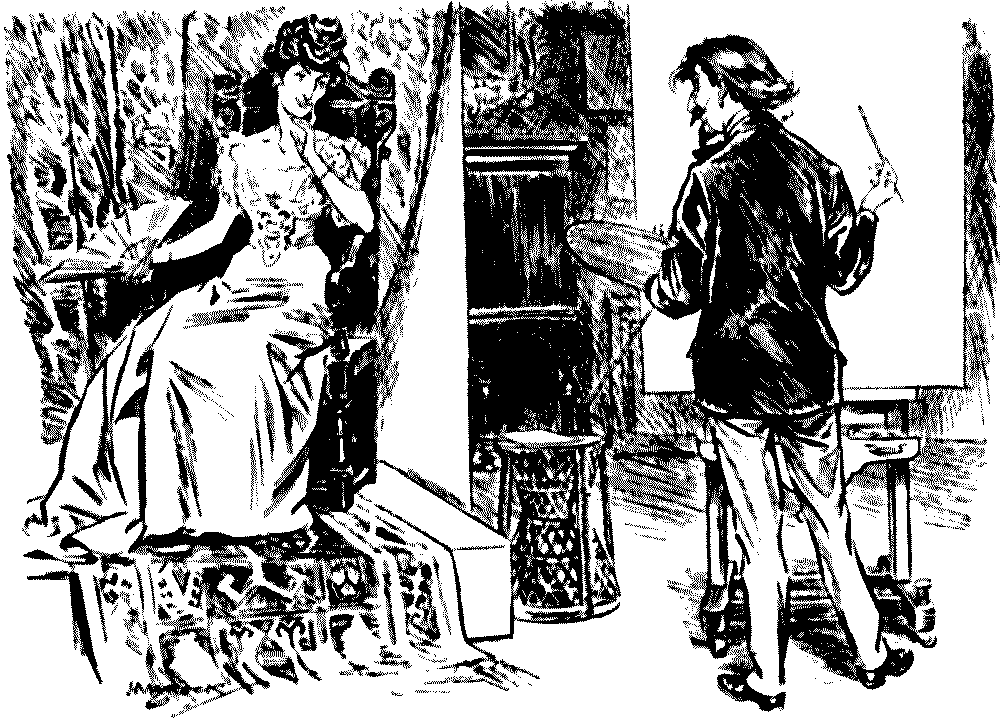
Miss Sere. "Ah, Mr. Brown, if you could only paint me as I was ten years ago!"
Our Portrait Painter (heroically). "I am afraid children's portraits are not in my line."
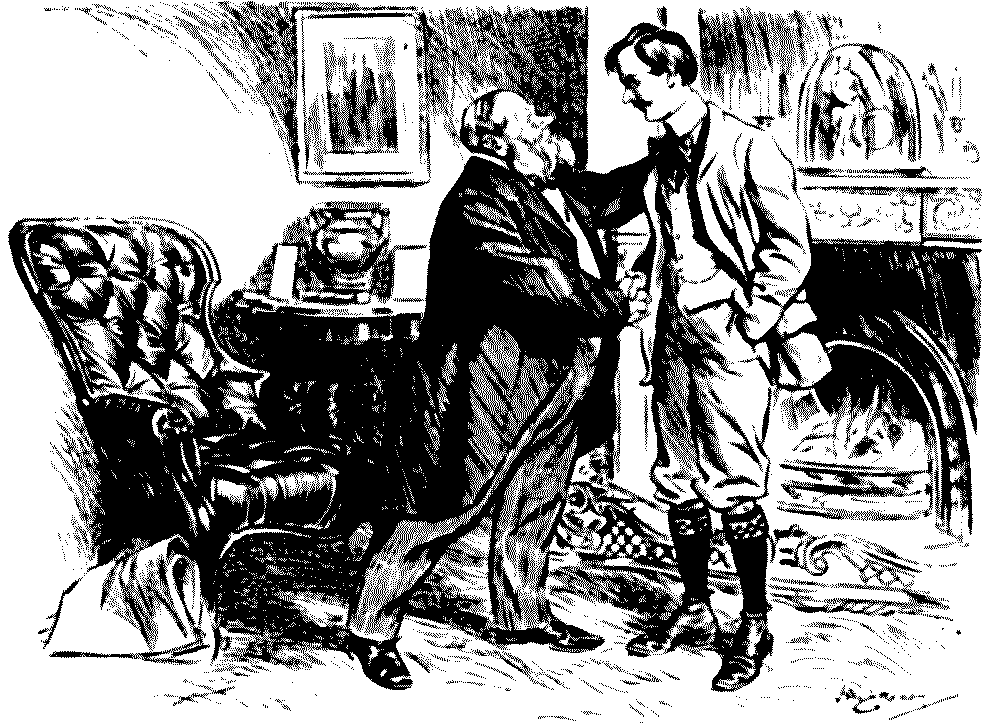
After the Sixth Rejection by the R.A.
The Prodigal. "Well, dad, here I am, ready to go into the office to-morrow. I've given up my studio and put all my sketches in the fire."
Fond Father. "That's right, 'Arold. Good lad! Your 'art's in the right place, after all!"
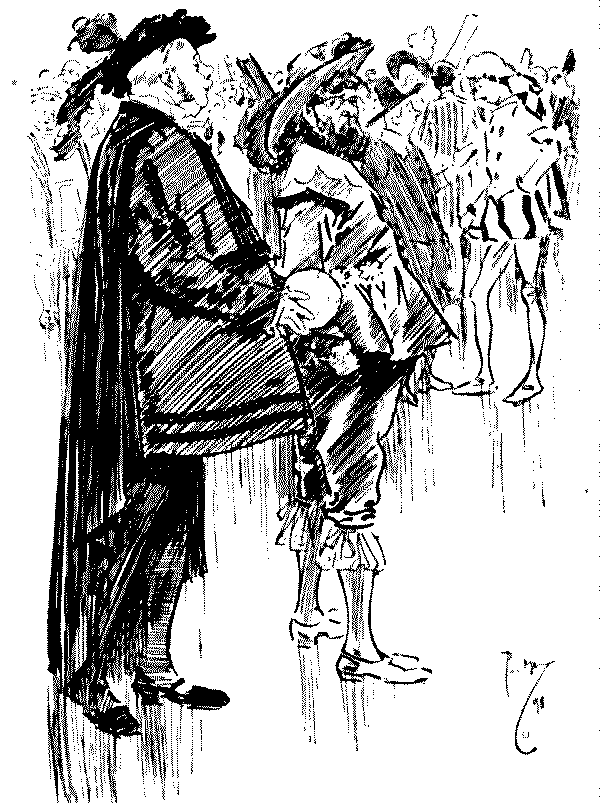
Brown (as Hamlet) to Jones (as Charles the Second). "'Normous amount of taste displayed here to-night!"
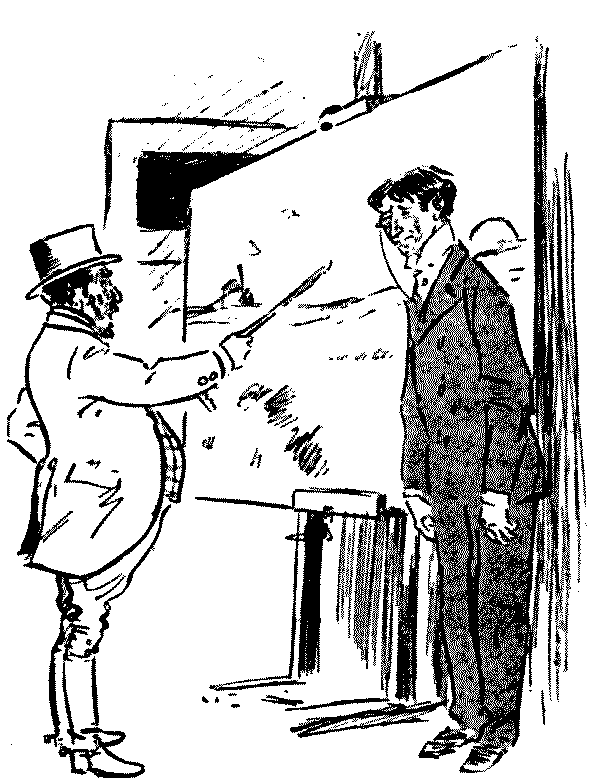
AN ART PATRON
"I'll have it if you shorten the 'orizon, and make it quids instead of guineas!"
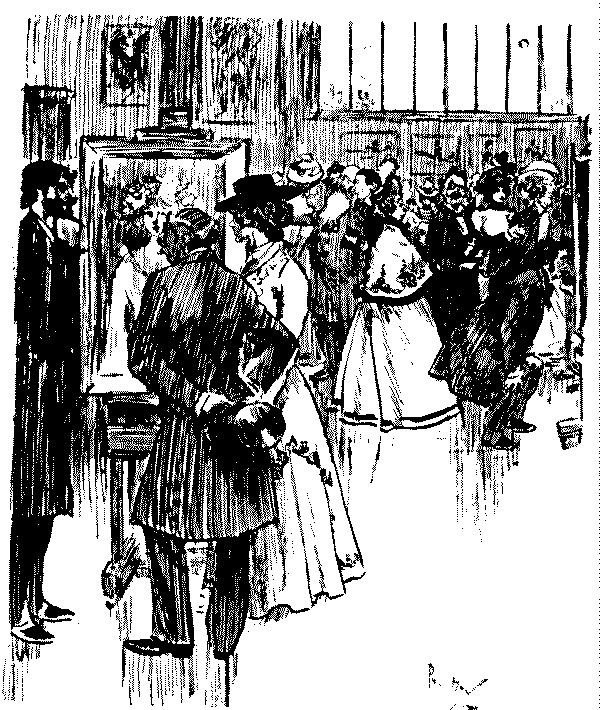
Show Sunday.
Brown (trying to find something to admire in Smudge's painting). "By Jove, old chap, those flowers are beautifully put in!"
Smudge. "Yes; my old friend—Thingummy—'R.A.' you know, painted them in for me."
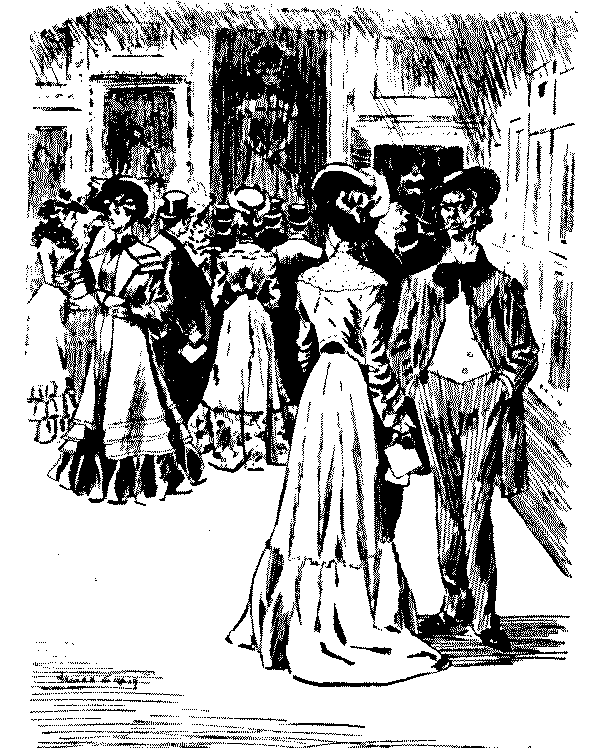
Envy.
Scene—Miss Semple and Dawber, standing near his picture.
Miss Semple. "Why, there's a crowd in front of Madder's picture!"
Dawber. "Someone fainted, I suppose!"