Gustave Courbet (1819-1877) La Grotte de la Loue Gift of Charles L. Lindemann
Reading edition
Below a three-hundred-foot perpendicular cliff in the Jura mountains, the Loue River issues in cascades from a cavernous grotto and flows through Courbet’s native town, Ornans, to join the Doubs and ultimately swell the Saône. Courbet, who loved his native scenery, does not choose to paint the picturesque aspects of this fine scene. Instead he looks with new intensity at nature and places his unprecedented, forthright vision almost brutally on canvas. Having little patience with refinements of draftsmanship, he seems to have used the thick body of his generously applied paint to counterfeit reality in his picture. While light and shade are present, Courbet is unconventional in his modeling of the great rocks. The eye is often uncertain of the surfaces of these rocks; their directions in space are ill-defined and one form is not connected with another. But viewing the work broadly, we are conscious of the painter’s power. How solidly the man spearing a fish stands before the opening of the spacious cavern and how substantially the huge masses of rock swell forward from the darkness! With his powerful, unorthodox style, Courbet broke radically with traditional modes of painting “to transcribe,” as he said, “the customs, ideas, the appearances,” of his time, “in a word, to create a living art.”
23
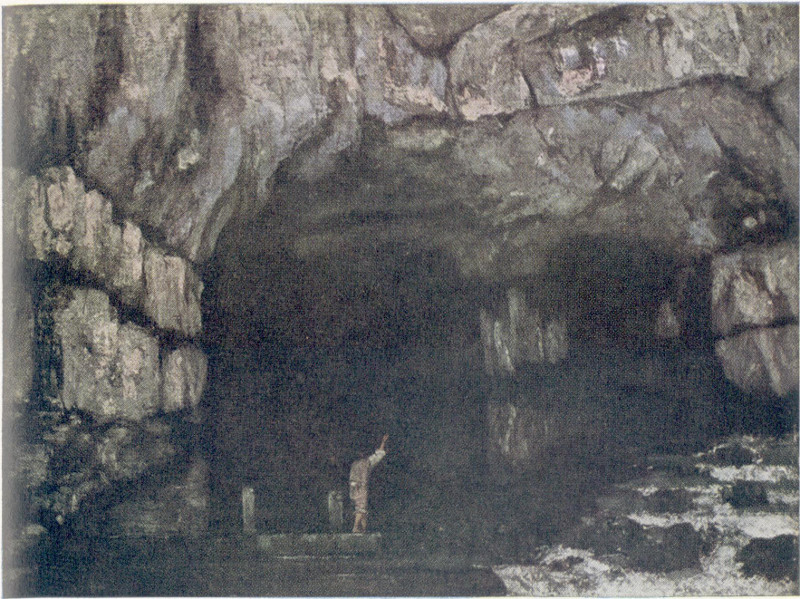
Canvas. 38¾ × 51⅜ inches Painted c. 1865
24