Claude Monet (1840-1926) Rouen Cathedral, West Façade, Sunlight Chester Dale Collection
Reading edition
The hot sun of early afternoon blazes down upon the lacy stone façade of Rouen Cathedral. Painted in 1894, twenty years after the first Impressionist exhibition, this picture reveals Monet’s ultimate achievement in capturing sunlight with broken color. The myriad glowing spots of color almost dissolve the cathedral’s form. Small, separate touches of paint, prismatic in their brilliance, complement each other to dazzle the eye and suggest the shimmer of actual light. Monet painted an extensive series of pictures showing different effects of light playing across the elaborate Gothic tracery of Rouen Cathedral. He said that often he could paint on each picture for only two or three minutes at a time; after that, the light would have changed and, for him, the subject would become quite different.
Monet created a new kind of pictorial unity. It did not depend upon lines or patterns, but upon the unity of a single visual sensation, an impression. He gave up such traditional aims as balancing his composition or expressing emotions about his subjects. Instead he painted vivid optical sensations. Through long experience he had discovered what effects of light might be achieved by juxtaposing certain bright, pure colors which interplay, one against another, to simulate the visual experience of light. As Cézanne said, “Monet was only an eye, but what an eye!”
29
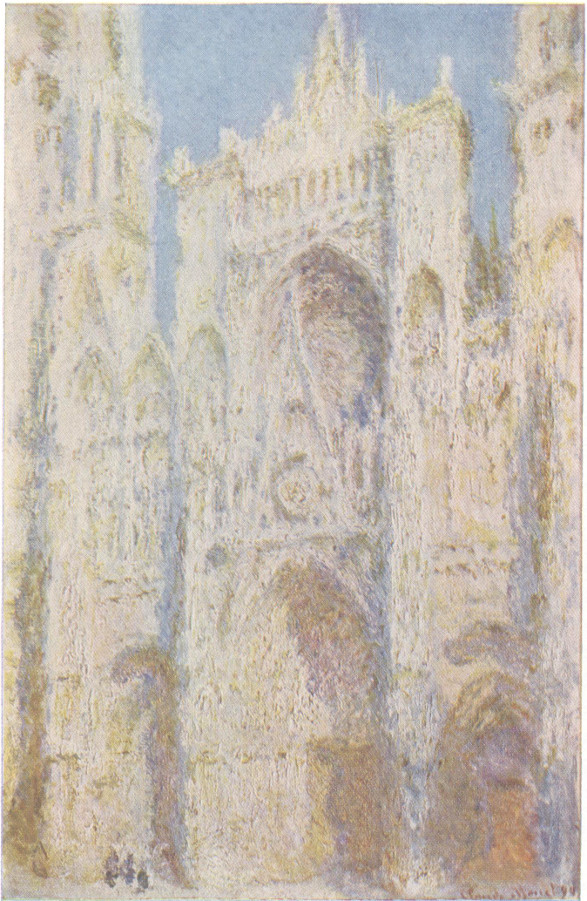
Canvas. 39½ × 26 inches Dated 1894
30