SCILLA bifolia.
Reading edition
Two-leaved Squill.

Class and Order.—Hexandria Monogynia.
Syn. Scilla bifolia. Eng. Fl., vol. ii., p. 146.
Bulb oblong, oval—leaves two, radical, opposite, linear, lanceolate, about five or six inches long—peduncles short—corolla bright blue—petals six, oblong, spreading in the form of a star—stamens six, shorter than the petals—germen superior—styles short.
This beautiful plant is a native of the West of England, though rarely found. It likes a light soil, and should be grown in large patches, when it forms one of the greatest ornaments to our gardens in the month of March. The white variety also flowers about the same time, and forms a striking and beautiful contrast if placed alternately in the flower border. It is increased by offsets, which may be removed when the leaves decay. If this plant be covered with a hand-glass, when coming into bloom, it will expand more fully, and preserve the brilliancy of its colour. The Scilla maritima possesses peculiar medicinal properties. The most beautiful species are
Scilla amæna. Scilla Italica.
—— Siberica. —— Peruviana.
—— Verna. —— præcox.
Pl. 3.
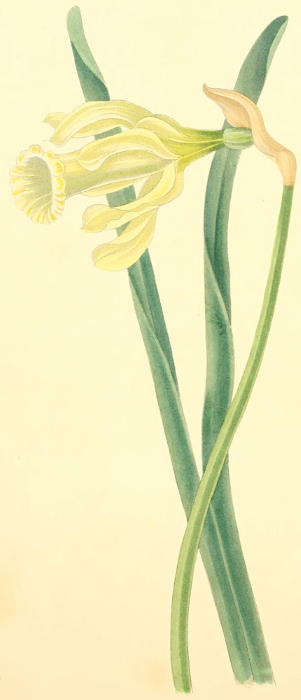
Plate 4. Narcissus Moschatus. Drawn from Nature by M.R. Engraved by R. Havell Junr.