COREOPSIS Grandiflora.
Reading edition
Large flowered Coreopsis.

Class and Order.—Syngenesia Polygamia Frustranea.
Syn. Coreopsis Grandiflora. Sweet's B. F. G. Vol. 2. pl. 175.
Root fibrous, creeping—Stem, tall, erect, branched. Leaves on short petioles ternate, leaflets lanceolate, acute—cauline leaves becoming more linear. Flowers large, terminal, on long, slender peduncles—Calyx double, exterior segments green, lanceolate acute; interior segments brown, membranaceous—Corolla bright yellow, radiated florets barren, dentate; florets of the disk fertile.
This fine species is so similar to C. Lanceolata, that it is only to be distinguished by the leaf, the flowers being alike in form and color, though perhaps a little larger in C. grandiflora—it was found by Professor Nuttall in the Arkansas, and was sent by him to Mr. Barclay about the year 1826; it is therefore from its late introduction yet rare in our collections, it promises to be of easy cultivation, its creeping roots throwing up a plentiful supply of young plants from which it may easily be propagated—a little protection in the winter may perhaps be desirable.
Amongst the most beautiful species of this genus are
C. lanceolata
— tinctoria.
— verticillata.
— tenuifolia.
Pl. 35.
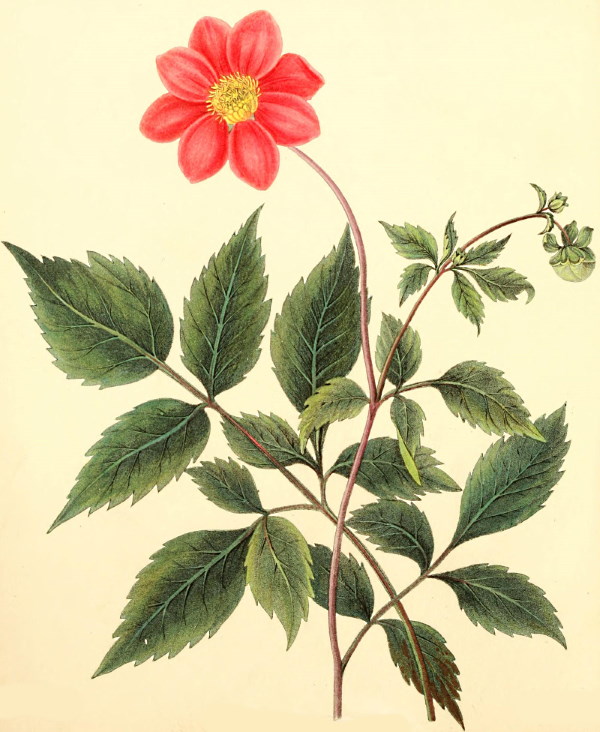
Plate 36. Georgina Coccinea. Drawn from Nature by M.R. Engraved by R. Havell Junr.