ERANTHIS hyemalis
Reading edition
Winter Aconite.

Class and Order.—Polyandria Polygynia.
Syn. Eranthis hyemalis. Salisbury, Lin. Soc. Trans. Vol. 8. p. 303.
Helleborus hyemalis. Curt. Bot. Mag. Vol. 1. p. 3.
Root tuberous—leaves radical, on long petioles, radiated, palmate, lobes generally trifid—scape radical, one flowered—involucrum sessile, lobed, becoming larger when the flower decays—corolla yellow—petals six, or sometimes more, obovate, nectaries tubular, stamens from twenty to thirty—anthers compressed—styles many.
The genus Eranthis, which was established by Salisbury, differs from Helleborus in the number of its petals and stamens, the latter in Eranthis are from twenty to thirty, in Helleborus, from thirty to sixty; the seed in the former genus being in one series, the latter in two series, the difference of habit, &c., altogether forming good grounds for making them separate genera. This pretty species which flowers about January is a native of France, Switzerland, and Austria, and was cultivated in our gardens as long since as 1596;—it grows best in a light loam mixed with bog, and is propagated by offsets. There is another species Eranthis Siberica.
Pl. 53.
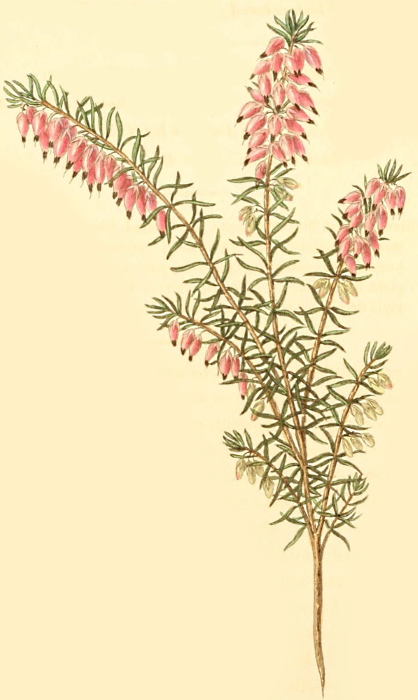
Plate 54. Erica carnea. Drawn from Nature by M.R. Engraved by R. Havell Junr.