PÆONIA tenuifolia.
Reading edition
Fine-leaved Pæony.

Class and Order.—Polyandria Trigynia.
Syn. Pæonia tenuifolia. Curt. Bot. Mag., pl. 926.
Root tuberous—stem erect, branching, growing to the height of one foot, or more—leaves numerous, biternate, linear—calyx five segments—flowers terminal—corolla deep scarlet—eight petals, orbicular, undulate—stamens many—anthers bright yellow—styles three—germen superior.
Though this beautiful plant has been so long known in our gardens, being introduced in the year 1756, it seldom grows luxuriantly, which perhaps may be accounted for by the liability of the roots to decay in cold wet soils. It is a native of Siberia, flowers in May, and makes a brilliant appearance when grown in large patches. The Pæonias grow best in a rich loamy soil, and may be increased by parting the roots, or by seed; by the latter means several most beautiful varieties have been raised of the Pæonia moutan, of which a full account may be seen in the "Hor. Soc. Trans.," vol. 6. This is a remarkably handsome genus. Some of the most ornamental are
P. odorata. P. rosea.
— sibirica. — moutan.
— albiflora. — papavaracea.
— Sabinii. — corallina.
— peregrina. — humilis.
Pl. 17.
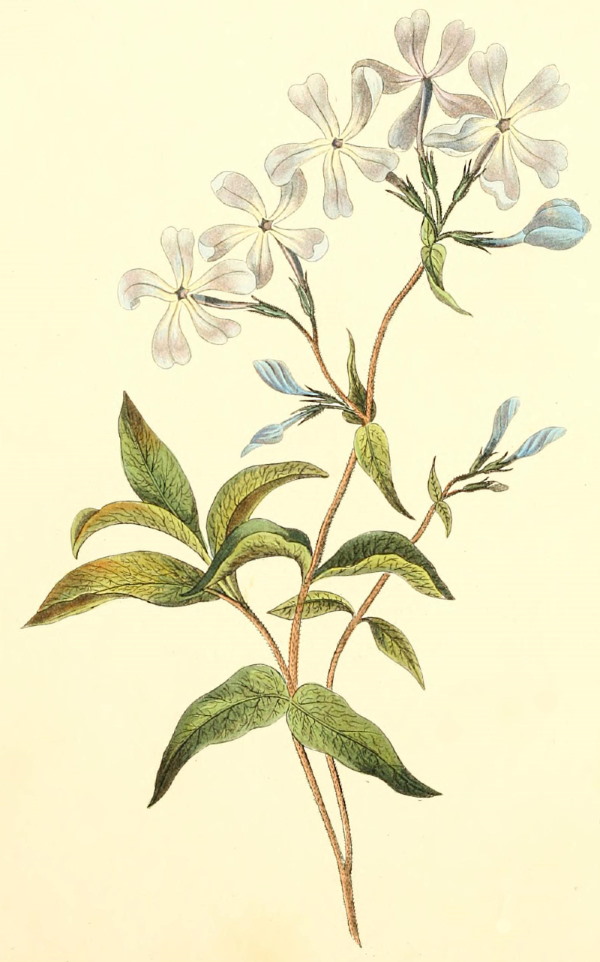
Plate 18. Phlox Divaricata. Drawn from Nature by M.R. Engraved by R. Havell Junr.