HELIANTHUS Atrorubens.
Reading edition
Dark-eyed Sunflower.

Class and Order.—Syngenesia Polygamia Frustrania.
Syn. Helianthus atrorubens. Pursh Flo. N. A. vol. 2, p. 573.
— Helianthus atrorubens. Bot. Mag. pl. 2668.
Root fibrous—stem tall, erect, branching—radical leaves very large, broadly lanceolate, margins dentate, nerved, of a dark green—cauline leaves sessile, opposite, ovate lanceolate, dentate acute—calyx many segments imbricate, acute—corolla dark bright yellow—radiated florets, barren dentate—florets of the disk fertile—whole plant rugose.
This is perhaps one of the most desirable species of the genus Helianthus, from the brilliancy of the colour and its moderate growth. It makes a striking appearance when planted at the back of the flower borders, and will continue in beauty to a late period in the autumn. According to Pursh it is found in the "western parts of Pennsylvania," and was introduced into this country in 1732. It will grow well in any good garden soil, and may be increased by parting the roots. There are not many species of this genus suitable for a flower garden, as they grow to such a large size, and take up so much room: the best are
H. mollis.
— multiflorus.
— diffusus.
Pl. 43.
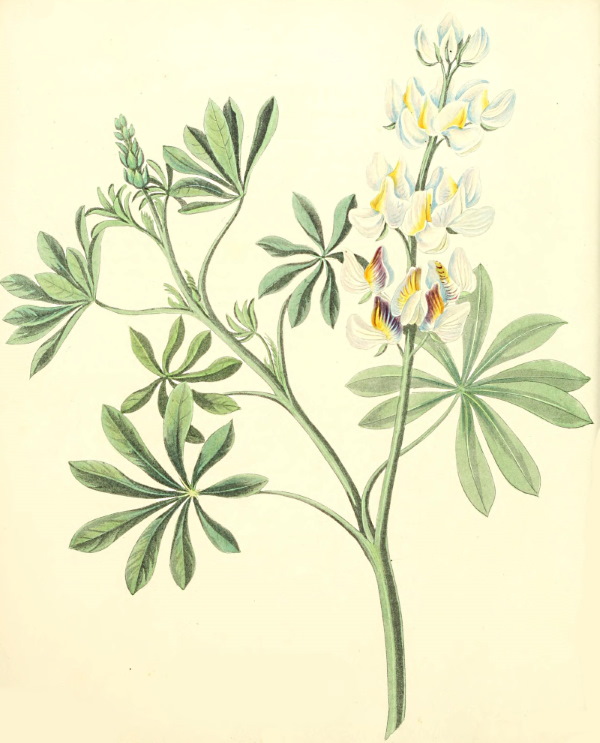
Plate 44. Lupinus mutabilis. Drawn from Nature by M.R. Engraved by R. Havell Junr.