CATANANCHE cœrulea.
Reading edition
Blue Catananche.

Class and Order.—Syngenesia Polygamia Æqualis.
Syn. Catananche Cœrulea. Curtis Bot. Mag. pl. 293.
Root fibrous—Stem radical, branching—growing to the height of two feet—Radical leaves, long, lanceolate, margins deeply toothed—back of the leaf downy, and strongly nerved—Cauline leaves, sessile, linear, acute. Flowers terminal on very long peduncles on which are scattered membranaceous bracteas—Calyx imbricate, squamose, membranaceous, striate—Corolla blue—Florets ligulate, apex three toothed, purple at the base, fertile—Stamens five, Anthers united—style one, stigma bifid.
There are only two species known of this genus, the one here figured is a native of the South of Europe, and is said to have been cultivated by Parkinson as far back as the year 1640, it is however by no means a common plant, owing perhaps to the difficulty of keeping it through the winter, when it is very apt to be destroyed by frost; it is easily raised from seeds which may be sown in the autumn, and if protected during the winter, will make strong plants to flower through the ensuing summer, continuing in beauty until the approach of winter—it likes a dry, sandy soil, and will not bear frequent removal,—the other species, Catananche lutea, is an annual not deserving of cultivation.
Pl. 34.
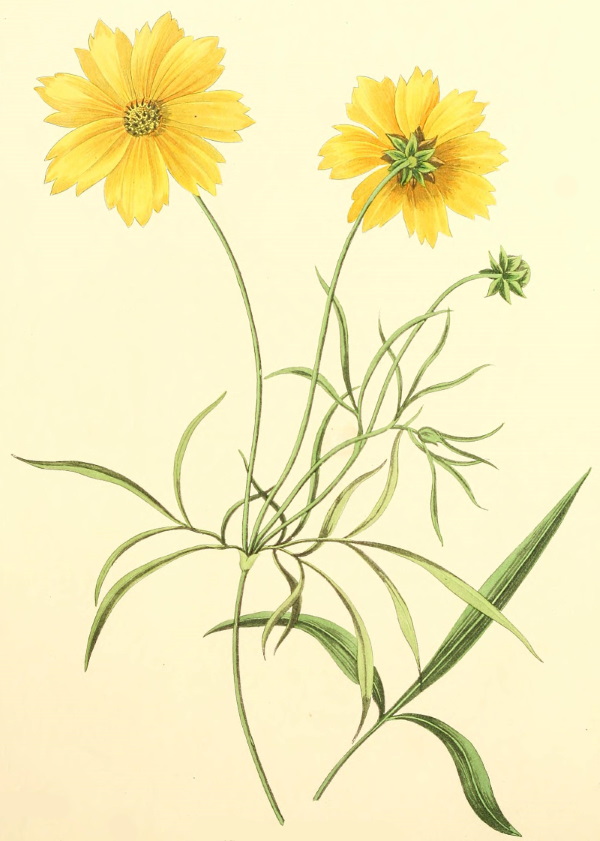
Plate 35. Coreopsis Grandiflora. Drawn from Nature by M.R. Engraved by R. Havell Junr.