IRIS VARIEGATA.
Reading edition
Variegated Iris.

Class and Order.—Triandria Monogynia.
Syn. Iris Variegata. Curt. Bot. Mag. pl. 16.
Root tuberose, cespitose,—leaves radical, clasping the stem, ensiform, nerved, unequal,—stem branched,—flower growing between two membranous green bractes, ovate, lanceolate,—tube greenish,—corolla six petals, three outer segments reflexed, oblong, obtuse, beautifully striated, and fringed at the base with glandular hairs,—three inner ones yellow, erect, margins undulate,—stamens three, filaments adhering to the base of the reflexed petals, apex bifid,—anthers oblong,—style slender,—stigma divided into three parts.
This species of Iris, though so long since introduced as the year 1597 is not frequently seen in our herbaceous collections. It is a plant of low growth, sometimes not exceeding a foot in height, though this varies according to the soil in which it is planted, a moist situation increasing its luxuriance both in flower and foliage. It is a native of Hungary, and is perfectly hardy, not requiring any particular treatment, and may be increased by separating the roots in Autumn,—flowers in May, and grows best in a stiff cold soil. This is a very beautiful genus, and affords many ornamental species.
I. pallida. dichotoma.
— nipalensis. pumila.
— ochroleuca. xiphium.
— flavecens. xiphioides.
— verna. versicolor.
— cristata. caucasica.
— germanica. furcata.
— aphylla. tenax.
Pl. 26.
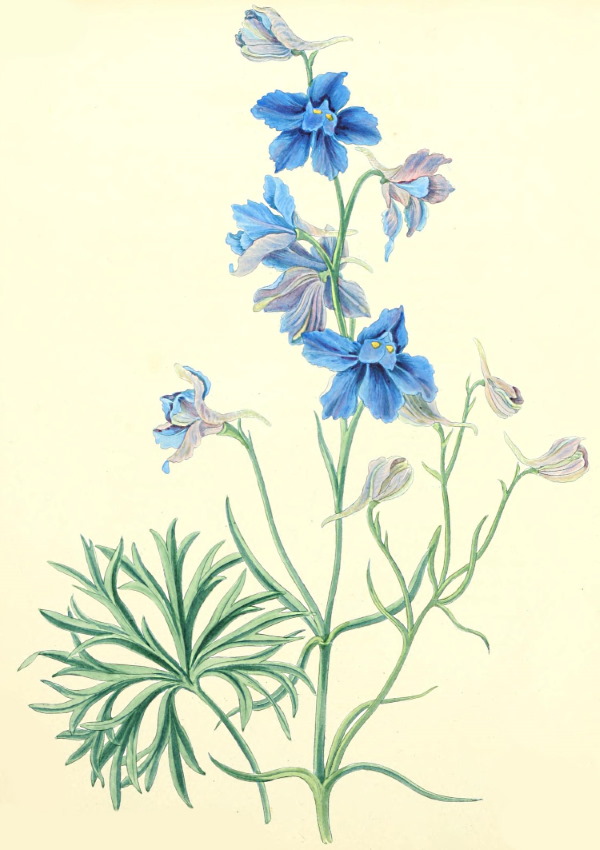
Plate 27. Delphinium grandiflorum. Drawn from Nature by M.R. Engraved by R. Havell Junr.