VIII. SAMUEL PALMER.
Reading edition
SAMUEL PALMER—an English classic, by this time, as a painter of water-colours—made (from the year 1850, or thereabouts, onward to his old age in the seventies) a limited number of elaborate etchings in which the play of line is almost wholly lost: more lost, much more lost, than in the etchings of Méryon. But Samuel Palmer, like Méryon, was a great poetic artist. Slowly he built up his effects, his noble sunrise or sunset landscapes—the landscape of artistic convention and poetic vision. The unity and strength of his thought was never sacrificed or frittered by the elaboration of his labour. To condemn him then, because he was not a free sketcher, would be as pedantic as to condemn Méryon. Nay more, were any such pedantic condemnation meted out to him, it would have to be meted out to the author of the “Ephraim Bonus” in his turn; since it is a characteristic of Rembrandt that in
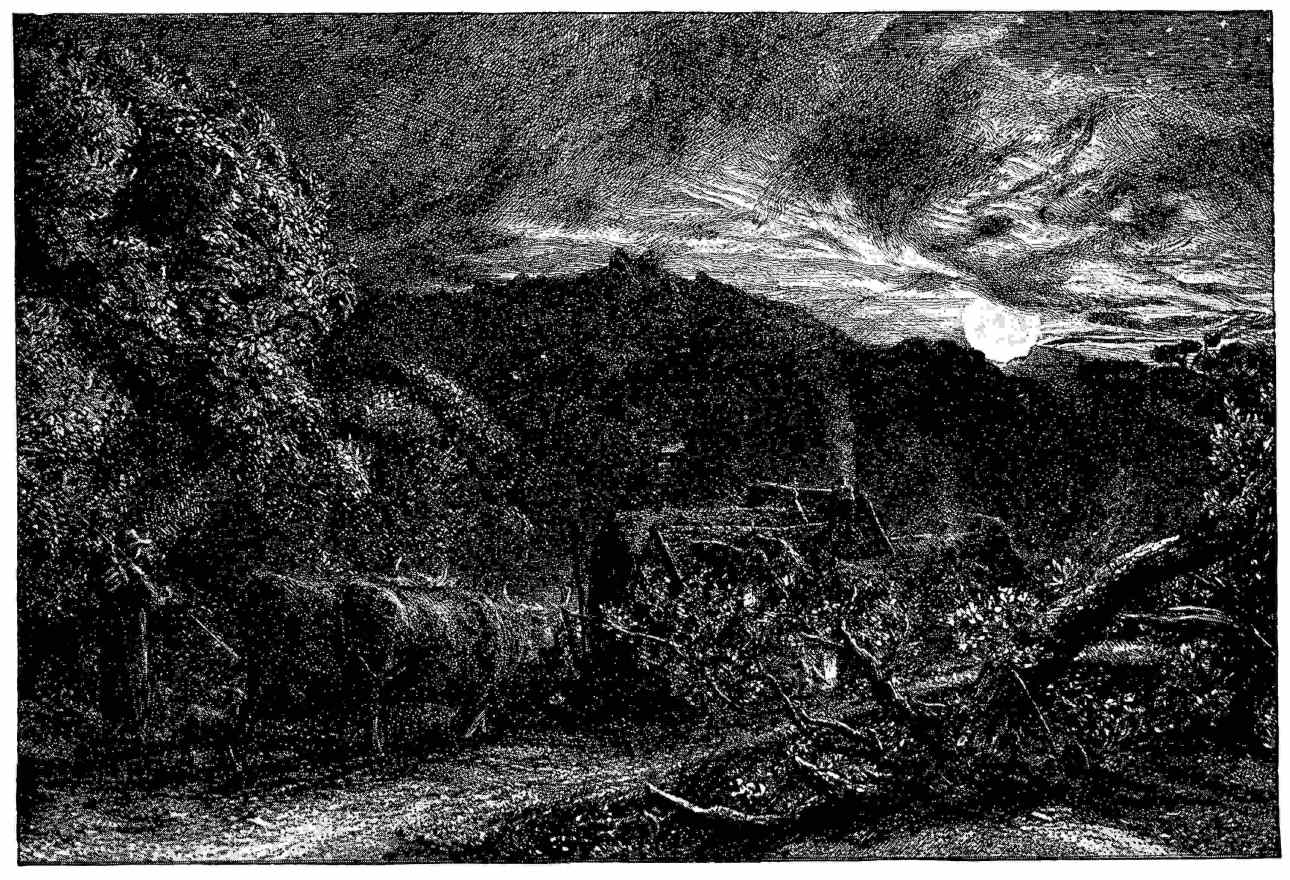
SAMUEL PALMER. “THE HERDSMAN.”
his engraved as in his painted work he allowed himself an amazing elasticity of method. Rembrandt, like every great man, is super grammaticam. He was a law unto himself. And so, in a measure, was Samuel Palmer, the creator of the solemn plates of “The Early Ploughman” and “The Herdsman,” and of certain hardly less admirable coppers which illustrate his own translation of the Eclogues of Virgil.