IV. WILKIE.
Reading edition
A FAMOUS Scotchman, David Wilkie, and his very distinguished friend and fellow-countryman, Andrew Geddes, wrought, each of them, in the middle period of Turne life, a certain number of etchings of independent merit. Those of Sir David Wilkie, which were but few, happen to be the best known, because Wilkie, much more than Geddes, was a leader of painting. But, meritorious as are the etchings of Wilkie, in their faithful record of character and picturesque effect, they are seldom as admirable as the prints of his less eminent brother. They have, generally, not so much freedom; and, while they follow great traditions less, they are at the same time less individual. “Pope Examining a Censer” has the dignity of the designer and the draughtsman, but not much of the etche particular gift. “The Receipt”—or “A Gentleman Searching in a Bureau,”
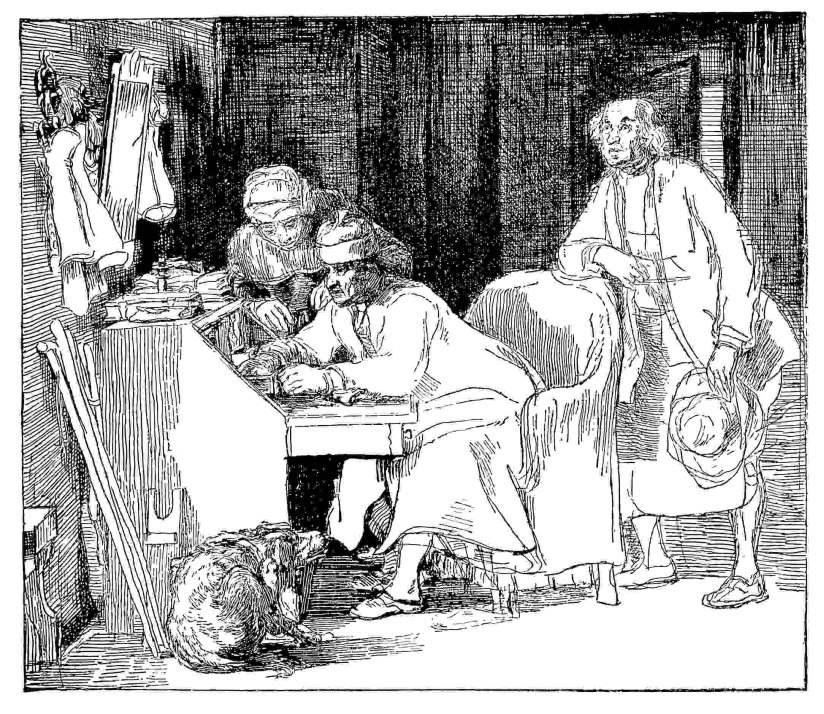
DAVID WILKIE. “THE RECEIPT.”
for this second title explains the subject better—is the most successful of Wilki. It is characteristic of his simpler and less ambitious genre, and is indeed faultless, and more than faultless—charming.