V. GEDDES.
Reading edition
ANDREW GEDDES etched four or five times as many plates as Wilkie. He issued ten from Brook Street, Grosvenor Square, in 1826. The dates on some of them are 1812, 1816, and 1822; and, besides these ten that were published, about thirty more, which there was no attempt to issue to the world, have to be taken account of. Some, like the excellent “Portrait of the Painte Mother”—which is so fine in illumination, in drawing, and in character—are directly suggested by the artis paintings. Others—including all the landscapes—are, apparently, studies from Nature, done with a singular appreciation of the ripest art of Rembrandt.
Geddes was very sensible of the charm of dry-point—of its peculiar quality of giving individuality to each one of the few impressions which you may safely produce from it, and of its unique capacity for rendering broad effects of light and shade.
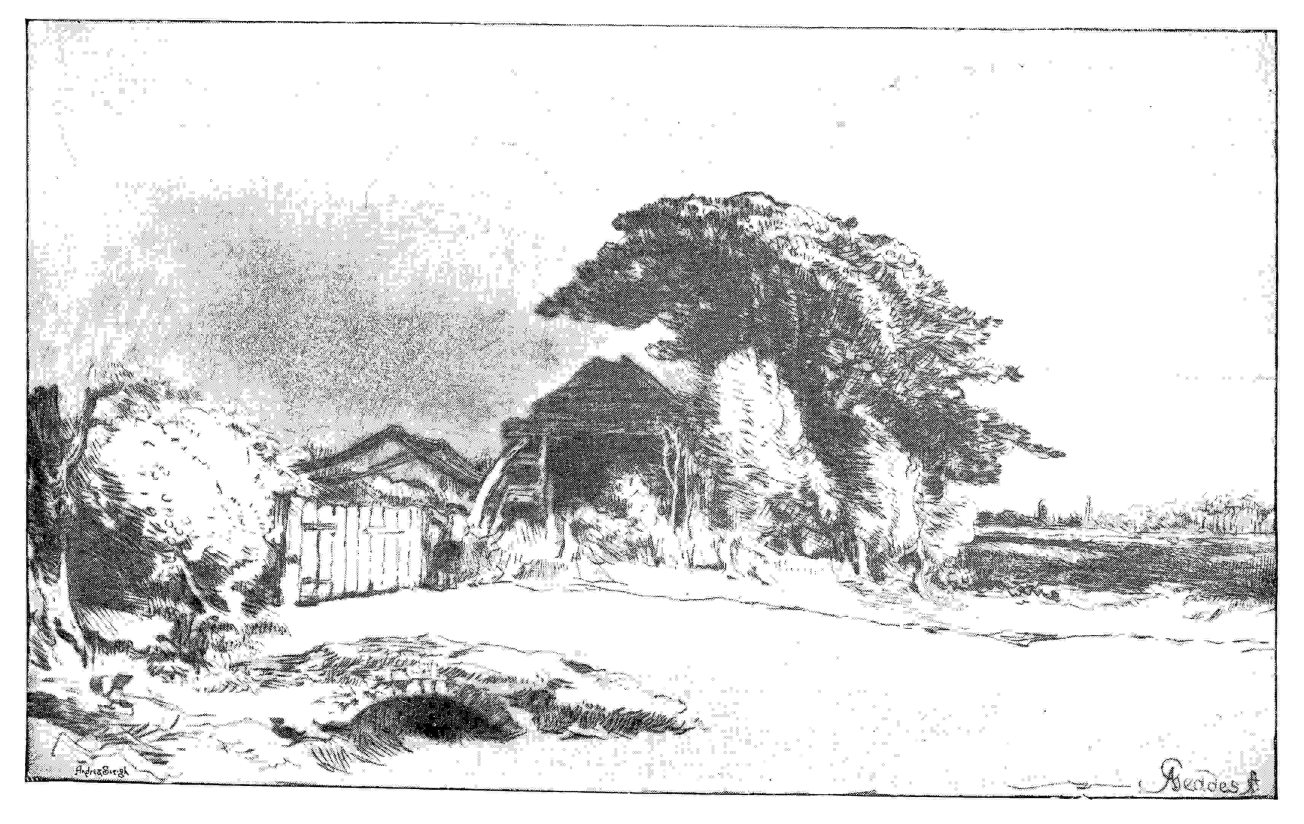
ANDREW GEDDES. “AT PECKHAM RYE.”
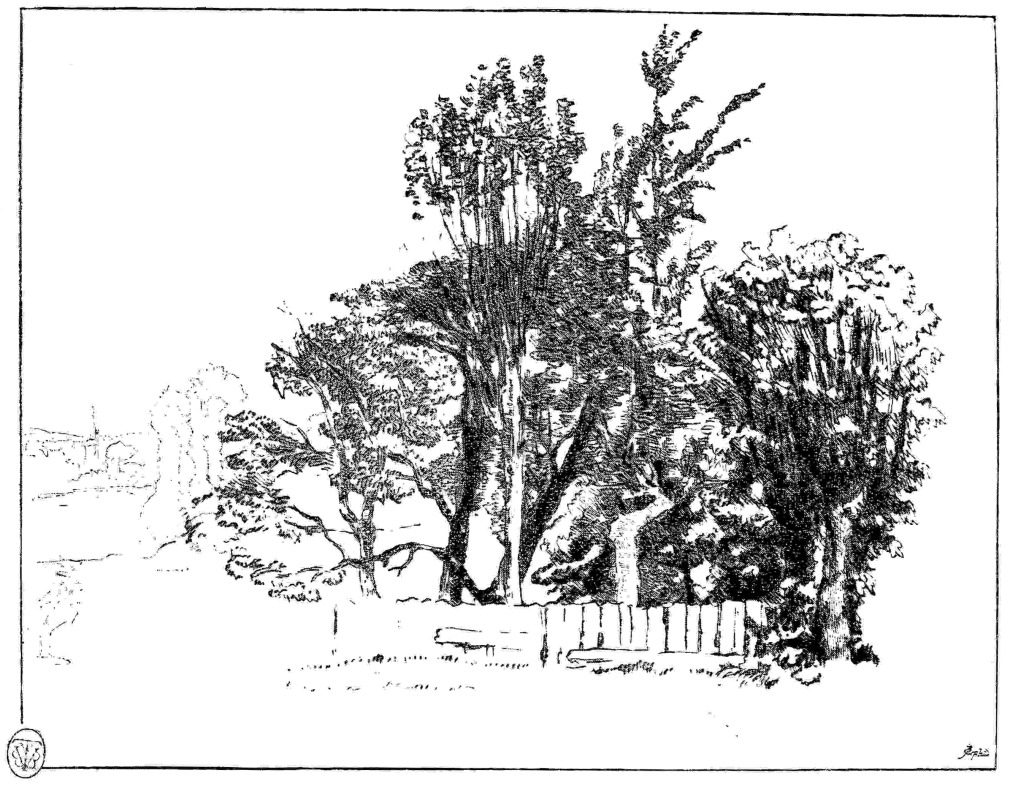
ANDREW GEDDES. “AT HALLIFORD ON THAMES.”
The “Peckham Rye” shows this. Nothing can show it better. And there is at least one other plate by Geddes, “Halliford on Thames,” which proves him just as completely a master of elegance and grace of line as “Peckham Rye” shows him a decisive master of masculine effect, and curiously adept in the broad and balanced disposition of masses of light and shade.
Gedde work will not decline in value, and the connoisseur has no business whatever to forget or to ignore it. Only, if he collects the dry-points of Geddes, he had better wait for years, if necessary, for early impressions of them, and he had better repudiate altogether the unsatisfactory modern edition—the worthy Mr. David Lain volume, “Etchings by Wilkie and Geddes,” issued, with the best intentions in the world, in Edinburgh in 1875.