VOLUME VI SLICE VI Cockaigne to Columbus, Christopher (continued 3)
Reading edition
See Earle and Plummer’s edition of the Anglo-Saxon Chronicle, 796, 819 (Oxford, 1892); W. de G. Birch, Cartularium Saxonicum, 378 (London, 1885-1893).
(F. G. M. B.)
COERCION (from Lat. coercere, to restrain), an application of moral or physical compulsion by which a person is forced to do or refrain from doing some act or set of acts apart from his own voluntary motion. Where the coercion is direct or positive, i.e. where the person is compelled by physical force to do an act contrary to his will,—for example, when a man is compelled to join a rebel army, and to serve as a soldier under threats of death,—his act is not legally a crime. Where the coercion is implied, as when a person is legally under subjection to another, the person coerced, having no will on the subject, is not responsible. But this principle is applied only within narrow limits, and does not extend to the command of a superior to an inferior; of a parent to a child; of a master to his servant or a principal to his agent. Where, however, a married woman commits a crime in the presence of her husband, she is generally presumed to have acted by his coercion, and to be entitled to acquittal, but this presumption does not extend to grave crimes, nor to those in which the principal part may be supposed to be taken by the woman, such as keeping a brothel. In civil matters, such as the making of a contract, where the law requires the free assent of the person who undertakes the obligation, coercion is a ground for invalidating the instrument.
The term “coercion” is inevitably somewhat ambiguous, and depends on the circumstances of the case. In a political sense, the application of the Crimes Act of 1887 to Ireland was called “coercion” by those opposed to the English Unionist party and government, as being special legislation differing from the ordinary law applicable in the United Kingdom.
CŒUR, JACQUES (c. 1395-1456), founder of the trade between France and the Levant, was born at Bourges, in which city his father, Pierre Cœur, was a rich merchant. Jacques is first heard of about 1418, when he married Macée de Léodepart, daughter of Lambert de Léodepart, an influential citizen, provost of Bourges, and a former valet of John, duke of Berry. About 1429 he formed a commercial partnership with two brothers named Godard; and in 1432 he was at Damascus, buying and bartering, and transporting the wares of the Levant—gall-nuts, wools and silks, goats’ hair, brocades and carpets—to the interior of France by way of Narbonne. In the same year he established himself at Montpellier, and there began those gigantic operations which have made him illustrious among financiers. Details are wanting; but it is certain that in a few years he placed his country in a position to contend not unsuccessfully with the great trading republics of Italy, and acquired such reputation as to be able, mere trader as he was, to render material assistance to the knights of Rhodes and to Venice herself.
In 1436 Cœur was summoned to Paris by Charles VII., and made master of the mint that had been established in that city. The post was of vast importance, and the duties onerous. The country was deluged with the base moneys of three reigns, charged with superscriptions both French and English, and Charles had determined on a sweeping reform. In this design he was ably seconded by the merchant, who, in fact, inspired or prepared all the ordinances concerning the coinage of France issued between 1435 and 1451. In 1438 he was made steward of the royal expenditure; in 1441 he and his family were ennobled by letters patent. In 1444 he was sent as one of the royal commissioners to preside over the new parlement of Languedoc, a dignity he bore till the day of his disgrace. In 1445 his agents in the East negotiated a treaty between the sultan of Egypt and the knights of Rhodes; and in 1447, at his instance, Jean de Village, his nephew by marriage, was charged with a mission to Egypt. The results were most important; concessions were obtained which greatly improved the position of the French consuls in the Levant, and that influence in the East was thereby founded which, though often interrupted, was for several centuries a chief commercial glory of France. In the same year Cœur assisted in an embassy to Amadeus VIII., former duke of Savoy, who had been chosen pope as Felix V. by the council of Basel; and in 1448 he represented the French king at the court of Pope Nicholas V., and was able to arrange an agreement between Nicholas and Amadeus, and so to end the papal schism. Nicholas treated him with the utmost distinction, lodged him in the papal palace, and gave him a special licence to traffic with the infidels. From about this time he made large advances to Charles for carrying on his wars; and in 1449, after fighting at the king’s side through the campaign, he entered Rouen in his train.
At this moment the great trader’s glory was at its height. He had represented France in three embassies, and had supplied the sinews of that war which had ousted the English from Normandy. He was invested with various offices of dignity, and possessed the most colossal fortune that had ever been amassed by a private Frenchman. The sea was covered with his ships; he had 300 factors in his employ, and houses of business in all the chief cities of France. He had built houses and chapels, and had founded colleges in Paris, at Montpellier and at Bourges. The house at Bourges (see House, Plate II. figs. 7 and 8) was of exceptional magnificence, and remains to-day one of the finest monuments of the middle ages in France. He also built there the sacristy of the cathedral and a sepulchral chapel for his family. His brother Nicholas was made bishop of Luçon, his sister married Jean Bochetel, the king’s secretary, his daughter married the son of the viscount of Bourges, and his son Jean became archbishop of Bourges. But Cœur’s gigantic monopoly caused his ruin. Dealing in everything, money and arms, peltry and jewels, brocades and woollens—a broker, a banker, a farmer—he had absorbed the trade of the country, and merchants complained they could make no gains on account of “that Jacquet.” He had lent money to needy courtiers, to members of the royal family, and to the king himself, and his debtors, jealous of his wealth, were eager for a chance to cause his overthrow.
In February 1450 Agnes Sorel, the king’s mistress, suddenly died. Eighteen months later it was rumoured that she had been poisoned, and a lady of the court who owed money to Jacques Cœur, Jeanne de Vendôme, wife of François de Montberon, and an Italian, Jacques Colonna, formally accused him of having poisoned her. There was not even a pretext for such a charge, but for this and other alleged crimes the king, on the 31st of July 1451, gave orders for his arrest and for the seizure of his goods, reserving to himself a large sum of money for the war in Guienne. Commissioners extraordinary, the merchant’s declared enemies, were chosen to conduct the trial, and an inquiry began, the judges in which were either the prisoner’s debtors or the holders of his forfeited estates. He was accused of having paid French gold and ingots to the infidels, of coining light money, of kidnapping oarsmen for his galleys, of sending back a Christian slave who had taken sanctuary on board one of his ships, and of committing frauds and exactions in Languedoc to the king’s prejudice. He defended himself with all the energy of his nature. His innocence was manifest; but a conviction was necessary, and in spite of strenuous efforts on the part of his friends, after twenty-two months of confinement in five prisons, he was condemned to do public penance for his fault, to pay the king a sum equal to about £1,000,000 of modern money, and to remain a prisoner till full satisfaction had been obtained; his sentence also embraced confiscation of all his property, and exile during royal pleasure. On the 5th of June 1453 the sentence took effect; at Poitiers the shameful form of making honourable amends was gone through; and for nearly three years nothing is known of him. It is probable that he remained in prison; it is certain that his vast possessions were distributed among the intimates of Charles.
In 1455 Jacques Cœur, wherever confined, contrived to escape into Provence. He was pursued; but a party, headed by Jean de Village and two of his old factors, carried him off to Tarascon, whence, by way of Marseilles, Nice and Pisa, he managed to reach Rome. He was honourably and joyfully received by Nicholas V., who was fitting out an expedition against the Turks. On the death of Nicholas, Calixtus III. continued his work, and named his guest captain of a fleet of sixteen galleys sent to the relief of Rhodes. Cœur set out on this expedition, but was taken ill at Chios, and died there on the 25th of November 1456. After his death Charles VII. showed himself well disposed to the family, and allowed Jacques Cœur’s sons to come into possession of whatever was left of their father’s wealth.
See the admirable monograph of Pierre Clément, Jacques Cœur et Charles VII (1858, 2nd ed. 1874); A. Valet de Viriville, Charles Sept et son époque (3 vols., 1862-1865); and Louisa Costello, Jacques Cœur, the French Argonaut (London, 1847).
CŒUR D’ALÊNE (“awl-heart,” the French translation of the native name skitswish), a tribe of North American Indians of Salishan stock. The name is said to have been originally that of a chief noted for his cruelty. The tribe has given its name to a lake, river and range of mountains in Idaho, where on a reservation the survivors, some 400, are settled.
COFFEE (Fr: café, Ger. Kaffee). This important and valuable article of food is the produce chiefly of Coffea arabica, a Rubiaceous plant indigenous to Abyssinia, which, however, as cultivated originally, spread outwards from the southern parts of Arabia. The name is probably derived from the Arabic K’hāwah, although by some it has been traced to Kaffa, a province in Abyssinia, in which the tree grows wild.
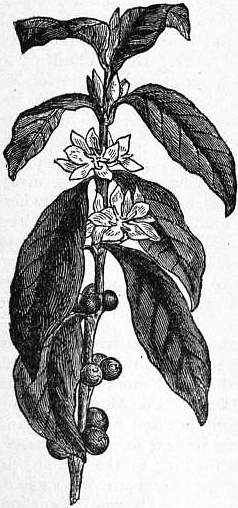
Fig. 1.—Branch of Coffea arabica.
The genus Coffea, to which the common coffee tree belongs, contains about 25 species in the tropics of the Old World, mainly African. Besides being found wild in Abyssinia, the common coffee plant appears to be widely disseminated in Africa, occurring wild in the Mozambique district, on the shores of the Victoria Nyanza, and in Angola on the west coast. The coffee leaf disease in Ceylon brought into prominence Liberian coffee (C. liberica), a native of the west coast of Africa, now extensively grown in several parts of the world. Other species of economic importance are Sierra Leone coffee (C. stenophylla) and Congo coffee (C. robusta), both of which have been introduced into and are cultivated on a small scale in various parts of the tropics. C. excelsa is another species of considerable promise.
The common Arabian coffee shrub is an evergreen plant, which under natural conditions grows to a height of from 18 to 20 ft., with oblong-ovate, acuminate, smooth and shining leaves, measuring about 6 in. in length by 2½ wide. Its flowers, which are produced in dense clusters in the axils of the leaves, have a five-toothed calyx, a tubular five-parted corolla, five stamens and a single bifid style. The flowers are pure white in colour, with a rich fragrant odour, and the plants in blossom have a lovely and attractive appearance, but the bloom is very evanescent. The fruit is a fleshy berry, having the appearance and size of a small cherry, and as it ripens it assumes a dark red colour. Each fruit contains two seeds embedded in a yellowish pulp, and the seeds are enclosed in a thin membranous endocarp (the “parchment”). Between each seed and the parchment is a delicate covering called the “silver skin.” The seeds which constitute the raw coffee “beans” of commerce are plano-convex in form, the flat surfaces which are laid against each other within the berry having a longitudinal furrow or groove. When only one seed is developed in a fruit it is not flattened on one side, but circular in cross section. Such seeds form “pea-berry” coffee.
The seeds are of a soft, semi-translucent, bluish or greenish colour, hard and tough in texture. The regions best adapted for the cultivation of coffee are well-watered mountain slopes at an elevation ranging from 1000 to 4000 ft. above sea-level, within the tropics, and possessing a mean annual temperature of about 65° to 70° F.
The Liberian coffee plant (C. liberica) has larger leaves, flowers and fruits, and is of a more robust and hardy constitution, than Arabian coffee. The seeds yield a highly aromatic and well-flavoured coffee (but by no means equal to Arabian), and the plant is very prolific and yields heavy crops. Liberian coffee grows, moreover, at low altitudes, and flourishes in many situations unsuitable to the Arabian coffee. It grows wild in great abundance along the whole of the Guinea coast.
History.—The early history of coffee as an economic product is involved in considerable obscurity, the absence of fact being compensated for by a profusion of conjectural statements and mythical stories. The use of coffee (C. arabica) in Abyssinia was recorded in the 15th century, and was then stated to have been practised from time immemorial. Neighbouring countries, however, appear to have been quite ignorant of its value. Various legendary accounts are given of the discovery of the beneficial properties of the plant, one ascribing it to a flock of sheep accidentally browsing on the wild shrubs, with the result that they became elated and sleepless at night! Its physiological action in dissipating drowsiness and preventing sleep was taken advantage of in connexion with the prolonged religious service of the Mahommedans, and its use as a devotional antisoporific stirred up fierce opposition on the part of the strictly orthodox and conservative section of the priests. Coffee by them was held to be an intoxicating beverage, and therefore prohibited by the Koran, and severe penalties were threatened to those addicted to its use. Notwithstanding threats of divine retribution and other devices, the coffee-drinking habit spread rapidly among the Arabian Mahommedans, and the growth of coffee and its use as a national beverage became as inseparably connected with Arabia as tea is with China.
Towards the close of the 16th century the use of coffee was recorded by a European resident in Egypt, and about this epoch it came into general use in the near East. The appreciation of coffee as a beverage in Europe dates from the 17th century. “Coffee-houses” were soon instituted, the first being opened in Constantinople and Venice. In London coffee-houses date from 1652, when one was opened in St Michael’s Alley, Cornhill. They soon became popular, and the role played by them in the social life of the 17th and 18th centuries is well known. Germany, France, Sweden and other countries adopted them at about the same time as Great Britain. In Europe, as in Arabia, coffee at first made its way into favour in the face of various adverse and even prohibitive restrictions. Thus at one time in Germany it was necessary to obtain a licence to roast coffee. In England Charles II. endeavoured to suppress coffee-houses on the ground that they were centres of political agitation, his royal proclamation stating that they were the resort of disaffected persons “who devised and spread abroad divers false, malicious and scandalous reports, to the defamation of His Majesty’s government, and to the disturbance of the peace and quiet of the nation.”
Up to the close of the 17th century the world’s entire, although limited, supply of coffee was obtained from the province of Yemen in south Arabia, where the true celebrated Mocha or Mokka coffee is still produced. At this time, however, plants were successfully introduced from Arabia to Java, where the cultivation was immediately taken up. The government of Java distributed plants to various places, including the botanic garden of Amsterdam. The Portuguese introduced coffee into Ceylon. From Amsterdam the Dutch sent the plant to Surinam in 1718, and in the same year Jamaica received it through the governor Sir Nicholas Lawes. Within a few years coffee reached the other West Indian islands, and spread generally through the tropics of the New World, which now produce by far the greater portion of the world’s supply.
Cultivation and Preparation for Market.—Coffee plants are grown from seeds, which, as in the case of other crops, should be obtained from selected trees of desirable characteristics. The seeds may be sown “at stake,” i.e. in the actual positions the mature plants are to occupy, or raised in a nursery and afterwards transplanted. The choice of methods is usually determined by various local considerations. Nurseries are desirable where there is risk of drought killing seedlings in the open. Whilst young the plants usually require to be shaded, and this may be done by growing castor oil plants, cassava (Manihot), maize or Indian corn, bananas, or various other useful crops between the coffee, until the latter develop and occupy the ground. Sometimes, but by no means always, permanent shading is afforded by special shade trees, such as species of the coral tree (Erythrina) and other leguminous trees. Opinions as to the necessity of shade trees varies in different countries; e.g. in Brazil and at high elevations in Jamaica they are not employed, whereas in Porto Rico many look on them as absolutely essential. It is probable that in many cases where shade trees are of advantage their beneficial action may be indirect, in affording protection from wind, drought or soil erosion, and, when leguminous plants are employed, in enriching the soil in nitrogen. The plants begin to come into bearing in their second or third year, but on the average the fifth is the first year of considerable yield. There may be two, three, or even more “flushes” of blossom in one year, and flowers and fruits in all stages may thus be seen on one plant. The fruits are fully ripe about seven months after the flowers open; the ripe fruits are fleshy, and of a deep red colour, whence the name of “cherry.” When mature the fruits are picked by hand, or allowed to fall of their own accord or by shaking the plant. The subsequent preparation may be according to (1) the dry or (2) the wet method.
In the dry method the cherries are spread in a thin layer, often on a stone drying floor, or barbecue, and exposed to the sun. Protection is necessary against heavy dew or rain. The dried cherries can be stored for any length of time, and later the dried pulp and the parchment are removed, setting free the two beans contained in each cherry. This primitive and simple method is employed in Arabia, in Brazil and other countries. In Brazil it is giving place to the more modern method described below.
In the wet, or as it is sometimes called, West Indian method, the cherries are put in a tank of water. On large estates galvanized spouting is often employed to convey the beans by the help of running water from the fields to the tank. The mature cherries sink, and are drawn off from the tank through pipes to the pulping machines. Here they are subjected to the action of a roughened cylinder revolving closely against a curved iron plate. The fleshy portion is reduced to a pulp, and the mixture of pulp and liberated seeds (each still enclosed in its parchment) is carried away to a second tank of water and stirred. The light pulp is removed by a stream of water and the seeds allowed to settle. Slight fermentation and subsequent washings, accompanied by trampling with bare feet and stirring by rakes or special machinery, result in the parchment coverings being left quite clean. The beans are now dried on barbecues, in trays, &c., or by artificial heat if climatic conditions render this necessary. Recent experiments in Porto Rico tend to show that if the weather is unfavourable during the crop period the pulped coffee can be allowed to remain moist and even to malt or sprout without injury to the final value of the product when dried later. The product is now in the state known as parchment coffee, and may be exported. Before use, however, the parchment must be removed. This may be done on the estate, at the port of shipment, or in the country where imported. The coffee is thoroughly dried, the parchment broken by a roller, and removed by winnowing. Further rubbing and winnowing removes the silver skin, and the beans are left in the condition of ordinary unroasted coffee. Grading into large, medium and small beans, to secure the uniformity desirable in roasting, is effected by the use of a cylindrical or other pattern sieve, along which the beans are made to travel, encountering first small, then medium, and finally large apertures or meshes. Damaged beans and foreign matter are removed by hand picking. An average yield of cleaned coffee is from 1½ to 2 ℔ per tree, but much greater crops are obtained on new rich lands, and under special conditions.
Production.—The centre of production has shifted greatly since coffee first came into use in Europe. Arabia formerly supplied the world; later the West Indies and then Java took the lead, to be supplanted in turn by Brazil, which now produces about three-quarters of the world’s supply and controls the market.
Brazil.—Coffee planting is the chief industry of Brazil, and coffee the principal export. The states of São Paulo, Rio de Janeiro, Minas Geraes and Santos, contain the chief coffee-producing lands. The annual output ranges from about 10,000,000 to 16,000,000 bags (of 120 ℔ each), whilst the world’s annual consumption is more or less stationary at about 16,000,000 bags. The overwhelming importance of the Brazilian output is thus evident. Recently efforts have been made to restrict production to maintain prices, and the Coffee Convention scheme came into force in São Paulo on December 1, 1906, and in Rio de Janeiro and Minas Geraes on January 1, 1907. The cultivation in general is very primitive in character, periodical weeding being almost all the attention the plants receive. Manuring is commonly confined to mulches of the cut weeds and addition of the coffee husks. New lands in São Paulo yield from 80 cwt. to 100 cwt. of cleaned coffee per 1000 trees (700 go to the acre); the average yield, however, is not more than 15 cwt. The plants are at their best when from 10 to 15 years old, but continue yielding for 30 years or even more.
Other South American Countries.—Venezuela, Colombia, Ecuador, Peru, and to a much less degree Bolivia and Paraguay, produce coffee, the annual crops of the two former countries being each of about £1,500,000 in value.
Central America.—Guatemala produces the most in this region; the coffee estates are mainly controlled by Germans, who have brought them to a high pitch of perfection. The crop ranges in value from about £1,000,000 to £1,500,000 per annum. Costa Rica and San Salvador produce about half this amount. In Nicaragua, Honduras and Panama, coffee is extensively cultivated, and all export the product.
West Indies.—Coffee is grown in most of the islands, often only for local use. Haiti produces the largest amount, the annual value of the crop being about £500,000. Porto Rico formerly had a flourishing industry, but it has declined owing to various causes. The interior is still expected to be devoted largely to coffee, and the U.S. Department of Agriculture has carried out experiments to improve methods and ensure the cultivation of better varieties. Jamaica produces the famous Blue Mountain Coffee, which compares favourably with the best coffees of the world, and also ordinary or “plain grown”; the Blue Mountain is cultivated at elevations of from 3000 to 4500 ft. Coffee usually ranks third or fourth in value amongst the exports of the island.
Africa, the native country of the coffees, does not now contribute any important amount to the world’s output. In Liberia, the Gold Coast and elsewhere on the West Coast are many plantations, but the low prices ruling of recent years have caused coffee to be neglected for more remunerative crops. Coffee is, however, still the principal export of Nyasaland (British Central Africa), where it was introduced as recently as 1894. The area under coffee has been greatly reduced, owing partly to more attention being paid to cotton, partly to droughts and other causes. In Somaliland and Abyssinia coffee cultivation is of very ancient date. Two kinds are exported, Harrari and Habashi. The former compares favourably with Mocha coffee. The industry could be very considerably extended. In Natal, Rhodesia, &c., coffee is grown, but not in sufficient quantity to supply the local demand.
Arabia.—The name “Mocha” is applied generally to coffee produced in Arabia. Turkey and Egypt obtain the best grades. Traders from these countries go to Arabia, buy the crops on the trees, and supervise its picking and preparation themselves. The coffee is prepared by the “dry method.”
India is the principal coffee-growing region in the British empire, and produces about one-fifth of the total supply of the United Kingdom. There are some 213,000 acres under coffee, mostly in southern India. The official report states that the production of coffee is restricted for the most part to a limited area in the elevated region above the south-western coast, the coffee lands of Mysore, Coorg, and the Madras districts of Malabar and the Nilgiris, comprising 86% of the whole area under the plant in India. About one-half of the whole coffee-producing area is in Mysore. In Burma, Assam and Bombay, coffee is of minor importance. During 1904-1906 there was a reduction of the area under coffee in India by 21,554 acres.
Ceylon.—The history of coffee in Ceylon is practically that of the coffee-leaf disease (see below). The Dutch introduced Arabian coffee in 1720, but abandoned its cultivation later. It was revived by the British, and developed very rapidly between 1836 and 1845, when there was a temporary collapse owing to financial crisis in the United Kingdom. In 1880 the exports of coffee were of the value of about £2,784,163. Ten years later they had fallen to £430,633, owing to the ravages of the coffee-leaf disease. The output continued to decrease, and the value of the crop in 1906 was only £17,258. Liberian coffee, which is hardier and more resistant to disease, was introduced, but met with only partial success.
Dutch East Indies.—Coffee from this source passes under the general name of “Java,” that island producing the greatest amount; Sumatra, Borneo and the Celebes, &c., however, also contribute. The Java plantations are largely owned by the government. Much of the coffee from these islands is of a high quality.
Australasia.—Coffee can be cultivated in the northern territories of Australia, but comparatively little is done with this crop; Queensland produces the largest amount.
Hawaii, &c.—In all the islands of the Hawaiian group coffee is grown, but nine-tenths or more is raised in Hawaii itself, the Kona district being the chief seat of production. The exports go mostly to the United States, and there is also a large local consumption.
Coffee thrives well also in the Philippines and Guam.
The World’s Trade.—The following figures, from the Year-book of the U.S. Department of Agriculture, indicate the relative importance of the coffee-exporting countries.
Country. 1904. Exports coffee in ℔. 1905. Exports coffee in ℔.
America—
Brazil 1,326,027,795 1,431,328,038
Colombia 130,000,000 (est.) 70,000,000
Venezuela 128,000,000 (est.) 94,370,090
Haiti 81,407,346 45,244,232
Salvador 75,314,003 61,822,223
Guatemala 71,653,700 81,081,600
Mexico 41,855,368 42,456,491
Costa Rica 27,730,672 39,788,002
Nicaragua 21,661,621 18,171,515
Porto Rico 15,330,590
Jamaica 5,781,440 9,046,464
Asia—
Dutch East Indies 77,168,254 72,864,649
British India 36,920,464 40,340,384
Singapore (port of export) 12,367,156 11,935,034
Other countries 216,891,567 220,132,690
————— —————
Total 2,268,109,976 2,238,581,412
In 1906 there was an increased total of 2,680,855,878 ℔, due to the Brazil export rising to 1,847,367,771 ℔. The aggregate value of the coffee annually entering the world’s markets is about £40,000,000.
Coffee Consumption.—The United States of America consume nearly one half of all the coffee exported from the producing countries of the world. This might of course be due merely to the States containing more coffee-drinkers than other countries, but the average consumption per head in the country is about 11 to 12 ℔ per annum, an amount equalled or excelled only in Norway, Sweden and Holland. Whilst one great branch of the Anglo-Saxon stock is near the head of the list, it is interesting to note that the United Kingdom and also Canada and Australia are almost at the foot, using only about 1 ℔ of coffee per head each year. Germany, with a consumption of about 6 to 7 ℔ per person per annum uses considerably less than a quarter of the world’s commercial crop. France, about 5 ℔ per head, takes about one eighth; and Austria-Hungary, about 2 ℔, uses some one-sixteenth. Holland consumes approximately as much, but with a much smaller population, the Dutch using more per head than any other people—14 ℔ to 15 ℔ per annum. Their taste is seen also in the relatively high consumption in South Africa. Sweden, Belgium and the United Kingdom, follow next in order of total amount used.
In many tropical countries much coffee is drunk, but as it is often produced locally exact figures are not available. The average consumption in the United Kingdom is about 50,000,000 lb per annum; about one-fifth only is produced in the British empire, and of this about nineteen-twentieths come from India and one-twentieth from the British West Indies.
Coffee-leaf Disease.—The coffee industry in Ceylon was ruined by the attack of a fungoid disease (Hemileia vastatrix) known as the Ceylon coffee-leaf disease. This has since extended its ravages into every coffee-producing country in the Old World, and added greatly to the difficulties of successful cultivation. The fungus is a microscopic one, the minute spores of which, carried by the wind, settle and germinate upon the leaves of the plant. The fungal growth spreads through the substance to the leaf, robbing the leaf of its nourishment and causing it to wither and fall. An infected plantation may be cleansed, and the fungus in its nascent state destroyed, by powdering the trees with a mixture of lime and sulphur, but, unless the access of fresh spores brought by the wind can be arrested, the plantations may be readily reinfected when the lime and sulphur are washed off by rain. The separation of plantations by belts of trees to windward is suggested as a check to the spread of the disease.
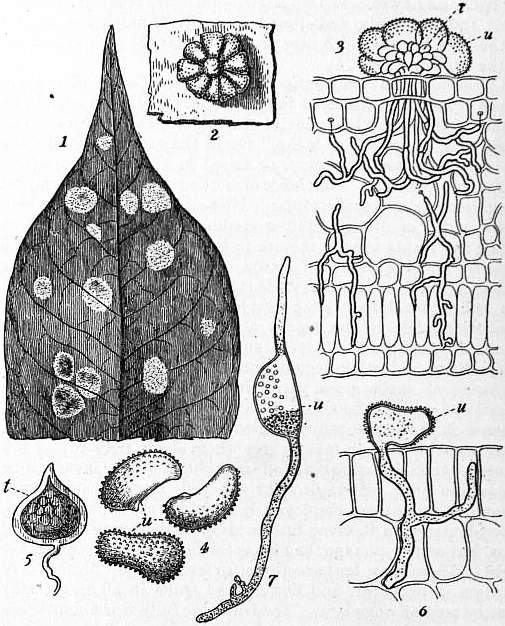
Fig. 2.—Coffee-leaf Disease, Hemileia vastatrix.
1, Part of leaf showing diseased patches. 2, Cluster of uredospores. 3, Transverse section of a diseased patch in the leaf showing the hyphae of the fungus pushing between the leaf-cells and tapping them for nourishment. The hyphae have broken through in the upper face and are forming a cluster of spores. 6, A uredospore germinating, the germ-tube is penetrating the leaf. 5, A teleutospore. 4, Ripe uredospores. 7, Uredospore germinating. u, Uredospore. t, Teleutospore. 2-7, Highly magnified.
Microscopic Structure.—Raw coffee seeds are tough and horny in structure, and are devoid of the peculiar aroma and taste which are so characteristic of the roasted seeds. The minute structure of coffee allows it to be readily recognized by means of the microscope, and as roasting does not destroy its distinguishing peculiarities, microscopic examination forms the readiest means of determining the genuineness of any sample. The substance of the seed, according to Dr Hassall, consists “of an assemblage of vesicles or cells of an angular form, which adhere so firmly together that they break up into pieces rather than separate into distinct and perfect cells. The cavities of the cells include, in the form of little drops, a considerable quantity of aromatic volatile oil, on the presence of which the fragrance and many of the active principles of the berry depend” (see fig. 3).
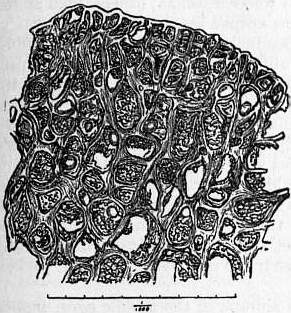
Fig. 3.—Microscopic structure of Coffee.
Physiological Action.—Coffee belongs to the medicinal or auxiliary class of food substances, being solely valuable for its stimulant effect upon the nervous and vascular system. It produces a feeling of buoyancy and exhilaration comparable to a certain stage of alcoholic intoxication, but which does not end in depression or collapse. It increases the frequency of the pulse, lightens the sensation of fatigue, and it sustains the strength under prolonged and severe muscular exertion. The value of its hot infusion under the rigours of Arctic cold has been demonstrated in the experience of all Arctic explorers, and it is scarcely less useful in tropical regions, where it beneficially stimulates the action of the skin.
The physiological action of coffee mainly depends on the presence of the alkaloid caffeine, which occurs also in tea, Paraguay tea, and cola nuts, and is very similar to theobromine, the active principle in cocoa. The percentage of caffeine present varies in the different species of Coffea. In Arabian coffee it ranges from about 0.7 to 1.6%; in Liberian coffee from 1.0 to 1.5%. Sierra Leone coffee (C. stenophylla) contains from 1.52 to 1.70%; in C. excelsa 1.89% is recorded, and as much as 1.97% in C. canephora. Four species have been shown by M. G. Bertrand to contain no caffeine at all, but instead a considerable quantity of a bitter principle. All these four species are found only in Madagascar or the neighbouring islands. Other coffees grown there contain caffeine as usual. Coffee, with the caffeine extracted, has also been recently prepared for the market. The commercial value of coffee is determined by the amount of the aromatic oil, caffeone, which develops in it by the process of roasting. By prolonged keeping it is found that the richness of any seeds in this peculiar oil is increased, and with increased aroma the coffee also yields a blander and more mellow beverage. Stored coffee loses weight at first with great rapidity, as much as 8% having been found to dissipate in the first year of keeping, 5% in the second, and 2% in the third; but such loss of weight is more than compensated by improvement in quality and consequent enhancement of value.
Roasting.—In the process of roasting, coffee seeds swell up by the liberation of gases within their substance,—their weight decreasing in proportion to the extent to which the operation is carried. Roasting also develops with the aromatic caffeone above alluded to a bitter soluble principle, and it liberates a portion of the caffeine from its combination with the caffetannic acid. Roasting is an operation of the greatest nicety, and one, moreover, of a crucial nature, for equally by insufficient and by excessive roasting much of the aroma of the coffee is lost; and its infusion is neither agreeable to the palate nor exhilarating in its influence. The roaster must judge of the amount of heat required for the adequate roasting of different qualities, and while that is variable, the range of roasting temperature proper for individual kinds is only narrow. In continental countries it is the practice to roast in small quantities, and thus the whole charge is well under the control of the roaster; but in Britain large roasts are the rule, in dealing with which much difficulty is experienced in producing uniform torrefaction, and in stopping the process at the proper moment. The coffee-roasting apparatus is usually a malleable iron cylinder mounted to revolve over the fire on a hollow axle which allows the escape of gases generated during torrefaction. The roasting of coffee should be done as short a time as practicable before the grinding for use, and as ground coffee especially parts rapidly with its aroma, the grinding should only be done when coffee is about to be prepared.
Adulteration.—Although by microscopic, physical and chemical tests the purity of coffee can be determined with perfect certainty, yet ground coffee is subjected to many and extensive adulterations (see also Adulteration). Chief among the adulterant substances, if it can be so called, is chicory; but it occupies a peculiar position, since very many people on the European continent as well as in Great Britain deliberately prefer a mixture of chicory with coffee to pure coffee. Chicory is indeed destitute of the stimulant alkaloid and essential oil for which coffee is valued; but the facts that it has stood the test of prolonged and extended use, and that its infusion is, in some localities, used alone, indicate that it performs some useful function in connexion with coffee, as used at least by Western communities. For one thing, it yields a copious amount of soluble matter in infusion with hot water, and thus gives a specious appearance of strength and substance to what may be really only a very weak preparation of coffee. The mixture of chicory with coffee is easily detected by the microscope, the structure of both, which they retain after torrefaction, being very characteristic and distinct. The granules of coffee, moreover, remain hard and angular when mixed with water, to which they communicate but little colour; chicory, on the other hand, swelling up and softening, yields a deep brown colour to water in which it is thrown. The specific gravity of an infusion of chicory is also much higher than that of coffee. Among the numerous other substances used to adulterate coffee are roasted and ground roots of the dandelion, carrot, parsnip and beet; beans, lupins and other leguminous seeds; wheat, rice and various cereal grains; the seeds of the broom, fenugreek and iris; acorns; “negro coffee,” the seeds of Cassia occidentalis, the seeds of the ochro (Hibiscus esculentus), and also the soja or soy bean (Glycine Soya). Not only have these with many more similar substances been used as adulterants, but under various high-sounding names several of them have been introduced as substitutes for coffee; but they have neither merited nor obtained any success, and their sole effect has been to bring coffee into undeserved disrepute with the public.
Not only is ground coffee adulterated, but such mixtures as flour, chicory and coffee, or even bran and molasses, have been made up to simulate coffee beans and sold as such.
The leaves of the coffee tree contain caffeine in larger proportion than the seeds themselves, and their use as a substitute for tea has frequently been suggested. The leaves are actually so used in Sumatra, but being destitute of any attractive aroma such as is possessed by both tea and coffee, the infusion is not palatable. It is, moreover, not practicable to obtain both seeds and leaves from the same plant, and as the commercial demand is for the seed alone, no consideration either of profit or of any dietetic or economic advantage is likely to lead to the growth of coffee trees on account of their leaves.
(A. B. R.; W. G. F.)
COFFER (Fr. coffre, O. Fr. cofre or cofne, Lat. cophinus, cf. “coffin”), in architecture, a sunk panel in a ceiling or vault; also a casket or chest in which jewels or precious goods were kept, and, if of large dimensions, clothes. The marriage coffers in Italy were of exceptional richness in their carving and gilding and were sometimes painted by great artists.
COFFERDAM, in engineering. To enable foundations (q.v.) to be laid in a site which is under water, the engineer sometimes surrounds it with an embankment or dam, known as a cofferdam, to form an enclosure from which the water is excluded. Where the depth of water is small and the current slight, simple clay dams may be used, but in general cofferdams consist of two rows of piles, the space between which is packed with clay puddle. The dam must be sufficiently strong to withstand the exterior pressure to which it is exposed when the enclosed space is pumped dry.
COFFEYVILLE, a city of Montgomery county, Kansas, U.S.A., on the Verdigris river, about 150 m. S. of Topeka and near the southern boundary of the state. Pop. (1890) 2282; (1900) 4953, of whom 803 were negroes; (1905) 13,196; (1910) 12,687. Coffeyville is served by the Missouri Pacific, the Atchison, Topeka & Santa Fé, the Missouri, Kansas & Texas, and the Saint Louis, Iron Mountain & Southern railways, and by inter-urban electric railway to Independence. It is in the Kansas natural-gas field, ships large quantities of grain, and has a large zinc oxide smelter and a large oil refinery, and various manufactures, including vitrified brick and tile, flour, lumber, chemicals, window glass, bottles, pottery and straw boards. The municipality owns and operates its water-works and electric lighting plant. Coffeyville, named in honour of A. M. Coffey, who was a member of the first legislature of the territory of Kansas, was founded in 1869, but in 1871 it was removed about 1 m. from its original site, now known as “old town.” It was incorporated as a city of the third class in 1872 and received a new charter in 1887. Coffeyville became a station on the Leavenworth, Lawrence & Galveston railway (now part of the Atchison, Topeka & Santa Fé), and for several years large numbers of cattle were driven here from Indian Territory and Texas for shipment; in fact, the city’s chief importance was as a trade centre for the north part of Indian Territory until natural gas was found here in large quantities in 1892.
COFFIN (from Lat. cophinus, Gr. κόφινος, a coffer, chest or basket, but never meaning “coffin” in its present sense), the receptacle in which a corpse is confined. The Greeks and Romans disposed of their dead both by burial and by cremation. Greek coffins varied in shape, being in the form of an urn, or like the modern coffins, or triangular, the body being in a sitting posture. The material used was generally burnt clay, and in some cases this had obviously been first moulded round the body, and so baked. Cremation was the commonest method of disposing of the dead among the Romans, until the Christian era, when stone coffins came into use. Examples of these have been frequently dug up in England. In 1853, during excavations for the foundations of some warehouses in Hayden Square, Minories, London, a Roman stone coffin was found within which was a leaden shell. Others have been found at Whitechapel, Stratford-le-Bow, Old Kent Road and Battersea Fields, and in great numbers at Colchester, York, Southfleet and Kingsholme near Gloucester. In early England stone coffins were only used by the nobles and the wealthy. Those of the Romans who were rich enough had their coffins made of a limestone brought from Assos in Troas, which it was commonly believed “ate the body”; hence arose the name sarcophagus (q.v.).
The coffins of the Chaldaeans were generally clay urns with the top left open, resembling immense jars. These, too, must have been moulded round the body, as the size of the mouth would not admit of its introduction after the clay was baked. The Egyptian coffins, or sarcophagi, as they have been improperly called, are the largest stone coffins known and are generally highly polished and covered with hieroglyphics, usually a history of the deceased. Mummy chests shaped to the form of the body were also used. These were made of hard wood or papier mâché painted, and like the stone coffins bore hieroglyphics. The Persians, Parthians, Medes and peoples of the Caspian are not known to have had any coffins, their usual custom being to expose the body to be devoured by beasts and birds of prey. Unhewn flat stones were sometimes used by the ancient European peoples to line the grave. One was placed at the bottom, others stood on their edges to form the sides, and a large slab was put on top, thus forming a rude cist. In England after the Roman invasion these rude cists gave place to the stone coffin, and this, though varying much in shape, continued in use until the 16th century.
The most primitive wooden coffin was formed of a tree-trunk split down the centre, and hollowed out. The earliest specimen of this type is in the Copenhagen museum, the implements found in it proving that it belonged to the Bronze Age. This type of coffin, more or less modified by planing, was used in medieval Britain by those of the better classes who could not afford stone, but the poor were buried without coffins, wrapped simply in cloth or even covered only with hay and flowers. Towards the end of the 17th century, coffins became usual for all classes. It is worth noting that in the Burial Service in the Book of Common Prayer the word “coffin” is not used.
Among the American Indians some tribes, e.g. the Sacs, Foxes and Sioux, used rough hewn wooden coffins; others, such as the Seris, sometimes enclosed the corpse between the carapace and plastron of a turtle. The Seminoles of Florida used no coffins, while at Santa Barbara, California, canoes containing corpses have been found buried though they may have been intended for the dead warrior’s use in the next world. Rough stone cists, too, have been found, especially in Illinois and Kentucky. In their tree and scaffold burial the Indians sometimes used wooden coffins, but oftener the bodies were simply wrapped in blankets. Canoes mounted on a scaffold near a river were used as coffins by some tribes, while others placed the corpse in a canoe or wicker basket and floated them out into the stream or lake (see Funeral Rites). The aborigines of Australia generally used coffins of bark, but some tribes employed baskets of wicker-work.
Lead coffins were used in Europe in the middle ages, shaped like the mummy chests of ancient Egypt. Iron coffins were more rare, but they were certainly used in England and Scotland as late as the 17th century, when an order was made that upon bodies so buried a heavier burial fee should be levied. The coffins used in England to-day are generally of elm or oak lined with lead, or with a leaden shell so as to delay as far as possible the process of disintegration and decomposition. In America glass is sometimes used for the lids, and the inside is lined with copper or zinc. The coffins of France and Germany and the continent generally, usually differ from those of England in not being of the ordinary hexagonal shape but having sides and ends parallel. Coffins used in cremation throughout the civilized world are of some light material easily consumed and yielding little ash. Ordinary thin deal and papier mâché are the favourite materials. Coffins for what is known as Earth to Earth Burial are made of wicker-work covered with a thin layer of papier mâché over cloth.
See also Funeral Rites; Cremation; Burial and Burial Acts; Embalming; Mummy, &c.
Bibliography.—Dr H. C. Yarrow, “Study of the Mortuary Customs of the North American Indians,” Report of Bureau of Amer. Ethnol. vol. i. (Washington, U.S.A., 1881); Rev. Thomas Hugo, “On the Hayden Square Sarcophagus,” Journ. of Archaeol. Soc. vol. ix. (London, 1854); C. V. Creagh, “On Unusual Forms of Burial by People of the East Coast of Borneo,” J.A.I., vol. xxvi. (London, 1896-1897); Rev. J. Edward Vaux, Church Folk-lore (1894).
COG. (1) (From an older cogge, a word which appears in various forms in Teutonic languages, as in O. Ger. kogge or kocke, and also in Romanic, as in O. Fr. cogue, or coque, from which the Eng. “cock-boat” is derived; the connexion between the Teutonic and the Romanic forms is obscure), a broadly built, round-shaped ship, used as a trader and also as a ship of war till the 15th century. (2) (A word of obscure origin, possibly connected with Fr. coche, and Ital. cocca, a notch; the Celtic forms cog and cocas come from the English), a tooth in a series of teeth, morticed on to, or cut out of the circumference of a wheel, which works with the tooth in a corresponding series on another wheel (see Mechanics). (3) (Also of quite obscure origin), a slang term for a form of cheating at dice. The early uses of the word show that this was done not by “loading” the dice, as the modern use of the expression of “cogged dice” seems to imply, but by sleight of hand in directing the fall or in changing the dice.
COGERS HALL, a London tavern debating society. It was instituted in 1755 at the White Bear Inn (now St Bride’s Tavern), Fleet Street, moved about 1850 to Discussion Hall, Shoe Lane, and in 1871 finally migrated to the Barley Mow Inn, Salisbury Square, E.C., its present quarters. The name is often wrongly spelt Codgers and Coggers; the “o” is really long, the accepted derivation being from Descartes’ Cogito, ergo sum, and thus meaning “The society of thinkers.” The aims of the Cogers were “the promotion of the liberty of the subject and the freedom of the Press, the maintenance of loyalty to the laws, the rights and claims of humanity and the practice of public and private virtue.” Among its early members Cogers Hall reckoned John Wilkes, one of its first presidents, and Curran, who in 1773 writes to a friend that he spent a couple of hours every night at the Hall. Later Dickens was a prominent member.
See Peter Rayleigh, History of Ye Antient Society of Cogers (London, 1904).
COGHLAN, CHARLES FRANCIS (1841-1899), Irish actor, was born in Paris, and was educated for the law. He made his first London appearance in 1860, and became the leading actor at the Prince of Wales’s. He went to America in 1876, where he remained for the rest of his life, playing first in Augustin Daly’s company and then in the Union Square stock company, during the long run of The Celebrated Case. He also played with his sister, and in support of Mrs Langtry and Mrs Fiske, and in 1898 produced a version of Dumas’ Kean, called The Royal Box, in which he successfully starred during the last years of his life. He died in Galveston, Texas, on the 27th of November 1899.
His sister, the actress Rose Coghlan (1853- ), went to America in 1871, was again in England from 1873 to 1877, playing with Barry Sullivan, and then returned to America, where she became prominent as Countess Zicka in Diplomacy, and Stephanie in Forget-me-not. She was at Wallack’s almost continuously until 1888, and subsequently appeared in melodrama in parts like the title-rôle of The Sporting Duchess.
COGNAC, a town of south-western France, capital of an arrondissement in the department of Charente, on the left bank of the river Charente, 32 m. W. of Angoulême on the Ouest-État railway, between Angoulême and Saintes. Pop. (1906) 18,389. The streets of the old town—which borders the river—are narrow and tortuous, but the newer parts are well provided with open spaces. The chief of these is the beautiful Parc François 1er overlooking the Charente. In one of the squares there is a statue of Francis I., who was born here. The chief building is a church of the 12th century dedicated to St Leger, which preserves a fine Romanesque façade and a tower of the 15th century. A castle of the 15th and 16th centuries, once the residence of the counts of Angoulême, now a storehouse for brandy, and a medieval gate stand in the older part of the town. Cognac is the seat of a subprefect and has tribunals of first instance and of commerce, a council of trade arbitrators, a chamber of commerce, and consulates of the United States, Spain and Portugal. Its most important industry is the distillation of the brandy (q.v.) to which the town gives its name. Large quantities are carried, by way of the river, to the neighbouring port of Tonnay-Charente. The industries subsidiary to the brandy trade, such as the making of cases and bottles, occupy many hands. Ironware is also manufactured, and a considerable trade is maintained in grain and cattle. In 1526 Cognac gave its name to a treaty concluded against Charles V. by Francis I., the pope, Venice and Milan. Its possession was contested during the wars of religion, and in 1570 it became one of the Huguenot strongholds. In 1651 it successfully sustained a siege against Louis II., prince of Condé, leader of the Fronde.
See Le Pays du Cognac, by L. Ravaz, for a description of the district and its viticulture.
COGNITION (Latin cognitio, from cognoscere, to become acquainted with), in psychology, a term used in its most general sense for all modes of being conscious or aware of an object, whether material or intellectual. It is an ultimate mode of consciousness, strictly the presentation (through sensation or otherwise) of an object to consciousness; in its complete form, however, it seems to involve a judgment, i.e. the separation from other objects of the object presented. The psychological theory of cognition takes for granted the dualism of the mind that knows and the object known; it takes no account of the metaphysical problem as to the possibility of a relation between the ego and the non-ego, but assumes that such a relation does exist. Cognition is therefore distinct from emotion and conation; it has no psychological connexion with feelings of pleasure and pain, nor does it tend as such to issue in action.
For the analysis of cognition-reactions see O. Külpe, Outlines of Psychology (Eng. trans., 1895), pp. 411 foll.; E. B. Titchener, Experimental Psychology (1905), ii. 187 foll. On cognition generally, G. F. Stout’s Analytic Psychology and Manual of Psychology; W. James’s Principles of Psychology (1890), i. 216 foll.; also article Psychology.
COGNIZANCE (Lat. cognoscere, to know), knowledge, notice, especially judicial notice, the right of trying or considering a case judicially, the exercise of jurisdiction by a court of law. In heraldry a “cognizance” is an emblem, badge or device, used as a distinguishing mark by the body of retainers of a royal or noble house.
COHEN (Hebrew for “priest”), a Jewish family name, implying descent from the ancient Hebrew priests. Many families claiming such descent are, however, not named Cohen. Other forms of the name are Cohn, Cowen, Kahn.
See J. Jacobs, Jewish Encyclopedia, iv. 144.
COHN, FERDINAND JULIUS (1828-1898), German botanist, was born on the 24th of January 1828 at Breslau. He was educated at Breslau and Berlin, and in 1859 became extraordinary, and in 1871 ordinary, professor of botany at Breslau University. He had a remarkable career, owing to his Jewish origin. He was contemporary with N. Pringsheim, and worked with H. R. Goeppert, C. G. Nees von Esenbeck, C. G. Ehrenberg and Johannes Müller. At an early date he exhibited astonishing ability with the microscope, which he did much to improve, and his researches on cell-walls and the growth and contents of plant-cells soon attracted attention, especially as he made remarkable advances in the establishment of an improved cell-theory, discovered the cilia in, and analysed the movements of, zoospores, and pointed out that the protoplasm of the plant-cell and the sarcode of the zoologists were one and the same physical vehicle of life. Although these early researches were especially on the Algae, in which group he instituted marked reforms of the rigid system due to F. T. Kützing, Cohn had already displayed that activity in various departments which made him so famous as an all-round naturalist, his attention at various times being turned to such varied subjects as Aldorovanda, torsion in trees, the nature of waterspouts, the effects of lightning, physiology of seeds, the proteid crystals in the potato, which he discovered, the formation of travertin, the rotatoria, luminous worms, &c.
It is, however, in the introduction of the strict biological and philosophical analysis of the life-histories of the lower and most minute forms of life that Cohn’s greatest achievements consist, for he applied to these organisms the principle that we can only know the phases of growth of microscopic plants by watching every stage of development under the microscope, just as we learn how different are the youthful and adult appearances of an oak or a fern by direct observation. The success with which he attempted and carried out the application of cultural and developmental methods on the Algae, Fungi and Bacteria can only be fully appreciated by those familiar with the minute size and elusive evolutions of these organisms, and with the limited appliances at Cohn’s command. Nevertheless his account of the life-histories of Protococcus (1850), Stephanosphaera (1852), Volvox (1856 and 1875), Hydrodictyon (1861), and Sphaeroplea (1855-1857) among the Algae have never been put aside. The first is a model of what a study in development should be; the last shares with G. Thuret’s studies on Fucus and Pringsheim’s on Vaucheria the merit of establishing the existence of a sexual process in Algae. Among the Fungi Cohn contributed important researches on Pilobolus (1851), Empusa (1855), Tarichium (1869), as well as valuable work on the nature of parasitism of Algae and Fungi.
It is as the founder of bacteriology that Cohn’s most striking claims to recognition will be established. He seems to have been always attracted particularly by curious problems of fermentation and coloration due to the most minute forms of life, as evinced by his papers on Monas prodigiosa (1850) and “Über blutähnliche Färbungen” (1850), on infusoria (1851 and 1852), on organisms in drinking-water (1853), “Die Wunder des Blutes” (1854), and had already published several works on insect epidemics (1869-1870) and on plant diseases, when his first specially bacteriological memoir (Crenothrix) appeared in the journal, Beiträge zur Biologie, which he then started (1870-1871), and which has since become so renowned. Investigations on other branches of bacteriology soon followed, among which “Organismen der Pockenlymphe” (1872) and “Untersuchungen über Bacterien” (1872-1875) are most important, and laid the foundations of the new department of science which has now its own laboratories, literature and workers specially devoted to its extension in all directions. When it is remembered that Cohn brought out and helped R. Koch in publishing his celebrated paper on Anthrax (1876), the first clearly worked out case of a bacterial disease, the significance of his influence on bacteriology becomes apparent.
Among his most striking discoveries during his studies of the forms and movements of the Bacteria may be mentioned the nature of Zoogloea, the formation and germination of true spores—which he observed for the first time, and which he himself discovered in Bacillus subtilis—and their resistance to high temperatures, and the bearing of this on the fallacious experiments supposed to support abiogenesis; as well as works on the bacteria of air and water, the significance of the bright sulphur granules in sulphur bacteria, and of the iron oxide deposited in the walls of Crenothrix. His discoveries in these and in other departments all stand forth as mementoes of his acute observation and reasoning powers, and the thoughtful (in every sense of the word) consideration of the work of others, and suggestive ideas attached to his principal papers, bear the same characteristics. If we overcome the always difficult task of bridging in imagination the interval between our present platform of knowledge and that on which bacteriologists stood in, say, 1870, we shall not undervalue the important contributions of Cohn to the overthrow of the then formidable bugbear known as the doctrine of “spontaneous generation,” a dogma of despair calculated to impede progress as much in its day as that of “vitalism” did in other periods. Cohn had also clear perceptions of the important bearings of Mycology and Bacteriology in infective diseases, as shown by his studies in insect-killing fungi, microscopic analysis of water, &c. He was a foreign member of the Royal Society and of the Linnean Society, and received the gold medal of the latter in 1895. He died at Breslau on the 25th of June 1898.
Lists of his papers will be found in the Catalogue of Scientific Papers of the Royal Society, and in Ber. d. d. bot. Gesellsch., 1899, vol. xvii. p. (196). The latter also contains (p. (172)) a full memoir by F. Rosen.
(H. M. W.)
COHN, GUSTAV (1840- ), German economist, was born on the 12th of December 1840 at Marienwerder, in West Prussia. He was educated at Berlin and Jena universities. In 1869 he obtained a post at the polytechnic in Riga, and in 1875 was elected a professor at the polytechnic at Zürich. In 1873 he went to England for a period of study, and as a result published his Untersuchungen über die englische Eisenbahnpolitik (Leipzig, 1874-1875). In 1884 he was appointed professor of political science at Göttingen. Cohn’s best-known works are System der Nationalökonomie (Stuttgart, 1885); Finanzwissenschaft (1889); Nationalökonomische Studien (1886), and Zur Geschichte und Politik des Verkehrswesens (1900).
COHOES, a city of Albany county, New York, U.S.A., about 9 m. N. of Albany, at the confluence of the Mohawk and Hudson rivers. Pop. (1890) 22,509; (1900) 23,910, of whom 7303 were foreign-born; (1910) 24,709. It is served by the New York Central & Hudson River and the Delaware & Hudson railways, by electric lines to Troy and Albany, and by the Erie and Champlain canals. It is primarily a manufacturing city. Hosiery and knit goods, cotton cloth, cotton batting, shoddy, underwear and shirts and collars are the principal products, but there are also extensive valve works and manufactories of pulp, paper and paper boxes, beer, pins and needles, tools and machinery, and sash, doors and blinds. The value of the factory products in 1905 was $10,289,822, of which $4,126,873, or 40.1%, was the value of hosiery and knit goods, Cohoes ranking fifth among the cities of the United States (of 20,000 inhabitants or more) in this industry, and showing a higher degree of specialization in it than any other city in the United States except Little Falls, N.Y. The Falls of the Mohawk, which furnish power for the majority of the manufacturing establishments, are 75 ft. high and 900 ft. broad, a large dam above the falls storing the water, which is conveyed through canals to the mills. Below the falls the river is crossed by two fine iron bridges. The city has a public library, a normal training school and the St Bernard’s (Roman Catholic) Academy. Cohoes was a part of the extensive manorial grant made to Killian Van Rensselaer in 1629 and it was probably settled very soon afterwards. It was incorporated as a village in 1848 and was chartered as a city in 1870.
COHORT (Lat. cohors), originally a place enclosed: in the Roman army, the name of a unit of infantry. The troops of the first grade, the legions, were divided into cohorts, of which there were ten in each legion: the cohort thus contained 600 men. Among the troops of the second grade (the auxilia) the cohorts were independent foot regiments 500 or 1000 strong, corresponding to the alae, which were similar regiments of cavalry; they were generally posted on the frontiers of the Empire in small forts of four to eight acres, each holding one cohort or ala. The special troops of Rome itself, the Praetorian Guard, the Urbanae Cohortes, and the Vigiles (fire brigade), were divided into cohorts (see further Roman Army). The phrase cohors praetoria or cohors amicorum was sometimes used, especially during the Roman republic, to denote the suite of the governor of a province; hence developed the Praetorian cohorts which formed the emperor’s bodyguard.
In biology, “cohort” is a term for a group of allied orders or families of plants or animals.
COIF (from Fr. coiffe, Ital. cuffia, a cap), a close-fitting covering for the head. Originally it was the name given to a head-covering worn in the middle ages, tied like a night-cap under the chin, and worn out of doors by both sexes; this was later worn by men as a kind of night-cap or skull-cap. The coif was also a close-fitting cap of white lawn or silk, worn by English serjeants-at-law as a distinguishing mark of their profession. It became the fashion to wear on the top of the white coif a small skull-cap of black silk or velvet; and on the introduction of wigs at the end of the 17th century a round space was left on the top of the wig for the display of the coif, which was afterwards covered by a small patch of black silk edged with white (see A. Pulling, Order of the Coif, 1897). The random conjecture of Sir H. Spelman (Glossarium archaiologicum) that the coif was originally designed to conceal the ecclesiastical tonsure has unfortunately been quoted by annotators of Blackstone’s Commentaries as well as by Lord Campbell in his Lives of the Chief Justices. It may be classed with the curious conceit, recorded in Brand’s Popular Antiquities, that the coif was derived from the child’s caul, and was worn on the advocate’s head for luck.
COIMBATORE, a city and district of British India, in the Madras presidency. The city is situated on the left bank of the Noyil river, 305 m. from Madras by the Madras railway. In 1901 it had a population of 53,080, showing an increase of 14% in the decade. The city stands 1437 ft. above sea-level, is well laid out and healthy, and is rendered additionally attractive to European residents by its picturesque position on the slopes of the Nilgiri hills. It is an important industrial centre, carrying on cotton weaving and spinning, tanning, distilling, and the manufacture of coffee, sugar, manure and saltpetre. It has two second-grade colleges, a college of agriculture, and a school of forestry.
The District of Coimbatore has an area of 7860 sq. m. It may be described as a flat, open country, hemmed in by mountains on the north, west and south, but opening eastwards on to the great plain of the Carnatic; the average height of the plain above sea-level is about 900 ft. The principal mountains are the Anamalai Hills, in the south of the district, rising at places to a height of between 8000 and 9000 ft. In the west the Palghat and Vallagiri Hills form a connecting link between the Anamalai range and the Nilgiris, with the exception of a remarkable gap known as the Palghat Pass. This gap, which completely intersects the Ghats, is about 20 m. wide. In the north is a range of primitive trap-hills known as the Cauvery chain, extending eastwards from the Nilgiris, and rising in places to a height of 4000 ft. The principal rivers are the Cauvery, Bhavani, Noyil, and Amravati. Numerous canals are cut from the rivers for the purpose of affording artificial irrigation, which has proved of immense benefit to the country. Well and tank water is also largely used for irrigation purposes. Coimbatore district was acquired by the British in 1799 at the close of the war which ended with the death of Tippoo. In 1901 the population was 2,201,782, showing an increase of 10% in the preceding decade. The principal crops are millet, rice, other food grains, pulse, oilseeds, cotton and tobacco, with a little coffee. Forests cover nearly 1½ million acres, yielding valuable timber (teak, sandalwood, &c.), and affording grazing-ground for cattle. There are several factories for pressing cotton, and for cleaning coffee, oil-cake presses, tanneries and saltpetre refineries. Cereals, cotton, forest products, cattle and hides, and brass and copper vessels are the chief exports from the district. The south-west line of the Madras railway runs through the district, and the South Indian railway (of metre gauge) joins this at Erode.
COIMBRA, the capital of an administrative district formerly included in the province of Beira, Portugal; on the north bank of the river Mondego, 115 m. N.N.E. of Lisbon, on the Lisbon-Oporto railway. Pop. (1900) 18,144. Coimbra is built for the most part on rising ground, and presents from the other side of the river a picturesque and imposing appearance; though in reality its houses have individually but little pretension, and its streets are, almost without exception, narrow and mean. It derives its present importance from being the seat of the only university in the kingdom—an institution which was originally established at Lisbon in 1291, was transferred to Coimbra in 1306, was again removed to Lisbon, and was finally fixed at Coimbra in 1527. There are five faculties—theology, law, medicine, mathematics and philosophy—with more than 1300 students. The library contains about 150,000 volumes, and the museums and laboratories are on an extensive scale. In connexion with the medical faculty there are regular hospitals; the mathematical faculty maintains an observatory from which an excellent view can be obtained of the whole valley of the Mondego; and outside the town there is a botanic garden (especially rich in the flora of Brazil), which also serves as a public promenade. Among the other educational establishments are a military college, a royal college of arts, a scientific and literary institute, and an episcopal seminary.
The city is the seat of a bishop, suffragan to the archbishop of Braga; its new cathedral, founded in 1580, is of little interest; but the old is a fine specimen of 12th-century Romanesque, and retains portions of the mosque which it replaced. The principal churches are Santa Cruz, of the 16th century, and San Salvador, founded in 1169. On the north bank of the Mondego stand the ruins of the once splendid monastery of Santa Clara, established in 1286; and on the south bank is the celebrated Quinta das lagrimas, or Villa of Tears, where Inez de Castro (q.v.) is believed to have been murdered in 1355. The town is supplied with water by means of an aqueduct of 20 arches. The Mondego is only navigable in flood, and the port of Figueira da Foz is 20 m. W. by S., so that the trade of Coimbra is mainly local; but there are important lamprey fisheries and manufactures of pottery, leather and hats.
A Latin inscription of the 4th century identifies Coimbra with the ancient Aeminium; while Condeixa (3623), 8 m. S.S.W., represents the ancient Conimbriga or Conembrica,. In the 9th century, however, when the bishopric of Conimbriga was removed hither, its old title was transferred to the new see, and hence arose the modern name Coimbra. The city was for a long time a Moorish stronghold, but in 1064 it was captured by Ferdinand I. of Castile and the Cid. Until 1260 it was the capital of the country, and no fewer than six kings—Sancho I. and II., Alphonso II. and III., Pedro and Ferdinand—were born within its walls. It was also the birthplace of the poet Francisco Sá de Miranda (1495-1558), and, according to one tradition, of the more famous Luiz de Camoens (1524-1580), who was a student at the university between 1537 and 1542. In 1755 Coimbra suffered considerably from the earthquake. In 1810 it was sacked by the French under Marshal Masséna. In 1834 Dom Miguel made the city his headquarters; and in 1846 it was the scene of a Miguelist insurrection.
The administrative district of Coimbra coincides with the south-western part of Beira; pop. (1900) 332,168; area 1508 sq. m.
COÍN, a town of southern Spain in the province of Málaga; 18 m. W.S.W. of the city of Málaga. Pop. (1900) 12,326. Coín is finely situated on the northern slope of the Sierra de Mijas, overlooking the small river Séco and surrounded by vineyards and plantations of oranges and lemons. There are marble quarries in the neighbourhood, and, despite the lack of a railway, Coín has a thriving agricultural trade. The population increased by more than half between 1880 and 1900.
COIN (older forms of the word are coyne, quoin and coign, all derived through the O. Fr. coing, and cuigne from Lat. cuneus, a wedge), properly the term for a wedge-shaped die used for stamping money, and so transferred to the money so stamped; hence a piece of money. The form “quoin” is used for the external angle of a building (see Quoins), and “coign,” also a projecting angle, survives in the Shakespearean phrase “a coign of vantage.”
COINAGE OFFENCES. The coinage of money is in all states a prerogative of the sovereign power; consequently any infringement of that prerogative is always severely punished, as being an offence likely to interfere with the well-being of the state.
In the United Kingdom the statute law against offences relating to the coin was codified by an act of 1861. The statute provides that whoever falsely makes or counterfeits any coin resembling or apparently intended to resemble or pass for any current gold or silver coin of the realm (s. 2), or gilds, silvers, washes, cases over or colours with materials capable of producing the appearance of gold or silver a coin or a piece of any metal or mixture of metals, or files or alters it, with intent to make it resemble or pass for any current gold or silver coin (s. 3), or who buys, sells, receives or pays a false gold or silver coin at a lower rate than its denomination imports, or who receives into the United Kingdom any false coin knowing it to be counterfeit (ss. 6, 7), or who, without lawful authority or excuse, knowingly makes or mends, buys or sells, or has in his custody or possession, or conveys out of the Royal Mint any coining moulds, machines or tools, is guilty of felony (ss. 24, 25). The punishment for such offences is either penal servitude for life or for not less than three years, or imprisonment for not more than two years, with or without hard labour. Whoever impairs, diminishes or lightens current gold or silver coin, with intent to pass same, is liable to penal servitude for from three to fourteen years (s. 4), and whoever has in his possession filings or clippings obtained by impairing or lightening current coin is liable to the same punishment, or to penal servitude for from three to seven years. The statute also makes provision against tendering or uttering false gold or silver coin, which is a misdemeanour, punishable by imprisonment with or without hard labour. Provision is also made with respect to falsely making, counterfeiting, tendering or uttering copper coin, exporting false coin, or defacing current coin by stamping names or words on it, and counterfeiting, tendering or uttering coin resembling or meant to pass as that of some foreign state. The act of 1861 applies to offences with respect to colonial coins as well as to those of the United Kingdom.
By the constitution of the United States, Congress has the power of coining money, regulating the value thereof and of foreign coin (Art. i. s. viii.), and the states are prohibited from coining money, or making anything but gold and silver money a tender in payment of debts (Art. i. s. x.). The counterfeiting coin or money, uttering the same, or mutilating or defacing it, is an offence against the United States, and is punishable by fine and imprisonment with hard labour for from two to ten years. It has also been made punishable by state legislation.
COIR (from Malay Kāyar, cord, Kāyaru, to be twisted), a rough, strong, fibrous substance obtained from the outer husk of the coco-nut. (See Coco-nut Palm.)
COIRE (Ger. Chur or Cur, Ital. Coira, Lat. Curia Raetorum, Romonsch Cuera), the capital of the Swiss canton of the Grisons. It is built, at a height of 1949 ft. above the sea-level, on the right bank of the Plessur torrent, just as it issues from the Schanfigg valley, and about a mile above its junction with the Rhine. It is overshadowed by the Mittenberg (east) and Pizokel (south), hills that guard the entrance to the deep-cut Schanfigg valley. In 1900 it contained 11,532 inhabitants, of whom 9288 were German-speaking, 1466 Romonsch-speaking, and 677 Italian-speaking; while 7561 were Protestants, 3962 Romanists and one a Jew. The modern part of the city is to the west, but the old portion, with all the historical buildings, is to the east. Here is the cathedral church of St Lucius (who is the patron of Coire, and is supposed to be a 2nd-century British king, though really the name has probably arisen from a confusion between Lucius of Cyrene—miswritten “curiensis”—with the Roman general Lucius Munatius Plancus, who conquered Raetia). Built between 1178 and 1282, on the site of an older church, it contains many curious medieval antiquities (especially in the sacristy), as well as a picture by Angelica Kaufmann, and the tomb of the great Grisons political leader (d. 1637) Jenatsch (q.v.). Opposite is the Bishop’s Palace, and not far off is the Episcopal Seminary (built on the ruins of a 6th-century monastic foundation). Not far from these ancient monuments is the new Raetian Museum, which contains a great collection of objects relating to Raetia (including the geological collections of the Benedictine monk of Disentis, Placidus a Spescha (1752-1833), who explored the high snowy regions around the sources of the Rhine). One of the hospitals was founded by the famous Capuchin philanthropist, Father Theodosius Florentini (1808-1865), who was long the Romanist curé of Coire, and whose remains were in 1906 transferred from the cathedral here to Ingenbohl (near Schwyz), his chief foundation. Coire is 74 m. by rail from Zürich, and is the meeting-point of the routes from Italy over many Alpine passes (the Lukmanier, the Splügen, the San Bernardino) as well as from the Engadine (Albula, Julier), so that it is the centre of an active trade (particularly in wine from the Valtelline), though it possesses also a few local factories.
The episcopal see is first mentioned in 452, but probably existed a century earlier. The bishop soon acquired great temporal powers, especially after his dominions were made, in 831, dependent on the Empire alone, of which he became a prince in 1170. In 1392 he became head of the league of God’s House (originally formed against him in 1367), one of the three Raetian leagues, but, in 1526, after the Reformation, lost his temporal powers, having fulfilled his historical mission (see Grisons). The bishopric still exists, with jurisdiction over the Cantons of the Grisons, Glarus, Zürich, and the three Forest Cantons, as well as the Austrian principality of Liechtenstein. The gild constitution of the city of Chur lasted from 1465 to 1839, while in 1874 the Burgergemeinde was replaced by an Einwohnergemeinde.
Authorities.—A. Eichhorn, Episcopatus Curiensis (St Blasien, 1797); W. von Juvalt, Forschungen über die Feudalzeit im Curischen Raetien, 2 parts (Zürich, 1871); C. Kind, Die Reformation in den Bisthümern Chur und Como (Coire, 1858); Conradin von Moor, Geschichte von Curraetien (2 vols., Coire, 1870-1874); P. C. von Planta, Das alte Raetien (Berlin, 1872); Idem, Die Curraetischen Herrschaften in der Feudalzeit (Bern, 1881); Idem, Verfassungsgeschichte der Stadt Cur im Mittelalter (Coire, 1879); Idem, Geschichte von Graubünden (Bern, 1892).
(W. A. B. C.)
COKE, SIR EDWARD (1552-1634), English lawyer, was born at Mileham, in Norfolk, on the 1st of February 1552. From the grammar school of Norwich he passed to Trinity College, Cambridge; and in 1572 he entered Lincoln’s Inn. In 1578 he was called to the bar, and in the next year he was chosen reader at Lyon’s Inn. His extensive and exact legal erudition, and the skill with which he argued the intricate libel case of Lord Cromwell (4 Rep. 13), and the celebrated real property case of Shelley (1 Rep. 94, 104), soon brought him a practice never before equalled, and caused him to be universally recognized as the greatest lawyer of his day. In 1586 he was made recorder of Norwich, and in 1592 recorder of London, solicitor-general, and reader in the Inner Temple. In 1593 he was returned as member of parliament for his native county, and also chosen speaker of the House of Commons. In 1594 he was promoted to the office of attorney-general, despite the claims of Bacon, who was warmly supported by the earl of Essex. As crown lawyer his treatment of the accused was marked by more than the harshness and violence common in his time; and the fame of the victim has caused his behaviour in the trial of Raleigh to be lastingly remembered against him. While the prisoner defended himself with the calmest dignity and self-possession, Coke burst into the bitterest invective, brutally addressing the great courtier as if he had been a servant, in the phrase, long remembered for its insolence and its utter injustice—“Thou hast an English face, but a Spanish heart!”
In 1582 Coke married the daughter of John Paston, a gentleman of Suffolk, receiving with her a fortune of £30,000; but in six months he was left a widower. Shortly after he sought the hand of Lady Elizabeth Hatton, daughter of Thomas, second Lord Burghley, and granddaughter of the great Cecil. Bacon was again his rival, and again unsuccessfully; the wealthy young widow became—not, it is said, to his future comfort—Coke’s second wife.
In 1606 Coke was made chief justice of the common pleas, but in 1613 he was removed to the office of chief justice of the king’s bench, which gave him less opportunity of interfering with the court. The change, though it brought promotion in dignity, caused a diminution of income as well as of power; but Coke received some compensation in being appointed a member of the privy council. The independence of his conduct as a judge, though not unmixed with the baser elements of prejudice and vulgar love of authority, has partly earned forgiveness for the harshness which was so prominent in his sturdy character. Full of an extreme reverence for the common law which he knew so well, he defended it alike against the court of chancery, the ecclesiastical courts, and the royal prerogative. In a narrow spirit, and strongly influenced, no doubt, by his enmity to the chancellor, Thomas Egerton (Lord Brackley), he sought to prevent the interference of the court of chancery with even the unjust decisions of the other courts. In the case of an appeal from a sentence given in the king’s bench, he advised the victorious, but guilty, party to bring an action of praemunire against all those who had been concerned in the appeal, and his authority was stretched to the utmost to obtain the verdict he desired. On the other hand, Coke has the credit of having repeatedly braved the anger of the king. He freely gave his opinion that the royal proclamation cannot make that an offence which was not an offence before. An equally famous but less satisfactory instance occurred during the trial of Edmund Peacham, a divine in whose study a sermon had been found containing libellous accusations against the king and the government. There was nothing to give colour to the charge of high treason with which he was charged, and the sermon had never been preached or published; yet Peacham was put to the torture, and Bacon was ordered to confer with the judges individually concerning the matter. Coke declared such conference to be illegal, and refused to give an opinion, except in writing, and even then he seems to have said nothing decided. But the most remarkable case of all occurred in the next year (1616). A trial was held before Coke in which one of the counsel denied the validity of a grant made by the king to the bishop of Lichfield of a benefice to be held in commendam. James, through Bacon, who was then attorney-general, commanded the chief justice to delay judgment till he himself should discuss the question with the judges. At Coke’s request Bacon sent a letter containing the same command to each of the judges, and Coke then obtained their signatures to a paper declaring that the attorney-general’s instructions were illegal, and that they were bound to proceed with the case. His Majesty expressed his displeasure, and summoned them before him in the council-chamber, where he insisted on his supreme prerogative, which, he said, ought not to be discussed in ordinary argument. Upon this all the judges fell on their knees, seeking pardon for the form of their letter; but Coke ventured to declare his continued belief in the loyalty of its substance, and when asked if he would in the future delay a case at the king’s order, the only reply he would vouchsafe was that he would do what became him as a judge. Soon after he was dismissed from all his offices on the following charges,—the concealment, as attorney-general, of a bond belonging to the king, a charge which could not be proved, illegal interference with the court of chancery and disrespect to the king in the case of commendams. He was also ordered by the council to revise his book of reports, which was said to contain many extravagant opinions (June 1616).
Coke did not suffer these losses with patience. He offered his daughter Frances, then little more than a child, in marriage to Sir John Villiers, brother of the favourite Buckingham. Her mother, supported at first by her husband’s great rival and her own former suitor, Bacon, objected to the match, and placed her in concealment. But Coke discovered her hiding-place; and she was forced to wed the man whom she declared that of all others she abhorred. The result was the desertion of the husband and the fall of the wife. It is said, however, that after his daughter’s public penance in the Savoy church, Coke had heart enough to receive her back to the home which he had forced her to leave. Almost all that he gained by his heartless diplomacy was a seat in the council and in the star-chamber.
In 1620 a new and more honourable career opened for him. He was elected member of parliament for Liskeard; and henceforth he was one of the most prominent of the constitutional party. It was he who proposed a remonstrance against the growth of popery and the marriage of Prince Charles to the infanta of Spain, and who led the Commons in the decisive step of entering on the journal of the House the famous petition of the 18th of December 1621, insisting on the freedom of parliamentary discussion, and the liberty of speech of every individual member. In consequence, together with Pym and Sir Robert Philips, he was thrown into confinement; and, when in the August of the next year he was released, he was commanded to remain in his house at Stoke Poges during his Majesty’s pleasure. Of the first and second parliaments of Charles I. Coke was again a member. From the second he was excluded by being appointed sheriff of Buckinghamshire. In 1628 he was at once returned for both Buckinghamshire and Suffolk, and he took his seat for the former county. After rendering other valuable support to the popular cause, he took a most important part in drawing up the great Petition of Right. The last act of his public career was to bewail with tears the ruin which he declared the duke of Buckingham was bringing upon the country. At the close of the session he retired into private life; and the six years that remained to him were spent in revising and improving the works upon which, at least as much as upon his public career, his fame now rests. He died at Stoke Poges on the 3rd of September 1634.
Coke published Institutes (1628), of which the first is also known as Coke upon Littleton; Reports (1600-1615), in thirteen parts; A Treatise of Bail and Mainprize (1635); The Complete Copyholder (1630); A Reading on Fines and Recoveries (1684).
See Johnson, Life of Sir Edward Coke (1837); H. W. Woolrych, The Life of Sir Edward Coke (1826); Foss, Lives of the Judges; Campbell, Lives of the Chief Justices; also English Law.
COKE, SIR JOHN (1563-1644), English politician, was born on the 5th of March 1563, and was educated at Trinity College, Cambridge. After leaving the university he entered public life as a servant of William Cecil, Lord Burghley, afterwards becoming deputy-treasurer of the navy and then a commissioner of the navy, and being specially commended for his labours on behalf of naval administration. He became member of parliament for Warwick in 1621 and was knighted in 1624, afterwards representing the university of Cambridge. In the parliament of 1625 Coke acted as a secretary of state; in this and later parliaments he introduced the royal requests for money, and defended the foreign policy of Charles I. and Buckingham, and afterwards the actions of the king. His actual appointment as secretary dates from September 1625. Disliked by the leaders of the popular party, his speeches in the House of Commons did not improve the king’s position, but when Charles ruled without a parliament he found Coke’s industry very useful to him. The secretary retained his post until 1639, when a scapegoat was required to expiate the humiliating treaty of Berwick with the Scots, and the scapegoat was Coke. Dismissed from office, he retired to his estate at Melbourne in Derbyshire, and then resided in London, dying at Tottenham on the 8th of September 1644. Coke’s son, Sir John Coke, sided with the parliament in its struggle with the king, and it is possible that in later life Coke’s own sympathies were with this party, although in his earlier years he had been a defender of absolute monarchy. Coke, who greatly disliked the papacy, is described by Clarendon as “a man of very narrow education and a narrower mind”; and again he says, “his cardinal perfection was industry and his most eminent infirmity covetousness.”
COKE, THOMAS (1747-1814), English divine, the first Methodist bishop, was born at Brecon, where his father was a well-to-do apothecary. He was educated at Jesus College, Oxford, taking the degree of M.A. in 1770 and that of D.C.L. in 1775. From 1772 to 1776 he was curate at South Petherton in Somerset, whence his rector dismissed him for adopting the open-air and cottage services introduced by John Wesley, with whom he had become acquainted. After serving on the London Wesleyan circuit he was in 1782 appointed president of the conference in Ireland, a position which he frequently held, in the intervals of his many voyages to America. He first visited that country in 1784, going to Baltimore as “superintendent” of the Methodist societies in the new world and, in 1787 the American conference changed his title to “bishop,” a nomenclature which he tried in vain to introduce into the English conference, of which he was president in 1797 and 1805. Failing this, he asked Lord Liverpool to make him a bishop in India, and he was voyaging to Ceylon when he died on the 3rd of May 1814. Coke had always been a missionary enthusiast, and was the pioneer of such enterprise in his connexion. He was an ardent opponent of slavery, and endeavoured also to heal the breach between the Methodist and Anglican communions. He published a History of the West Indies (3 vols., 1808-1811), several volumes of sermons, and, with Henry Moore, a Life of Wesley (1792).
COKE (a northern English word, possibly connected with “colk,” core), the product obtained by strongly heating coal out of contact with the air until the volatile constituents are driven off; it consists essentially of carbon, the so-called “fixed carbon,” together with the incombustible matters or ash contained in the coal from which it is derived. In addition to these it almost invariably contains small quantities of hydrogen, oxygen and nitrogen, the whole, however, not exceeding 2 or 3%. It also contains water, the amount of which may vary considerably according to the method of manufacture. When produced rapidly and at a low heat, as in gas-making, it is of a dull black colour, and a loose spongy or pumice-like texture, and ignites with comparative ease, though less readily than bituminous coal, so that it may be burnt in open fire-places; but when a long-continued heat is used, as in the preparation of coke for iron and steel melting, the product is hard and dense, is often prismatic in structure, has a brilliant semi-metallic lustre and silvery-grey colour, is a conductor of heat and electricity, and can only be burnt in furnaces provided with a strong chimney draught or an artificial blast. The strength and cohesive properties are also intimately related to the nature and composition of the coals employed, which are said to be caking or non-caking according to the compact or fragmentary character of the coke produced.
Formerly coke was made from large coal piled in heaps with central chimneys like those of the charcoal burner, or in open rectangular clamps or kilns with air flues in the enclosing walls; but these methods are now practically obsolete, closed chambers or ovens being generally used. These vary considerably in construction, but may be classified into three principal types:—(1) direct heated ovens, (2) flue-heated ovens, (3) condensing ovens. In the first class the heating is done by direct contact or by burning the gases given off in coking within the oven, while in the other two the heating is indirect, the gas being burned in cellular passages or flues provided in the walls dividing the coking chambers, and the heat transmitted through the sides of the latter which are comparatively thin. The arrangement is somewhat similar to that of a gas-works retort, whence the name of “retort ovens” is sometimes applied to them. The difference between the second and third classes is founded on the treatment of the gases. In the former the gas is fired in the side flues immediately upon issuing from the oven, while in the latter the gases are first subjected to a systematic treatment in condensers, similar to those used in gas-works, to remove tar, ammonia and condensable hydrocarbons, the incondensable gases being returned to the oven and burned in the heating flues. These are generally known as “by-product ovens.”
The simplest form of coke oven, and probably that still most largely used, is the so-called “beehive oven.” This is circular in plan, from 7 to 12 ft. in diameter, with a cylindrical wall about 2½ ft. high and a nearly hemispherical roof with a Beehive oven. circular hole at the top. The floor, made of refractory bricks or slabs, is laid with a slight slope towards an arched opening in the ring wall, which is stopped with brickwork during the coking but opened for drawing the finished charge. The ovens are usually arranged in rows or banks of 20 to 30 or more, with their doors outwards, two rows being often placed with a longitudinal flue between them connected by uptakes with the individual ovens on either side. A railway along the top of the bank brings the coal from the screens or washery. The largest ovens take a charge of about 5 tons, which is introduced through the hole in the roof, the brickwork of the empty oven being still red hot from the preceding charge, and when levelled fills the cylindrical part nearly to the springing of the roof. The gas fires as it is given off and fills the dome with flame, and the burning is regulated by air admitted through holes in the upper part of the door stopping. The temperature being very high, a proportion of the volatile hydrocarbons is decomposed, and a film of graphitic carbon is deposited on the coke, giving it a semi-metallic lustre and silvery grey colour. When the gas is burned off, the upper part of the door is opened and the glowing charge cooled by jets of water thrown directly upon it from a hose, and it is subsequently drawn out through the open door. The charge breaks up into prisms or columns whose length corresponds to the depth of the charge, and as a rule is uniform in character and free from dull black patches or “black ends.” The time of burning is either 48 or 72 hours, the turns being so arranged as to avoid the necessity of drawing the ovens on Sunday. The longer the heat is continued the denser the product becomes, but the yield also diminishes, as a portion of the finished coke necessarily burns to waste when the gas is exhausted. For this reason the yield on the coal charged is usually less than that obtained in retort ovens, although the quality may be better. Coals containing at most about 35% of volatile matter are best suited for the beehive oven. With less than 25% the gas is not sufficient to effect the coking completely, and when there is a higher percentage the coke is brittle and spongy and unsuited for blast furnace or foundry use. The spent flame from the ovens passes to a range of steam boilers before escaping by the chimney.