PART I. TEACHERS' LEAFLETS. (continued 7)
Reading edition
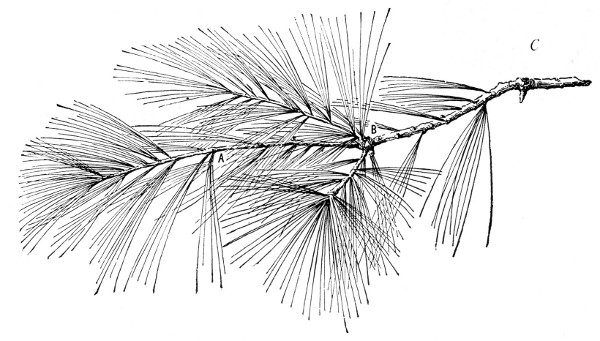
Fig. 232. Shoot of the common white pine, one-third natural size.
It will be interesting to find out something about the leaves of our common evergreens. Let us look at some of them.
The White Pine.
In Fig. 232 is shown a white pine branch. Notice that the leaves are borne in bunches or clusters of five. Each bunch of leaves is produced in the axil (or angle) of a minute scale-like body, but this scale can best be seen and studied on the very young growth. It has been worn away or broken from the older growth by the wind and the rain and the other forces of nature.
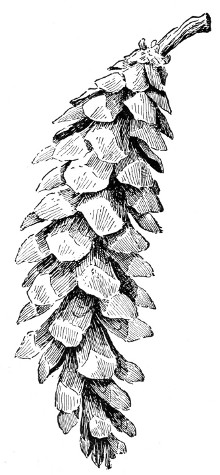
Fig. 233. Cone of white pine. It has shed its seeds. Half natural size.
Another strange fact should be well observed. The leaves of the maples and other deciduous trees are borne only on the present season's growth; but this is not the case in the pines, and kindred trees. If we trace back the growth of the past two or three years, we may find that there are as many leaves on the wood that is two years old as there are on the last season's growth; and in many cases we can find leaves on the part of the branch that is three years old. This means that the pine leaves or needles are two and sometimes three years old when they fall. The Fig. 232 shows the falling of the leaves from the different years' growth. The part of the branch between the tip and A is the last season's growth; between A and B it is two years old; the part between B and C is three years old. The part that grew four seasons ago—beyond C—has no leaves.
The different seasons' growth is indicated not by distinct "rings" as in the case of deciduous trees, but by the branching. Each whorl of branches about a limb represents the end of a season's growth. A young pine tree, or the younger limbs of an old tree, shows this character very plainly.
Do the leaves of the pines and of the other evergreen trees fall at the end of the growing season, as the leaves of most of the deciduous trees do? Or do they gradually become lifeless and fall at any season, from the force of the wind and other natural forces? Tie a large sheet of cloth in the top of some evergreen tree, in such a way as to form a receptacle to catch the leaves. Do you catch leaves in winter as well as in summer? Do you find leaves on the snow?
As there are several different kinds of pines, we must picture carefully in our minds the foliage of the white pine, for it is different from that of any others. The leaves are soft and very slender, and from three to four inches long. The base of each cluster of leaves is at first surrounded by a small sheath. A scar is left when the leaves drop and these scars can often be seen on parts of the branches that are eight or ten years old. Do the leaves of other kinds of trees make a scar when they fall?
The white pine cones, in which the seeds are borne, are conspicuous objects. They are five or six inches long and slightly curved. It will be interesting to find out whether the seeds ripen the same year in which they are formed. Perhaps a cone still containing seeds can be secured. Carefully tear it apart and see where the seeds are attached. Red squirrels sometimes eat the pine seeds. A white pine cone, which has shed its seeds, is shown in Fig. 233.
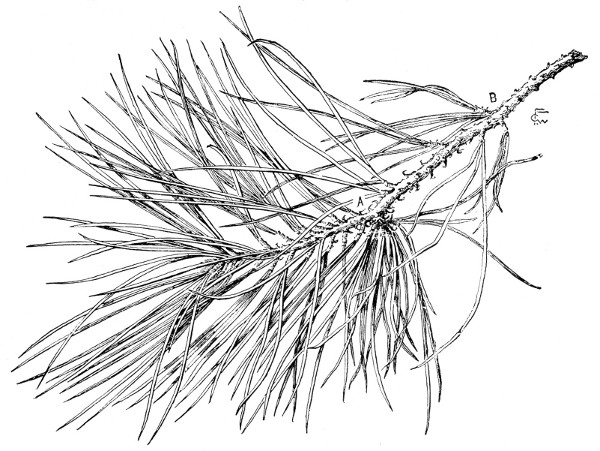
Fig. 234. Shoot of common pitch pine. One-half natural size.
This kind of pine is found widely scattered in New England, New York, and westward to Minnesota and Iowa and along the Alleghany Mountains as far south as Georgia; also in some parts of Canada. It is a valuable lumber tree.
The Pitch Pine.
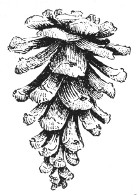
Fig. 235. Cone of pitch pine. One-half natural size.
This kind of pine is very different, in many respects, from the white pine. Let us find some of the differences. Instead of having leaves in bunches of five, it has them in clusters of three, and the base of each cluster is inclosed by a scaly sheath which does not fall away as in the case of the white pine; neither does the little scale-like body upon the branch, in the axil of which the leaf-cluster is borne, fall away, but it may be found just below the leaf, and even on branches that are several years old. Sometimes a sheath is found with only two leaves. We shall want to know, too, how old the leaves are when they fall. Do they remain on the tree longer than the white pine leaves do?
Again, instead of being soft and slender as the white pine leaves are, we shall find that these leaves are rigid and thick in comparison, and stand out straight from the branches. The shape of the leaves is also distinct from that of the white pine needles. See whether you can find any other differences.
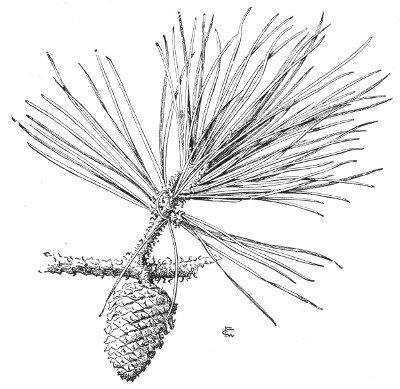
Fig. 236. Pitch pine. One-third natural size.
A pitch pine branch is shown in Fig. 234. The part between the tip and A is the past season's growth. Observe the foliage on the part that is two years old. Part of it has fallen. We often find it on growth which is older than this; but in this specimen there are no leaves on the three-year wood.
The cone of the pitch pine is very unlike that of the white pine. Fig. 235 gives a good idea of one that has shed its seeds. Compare this with Fig. 233; or, better, examine the two kinds of cones side by side. The pitch pine cones are sometimes borne in clusters of two or more and they persist,—that is, remain on the tree for several years after the seeds have ripened and scattered.
Notice how the new cones are borne with reference to last season's growth. Are they attached to the tip of a branchlet? Or are they closely attached to the side of a branch? Figs. 236 and 237 will help us answer this question. The little cones in Fig. 237 near the tip of the twig, are just beginning to form.
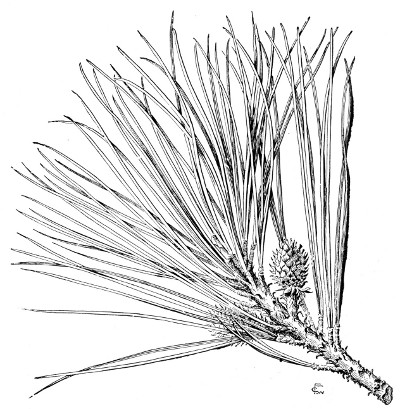
Fig. 237. Pitch pine, showing young cones. Half natural size.
The pitch pine usually grows in sandy or rocky soil and is found in the United States along the Atlantic coast to Virginia, along the mountains to Georgia, westward to Western New York, Eastern Ohio, Kentucky, and Eastern Tennessee. It has little value as timber, because it does not grow large enough.
Scotch and Austrian Pines.
In the same manner other pines may be studied. Fig. 238 shows a cone and a bit of foliage of the Scotch pine, and Fig. 239 the Austrian pine. These cones grew the past season and are not yet mature. After they ripen and shed the seeds which they contain, they will look somewhat like the cone in Fig 235. The Scotch pine has short and blue-green needles. The Austrian pine is coarser, and has long dark-green needles.
There are but two leaves in a cluster on these kinds of pines and we shall find that the sheath which incloses the base of the leaf-cluster is more conspicuous than in either the white or the pitch pine. Do the leaves persist in the Scotch and Austrian pines longer than they do in the others we have examined? Study the cones of these and other pines.
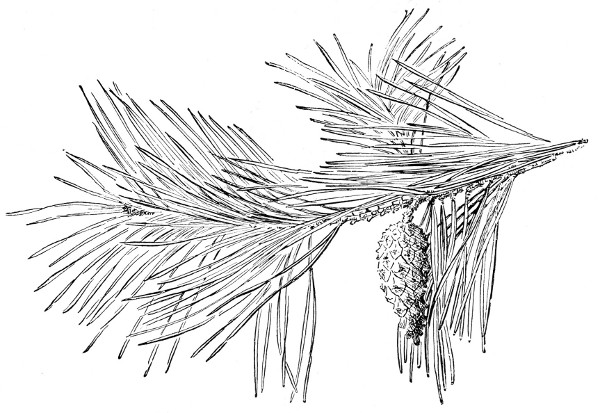
Fig. 238. Scotch pine. Half natural size.
The Scotch and Austrian pines are not native to this country, but are much grown for ornament. They can be found in almost any park and in many other places where ornamental trees are grown.
The Norway Spruce.
The leaves of spruce trees are borne very differently from those of the pines. Instead of being in clusters of two or more, they are single and without a sheath at the base; neither are there scale-like bodies on the branches where the leaves are borne. Notice, too, that the leaves have a very short stem or petiole.
The leaves of the Norway spruce are about one inch long, although the length varies more or less in different parts of the tree and in different trees. They are rather stiff and rigid and sharp-pointed. In a general way, the leaves are four-sided, though indistinctly so.
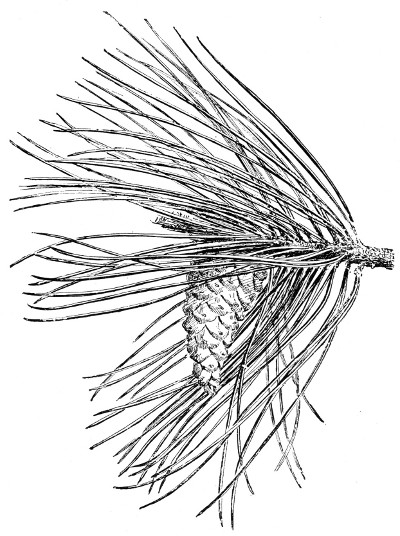
Fig. 239. Austrian pine. One-third natural size.
It will be interesting to study the position which the leaves take on the branches. A hasty glance might give us the impression that the leaves are not produced on the under side of the branches; but a more careful examination will convince us that there are nearly as many on the under side as on the upper. The leaves are all pointing outward from the branch and as nearly upward as is possible. In other words, the leaves grow toward the light.
We must not forget to see how long the leaves of the Norway spruce persist and to find out when the leaf-scars disappear. We can find leaves that must surely be six or seven years old and sometimes we can find them even older than this. The leaf scars, too, remain a long time. The falling of the leaves is illustrated in Fig. 240. It shows the extremities of a limb which is eight years old. The part between the tip and A is last season's growth; between A and B it is two years old; and beyond B is a part that grew three seasons ago. The section beyond C is six years old; from C to D is seven years of age. The four years' growth of this limb not shown in the drawing was as densely covered with foliage as is the part shown in the upper figure; but there are not many leaves between C and D (seven years old) and none on the eight-year-old wood (except those on the branchlets, and these are younger).
The cone of the Norway spruce is nearly as long as that of the white pine, but it is not so rough and coarse as the white pine cone is. The cones are usually borne on the tips of small branchlets, although occasionally one is borne in the manner shown in Fig. 241. The cones usually fall the first winter.
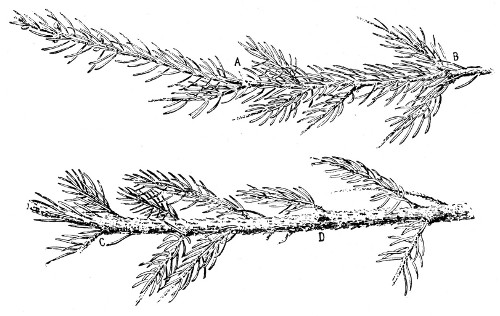
Fig. 240. Twig of the common Norway spruce. Half natural size.
The Norway spruce is not a native of this country, but like the Scotch and Austrian pines, it was introduced from Europe and is grown very widely as an ornamental tree. It is the commonest evergreen in yards and parks.
The Black Spruce and Its Kin.
There are several different kinds of spruces which we find growing in our forests and swamps, and sometimes these are planted for ornament. A sprig of foliage and a cone of one of these,—the black spruce,—is shown in Fig. 242. The foliage is not very unlike that of the Norway spruce, but the cones are very small in comparison. They are about one inch long, though they vary considerably in size. Before they open they are oval or plum-shaped; but when mature and the scales of the cone have expanded, they are nearly globular. They are often borne in clusters, as well as singly, and persist for many years after the seeds have fallen. The position of the cones will depend upon their age. When young they point upward, but they gradually turn downward.
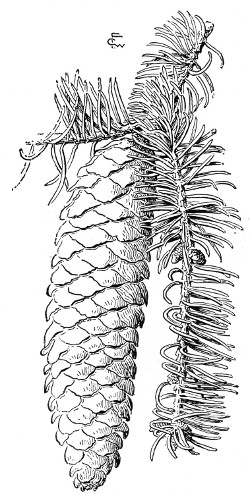
Fig. 241. Cone of Norway spruce. Half size.
In general appearance the white spruce resembles the black very closely. The leaves of the white spruce have a whitish or dusty looking tinge of color and when crushed or bruised give forth a peculiar, disagreeable odor. The cones vary in length from an inch to two inches, and in shape are more cylindrical or finger-shaped than the cone of the black spruce.
The foliage of the red spruce lacks the whitish tinge of color of the white spruce and the cones, which are from one inch to two inches in length, are obovate in shape—that is, the widest place is through the upper part of the cone, and from this point it gradually tapers to the tip. They seldom persist longer than the second summer.
The leaves of all these different kinds of spruces vary greatly in length, thickness, and sharpness of point, according to the part of the tree on which they grow, and their surroundings. The shedding of the leaves on these or other spruces can be determined as easily as in the Norway spruce.
These three spruces like a cold climate and grow in many sections of the northern United States and Canada and farther south in the mountains. They are sometimes all found growing together, but the black spruce likes best the damp, cold swamps, while the others grow best on the drier and better drained lands. The black spruce is commonest. The red spruce is least known.
The Balsam Fir.
This is another evergreen tree which grows naturally in the cold, damp grounds of the northern United States and Canada, and to some extent in the eastern states as far south as West Virginia.
The foliage is borne in much the same manner as that of the spruces; yet there are interesting differences in the characters of these two kinds of leaves. Perhaps the most noticeable difference is in the shape; and the color of the fir leaves will attract our attention because the under side is a silvery color, while the upper side is green. What is the nature of the tip of the leaf and how does it compare with the pines and spruces in this respect? Does the leaf have a stem or petiole or is it attached directly to the branch without any stem? How are the leaves shed?
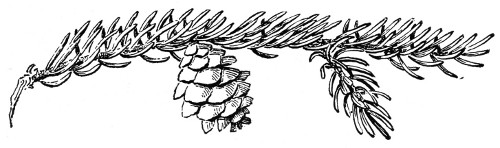
Fig. 242.—Black spruce. Half natural size.
The cones are about three inches long and present a rather delicate appearance. It will be interesting to determine the position of the cones, that is, the direction in which they point, and to learn whether it is the same when they are young as it is after they have matured.
The grayish colored bark of the trunk and limbs bears many "blisters" from which Canada balsam is obtained.
The Hemlock.
A hemlock twig is an interesting object. It may have many characters in common with the spruce and fir; yet the impression which we get from it, or from a large hemlock tree, is entirely distinct. The arrangement of the leaves and the gracefulness of the drooping branchlets are most pleasing. We are led to examine it more closely. We notice that the leaves appear to be borne in two more or less regular rows,—one on each side of the branch or twig; but in reality they come from all sides of the branch, and it is the position which the leaves assume that gives this two-rowed appearance.
The leaves have a short stalk or petiole, and this stalk rests along the side of the branchlet in such a direction that the leaves are placed in single rows on either side of the branch. The petioles of the leaves are nearly parallel with the branch while the leaves often make a decided angle with the petiole. This fact can best be brought out by carefully examining a small twig.
While we are noting the arrangement of the leaves on the branchlets, we should also notice the points of similarity and difference between these leaves and those of the spruces and firs. We shall find that there is more in common, at least so far as shape and color are concerned, between the hemlock and the fir than between the hemlock and the spruce.
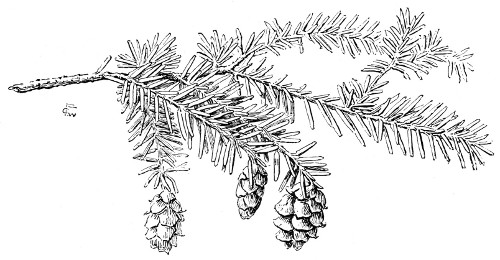
Fig. 243. Spray of the hemlock. Two-thirds natural size.
The small, delicate cones, borne on the tips of the branchlets, will also attract our attention (Fig. 243.) We may wonder at their small size, for they are only about three-quarters of an inch long, and very delicate; yet a second glance at the tree will impress us with the number of cones which the tree bears, and we conclude that, although the cones may be small, yet there are so many of them that there will be no lack of seeds.
It is more difficult to trace the age of a hemlock limb than of many other kinds of trees, yet we can easily determine that many of the leaves are several years old when they fall.
The bark of the hemlock is used in tanning hides for leather. The tree is much used for lumber. Where does it grow?
The Arbor-vitæ.
One might almost wonder, at first sight, if the arbor-vitæ (often, but wrongly, called the white cedar) has any leaves at all. It does possess them, however, but they are very different in size and shape from any of the others that we have examined. They are small scale-like bodies, closely pressed together along the sides of the branchlets, in four rows. Leaves pressed to the branches in this manner are said to be "appressed." The leaves of the arbor-vitæ are so close together that they overlap one another. The leaves are of two distinct shapes, sometimes known as the surface leaves and the flank leaves. The former are located on what appears to be the flattened surface of the branchlets, while the latter are on the sides or edges. See Fig. 244.
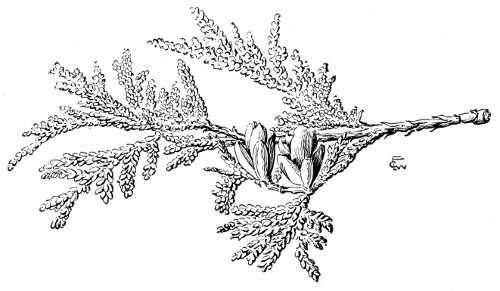
Fig. 244. The Arbor-vitæ. Nearly full size.
If we carefully look at the leaves, we shall notice a raised spot near the point or tip. This is said to be a resin gland. This gland can be seen more plainly on the surface leaves that are two years old.
Most of the leaves persist for at least two and sometimes three years; but even older ones can be found. These older leaves, however, exist not as green, active leaves, but merely as dried and lifeless scales. These lifeless leaves are probably detached from the branches by the forces of nature.
The cones are even smaller than the hemlock cones. They are borne in the axils of the leaves in the same manner as the branchlets and are not conspicuous unless one is close to the tree.
The arbor-vitæ is much planted for hedges and screens, as well as for other ornamental purposes. There are many horticultural varieties. The tree is abundant in a wild state in New York.
Summary of the Kinds of Common Evergreens.
The white pine (Pinus Strobus).—Leaves in clusters of five, soft and slender; cones five or six inches long, slightly curved; bark smooth except on the trunks and larger limbs of old trees, where it is fissured.
The pitch pine (Pinus rigida).—Leaves in clusters of three, from three to four inches long, rather rigid; cones two to three inches long, often in clusters of two or more but frequently borne singly, persisting long after the seeds have been shed; bark more or less rough on the young growth and deeply fissured on the trunks of old trees.
The Scotch pine (Pinus sylvestris).—Leaves usually in clusters of two, from two to four inches long, rigid, of a bluish-green hue when seen in a large mass on the tree; cones two to three inches long and the scales tipped with a beak or prickle.
The Austrian pine (Pinus Austriaca).—Leaves in clusters of two, five or six inches long and somewhat rigid, dark green in color, and persisting for four or five years; cones about three inches long, conical in shape; and scales not beaked or pointed as in the Scotch pine.
The Norway spruce (Picea excelsa).—Leaves borne singly, about one inch long, dark green, four-sided; cones about six inches long, and composed of thin scales, and usually borne on the tips of branchlets. The small branches mostly drooping.
The black spruce (Picea nigra).—In general appearance, this is not very unlike the Norway spruce, but the small branches stand out more horizontally and the cones are only one or one and one-half inches long, recurving on short branches. The cones persist for several years after shedding the seed.
The white spruce (Picea alba).—Leaves about one inch long, having a glaucous or whitish tinge; twigs stout and rigid, of a pale greenish-white color; cones from one to two and one-half inches long, more or less cylindrical or "finger-shaped," and easily crushed when dry.
The red spruce (Picea rubra).—The foliage lacks the whitish tinge of the white spruce and is of a dark or dark yellowish color; twigs stouter than those of the black spruce and not so much inclined to droop; cones about one inch long, obovate, and usually falling by the second summer.
The hemlock (Tsuga Canadensis).—Leaves about one-half inch long, flat with rounded point, green on the upper side, whitish beneath, and borne on short appressed petioles; cones about three-quarters of an inch long, oval or egg-shaped, and borne on the ends of small branchlets and often persisting for some time.
The balsam fir (Abies balsamea).—Leaves narrow, less than one inch long, borne singly, very numerous and standing out from the branchlets in much the way of the spruce; cones about three inches long, cylindrical, composed of thin scales, and standing upright on the branches, or recurved; bark smooth, light green with whitish tinge.
The arbor-vitæ (Thuya occidentalis).—Leaves very small, scale-like, and over-lapping one another in four rows, adhering closely to the branchlets; the cones oblong and small,—a half-inch or less in length,—and composed of but few scales.
LEAFLET XXXIV. THE CLOVERS AND THEIR KIN.[46] By ANNA BOTSFORD COMSTOCK.
The pedigree of honey does not concern the bee, A clover any time to him is aristocracy.
—Emily Dickinson.
There is a deep-seated prejudice that usefulness and beauty do not belong together;—a prejudice based obviously on human selfishness, for if a thing is useful to us we emphasize that quality so much that we forget to look for its beauty. Thus it is that the clover suffers great injustice; it has for centuries been a most valuable forage crop, and, therefore, we forget to note its beauty, or to regard it as an object worthy of æsthetic attention. This is a pitiful fact; but it cheats us more than it does the clover, for the clover blossoms not for us, but for the bees and butterflies as well as for itself. As I remember the scenes which have impressed me most, I find among them three in which clover was the special attraction. One was a well-cultivated thrifty orchard carpeted with the brilliant red of the crimson clover in bloom. One was a great field of alfalfa spread near the shore of the Great Salt Lake, which met our eyes as we came through the pass in the Wasatch Mountains after days of travel in dust-colored lands; the brilliant green of that alfalfa field in the evening sunlight refreshed our eyes as the draught of cold water refreshes the parched throat of the traveller in a desert. And another was a gently undulating field in our own State stretching away like a sea to the west, covered with the purple foam of the red clover in blossom; and the fragrance of that field settled like a benediction over the acres that margined it. But we do not need landscapes to teach us the beauty of clover. Just one clover blossom studied carefully and looked at with clear-seeing eyes, reveals each floweret beautiful in color, interesting in form, and perfect in its mechanism for securing pollination.
The clover is especially renowned for its partnerships with members of the animal kingdom. It readily forms a partnership with man, thriftily growing in his pastures and meadows, while he distributes its seed. For ages it has been a special partner of the bees, giving them honey for carrying its pollen. Below the ground it has formed a mysterious partnership with microbes, and the clover seems to be getting the best of the bargain.
For many years clover was regarded as a crop helpful to the soil, and one reason given was the great length of the roots. Thus the roots of red clover often reach the depth of several feet, even in heavy soil, which they thus aerate and drain, especially when they decay and leave channels. But this is only half the story; for a long time people had noted that on clover roots were little swollen places or nodules, which were supposed to have come from some disease or insect injury. The scientists became interested in the supposed disease, and they finally ascertained that these nodules are filled with bacteria, which are the underground partners of the clovers and other legumes. These bacteria are able to fix the free nitrogen of the air, and make it available for plant-food. As nitrogen is the most expensive of the fertilizers, any agency which can extract it from the free air for the use of plants is indeed a valuable aid to the farmer. Thus it is that in the modern agriculture, clover or some other legume is put on the land once in three or four years in the regular rotation of crops, and it brings back to the soil the nitrogen which other crops have exhausted. An interesting fact about the partnership between the root bacteria and the clover-like plants is that the plants do not flourish without this partnership, and investigators have devised a method by which these bacteria may be scattered in the soil on which some kinds of clover are to be planted, and thus aid in growing a crop. This method is to-day being used for the introduction of alfalfa here in New York State. But the use of clover as a fertilizer is not limited to its root factory for capturing nitrogen; its leaves break down quickly and readily yield the rich food material of which they are composed, so that the farmer who plows under his second-crop clover instead of harvesting it, adds greatly to the fertility of his farm.
The members of three distinct genera are popularly called clovers: The True Clovers (Trifolium), of which six or seven species are found in New York State, and more than sixty species are found in the United States. The Medics (Medicago), of which four species are found here. The Melilots (Melilotus), or sweet clovers, of which we have two species.
The True Clovers. (Trifolium.)
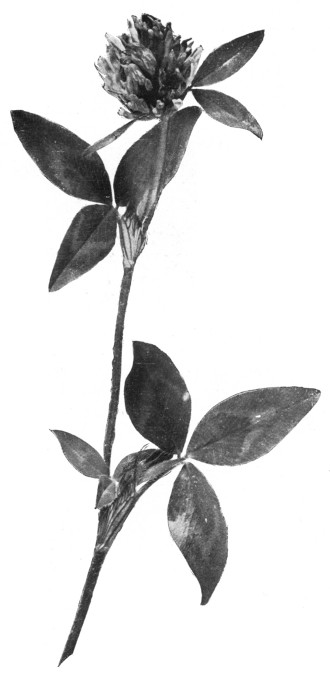
Fig. 245. The common red clover.
The Red Clover (Fig. 245). (Trifolium pratense.[47])—This beautiful dweller in our fields came to us from Europe, and it is also a native of Asia. It is the clover most widely cultivated in New York State for fodder, and is one of our most important crops. Clover hay often being a standard of excellence by which other hay is measured. The export of clover seed from the United States has sometimes reached the worth of two million dollars per year, and this great industry is supposed to be carried on with the aid of that other partner of the red clover, the bumblebee. Bumblebees had to be imported into Australia before clover seed could be produced there. The whole question of the relation of the bumblebee to the pollination of clover no doubt needs to be re-studied, for recent observations have led to the contesting of prevailing opinions. It has been supposed that the failure of the clover seed crop in some places is due to the destruction of bumblebees; whether this is true or not, we are certain that bumblebees visit clover blooms, and the teacher can observe for himself.
There is a more perennial form of red clover, known as variety perenne. It is distinguished from the common form of red clover by its taller growth and mostly less hairy herbage, and by the fact that the flower-head is usually somewhat stalked. Some persons regard it as a hybrid of red and zig-zag clover.
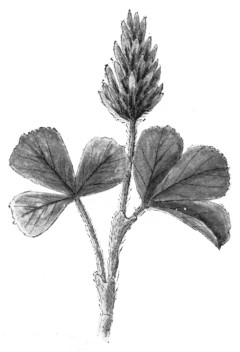
Fig. 246. Crimson clover.
Zig-Zag Clover. (T. medium.)—This is another species of red clover, resembling the one just discussed, except that its flower-head rises on a long stalk above the upper leaves, while the red clover has the flower-head set close to these leaves. The color of the blossom is darker than in red clover, and the flower-head is looser. The stems of the zig-zag clover are likely to be bent at angles and thus it gets its name. It is a question whether this species is really grown on farms. It is probable that some or all of the clover that passes under this name is Trifolium pratense var. perenne. At all events, the zig-zag clover seems to be imperfectly understood by botanists and others.
Crimson Clover—Scarlet Clover (Fig. 246). (T. incarnatum.)—While this beautiful clover grows as a weed in the southern parts of our State, it has only recently begun to play an important part in our horticulture. It is an annual, and its home is the Mediterranean region of Europe. It thrives best in loose, sandy soils, and in our State is chiefly used as a cover-crop for orchards, and to plow under as a fertilizer. It usually has bright, crimson flowers, arranged in a long, pointed head, and its brilliant green fan-shaped leaves make it the most artistically decorative of all our clovers.
Buffalo Clover (Fig. 247). (T. reflexum.)—This is sometimes taken for a variety of the red clover, but only a glance is needed to distinguish it. While the head is perhaps an inch in diameter the flowerets are not directed upward and set close as in the red clover, but each floweret is on a little stalk, and is bent abruptly backward. The flowers are not pink. The standard is red, while the wings and keel are nearly white. The leaves are blunt at the tip. It grows in meadows in western New York and westward. This species is native to this country.
Alsike Clover. (T. hybridum.)—This is a perennial and grows in low meadows and waste places from Nova Scotia to Idaho. It was introduced from Europe. It is especially valuable in wet meadows, where the red clover would be drowned. The blossoms of the alsike look like those of the white clover except that they are a little larger and are pink; but the long branching mostly upright stems are very different in habit from the creeping stems of the white clover; the blossoms are very fragrant.
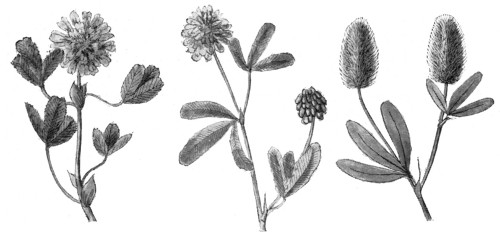
Fig. 247. Three clovers, respectively, Buffalo, Yellow, and Rabbit-foot clover.
The White Clover. (T. repens.)—This beautiful little clover, whose leaves make a rug for our feet in every possible place, is well known to us all. It is the clover best beloved by honey-bees, and the person who does not know the distinct flavor of white clover honey has lost something out of life. While in hard soil the white clover lasts only two or three years, on rich, moist lands it is a true perennial. While it was probably a native in the northern part of America, yet it is truly cosmopolitan and may be found in almost all regions of the temperate zones. Very likely the common stock of it is an introduction from Europe. By many this is considered to be the original shamrock.
The Yellow, or Hop Clover (Fig. 247). (T. agrarium.)—This friendly little plant, filling waste places with brilliant green leaves and small yellow flower-heads, is not considered a clover by those who are not observant. But if the flowerets in the small, dense heads are examined, they will be seen to resemble very closely those of the other clovers. The stems are many-branched and often grow a foot or more in height. The flowers are numerous, and on fading turn brown, and resemble the fruit of a pigmy hop vine, whence the name. Its leaves are much more pointed than those of the medics, with which it might be confused because of its yellow flowers.
Low Hop Clover, or Hop Trefoil. (T. procumbens.)—This resembles the above species, except that it is smaller and also more spreading, and the stems and leaves are more downy.
The Least Hop Clover. (T. dubium.)—This may be readily distinguished from the above species by the fact that its yellow flowerets occur from three to ten in a head. This is said by some to be the true shamrock, although the white clover is also called the shamrock.
The Rabbit-Foot, or Stone Clover (Fig. 247). (T. arvense.)—This is another clover not easily recognized as such. It grows a foot or more in height and has erect branches. The leaflets are narrow and all arise from the same point. The flowerets occur in long, dense heads. The calyx is very silky, and the lobes are longer than the white corollas, thus giving the flower-head a soft, hairy look, something like the early stages of the blossom of the pussy willow. Because of its appearance it is often called "pussy clover."
The Medics. (Medicago.)
Alfalfa (Fig. 248). (Medicago sativa.)—This is the veteran of all the clovers, for it has been under cultivation for twenty centuries. It is a native of the valleys of western Asia. In America it was first introduced into Mexico with the Spanish invasion. It was brought from Chile to California in 1854, where it has since been the most important hay crop. In fact, there is no better hay than that made from alfalfa. It was probably introduced into the Atlantic States from southern Europe, and has grown as a weed for many years in certain localities in New England and the Middle States; only recently has it been considered a practicable crop for this climate, although it was grown in Jefferson Co., N. Y., in 1791. Its special value is that it is a true perennial, and may be cut three times or more during a season, and when once established it withstands hot, dry weather. It is of marvelous value to the semi-arid regions. The alfalfa flower is blue or violet, and grows in a loose raceme. The plant grows tall and its stems are many branched. This and all these medics are introduced from Europe.
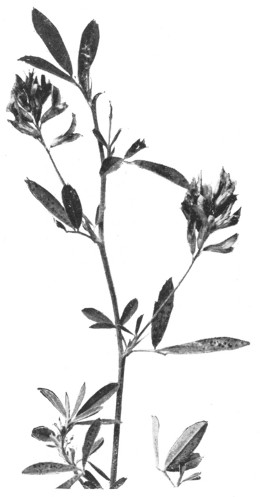
Fig. 248. Alfalfa, foliage and flowers.
Black or Hop Medic. (M. lupulina.)—This would hardly be called a clover by the novice. The long stems lie along the ground, and the tiny yellow flower-heads do not much resemble the clover blossom. It is a common weed in waste places in our State. It is perennial.
The Toothed Medic. (M. denticulata.)—Instead of having the yellow flowerets in a dense head, this species has them in pairs or perhaps fours, or sometimes more. It is widely distributed as a weed, and is also introduced as a pasture plant for early grazing. It is of little value as hay.
The Spotted Medic. (M. Arabica.)—This very much resembles the preceding species except that the leaves are likely to have on them conspicuous dark spots near the center. Like the preceding species it is an annual and a weed, and has also been introduced as a plant for early grazing. This and the toothed medic are known to farmers under the name of bur-clover. The reason for this name is found in the seed-pod, which is twisted in a spiral and has an outer margin of curved prickles.
The Melilots, Or Sweet Clovers. (Melilotus.)
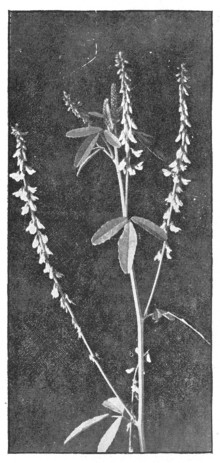
Fig. 249. White sweet clover.
In driving or walking along the country roads, we may find ourselves suddenly immersed in a wave of delightful fragrance, and if we look for the source we may find this friendly plant flourishing in the most forbidding of soils. Growing as a weed, it brings sweet perfume to us, and at the same time nitrogen, aeration and drainage to the hopeless soil, making rich those places where other weeds have not the temerity to attempt to grow. When the soil is generous, the sweet clover often grows very tall, sometimes as high as ten feet. It is a cheerful, adaptable and beneficial plant, and I never see it without giving it a welcome, which, I am sorry to say, I cannot always grant to other roadside wayfarers. The sweet clovers are European.
The White Sweet Clover (M. alba) is sometimes called Bokhara clover and has white flowers (Fig. 249).
The Yellow Sweet Clover (M. officinalis) has yellow blossoms. It has interesting old English names, such as Balsam Flowers, King's Clover and Heartwort.
Questions on the Clovers.
Two general kinds of types of studies are to be made of the clovers: identification studies, whereby you will come to know the kinds of clover; life history studies, whereby you will come to know under what conditions the plants live and thrive. The latter is the more important, but the former usually precedes it, for one is better able to discover and discuss the biological questions when he is acquainted with the species. The following questions will bring out some of the important biological aspects:
1. How many of the true clovers, the medics, and the sweet clovers do you know?
2. Send me properly labelled pressed specimens of the leaves and blossoms of the clovers that you have been able to find.
3. Dig a root of red clover and find the nodules on it. Please describe them.
4. What methods does the U. S. Department of Agriculture employ to inoculate the soil with bacteria so that alfalfa may grow?
5. How do clover roots protect the land from the effects of heavy rains?
6. How do the clover plants conserve the moisture in the soil?
7. How does this conservation of moisture aid the farmer and orchardist?
8. What is a cover-crop, and what are its uses?
9. Why do farmers sow red clover with grass seed?
10. How do the habits of the stems of white clover differ from those of other clovers?
11. Why is white clover so desirable for lawns?
12. Compare the floweret of the red clover with the sweet pea blossom and describe the resemblance.
13. Study a head of white clover from the time it opens until it is brown, and tell what changes take place in it day by day.
14. What has happened to the flowerets that are bent downward around the stalk?
15. Watch one of these flowerets deflect, and describe the process.
16. How many flowerets do you find in a head of red clover? Of white clover? Of alsike?
17. Which flowerets open first in a head of red clover?
18. Describe a clover seed. Describe a seed of alfalfa.
19. What insects do you find visiting the red clover blossoms? The white clover blossoms?
Alfalfa, or Lucerne.[48]
The alfalfa plant is just now coming into great prominence in New York State. Every teacher, particularly in the rural schools, will need to know the plant and to have some information about it.
What alfalfa is.—It is a clover-like plant. It is perennial. It has violet-purple flowers. The leaves have three narrow leaflets. It sends up many stiff stems, 2 to 3 feet high. The roots go straight down to great depths.
Why it is important.—It is an excellent cattle food, and cattle-raising for dairy purposes is the leading special agricultural industry in New York State. In fact, New York leads all the States in the value of its dairy products. Any plant that is more nutritious and more productive of pasture and hay than the familiar clovers and grasses will add immensely to the dairy industry, and therefore to the wealth of the State. Alfalfa is such a plant. It gives three cuttings of hay year after year in New York State, thereby yielding twice as much as clover does. In the production of digestible nutrients per acre ranks above clover as 24 ranks above 10. When once established it withstands droughts, for the roots grow deep.
Alfalfa is South European. It was early introduced into North America. It first came into prominence in the semi-arid West because of its drought-resisting qualities, and now it has added millions of dollars to the wealth of the nation. Gradually it is working its way into the East. It is discussed in the agricultural press and before farmers' institutes. Last year the College of Agriculture offered to send a small packet of seeds to such school children in New York State as wanted to grow a little garden plat of it. About 5,000 children were supplied. The teacher must now learn what alfalfa is.
In nearly every rural community, sufficient alfalfa can be found for school purposes. In many places it has run wild along roadsides.
On these plants make the following observations:
1. Under what conditions have you found alfalfa growing? How did the plant come to grow there,—sown, or run wild?
2. Describe the form of the root. How does the root branch?
3. Do you find the little tubercles or nodules on the roots? On what part of the roots? How large? How numerous?
4. The crown of the plant (at the surface of the ground),—describe it, and how the tops and the roots start from it.
5. The stems,—how many from each crown, whether erect or prostrate, how they branch.
6. The leaves,—simple or compound? Form? Edges entire or fine toothed? Do the leaves "sleep" at night, as those of clover do?
7. Do you find any distinct spots on the leaves? What do you think is the cause of them?
8. Flowers,—how borne (whether singly or in clusters), color, form, resemblance to any other flowers you may know. Do they vary in color?
9. If possible, find the seed-pods and seeds, and describe.
10. Make inquiries as to whether alfalfa is becoming well known in your vicinity.
Agricultural Account of Alfalfa.
You may be asked some practical questions about alfalfa; therefore we give you a brief agricultural account of it. If you desire further information, write to the College of Agriculture, Ithaca, N. Y., for Bulletin 221, "Alfalfa in New York."
Alfalfa is grown mostly for hay. It is not adapted to pasture, because the new growth springs from the crown at the surface of the ground, and if this is destroyed the growth will not be renewed vigorously. New York is a hay-producing State. Grain feeds can be grown more cheaply in the West. It is of great importance to the State, therefore, if a better hay-producing plant can be found. We have seen that New York leads the States in dairy cattle. Other livestock also is abundant. Last year more than half a million horses and mules were fed in the State.
Success has not attended efforts to grow alfalfa in all parts of New York. This is due to two principal reasons: (1) farmers have not known the plant and its habits well enough to give it the care and treatment it demands; (2) the soils of many localities, because of their physical condition or composition, are not suitable for the plant.
The alfalfa seedling is not a strong plant. It cannot compete with weeds nor overcome adverse conditions of moisture; it cannot adapt itself to conditions resulting from poor preparation of land, and it is not vigorous in its ability to get food from any source. Care must be given to the preparation of the land in order that sufficient moisture may be supplied during the early stages of growth and that there may be an abundance of quickly available plant-food. After growth has started, alfalfa has the power to get some of its nitrogen from the air through the nodules which grow upon its roots; yet during the early stages of growth it is essential that the soil be supplied with all elements of plant-food in available form.
While alfalfa requires an abundance of moisture for its best growth and development, yet it will not grow in soils that hold water for any considerable length of time. Such soils are usually those with an impervious subsoil or hard-pan, or those of clay or silt structure which retain free water to the exclusion of air. Therefore, it is important that alfalfa soils be well and uniformly drained, either by natural conditions or by underground drains. One other essential of prime importance is that the soil be neutral or alkaline in its reaction; in other words, that it contain no free acid. Limestone or blue-grass soils are ideal in this regard for alfalfa. If acid is present, the difficulty may be corrected either wholly or in part by the application of 500 to 2,000 pounds of lime per acre.
As in most other legumes (members of the family Leguminosæ, including peas, beans, clovers), there is a peculiar relationship existing between the plant and excrescences or nodules upon its roots. These nodules are essential to the normal growth and development of the plant. They contain bacteria, and these bacteria have the power of "fixing" or appropriating the free atmospheric nitrogen in the soil. Legumes are "nitrogen-gatherers," whereas most other plants secure their nitrogen only from decomposing organic matter. Failure to have the soil inoculated with the proper bacteria for alfalfa is the cause for many failures with the crop. In most instances when the plants do not make satisfactory growth, or have a yellow, dwarfed appearance, the trouble can be traced to the absence of these bacteria from the soil, and hence to a lack of nodules on the roots. The relationship existing between the plant and the organism is one of mutual benefit. Each kind of leguminous plant seems to have its characteristic bacterium, which grows on no other plant, although this question is not thoroughly settled.
Farmers are becoming aware of this requisite in alfalfa culture and usually supply it in two different ways. The older method is to take the surface soil from an old alfalfa field, where the plants have grown well and where nodules are to be found on the roots, and to sow it on the land to be seeded at the rate of one hundred or more pounds per acre. In this way the soil becomes inoculated with the bacteria, and as the young plants spring into growth the bacteria develop on the roots. Another method is to inoculate the seed before sowing with artificial cultures of the bacteria. Both of these methods are usually successful, and if soil conditions are right the chances for failure are few.
Alfalfa should be cut when it opens into flower. At this time the stems and leaves contain their highest percentage of nutrients, the leaves do not so easily fall off in curing, and the stems are not so woody. Besides these reasons, if cutting be delayed until after flowering, the plant may not spring quickly into subsequent growth.
Disease does not spare the alfalfa plant. Both leaves and roots are attacked, the leaf spot being serious. The parasitic dodder is a serious enemy in some parts of New York State.
LEAFLET XXXV HOW PLANTS LIVE TOGETHER.[49] By L. H. BAILEY.
To the general observer, plants seem to be distributed in a promiscuous and haphazard way, without law or order. This is because he does not see and consider.
The world is now full of plants. Every plant puts forth its supreme effort to multiply its kind. The result is an intense struggle for an opportunity to live.
Seeds are scattered in profusion, but only the few can grow. The many do not find the proper conditions. They fall on stony ground. In Fig. 250 this loss is shown. The trunk of an elm tree stands in the background. The covering of the ground, except about the very base of the tree, is a mat of elm seedlings. There are thousands of them in the space shown in the picture, so many that they make a sod-like covering which shows little detail in the photograph. Not one of these thousands will ever make a tree.
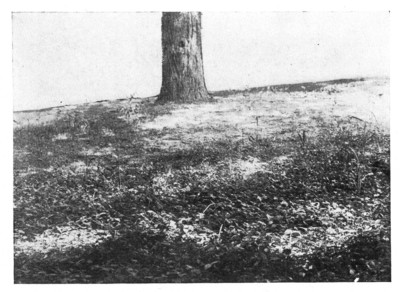
Fig. 250. A carpet of young elms, all of which must perish.
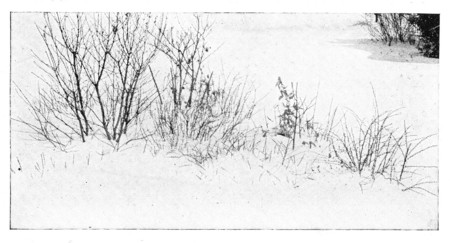
Fig. 251. A plant society waiting for the spring.
Since there is intense competition for every foot of the earth's surface that is capable of raising plants, it follows that every spot will probably have many kinds of plant inhabitants. Plants must live together. They associate; they become adapted or accustomed to each other. Some can live in shade; they thrive in the forest, where sun-loving plants perish. Others prefer the sun, and thereby live together. There are plant societies.
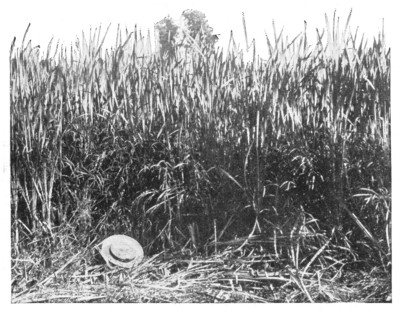
Fig. 252. Weak, narrow-leaved grasses grow in the cat-tail forest.
Every distinct or separate area has its own plant society. There is one association for the hard-tramped dooryard,—knot-weed and broad-leaved plantain with interspersed grass and dandelions; one for the fence-row,—briars and choke-cherries and hiding weeds; one for the dry open field,—wire-grass and mullein and scattered docks; one for the slattern roadside,—sweet clover, ragweed, burdock; one for the meadow swale,—smartweed and pitchforks; one for the barnyard,—rank pigweeds and sprawling barn-grass; one for the dripping rock-cliff,—delicate bluebells and hanging ferns and grasses. Indefinitely might these categories be extended. We all know the plant societies, but we have not considered them.
In every plant society there is one dominant note. It is the individuality of one kind of plant which grows most abundantly or overtops the others. Certain plant-forms come to mind when one thinks of willows, others when he thinks of an apple orchard, still others when he thinks of a beech forest. The farmer may associate "pussly" with cabbages and beets, but not with wheat and oats. He associates cockle with wheat, but not with oats or corn. We all associate dandelions with grassy areas, but not with burdock or forests.
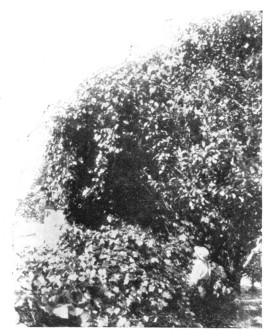
Fig. 253. The wild grape covers the treetop, and the children play in the bower. The grape is searching for light.
It is impossible to open one's eyes out-of-doors, outside the paved streets of cities, without seeing a plant society. A lawn is a plant society. It may contain only grass, or it may contain weeds hidden away in the sward. What weeds remain in the lawn? Only those which can withstand the mowing. What are they? Let a bit of lawn grow as it will for a month, and see what there is in it. A swale, a dry hillside, a forest of beech, a forest of oak, a forest of hemlock or pine, a weedy yard, a tangled fence-row, a brook-side, a deep quiet swamp, a lake shore, a railroad, a river bank, a meadow, a pasture, a dusty roadway,—each has its characteristic plants. Even in the winter, one may see these societies,—the tall plants still asserting themselves, others of less aspiring stature, and others snuggling just under the snow (Fig. 251).
Often these societies are in the nature of overgrowth and undergrowth—one society living beneath another. Of such are forest societies. Few woods are so dark that some plants do not grow on the ground, unless they are evergreen or coniferous woods. Even in humbler communities, the overgrowth and undergrowth are usually apparent if one looks closely. Separate the cat-tails in the dense swamp and see the weak and narrow-leaved grasses growing between (Fig. 252). Note the clover, young grasses, and other plants between the grass in the meadow: the farmer says that his meadow has good "bottom."
Some plants even grow on top of other plants. It is their way of getting light. Of such are the climbers. Note the mantle which the wild grape throws over the trees (Fig. 253). Often the supporting tree is smothered and killed.
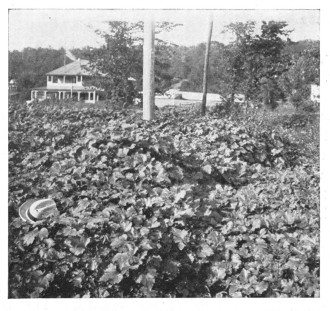
Fig. 254. A colony of clotbur.
When an area is newly cleared, many plants rush for it. Quickly it is covered with ambitious growths,—pokeweeds, fireweeds, thistles, briars, nettles. Often each plant occupies large places alone, making clumps or patches. These patches are plant colonies,—made up mostly of one species or kind (Fig. 254). But as the struggle tightens, other plants insinuate themselves into the colony and it is broken up; a mixed population results. Sometimes these colonies are broken up by the shade of trees and tall bushes which have come up near them, for all neglected areas, in this part of the world, tend to return to forest if they are not mown, pastured or burned. Mown and pastured areas run into grass, for the grass withstands the cutting and grazing. In burned areas the struggle begins anew when the fire has passed.
Plant societies are easy to study for the school. The study of them appeals to the desire for exploration and adventure, and adds zest to the excursion. Go to a swale, swamp, roadside, forest, weedy field, or other place, and ask the pupil to note: (1) that the flora of the place is unlike that of places with different physical features; (2) that these particular plants grow together because they can all survive under similar conditions; (3) what these conditions are,—whether sun, shade, dry soil, wet soil, sand, clay, rock; (4) what particular plant is most abundant or gives character to the society.
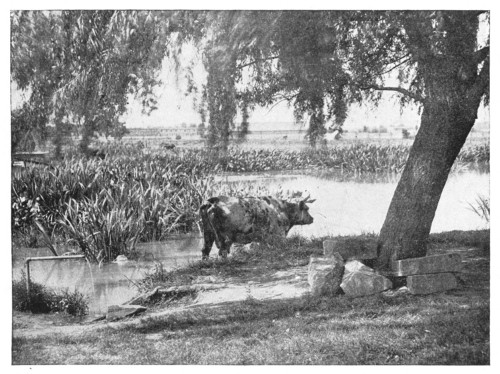
Fig. 255. Two plant societies,—the close-bitten sward and the rushy pond.
Study one society thoroughly. Make lists of the kinds of plants and of the relative numbers of each. If the names of the plants are not known, call them by numbers; make dried specimens of them for reference. When another society is visited, repeat these observations, and compare one society with another.
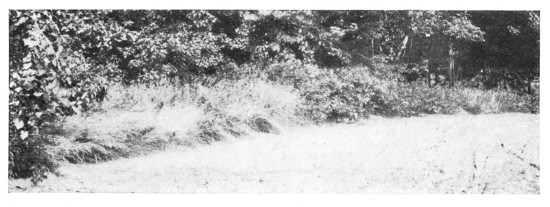
Fig. 256. The edge of the road. Trees and bushes crowd the drive-way, and a ribbon of grass and weeds has pushed itself to the very margin.
Ask every plant why it grows there.
LEAFLET XXXVI. PLANTING A PLANT.[50] By L. H. BAILEY.
Most persons are interested in plants, even though they do not know it. They enjoy the green verdure, the brilliant flower, the graceful form. They are interested in plants in general. I wish that every person were interested in some plant in particular. There is a pleasure in the companionship, merely because the plant is a living and a growing thing. It expresses power, vitality. It is a complete, self-sufficient organism. It makes its way in the world. It is alive.
The companionship with a plant, as with a bird or an insect, means more than the feeling for the plant itself. It means that the person has interest in something real and genuine. It takes him out-of-doors. It invites him to the field. It is suggestive. It inculcates a habit of meditation and reflection. It enables one to discover himself.
I wish that every child in New York State had a plant of his own, and were attached to it. Why cannot the teacher suggest this idea to the pupils? It may be enough to have only one plant the first year, particularly if the pupil is young. It matters little what the plant is. The important thing is that it shall be alive. Every plant is interesting in its way. A good pigweed is much more satisfactory than a poor rosebush. The pupil should grow the plant from the beginning. He should not buy it ready grown, for then it is not his, even though he own it.
It is well to begin with some plant that grows quickly and matures early. One is ambitious in spring, but his enthusiasm may wither and die in the burning days of summer. If possible, grow the plant in the free open ground; if this is not feasible, grow it in a pot or box or tin can. Take advantage of the early spring enthusiasm. Choose hardy and vigorous plants: sow the seeds when the "spirit moves."
If a pupil is interested in kitchen-garden vegetables, recommend lettuce and radish, or a potato. If in flowers, suggest sweet pea, bachelor's button or blue-bottle, annual phlox, candytuft, China aster. If in fruits, suggest strawberry.
We desire to inaugurate a general movement for the planting of plants. The school ground should be planted. Private yards should be planted. Roadsides should be planted. In some cities and villages there are committees or other organizations whose object it is to encourage the planting of public and private places. Sometimes this organization is connected with the school interest, sometimes with a local horticultural or agricultural society, sometimes with a business men's organization. There should be such a committee in every village and town. We wish that the teachers might help in this work, for they would not only be lending their aid to planting, but also be interesting their pupils in some concrete and useful work, and teaching them the value of public spirit. Arbor Day should be more than a mere ceremonial. It should be a means of awakening interest in definite plans for the adornment of the neighborhood and of directing the attention of the children nature-ward.
LEAFLET XXXVII. CUTTINGS AND CUTTINGS.[51] By L. H. BAILEY.
Perhaps no subject connected with the growing of plants awakens so much popular wonder and inquiry as their propagation by means of cuttings and grafts. We assume that propagation by means of seeds is the natural way, and therefore do not wonder, notwithstanding that it is wonderful. We assume that propagation by cuttings is wholly unnatural, and therefore never cease to wonder, notwithstanding that this is less wonderful than the other. To common minds, common things are not wonderful. Mere commonplace familiarity takes away the charm, for such minds have no desire of inquiry. The well trained mind goes beneath the surface, and wonders at everything; and this wonder, grown old and wise, is the spirit of science.
A plant does not have a definite number of parts, as an animal does. It may have ten branches or fifty. Each of these branches may do what every other branch does—produce leaves, flowers, fruits, seeds. It is not so with the higher animals, for in them each part may do something which some other part cannot do: if the part is a leg, it runs; if an ear, it hears. Each part serves the whole animal; and it cannot reproduce the animal. But in the plant, each branch lives for itself: it grows on the parent stock; or, if it is removed, it may grow in the soil. And if it grow in the soil, it is relieved of competition with other branches and grows bigger: it makes what we call a plant.
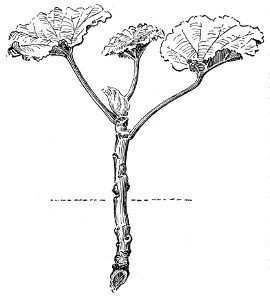
Fig. 257. Geranium cutting. One-half natural size.
Having thus bewildered my reader, I may say that a bit of a plant stuck into the ground stands a chance of growing; and this bit is a cutting. Plants have preferences, however, as to the kind of bit which shall be used; but there is no way of telling what this preference is except by trying. In some instances this preference has not been discovered, and we may say that the plant cannot be propagated by cuttings. Most plants prefer that the cuttings be made of the soft or growing wood, of which the "slips" of geraniums and coleus are examples. Others grow equally well from cuttings of the hard or mature wood, as currants and grapes; and in some instances this mature wood may be of roots, as in the blackberry. Somewhat different principles underlie the handling of these two kinds of cuttings; and these principles we may now consider. We shall find it excellent practice to set the pupils to making cuttings now and then. If we can do nothing more, we can make cuttings of potatoes, as the farmer does; and we can plant them in a box in the window.
The Softwood Cutting.
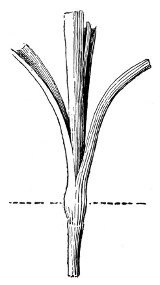
Fig. 258. Carnation cutting. Natural size.
The softwood cutting is made from tissue which is still growing, or at least from that which is not dormant. It must not be allowed to wilt. It must, therefore, be protected from direct sunlight and dry air until it is well established; and if it has many leaves, some of them should be removed, or at least cut in two in order to reduce the evaporating surface. Keep the soil uniformly moist; and avoid soils which contain much decaying organic matter, for these soils are breeding places of fungi which attack the soft cutting and cause it to "damp off."
For most plants, the proper age of maturity of wood for the making of cuttings may be determined by giving the twig a quick bend; if it snaps and hangs by the bark, it is in proper condition; if it bends without breaking it is too young and soft or too old; if it splinters, it is too old and woody.
The tips of strong upright shoots usually make the best cuttings. Preferably each cutting should have a joint or node near its base; and if the internodes are short, it may comprise two or three joints. Allow one to three leaves to remain at the top. If these leaves are large, cut them in two.
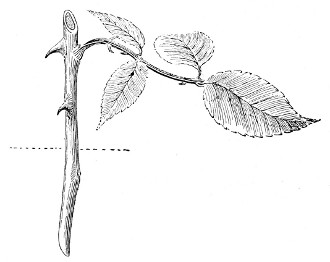
Fig. 259. Rose cutting. More than one-half natural size.
Insert the cutting half or more its length in clean sand or gravel. Press the earth firmly about it. Throw a newspaper over the bed to exclude the light—if the sun strikes it—and to prevent too rapid evaporation. See that the soil is moist clear through, not on top only.
Mason's sand is good earth in which to start cuttings. Or fine gravel—sifted of most of its earthy matter—may be used. If the cuttings are to be grown in a window, put three or four inches of the earth in a shallow box or a pan. A soap box cut in two lengthwise, so that it makes a box four or five inches deep—like a gardener's flat—is excellent.
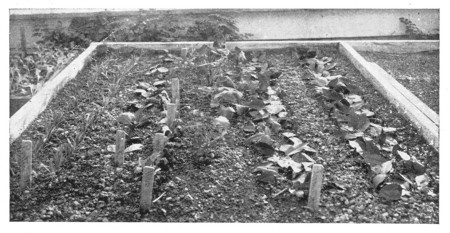
Fig. 260. Cutting-bed, showing carnations and roses.
If the box does not receive direct sunlight, it may be covered with a pane of glass to prevent evaporation; and then the children may see the plants more readily. But take care that the air is not kept too close, else the damping-off fungi may attack the cuttings and they will rot at the surface of the ground. See that the pane is raised a little at one end to afford ventilation; and if water collects in drops on the under side of the glass, remove the pane for a time. Cuttings of common plants, as geranium, coleus, fuchsia, carnation, should be kept in a living-room temperature.
The pictures are better than words. The line across them shows where the soil comes. There are softwood cuttings of the geranium (Fig. 257), the carnation (Fig. 258), and the rose (Fig. 259); and there is a gardener's cutting bed (Fig. 260) with cuttings of carnations and roses.
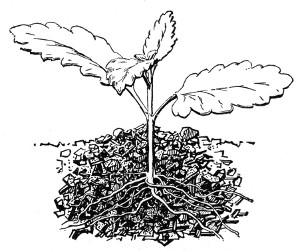
Fig. 261. Verbena cutting ready for transplanting. Two-thirds natural size.
Be patient. As long as the cuttings look bright and green, they are safe. It may be a month before roots form. When roots have formed, the plants will begin to make new leaves at the tip. Then they may be transplanted into other boxes or into pots. The verbena in Fig. 261 is just ready for transplanting. Each child will want a plant.
It is not always easy to find growing shoots from which to make the cuttings. The best practice is to cut back some old plant severely, then keep it warm and well watered, and thereby force it to throw out new shoots. The old geranium plant from the window garden, or the one taken up from the lawn bed, may be served this way. See Fig. 262. This may seem hard treatment, but that is all the old plant is good for; it has passed its usefulness for bloom. The best plants of the geranium and the coleus and many window plants are those which are not more than one year old. The cuttings that are made in January, February, or March will give compact blooming plants for the next winter; and thereafter new ones take their place.
Some plants may be propagated by means of cuttings of leaves. The Rex begonias or "beefsteak geraniums" are the commonest examples. The large, nearly mature leaf is divided into triangular pieces, each piece containing at its point a bit of the leaf-base (top of the leaf-stalk). This kind of cutting is shown in Fig. 263. This base is sometimes split (as at o) by gardeners to hasten the formation of roots. Only the tip of the cutting is stuck into the sand; otherwise it is treated like other softwood cuttings.
The Hardwood Cutting.
Many plants grow readily from cuttings of ripe or dormant wood. The willows cast their branchlets in snow and wind, and these, falling in pleasant places propagate their kind; and thus the river sides and the lake shores become willow-crowned.
Grapes, currants, gooseberries, poplars readily take root from the hardwood. Fig. 264 shows a currant cutting. It has only one bud above the ground.
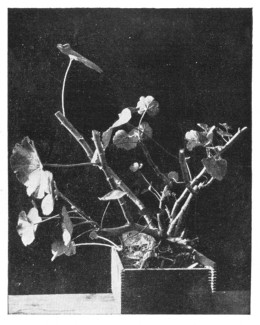
Fig. 262. Old geranium plant cut back to make it throw out shoots from which cuttings can be made.
The best results are attained when the cuttings are made in the fall, and then buried until spring in sand in the cellar. They are not idle while they rest. The lower end calluses or heals, and the roots form more readily when the cutting is planted in the spring. But if the children are interested, take cuttings at any time in winter, plant them in a deep box in the window, and watch. They will need no shading or special care.
When plants of any variety are scarce, the cuttings may be shorter. Sometimes they are reduced to a single "eye" or bud, with an inch or two of wood attached; and these single-eye cuttings are planted much as one plants seeds.
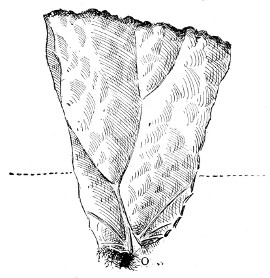
Fig. 263. Begonia leaf cutting. Natural size.
The Graft.
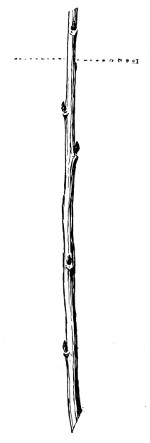
Fig. 264. Currant cutting. One-third natural size.
If the cutting were planted in a plant rather than in the soil, we should have a graft; and the graft might grow. In this case, the cutting would not make roots, but it would grow fast to the other plant, and the twain would become one. When the cutting is inserted in a plant it is no longer called a cutting, but a cion; and the plant in which it is inserted is called the stock. The completed thing—the cion growing in the stock—is a graft.

Fig. 265. Cion for cleft-grafting. One-half natural size.
Plants are particular as to their companions, when it comes to such close relationships as these. They choose the stocks upon which they will grow; but we can find out what their choice is only by making the experiment. There are queer things about it. The pear grows well on the quince, but the quince does not grow so well on the pear. The pear grows on some of the hawthorns, but it is an unwilling subject on the apple. Tomato plants will grow on potato plants and potato plants on tomato plants. When the potato is the root, both tomatoes and potatoes may be produced; when the tomato is the root, neither potatoes nor tomatoes will be produced. Chestnuts are said to grow on some kinds of oaks.
Why do we graft? Think a bit. If I sow seeds of a Baldwin apple, I shall probably have as many kinds of apples as I have trees. Some of these apples may be like the Baldwin, and they may not. That is, apple seeds do not reproduce the particular variety. They will not be held to any stricter account than merely to produce apples; these apples may range all the way from toothsome kinds to Ben Davis. The nurseryman knows this, and he does not wait for the trees to bear in the hope that they will produce something to his liking. So he grafts them when they still are young,—takes a cion from the kind which he wishes to perpetuate. So it happens that all the Baldwins and the Kings and the Russets, and all other named varieties, are growing on alien roots; and what kinds of fruits these stocks would have produced no one will ever know, because their heads were cut off in youth and other heads were put on to order. In this way apples and pears and plums and peaches and cherries and apricots are propagated, for they will not grow readily from cuttings. But raspberries and blackberries and gooseberries and currants and grapes grow willingly from cuttings, and they are not grafted by the nurseryman.
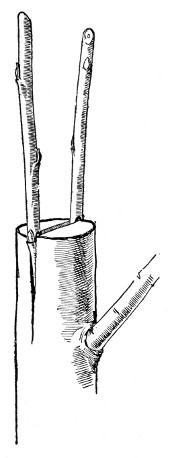
Fig. 266. Cleft-graft. One-half natural size.
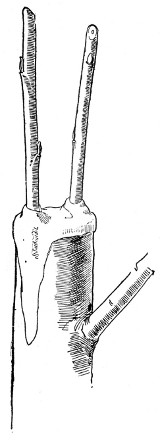
Fig. 267. The graft waxed.
The forming, growing tissue of the trunk is the cambium, lying on the outside of the woody cylinder, beneath the bark. In order that union may take place, the cambium of the cion and the stock must come together. Therefore, the cion is set in the side of the stock. I once knew a man who believed that everything was designed for some useful purpose. The hole in the pith bothered him, until he discovered that a cion just filled it. He grafted his trees accordingly; but the experiment was productive of nothing except pithy remarks.
There are many ways of shaping the cion and of preparing the stock to receive it. These ways are dictated largely by the relative sizes of cion and stock, although many of them are matters of mere personal preference. The underlying principles are two: see that there is close contact between the cambiums of cion and stock; cover the wounded surfaces to prevent evaporation and to protect the parts from disease.
On large stocks the common form of grafting is the cleft-graft. The stock is cut off and split; and in one or both sides a wedge-shaped cion is firmly inserted. Fig. 265 shows the cion; Fig. 266, the cions set in the stock; Fig. 267, the stock waxed. It will be seen that the lower bud—that lying in the wedge—is covered by the wax; but being nearest the food supply and least exposed to weather, it is the most likely to grow: it pushes through the wax.
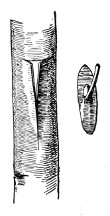
Fig. 268. Shield-budding. One-half natural size.
The wax is made of beeswax, resin, and tallow. The hands are greased, and the wax is then worked until it is soft enough to spread. For the little grafting which any school would do, it is better to buy the wax of a seedsman. However, grafting is hardly to be recommended as a general school diversion, as the making of cuttings is; and this account of it is inserted chiefly to satisfy the general curiosity on the subject. But we hope that now and then a youngster will make the effort for himself, for nothing is more exciting than to make a graft grow all by one's self.
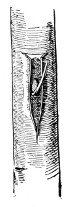
Fig. 269. The bud set in the matrix. One-half natural size.
Cleft-grafting is done in spring, as growth begins. The cions are cut previously, when perfectly dormant, and from the tree which it is desired to propagate. The cions are kept in sand or moss in the cellar. Limbs of various sizes may be cleft-grafted—from one-half inch up to four inches in diameter; but a diameter of one inch is the most convenient size. All the leading or main branches of a tree top may be grafted. If the remaining parts of the top are gradually cut away and the scions grow well, the entire top will be changed over to the new variety in three or four years. Each cion may be a different variety; but there is no difference in the operation or the treatment of the tree.
On young or small stocks, like nursery trees, the cleft-graft is not practicable, and a different form of grafting is employed; but the teacher will not care to be confused with further details.
We have seen that a cutting may be reduced to a single bud; so may a cion. If the bud-cion has very little or no wood attached, and is inserted underneath the bark, the operation is known as budding. The commonest form of budding is shown in Figs. 268, 269, 270. This is the method known as shield-budding, because the bud, with its attached bark, is shield-shaped (Fig. 268). A T-shape incision is made in the stock, and under the bark the bud is inserted (Fig. 269); then the wound is tightly bound with soft cord or bast (Fig. 270). Budding may be performed whenever the bark will "slip" and when well grown buds can be secured,—that is, either in spring or late summer. It is usually performed at the latter season; and then the bud does not throw out a shoot the same season, but merely grows fast to the stock. The next spring it throws out a shoot and makes a trunk; and in the meantime the stock has been cut off just above the bud. That is, the bud-shoot takes the place of the top of the stock.
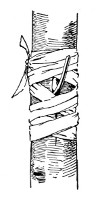
Fig. 270. The bud tied.
Shield-budding is performed only on small and young stocks. It is usually exclusively employed in the propagation of stone fruits, as cherries, peaches, plums, apricots, for experience has proved that it is preferable to other forms of grafting. It may also be employed for other fruit trees.
How is a peach tree made? In 1898 a pit or seed is saved. In the spring of 1899 it is planted. The young tree comes up quickly. In August, 1899, the little stock has one bud—of the desired variety—inserted near the ground. In the spring of 1900 the stock is severed just above the bud: the bud throws out a shoot which grows to a height of four or six feet; and in the fall of 1900 the tree is sold. It is known as a year-old tree; but the root is two years old.
How is an apple tree made? The seed is saved in 1898, planted in 1899. The seedlings do not grow so rapidly as those of the peach. At the end of 1899 they are taken up and sorted; and in the spring of 1900 they are planted. In July or August, 1900, they are budded. In the spring of 1901 the stock is cut off above the bud; and the bud-shoot grows three or four feet. In 1902 the shoot branches, or the top begins to form; and in the fall of 1902 the tree may be sold as a two-year-old, although most persons prefer to buy it in 1903 as a three-year-old. In some parts of the country, particularly in the west, the little seedling is grafted in the winter of 1899-1900 in a grafting-room; and the young grafts are set in the nursery row in the spring of 1900, to complete their growth.
I have now given my reader an elementary lesson in horticulture; but I shall consider it of little avail if it is not transformed into practice for the children. February is the gardener's time for the starting of his cutting-beds, in which to grow plants for the summer bloom. Ask the children to bring the old geraniums and fuchsias and coleus, and other favorites. Keep them in a warm window; cut them back; see that they are well watered; then take the cuttings when the time comes. The children will be interested to watch the fortunes of the different cuttings. They will be interested in Vergil's couplet, as set to rhyme in old-fashioned English:
Some need no root, nor doth the Gardner doubt, That Sprigs though headlong set, will timely sprout.
LEAFLET XXXVIII. A CHILDREN'S GARDEN.[52] By L. H. BAILEY.
We want every school child in the State to grow a few plants. We want every one of them to learn something of why and how plants grow; and the best and surest way to learn is to grow the plants and to watch them carefully. We want everyone to become interested in everything that lives and grows. It does not matter so very much just what kinds of plants one grows as it does that he grows something and grows it the best that he knows how. We want the children to grow these plants for the love of it,—that is, for the fun of it,—hence we propose that they grow flowers; for when one grows pumpkins and potatoes, and such things, he is usually thinking of how much money he is going to make at the end of the season. Yet, we should like some rivalry in the matter in every school, and we therefore propose that a kind of a fair be held at the school-house next September, soon after school begins, so that each child may show the flowers which he has grown. What a jolly time that will be!
Now, we must not try to grow too many things or to do too much. Therefore, we propose that you grow sweet peas and China asters. They are both easy to grow, and the seeds are cheap. Each one has many colors, and everybody likes them. Now let us tell you just how we should grow them.
1. The place.—Never put them—or any other flowers—in the middle of the lawn,—that is, out in the center of the yard. They do not look well there, and the grass roots run under them and steal the food and the moisture. I am sure that you would not like to see a picture hung up on a fence-post. It has no background, and it looks out of place. The picture does not mean anything when hung in such a spot. In the same way, a flower bed does not mean anything when set out in the center of a lawn. We must have a background for it, if possible,—a wall upon which to hang it. So we will put the flower bed just in front of some bushes or near the back fence, or alongside the smoke-house, or along the walk at the side of the house, or in the back yard. The flowers will not only look better in such places, but it will not matter so much if we make a failure of our flower bed; there are always risks to run, for the old hen may scratch up the seeds, the cow may break into the yard some summer night, or some bug may eat the plants up.
Perhaps some of the children may live so near to the school-house that they can grow their plants upon the school grounds, and so have sweet peas and asters where there are usually docks and smartweeds. Grow them alongside the fence, or against the school-house if there is a place where the eaves will not drip on them.
2. How to make the bed.—Spade the ground up deep. Take out all the roots of docks and thistles and other weeds. Shake the dirt all out of the sods and throw the grass away. You may need a little manure in the soil, especially if the land is either very hard or very loose and sandy. But the manure must be very fine and well mixed into the soil. It is easy, however, to make sweet pea soil so rich that the plants will run to vine and not bloom well.
Make the bed long and narrow, but not narrower than three feet. If it is narrower than this the grass roots will be likely to run under it and suck up the moisture. If the bed can be got at on both sides it may be as wide as five feet.
Sow the seeds in little rows crosswise the bed. The plants can then be weeded and hoed easily from either side. If the rows are marked by little sticks, or if a strong mark is left in the earth, you can break the crust between the rows (with a rake) before the plants are up. The rows ought to be four or five inches further apart than the width of a narrow rake.
3. How to water the plants.—I wonder if you have a watering-pot? If you have, put it where you cannot find it; for we are going to water this garden with a rake! We want you to learn, in this little garden, the first great lesson in farming,—how to save the water in the soil. If you learn that much this summer, you will know more than many old farmers do. You know that the soil is moist in the spring when you plant the seeds. Where does this moisture go to? It dries up,—goes off into the air. If we could cover up the soil with something, we should prevent the moisture from drying up. Let us cover it with a layer of loose, dry earth! We will make this covering by raking the bed every few days,—once every week anyway, and oftener than that if the top of the soil becomes hard and crusty, as it does after a rain. Instead of pouring water on the bed, therefore, we will keep the moisture in the bed.
If, however, the soil becomes so dry in spite of you that the plants do not thrive, then water the bed. Do not sprinkle it, but water it. Wet it clear through at evening. Then in the morning, when the surface begins to get dry, begin the raking again to keep the water from getting away. Sprinkling the plants every day or two is one of the surest ways to spoil them.
4. When and how to sow.—The sweet peas should be put in just as soon as the ground can be dug, even before frosts are passed. Yet good results can be had if the seeds are put in as late as the 10th of May. In the sweet pea garden at Cornell last year, we sowed the seeds on the 20th of April. This was about right. The year before, we sowed them on the 30th. If sown very early, they are likely to bloom better, but they may be gone before the middle of September. The blooming can be much prolonged if the flowers are cut as soon as they begin to fade.
Plant sweet peas deep,—two or three or sometimes even four inches. When the plants are a few inches high, pull out a part of them so that they will not stand nearer together than six inches in the row. It is a good plan to sow sweet peas in double rows,—that is, put two rows only five or six inches apart,—and stick the brush or place the chicken-wire support between them.
China asters may be sown from the middle of May to the first of June. In one large test at Cornell, we sowed them the 4th of June, and had good success; but this is rather later than we would advise. The China asters are autumn flowers, and they should be in their prime in September and early October.
Sow the aster seed shallow,—not more than a half inch deep. The tall kinds of asters should have at least a foot between the plants in the row, and the dwarf kinds six to eight inches.
Sometimes China asters have rusty or yellow spots on the undersides of their leaves. This is a fungous disease. If it appears, have your father make some ammoniacal carbonate of copper solution and then spray them with it; or Bordeaux mixture will do just as well or better, only that it discolors the leaves and flowers.
5. What varieties to choose.—In the first place, do not plant too much. A garden which looks very small when the pussy willows come out and the frogs begin to peep, is pretty big in the hot days of July. A garden four feet wide and twenty feet long, half sweet peas and half asters, is about as big as most boys and girls will take care of.
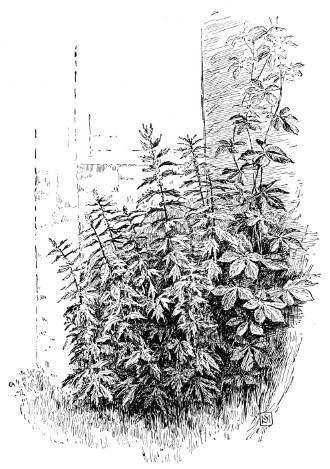
Fig. 271. A clump of weeds in the corner by the house,—motherworth and Virginia creeper. How pretty they are!
In the next place, do not get too many varieties. Four or five kinds each of peas and asters will be enough. Buy the named varieties,—that is, those of known colors,—not the mixed packets. If you are very fond of reds, then choose the reddest kinds; but it is well to put in at least three colors. The varieties which please you may not please me or your neighbor, so that I cannot advise you what to get.
Of China asters, the Comet type—in various colors—will probably give the most satisfaction. They are mostly large-growing kinds. Other excellent kinds are the Perfection and Peony-flowered, Semple or Branching, Chrysanthemum-flowered, Washington, Victoria, and, for early, Queen of the Market. Odd varieties are Crown, German Quilled, Victoria Needle, and Lilliput. Very dwarf kinds are Dwarf Bouquet or Dwarf German, and Shakespeare.
One of the chief merits of the China aster is the lateness of bloom, allowing the flowers to be used in the schools after they open in the fall. An excellent flower for sowing during May is the common annual Phlox (Phlox Drummondii of the catalogues). Poppies are also satisfactory, but the flowers do not last long. Petunias are excellent and Balsams, Clarkias, Coreopsis (or Calliopsis), and Zinnias may be sown.
Now, let us see how many boys and girls in New York State will raise sweet peas and China asters this year! And we should like them to write us all about it.
LEAFLET XXXIX. A HILL OF POTATOES.[53] By I. P. ROBERTS.
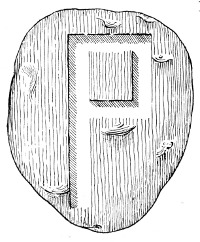
Plant a hill of potatoes. You can do it in the school-room. Plant in a box or a flower-pot. Keep the box warm, and do not let the soil dry out. Plant whole tubers and pieces of tubers. Plant pieces of various sizes. Plant some that have no "eyes." Plant shallow—so that the tuber is just covered with soil—and deep. Watch the results.
All plants are abundantly supplied with means for reproducing their kind: some by seed, some by multiplication at the crown or base or by roots, others by means of underground stems; and some, as the potato, have two or more means of reproduction. In its wild or partially improved state the potato is abundantly supplied with fruit, "seed balls," borne on the top of the stalks. The seeds of a single ball will often produce many varieties of potatoes; but they cannot be depended upon to reproduce the parent stock. Farmers seldom attempt to raise potatoes from the seeds; when they do it is for the purpose of securing new varieties. The common method of reproduction is to plant a part or all of an enlarged underground stem, that is, a part of the "potato" or tuber.
When the soil is reasonably porous and fertile, a strong root may start at the seed-piece and descend more or less directly into the subsoil. In most cases, however, the roots spread laterally. This is a good illustration of how plants may vary in their root habits in order to adapt themselves to their environment. Notice where the roots form on the plants you are growing. Few farmers know where they form. Distinguish the true or feeding roots from the underground stems. Determine how many tubers form on each underground stem. Dig up a hill of potatoes from the garden before school closes.
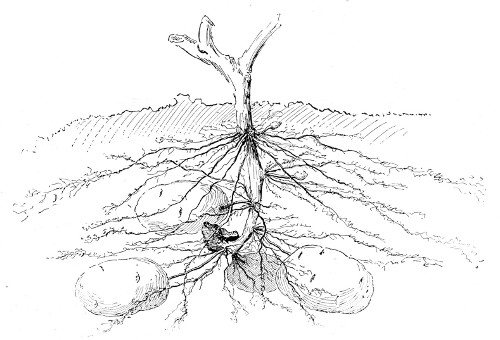
Fig. 272. Underground part of potato plant in mellow soil.
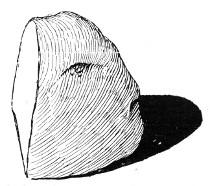
Fig. 273. Piece of tuber for planting, bearing a single eye.
A single eye, with a portion of the tuber attached to furnish nourishment to the bud until sustenance can be secured from newly formed rootlets, may produce one, occasionally more, strong upright stems. A most interesting study of manifold reproduction may be made even in the winter time by planting in a fertile soil a piece of potato containing a single eye (Fig. 273). As soon as the rootlets begin to start, divide each eye and piece into two parts and re-plant. In a few days after the rootlets have again started, divide the two pieces into four and re-plant. This operation may be performed again and again, until many plants suitable for transplanting in the open may be secured from a single eye.
Demonstrate that the potato contains starch. This can be done by applying a drop of dilute iodine to a freshly cut surface of the tuber: the starch grains turn blue-black. Five cents' worth of iodine purchased at the drug-store will be sufficient for many tests. Dilute it about one-half with water. This starch, after being changed to sugar, supplies the young plant with nourishment. Dig up the pieces you have planted and see which start first, shoots or roots.
The "potato" is an enlarged underground stem provided with numerous buds similar to those on the stems of plants above ground. These buds are placed spirally on the underground stem or tuber with a considerable degree of uniformity. As on the stems of other plants, the buds are less numerous and weaker at the base and most numerous and vigorous at the top or upper end. On a smooth well developed long potato, the spiral arrangement of the buds may be illustrated by sticking a tooth-pick or pin in each eye, beginning at the base or stem end, and connecting the pins with a string (Fig. 274).
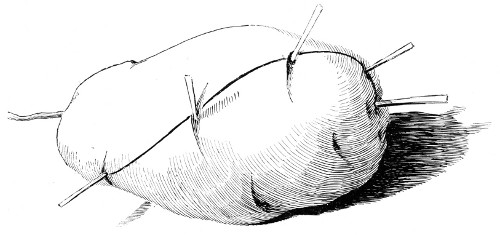
Fig. 274. How to illustrate the spiral arrangement of the eyes.
Farm Notes on the Potato.
Now that we have seen the potato growing in the school-room, some information may be given respecting its treatment in the field as a crop.
Potatoes are easily raised, even under adverse conditions, although they respond quickly to superior fertility and tillage. The average yield in the United States during the last ten years was 76.6 bushels an acre, although from three to four hundred bushels an acre are not uncommon under superior tillage when soil and climate are at their best.
The area devoted to potatoes during the last decade was two and a half million acres annually. Potatoes do best on a moderately moist and deep soil and in a climate relatively cool.
Since the period of growth is short, varying from three to five months, they should be planted in soil which has an abundance of readily available plant-food. Notice in Fig. 272 that most of the underground stems which have produced potatoes leave the main stem about four inches below the surface and but a short distance above the seed-piece. This suggests that the seed should be planted about four inches deep. To produce three hundred bushels of potatoes requires the exhalation of over three hundred tons of water: therefore water or moisture is of quite as much importance in securing large yields as plant-food.
It is best to prepare the land deeply, to plant deep, and then to practice nearly or quite level culture. The practice of hilling up potatoes, so common in most parts of the country, is to be discouraged, usually, because it is wasteful of moisture and the tubers do not grow in the coolest part of the soil. For very early potatoes, hilling-up may be allowable. Till the soil very often to save the moisture. For the philosophy of this, see Leaflet No. IX.
Not infrequently the potato is seriously injured by blights which attack the leaves. The early blight, which usually appears in June, may destroy some of the foliage, thereby checking growth. The late blight, which also attacks the foliage, is far more serious. It differs little in outward appearance from the early blight. In rare cases the vines are so seriously injured that no potatoes are formed. The potato rot or blight did great damage to the potato in many localities in the United States in 1845. In 1846 the blight appeared in Ireland and virtually destroyed the entire crop. Before this date the potato had become the chief food supply of the peasantry. The cultivation of oats as a food crop had been universal before the introduction of the potato, but oats furnished so little food on a given area as compared to the potato that the cultivation of them at the time the blight appeared had been very largely abandoned. The loss of the potato crop produced widespread famine. The most conservative estimate of the numbers who perished for want of food or by disease caused by a meager diet of unhealthy and innutritions food is set down at six hundred thousand during the two years of the potato blight. This disease was not so destructive in 1847 as in 1846; and by 1848 it had virtually disappeared. Some one has said that if Great Britain had expended one dollar for investigating the diseases of potatoes where she had spent a thousand dollars for perfecting the engines of war, the terrible famine might have been averted. We now think it a relatively easy matter to keep the blight in check by thorough spraying with Bordeaux mixture.
How the Potato Has Been Improved.
All plants have their origin in pre-existing plants. While the young plant is always similar to the one from which it was derived, it is never exactly like its parent in every detail. This arises from the fact that all of the conditions under which the parent plant and its offspring grow are never exactly alike. The variations or differences in the plants are usually exceedingly small in a single generation; but occasionally they are wide, in which case they are called "sports" and are usually difficult to perpetuate. If successive generations of plants are reared under continuously improved conditions, there will be a continuous and accumulating variation from generation to generation, which in time may come to be so great as to make it difficult to discover a marked similarity between the wild and the cultivated forms of the same plant.