PART I. TEACHERS' LEAFLETS. (continued 3)
Reading edition
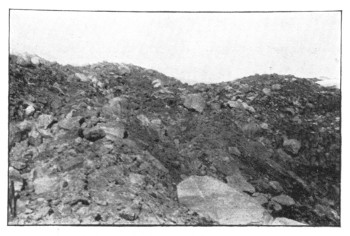
Fig. 32. Hummocky surface of the boulder-strewn moraine of Greenland.
Going nearer to the ice we find the lower part loaded with pebbles, boulders and bits of clay very like those on the rocks near by. Fig. 30 shows one of these, scratched and grooved, which I once dug from the ice of this very glacier. The bottom of the ice is like a huge sandpaper, being dragged over the bed rock with tremendous force. It carries a load of rock fragments, and as it moves secures more by grinding or prying them from the rocks beneath. These all travel on toward the edge of the ice, being constantly ground finer and finer as wheat is ground when it goes through the mill. Indeed the resemblance is so close that the clay produced by this grinding action is often called rock flour.
Dragged to the front of the ice, the rock bits, great and small, roll out as the ice melts, some, especially the finest, being carried away in the water, which is always muddy with the rock flour it carries; but much remains near the edge of the ice, forming a moraine (Figs. 31 and 32). This moraine, dumped at the edge of the glacier, very closely resembles the hummocky hills of New York (Figs. 33 and 34), mentioned above, which are really moraines formed at the ice-edge during the glacial period. While their form is quite alike, the New York moraines are generally less pebbly than the Greenland moraines, because the Greenland glacier carries less rock flour than did the glacier which covered New York.
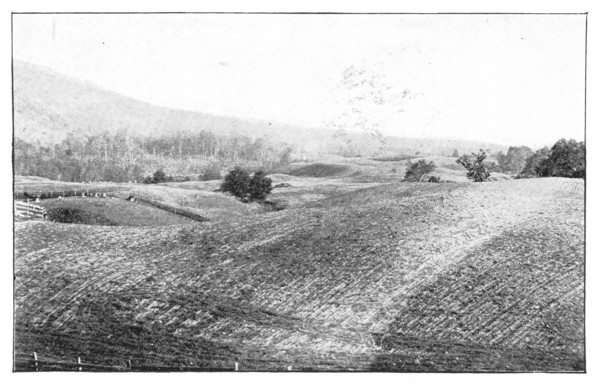
Fig. 33. A view over the hummocky surface of a part of the moraine of the great American ice sheet in Central New York.
In the Greenland glacier, as you can see in Fig. 31, there is much dirt and rock; in the glacier of the glacial period there was even more. When it melted away the ice disappeared as water, but the rock fragments of course fell down upon the rock beneath and formed soil. If over a certain region, as for instance over your home, the ice carried a great load of drift, when this gradually settled down, as the ice melted, it formed a deep layer of soil; but if the glacier had only a small load a shallow soil was left. Again, if the ice front remained for a long time near a certain place, as near your home, it kept bringing and dumping rock fragments to form moraines, which, of course, would continue to grow higher so long as the ice dumped the rock fragments, much as a sand pile will continue to grow higher so long as fresh loads are brought and dumped.
There are other causes for differences in the glacial soils, but most of them cannot be considered here. One of them is so important, however, that it must be mentioned. With the melting of so much ice, vast floods of water were caused, and these came from the ice, perhaps in places where there are now no streams, or at best only small ones. These rapid currents carried off much of the rock flour and left the coarser and heavier sand, gravel, or pebbles, the latter often well rounded, with the scratches removed by the long-continued rolling about in the glacial stream bed.
One often finds such beds of sand or gravel in different parts of the State, telling not only of ice where it is now absent, but of water currents where is now dry land. The rock flour was in some cases carried to the sea, elsewhere to lakes, or in still other places deposited in the flood-plains of the glacier-fed rivers. Now some of this rock flour is dug out to make into bricks.
Enough has been said to show that the soils of New York were brought by a glacier, and to point out that there are many differences in thickness as well as in kind and condition of the soil. The agriculture of the State is greatly influenced by these differences. In some cases one part of a farm has a deep, rich soil, another part a barren, sandy, pebbly or boulder-covered soil (Fig. 21), while in still another part the bed rock may be so near the surface that it does not pay to clear the forest from it. Moreover, some farms are in hummocky moraines, while others, near by, are on level plains (Fig. 34), where a broad glacial stream built up a flood-plain in a place where now the stream is so small that it never rises high enough to overflow the plain.
There are even other differences than these, and one who is familiar with a region is often puzzled to explain them; but they are all due to the glacier or to the water furnished by its melting, and a careful study by a student of the subject of Glacial Geology will serve to explain them. Each place has had peculiar conditions and it would be necessary to study each place much more carefully than has been done here in order to explain all the differences.
Not only is agriculture influenced greatly by the differences in the soil from place to place, but also by the very fact that they are glacial soils. Being made up of partly ground-up rock fragments the soils are often stony and difficult to till. Unlike the soil of rock decay, the particles of which the glacial soil is made have been derived by mechanical grinding, not by chemical decay and disintegration. There has been less leaching out of the soluble compounds which make plant foods. These are stored up in the rock fragments ready for use when decay causes the proper changes to produce the soluble compounds which plants require.
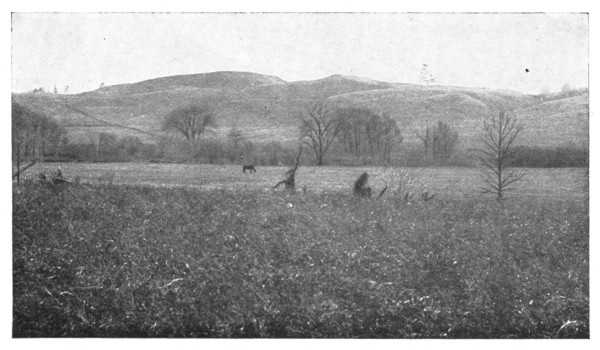
Fig. 34. Hummocky moraine hills in the background and a level gravel plain—an ancient glacial-stream flood-plain—in foreground.
Slowly the glacial soils are decaying, and, as they do so, are furnishing plant-food to the water which the roots greedily draw in. So the glacial soil is not a mere store house of plant-food, but a manufactory of it as well, and glacial soils are therefore "strong" and last for a long time. That decay is going on, especially near the surface, may often be seen in a cut in the soil, where the natural blue color of the drift is seen below, while near the surface the soil is rusted yellow by the decay of certain minerals which contain iron.
Few materials on the earth are more important than the soil; it acts as the intermediary between man and the earth. The rocks have some substances locked up in them which animals need; by decay, or by being ground up, the rocks crumble so that plants may send roots into them and extract the substances needed by animals. Gifted with this wonderful power the plants grow and furnish food to animals, some of which is plant-food obtained from the rocks; and so the animals of the land, and man himself, secure a large part of their food from the rocks. It is then worth the while to stop for a moment and think and study about this, one of the most marvelous of the many wonderful adjustments of Nature, but so common that most persons live and die without even giving it more than a passing thought.
LEAFLET IX. A HANDFUL OF SOIL: WHAT IT DOES.[11] By L. A. CLINTON.
The more one studies the soil, the more certainly it will be found that the earth has locked up in her bosom many secrets, and that these secrets will not be given up for the mere asking. As mysterious as the soil may appear at different times, it always is governed by certain laws. These principles once understood, the soil becomes an open book from which one may read quickly and accurately.
Uses of the Soil.
The soil has certain offices to perform for which it is admirably fitted. The most important of these offices are:
To hold plants in place;
To serve as a source of plant-food;
To act as a reservoir for moisture;
To serve as a storehouse for applied plant-food or fertilizer.
Some soils are capable of performing all these offices, while others are fitted for only a part of them. Thus a soil which is pure sand and almost entirely deficient in the essential elements of plant-food, may serve, if located near a large city, merely to hold the plants in position while the skillful gardener feeds the plants with specially prepared fertilizers, and supplies the moisture by irrigation.
Early in the study of soils an excursion, if possible, should be made into the woods. Great trees will be seen and under the trees will be found various shrubs and possibly weeds and grass. It will be noticed that the soil is well occupied with growing plants. The surface will be found covered with a layer several inches thick of leaves and twigs. Beneath this covering the soil is dark, moist, full of organic matter, loose, easily spaded except as roots or stones may interfere, and has every appearance of being fertile.
Soil Conditions as Found in Many Fields.
After examining the conditions in the forest, a study should be made of the soil in some cultivated field. It will be found that in the field the soil has lost many of the marked characteristics noticed in the woodland. In walking over the field, the soil will be found to be hard and compact. The surface may be covered with growing plants, for if the seeds which have been put into the soil by the farmer have not germinated and the plants made growth, nature has quickly come to the rescue and filled the soil with other plants which we commonly call weeds. It is nature's plan to keep the soil covered with growing plants, and from nature we should learn a lesson. The field soil, instead of being moist, is dry; instead of being loose and friable, it is hard and compact, and it appears in texture entirely different from the woodland soil. The cause of the difference is not hard to discover. In the woods, nature for years has been building up the soil. The leaves from the trees fall to the ground and form a covering which prevents washing or erosion, and these leaves decay and add to the humus, or vegetable mould, of the soil. Roots are constantly decaying and furnish channels through the soil and permit the circulation of air and water.
In the field, nature's lesson has been disregarded and too often the whole aim seems to be to remove everything from the soil and to make no returns. Consequently the organic matter, or humus, has been used up; the tramping of the horses' feet has closed the natural drainage canals; after the crop is removed, the soil is left naked during the winter and the heavy rains wash and erode the surface, and remove some of the best plant-food. After a few years of such treatment, the farmer wonders why the soil will not produce as liberally as it did formerly.
Experiment No. 1.—The fact that there is humus, or vegetable mould, in certain soils can be shown by burning. Weigh a potful of hard soil and a potful of lowland soil, or muck, after each has been thoroughly dried. Then put the pots on the coals in a coal stove. After the soil is thoroughly burned, weigh again. Some of the difference in weight may be due to loss of moisture, but if the samples were well dried in the beginning, most of the loss will be due to the burning of the humus.
Conditions Which Affect Fertility.
There are certain conditions which affect soil fertility and of these the most important are:
Texture;
Moisture-content;
Plant-food;
Temperature.
Texture and Its Relation To Fertility.
By texture is meant the physical condition of the soil. Upon good texture, more than upon any other one thing, depends the productivity of the soil. When the texture is right the soil is fine, loose, and friable; the roots are able to push through it and the feeding area is enlarged. Each individual particle is free to give up a portion of its plant-food, or its film of moisture. The conditions which are found in the woods' soil are almost ideal.
Experiment No. 2.—The importance of good texture may be well shown in the class room. Pots should be filled with a soil which is lumpy and cloddy, and other pots with the same kind of material after it has been made fine and mellow. After seeds are planted in the different pots, a careful study should be made of the length of time required for germination and of the health and vigor of the plants.
Experiment No. 3.—The greater part of our farming lands do not present ideal conditions as regards texture. Clay soils are especially likely to be in bad condition. If samples of the various soils can be collected, as sand, loam, clay, etc., it may be clearly shown how different soils respond to the same kind of treatment. With a common garden trowel, the soils should be stirred and worked while wet, and then put away to dry. After drying, the conditions presented by the soils should be noted, also the length of time required for the soils to become dry. Whereas the sand and the loam will remain in fairly good condition when dry, the clay will have become "puddled," i. e., the particles will have run together and made a hard, compact mass. Thus it is found in practice that clay soils must be handled with far more care and intelligence than is required for the sand and loams, if the texture is to be kept perfect.
Experiment No. 4.—If, in the experiment above suggested, the clay soil is mixed with leaf-mould, or humus soil, from the woods, it will be found to act very differently. The vegetable matter thus mixed with the mineral matter prevents the running together of the particles of clay.
Two principles, both important as relating to soil texture, now have been illustrated. Soils must not be worked when they are so wet that their particles will cohere, and organic matter, or humus, must be kept mixed with the mineral matter of the soil. In practical farm operations, if the soil can be made into a mud ball it is said to be too wet to work. The required amount of humus is retained in the soil by occasionally plowing under some green crop, as clover, or by applying barn manures.
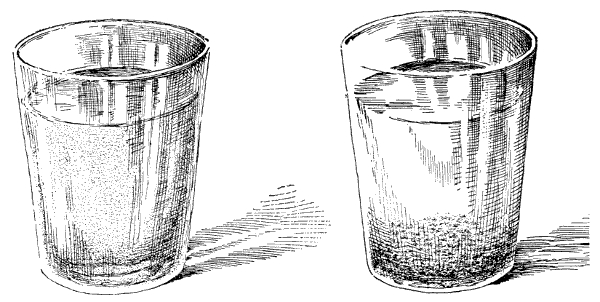
Fig. 35. The glass of water at the right has received lime and the clay has been flocculated; the other was not treated.
Clay soils are also frequently treated with lime to cause them to remain in good condition and be more easily tilled. Lime causes the fine particles to flocculate, or to become granular, i. e., several particles unite to form a larger particle, and these combinations are more stable and do not so readily puddle, or run together. A mud-puddle in clay soil will remain murky until the water has evaporated entirely. Let a little water-slaked lime be mixed with the muddy water, and the particles of clay will be flocculated and will settle to the bottom; thus the water will become clear.
Experiment No. 5.—Into two glasses of water put some fine clay soil; thoroughly stir the mixture (Fig. 35). Into one glass thus prepared put a spoonful of water-slaked lime; stir thoroughly, then allow both glasses to remain quiet that the soil may settle. Notice in which glass the water first becomes clear, and note the appearance of the sediment in each.
The Moisture in the Soil.
In Leaflet VI has been given the history of a thunder shower. We are not told much about the history of the water after it reaches the earth. If we go out immediately after a heavy shower, we find little streams running alongside the road. These little streams unite to make larger ones, until finally the creeks and rivers are swollen, and, if the rain was heavy enough, the streams may overflow their banks. In all these streams, from the smallest to the largest, the water is muddy. Where did this mud come from? It was washed largely from the cultivated fields, and the finest and best soil is certain to be the first to start on its voyage to the valleys or to the sea. If the farmer had only learned better the lesson from nature and kept his fields covered with plants, a large part of the loss might have been prevented. A rain gauge should be kept in every school yard, so that every shower can be measured. It can then be easily determined by the pupils how many tons of rain fall upon the school grounds, or how much falls upon an acre of land. It will be a matter of surprise that the amount is so great.
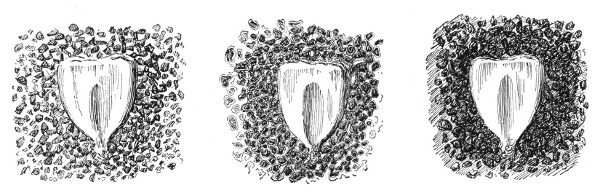
Fig. 36. a. Soil too dry. b. Soil in good condition. c. Soil too wet.
Not all the water which falls during a summer shower is carried off by surface drainage, since a considerable part sinks into the soil. As it passes down, each soil grain takes up a portion and surrounds itself with a little film of water, much as does a marble when dipped into water. If the rain continues long enough, the soil will become saturated and the water which cannot be retained, will, under the influence of gravity, sink down to the lower layers of soil until it finally reaches the level of the free water. From this free water, at varying depths in the soil, wells and springs are supplied. If the soil were to remain long saturated, seeds would not germinate, and most cultivated plants would not grow because all the air passages of the soil would be filled with water (Fig. 36). The water which sinks down deep into the soil and helps to supply our wells is called free water. That part which is held as a film by the soil particles (as on a marble) is called capillary water. After the rain is over and the sun shines, a part of the moisture which is held by the particles near the surface is lost by evaporation. The moisture which is below tends to rise to restore the equilibrium; thus there is created a current toward the surface, and finally into the air; the moisture which thus escapes aids in forming the next thunder storm.
Experiment No. 6.—Humus enables the soil to take up and hold large quantities of water. To illustrate this, two samples of soil should be obtained, one a humus, or alluvial, soil, rich in organic matter, and the other a sandy soil. Put the two samples where they will become thoroughly air dry. Procure, say five pounds each of the dry soils, and put each into a glass tube over one end of which there is tied a piece of muslin, or fine wire gauze. From a graduated glass pour water slowly upon each sample until the water begins to drain from the bottom of the tube. In this way it can be shown which soil has the greater power of holding moisture. Both samples should then be set away to dry. By weighing the samples each day, it can be determined which soil has the greater power of retaining moisture. This experiment may be conducted not only with sand and humus, but with clay, loam, gravel, and all other kinds of soil.
Experiment No. 7.—A finely pulverized soil will hold more film-moisture than a cloddy soil. To illustrate the importance of texture as related to moisture, soil should be secured which is cloddy, or lumpy. One tube should be filled, as heretofore described (Exp. No. 6), with the lumpy soil, and the other tube with the fine soil which results from pulverizing the lumps, equal weights of soil being used in each case. From a graduated glass pour water upon each sample until the drainage begins from the bottom. Notice which soil possesses greater power of absorbing moisture. Put the samples away to dry, and by careful weighing, each day, it can be determined which soil dries out more readily.
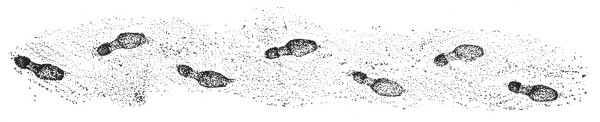
Fig. 37. "Foot-prints on the sands of time."
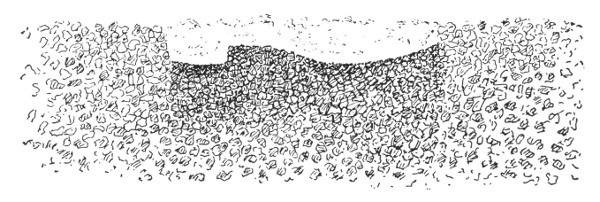
Fig. 38. A cross section through one of the foot-prints.
The prudent farmer will take measures to prevent the escape of this moisture into the air. All the film-moisture (on the soil particles) needs to be carefully conserved or saved, for the plants will need very large amounts of moisture before they mature, and they can draw their supply only from this film-moisture. We can again apply the lesson learned in the woods. The soil there is always moist; the leaves form a cover, or blanket, which prevents the evaporation of moisture. Underneath an old plank or board, the soil will be found moist. If we can break the connection between the soil and the air, we can check the escape of moisture. A layer of straw over the soil will serve to prevent the loss of moisture; yet a whole field cannot be thus covered. It has been found that the surface soil, if kept loose, say about three inches of the top soil can be made to act as a blanket or covering for the soil underneath. Although this top layer may become as dry as dust, yet it prevents the escape, by evaporation, of moisture from below. It is a matter of common observation that if tracks are made across a freshly cultivated field, the soil where the tracks are will become darker (Fig. 37). This darker appearance of the soil in the foot-marks is due to the moisture which is there rising to the surface. The implement of tillage makes the soil loose, breaking the capillary connection between the lower layers of soil and the surface; thus the upward passage of the water is checked. Where the foot-print is, the soil has been again pressed down at the surface, the particles have been crowded closer together, and capillarity is restored to the surface so that the moisture is free to escape (Fig. 38). In caring for flower-beds, or even in growing plants in a pot in the school-room, it is important that the surface of the soil be kept loose and mellow. Far better in a flower garden is a garden rake than a watering pot.
Experiment No. 8.—To show the importance of the surface mulch, fill several pots with a sandy loam soil, putting the same weight of soil into each pot. In one pot, pack the soil firmly; in another pot, pack the soil firmly and then make the surface loose. These pots of soil may then be put away to dry; by daily weighing each it can be readily determined what effects the various methods of treatment have upon the moisture-holding power of soils.
Experiment No. 9.—The above experiment may be varied by covering the soil in some of the pots with leaves, or straw, or paper, care being taken that the added weight of the foreign matter is properly accounted for.
Soil Temperature.
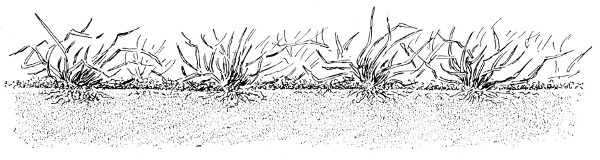
Fig. 39. The moss-grown lawn or grass plot.
If a kernel of corn be placed in the ground in early spring before the soil has become warm, the seed will not germinate. Abundance of moisture and oxygen may be present, but the third requisite for germination, proper temperature, is lacking. The soil is very slow to become warm in the spring, and this is due to the large amount of water which must be evaporated. During the winter and spring, the rain and melting snow have saturated the soil. The under-drainage is deficient so there is no way for the escape of the surplus water except by evaporation, and evaporation is a cooling process. A well-drained soil is thus warmer than a poorly-drained one.
The atmosphere is much quicker to respond to changes in temperature than is the soil. In the spring, the air becomes warm while the soil continues cold, and the rains which fall during this time are warmed by passing through the warm air. Then in sinking through the soil the rain-water parts with some of its heat which makes the soil warmer. During mid-summer the soil becomes very warm, and it is not affected by cool nights, as is the atmosphere. Consequently as a summer rain may be several degrees cooler than the soil, the water in passing through the soil takes up some of the heat; thus the soil conditions are made more favorable for plant growth. Therefore, soil temperature is regulated somewhat by the rainfall.
Experiment No. 10.—The color of a soil also affects its temperature, a dark soil being warmer than a light colored soil. By having thermometers as a part of the school room equipment, interesting experiments may be conducted in determining the effect of color and moisture upon the temperature of soils.
Air in the Soil.
Although that part of the plant which we can see is entirely surrounded by air, it is also necessary that the soil be in such a condition that it can be penetrated by the air. Indeed, growth cannot begin in a soil from which the air is excluded.
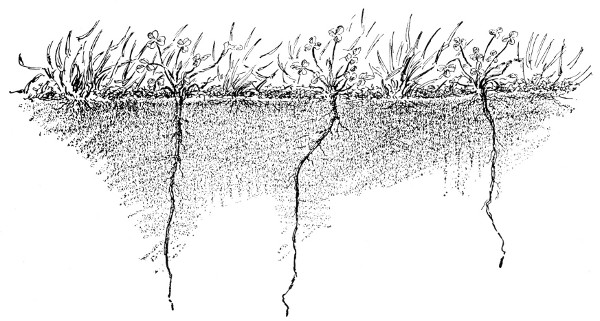
Fig. 40. The clover roots penetrate the soil deeply.
Experiment No. 11.—To prove this, put clay soil in a pot and plant seeds; then wet the surface of the soil and puddle or pack the clay while wet and watch for the seeds to germinate and grow. At the same time put seeds in another pot filled with loose, mellow, moist soil.
Frequently, after the farmer has sown his grain, there comes a heavy, beating rain, and the surface of the soil becomes so packed that the air is excluded and the seeds cannot germinate. If plants are grown in pots and the water is supplied at the top, the soil may become so hard and compact as to exclude the air and the plants will make a sickly growth. The surface soil must be kept loose so that the air can penetrate it.
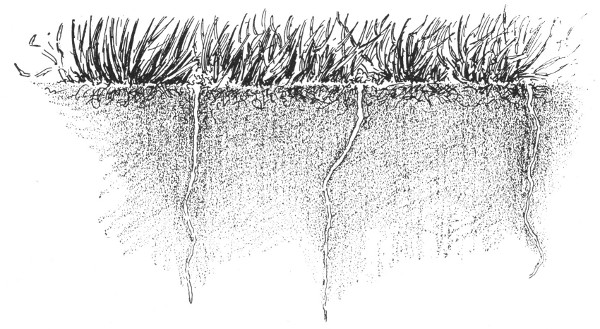
Fig. 41. After the clover dies the soil is in better condition for its having lived.
On many lawns it may be noticed that the grass is not thriving. It has a sickly appearance, and even the application of fertilizer does not seem to remedy the conditions. Perhaps the ground has become so hard that the air cannot penetrate and the grass is being smothered. If the surface of the soil can be loosened with a garden rake, and clover seed sown, much good may be accomplished. The clover is a tap-rooted plant, sending its main root deep into the soil.
After the death of the plant, the root decays, and the nitrogen which is stored in it can be used as food by the other plants. Most useful of all, however, in such cases, the decay of the tap-root of the clover makes a passage deep into the soil and thus allows the air to enter. Consult Figs. 39-41.
LEAFLET X. THE BROOK.[12] By J. O. MARTIN.
Introduction by L. H. BAILEY.
A brook is the best of subjects for nature-study. It is near and dear to every child. It is a world in itself. It is an epitome of the nature in which we live. In miniature, it illustrates the forces which have shaped much of the earth's surface. Day by day and century by century, it carries its burden of earth-waste which it lays down in the quiet places. Always beginning and never ceasing, it does its work as slowly and as quietly as the drifting of the years. It is a scene of life and activity. It reflects the sky. It is kissed by the sun. It is caressed by the winds. The minnows play in the pools. The soft weeds grow in the shallows. The grass and the dandelions lie on its sunny banks. The moss and fern are sheltered in the nooks. It comes one knows not whence; it flows one knows not whither. It awakens the desire of exploration. It is a realm of mysteries. It typifies the flood of life. It goes "on forever."
In many ways can the brook be made an adjunct of the school-room. One teacher or one grade may study its physiography; another its birds; another may plat it. Or one teacher and one grade may devote a month or a term to one phase of it. Thus the brook may be made the center of a life-theme.
L. H. B.
I. A BROOK AND ITS WORK.
On a rainy day most of us are driven indoors and thus we miss some of nature's most instructive lessons, for in sunshine or rain the great mother toils on, doing some of her hardest labor when her face is overcast with clouds. Let us find our waterproofs, raise our umbrellas, bid defiance to the pattering rain, and go forth to learn some of the lessons of a rainy day.
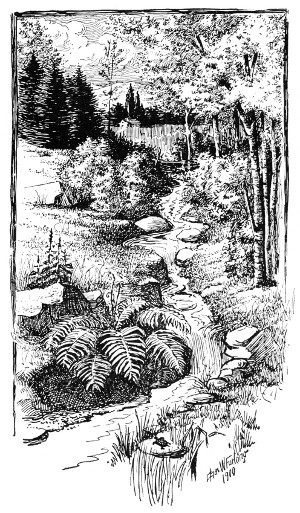
Fig. 42. The brook may be made the center of a life-theme.
Along the roadside, the steady, down-pouring rain collects into pools and rills, or sinks out of sight in the ground. The tiny streams search out the easiest grade and run down the road, digging little gullies as they go. Soon these rills meet and, joining their muddy currents, flow on with greater speed down the hillside until they reach the bottom of the valley and go to swell the brook which flows on, through sunshine or rain. The water which sinks into the ground passes out of sight for a time, but its journey is also downward toward the brook, though the soil, acting as a great sponge, holds it back and makes it take a slower pace than the rushing surface water. This slower-moving underground water percolates through the soil until it comes to a layer of rock, clay, or other impervious substance, along the slope of which it flows until it is turned again to the surface in the form of a spring. Perhaps this spring is one of those clear, cold pools, with the water bubbling up through its sandy bottom, from which we love to drink on a hot summer's day; or, again, it is a swampy spot on the hillside where the cat-tails grow. In whatever form it issues from the ground, a tiny rill carries away its overflow, and this sooner or later joins the brook.
The brook, we see, is simply the collected rainfall from the hillsides, flowing away to join the river. It grows larger as other brooks join it, and becomes a creek and finally a river. But where is the dividing line between brook, creek, and river? So gradually does the brook increase in volume that it would be difficult to draw any dividing line between it and the larger streams. And so with the rills that formed the brook: each is a part of the river, and the names rill, brook, creek, and river are merely relative terms.
Brooks are but rivers on a small scale; and if we study the work that a brook is doing, we shall find it engaged in cutting down or building up, just as the river does, although, owing to the smaller size of the brook, we can see most of these operations in a short distance. Let us take our way through the wet grass and dripping trees to the brookside and see what work it is doing.
The countless rain-born rills are pouring their muddy water into the brook and to-day its volume is much greater than when it is fed, as it is in fair weather, by the slower-moving underground water of the springs. It roars along with its waters no longer clear but full of clay and sand ("mud" as we call it).
If we should dip up a glassful of this muddy water, we should find that when it had settled there remained on the bottom of the glass a thin deposit of sediment. The amount of this sediment is small, no doubt, for a single glassful, but when we think of the great quantity of water constantly flowing by, we can see that considerable sediment is going along with it. But this sediment in suspension is not all the load that the brook is moving. If you will roll up your sleeve, plunge your hand to the bottom of the brook and hold it there quietly, you will feel the coarser gravel and small stones rolling along the bottom.
All this load of sand and gravel comes, as we have seen, from the valley sides, the banks of the brook, and from its bed. It is moving downward away from its original resting place; and what is the result? For thousands upon thousands of years, our brook may have been carrying off its yearly load of sediment; and though each day's labor is small, yet the added toil of centuries has been great. The result of this labor we can see in the great trough or valley through which the brook flows. Tennyson speaks of the ceaseless toil of the brook in the following words:
"I chatter, chatter, as I flow To join the brimming river, For men may come and men may go, But I go on forever."
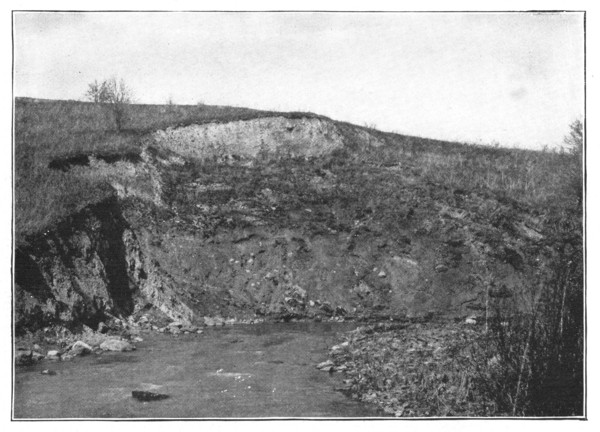
Fig. 43. A brook cutting under its bank and causing a landslide.
We have seen how the rills and torrents bring into the brook their loads of sand, clay, and gravel; now let us walk along the bank and see what the brook is doing to increase this load. Just here there is a sudden turn in the channel and so sharp is the curve that the rushing stream is not able to keep in mid-channel, but throws itself furiously against the outer bank of the curve, eating into the clay of which it is composed, until the bank is undermined, allowing a mass of clay to slide down into the stream bed, where it is eaten up and carried away by the rushing water (Fig. 43). Farther on, the brook dashes down a steep, rocky incline, and if we listen and watch we may hear the thud of boulders hurled along, or even see a pebble bound out of the muddy foaming water. These moving pebbles strike against each other and grind along the bottom, wearing out themselves as well as the large unmovable boulders of the rocky bed of the brook. Thus the larger stones are ground down, rounded at first but in time reduced to sand, adding in this way to the moving burden of the brook. By this slow process of cutting and grinding, the deep rock gorges of New York state, like those at Watkins, Ithaca, Au Sable Chasm, and even the mighty gorge of Niagara, have been made. The Grand Canyon of the Colorado, over a mile in depth, is one of the greatest examples of stream cutting to be found in the world.
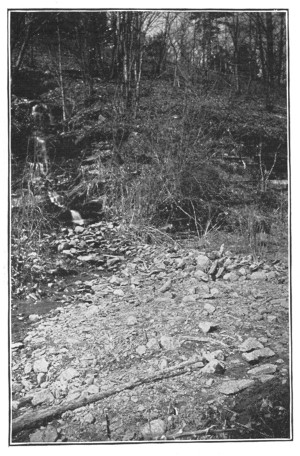
Fig. 44. A pile of brook debris deposited by the checking of the current.
Now the brook leads us into a dripping woodland, and just ahead we can hear the roar of a little waterfall, for at this point the cutting stream flows upon the bed rock with its alternating bands of hard and soft rock through which the busy brook is cutting a miniature gorge. Here is a hard layer which the stream has undermined until it stands out as a shelf, over which the water leaps and falls in one mass with a drop of nearly ten feet. Watch how the water below boils and eddies; think with what force it is hammering its stone-cutting tools upon the rocky floor. Surely here is a place where the brook is cutting fast. Notice that swirling eddy where the water is whirling about with the speed of a spinning top; let us remember this eddy and when the water is lower we will try to see what is happening at its bottom.
On the other side of the woods our brook emerges into a broad meadow; let us follow it and see what becomes of its load, whether it is carried onward, or whether the tired brook lays it down occasionally to rest. Out of the woods, the brook dashes down a steep incline until the foaming tide comes to rest in a deep pool. What becomes of the large pebbles which have been swept down? Do they go on or do they stop? If you go to the outlet of the pool you will see that the water is coming out with nothing in its grasp but the fine clay and sand, the gravel and pebbles having been dropped by the less rapid current of the pool. This is one of the most important of the brook's lessons, for anything that tends to check the current makes it drop some of the sediment that it carries (Fig. 44). Yonder is an old tree stump with its crooked roots caught fast on the bottom; the mid-stream current rushes against it only to be thrown back in a boiling eddy, and the waters split in twain and flow by on either side with their current somewhat checked. In the rear of the stump is a region of quiet water where the brook is building up a pile of gravel. Farther on, the banks of the brook are low and here the waters no longer remain in the channel, but overflow the low land, spreading out on either side in a broad sheet. The increased friction of this larger area reduces the current, and again we see the brook laying down some of its load. The sand and gravel deposited here is spread out in a flat plain called a flood plain, because it is built up when the stream is in flood. It is on the large flood plains of rivers that many of our richest farm lands occur. These receive, each spring when the stream is in flood, a fresh coating of soil mixed with fragments of vegetable matter, and thus grow deeper and richer year by year. The flood plains of the Mississippi and of the Nile are notable examples of this important form of stream deposit.
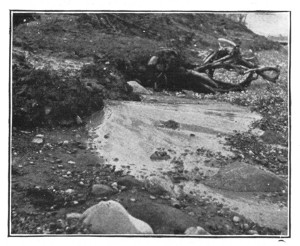
Fig. 45. A delta built by a tiny rill flowing from a steep clay bank.
And now let us make one more rainy-day observation before going back to our warm, dry homes. Just ahead on the other side of that clump of alders and willows lies the pond into which the brook flows and where its current is so checked that it gives up almost all its burden of sediment. Close to the shore it has dropped its heaviest fragments, while the sand and clay have been carried farther out, each to be dropped in its turn, carefully assorted as to size and weight. Here you can see that the stream has partly filled this end of the pond, and it is now sending its divided current out over the deposit which it has made in a series of branching rivulets. This deposit is called a delta (Fig. 45), and deltas are another important form of stream deposits. In the lakes and ponds, deltas may grow outward until the lake is filled, when the stream will meander across the level plain without much current and hence without much cutting power (Fig. 46). In the sea, great deltas are being formed in some places, like those at the mouths of the Mississippi, the Nile, and the Ganges. Large areas of dry land have thus been built. Deltas, like flood plains, afford rich farming lands when they are built high enough to remain above the water.
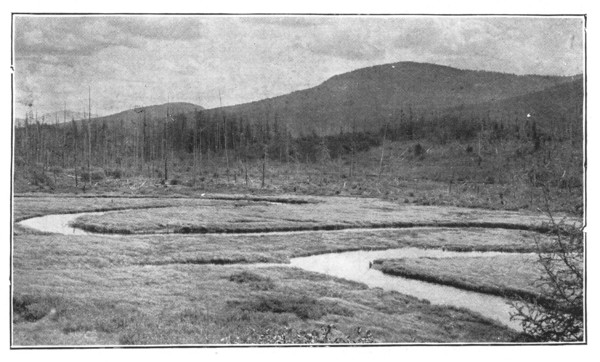
Fig. 46. A brook flowing across a pond which has been filled.
Here let us end our study of the brook for to-day, and wait until the rain ceases and the water runs clear again; then we can see the bottom and can also learn by contrast how much more work the brook has been doing to-day than it does when the volume of water is less.
On the road home, however, we can notice how the temporary streams, as well as the everflowing brook, have been cutting and depositing. See where this tiny rill has run down that steep clay bank until its current was checked at the foot. Notice how it has spread out its sediment in a fan-shaped deposit. This form of deposit is sometimes made by larger streams, especially in a mountainous country with plains at the foot of the slopes. They are called alluvial fans or cone deltas (Fig. 47), but they are not as important as flood plains and deltas.
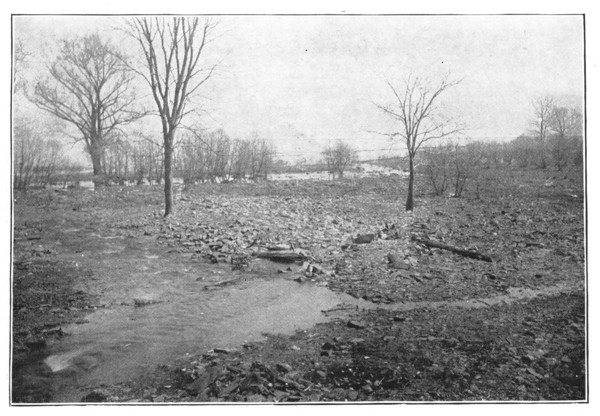
Fig. 47. A brook building a delta into a lake. Formerly the brook flowed straight ahead, but its own delta has caused it to change its direction.
The first dry, sunny morning that comes we visit the brook again. It no longer roars, but its clear waters now sing a pleasant melody as they ripple along the stony bed. We can see at a glance that comparatively little work is going on to-day, and yet if we look closely, we shall see glittering particles of sand moving along the bottom. The clear water, however, allows us to study the bottom which before was hidden by the load of mud.
First we see the rounded boulders and pebbles of all sizes which must have been rolled about for a long time to make them so smooth. Some of them are so very hard that we cannot even scratch them with our knives; others are soft and easily broken. What would be the effect of rolling together stones of such varying hardness? We must think of these stones as the tools with which the brook cuts and grinds, for water without sediment can do little more than slightly to dissolve the rock.
Let us go at once to the little waterfall, for we shall be curious to see what lies at the bottom of the whirling eddy that drew our attention yesterday. As we look down into the sunlit pool we see that the eddy is gone, for the volume of water is not great enough to cause it to revolve, but there in the rock on the bottom is a deep basin-like hole. In the bottom of this hole we shall see a number of well-rounded stones, with perhaps some sand and gravel. These stones are the tools which, whirled about by the eddying water, have cut the basin-like holes. Holes of this sort are common in rocky stream beds, especially in the neighborhood of falls or in places where falls have once been; they are called pot-holes and represent another form of stream cutting (Fig. 48).
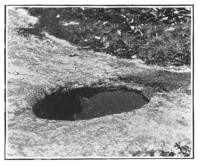
Fig. 48. A pot-hole cut in the rock of a stream's bed.
Next let us visit the flood plains which we saw forming when the water was high. Now we shall find the brook flowing in its channel with the flood plain deposits left high and dry. If we dig down into the flood plain, we shall see that it is made up of successive layers varying in thickness and in the size of the fragments. Each of these layers represents a period of high water and the size of the fragments in the layer tells us something of the strength of the current, and therefore of the intensity of the flood. Some layers are thicker than others, showing a longer period of flood, or perhaps several floods in which there was little variation. This stratification, as it is called, is one of the peculiarities of water deposits and it is due to the assorting power of currents which vary in force. If we were to cut into the delta we should find the same thing to be true,—a regular succession of layers, though sometimes confused by changes in direction of flow.
To-day we shall notice something which escaped our attention when it was held by the rushing torrent—the valley bottom is much wider than the bed of the stream; if we keep our eyes open we shall see the explanation of this in the abandoned channels, where, owing to some temporary obstructions, the stream has been turned from side to side of the valley, now cutting on one bank and now on the other. In this turning from side to side the cutting area of the stream is increased, and it goes on widening its valley as well as cutting it downward.
And now we have learned some of the most important ways in which the busy brook is toiling; but there are other points which we might have seen, and in some brooks there are special features to be noted. However, we have learned that the brook is no idler, that its main work is to conduct to the ocean the rain that falls upon the earth's surface, and that in doing this it is wearing down the hills, carrying them away only to build up in other places. The cheerful song of the brook takes on a new meaning as we lie in the shade and watch it hurry by. It is not the song of idleness nor of pleasure, but like the song with which a cheerful and tireless worker seeks to make its task lighter.
LEAFLET XI. INSECT LIFE OF A BROOK.[13] By MARY ROGERS MILLER.
What wader, be he boy or water-fowl, has not watched the water-insects? How they dart hither and thither, some skimming the surface, others sturdily rowing about in the clear shallows! The sunlight fastens, for an instant, their grotesque reflections on the smooth bottom, then away—the shadow is lost, except for the picture it left in the memory of the onlooker.
The splashing, dashing wader, with his shout and his all-disturbing stick, stands but a poor chance of making intimate acquaintances among water-folk. Your true brook-lover is a quiet individual except when occasion demands action. The lad who, from the vantage ground of a fallen log or overhanging bank, looks down on the housekeeping affairs of his tiny neighbors has the right spirit. Indeed, I doubt whether these little folk are aware of his presence or curiosity.
Time was when the enjoyment of brook-life was limited to boys. White aprons, dainty slippers and fear of being called "Tom-boy" restrained the natural impulses of the "little women." Happily that day is past, and it no longer looks queer for girls to live in the open air and sunshine, free to chase butterflies and hunt water-bugs with their brothers.
My brooks abound in swift eddies, perfect whirlpools in miniature, and water-falls of assorted sizes. They have also their quiet reaches, where whirligig beetles perform their marvelous gyrations, and bright-eyed polliwogs twirl their tails in early May. On the banks are ferns and mosses; sometimes willows and alders form a fringing border.
The heart-leaved willows along many brooksides are found to bear at the tips of many of their branches, knob-like bodies which look like pine cones. (Fig. 49.) Now everybody knows that willows bear their seeds in catkins. Why, then, should so many brookside willows thrust these cones in our faces? On cutting one of the cones open, we learn the secret. A tiny colorless grub rolls helplessly out of a cell in the very centre of the cone. It is the young of a small gnat, scarcely larger than a mosquito, and known as a "gall gnat." The cone-shaped body on the willow branch is called a "pine-cone willow-gall." The little gray gnat comes out in the spring. Any one can collect the galls from the willows and keep them in some kind of cage in the house until the gnats come forth.
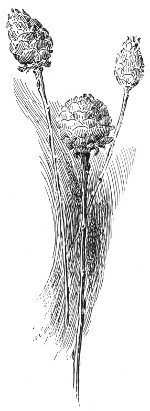
Fig. 49. Knob-like bodies resembling pine cones.
The pine-cone gall is an enlarged and deformed bud. The twig might have developed into a branch but for the presence of the little larva. The scales of the cone are the parts which under more favorable conditions would have been leaves. The brook-lover cannot afford to miss the pine-cone willow-galls.
Wandering along the brookside in spring or early summer, one is surprised to find so many insect visitors darting about in the air. There are dragon-flies of many shapes, sizes and colors; dainty damsel-flies perch airily on reeds, their gleaming wings a-flutter in the sunshine; sometimes a nervous mud-wasp alights for a moment, and then up and away. The dragon-flies seem intent on coming as near to the water as possible without wetting their wings. They pay no heed to other visitors, yet how easily they escape the net of the would be collector! Let them alone. Their business is important if we would have a new generation of dragon-flies to delight the eye next year. The eggs of these creatures are left in the water and the young ones are aquatic. If you would know more of them, dip down into the stream in some sluggish bay. Dip deep and trail the net among the water plants. Besides dragon-fly nymphs there will be caddice-worm cases like tiny cob-houses, water-boatmen, back-swimmers, and giant water-bugs.[14] These are insects characteristic of still or sluggish water, and are found in spring and summer.
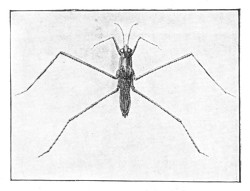
Fig. 50. Water-striders have long, thin legs.
The insects which skip lightly over the surface of the water where the current is not too strong, are water-striders. (Fig. 50.) Some are short and stout, others slender-bodied; but all have long thin legs. Their color is nearly black. As they scurry about in the sunshine the delighted watcher will sometimes catch a glimpse of their reflections on the bottom. Six oval bits of shadow, outlined by rims of light; there is nothing else like it! Be sure you see it.
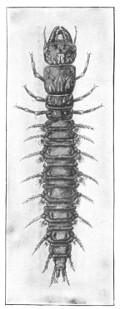
Fig. 51. The dobson makes no pretensions to beauty. (Natural size).
Let us leave the quiet, restful pools and the sluggish bays, and follow the hurrying water to the rapids. Every stone changes the course of the current and the babble makes glad the heart of the wayfarer. Let us "leave no stone unturned," until we have routed from his favorite haunt that genius of the rapids, the dobson. (Fig. 51.) These creatures bear other common names. They are prized by fishermen in the black bass season. Dirty brown in color and frankly ugly in appearance and disposition, these larvæ, for such they are, have little to fear from the casual visitor at the water's edge. When a stone is lifted, the dobsons beneath it allow themselves to be hurried along for some distance by the current. The danger over, they "catch hold" and await their prey farther down stream. In spite of their vicious looking jaws these insects are not venomous. At the very worst they could do no more than pinch the finger of the unwary explorer.
When the dobson is full grown, it is called a hellgrammite fly or horned corydalis. It has lost none of its ugliness, though it has gained two pairs of thin, brownish-gray wings, and flies about in the evening. It has been known to create some consternation by flying in at an open window. It is harmless and short-lived in the adult stage.
Upturned stones are likely to bring to view other strangers. Lying close against these wet stony surfaces one usually finds young May-flies. (Fig. 52.[15]) These, like the young dragon-flies, are called nymphs.
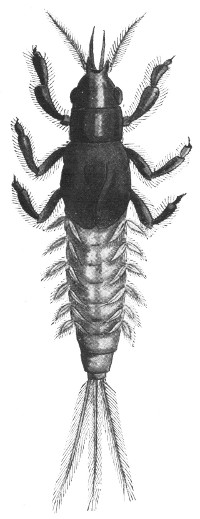
Fig. 52. May-fly nymph. (Three times natural size)
When they are ready to leave the water they make their way to the shore, and, clinging to some convenient tree trunk or building, they shed their nymph skins. I have seen trees and buildings on the banks of the St. Lawrence river literally covered with these cast skins. In the early morning in June and July one may watch the molting process, the unfolding of the gauzy wings, and the unsheathing of the long filaments. (Fig. 53.)
Do not believe that May-flies are harmful. They are sometimes too numerous for comfort at summer resorts where myriads of them swarm about the lights; but stories of their stinging and biting are entirely without foundation. They are short-lived in the adult stage. The name of the family to which they belong, Ephemeridæ, suggests their ephemeral existence. It is of these that poets have sung.
Stone-fly nymphs, also, cling closely to the flat stones. The cast skins of these are frequently found on the banks of streams. They resemble the May-fly nymphs but can be identified by a comparison with these illustrations. (Fig. 54.)
Sometimes on the very brink of a cataract one will see what appear like patches of loose black moss. Strangely enough, these are the larvæ of black-flies, related to the terrible black-fly of the north woods. The black-fly larvæ can live only in the swiftest water. There they pass through their transformations and succeed in emerging into their aërial stage, in spite of the rushing current.
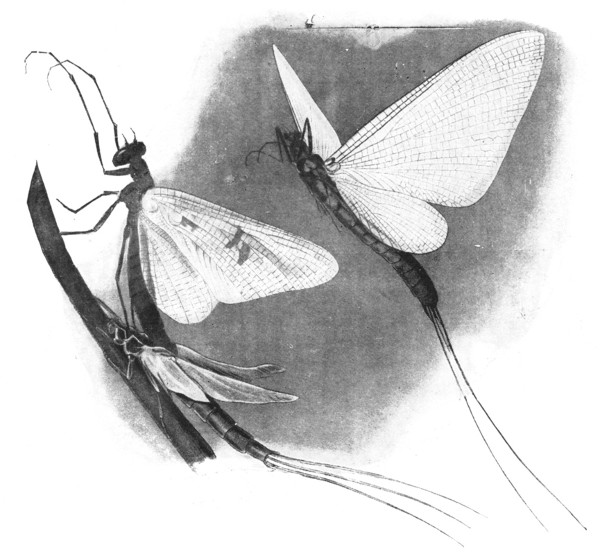
Fig. 53. The May-fly sheds its nymph skin. (Twice natural size.)
All these things and many more are seen by those who frequent the water brooks. Observers cannot tell all they see, for some things are too deep for words. They can and do say to one and all, "Come, let us visit the brook together. The water and all that dwell in it and round about, invite us and make us welcome."
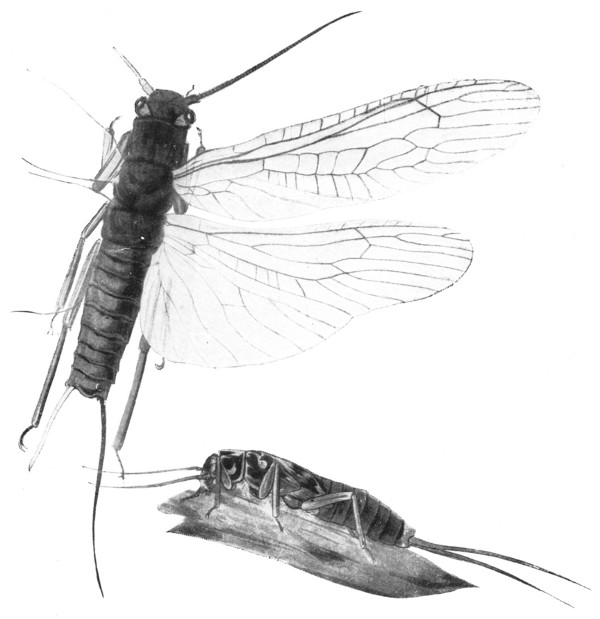
Fig. 54. Stone-fly, showing one pair of wings. The lower figure is a nymph. (Twice natural size.)
LEAFLET XII. LIFE IN AN AQUARIUM.[16] By MARY ROGERS MILLER.

There is no more fascinating adjunct to nature-study than a well-kept aquarium. It is a never-ending source of enjoyment, interest and instruction to students of any age. Children in the kindergarten or at home will watch with delight the lively occupants, which cut all sorts of queer capers for their amusement, and older people may read some of nature's choicest secrets through the glassy sides of the little water world. To many, the word aquarium suggests a vision of an elaborately constructed glass box, ornamented with impossible rock-work and strange water plants, or a globe in which discouraged and sickly-looking gold-fish appear and disappear, and take strange, uncanny shapes as they dart hither and thither.
Such forms of aquaria have their place in the world, but they are not suited to the needs of an ordinary school-room. Every school may have some sort of an aquarium if the teacher and pupils are willing to give it some daily thought and care. Without such attention a fine aquarium may become an unsightly and disagreeable object, its inhabitants unhealthy and its beauty and usefulness lost.
The great fundamental principle underlying success in making and maintaining an aquarium is this: imitate nature. We all know how much easier it is to formulate a principle, and even to write a book about it, than to put it into practice. Most of us have not had the time and opportunity for the close observation of nature necessary to interpret her methods and to imitate her. It is to those teachers who are anxious to learn what nature has to teach and who wish to lead their pupils to a higher and wider conception of life, that these suggestions are offered.
Four things are important in making and keeping an aquarium:
1. The equilibrium between plant and animal life must be secured and maintained. It is probable that an aquarium in an elementary school is mainly used for the study of animal life; but animals do not thrive in water where no plants are growing. Nature keeps plants and animals in the same pond and we must follow her lead. The plants have three valuable functions in the aquarium. First, they supply food for the herbivorous creatures. Second, they give off a quantity of oxygen which is necessary to the life of the animals. Third, they take up from the water the harmful carbonic acid gas which passes from the bodies of the animals. Just how the plants do this is another story.
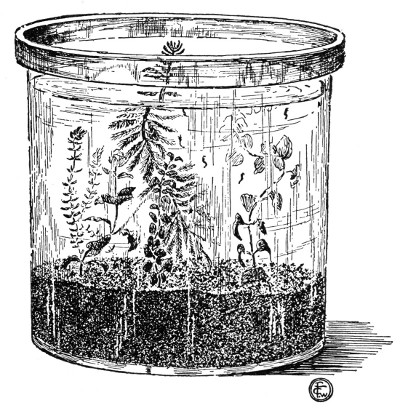
Fig. 55. A museum-jar aquarium. (More animal life would make a better equilibrium.)
2. The aquarium must be ventilated. Its top should be broad and open. Every little fish, snail and insect wants air, just as every boy and girl wants it. A certain quantity of air is mixed with the water, and the creatures must breathe that or come to the surface for their supply. How does Mother Nature manage the ventilation of her aquaria,—the ponds and streams? The plants furnish part of the air, as we have said. The open pond, whose surface is ruffled by every passing breeze, is constantly being provided with fresh air. A tadpole or a fish can no more live in a long-necked bottle than a boy can live in a chimney.
3. The temperature should be kept between 40° and 50° Fahr. Both nature and experience teach us this. A shady corner is a better place for the aquarium than a sunny window on a warm day.
4. It is well to choose such animals for the aquarium as are adapted to life in still water. Unless one has an arrangement of water pipes to supply a constant flow of water through the aquarium, it is better not to try to keep creatures that we find in swift streams.
Practical experience shows that there are certain dangers to guard against,—dangers which may result in the unnecessary suffering of the innocent. Perhaps the most serious results come from overstocking. It is better to have too few plants or animals than too many of either. A great deal of light, especially bright sunlight, is not good for the aquarium. A pond that is not shaded soon becomes green with a thick growth of slime or algæ. This does not look well in an aquarium and is likely to take up so much of the plant-food that the other plants are "starved out." The plants in the school-room window may provide shade for the aquarium, just as the trees and shrubs on its banks shade the pond. If we find green slime forming on the light side of our miniature pond, we should put it in a darker place, shade it heavily so that the light comes in from the top only, and put in a few more snails. These will make quick work of the green slime, since they are fond of it, if we are not.
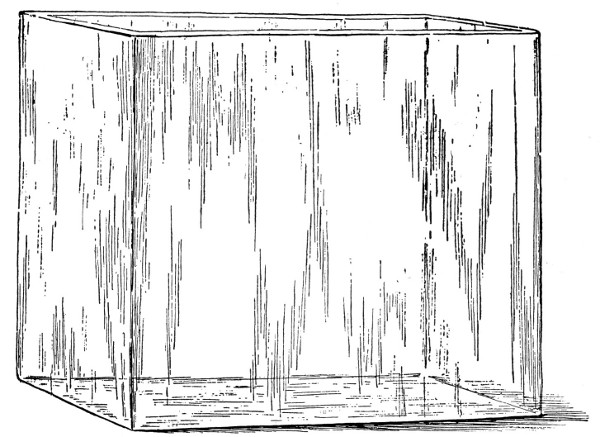
Fig. 56. A rectangular glass aquarium.
Some of the most innocent-looking "water nymphs" may be concealing habits that we can hardly approve. There are some which feed on their smaller and weaker neighbors, and even on the members of their own families. We know that such things go on in nature, but if we wish to have a happy family we must keep the cannibals by themselves.
After an aquarium has been filled with water and the inhabitants well established, it is not necessary to change the water, except in case of accident. The water that is lost by evaporation has to be replaced. It should be poured in gently in order not to disturb the water and destroy its clearness. If a piece of rubber tubing is available, a practical use of the siphon can be shown and the aquarium replenished at the same time. It is a good plan to use rain water, or clear water from a pond, for this purpose.
A piece of thin board or a pane of glass may be used as a cover to keep the dust out of the aquarium. This need not fit tightly or be left on all the time. A wire netting or a cover of thin cotton net would keep the flying insects from escaping, and it might be tied on permanently. Dust may be skimmed off the top of the water or may be removed by laying pieces of blotting paper on the surface for a moment.
If any of the inhabitants do not take kindly to the life in the aquarium, they can be taken out and kept in a jar by themselves—a sort of fresh air and cold water cure. If any chance to die they ought to be removed before they make the water unfit for the others. Bits of charcoal in the water are helpful if a deodorizer or disinfectant is needed.
Experience, the dear but thorough teacher, is of more value to every one of us than many rules and precepts. Nothing can rob us of the pleasure that comes of finding things out for ourselves. Much of the fun as well as much of the success in life comes from overcoming its difficulties. One must have a large store of patience and courage and hopefulness to undertake the care of an aquarium. After it is once made it is less trouble to take care of than a canary or a pet rabbit. But most things that are worth doing require patience, courage and hopefulness, and if we can add to our store of any of these by our study of life in an aquarium we are so much the better for it.
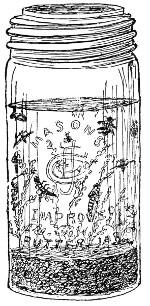
Fig. 57. A home-made aquarium.
Two kinds of aquaria will be found useful in any school. Permanent ones—those which are expected to continue through a season or through a whole year if the school-room is warm enough to prevent freezing; and temporary ones—those which are for lesson hours or for the study of special forms.
If some one phase in the life of any aquatic animal is to be studied during a short period, it is well to have special temporary aquaria. Also, when a talk on some of the occupants of the larger aquarium is to be given, specimens may be placed in small vessels for the time being and returned later. For such purposes glass tumblers can be used, or small fruit jars, finger bowls, broken goblets set in blocks of wood, ordinary white bowls or dishes, tubs, pails or tanks for large fishes,—in fact any wide-mouthed vessel which is easy to get. Special suggestions will be made in connection with the study of some of the water insects and others.
A permanent aquarium need not be an expensive affair. The rectangular ones are best if large fishes are to be kept, yet they are not essential. Here, again, it is easier to write directions for the construction of a perfect aquarium than it is for the most patient teacher, with the help of the boys who are handy with tools, to put together a box of wood and glass that will not spring a leak some day and spoil everything. But failures do not discourage us; they make us only more determined. If a rectangular water-tight box is out of the question, what is the next best thing? One of the busiest laboratories in New York State has plants and animals living in jars of all shapes and sizes,—fruit jars, glass butter jars, candy jars, battery jars, museum jars, and others of like nature. There are rectangular and round aquaria of various sizes kept by all firms who deal in laboratory supplies, and if some money is to be spent, one of these is a good investment. Fig. 56 shows one of these rectangular ones, and Fig. 57 shows a round one of small size which is useful and does not cost much.
A Good School Aquarium.
A cheap, substantial aquarium for general use may be made of glass and "angle" or "valley" tin. Pieces of glass are always handy and the tin can be had at any tin-shop. The tinsmith will know just how to cut, "angle" and solder it.
The following directions for making an aquarium of this kind are supplied us by Professor C. F. Hodge of Clark University. He has made and used them for years with great satisfaction in the university laboratory and in graded schools.
The illustration (Fig. 58, 59) shows various sizes. A good all-round size has these dimensions: 12 inches high, 15 inches long and 8 inches wide. One may use spoiled photographic plates for small desk aquaria, in which to watch the development of "wigglers," dragon-fly nymphs or other water insects. Lids of wire screen are shown on some of the aquaria in the picture (1, 2 and 3).
To make the frame.—If the aquarium is to be 10 x 8 x 5 inches, we shall need two pieces of glass for sides 10 x 5 inches, two for ends 8 x 10, and one for bottom 8 x 5; and two strips of tin 3/4 inch wide, 28 inches long, and four strips 103/8 inches long. These should be angled by the tinner, and out of them we shall make the frame. The 28-inch strips should be cut with tinner's snips half way in two at 103/8, 53/8, 103/8 and 53/8 inches, cutting off the end at the last mark. This keeps the top and the bottom of the frame each in one piece. Next we bend them into shape. When the corners are well squared they should be soldered. The four 103/8 pieces make the vertical corners and we will solder them in place. An easy way to be sure that each angle is square is to hold it in a mechanic's square while soldering it.
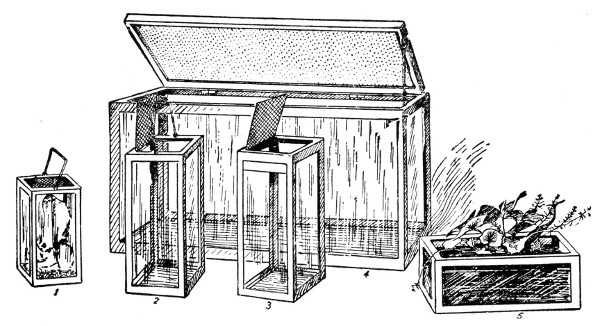
Figs. 58, 59. Permanent aquarium made of tin and glass.
To set the glass.—Lay the aquarium cement (see recipe) on evenly all around the bottom of the frame and press the bottom glass into place. Put in the sides and ends in the same way. Next carefully put a few very limber twigs into the aquarium to hold the glass against the frame till the cement takes hold. Cut off the extra cement with a knife and smooth it nicely. Cover the frame with asphaltum varnish or black lacquer. In a week it will be ready to use.
Double thick glass must be used for large aquaria.
Cement.—Shun all resinous cements that require to be put on hot. The following is a recipe for cement used in successful angle tin aquaria, for both salt and fresh water:
10 parts, by measure, fine, dry, white sand,
10 parts plaster of Paris,
10 parts litharge,
1 part powdered resin.
Stir well together and, as wanted, mix to consistency of stiff putty with pure boiled linseed oil.
The formula given by the U. S. Fish Commission is recommended:
8 parts putty,
1 part red lead,
1 part litharge.
Mix, when wanted, to consistency of stiff putty, with raw linseed oil.
After reading all these directions and getting the idea of an aquarium, one should think the whole matter out for himself and make it just as he wants it. Directions are useful as suggestions only. The shallow form is better for raising toads, frogs and insect larvæ; the deeper aquaria show water plants and fishes to better advantage.
Inhabitants of the Aquarium.
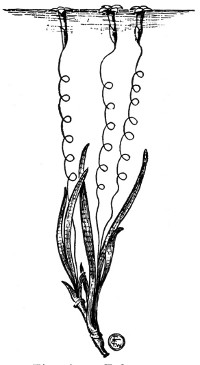
Fig. 60. Eel-grass.
It is now time to begin to think about what shall be kept in the aquarium. At the bottom a layer of sand, the cleaner the better, two or three inches deep will be needed. A few stones, not too large, may be dropped in on top of this first layer, to make it more natural. The water plants come next and will thrive best if planted securely in the sand. The most difficult thing is to get the water in without stirring things up. A good way is to pour the water in a slow stream against the inside of the aquarium. The best way is to use a rubber tube siphon, but even then the water ought not to flow from a very great height. If the aquarium is large, it had better be put in its permanent place before filling.
The aquarium will soon be ready for snails, polliwogs, and what ever else we may wish to put into it. In the course of a few days the plants will be giving up oxygen and asking for carbon dioxid.
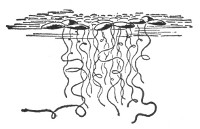
Fig. 61. Duck-weed.
Plants that thrive and are useful in aquaria.—Many of the common marsh or pond plants are suitable. The accompanying illustrations show a few of these. Nothing can be prettier than some of these soft, delicate plants in the water. The eel-grass, or tape grass (Fig. 60), is an interesting study in itself, especially at blossoming time when the spiral stems, bearing flowers, appear.
Any who are especially interested in the life-history of this plant may read in reference books a great deal about what other observers have learned from the plant concerning its methods of growth and development. The best that we learn will be what the plant itself tells us day by day.
Some of the best reference books on both plant and animal life are found in the New York State Teachers' Library and can be obtained by teachers through the school commissioners.
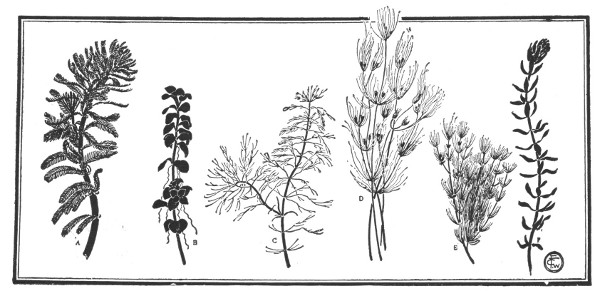
Fig. 62. Water plants.
Every boy and girl who likes to taste the fresh, peppery plants which they find growing in cold springs, knows watercress. If the aquarium is not too deep, this plant will grow above the surface and furnish a resting place for some snail which, tired perhaps by its constant activity, enjoys a few minutes in the open air.
Duck-weed or duck's-meat (Fig. 61) grows on the surface, dangling its long thread-like roots in the water. A little of it is enough. Too much would keep us from looking down upon our little friends in the water.
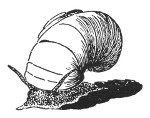
Fig. 63. Snail.
The parrot's feather (Fig. 62, A) is an ornamental water plant that can be obtained from a florist; a plant that looks very like it grows in our ponds. It is called water-milfoil.
The water purslane, B, or the common stoneworts, Nitella and Chara, D, E, the waterweed, F, and the horn-wort, C, appear graceful and pretty in the water. If you do not find any of these, you are sure to find others growing in the ponds in your neighborhood which will answer the purpose just as well.
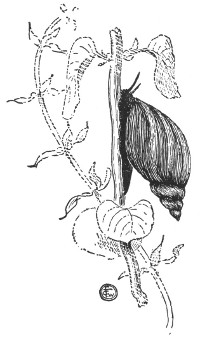
Fig. 64. Snail with conical shell.
Animals that may be kept in aquaria.—The snail. The common pond snail with the spiral shell, either flat or conical, can be found clinging to the stems of the cat-tails or flags and to floating rubbish in ponds or swamps. If these are picked off carefully and taken home in a pail of water they will be valuable inhabitants for the aquarium. They are vegetable feeders and unless there is some green slime in the water, cabbage or lettuce leaves may be put where the snails can get them. The eggs of the snail are excellent food for fishes, and if a few could be secured for special study, their form, habits and development may be made delightful observation and drawing lessons. Snails can be kept out of the water for some time on moist earth. Land snails and slugs should be kept on wet sand and fed with lettuce and cabbage leaves. The common slug of the garden is often injurious to vegetation. It may always be tracked by the trail of slime it leaves behind it. Gardeners often protect plants from those creatures by sprinkling wood-ashes about them.
Minnows. Every boy knows where to find these spry little fellows. They can be collected with a dipper or net and will thrive in an aquarium if fed with earth worms or flies or other insects. If kept in small quarters where food is scarce, they will soon dispatch the other occupants of the jar. They will, however, eat bits of fresh meat. If the aquarium is large enough, it would hardly be complete without minnows.
Cat fish.—It will not be practicable to keep a cat fish in the permanent aquarium. If one is to be studied it can be obtained at any fish market or by angling, the latter a slow method, but one which will appeal to every boy in the class. The cat fish should be kept in a tub, tank, or large pan of water, and if not wanted for laboratory work, they might be fried for lunch, as cat fish are very good eating.
Gold fish are a special delight if kept in large aquaria. These may often be obtained from dealers in the larger cities. Those who wish other fish for study should be able to get information from the New York State Fish Culturist, concerning the species that are suited to life in still water, and how to get and take care of them.
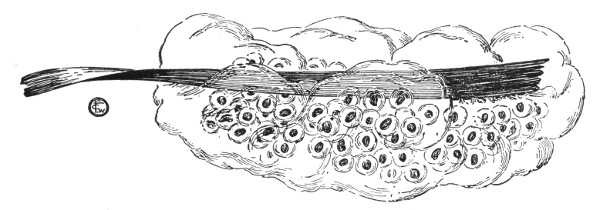
Fig. 65. "Frog spawn."
The clam.—If empty clam shells are plenty on the bank of some stream after a freshet, a supply of clams may be obtained by raking the mud or sand at the bottom of the stream. They can be kept in a shallow pan, and if the water is warmish and they are left undisturbed for a time, they will move about. If kept in a jar of damp sand they will probably bury themselves. They feed on microscopic plants and might not thrive in the permanent aquarium.
Crawfish or crayfish.—These can be collected with nets from under stones in creeks or ponds. They can live very comfortably out of the water part of the time. There is small chance for the unsuspecting snail or water insect which comes within reach of the hungry jaws of the crawfish, and the temporary aquarium is the safest place for him. Many who live near the ocean can obtain and keep in sea water the lobster, a cousin of the crawfish, and will find that the habits of either will afford much amusement as well as instruction. The school boy generally knows the crawfish as a "crab."
The frog.—The study of the development of the common frog is accompanied with little or no difficulty. To be sure there are some species which require two or three years to complete their growth and changes, from the egg to the adult, yet most of the changes can be seen in one year. Frogs are not at all shy in the spring, proclaiming their whereabouts in no uncertain tones from every pond in the neighborhood. The "frog spawn" can be found clinging to plants or rubbish in masses varying in size from a cluster of two or three eggs to great lumps as large as the two fists. The "spawn" is a transparent jelly in which the eggs are imbedded. Each egg is dark colored, spherical in shape, and about as large as a small pea. The eggs of the small spotted salamander are found in similar masses of jelly and look very much like the frog's eggs. If a small quantity of this jelly-like mass be secured by means of a collecting net or by wading in for it, it may be kept in a flat white dish with just enough clean, cool water to cover it, until the young tadpoles have hatched. As they grow larger a few may be transferred to a permanent aquarium prepared especially for them in a dish with sloping sides, and their changes watched from week to week through the season. The growing polliwog feeds on vegetable diet; what does the full grown frog eat?
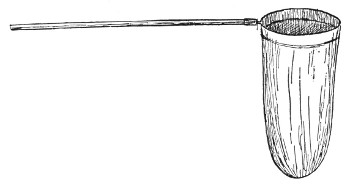
Fig. 66. A useful net for general collecting.
Insects that can be kept in aquaria.—Insects are to many the most satisfactory creatures that can be keep in aquaria. They are plentiful, easy to get, each one of the many kinds seems to have habits peculiar to itself, and each more curious and interesting than the last.
Some insects spend their entire life in the water; others are aquatic during one stage of their existence only. Those described here are a few of the common ones in ponds and sluggish streams, of the central part of the state of New York. If these cannot be found, others just as interesting may be kept instead. One can hardly make a single dip with a net without bringing out of their hiding places many of these "little people."
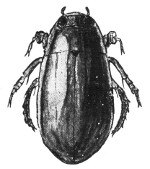
Fig. 67. The predaceous diving-beetle.
The predaceous diving-beetle (Fig. 67) is well named. He is a diver by profession and is a skilled one. The young of this beetle are known as "water-tigers" (Fig. 68), and their habits justify the name. Their food consists of the young of other insects; in fact it is better to keep them by themselves unless we wish to have the aquarium depopulated. When the tiger has reached his full size, his form changes and he rests for a time as a pupa; then comes forth as a hard, shiny beetle like Fig. 67.
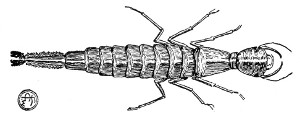
Fig. 68. A water-tiger.
The water-scavenger beetle (Fig. 69), so called because of its appetite for decayed matter, is common in many ponds. It has, like the diving beetle, a hard, shiny back, with a straight line down the middle, but the two can be distinguished when seen together. The young of this beetle look and act something like the water-tigers, but have not such great ugly jaws.
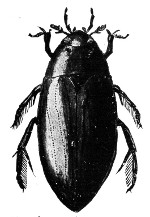
Fig. 69. A water-scavenger beetle.
There are three other swimmers even more delightful to watch than those already mentioned. The water-boatmen (Fig. 70), with their sturdy oar-like legs and business-like way of using them, are droll little fellows. They are not so large as the back-swimmers. Fig. 71 shows a back-swimmer just in the act of pulling a stroke. These creatures swim with their boat-shaped backs down and their six legs up. We must be careful how we handle the back-swimmers, for each one of them carries a sharp bill and may give us a thrust with it which would be painful, perhaps poisonous.
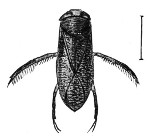
Fig. 70. Water-boatman.
The water-scorpion (Fig. 72) is a queer creature living in a neighborly way with the boatmen and back-swimmers, though not so easy to find. Do not throw away any dirty little twig which you find in the net after a dip among water plants near the bottom of a stream or pond. It may begin to squirm and reveal the fact that it is no twig but a slender-legged insect with a spindle-shaped body. We may handle it without danger, as it is harmless. This is a water-scorpion, and his way of catching his prey and getting his air supply will be interesting to watch. He is not shy and will answer questions about himself promptly and cheerfully. Fig. 72 will give an idea of the size and appearance of this insect.
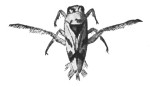
Fig. 71. A back-swimmer.
No water insect except the big scavenger beetle can begin to compare in size with the giant water-bug (Fig. 73). We may think at first that he is a beetle, yet the way he crosses his wings on his back proves him a true bug. In quiet ponds these giants are common enough, but the boy or girl who "bags" a full-grown one at the first dip of the net may be considered lucky.
The boatmen, back-swimmers and giants all have oars, yet are not entirely dependent on them. They have strong wings, too, and if their old home gets too thickly settled, and the other insects on which they feed are scarce, they fly away to other places. The giant water-bug often migrates at night, and is attracted to any bright light he sees in his journey. This habit has given him the popular name of "electric-light bug."
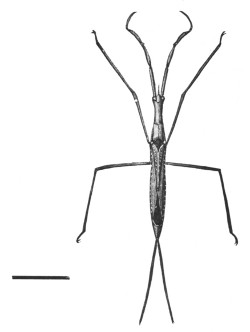
Fig. 72. Water-scorpion.
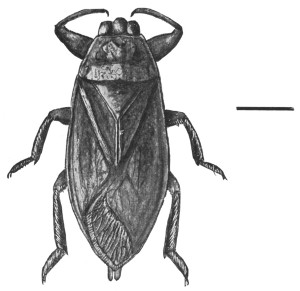
Fig. 73. Giant water-bug.
Among the insects which spend but part of their life in the water, we shall find many surprises. It made us feel queer when we learned that the restless but innocent-looking wiggler of the rain-water barrel was really the young of the too familiar mosquito. The adult mosquito leaves its eggs in tiny boat-shaped masses on the surface of stagnant water, where food will be abundant for the young which soon appear. Some time is spent by the wigglers in eating and growing before they curl up into pupæ. Insects are rarely active in the pupa stage. The mosquito is one of the very few exceptions. From these lively pupæ the full-grown mosquitoes emerge. Fig. 74 shows a small glass tumbler in which are seen the three aquatic stages of the mosquito's life and an adult just leaving the pupa skin. Nothing is easier than to watch the entire development of the mosquito, and the changes must be seen to be fully enjoyed and appreciated. It would be interesting to note the differences between the mosquitoes that come out of the small aquaria. A supply of wigglers may be kept in the permanent aquarium where they serve as food for the other insects.
Every child knows the dragon-fly or darning-needle, and none but the bravest of them dare venture near one without covering ears or eyes or mouth, for fear of being sewed. Many and wide-spread are the superstitions concerning this insect, and it is often difficult to bring children to believe that this creature, besides being a thing of beauty, is not only harmless but actually beneficial. If they knew how many mosquitoes the darning-needle eats in a day they would welcome instead of fearing the gay creature.
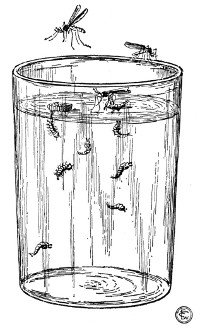
Fig. 74. Temporary aquarium, containing eggs, larvæ and pupæ of mosquito.
The young of the dragon-fly live a groveling existence, as different as can be from that of their sun-loving parents. Their food consists of mosquito larvæ, water-fleas and the like, and their method of catching their prey is as novel as it is effective. Pupils and teacher can get plenty of good healthy entertainment out of the behavior of these awkward and voracious little mask-wearers. The first dip of the net usually brings up a supply of dragon-fly nymphs and of their more slender cousins, the damsel-fly nymphs. The latter have expanded plate-like appendages at the hind end of the body which distinguish them from the dragon-fly nymphs.
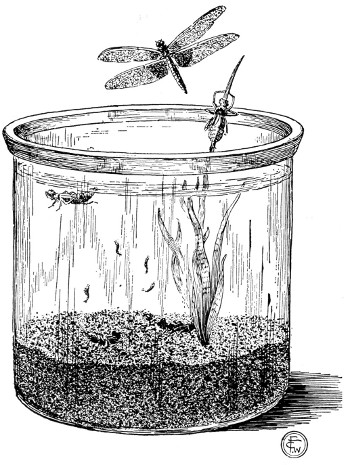
Fig. 75. The life history of a dragon-fly as seen in an aquarium.
The transformation of one of these young insects into an adult is one of the most interesting observation lessons that can be imagined for a warm spring morning. If a dragon-fly nymph should signify its intention of changing its form in my school-room, I should certainly suspend all ordinary work and attend to him alone. Each child should see if possible this wonderful transfiguration.
Floating in the water of a pond or stream one may find a little bundle of grass or weed stems, with perhaps a tiny pebble clinging to the mass. Close examination will prove this to be the "house-boat" of one of our insect neighbors, the caddice-worm. Contrasting strangely with the untidy exterior is the neat interior, with its lining of delicate silk, so smooth that the soft-bodied creature which lives inside is safe from injury. The commonest of the many forms of houses found here are those illustrated in Figs. 76 and 77. These will find all they wish to eat in a well-stocked aquarium. When full grown they will leave the water as winged creatures, like Fig. 78, and return to its depths no more.
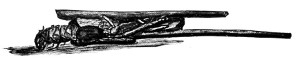
Fig. 76. Case of caddice-worm
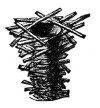
Fig. 77. Another caddice-worm case.
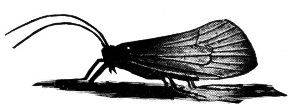
Fig. 78. Caddice-fly.
There is surely no lack of material furnished by Mother Nature for the study of aquatic life. Every one who really believes in its usefulness can have an aquarium, and will feel well repaid for the time and effort required when the renewed interest in nature is witnessed which this close contact with living beings brings to every student. Let us take hold with a will, overcome the difficulties in the way, and teacher and pupils become students together.
LEAFLET XIII. A STUDY OF FISHES.[17] By H. D. REED.
The first forms of animal life which attract the young naturalist's attention are doubtless the birds. These are most interesting to him because of their beautiful colors, their sweet songs, and the grace with which they fly. But who has watched the fishes in a brook or an aquarium and is not able to grant them a place, in beauty, grace and delicate coloration, equal to the birds? To be sure, fishes cannot sing, yet there are so many other interesting facts in connection with their habits and life-histories that it fully makes up for their lack of voice.
The Parts of a Fish.
While observing a living fish and admiring its beauty, it will probably occur to some of us that a fish consists only of a head and tail. Yet this is not all. Between the head and tail is a part that we may call the trunk. It contains the digestive and other organs. There is no indication of a neck in a fish. Any such constriction would destroy the regular outline of the animal's body and thus retard the speed with which it moves through the water. But head, trunk and tail are not all. There are attached to the outer side of the fish's body certain appendages that are called fins.
Before discussing some of the different kinds of fishes and their habits, it will be necessary to learn something about fins, for the fins of all fishes are not alike. When a fish moves through the water, it bends its tail first to one side and then to the other. This undulatory movement, as it is called, pushes the fish's body ahead. One can observe the movements easily upon a specimen kept alive in an aquarium jar. At the extreme end of the tail there is a broad, notched fin which aids the tail in propelling and steering the body. We will call this the tail or caudal fin (Fig. 79 B). In most of our common fishes there are seven fins—six without the caudal. The first of these six is a large fin situated near the middle of the back. This is the back or dorsal fin (Fig. 79 A). Sometimes we may find a fish that has two dorsal fins. In this case the one nearest the head is called first dorsal and the next one behind it the second dorsal. Near the head, in a position corresponding to our arms, is a pair of fins which are called the arm or pectoral fins (Fig. 79 E). Farther back towards the tail, on the under side of the fish, is another pair, corresponding in position to the hind legs of a quadruped. This pair is called the leg or pelvic fins (Fig. 79 D). Just behind the pelvic fins is a single fin, situated on the middle line of the body. This is the anal fin (Fig. 79 C). The pectoral and pelvic fins are called paired fins because they are in pairs. The others which are not in pairs are called median fins, because they are situated on the middle line of the body. The paired fins serve as delicate balancers to keep the body right side up and to regulate speed. They are also used to propel the body backwards. After naming the different fins of the fish in the schoolroom aquarium, it will be interesting to observe the uses of each.
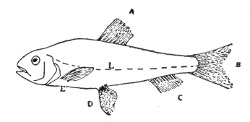
Fig. 79. Diagram of a fish to show: A, dorsal fin; B, caudal fin; C, anal fin; D, pelvic fins; E, pectoral fins; L, lateral line.
On the side of the body, extending from the head to the caudal fin, is, in most fishes, a line made up of a series of small tubes which open upon the surface. This is called the lateral line, and acts in the capacity of a sense organ (Fig. 79 L). Is the lateral line straight or curved? Does it curve upwards or downwards? Does the curvature differ in different kinds of fishes? Do all the fishes you find possess a lateral line? Is the lateral line complete in all fishes, i. e., does it extend from the head to the caudal fin without a single break?
Where Fishes Spend the Winter.
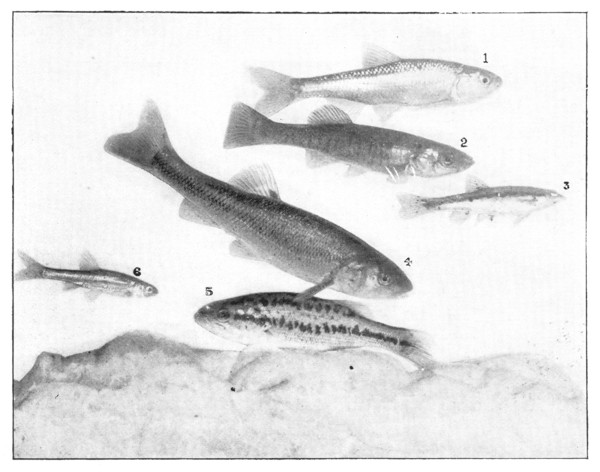
Fig. 80. 1, Shiner; 2, Barred Killifish; 3, Black-nosed Dace; 4, Creek Chub; 5, Young of Large-mouthed Black Bass; 6, Varying-toothed Minnow.
As winter approaches and the leaves fall and the ground becomes frozen, the birds leave us and go farther south into warmer climates where food is more abundant. We are all familiar with this habit of the birds, but how many of us know or have even wondered what the fishes have been doing through the cold winter months while the streams and ponds have been covered with ice? Before the warmth of spring comes to raise the temperature of the streams, let us go to some familiar place in a brook where, during the summer, are to be found scores of minnows. None are to be found now. The brook shows no signs of ever having contained any living creatures. Suppose we go farther up or down the stream until we find a protected pool the bottom of which is covered with sediment and water-soaked leaves. With our net we will dip up some of the leaves and sediment, being sure that we dip from the very bottom. On looking over this mass of muddy material we may find a fish two or three inches long, with very fine scales, a black back, a silvery belly and a blackish or brown band on the side of the body extending from the tip of the nose to the tail. This is the Black-nosed Dace (Fig. 80). If specimens of this fish are caught very early in the spring, one will be able to watch some interesting color changes. As the spawning time approaches, the dark band on the sides and the fins change to a bright crimson. Sometimes the whole body may be of this gaudy color. During the summer the lateral band becomes orange. As the season goes, the bright colors gradually fade until finally, in the fall and winter, the little black-nose is again clothed in his more modest attire. A great many of the fishes, and especially the larger ones, seek some deep pond or pool in the stream at the approach of winter, and remain near the bottom. If the pond or stream is so deep that they do not become chilled they will remain active, swimming about and taking food all winter. But when the stream is very shallow and the fishes feel the cold, they settle down to the bottom, moving about very little and taking little or no food. The carp collect in small numbers and pass the winter in excavations that they make in the muddy bottom. If the débris thrown up by the water across the marshy end of a lake be raked over during the winter, one will probably find some of the smaller catfishes spending the season in a semi-dormant state.
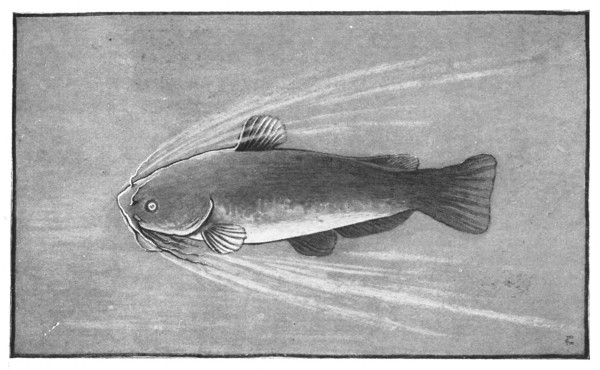
Fig. 81. The Common Catfish or Bullhead.
Some interesting experiments may be tried with the fishes in the aquarium jar. Keep them for a few days where it is cold and then bring them into a warmer room and note the difference in their activity.
The Common Catfish or Bullhead.
This sleepy old fellow differs in many respects from most of our common fishes. He has no scales. About the mouth are eight long whisker-like appendages, called barbels (Fig. 81). Perhaps he is called catfish because he has whiskers about his mouth like a cat. Any one who has ever taken a catfish from the hook probably knows that care is needed in order not to receive a painful prick from the sharp spines in his pectoral and dorsal fins.
There is nothing aristocratic about the catfish. In warm pools and streams where the water is sluggish and the muddy bottom is covered with weeds, he may be found moving lazily about in search of food. His taste is not delicate. Animal substance, whether living or dead, satisfies him. When in search of food he makes good use of his barbels, especially those at the corners of his mouth, which he uses as feelers. The catfish will live longer out of water than most of our other food fishes. They will live and thrive in water which is far too impure for "pumpkin seeds" or bass. They spawn late in the spring. The mother fish cares for her young much as a hen cares for her chickens. When they are old enough to take care of themselves, she weans them.
The Common Sunfish or Pumpkin Seed.
Some evening just at sunset visit a quiet pool in a nearby stream. Drop in your hook baited with an "angle worm" and presently the dancing cork shows that you have a "bite." On "pulling up" you find that you really have a fish. It is a beautiful creature, too—thin flat body shaped something like the seed of a pumpkin. His back is an olive green delicately shaded with blue. His sides are spotted with orange, while his belly is a bright yellow. His cheeks are orange-color streaked with wavy lines of blue. Just behind his eye on his "ear-flap" is a bright scarlet spot. This is the common Sunfish or Pumpkin Seed (Fig. 82). He is a very beautiful, aristocratic little fellow, "looking like a brilliant coin fresh from the mint."