Chapter XVI · EDGMIATSIN AND THE ARMENIAN CHURCH
Reading edition
At five o’clock in the afternoon of the 4th of October we set out for Edgmiatsin. It is a drive of about thirteen miles across the plain. Our luggage was consigned to a waggon of the post, and we ourselves enjoyed the luxury of a light victoria, drawn by four horses abreast. They covered the distance in an hour and forty minutes, although the road is in many places a mere track.
What a drive! It is so well within reach of Europe that it ought to be included, like the journey to Italy, in the programme of a liberal education. The railway will before long arrive at Erivan, and then the pilgrimage will be still easier to undertake. Not all the tourists in the world will disturb the harmony of this landscape; the screeching trains, the loud hotels, the Babel of tongues will be lost, like a flight of starlings, in this expanse. It is here that the spirit of Asia is most intensely present—an inner sanctuary to those outer courts through which the traveller may have wandered and never crossed the threshold of this plain. And it is a spirit and an influence which arouse deep chords within us and send them sounding through our lives.
The landscape at once combines and accentuates the salient features of the Asiatic highlands. There is the plain which was once the bed of an inland sea. It stretches west and east without visible limits; and this evening it has all the appearance of water. In the west it is mirage which produces this effect. The long north-western slope of the Ararat fabric assumes the character of a dark and narrow promontory rising on an opposite shore. From the east, beyond the train of the Little Ararat, a cold mist—may it be from the Caspian?—is slowly wafted over the steppe, and the illusion is complete. Into those liquid spaces sweep the basal vaultings of Alagöz—the boulder-strewn declivities which we keep on our right hand, and which seem to embody on a typical scale that quality of hopeless sterility which is characteristic of vast portions of the continent. But the same vague distance receives the Zanga, diffused into many channels, and lost beneath luxuriant foliage. For over a quarter of an hour after leaving Erivan we pass at a rapid trot between the walls of orchards; and in places the water gushes from the conduits across the road. Once outside this intricate zone the track wanders over the idle soil, skirting the stony slopes in the north. In the opposite direction the plain blooms with fields of cotton and rice, sustained by a small canal which pursues a westerly course before it falls into the Araxes, if indeed it flow so far.
And there are the mountains of Asia—the volcanoes with their vaulted summits, as well as those long ridges with their serrated outline which represent the operation of less impetuous forces through longer spaces of time. To this second category belongs the fine chain on the west of Ararat which gains in definition as we proceed. It stands a little back and behind the fabric of Ararat, and volcanoes too have built themselves up upon this wall. But its rugged and tumbled appearance is the feature which predominates, in striking contrast to the symmetry of the mountain of the Ark. That giant overpowers the lesser Ararat and appropriates their common base. One stands in wonder at the force which could have rent that massive pedestal and opened the yawning chasm which fronts the plain. Night creeps into those recesses, where the blaze of a Kurdish camp-fire calls attention to the extraordinary transparence of the air. The snow-fields, bare and cold above the amber of the sunset, are already free of their coronal of cloud. One full-puffed vapour still floats behind the uppermost pinnacle; another clings to the bastion on the north-west. While we admire this stately scene, made more impressive by the heavy silence, a grove of trees rises from the steppe on our point of course. Two little conical shapes just emerge above their outline, and are recognised as the domes of Edgmiatsin.
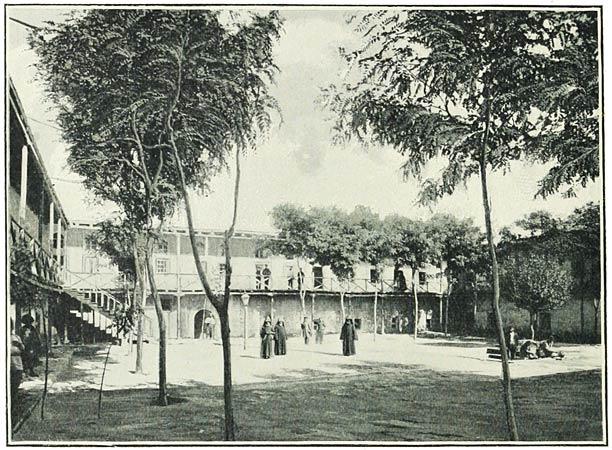
Fig. 47. Pilgrims’ Court, Edgmiatsin.
At last the hinges creak and the porter appears. We are ushered into a court, like that of a college at Cambridge, adjoining the great gate which is in the south wall. It is known as the pilgrims’ court (Fig. 47). Low buildings, rudely built, with a continuous wooden verandah, compose the quadrangle. The windows are all lit up behind a line of young trees of which the foliage rustles in the night air. Several figures may be discerned on the steps of a basin of water in the centre of the court. The place is all bustle and stir. Every room, so we are told, in the whole monastery is occupied by as many people as it will hold. Quarters have been reserved for us in the principal court; but we are not expected until to-morrow. Sooner than disturb the peace of evening we retire to a room in the village where we erect our camp beds. It is quite a dormitory. My immediate neighbour speaks English and is a correspondent of the Daily News. He is an Armenian gentleman who has come all the way from Tabriz, partly in the capacity of delegate of his countrymen in the Persian city, and partly as the representative of the London newspaper. He talks incessantly; his companions do the same. The great event of the coming days will form an epoch in their lives, and every incident will be indelibly imprinted upon their memories. A thrilling and detailed narrative will be despatched to London, where it will filter through the brain of the sub-editor and issue in the form of a paragraph in small type.
But the newspaper will be to blame; for it is an event, this consecration of the latest pontiff of the Armenian Church. It is an event both by reason of the personality of the new katholikos and because within recent years the fact has slowly dawned upon Europe that the politics of Western Asia must react upon the Western peoples, and that in those politics the Armenians are destined to play a part. The Church is at the present day the only native institution which has been preserved to that people. All their aspirations as human beings desirous to live as human beings are focussed by that single organisation. The broad democratic basis upon which reposes the election of the patriarch invests him with a representative character. Moreover he is not chosen by a section of his countrymen but by the nation as a whole. The Armenians of Turkey and of Persia as well as those within Russian territory contribute their suffrages. It is therefore only natural that, in the absence of secular institutions, the head of the Church should be much more than a merely spiritual ruler, and should reflect and in no small measure be expected to instruct the temporal hopes and fears of his flock.
Nor are the remaining provisions of this double-faced instrument calculated to shed balm over the wounded dignity of the head of the Church. It is the Emperor who appoints the members of the synod, although the katholikos is entrusted with the important function of submitting two names for the Imperial choice. It is not legal for the pontiff to punish a member of the synod without the Imperial consent. The same authority is necessary should he desire to suspend a bishop. He may not leave the cloister for more than four months except with the sanction of the Tsar. When a bishopric falls vacant he submits names to the Emperor, with whom the appointment rests. Should the bishop desire to go abroad for more than four months, application must be made to the same high quarter. But perhaps the most serious because the most insidious weapon against the independence of the national Church is the provision which enacts that a year shall elapse between the death of a katholikos and the election of his successor. This clause was accepted with singular want of foresight at a time when travelling was even slower than it is at the present day, and when it was difficult to collect the delegates from Turkey and Persia within a lesser period. In practice it is not easy for the new katholikos to take up his duties until some time subsequent to his election; and, should further delay be of advantage to the Government, the Tsar can always defer confirming the choice of the representatives. Thus a vacancy in the Chair is always accompanied by a long interregnum, during which the Government plays off one party against the other, and succeeds in obtaining whatever concessions may have been resisted during the preceding pontificate.
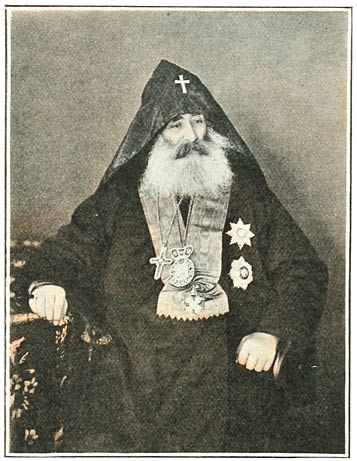
Fig. 48. The Katholikos Mekertich Khrimean.
Side by side with personal relations of greater freedom than I had anticipated towards this remarkable man, there grew up at Edgmiatsin and during the course of subsequent travel a fairly intimate acquaintance with the events of his life. He was born on the 5th of April 1820; and it is therefore in his seventy-fourth year that he ascends the throne of St. Thaddeus and of St. Gregory. His father and uncle were well-to-do citizens of Van, who had come to be known under the name of Khrimean because of a trade which they had conducted with the Crimea. The young Mekertich had a single brother and no sisters; and he appears to have been educated with some care by his uncle. His youth and early manhood were devoted to secular pursuits. For five or six years he acted in the capacity of an overseer in a weaving business. But already in 1841 he had become a traveller and a thinker; in that year he made a journey in the province of Ararat and visited Edgmiatsin. At the age of twenty-five he married and in due course became a father; but his wife died after giving birth to a daughter who only lived to be six or seven years old. To a layman of intellectual tastes among the Armenians of Turkey there is scarcely any other profession open than the honourable but ill-paid calling of a teacher. Shortly after his marriage Khrimean proceeded to the capital and earned his living by private tuition. His first book appeared in 1850, and consisted of a description in poetry of his travels in Ararat. The period of his residence in Constantinople was diversified by further journeys; to Jerusalem and the Holy Land, of which he published an account; and to Cilicia, the seat of the latest Armenian dynasty, where he remained some time as a teacher in the convent of Sis. In 1854 he returned to his native city, and in the following year took orders and became a vardapet or monastic priest. It is at this date that the more conspicuous portion of his life may be said to have commenced. The pulpit gave full scope to his natural eloquence; while the qualities of the student and writer, which he had carefully cultivated, were displayed in the columns of a journal which he founded about 1856 and named the Eagle of Vaspurakan, or of the province of Van. The proceeds of the sale of this periodical, which was at first printed at Constantinople, whither he had returned in 1855, enabled him to purchase an instrument of great rareness in Turkey, which the Armenians prize with the same childish affection and reverence as the Persian highlanders value a rifle or sporting gun. Khrimean re-entered Van with the title of abbot of the famous monastery which overlooks the landscape of the city and the rock and the waters from the slopes of Mount Varag. He came the proud possessor of a printing press, with which to conquer the sloth of the faint-hearted among the laymen and edify the crass ignorance of the priests.
In the good old times in Turkey one might read or write what books one liked, and the freedom which was enjoyed by the average individual might have excited the envy of the citizens of some of the European states. When the abbot of Varag cast his stone into the stagnant waters, the report woke little echo beyond the borders of his native province and the ranks of his countrymen. But the waves which he set in motion have never yet subsided; and who can tell upon what shore of promise or disappointment they are destined to break and disappear? If ever there was a good cause, such was the cause which he championed, and no advocate could be more pure-minded than himself. His avowed object and real aim was the elevation of the Armenians and their preparation for the new era which he foresaw. That era he conceived as one of national activity in the rapid decline of the Mussulman peoples and the approach of new influences from the West. If we tax him with having resuscitated a realised and played-out ideal—that national ideal which is still the bane of our modern Europe, but which, except perhaps in the case of some paradoxical German Professors, has lost its hold upon educated minds, he might reply that it is the only talisman with which to touch the Armenians, the most obstinate nationalists which the world has ever seen. He might further point to the almost hopeless condition of the Ottoman Empire, and under his breath he might suggest that the methods of Russian despotism were not such as to excite the enthusiasm of a strongly individual people capable of assimilating Western culture at first hand. Lastly, he might dwell upon the fact that the Armenians have a long history, and that their progress, to be solid and permanent, must be based on a revival of consciousness in the dignity of their past.
But the inculcation of such doctrines in the minds of his countrymen was sure to produce a ferment among a people who have been regarded as the inferiors and almost as the slaves of the Mussulmans for upwards of eight hundred years. It was imputed to him that he was working to revive the old Armenian kingdom—a consummation which a sensible Turk should regard with equanimity, since the time necessary to attain this end would far exceed all possible limits which he might assign to his solicitude for posterity. But sensible people are a minority of the inhabitants of this globe, and they are not numerous in the governing circles of the Ottoman Empire. The great activity of the Abbot of Varag, who trained his youths in the school of the cloister to conduct unaided the redoubtable magazine, slowly aroused the suspicion of the authorities. His own party in the Church supported him with much zeal, and another monastery, still more famous, that of Surb Karapet above Mush plain, was added to his spiritual administration. No sooner was he installed than a second printing press was set up and another school founded. The Armenians of the plain of Mush were edified by a new local journal, the Little Eagle of Taron. In 1869 he was elected Patriarch of Constantinople, a dignity which he only held for four years. The Turkish Government had become alive to his great and growing popularity, and it was found expedient that he should resign. Then came the tribulations of the Russo-Turkish war, during which the new movement among the Armenians cost them several little massacres and untoward events. When the Congress met at Berlin the ex-patriarch, who had been busy with literature, undertook, in concert with an archiepiscopal colleague, a mission on behalf of his nation to the German capital. This was his first visit to the West, and he extended his journey to Italy, France and England. The result of his efforts and of those of Nerses, Patriarch of Constantinople, was the insertion of the well-known clause in the Treaty of Berlin pledging Europe to supervise the execution of reforms in the Asiatic provinces of Turkey inhabited by Armenians. Khrimean returned to his native country the object of the resentment of the Ottoman authorities; much of this portion of his life was spent in Van. But Armenian discontent was spreading; the alarm of Government was increasing; and in 1889 the eloquent preacher was sent to Jerusalem in honorary exile. In the month of May 1892 he was elected to the primacy of the Armenian Church. The Russian bureaucracy perhaps reflected that their safeguards at Edgmiatsin were quite sufficient to bridle the vigour of a septuagenarian. These shrewd diplomats therefore humoured the Armenians in the matter, and the election was allowed to stand. The Sultan raised difficulties about releasing the exiled prelate from his Ottoman nationality and oath of allegiance. When this objection had been overcome his consent was qualified by the condition that the katholikos-elect should not pass through Constantinople. A year elapsed in these parleyings. For two years the Armenian Church had been without a head. During that period it had been ruled by the Russian procurator. Now in the autumn the elect of the nation is at length presented to the delegates who have assembled from all parts of the Armenian world. And he comes from Russia, from the north, released from exile in Turkey at the pressing instance of the Tsar. One must admire the extraordinary cleverness of these Russian bureaucrats!
The sun was already high when we sallied forth from our lodging, having with great difficulty prepared our breakfast in the crowded room. We passed down the long and dusty street of the village, which is dignified by the historical name of Vagharshapat. Nothing remains of the capital of King Tiridates, which was built upon this site or in the immediate neighbourhood. You are shown the remains of an old bridge which spanned the Kasagh, or river of Vagharshapat, some little distance north-west of the present settlement. The river has changed its course since it was erected. But the character of the masonry is rather that which was prevalent in the Middle Ages—conglomerate piles, faced with carefully hewn and jointed blocks of stone. Several shops bestow a modern appearance upon the street, having windows and being disposed as in Europe. A commonplace edifice with many windows and standing in private grounds recalls an Institute in one of our provincial towns. It is the Academy or Seminary. We entered the cloister from a door on the north, through which we issued into an open space on the west of the great court. A covered way conducted us to the quadrangle, in the centre of which rises the cathedral (Fig. 49, taken from south-west).
Imagine the Old Court of Trinity College at Cambridge without the gateway, the hall and chapel, and with a church of some size placed in the centre where the fountain stands. All four sides of the figure are defined by low buildings, resembling the dwellings which constitute two sides of the Cambridge court. I had always understood that our quadrangle at Trinity was the largest in the world; although I believe some American university was building one a few inches bigger not so very long ago. But the great court of Edgmiatsin perhaps already makes the record; it has a length, from west to east, of 349 feet 6 inches, and a breadth of 335 feet 2 inches. These measurements I took myself, much to the astonishment of the crowd which assembled; they were at a loss to find a theory which might explain so strange an act. The length will be very much increased in a short while, when the condemned east side has disappeared. A fine row of stone buildings is in course of erection, which will enlarge that dimension by many yards. Our cousins across the Atlantic must bestir themselves.
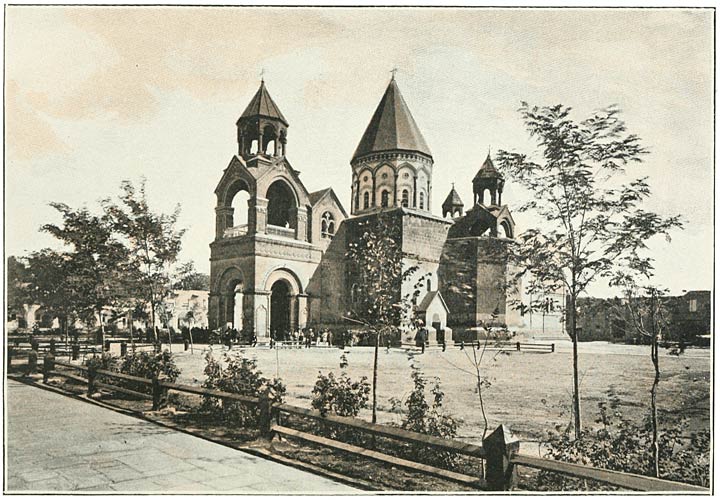
Fig. 49. Edgmiatsin: The Great Court and the Cathedral.
The western side of the court on the south of the covered way is devoted to the residence of the Katholikos, while the block on the north of the same passage is occupied by the bishops. There is no style or pomp about the pontifical dwelling; and it would bear the same relation to the Master’s Lodge at Trinity as a four-roomed cottage to a mansion. At the back is a little garden. The north side consists of the rooms inhabited by the monks, and a terrace, raised on pointed arches, extends from end to end. The building on the east is in process of demolition, and, like its fellows on the two sides which have already been described, is composed of comparatively fragile material. I was given to understand that it had once housed the seminary and printing press; a little bakery still occupies the junction with the buildings on the south. These are constructed of stone, and, although very plain, lend an air of solidity to the entire quadrangle. Beginning on the west of this block we have first a long refectory on the ground floor. Its dimensions are a length of 155 feet, and a breadth of 16 feet 6 inches. But it is a very humble place when compared to the magnificent dining halls at Cambridge, and it is not more than 14 feet in height. The ceiling is vaulted, and like the walls is whitewashed over; the apartment is well lit and is cool in summer. Two rows of narrow tables extend down it, and on the west side is the throne and the canopy of the Katholikos, both in carved wood. Should he join the monks at dinner, his table is spread beneath the canopy. Parallel with this refectory and facing the outhouses on the south is placed a similar chamber for the servants, a part of the space upon the east being occupied by the kitchen. The storey above the refectories is tenanted by the library, while the eastern portion of the buildings is taken up by granaries and store rooms both on the ground and upper floors.
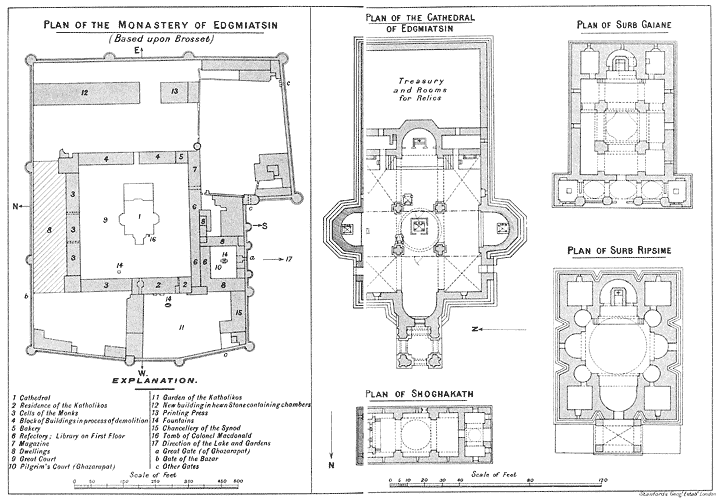
Plan of the Monastery of Edgmiatsin
(Based upon Brosset)
Plan of the Cathedral of Edgmiatsin
Plan of Surb Gaiane
Plan of Surb Ripisme
Plan of Shoghakath
Except for the pilgrims’ court, with adjacent structures, and the garden of the Katholikos—the one on the southern, the other on the south-western side—the space between the outer wall and the great court is for the most part vacant ground. What edifices there have been raised within it are of an unsubstantial character, and may have been allowed to fall into ruin. The fine sites which are thus forthcoming are being rapidly utilised, and I have already referred to the row of buildings which will extend the great court upon the east and which at the time of our visit were approaching completion. In a line with this new block, in which red and grey stones diversify the masonry, is situated further south the house which lodges the printing press, a solid stone structure. The transformation of Edgmiatsin from a residence of ignorant monks into a seat of education, the home of cultured men, is proceeding year by year; and it is even possible that the bricks and mortar, or, to speak more correctly, the excellent masonry is in advance of the needs which it is intended to supply. Wealthy Armenians are fond of endowing the famous cloister, for which they do not need the incitement of meetings at some Devonshire House. But the form of gift dearest to them is the erection of a building, which stands there so that all may see. This preference for the concrete and visible is deeply ingrained in them, and they are able to gratify it owing to the great skill of the Armenian masons. Plans were shown me which provided a palace for the Katholikos and the rebuilding of the north side of the quadrangle. These, I believe, have already been decided upon, one of our party at the private table of the Katholikos having provided the greater part of the funds. I was also invited to look at some very elaborate drawings for the enlargement and adornment of the church. No sooner had they been handed round than one of the guests of His Holiness expressed his readiness to defray the cost. Speaking as one who came fresh to Edgmiatsin, I did my best to dissuade the acceptance of this last project. To enlarge the church would be to dwarf the fine proportions of the court; indeed the contrary course would be well-advised. One would not very much regret the abolition of the portal, while the excrescence on the east, containing the treasury and room of relics, should certainly be pulled down. His Holiness favoured the idea of erecting a new church outside the walls, to supplement the space available in the present building.
We were assigned a room in the condemned block on the east of the quadrangle, wherein we spread our rugs and erected our camp beds. It was 26 feet square, with a lofty wooden ceiling, supported by two pillars of the same material. The adjoining apartment was in process of demolition, but, although without a roof, it served admirably as a kitchen, while the flooring provided fuel for our fire. When all was in order we should not have exchanged the results of our improvisation even for the creations of the Cambridge upholsterer, mellowed in the hands of the Cambridge bedmaker; while, as for living, was it not preferable to possess the whole of our scapegrace cook than to share the services of the most virtuous of gyps? Each day as we mounted our staircase, which exactly recalled its sad Cambridge counterparts, I was struck by the resemblance of my new surroundings to those among which I had grown up in the Old Court of Trinity, with the sky and the fountain and the adjacent cloister, where the glory of the foliage and lawn and river is spread in mystery beyond the trellis screens.
Even beneath this tropical sun the mind of man has surpassed his difficulties; and just as the Cam has been converted from a melancholy ditch into a brimming waterway, threading a landscape of lawn and forest, so the Kasagh has been impressed into the service of an artificial lake, bordered by shady avenues. Extremely pleasant is the stroll round this spacious basin, which is due to the refinement of Nerses V. (1761–1857). It is situated just outside and south of the cloister; and while from one side the view discloses the dome and a cupola of the cathedral (Fig. 50), on the other it is the vault of Ararat and the pyramid of the Lesser Ararat that are outlined above the soft foreground of water and trees (Fig. 51). It was a pleasure to instance this work to General Frese and my Russian acquaintances as bearing testimony to the sense of security inspired by Russian rule. The cloister and even the bazar are surrounded by walls worthy of a fortress, a relic from the old Persian times. The Russians appear on the scene, and the imprisoned monks disport in the open, which they make to bloom with luscious groves.
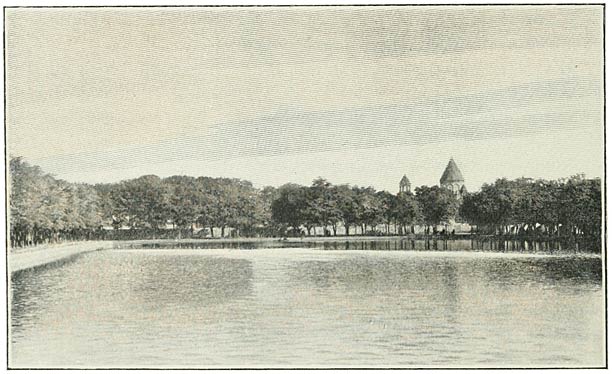
Fig. 50. The Lake at Edgmiatsin.
On the morning following a restful day which introduced us to our new environment I was invited to visit His Holiness. He had arrived within the walls of the cloister during our sojourn on Ararat, and it appeared that he had scarcely been able to leave his apartments owing to the enthusiasm of the humbler among his admirers, who could not be restrained from pressing round him whenever he walked abroad. This enforced seclusion had developed a tendency to asthma; but with this exception I found him in excellent health. Even the garden had been invaded by the peasants, who would wait hour after hour to catch a glimpse of their Hayrik—a term of endearment, signifying little father, under which Khrimean is very generally known. Two footmen in scarlet robes with blue sashes stood upon the flight of steps or busied themselves with errands. I was ushered into a long apartment, modestly furnished in European style, where I was received by an Armenian gentleman, of the handsome aquiline type of face, who addressed me in fluent English. He had been interpreter to the delegates to the Berlin Congress, and more recently had been much in the society of the Katholikos, residing at Jaffa (Jerusalem). Baron Serapion Murad—the first name is the equivalent of Mr.—holds a position of the first importance in the counsels of His Holiness at this juncture in his career. He is the shrewd man of the world, who weighs you in the balance with a single glance of his intelligent eyes. I appear to have emerged on the right side of the scale; for his formidable scrutiny rapidly relaxed into an amiable smile. We passed from this outer room into a chamber with a daïs at the further side; and presently the Katholikos entered and mounted the daïs, begging us be seated on two chairs which were placed on the floor below, but quite close to his own arm-chair.
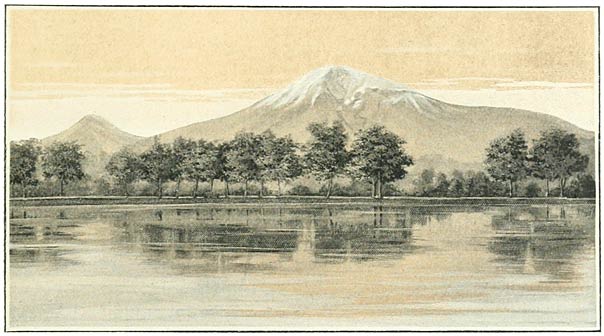
Fig. 51. Ararat from the Lake at Edgmiatsin.
I do not remember having ever seen a more handsome and engaging face; and I experienced a thrill of pleasure at the mere fact of sitting beside him and seeing the smile, which was evidently habitual to those features, play around the limpid brown eyes. The voice too is one of great sweetness, and the manner a quiet dignity with strength behind. The footmen and the daïs and the antechamber were soon forgotten in this presence—forms necessary to little men and perhaps useful to their superiors, though they are always kicking them off when they are not stumbling among their folds. Happily the temperament of His Holiness is averse to all baubles; the cross of diamonds was absent from his conical cowl, and his black silk robe, upon which fell a beard which was not yet white, was unrelieved by the star of his Russian order. These ornaments are strangely out of place on such a figure, and their formulas out of keeping with this character. I was closely questioned upon all the incidents of our climb on Ararat; nor was it doubted that we had reached the summit. In the old days such a pretension would have been met with a smile. Then we passed to his sojourn in England, and I asked his opinion of Mr. Gladstone, with whom he had enjoyed some intercourse. He had been impressed, like so many others, with the theological cast of that supple mind. The face contracted when we came to speak of his life in the Turkish provinces; and he laid stress upon the terrible reality of the sufferings of the Armenian inhabitants. All the struggles and hopes and anguish of his strenuous days and sleepless nights seemed to rise in the mind and choke the voice. Then he sank back, with a sigh which seemed to regret them. “I have come,” he said, “to the land of Forgetfulness.”—And from the quadrangle came the sound of a slowly-moving Russian anthem, and the measured step of a detachment of Russian soldiers.
His Holiness invited me to take my meals in his private dining-room, and expressed his regret that he would not be present himself. It happened to be a fast day, and nothing was offered but lentils and peas. But on the day following quite a banquet was spread before us—salmon trout from Lake Sevan, delicious dolmas of minced meat and rice bound together by tender cabbage leaves, and the usual not very tasty chickens. At the head of the table sat the vicar or substitute of the Katholikos, with M. Pribil on a special mission representing the Emperor on his right hand, and General Frese on his left. One or two Armenian notables were of the party, which, however, consisted for the most part of bishops resident at Edgmiatsin. All wore their black silk cowls during the meal. As one looked down the line of clerics the aquiline type of face predominated—fine human animals they seemed, with their pronounced features and limpid eyes and the long beards which keep their colour and speak of a mind at ease. One of the monks present spoke French fluently; but he had been imported from the Crimea by the present Katholikos. His name was Khoren Stephaneh. Many a pleasant talk I had with him, but not during dinner; they have too much respect in the East for their food and cook to divert the tongue at such a time from its proper function. What little ripples of conversation diversified the natural sounds of the meal were due to that restless spirit of the West, which is always asking questions and living several hours in advance of the actually present time. I do not know that either of the high Russian functionaries were much troubled by this particular product of Western culture; but, if they were, they must have suffered from the inability of their hosts to comprehend their language. The wine of the cloister flowed freely, and was supplemented by European liqueurs. Then the restless spirit broke bounds, attacking first the taciturnity of the Governor of Erivan. The formula I had heard so often was the first to take wing; and “How long are you staying here?” came across the table in a somewhat loud voice. It was not the least unkindly meant. Next the same little sprite perched upon M. Pribil, and extracted several questions, which it let fly. When we rose from table he engaged me in a discursive conversation which ranged freely over the Armenian Question. He affirmed that the Armenians did not compose more than one-fifth of the population of the Russian provinces south of Caucasus.
Evensong was at hand, and my companion and myself entered the dimly-lit church. The Katholikos was already seated in the throne with the canopy, attired in a rich white satin robe. The cross of diamonds flashed from his cowl. Bishops and monks composed two rows, extending to the daïs of the apse; they wore robes of yellow silk, embroidered with coloured garlands of flowers. The congregation was very numerous, but clustered in groups about the Katholikos; there was no order or assignment of places, as with us. They sat or knelt upon the floor. On either side of the lines of clerics were gathered the choir, in gorgeous dresses, holding large and cumbrous books of Armenian music. The priests conducting the service stood upon the pavement of the church with their backs to the daïs. Above them rose the shapes of crosses and gorgeous eikons, held aloft by their attendants. Incense was scattered at intervals. I noticed that His Holiness twice changed raiment, although I was at a loss to discover when and where the transformation had taken place. The strongly nasal chants hurt my unaccustomed ear, and I found it impossible to educate my sympathy into communion with this show.
An hour or two later symbols and eikons and tight little formulas were all blissfully asleep; and the great court flooded over with good, healthy human spirits, released from the restraints of the day. Bonfires were lit within it, from which the leaping flames shot into the shadows of the church of the Illuminator and revealed the circles of the dancers. From many a brightly-lit room, given over to the pilgrims, came the shrill sounds of the flute and the beats of the small drum. Hai-this and Hai-that—the refrain and burden of every song celebrated the glories of the sons of Hayk. In the street of Vagharshapat our friends the musicians from Alexandropol were reaping a golden harvest. Was there ever collected together a more motley crowd? They must have come great distances. There were ladies from Akhaltsykh, with the pretty fillets across the brow; there were frock-coats and uniforms. The bright calicoes of peasant women enlivened the scene; some of the men, the poorest class, wore their rough sheepskin hats, while the better-to-do had donned low caps with a peak, like that of a naval officer. Long before midnight quiet had settled upon the great quadrangle, and nothing was heard but the plash of the fountain. But sombre patches marked the spots where whole families were encamped; while the steps all around the church and every niche and doorway were black with the forms of serried human beings in every attitude of slumber.
Next morning, the 8th of October, popular excitement was at its highest, the central event which they had come to celebrate being imminent. From the earliest dawn throngs of sheepskins and peak hats and coloured calicoes had been busy reconnoitring the most suitable positions; and, when the hour approached, all the roofs which commanded a view of the portal, and a good part of the quadrangle enjoying the same advantage, were densely packed with spectators. Rows of Russian soldiers kept clear the approaches to the western or principal entrance of the church. They wore dark green uniforms with shoulder-straps of a faded pink, and peaked caps of white canvas. Wesson and I made our way with difficulty to the residence of the Katholikos, where, in the private room of Baron Murad, we set up the camera right in face of the scene of the approaching ceremony. It had been decided to perform the rite of consecration upon a daïs in front of the portal. This improvised wooden structure was covered with carpets and costly embroideries. Over the doorway of the portal were emblazoned large Armenian letters upon a ground of cloth or canvas. The inscription reminded us that we were assembled upon the actual site where Jesus Christ is believed to have descended from heaven. The name of the cloister and cathedral is said to signify “The Only-Begotten has descended”; and the text over the doorway may be translated “The Only-Begotten has descended from the Father, and the light of glorification with Him.” Upon a higher plane, from the tower of the belfry, was suspended a banner, embroidered with the device of the Katholikos and with the eagle of Vaspurakan (Van). The device consisted of a mitre, surmounting the figures of two angels, one carrying a cross and the other a pastoral staff. These emblems crossed one another, and at the intersection was placed an ornament of diamond shape peculiar to the Katholikos. The eagle with the wings outspread was purely personal to Khrimean, recalling the many links which attach him to Van. The scroll was to the following effect:—“O God, the knower of hearts, protect for long years our chief of shepherds (Hovapet) Mekertich Hayrik.” Left and right of the daïs, in niches of the façade of the portal, were exhibited two eikons, or religious pictures, richly framed, of which that on the left—a Virgin and Child—was a painting of very high merit, said to be of Byzantine origin.
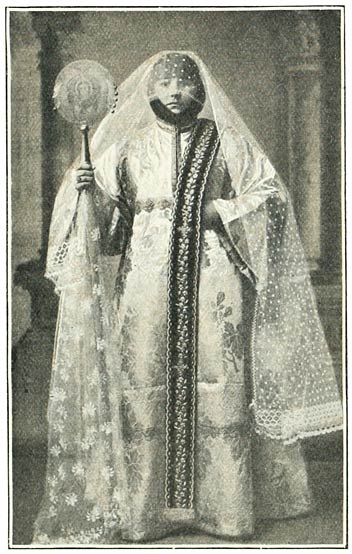
Fig. 52. Armenian Nun.
At a quarter to nine the procession is formed, and proceeds from the pontifical residence down the avenue of soldiers to the church door. The service which is held within the cathedral of the Illuminator lasts for over an hour. The party assembled in our upper chamber spend the time with conversation and in gazing down upon the multitude. It consists of a nun from Tiflis, a frock-coated teacher in a school of that city, and a pretty woman of the rich Armenian bourgeoisie of Tiflis, attired in a dress of Parisian model. The nun is a charming woman, and we make great friends. She informs me that she is almost an unique specimen of her order; the convent at Tiflis is perhaps a solecism. Nunneries are not popular with the Armenians. I think my reader may appreciate the magnificent robes which belong to her office, and of which, by her kindness, I am able to supply an illustration (Fig. 52). I notice that among the women assembled in the quadrangle the Armenian national dress is not often seen. The Georgian head-dress—a band of black velvet, embroidered with beads or jewels, across the temples, and a white silk kerchief over the head—appears to predominate. This fact would show that the greater number of those present have come from Tiflis and the northern districts.
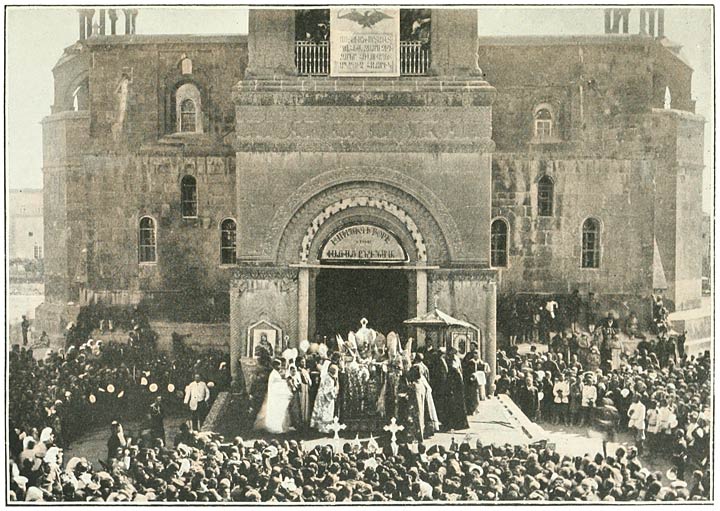
Fig. 53. Edgmiatsin: Ceremony of the Consecration of the Katholikos—Anointing with Oil from the Beak of a Golden Dove.
The dinner “in hall” upon this festival of the consecration was a very interesting incident. We were all to dine in the refectory. When I entered, the long apartment was crammed. The scholars of the Academy partook of the meal in the parallel chamber. The bishops, the monks, the delegates composed a sombre assembly, stretching in rows of long perspective down the tables. A single exception to this dark apparel was furnished by a delegate from Karabagh, who was seated next myself. He wore his national dress—a spare black tunic, fastened at the neck, displaying the front and sleeves of a light blue silken vest. His face was large and expressive of great resolution, especially the chin, which, like the cheeks, was shaved. The bronze complexion heightened the whiteness of the bold moustache. One was reminded of the best type of peasant proprietors in Europe; and, indeed, a view of the faces round one confirmed that favourable impression which one receives from the society of Armenians in their native country. There is depicted a striking union of force of character with intelligence. In the midst of these reflections the Katholikos enters the building, and we all rise from our seats. He sits on his throne beneath the canopy, and a monk ministers to his needs. On either side stands a scarlet footman with a blue sash; the choir are drawn up behind. After the first course His Holiness rises, wearing his cowl and the glittering cross, and proposes the toast of the Emperor. It is a delight to hear him speak. He has all the personal fascination of Mr. Gladstone. Dinner proceeds as the catalogue of toasts is gone through, and between each toast European melodies are sung by the choir, and songs by an Armenian tenor of repute. The health of the Emperor is received with cries of Oura; but the remaining toasts without exception with the Armenian cheer of Ketsze! the equivalent of the French Vive! In proposing the health of M. Pribil His Holiness recites the various occasions upon which that functionary has come to Edgmiatsin to attend the consecration or the funeral of a Katholikos. Turning to his guest with a winning smile, he begs him to defer his next ceremonial visit until after the lapse of a moderate interval.
In the evening the whole quadrangle was illuminated with strings of coloured glasses containing candles. They made a very pretty show. At intervals huge firebrands threw a lurid light upon the buildings. The numerous choir of the Academy was marshalled in the court, including many ladies. The programme comprised several cantatas and some concerted music, and the standard was fairly high. But it appears difficult to eliminate the nasal pronunciation. The music-master was a great swell with his inspired look and flowing hair. The band discoursed the waltzes of the immortal Strauss. Before eleven all sound was hushed save the plash of the fountain, and darkness unrelieved had settled upon the scene. I made my way to the rooms of His Holiness and ascertained that he would receive me in spite of the lateness of the hour.
I found him reclining on a wooden couch in a bare white-washed apartment; a single rug was suspended upon the wall beside the couch. Such is the bed and such the furniture natural to the object of all this pomp, which I do not doubt is profoundly distasteful to such a character. He took my hand in his, and we sat together for some time, the office of interpreter being, I think, performed by Dr. Arshak Ter Mikelean. Our talk ranged over many subjects; but I should have preferred to sit still, look in those eyes and hear that voice. I think we both felt that we were very near each other; and religion is a subtler thing than can be defined in creeds and dogmas or embodied in what the world calls “views.”
Meanwhile the emperor had despatched messengers in every direction, and a Roman ambassador arrived at the court of the Armenian king. He was the bearer of a letter to that monarch from his master, who related how the Empire was suffering from the misdeeds of the Christians, and in particular how a beautiful virgin whom he himself had desired to marry had been abstracted by her infatuated co-sectaries and taken into the territory of his Armenian ally. The emperor begged his beloved colleague to track the party out, and, with the exception of the wondrous virgin, to put them all to death. As for the lovely fugitive, it would only be necessary to send her back; but the missive added, with an amiability truly worthy of an emperor, that the king might keep her if overcome by her charms.
As might be expected, no time was lost on the part of Tiridates to institute and elaborate the search. The band was found; the beauty of Ripsime needed no identification; and the fame of it attracted a multitude of all ranks—princes and nobles, shoulder to shoulder with the common people, closing round her under the sting of licentious desire. The nuns raised their hands to heaven and drew their veils about their faces; and perhaps this display of modesty averted their ruin. Early on the following morning there arrived from the palace magnificent litters and costly robes, the design of the king being to take to wife the Christian maiden and make her queen of the Armenians. But at this juncture a peal of thunder carried terror into all hearts, and a voice was heard descending from the sky. It was the voice of the Saviour, adjuring the nuns to take courage and remain firm for the glorification of His name among the peoples of the north. “Thou Ripsime,” it proceeded, “hast been cast out (ἐξερρίφθης) with Gaiane and thy companions from the realm of death into that of eternal life.” Meanwhile the thunder had caused a panic among the assembled people, and the king’s officers hastened to the royal presence, bringing a written report of all they had heard. But the monarch hardened his heart, and, since she refused the pomp he offered, gave orders that the maiden should be taken by force and brought to the royal apartments.
These directions were executed, but not without difficulty; the pious virgin was of stalwart frame, and the soldiers were obliged to drag her along the ground, or carry her struggling in their arms. When they had placed her in the king’s chamber, and it was announced that the king had entered, the people outside the palace feasted and danced and sang. But their rejoicings were premature; for the intrepid Roman maiden was more than a match even for the powers of so redoubtable an antagonist. Tiridates was widely famed for physical strength and deeds of prowess; yet, although he persisted in his suit for not less than seven hours, he was at last compelled through sheer exhaustion to give in. The offices of Gaiane were invoked; she consented to speak, but her counsels were addressed to confirming the courage of her companion. Her Latin speech was understood by some among those present; they took stones and tore her face and broke her teeth. After a brief repose the king returned, and again endeavoured to overcome the girl’s obstinacy; but after a long struggle the inspired amazon was a second time victorious; she threw the king (ἔρριψεν), destroyed his diadem, and dismissed him from the chamber, fainting and gathering around him his tattered robes.
A tender respect for the honour of women is a virtue of Christian origin, which the romance of Western chivalry converted into a cult of the fair sex. But the king of Armenia was an Oriental, a heathen and a barbarian; nor had he been instructed in the code which precludes the sentiment of humiliation in the vanquished where the victor is possessed of a female form. His passion as a lover was overcome by his fury as a thwarted despot; the virgin had fled from the palace, but his savage emissaries were soon on her track. The unfortunate maiden directed her steps to the retreat where the vats were stored, and gave the alarm to her companions. All those present, excepting one who was stricken with illness, accompanied her flight. But when they had reached some rising ground near the road which led to Artaxata, they were overtaken, bound with cords and put to death with great cruelty. With Ripsime there perished thirty-two of her attendants, while the poor nun who had been left behind presently met the same fate. The martyrdom of Gaiane and of two companions took place on the following day and was attended with tortures which I should shudder to commit to paper.
Not many days after this tragedy its author was visited by the vengeance of heaven; a demon entered his body, and, like his prototype of Babylon, the king of Armenia was turned into an animal eating grass. In the form of a wild boar he resisted all attempts to confine him; and similar punishments overtook the royal family and attendants. At length the sister of the king, by name Khosrovidukht, beheld in the watches of night a vision. A man with a radiant face appeared and addressed her, to the effect that the only remedy was to send to the town of Artaxata and summon thence a prisoner named Gregory. When she related the vision people shook their heads, and attributed it to the incipient madness of the princess. For Gregory, who was once an honoured servant of King Tiridates, had been cast by the tyrant into a deep pit, on account of his profession of Christianity, not less than fifteen years ago. Would even his bones be forthcoming from such a place? But when several times the vision had been repeated, and the princess renewed her insistence, a great noble was despatched to the place where the pit was situated, near the town of Artaxata. A rope was let down into the cavern; and, to the astonishment of all, there emerged a human form, blackened to the colour of coal. It was none other than St. Gregory.
The saint was met by the king and nobles, foaming and devouring their flesh, as he approached the city along the road from Artaxata. Sinking on his knees, he obtained from heaven the restoration of their reason, although not of their human forms. His next care was the burial of the martyrs; he found their bodies, lying where they fell, and still untouched by corruption after the lapse of nine days. No dog or beast or bird had approached the remains. St. Gregory took them with him to the place where the vats were stored; and for sixty-six days he sojourned in that place, instructing the king and nobles. After the lapse of that period he related to them a vision which he had beheld during the middle watches of the night. The royal party had come at sunrise to prostrate themselves before the holy man.
During his vigil, while his mind was revolving the recent acts of Divine grace, a violent peal of thunder, followed by a terrible rumbling sound, had fallen upon his startled sense. The firmament opened as a tent opens, and from the heaven descended the form of a man, radiant with celestial light. The name of Gregory was pronounced; the saint looked upon the face of the man, and fell trembling to the ground. Enjoined to raise his eyes, he beheld the waters above the firmament cloven and parcelled apart like hills and valleys, extending beyond the range of sight. Streams of light poured down from on high upon the earth, and, with the light, innumerable cohorts of shining human figures with wings of living flame. At their head was One of terrible face whom all followed as the supreme ruler of the host; He bore in his hand a golden mallet, and, alighting on the ground in the centre of the city, struck with His mallet the crust of the broad earth. The report of the blow penetrated into the abysses below the earth; far and near all inequalities of the surface were smoothed out, and the land became a uniform plain.
And the saint perceived in the middle of the city, near the palace of the king, a circular pedestal made of gold and of the size of a large plateau, upon which was reared an immensely lofty column of fire with a cloud for capital, surmounted by a flaming cross. As he gazed he became aware of three other pedestals. One rose from the spot where the holy Gaiane suffered martyrdom; a second from the site of the massacre of Ripsime and her companions; and the third from the position occupied by the magazine of vats. These pedestals were of the colour of blood; the columns were of cloud, and the capitals of fire. The crosses resembled the cross of the Saviour, and might be likened to pure light. The three columns were equal in height one with another, but a little lower than that which rose near the royal palace. Upon the summits of all four were suspended arcs of wondrous appearance; and above the intersection of the arcs was displayed an edifice with a dome, the substance being cloud. On the arcs stood the thirty-seven martyrs, figures of ineffable beauty attired in white robes; while the crown of the figure above the edifice was a throne of Divine fashioning surmounted by the cross of Christ. The light of the throne mingled with the light of the cross and descended to the bases of the columns.
I cannot invite my reader to admire the architecture of this cathedral, although the interior, with its spacious body, central dome and four apses, one at each point of the compass, is sufficiently remarkable. Much the same design is seen in the church of St. Ripsime; but in that building it underlies important developments which probably argue a later date. The original form of the exterior is rather difficult to unravel owing to the excrescences, of which I may safely say that none are improvements, that have been added at various times. But let me briefly undertake the work of demolition, addressing myself to the illustration, which was taken from the south-west (Fig. 49).
The portal on the left of the picture is a work of the seventeenth century; it was commenced by the Katholikos Philip and completed by his successor Jacob in 1658. It is probably due to the mania for portals prevalent in Armenia at that period and not to a feature of the earlier plan. Just east of and adjoining the balcony of this structure is seen a window with a richly carved column in the centre, surmounted by a cross and supporting two ornamental arches. This window and the upper portion of the building to which it belongs are in subservience to the portal, with which they are in architectural harmony, and which they link with the main edifice. The lower part, including the frieze or quasi-classical moulding, which runs right round the church, is in a different style and of a different form of masonry, being indeed an integral member of the body of the church. You have only to remove the window and pointed roof, build up the wall above the cornice and cover it with a flat roof, and you obtain precisely the same projection which the picture shows on the south side and which is necessitated by the south apse.
We have now obtained the figure of a body with four projecting members, each of which represents an apse. The roof would appear to have been always built at a very low angle; it is, as usual, of stone. But we have yet to disencumber the apse on the east, which is completely hidden by the stupid building which contains the treasury and room of relics—an annexe which from outside lengthens and perverts the original edifice. We owe this feature to the Katholikos George IV., who died in 1882. This apse had a lesser projection than its fellows from the wall of the church, owing to the incidence of the two indispensable side chapels, which were small and merely entailed a slight advance of the rectangular walls. Over each apse it has been customary to have a belfry; when the portal was added this feature of the apse on the west was transferred to that structure. The open cupolas with belfries which are at present seen over the three apses were built in the year 1682 by the Katholikos Eleazar. They are of bright red stone, of which the hue contrasts in a displeasing manner with the dull grey of the body of the church.
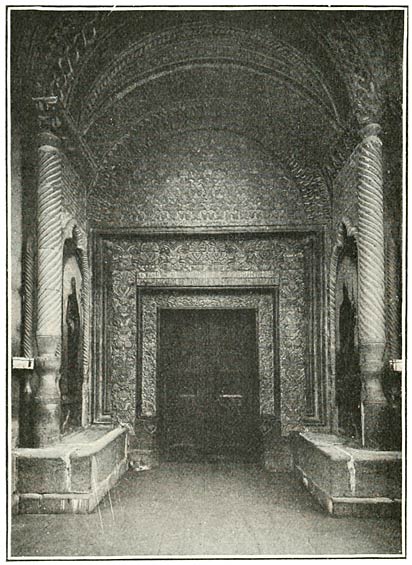
Fig. 54. Interior of the Portal of the Cathedral.
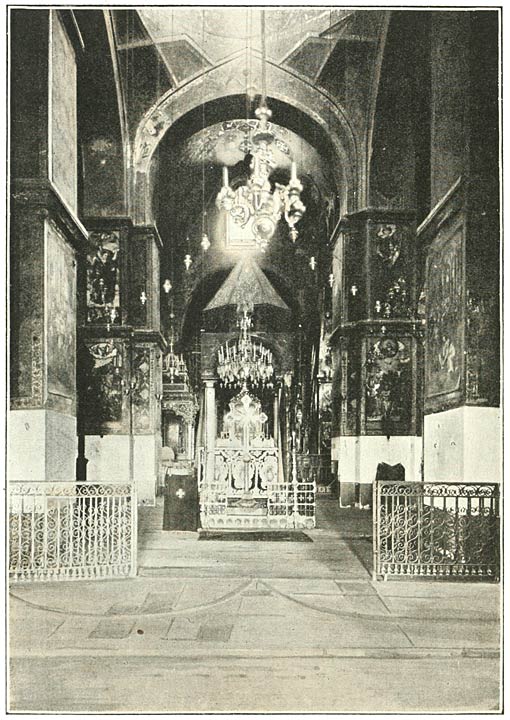
Fig. 55. Edgmiatsin: Interior of the Cathedral.

Fig. 56. 1.

Fig. 56. 2.
The treasury and room of relics contain many interesting objects. To these chambers is allotted the building on the east of the church. Both are entered from the interior and through doors in the east wall, that on the north of the apse communicating with the treasury, and that on the south with the apartment containing the relics. Among the treasures are several objects which deserve the attention of the student of art, examples of mediæval Armenian craft being, I imagine, none too frequent. I observed a crystal cross, said to belong to the Bagratid period, and some other crosses reputed to have come from Ani. A gold crown, inlaid with jewels, is ascribed to King Tiridates, and, whatever its origin, is a very interesting object. The same may be said of a silver saucer with repoussé figures dating from the pontificate of Nerses IV. (1166–73). There are a quantity of jewelled mitres and embroidered stoles and ornaments for the church. There are seals of the pontiffs and coins of the Rupenian (Cilician) dynasty. Some store is set upon a head of Dionysus which is believed to be of Egyptian origin. The monastery has become possessed of a most curious object in the shape of a huge caldron, standing on three legs, and having as handles four tigers in the act of climbing. It was found not many years ago in a cloister near Tiflis; buried within it was a bell. An inscription round the rim gives the date of the Armenian era 781 or A.D. 1331. In the chamber of relics are preserved a fine collection of episcopal staves surmounted by a cross above a knot of hissing serpents’ heads (Fig. 56, Nos. 1 and 2). Many are of exquisite workmanship.
The chapels of the martyrs, which are churches rather than chapels, are situated within short walks from the monastery. Thus St. Gaiane is not more than about a quarter of a mile distant in a southerly direction. St. Ripsime is a little further, say three-quarters of a mile; it is placed to the east of Edgmiatsin and is the first building which you see as you drive from Erivan, on the very outskirts of the trees and greenery. Shoghakath is a near neighbour of Ripsime on the side of the great cloister.
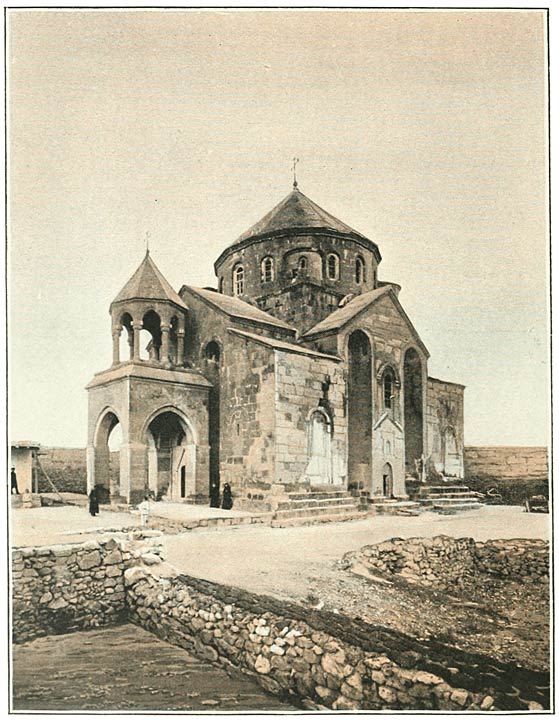
Fig. 57. Edgmiatsin: Exterior of St. Ripsime.
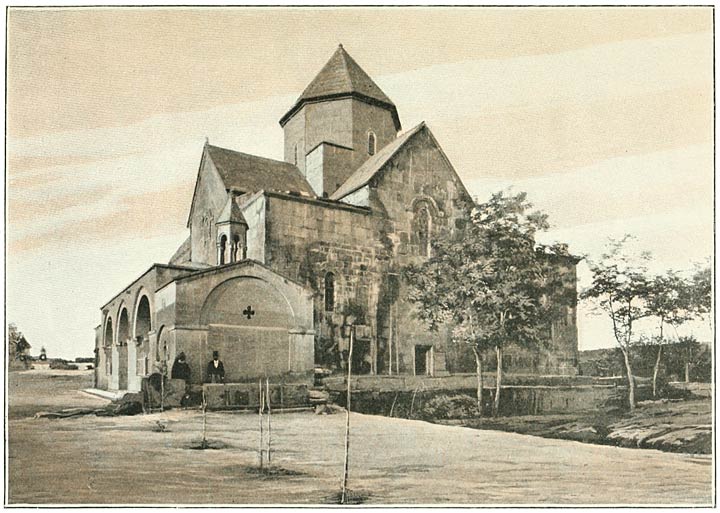
Fig. 58. Edgmiatsin: Exterior of St. Gaiane.
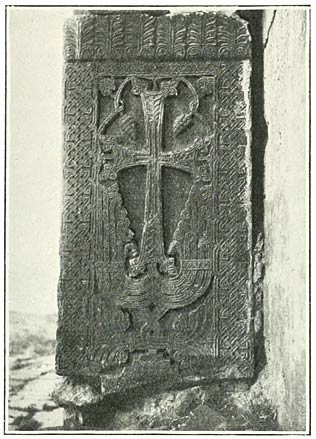
Fig. 59. Sculptured Stone.
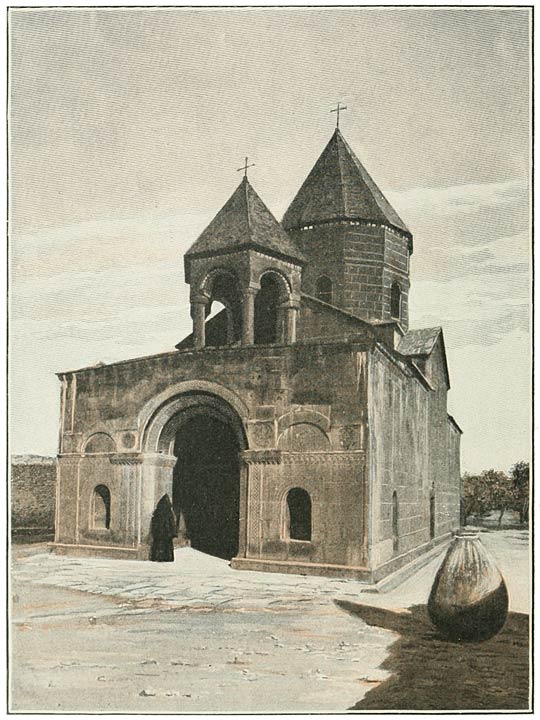
Fig. 60. Edgmiatsin: Exterior of Shoghakath.
I return from this detailed description of the cathedral and the chapels of the martyrs to the more general tenour of the contents of this chapter. Edgmiatsin is rapidly developing into a home of the higher education, and it enjoys the proud privilege of possessing an institution which is unique in all Armenia for the comparatively exalted standard of the course of study which it provides. The Academy at once dispenses the usual curriculum of a seminary and supplies a higher course, extending over three years. Such an excessive disporting in the realms of dangerous knowledge was only sanctioned by the Russian Government on the understanding that the privilege should be confined to candidates for the priesthood. The nature of their profession may have appeared a sufficient guarantee that the learning imparted would be strictly subordinated to “views.” Besides, there was always the safeguard that the curriculum must be submitted to the Russian bureaucracy, and approved in due course by these aureoled arbiters, enthroned above the shifting mists and slippery quagmires among which poor Knowledge often faints and sometimes sinks. Her youngest and hardiest offspring, pertinacious Natural Science, has been excluded from these intellectual preserves; and I was assured that the mere mention of the name of this arch-enemy in a prospectus would produce the same effect among the august censors as a challenge from the prince of devils among the blessed. The course is confined to theology, history and literature, foreign as well as Armenian. To these subjects is added a study which the Germans have developed under the name of Pädagogik. Within this formula, I was given to understand, are included at Edgmiatsin, besides the art of the teacher, a certain general knowledge of philosophy and psychology. The students are obliged to pass a certain standard by examination at the end of each year.
My reader is aware that in Russian Armenia the word seminarist does not necessarily apply exclusively to candidates for the priesthood. The seminary is nothing more than the highest grade in the Armenian school system, with the single exception of the more exalted course provided by this Academy. The great majority of the pupils are maintained out of the revenues of the cloister; but those who are able pay what they can. A youth enters the seminary when about thirteen or fourteen years old, and the academy at about nineteen or twenty. Both institutions are housed in the same building. Each diocese is invited to make a certain number of presentations; and boys and young men are encouraged to come from the Turkish provinces. As a matter of fact few are able to avail themselves of the offer. The scholars reside within the building, one dormitory being allotted to the academy and another to the seminary. These dormitories are kept scrupulously neat and clean. There is a fine music room with a grand piano, and there is also a nice library with casts of the immortal works of Greek sculpture illuminating the shadows above the shelves. How strange they seem in this distant land, where the study of the classics is not included even in the higher education!
The effect which is being produced upon the character of the monastic priests by the wise solicitude for education which has characterised the Armenian movement is almost incalculable. In old days the monks were chosen by the bishops from among their attendants; and this custom obtained even after the development of seminarial instruction within the cloister. But in 1892 the synod issued a decree enjoining that, except in very special circumstances, no person should be ordained monk who had not passed through a seminary. He is nominated by the bishop, but must be approved by the synod. It is a pity that hitherto no steps have been taken to raise the standard of the ordinary clergy. But we must admit that it would not be easy to effect such a reform from above. For all practical purposes we may count three grades in the hierarchy of the Armenian Church. In the first figure the bishops, the second comprises the monks and parish priests, and the third includes the deacons. Over all three is exalted the authority of the katholikos, the keystone of the dome of the edifice. Celibacy is imposed upon the bishops and monks, while marriage is rendered obligatory upon the parish priests. Thus a sharp division exists between the two orders of clergy, arising out of a complete difference in mode of life. Moreover the ordinary clergy are elected by the laity—a custom to which the people jealously cling. The inhabitants of a town or village select their future pastor from among their own number. Of course the bishop might refuse to ordain. But such a course would only be warranted in very special circumstances; the same being predicated of the right of the bishop to depose a priest. Thus the parish clergy occupy a special and somewhat independent position. In the rural districts the spread of education has not yet commenced to touch them; nor will they emerge from their present deplorable debasement until a general quickening of public opinion shall take place.
The revenues dispensed by the katholikos are derived from several sources. There is the property of the monastery, consisting of lands and villages in the valley of the Araxes and elsewhere, to which, in the absence of statutes of mortmain, additions are constantly being made. The income from this source and from offerings and contributions of various kinds amounts, I believe, to about £8000 a year. The general property of the Church is also administered from Edgmiatsin, the synod being specially invested with this important function. Donations in lands or money are frequently forthcoming, and are devoted to the support of the various institutions. The accounts of the monasteries and bishoprics in Russia are audited and passed by the synod. But the clergy are supported by their own flocks; and, beyond submitting their accounts to the proper authority, the parishes are practically autonomous.
My reader has perhaps divined from a perusal of the foregoing paragraphs that an interesting feature of the Armenian Church is the power enjoyed by the laity, which indeed may be described as predominant. With them rests the choice of the ordinary clergy, and in practice their voice prevails in the selection of a katholikos. That Church is indeed a compromise, so far as her ministers are concerned, between opposite principles in the organisation of Christianity. The monastic priests represent the principle of elevating a hierarchy into a position of lofty independence. From among their ranks are taken the bishops. But the great body of the clergy are strictly the ministers of the people, supported by their voluntary contributions. From these conclusions, derived from a study of contemporary conditions, I pass to a brief examination of the Edgmiatsin legend, and of the history and character of that interesting ecclesiastical edifice which rises in the background of all that I have written in the present chapter.
What was the nature of this early Christianity which made its way in despite of persecution among a barbarous people, professing a crude and perhaps unamiable form of paganism? It is difficult to believe that the religion of the first Christians resembled even remotely the later State religion of the Roman Empire, which under the name of Christianity was spread over the world by the imperial armies and has been bequeathed as a troublesome legacy to the modern world. The origins of this great spiritual movement are veiled in twilight; but from the shadows and uncertain glimmer shines forth a Personality which no doubts and no disappointments can assail. Round this Personality centred many and diverse spiritual conceptions, old as time itself and young as time. They were quickened into new life by the emotional quality of a great example; and they were kept alive and made to focus upon the domain of morality by the daily and intimate intercourse of the members of a brotherhood which should embrace all the creatures of God. It is essential to the fruitfulness of such a community that they should maintain, not internal discipline nor even the agreement of the members upon matters of doctrine among themselves, but the enthusiasm which prompted their first efforts, a high sense of individual responsibility among the members, and the habit of mutual tolerance, mutual help, mutual consolation, and, above all, of mutual love. The simple ceremonies of the early Church were calculated to promote this spirit. The candidate was admonished by the rite of baptism of the serious nature of the resolve which he had taken to break with the world of sense and appearance, and to become initiated into the higher meaning and purpose by which it is supported and inspired. The fast redressed the balance between the soul and the unruly flesh; and the agapes or love-feasts induced a close communion among the brothers, the necessary corollary to communion with God.
The connection of the assailants of Armenian orthodoxy, who were known as Paulicians, with their namesakes in the more westerly provinces of the Empire, and of these with Paul of Samosata, has not yet, perhaps, in spite of the luminous researches of the scholar I have quoted, been sufficiently worked out. But we rise from a perusal of his work with the conviction that this connection was at least of the nature of a strong family resemblance dating back to apostolic times. The important document which he has disinterred from the library at Edgmiatsin, and of which the title suggests the hopes that were excited in the breast of Socrates by the pretensions of a certain work of Anaxagoras, affords us a full and detailed, if partially mutilated account of the religious profession of the descendants of these Armenian heretics, as copied from previous copies by a member of the sect in 1782. The same voice which found expression in the disputation of Archelaus rings out from the pages of the Key of Truth not less clearly than of old. Jesus is human, though free from sin, until He is baptized by John in the Jordan when He has reached His thirtieth year. Then the Spirit of the Father, descending upon Him, fills Him with the Godhead. After adoption the elect Christ is forthwith led up to the mountain, where He enjoys the mystery of intercourse with the Father for forty days. Baptism must therefore constitute a central event in the life of the Christian, or imitator of Christ. He must come to baptism after the full awakening of his individual conscience to a knowledge of sin and to the nature of repentance. He must come at mature age, when the heats of youth are passed and his natural instincts have been brought under control. No remission of sins can be effective until he shall have reached this age; nor is baptism under other circumstances more than an empty form. Through baptism he becomes a Christian; and the meal which follows baptism is the symbol of that feast of divine converse with God of which the Son of God, after His adoption, partook. The Holy Ghost enters the catechumen immediately after baptism, and he in effect becomes filled with the spirit of God. The note of aversion to hierarchical grades which is struck in this treatise was no doubt accentuated by the opposition of the sect to the methods of their natural enemies, the Orthodox Church. But their polity—if the word may stand—could in this respect be based on Scripture; and it encouraged that sense of individual responsibility and that habit of self-reliance which are not less effective qualities in the domain of evangelical enterprise than the opposite methods of the Jesuits. The elect of God composed a body of which each member was sublimely conscious of his resolve to pursue a life of ideal justice by communion with the spirit which resided in himself. The example which they set was not that of a selected and exotic hierarchy, but was the example of simple peasants and artisans. When we meet such people, whatever the proximate origin of their particular tenets, we take farewell with a tear and perhaps with a sigh. The Dukhobortsy, of whom I have spoken, would find much in the manual of these Armenian adoptionists with which those resolute children of the Reformation in Europe would cordially agree.
For thirteen years Gregory languished in this noisome dungeon, forgotten by the world but saved from death by the ministrations of a widow who resided in the castle. The hatred or fear of the Christians, so early manifest in the new reign, was emphasised by Tiridates in a pompous edict, which admonished his subjects to beware of the resentment of the gods—of Aramazd, who gave fertility; of Anahid, the goddess defender; of Vahagn, the courageous god. The king had been a witness—so it proceeded—during his sojourn in the Empire, of the great solicitude of the Cæsars for the cult of the national divinities, to the prosperity and glory of their people. Following the example of his august instructors, he bade his subjects, nobles and peasants, to lay hands on any offender against the gods. They should bind him, hand and foot, and bring him to the gate of the palace. His lands and possessions would be bestowed upon the denouncer. The religious policy of a Decius and a Valerian was at least extended by Tiridates to the holier sphere of legitimate homicide. At the head of the Roman cavalry he rode down the Persian cohorts, and among his levies were reckoned a contingent of Huns. Of lofty stature and broad shoulders, his appearance was the signal of victory; and it became a proverb that Tiridates would destroy the dams in his impatience, and in his courage arrest the rivers in their course towards the sea.
It is during the rule of Tiran that we observe for the first time manifestations of that bitter rivalry between the head of the Church and the head of the State which was destined, as much, perhaps, as any other cause, to bring about the downfall of the dynasty. Such an outcome of the ecclesiastical institutions of the first Christian monarch might indeed have been foreseen. Had Armenia not been exposed to a struggle for life and death with enemies from without, her statesmen might well have solved the problem of this dangerous dualism without endangering the safety of the nation. Enveloped as they were in such a struggle, the only policy was to postpone the issue; King Tiran chose the opposite course. He had given his daughter in marriage to the son of Verthanes, Yusik; but after the experience of a single night the youth deserted his bride, in apprehension, it is said, of the terrible progeny which she was destined to give to the world. Such conduct and such explanations could scarcely have satisfied her royal parents; but the princess died after giving birth to twin sons. Upon the death of Verthanes, Yusik was placed in the pontifical chair, the ceremony of his installation being performed at Artaxata. The king was a lukewarm Christian and, perhaps, an inveterate sinner; the katholikos was at once pious and severe. A long feud and partial estrangements resulted in an open rupture; and, when the sovereign on a certain feast day was about to attend divine service, he was publicly denounced by the enraged prelate and forbidden to enter the church. Yusik was beaten to death under royal orders; and a similar fate befell the saintly bishop of Astishat, who, although a Syrian and not a member of the family of St. Gregory, was summoned by king and nobles to fill the vacancy in the Chair. We are told that King Tiran lived on friendly terms with Persia; however this may be, he contrived to fall into the hands of these powerful neighbours, who put out his eyes and led him to the feet of their master.
The reign of Arshak is, indeed, contemporary with the great wars which were waged by Shapur with the power which disputed his supremacy over the East. However little credit we may attach to the narrative of the Armenian historian, it is at least plain that a king who owed his throne to the Cæsars was often their enemy and never their loyal ally. We are told, indeed, that on one occasion his armies violated the Roman territory and advanced as far as Angora; on another that the king himself led his troops against those of the Empire, and fell upon them as they were preparing to receive a Persian attack. When the duel was being waged most fiercely he maintained an attitude of expectant neutrality, waiting to see which of the antagonists would offer him the best terms. The only palliation which we may discover for such a course of outrageous conduct is derived from the obscure notice of a religious persecution, directed against the Armenian pontiff, Nerses, by one of the successors of Constantine. Yet that prelate with true wisdom enjoined resistance to the Persians at a moment when it might well have seemed a desperate course. The king, left to his fate by the provision in the Roman treaty, maintained for awhile a courageous front to the Persian onslaught. But he was at length compelled to sue for peace and to place his person in the power of his enemy under a guarantee of security. His former treachery was requited, as it deserved, by the same treatment; and, while he himself was taken to Persia and consigned to the castle of oblivion, his queen, after a brief resistance, was brought to the presence of Shapur and outraged before the eyes of his army until she expired.
A series of massacres on a large scale and organised by Shapur in person was the sequel of these events. The unfortunate Armenians were collected into large bodies and trampled down under the feet of elephants. The number of the victims is said to have amounted to thousands and tens of thousands of either sex and every age. The great cities, including Artaxata and Vagharshapat, were ruthlessly destroyed. Whole populations, among which were conspicuous the numerous Jewish colonies, were driven off into captivity. From this calamity, which must have occurred after the year 363 and before 379, the Arsakid dynasty does not appear to have recovered. The son of Arshak, by name Pap, was indeed placed upon the throne by the emperor, and reigned for several years. But, like his father, he turned his arms against his protectors the moment they had cleared his frontiers of the inveterate foe. Like his father he coquetted with the Persian power, forgetting the unspeakable insults to which his family had been subjected. He even possessed the effrontery to despatch to the emperor an insulting message, summoning him to restore Edessa and Cæsarea and ten other cities which he averred had belonged to his ancestors. Pap was put to death by imperial order, and another member of the Arsakid family sent to reign in his place. But that prince was expelled by the most valiant of the Armenian chieftains, who proceeded to administer the country in the interests of the sons of Pap. When these had come of age the royal authority was divided between them, while the numerous Persian party among the Armenians selected a rival Arsakid and enlisted in his favour Persian support. Armenian politics were becoming a farce when the rulers of the two great powers arrived at a solution to which both had been provoked. The buffer state was divided between them, the Persians taking the greater portion, and the smaller, including the valley of the Western Euphrates, falling to the Roman Empire (A.D. 387). Phantom kings of Arsakid descent were set up by either power, until in the course of time Persian governors and Greek prefects administered the government in either sphere.
Armenian Arsakid Kings. Roman Emperors. Persian Sasanian Kings.
Chosroes II. (the Little) 314–322 Death of Constantine 337 Shapur II. (succeeds as an infant) 310–379
Tiran 322–337 Constantius 337–361
Arshak 338–367 Julian 361–363
Pap 369–374 Valens 364–378
Theodosius (the Great) 379–395