Chapter XIII · THE HEART OF ARARAT
Reading edition
Retracing our steps down the side of the cone, we soon regained the streaming sunlight. I called a halt, and we rested on some rocks, embedded in snow. Our next task was to search for Wesson; but he had left his sheltered cranny, and, as the day was warm, we concluded that he had returned to camp. The Swiss and myself determined to try a glissade down the snow slope; my cousin preferred to adhere to the rocks. I was aware of the danger of the glissade down Ararat, and we therefore planned our course with care. We broke the descent at several points, made errors on the side of caution, and glided safely into one of the inlets about the base of the cone. It was still some distance to the encampment; we proceeded with the utmost leisure across the boulder-strewn waste. At last we beheld the lake of snow, and our tiny tent beside it, and the gaunt figures of the Kurds. These also perceived us, and sent us a cry of greeting, which vibrated in the still air. Wesson and the dragoman were there to meet us; my cousin arrived almost at the same time. Our climb had been accomplished without a single mishap, and all except the dragoman, who pleaded that he had been half frozen in camp, were pleased with the day’s work. It was twenty minutes past six o’clock; yet I thought it best to strike our tent and seek a less exposed and less elevated spot. After a toilsome walk of about half an hour we found some grass in a little valley, and there composed ourselves for the night.
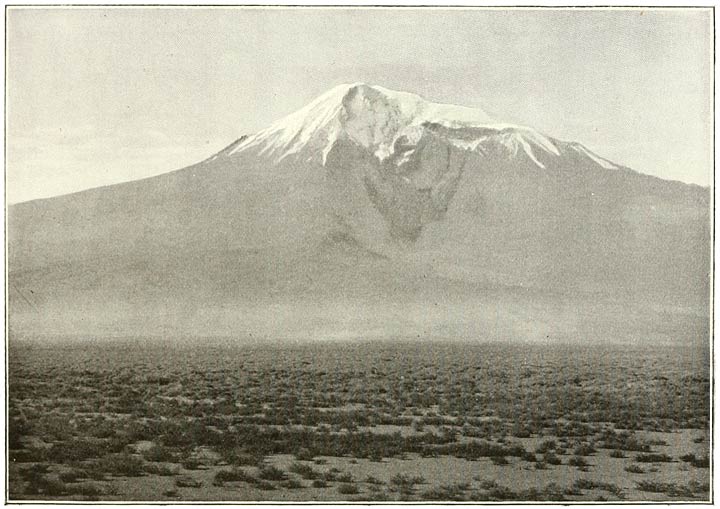
Fig. 37. Akhury: The Great Chasm from Aralykh.
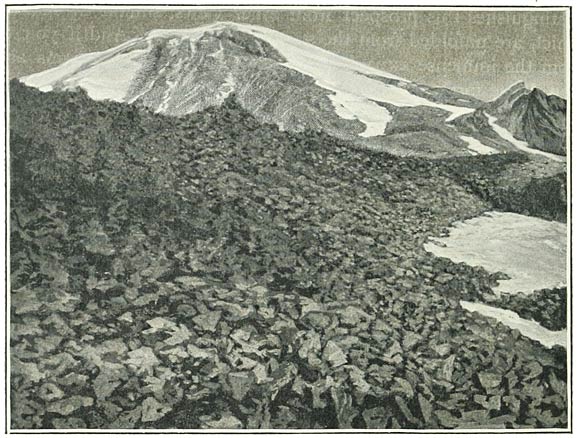
Fig. 36. Summit of Ararat from the South-East, taken at a height of about 13,000 feet.
Relieved of the tension of a fixed purpose, we were able to turn with real enjoyment to the contemplation of the surroundings in which we were placed. There can scarcely exist in the world another such standpoint as the platform of the sirdar’s well. You never tire of the contrasting shapes of the massive dome and the graceful pyramid; below you in the plains the silent operations of Nature proceed on their daily course. Morning breaks, and the floor of the plain is shrouded in white mist; the sun rises, and the opposite peaks of the Sevan ranges are crowned with banks of billowing cloud. Stray films wander out into the blue vault of heaven, and graze the sides of the dome. As the day grows, the warm air mounts these sides and melts the snows, which distil into a white vaporous mass. The ground of the landscape increases in definition of feature—the rich campagna, the looping river, the sites of the towns. It is the subtle quality no less than the scale of the composition which distinguishes this prospect from other views, similar in character, which are unfolded from the summit of a pass. And if you turn from the immense expanse and rest the eye on the forms about you, those forms respond to your emotions and invest them with a deeply religious cast. This vast fabric, so harmonious in design, in position so self-sufficient, touches chords in the nature of man which sound through all the religions, and die away only when they die. Yet how vulgar appear their dogmas in this pure atmosphere of religion, in the courts of this great cathedral of the natural world! You feel that this mountain has been the parent of religions, whence they strayed into devious paths. To this parent you would again collect the distracted; in this atmosphere you long to bathe the populations of our great towns. Our morbid dramatists, our nervous novelists need the inspiration of these surroundings—the promptings of Nature in her loftiest manifestations, from which the life of man can never with impunity be divorced.
In a lighter sense, to the traveller who seeks rest and enjoyment, I can confidently recommend a pilgrimage to this beautiful upland valley, and a sojourn among the marvels of this site. For the sportsman there are partridges in abundance; the botanist and the man of taste will admire the brilliancy of the flowers which nestle in the crannies of the rocks. Junipers clothe the ground, and a plant with spiked foliage like the juniper, and with a lovely little flower like a star. I have taken a specimen to Kew, and they call it Acantholimon echinus—a peculiarly appropriate name. Tiny bushes of wild rose flutter in the breezes; and, a little lower down, the earth is yellow with immortelles (Helichrysum), which, as I write, recall the southern sun. The journey to Erivan, by way of Tiflis, can be performed in luxury; from Erivan you can drive in a victoria to the foot of Ararat; on the mountain you have need of nothing but a tent and a cook. The Kurds are well-behaved, and will provide you with milk and mutton, of which it is a treat to taste. The old lawless times are passing into legend, thanks to the vigorous rule of the Tsars. The Russian officials abound in real kindness of disposition; and, if you can only succeed in patching a peace with the system, you feel that they really wish you well. We returned to Aralykh on the 22nd of September after an absence of nearly six days.
The cantonment of Aralykh faces the jaws of the great chasm which extends from the snowy roof to the base of Ararat, and lays the heart of the mountain bare (Fig. 37). We were anxious to penetrate within these dark recesses, and, after a day’s rest, carried our project into effect.
We set out at a quarter-past eight in the morning, mounted on little hacks. The Armenian Makar, who had accompanied us on the previous expedition, was deputed to be our guide. It took us some twenty minutes to cross the belt of sand and camelthorn at a pace of about six miles an hour. Then the ground commenced to rise with more perceptible acclivity, and we made our way across the massive base. The still air, and the restfulness of the stately fabric before us exercised upon us their now familiar spell. Grey clouds enveloped the snows of the summit region, collected above a veil of tender mist.
We were pointing towards the entrance to the chasm, and we noticed that, in that direction, there exists a considerable concavity in the surface of the base. One might almost form the conception of a flaw in the mountain, extending to the pedestal upon which it is reared. On either side of us, but more especially on our left hand, the rounded contours of the basal slopes were curving inwards to a wide depression, up the trough of which we rode. Is this feature the result of landslip and of floods issuing from the chasm, or was the pedestal always weaker upon this side? I am inclined to ascribe it in part to an inherent defect in the structure, which has been enlarged and accentuated in the process of centuries. It would appear that the streams of lava which fed the base on the north-west and south-east were not directed in equal volume to these north-eastern slopes. Such a distribution of the molten matter which contributed to build up the fabric would account, at least in some measure, for the subsequent subsidence of Ararat on this its north-eastern flank.
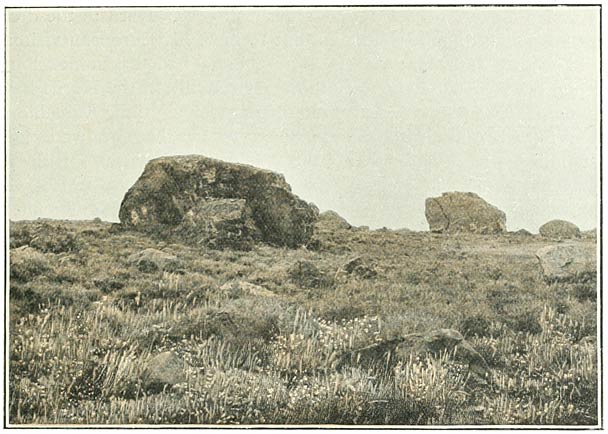
Fig. 38.
At half-past ten we halted at a small Kurdish village, situated at the mouth of the chasm. These Kurds have erected hovels of loose stones with roofs of mud, and they can boast or deplore, in the person of a starshina, a direct official connection with the Russian Government. It was amusing to see a Kurd in the dress of a Russian dignitary stepping out to meet his European visitors. He wore a dark blue coat; a large brass badge of office hung upon his breast. Ever since the great convulsion the Kurds have haunted the site of Akhury, rummaging for anything valuable in the buried ruins. Makar explained to us that we were now standing where once stood the prosperous township, with its ancient church and pleasant gardens. The woods of apricot, the rich vineyards have disappeared entirely; it would be difficult to discover a single tree. Just west of the miserable hamlet you still remark the deep watercourse which is the principal vent for the drainage of the ravine. The channel is dry at this season, and is overhung by steep banks some 100 to 150 feet high. We observed that these banks are composed of a sandy soil, inlaid with rocks. Yet the valley, even in autumn, is not entirely devoid of water; here and there we were refreshed by the sight of growing grass, and by the sound of little runnels. The trough of the ravine has at this point an elevation above sea-level of about 5570 feet, while its sides, which are formed by the cleft in the base of outer sheath of the mountain, are as yet scarcely more than 200 feet high. It extends almost in a straight line, and in a south-westerly direction, to the very heart of Ararat. The flanking cliffs rise and the valley narrows, until the formation assumes the proportions of a gulf many thousands of feet in depth, overhung by the snows of the summit region. Imagine a gigantic cutting, with a length of several miles, at the uppermost end of which an almost perpendicular precipice supports the snowy roof of Ararat! Even from this standpoint we could perceive the vertical seams at the head of the chasm, shadowed walls of grey rock with veins of orange hue, the higher ledges sprinkled with the first snows of autumn and half concealed by light, dissolving mist.
We mounted to the top of the cliff on the right or eastern side of the ravine, in order to obtain a view on either hand. Towards the east stretched the contours of the upper portion of the base, clothed with withered grass and strewn with stones. Abich tells us that these fragments are different in origin and character from the boulders and stones in the trough of the ravine; and, as we have seen, he uses the fact as a powerful weapon against the eruptive theory which Wagner propounds. Looking across the valley, our eyes rested on a little settlement on its opposite or western flank. It occupies a higher site than that of the Kurdish village, and may have been about a mile distant from where we stood. It interested us as well by its lonely and dangerous position as by an adjacent and isolated group of trees. It is called New Akhury, and, according to the official statistics, contains a population of some 400 Tartar inhabitants. It is the seat of a Cossack station, and bids fair to increase in size before the next earthquake shall sweep it away.
Makar directed our attention to some fallen gravestones, not many yards distant from where we stood. They are the remains of the cemetery of the old Akhury, and among them we admired several crosses with rich chasing in the old Armenian style. We found them overgrown with a thick, orange-hued lichen, resembling the appearance of rust. He told us that many of his relations had been buried in this graveyard, and he pointed out in particular a group of seven stones. He said that they marked the graves of seven brothers who had been killed in the gardens of the vanished township by the attacks of a single snake.
After regaling ourselves with delicious milk and eating an egg or two, we started at noon on our excursion up the ravine. We made our way along the eastern side of the chasm, sometimes picking our course as we might among the boulders, at others following a beaten path on higher ground. Not far beyond the hamlet we noticed a little spring, of which the water was trickling over. The next object to excite our interest was the peculiar formation of the floor of a side valley, in which we found ourselves at half-past twelve. Throughout an area of some 350 by 200 yards the ground was perfectly level, like a billiard table, with a smooth surface of sand and little pebbles. The length of this round ellipse followed the direction of the main ravine, which lay at some considerable depth beneath it, and from which the basin of this valley was separated by a low bulwark of rock and soil. We were impressed by the sharp distinction between the bottom of this flat area and the banks which, on the one side, were formed by this bulwark and, on the other, by towering cliffs, overgrown with grass. The basin has an entrance and an exit gully, through which the waters collect and escape. Not a single pool lingered within it at this season, and it was difficult to realise that this warm and sunny recess probably owes its most distinctive features to the erosive action of ice.
We mounted ever higher up the slopes which flank the ravine. In the trough of the gulf we noticed another flat space, similar in character but less pronounced than that which I have described. Bushes of wild rose luxuriate on these cliff-sides, and from this foreground of rich tints and red berries we looked across to the dark and perpendicular precipices which encircle the head of the chasm. At every lift in the restless vapours we feasted our eyes on the snows of the summit, and we remarked the great length and horizontal profile of the summit-outline, seen between the opening arms of the abyss. Muffled women’s figures, astride of their horses, came winding down the path. They were Armenian ladies, returning from a pilgrimage to St. Jacob’s Well; foot-attendants held their bridles and picked their way.
At two o’clock we arrived at the famous rose bush and the holy well. The path has been worn by the feet of pilgrims, who journey hither from the plains. The water issues from a recess in the side of the mountain which has been levelled with a masonry of hewn stone. The overflow nourishes the rose-tree, on the twigs of which are attached countless little ribbons of rag, shreds from the garments of the devout. Just beyond these sacred objects you are shown a level site, overhanging the ravine. Rows of stones are interlaced upon its surface, a sign for pious wayfarers. Here was placed the little shrine which during the great earthquake must have tumbled headlong into the chasm. The pilgrims insert tiny sticks into the ground with the same little ribbons of rag. The holy water is a talisman against all kinds of calamities, and it is supposed to attract the birds which destroy the locusts when they desolate the country-side.
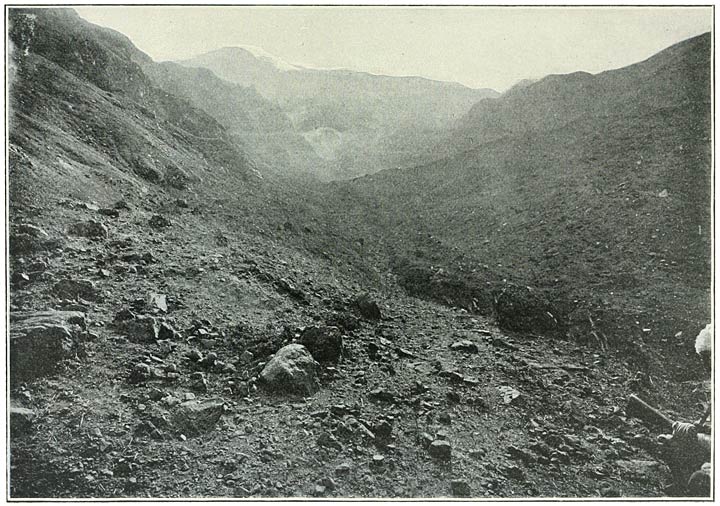
Fig. 39. Akhury: Inside the Great Chasm.
We lingered for some little space in the ravine beyond St. Jacob’s Well, waiting for the clouds to lift. But they hung jealously about the upper slopes of the precipices, whence a mist descended upon us like rain. The mountain thundered; from time to time the mist was gently parted, and gave passage to the sun. If we were disappointed of a clear view of the higher regions, we were at least able to appreciate to the full the vista down the weird chasm to the fair landscape of the plain. The comparative straightness of the gulf renders such a prospect possible, even from its uppermost end. No projecting spur or interposed eminence obstructs the continuous stretch of the hollow outlines to the distant campagna of the river-side. On the horizon were the crinkled mountains in the direction of Lake Sevan, flushed with tints of delicate yellow and amethyst, lightly shaded with opal hues. Deep gloom lay upon the floor of the abyss, and only the pools of blue glacier water caught the brilliance of day. On the open base beyond these shadows the sinuous lines of dry watercourses led the eye into the expanse of the plain; and we could still see the recumbent blocks which once hung in pinnacles above the spot upon which we stood.
Evening was drawing in when we again reached the entrance to the chasm. We skirt the Kurdish village, we pass a pool of water and a group of barefooted Kurdish girls. Away on our left are the mud houses of the Tartar settlement, and the green clump of trees. To these succeed the bouquets of pink and white atraphaxis, and the scattered crags of conglomerate rock. A flora of great variety starts from the sand and among the stone. While we are crossing this upper region of the base, the sun disappears behind the still, grey clouds; the blue zenith pales and fades. A full moon rises from the grey clouds, wreathing the landscape with soft lights. Heavy quiet reigns over the vast and lonely scene, and the only sound is the cicada’s hum. The low, dark outline of the trees of Aralykh is a mere shadow on the plain. Nature touches the chords of that stately and solemn movement which issues in and faintly accompanies the life of man.
SUPPLEMENTARY NOTE
The identification of Mount Ararat with the mountain upon which the Ark rested is at least as early as the adoption of Christianity by the Armenians, and may have been originally made by Jewish prisoners of war. But there does not appear to have existed in the neighbourhood of Ararat an independent local tradition of the Flood; and the mountain is still locally known not as Ararat, but as Masis to the Armenians, and as Aghri Dagh to the Tartars. It is, however, called Ararat in Armenian literature as early as Faustus of Byzantium, who uses the name in relating the story of St. Jacob of Nisibis (Faustus, iii. 10. The name appears to have been wrongly spelt Sararat by the copyists). The Ararat of Scripture is the Assyrian Urardhu; and the “mountains of Ararat” of Genesis viii. 4 must be sought within the country of Urardhu. Dr. Belck has quite recently examined, in the light of his remarkable researches into the lore of the Vannic texts, the question of the original geographical application of the term Urardhu (Zeitschrift für Ethnologie, Berlin, 1899, pp. 113 seq.); it appears to have spread from a district in Kurdistan, south-west of Lake Urmi, to the country about Lake Van. It would, therefore, seem that the tendency of the term has been to travel north; for the Urardhu or Ararat of the historical period is the province about Mount Ararat, one of the great divisions in the kingdom of the Arsakid monarchs of Armenia, and well known under the name of Ararat to Agathangelus and the earliest Armenian writers. Mount Ararat could scarcely have been known to the peoples of the lowlands, among whom the Biblical legend of the Flood originated. Various aspects of the subject are well discussed by Suess (Das Antlitz der Erde, Leipzic, 1885, vol. i. pp. 25–92; Die Sintfluth), Bryce (Transcaucasia and Ararat, edition of 1896, pp. 211 seq.), and Sayce (Dictionary of the Bible, London, 1898, sub voce Ararat).
Yielding in height to the most lofty peaks of the Caucasus in the north (Elburz, 18,525 feet), which are visible from the summit, and to Demavend (over 18,000 feet) in the belt of mountains which rise along the southern shore of the Caspian Sea, Ararat is by far the loftiest of the mountains of Armenia, and is over 1000 feet more elevated than the highest peak in Europe, Mont Blanc (15,780 feet). Moreover, Elburz and Kazbek, Mont Blanc, and even Demavend, all rise among a sea of mountains, of which they are little more than the highest crests. The isolation of Ararat is not its least interesting feature—a feature which I would fain hope is already imprinted upon my reader’s mind. The plains which it overlooks belong to three empires; the frontiers of Persia, Turkey, and Russia meet upon its slopes.
The best season for an ascent is the latter half of September. During October there is more chance of obtaining a view from the summit, which is usually most free from clouds in that month. But the days are, of course, shorter, and the fresh snow commences to lie. I should recommend the traveller with time upon his hands who may be anxious to extend our knowledge of the mountain to adopt the following programme:—(1) Ascend Little Ararat from Sardar Bulakh. (Good accounts are furnished by Parrot, op. cit. pp. 219 seq.; Stuart, Proceedings R.G.S. 1877, vol. xxi. pp. 77–92; Kovaleffsky, Voyage au Mont Ararat, Moscow, 1899 [in Russian]; Artsruni, Verhand. Gesell. Erdkunde Berlin, vol. xxii. 1895, pp. 606 seq.; Ebeling, Verhand. Gesell. Erdkunde Berlin, vol. xxv. 1898, pp. 130–132.) (2) Extend the journey to the southern slopes of Great Ararat, and thoroughly explore that side of the mountain. (3) Ascend Great Ararat, perhaps from a point a little further south than that indicated in my account; and (4) investigate the condition of the glacier in the chasm of Akhury. An interesting excursion may also be made to the little crater lake known as Kip Göl on the north-western slopes (see the accounts of Monsieur and of Madame Chantre in their writings already cited).
1. F. Parrot, 1829. Started from the monastery of St. Jacob (chasm of Akhury) and made the ascent by the north-western slope.
2. K. Spasky-Avtonomoff, 1834. From Akhury.
3. Herrmann Abich, 1845. From Sardar Bulakh.
4. H. D. Seymour, 1845. (From New Akhury?).
5. J. Khodzko, N. V. Khanikoff, and others, 1850. From Sardar Bulakh.
6. R. Stuart and others, 1856. From Bayazid.
7. J. Bryce, 1876. From Sardar Bulakh.
8. G. P. Baker, 1878. From Sardar Bulakh.
9. Sivoloboff, 1882.
10. E. Markoff, 1888. From Sardar Bulakh.
11. Semenoff, 1888 (?).
12. Raphalovich and others, 1889. From Sardar Bulakh.
13. T. G. Allen and W. L. Sachtleben (1892?). From Bayazid.
14. Postukhoff, 1893. From Sardar Bulakh.
15. H. B. Lynch, H. F. B. Lynch, and Rudolph Taugwalder, 1893. From Sardar Bulakh.