JAMES KNOX POLK,
Reading edition
THE TENTH PRESIDENT OF THE UNITED STATES,
Was born at Mecklenberg, North Carolina, November 2, 1795, and there received the rudiments of his early education. In 1806, his father removed to Nashville, Tennessee, taking his family with him, and here it was that Mr. Polk pursued those preliminary studies which were requisite to qualify him for the legal profession. After due preparation, he entered the office of Hon. Felix Grundy, under whose able instruction he made such rapid progress, that he was admitted to practice in 1820. His duties at the bar did not prevent him from taking part in the political affairs of the day; and in this sphere his comprehensive views and zealous devotion to Democracy soon secured him a widely-extended popularity, which resulted in his election to the Legislature of Tennessee, in 1823. In 1825, while yet in his thirtieth year, he was chosen a member of Congress, in which body he remained fourteen years—being honored with the Speakership for several sessions. So well satisfied were his constituents with his congressional course, that he was elected Governor by a large majority, but some questions of local policy subsequently defeated his reëlection.
In 1844, he was unexpectedly nominated for the office of President of the United States by the Democratic Convention at Baltimore; and, having received sixty-five electoral votes more than his rival candidate, Mr. Clay, he was inaugurated on the 4th of March, 1845.
Soon after Mr. Polk assumed the reins of government, the country became involved in a war with Mexico, which was little more than a series of victories wherever the American banner was displayed, and which resulted in important territorial acquisitions. The ostensible ground for this war, on the part of Mexico, was the admission of Texas into the Union, which was one of the first acts of Mr. Polk’s administration. The Mexicans, however, paid dearly for asserting their frivolous claim to Texas as a revolted province, and the prompt and energetic course pursued by Mr.Polk was sanctioned and sustained by a large majority of the people.
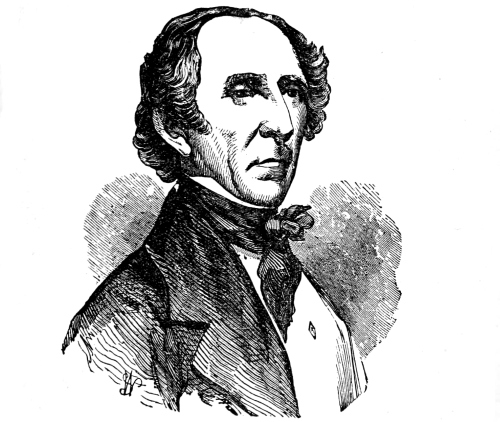
JOHN TYLER.
But notwithstanding the advantageous issue of the war, the acquisition of Texas, and the satisfactory settlement of several vexed questions of long standing, Mr. Polk was not nominated for a second term—various extraneous matters leading to the selection of another candidate. Perhaps it was fortunate for the country and for himself that he was permitted to retire to the more congenial enjoyment of private life; for his health had become very much impaired, and he did not long survive after reaching his home in Nashville. He died June 15, 1849.
Election for the Fifteenth Term, commencing March 4, 1845, and terminating March 3, 1849.
A STATES. PRES’T. V. PRES’T.
B C D E
9 Maine 9 9
6 New Hampshire 6 6
12 Massachusetts 12 12
4 Rhode Island 4 4
6 Connecticut 6 6
6 Vermont 6 6
36 New York 36 36
7 New Jersey 7 7
26 Pennsylvania 26 26
3 Delaware 3 3
8 Maryland 8 8
17 Virginia 17 17
11 North Carolina 11 11
9 South Carolina 9 9
10 Georgia 10 10
12 Kentucky 12 12
13 Tennessee 13 13
23 Ohio 23 23
6 Louisiana 6 6
6 Mississippi 6 6
12 Indiana 12 12
9 Illinois 9 9
9 Alabama 9 9
7 Missouri 7 7
3 Arkansas 7 7
5 Michigan 5 5
275 Whole No. of Electors 170 105 170 105
Majority138
COLUMN HEADINGS:
(A) = No. of Electors from each State.
(B) = James K. Polk, of Tennessee.
(C) = Henry Clay, of Kentucky.
(D) = George M. Dallas, of Pennsylvania.
(E) = T. Frelinghuysen, of New Jersey.
James K. Polk took the oath of office, as President, and entered upon his duties March 4, 1845.
George M. Dallas took the oath of office, as Vice-President, and attended in the Senate, March 4, 1845.
The most important incidents of Mr. Polk’s administration were the admission of Texas and the consequent war with Mexico, the latter of which resulted in extending our territorial boundaries to the Pacific Ocean, embracing regions of incalculable value.