CHRONOLOGICAL RECORD OF THE REBELLION.
Reading edition
NOVEMBER, 1860—Presidential Election.
Nov. 6.—Each of the four political parties presented its candidate for the Presidency, and the same number for the Vice-Presidency. The Republican party supported Abraham Lincoln, of Illinois, and Hannibal Hamlin, of Maine. One wing of the Democratic party supported S. A. Douglas, of Illinois, and H. V. Johnson, of Georgia; the other wing sustained John C. Breckenridge, of Kentucky, and Joseph Lane, of Oregon. The Old Line Whigs and Know Nothings supported John Bell, of Tennessee, and Edward Everett, of Massachusetts. The result of the popular vote was as follows:
Lincoln and Hamlin received 1,857,610; Douglas and Johnson, 1,365,976; Breckenridge and Lane, 847,553; Bell and Everett, 590,631.
Nov. 7.—The news of Mr. Lincoln’s election received at Charleston, South Carolina, with cheers for a Southern Confederacy. The “Palmetto Flag” hoisted on the vessels in the harbor.
Nov. 9.—An attempt to seize the arms in Fort Moultrie.
Nov. 10.—A bill was introduced into the South Carolina Legislature to raise and equip 10,000 men. The Legislature also ordered the election of a convention, to consider the question of secession. Jas. Chester, United States Senator from South Carolina, resigned.
Nov. 11.—Senator Hammond, of South Carolina, resigned.
Nov. 15.—Governor Letcher, of Virginia, called an extra session of the Legislature.
Nov. 18.—Georgia Legislature appropriated $1,000,000 to arm the State. Major Anderson sent to Fort Moultrie to relieve Colonel Gardner.
Nov. 19.—Governor Moore called an extra session of the Louisiana Legislature.
DECEMBER, 1860.
Dec. 1.—Florida Legislature ordered the election of a convention. Great secession meeting in Memphis.
Dec. 3.—Congress met. The President denied the right of a State to secede, and asserted the right of the General Government to coerce a seceding State.
Dec. 5.—Election of delegates to South Carolina Convention took place. The successful candidates were secessionists.
Dec. 10.—Howell Cobb, Secretary of the Treasury, resigned. Senator Clay, of Alabama, resigned. The Louisiana Legislature ordered the election of a convention, and appropriated $500,000 to arm the State.
Dec. 13.—An extra session of the Cabinet was held to consider the question of reinforcing Fort Moultrie; the President opposed it, and reinforcements were not sent.
Dec. 14.—General Cass, Secretary of State, resigned.
Dec. 17.—South Carolina Convention assembled.
Dec. 18.—The Crittenden Compromise introduced in the United States Senate.
Dec. 19.—Governor Hicks, of Maryland, refused to receive the Mississippi Commissioner.
Dec. 20.—South Carolina Convention adopted a secession ordinance; the vote unanimous.
Dec. 22.—The Crittenden Compromise voted down in the Senate committee of Thirteen.
Dec. 24.—The people of Pittsburg stop the shipment of ordnance from the arsenal at that place to Southern forts. Governor Moore called an extra session of the Alabama Legislature.—Election of members of the Alabama Convention took place; the majority for secession was over 50,000.—South Carolina members of Congress resigned.
Dec. 26.—Major Anderson left Fort Moultrie and took possession of Fort Sumter. He had with him only 111 men. South Carolina Commissioners arrived in Washington. The President refused to receive them.
Dec. 27.—Revenue cutter, William Aiken, surrendered to the South Carolina authorities.
Dec. 28.—South Carolina seized the Government property in Charleston, took possession of Castle Pinckney and Fort Moultrie.
Dec. 29.—John B. Floyd, Secretary of War, resigned.
Dec. 31.—South Carolina sent Commissioners to the slave States to make arrangements for a Southern Confederacy.
JANUARY, 1861.
Jan. 2.—Governor Ellis, of North Carolina, took possession of Fort Macon. Georgia troops seized Forts Pulaski and Jackson, and the United States arsenal at Savannah.
Jan. 4.—Governor Moore, of Alabama, seized Fort Morgan, and the United States arsenal at Mobile. Fast-day, by proclamation of the President.
Jan. 7.—State Conventions of Alabama and Mississippi, Legislatures of Virginia and Tennessee, assembled.
Jan. 8.—Jacob Thompson, Secretary of the Interior, resigned. Fort Johnson at Wilmington, and Caswell at Oak Island, seized by North Carolina.
Jan. 9.—The steamer Star of the West fired on by rebel batteries in Charleston harbor, and driven back. Mississippi Convention passed secession ordinance by vote of 84 to 15.
Jan. 10.—Florida Convention adopted an ordinance of secession by a vote of 62 to 7. Florida seized Fort McRae.
Jan. 11.—Alabama seceded; vote in Convention, ayes, 61; noes, 39. P. B. Thomas, Secretary of the Treasury, resigned, and was succeeded by John A. Dix, of New York. The Governor of Louisiana seized Forts Phillip and Jackson, on the Mississippi below New Orleans, the United States arsenal at Baton Rouge, and Forts Pike and Macomb, on Lake Ponchartrain.
Jan. 13.—Florida troops took possession of the Pensacola Navy Yard and Fort Barancas. Lieutenant Slemmer, in command of Fort Pickens, refused to obey Commodore Armstrong’s order to surrender the fort to the Florida troops, and thus saved that important place to the Union.
Jan. 16.—The Legislature of Arkansas called a convention. Colonel Hayne, of South Carolina, demanded of the President the surrender of Fort Sumter, which was refused. The Missouri Legislature voted to hold a convention.
Jan. 18.—The Legislature of Virginia appropriated $1,000,000 for the defense of the State.
Jan. 19.—Georgia adopted a secession ordinance by vote of 208 to 89.
Jan. 21.—Members of Congress from Alabama resigned. Jefferson Davis resigned his place in the Senate.
Jan. 23.—Georgia members of Congress resigned.
Jan. 24.—The rebels seized the U. S. arsenal at Augusta Georgia.
Jan. 26.—Louisiana Legislature passed secession ordinance by vote of 113 to 17.
Jan. 30.—North Carolina Legislature submitted the convention question to the people. This was the first instance of the will of the people being consulted in regard to the question of secession. The revenue cutters Cass, at Mobile, and McLelland, at New Orleans, surrendered to the rebel authorities.
FEBRUARY, 1861.
Feb. 1.—Texas Convention passed an ordinance of secession by vote of 166 to 7, to be submitted to the people. The Louisiana authorities seized the Mint and Custom House at New Orleans.
Feb. 4.—Delegates from the seceded States met at Montgomery, Alabama, to organize a Confederate Government. Peace Congress met at Washington; Ex-President Tyler was chosen President.
Feb. 8.—The U. S. arsenal at Little Rock surrendered to Arkansas.
Feb. 9.—Jefferson Davis and A. H. Stephens elected Provisional President and Vice-President of the Southern Confederacy.
Feb. 13.—The electoral vote counted. Abraham Lincoln received 180 votes, Stephen A. Douglas 12, John C. Breckenridge 72, and John Bell 39.
Feb. 19.—Fort Kearney, Kansas, seized by the rebels.
Feb. 23.—General Twiggs surrendered government property in Texas, valued at $1,200,000, to the rebels.
MARCH, 1861.
March 1.—General Twiggs expelled from the army. Peace Congress adjourned.
March 2.—Revenue cutter Dodge surrendered to the rebels at Galveston, Texas.
March 4.—The ordinance of secession passed by the Texas Convention and submitted to the people, having been adopted by a majority of about 40,000, the Convention declared the State out of the Union.
March 5.—General Beauregard took command of the troops at Charleston.
March 6.—Fort Brown, on the Rio Grande, was surrendered by special agreement. The Federal troops evacuated the fort and sailed for Key West and Tortugas.
March 28.—Vote of Louisiana on secession made public. For secession, 20,448; against it, 17,926.
March 30.—Mississippi Convention ratified the Confederate Constitution by a vote of 78 to 70.
APRIL, 1861.
April 3.—South Carolina Convention ratified the Confederate Constitution by a vote of 114 to 16.
April 4.—Virginia Convention, by a vote of 89 to 45, refused to submit an ordinance of secession to the people.
April 7.—All intercourse between Fort Sumter and Charleston stopped by order of Beauregard. The steamer Atlantic sailed from New York with troops and supplies.
April 8.—The Federal Government notified the South Carolina authorities that provisions would be sent to Major Anderson by force, if necessary. The State Department refused to recognize the Confederate States Commissioners.
April 11.—Troops are stationed in Washington, and the oath of fidelity administered to the men. The rebel Commissioners left Washington. General Beauregard demanded the surrender of Fort Sumter. Major Anderson refused.
BOMBARDMENT OF FORT SUMTER.
April 12.—The rebels had constructed batteries on Morris Island, Sullivan Island and Cumming’s Point, besides occupying Fort Moultrie; they had also built a powerful floating battery, all of which were employed in the attack on Sumter. Fort Moultrie opened fire at four o’clock in the morning. Fort Sumter did not reply until seven o’clock. The fire was kept up with vigor by both sides. Major Anderson had under his command 111 men, including officers, musicians and laborers. The Legislature appropriated $500,000 to arm the State. Fort Pickens reinforced.
April 13.—The bombardment of Fort Sumter continued; early in the day the officers’ quarters were fired by a shell; by noon most of the wood work was on fire; Sumter’s fire was almost silenced when General Wigfall came with a flag of truce, and arrangements were made for evacuating the fort. The terms were that the garrison should take all its individual and company property, that they should march out with their side arms in their own way, at their own time, and that they should salute their flag and take it with them.
April 14.—Major Anderson and his men sailed for New York. Governor Yates, of Illinois, called an extra session of the Legislature, to meet April 22.
April 15.—The President issued a proclamation commanding all persons in arms against the Government to disperse within twenty days; also calling for 75,000 volunteers. The New York Legislature authorized the raising of $3,000,000 for their equipment and support. The President called an extra session of Congress, to meet July 4th.
April 16.—The Governors of Kentucky, Virginia, Tennessee and Missouri, refused to furnish troops Under the President’s proclamation.—The Confederate Government called for 32,000 men.
April 17.—Virginia Convention adopted secession ordinance in secret session by a vote of 60 to 53, to be submitted to the people on the fourth Thursday of May. Forces were sent to seize the U. S. Arsenal at Harper’s Ferry, and the Gosport Navy Yard. All the military power of the State was placed under the control of the President of the Southern Confederacy. Jefferson Davis issued a proclamation, offering letters of marque and reprisal to all who wished to engage in privateering.
April 18.—U. S. Arsenal at Harper’s Ferry destroyed by Lieutenant Jones, to prevent it falling into the hands of the enemy. Colonel Cake, with 400 men of the 25th Pennsylvania regiment, arrived in Washington. These were the first troops to enter the city for its defense.
April 19.—Steamer Star of the West seized by the rebels at Indianola, Texas. The 6th Massachusetts regiment, while passing through Baltimore, was attacked by a mob; two soldiers were wounded. The troops fired upon the mob, killing eleven and wounding many. President Lincoln issued a proclamation declaring the ports of South Carolina, Florida, Georgia, Mississippi, Louisiana and Texas, in a state of blockade. Maryland, Delaware and Pennsylvania, added to the military department of Washington, and placed under the command of General Patterson. City Council of Philadelphia appropriated $1,000,000 to equip the volunteers and support their families.
April 20.—The Governor of North Carolina seized the Branch Mint at Charlotte. Several bridges on the Northern Pennsylvania Railroad destroyed by Maryland rebels, to prevent the passage of troops to Washington. The U. S. Arsenal at Liberty, Mo., seized by the secessionists and the arms distributed among the surrounding counties. The Gosport Navy Yard destroyed by General McCauley, to keep it from the rebels; the war vessels Delaware, Pennsylvania, Columbia, Germantown, Merrimac, Raritan, Dolphin and United States, were scuttled and set on fire; the Cumberland was towed out. The 4th Massachusetts regiment arrived at Fortress Monroe. A special meeting of the Pennsylvania Legislature called for the 30th, by proclamation of Governor Curtin.
April 21.—Federal Government took possession of the Philadelphia and Baltimore Railroad. Senator Andrew Johnson, of Tennessee, mobbed at Lynchburg, Va.
April 22.—U. S. Arsenal at Fayetteville, N. C., seized by the rebels. Arkansas seized the Arsenal at Napoleon.
April 24.—Fort Smith, Arkansas, seized by the rebels under Senator Boland. Cairo, Illinois, occupied by Union troops.
April 25.—Major Sibly surrendered 450 U. S. troops to the rebel Colonel Van Dorn, at Saluria, Texas. A company of Illinois volunteers, acting under the authority of the Government, removed 22,000 stand of arms from the Arsenal at St. Louis to Springfield, Illinois. Governor Letcher proclaims Virginia a member of the Southern Confederacy.
April 27.—The steamer Aelmick, loaded with powder and munitions of war for the South, seized at Cairo. The blockade extended to the ports of North Carolina and Virginia. All officers of the army were required to take the oath of allegiance.
April 29.—The Indiana Legislature appropriated $500,000 to arm the State. The Maryland House of Delegates voted against secession, 63 to 13. Governor Harris, of Tennessee, seized bonds and money in the Collector’s hands at Nashville, belonging to the Federal Government. Three steamships seized at New Orleans by order of Governor Moore, of Louisiana.
MAY, 1861.
May 1.—North Carolina Legislature passed a bill calling a State Convention, to meet on the 20th of May. The Legislature of Tennessee passed an act, in secret session, authorizing the Governor to form a league with the Southern Confederacy.
May 3.—Governor Letcher called out the militia to defend Virginia. President Lincoln called for 42,000 three years’ volunteers; 22,000 troops for the regular army, and 18,000 seamen. Fourteen companies of Kentucky volunteers offered their services to the Secretary of War, notwithstanding the Governor’s refusal. Connecticut Legislature appropriated $2,000,000 for military purposes.
May 4.—General McClellan placed in command of the Department of Ohio, comprising the States of Ohio, Indiana and Illinois. Union meetings were held in Preston county, Va., and at Wheeling, Va.
May 5.—General Butler took possession of the Relay House, Maryland.
May 6.—Arkansas Convention passed an ordinance of secession, by vote of 69 to 1. Tennessee Legislature adopted secession ordinance in secret session, to be submitted to a vote of the people on the 8th of June.
May 10.—A mob attacked the Home Guard at St. Louis; the Guard fired on the rioters, killing seven. A rebel force of 800 men, under Gen. Frost, surrendered to Captain (afterwards General) Lyon, at St. Louis.
May 11.—The mob made another attack on the Home Guard in St. Louis. Blockade of Charleston, S. C., established by the steamer Niagara.
May 13.—A Convention composed of delegates from 35 counties, met at Wheeling, Virginia, to consider the policy of forming a new State.
May 14.—A schooner loaded with arms for the rebels, also a large number of guns in Baltimore, seized by the forces under General Butler. The ship Argo, with a cargo of tobacco valued at $150,000, captured by the U. S. gunboat Quaker City.
May 16.—A bridge on the Baltimore and Ohio Railroad destroyed. General Scott ordered the fortification of Arlington Heights.
May 17.—Secession spies arrested in Washington by order of General Scott. Adams Express Company prohibited from carrying packages or letters south of Washington. Rebels commence fortifying Harper’s Ferry.
May 18.—Military Department of Virginia created, comprising Eastern Virginia, North and South Carolina; headquarters at Fortress Monroe, commander General Butler.
May 19.—Rebel batteries at Sewell’s Point attacked by U. S. steamers. Two schooners with rebel troops on board captured by the U. S. steamer Freeborn.
May 20.—Telegraphic dispatches throughout the North seized by order of the Government. North Carolina secession ordinance adopted. Governor Magoffin proclaimed the neutrality of Kentucky.
May 22.—Fortifications of Ship Island destroyed to keep them from the enemy.
May 24.—Thirteen thousand troops crossed the Potomac into Virginia. Alexandria occupied by Federal troops. Colonel Ellsworth shot by Jackson; the murderer was instantly killed. Arlington Heights occupied by Union troops.
May 25.—Union troops destroyed seven bridges and five miles of railroad from Alexandria to Leesburg.
May 26.—Western Virginia gave a large majority in favor of the Union. The port of New Orleans was blockaded by the sloop of war Brooklyn. All postal service in the seceded States suspended.
May 31.—The steamers Freeborn and Anacosta engage the rebel batteries at Acquia Creek.
JUNE, 1861.
June 1.—Lieutenant Tompkins, with 47 men, attacked the rebels at Fairfax Court House, killing Captain Marr and several others. Union loss two killed. The steamers Freeborn and Anacosta engage the batteries at Acquia Creek the second time. Skirmish at Williamsport, Maryland, between the rebels and a company of Home Guards.
June 3.—Colonel Kelly defeated the rebels at Phillippi, Va., killing 15; Colonel Kelly was severely wounded. Hon. S. A. Douglas died at Chicago. General Beauregard arrived and assumed command of the Confederate forces at Manassas Junction, Va. The voluntary contributions in the Northern States to carry on the war amounted to over $32,000,000.
June 6.—Harriet Lane attacked the batteries at Pig Point, near Fortress Monroe. A company of rebel cavalry, captured at Alexandria, Va., take the oath of allegiance.
BATTLE OF BIG BETHEL.
June 10.—Three regiments of Union troops, under the command of General Pierce, were defeated with a loss of 16 killed, among them Major Winthrop, and 41 wounded.
June 11.—Skirmish at Romney, Va. Wheeling Convention met.
June 14.—Rebels evacuated Harper’s Ferry, after destroying all available property; the armory machinery was taken to Richmond.
June 15.—Brig Perry arrived at New York with the privateer Savannah, captured June 4th.
June 17.—Wheeling Convention unanimously declared Western Virginia independent of the rebel portion of the State. A train of cars with 275 Ohio volunteers, under the command of Colonel Schenck, was fired into from a masked battery near Vienna, Va,; 8 were killed and 12 wounded. General Lyon defeated the rebels at Boonville, Mo., with a loss of about 30 killed and 50 wounded; Union loss 2 killed and 9 wounded.
June 10.—A skirmish took place at Cole Camp, Mo., between a body of secessionists and a company of Home Guards; the latter were defeated with a loss of 10 killed, 20 wounded and 30 prisoners. A detachment of U. S. Regulars captured a number of rebels with their arms and ammunition, at Liberty, Mo.
June 20.—Union Convention elected Frank D. Pierpont Governor of Virginia. General McClellan assumed command in person of the army in Western Virginia.
June 23.—Forty-eight locomotives belonging to the Baltimore and Ohio Railroad, valued at $400,000, were destroyed by the rebels.
June 24.—The U. S. gunboat Pawnee attacked the rebel battery at Mathias Point. A spy arrested at Washington with a full detail of the number of the troops and batteries, and the best plan of attack on the city.
June 26.—The President acknowledged the Wheeling government of Virginia.
June 27.—George P. Kane, Marshal of Baltimore police, arrested by General Banks and sent to Fort McHenry. The steamers Pawnee, Resolute and Freeborn, made a second attack on the rebel battery at Mathias Point; Captain Ward, commanding the Federal force, was killed.
June 29.—The rebel privateer Sumter escaped from New Orleans. The rebels made a dash at Harper’s Ferry, destroying several boats and a railroad bridge.
JULY, 1861.
July 2.—General Patterson defeated the Confederates at Falling Water, Va.; Union loss 3 killed and 10 wounded.
July 3.—A rebel company of 94 men captured at Neosho, Missouri.
July 4.—Rebels seized the Louisville and Nashville Railroad. Congress met in extra session
BATTLE OF CARTHAGE, MO.
July 5.—Confederates were commanded by Governor Jackson, the Federal troops, numbering 1,600, by Colonel Sigel. Colonel Sigel retreated to Springfield; Union loss 13 killed and 31 wounded.
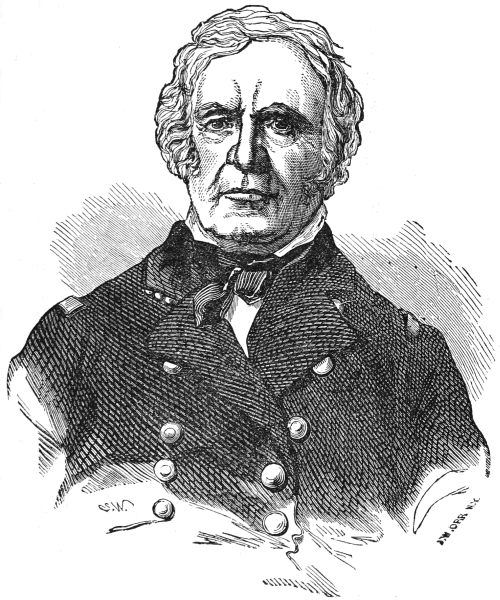
ZACHARY TAYLOR.
July 6.—General Fremont appointed to the command of the Western Department, consisting of the State of Illinois, and the States and territories west of the Mississippi, and east of the Rocky Mountains. Headquarters at St. Louis. 45 men belonging to the 3d Ohio regiment, cut their way through an ambuscade near Buchanan, Virginia.
July 10.—Skirmish at Laurel Hill, Virginia, rebels defeated. Union loss, 2 killed and 2 wounded.
July 11.—The following Senators were expelled from the U. S. Senate: J. M. Mason, R. M. Hunter, of Virginia; T. L. Clingham and Thomas Bragg, of North Carolina; L. T. Wigfall and J. U. Hemphill, of Texas; C. B. Mitchell and W. K. Sebastian, of Arkansas; and A. O. F. Nicholson, of Tennessee.
BATTLE OF RICH MOUNTAIN.
July 12.—The Federal troops, under command of Colonel Rosecrans, defeated the enemy under Colonel Pegram. The rebels lost their wagons, guns, camp equipage, and about 800 prisoners, besides 150 killed and wounded.
July 13.—-The Confederates under General Garnett were defeated at Carrick’s Ford, Virginia. The rebel General Garnett was killed. Union loss was 2 killed and 10 wounded.
Battle of Screytown, Va.—The Federals under Colonel Lowe, were defeated with a loss of 9 killed and 40 wounded and missing.
July 15.—Skirmish at Bunker Hill, Virginia. The rebel cavalry under Colonel Stuart, made the attack, but were defeated.
July 16.—Skirmish at Millville, Missouri, and at Barboursville, Virginia. Tilgham, a negro, killed three of a rebel prize crew on the S. J. Warring, and brought the vessel into New York. President Lincoln authorized to call the militia and accept the services of 500,000 men.
FIGHT AT BLACKBURN FORD.
July 18.—The Federal troops under command of General Tyler made the attack, but after three hours’ fighting were ordered back to Centerville; their loss was 19 killed and 64 wounded and missing. The Department of Maryland created, and General John A. Dix placed in command. Headquarters at Baltimore.
July 19.—General Banks superceded General Patterson. Headquarters in the field.
July 20.—The Confederate Congress met at Richmond.
BATTLE OF BULL RUN.
July 21.—The Army of the Potomac, 45,000 strong, under the command of Brigadier-General McDowell, left its camp near Washington, July 17. The army was formed in five divisions. General Tyler commanded the 1st division, Colonel Hunter the 2d, Colonel Heintzelman the 3d, Colonel Runyon the 4th, and Colonel Miles the 5th. Colonel Runyon’s division remained in the rear, between Centerville and Fairfax, and took no part in the battle. The enemy, in numbers about equal to the attacking force, occupied a position at Manassas naturally strong, and made doubly so by art. The battle was commenced on Sunday morning by the Union troops and was fought skilfully and bravely; the enemy were driven from a portion of their works, and the chances were decidedly in favor of the Federals; but the arrival of the rebel General Johnson with large reinforcements, turned the scale; at the same time a panic seized upon the troops, and they commenced a shameful and disorderly retreat towards Washington. The Federal loss was 481 killed, 104 wounded, and 1,216 missing. The rebel loss, according to General Beauregard, was 269 killed, and 1,483 wounded.
July 22.—General McClellan took command of the Army of the Potomac. Three Months Volunteers began to return home.
July 24.—Fort Fillmore, New Mexico, treacherously surrendered to the enemy by Major Lynde, U. S. A. All the arms and supplies were delivered up, and the soldiers released on parole.
July 25.—General Rosecrans assumed command of the army in Western Virginia.
July 31.—City Council of Cincinnati appropriated $23,000 to aid in relieving the families of volunteers from Hamilton county, Ohio.
AUGUST, 1861.
Aug. 1.—The rebels retreated from Harper’s Ferry to Leesburg.
Aug. 2.—General Lyon defeated the Confederates at Dug Spring, Missouri. Union loss was 8 killed at 30 wounded. The vessels engaged in a contraband trade with the rebels of Virginia and North Carolina were destroyed in Pocomoke Sound
Aug. 3.—Congress passed a bill for raising $20,000,000 by direct taxation and the Confiscation bill.
Aug. 5.—Commodore Alden bombarded Galveston, Texas.
Aug. 6.—The extra session of Congress closed.
Aug. 7.—The village of Hampton, Virginia, destroyed by the rebels. The privateer York burned by the U. S. Gunboat Union, crew taken prisoners.
BATTLE OF WILSON CREEK, MO.
Aug. 10.—General Lyon, with 5,000 Missouri, Iowa and Kansas troops, attacked a Confederate force double that of his own at Wilson Creek, near Springfield, Missouri. After a hard fight of six hours, General Lyon being killed, the Union troops, under the command of Colonel Sigel and Major Sturgis, retired to Springfield. The enemy did not pursue. Union loss was 223 killed, and 1,012 wounded and missing. General McCulloch, commanding the rebels, reported 265 killed, and 800 wounded.
Aug. 12.—President Lincoln appointed the 30th of September as a fast day.
Aug. 14.—General Fremont declared martial law in St. Louis.
Aug. 15.—Jefferson Davis ordered all Northern men to leave the South in forty days.
Aug. 16.—General Wool took command at Fortress Monroe.
Aug. 21.—Colonel Doherty with 300 Illinois troops, dispersed a rebel force at Charleston, Missouri. Union loss 1 killed and 6 wounded.
Aug. 26.—The 7th Ohio regiment, 900 strong, were surprised at Summerville, Virginia, while at breakfast, by the rebels, under General Floyd, but fought their way out, with a loss of 6 officers. The Hatteras expedition sailed.
Aug. 28.—Fort Clark, on the coast of North Carolina, captured.
Aug. 29.—Fort Hatteras surrendered to the Union forces. Rebel loss was 48 killed, 51 wounded, and 691 prisoners. The Federals lost none.
Aug. 30.—Fort Morgan, at Ocracoke Inlet, abandoned by the Confederates.
SEPTEMBER, 1861.
Sept. 1.—Kentucky Legislature met. Union majority in the Senate, 16; in the House, 52. Fight at Boonville, Virginia; the rebels were defeated and the town destroyed. Union loss 6 wounded.
Sept. 4.—Confederates under General Polk, took possession of Columbus, Kentucky. The rebels attempted to cross the Potomac at Great Falls, but were repulsed.
Sept. 6.—General Grant took possession of Paducah, Ky.
BATTLE OF CARNIFEX FERRY.
Sept. 10.—General Rosecrans with 4,500 troops, attacked the rebels under Floyd, in their intrenched camp at Gauley river, near Carnifex Ferry. After several hours’ fighting, darkness put an end to the contest. During the night Floyd retreated, burning the bridge over Gauley river. The Federal loss was 15 killed and 70 wounded. A naval engagement took place on the Mississippi between the U. S. gunboats Conestoga and Lexington, and two Confederate boats, assisted by a battery at Lucas Bend. The battery was silenced, and the boats driven to Columbus.
Sept. 11.—President Lincoln modified General Fremont’s emancipation proclamation.
Sept. 12.—Fight at Cheat Mountain. Colonel J. A. Washington, proprietor of Mount Vernon, was killed. Union loss, 9 killed and 12 wounded.
Sept. 17.—Accident on the Ohio and Mississippi railroad, near Huron, Indiana. About 100 of the 19th Illinois regiment were killed or wounded. Skirmish between the 3d Iowa regiment and a band of Confederates at Blue Mills, Missouri. The Federal troops were compelled to fall back, but receiving reinforcements, rallied, when the rebels retreated. Union loss, 12 killed and 85 wounded.
Sept. 18.—Colonel Frank Blair arrested by order of General Fremont. Maryland Legislature closed by Provost Marshal. Secession members sent to Fort McHenry.
Sept. 19.—Governor Morehead, Rueben Merrit, and M. A. Barr, arrested in Louisville, Kentucky, for treason.
BATTLE OF LEXINGTON, MO.
Sept. 20.—Colonel Mulligan, with 2,460 men, occupying the town of Lexington, Missouri, was attacked by a greatly superior force of the enemy, and after four days was compelled to surrender. During the siege the whole Union loss was 39 killed and 120 wounded.
Sept. 21.—John C. Breckinridge fled from Frankfort, Kentucky, and joined the rebels. General Lane defeated a rebel force at Papinsville, Missouri. Federal loss 17 killed.
OCTOBER, 1861.
Oct. 1.—The propeller Fanny captured by the rebels at Chicamacomico.
Oct. 2.—Fight at Chapmanville, Virginia, between Colonel Enyartz, Kentucky volunteers, and a party of Confederates. The latter were defeated and 47 of them taken prisoners. Union loss 4 killed and 8 wounded.
Oct. 3.—General Reynolds made an armed reconnaissance of the enemy’s position at Greenbriar. After driving in the rebel pickets and capturing three cannon, General Reynolds returned to Cheat Mountain, having lost 8 killed and 32 wounded. The Confederates evacuated Lexington, Missouri.
Oct. 4.—A large force of rebels under Colonel Barlow attacked the 20th Indiana regiment in their camp at Chicamacomico. The Federals retreated, leaving the wounded in the hands of the enemy.
Oct. 5.—The steamer Monticello shelled the rebels under Bartow, and drove them to their boats.
Oct. 6.—Fight at Flemington, Kentucky, between the Home Guard and a band of rebels. The latter were defeated.
Oct. 7.—The rebel iron-clad steamer, Merrimac, made its first appearance within sight of Fortress Monroe.
Oct. 9.—Confederates made an attack on Santa Rosa Island, but were defeated. Union loss was 13 killed and 21 wounded. Colonel Geary, with 400 Pennsylvania troops, crossed the Potomac at Harper’s Ferry, and captured 21,000 bushels of wheat.
Oct. 11.—Rebel steamer Theodore escaped from Charleston, South Carolina, with Mason and Slidell on board.
Oct. 15.—Jeff. Thompson, with a force of 600 men, captured a guard of 50, stationed at Big River Bridge, near Potosi, Missouri, and destroyed the bridge.
Oct. 16.—A small Union force under Major White recaptured Lexington, Missouri.
Oct. 21.—Fight at Fredericktown, Missouri. The Confederates defeated. Union loss 6 killed and about 60 wounded.
BATTLE OF BALL’S BLUFF.
Oct. 21.—Union forces engaged numbered 1,900, commanded by Colonel Baker. General Stone failed to cross the Potomac to support Colonel Baker. After a severe fight, in which Colonel Baker was killed, the Federals retreated. Union loss was 223 killed, 266 wounded, and 455 prisoners, including 100 wounded.
BATTLE OF WILD CAT, KY.
Oct. 21.—General Zollicoffer, with 6,000 Confederates, attacked the Unionists at Camp Wild Cat, Laurel county, Kentucky, and was repulsed by the forces under General Schoep. Union loss 4 killed and 21 wounded.
Oct. 22.—Skirmish at Buffalo Mills, Missouri. Rebels lost 17 killed and 90 prisoners.
Oct. 25.—General Kelley defeated the enemy, at Romney, Virginia.
Oct. 26.—Gallant charge of Major Zagoni, with 150 of Fremont’s body guard on a large force of rebels near Springfield, Missouri. The enemy was routed with a loss of 106 killed and 27 prisoners. Union loss 52 killed and wounded.
Oct. 26.—General Lane captured a rebel transportation train near Butler, Missouri.
Oct. 29.—The second naval expedition, consisting of 80 vessels, and 15,000 men, sailed from Fortress Monroe. The naval force was commanded by Commodore Dupont; the land forces were commanded by General Sherman.
NOVEMBER, 1861.
Nov. 1.—General Scott resigned as commander-in-chief of the armies of the United States. General McClellan was appointed in his place. General Benham defeated the rebels at Gauley Bridge, Virginia.
Nov. 2.—General Hunter superceded John C. Fremont in the command of the Western Department. The Confederate schooner Bermuda ran the blockade at Savannah.
PORT ROYAL.
Nov. 7.—The naval and military forces under the command of Commodore Dupont and General Sherman, captured Forts Walker and Beauregard, at Port Royal entrance. They also took possession of the town of Beaufort and Hilton Island. The Union loss was 8 killed and 25 wounded.
BATTLE OF BELMONT.
General Grant, with a force of 2,800, attacked a rebel camp at Belmont, Missouri, driving the enemy out and destroying the camp, and taking a quantity of arms; but reinforcements arriving at Columbus, the Federals were compelled to retreat; their loss was 84 killed, 288 wounded, and 235 missing.
Nov. 8.—Five rebel boats made an attack on Fort Hatteras, but were repulsed.
Nov. 10.—The rebels attack the town Guyandotte, Virginia, killing some of the Union men, but were driven off.
Nov. 11.—Guyandotte burned by the Unionists. General Halleck takes command of the Western Department.
Nov. 15.—The United States Frigate San Jacinto arrived at Fortress Monroe with Mason and Slidell, the rebel commissioners to Europe.
Nov. 18.—Confederate Congress met.
Nov. 21.—The United States vessel Santee captured the privateer Royal Yacht, off Galveston, Texas.
Nov. 23.—Fort Pickens and the U. S. war vessels Niagara and Colorado, bombarded the rebel fortifications at Pensacola. Port of Warrenton burnt.
Nov. 26.—Sharp skirmish at Hunter’s Hill, Virginia. Union loss 28 killed and wounded.
Nov. 27.—General McClellan directed the observance of the Sabbath in all the camps of the U. S. Army.
Nov. 29.—Skirmish at Warsaw, Missouri; a portion of the town destroyed.
Nov. 30.—Fight at Salem, Missouri. Rebels defeated with a loss of 39 killed and wounded.
DECEMBER, 1861.
Dec. 3.—Congress met.
Dec. 4.—John C. Breckinridge expelled from the United States Senate.
Dec. 5.—Engagement between the rebel gunboats and the Federal vessels, at Cape Hatteras. According to the reports of the Secretaries of War and Navy, the Union forces numbered 640,537 volunteers, 20,334 regular soldiers, and 22,000 seamen.
Dec. 9.—The Confederate Congress passed a bill admitting Kentucky into the Southern Confederacy. Freestone Point, Virginia, shelled by the National gunboats; the rebel batteries were silenced, and the buildings containing stores were destroyed.
Dec. 13.—Engagement at Camp Alleghany, Virginia, in which General Milroy defeated the rebels under Colonel Johnson. Union loss, 21 killed and 107 wounded.
FIGHT AT MUNFORDSVILLE, KY.
Dec. 17.—The Union force engaged was a portion of the 32d Indiana (German) regiment; the Confederates were commanded by General Hindman; battle drawn. Union loss 10 killed and 17 wounded.General Pope captured 360 secessionists at Osceola, Missouri.
Dec. 18.—General Pope captured 1,300 rebels, a number of horses and wagons, and 1,000 stand of arms, at Millford, Missouri. Union loss 2 killed and 17 wounded. Stone fleet sunk in Charleston harbor.
Dec. 20.—Battle of Drainsville, Virginia, in which the rebels were defeated by the Union troops under General McCall. Union loss 7 killed and 61 wounded.
Dec. 27.—Mason and Slidell surrendered to the British Minister.
Dec. 28.—A fight took place at Mount Zion, Boone county, Missouri. The Confederates were dispersed with considerable loss in killed, wounded and prisoners. Union loss 3 killed and 11 wounded.
JANUARY, 1862.
Jan. 1.—Mason and Slidell left Fort Warren, for England, in the British steamer Rinaldo. Cannon fight at Fort Pickens. General Stevens advances from Beaufort to the mainland, and with the assistance of the gunboats, captured the Coosaw batteries. Union loss 2 killed and 8 wounded.
Jan. 4.—General Milroy defeated the rebels at Huntersville, Virginia, and captured $80,000 worth of stores.
Jan. 7.—Rebels defeated at Romney. A force of 300 Union troops sent by General Milroy, captured a large quantity of stores in Tucker county, Virginia.
Jan. 8.—General Palmer defeated the rebels at Silver Creek, Missouri. Union loss 4 killed and 18 wounded.
Jan. 10.—Colonel Garfield defeated the rebels under Humphrey Marshall, at Prestonburg, Ky.
Jan. 11.—The Burnside expedition sailed from Fortress Monroe. Naval engagement on the Mississippi between the Union steamers Essex and St. Louis, and four rebel boats; the latter were compelled to seek protection under the batteries at Columbus. Simon Cameron resigned his position as Secretary of War, and E. M. Stanton appointed in his place.
MILL SPRING, KY.
Jan. 19.—This battle was fought between 3,000 Union troops under General Schoep, and rebels under General Zollicoffer. The enemy were defeated and General Zollicoffer killed. Union loss, 39 killed and 127 wounded.
FEBRUARY, 1862.
Feb. 3.—The Federal Government decided that the crews of the captured privateers were to be considered as prisoners of war.
Feb. 5.—Jesse D. Bright expelled from the United States Senate.
Feb. 6.—Commodore Foote, with 7 gunboats, attacked Fort Henry, on the Tennessee river. After fighting an hour and a half, the rebel commander, General Tilghman, made an unconditional surrender.
Feb. 7.—The expedition under General Burnside and Commodore Goldsborough reached Roanoke Island, and commenced the attack on the rebel fortifications.
ROANOKE ISLAND.
Feb. 8.—General Burnside captured the six forts on Roanoke Island, taking about 3,000 small arms and destroying all the Confederate fleet, except two vessels. Union loss was 50 killed and 212 wounded. 2,500 prisoners and a large quantity of ammunition were captured.
Feb. 9.—General C. P. Stone arrested and sent to Fort Lafayette.
Feb. 10.—Elizabeth City, N. C., surrendered to General Burnside. The Federal gunboats ascended the Tennessee river as far as Florence, Alabama, capturing three and destroying six rebel boats.
FORT DONELSON.
Feb. 13.—General Curtis took possession of Springfield, Mo. Fort Donelson invested, and the bombardment commenced.
Feb. 14.—Commodore Foote attacked Fort Donelson with the gunboats, but was compelled to withdraw.
Feb. 15.—The attack on Fort Donelson renewed by the land forces under General Grant, numbering 40,000. Bowling Green evacuated by the rebels.
Feb. 16.—General Buckner made an unconditional surrender of Fort Donelson and the troops under his command. Between 12,000 and 15,000 prisoners, 40 cannon, and a large amount of stores were captured. Union loss was 321 killed, 1,046 wounded and 150 missing. Skirmish at Independence, Mo.
Feb. 18.—General Curtis drove the rebels across the Arkansas line, capturing a number of prisoners and army stores.
Feb. 21.—The Union troops occupied Clarksville, Tennessee. Desperate fight at Fort Craig, New Mexico, between the Union troops under Colonel Canby, and the Texans. The Federals were defeated with a loss of 62 killed and 162 wounded.
Feb. 22.—Jefferson Davis inaugurated President, and A. H. Stephens Vice-President of the Southern Confederacy.
Feb. 24.—Nashville, Tennessee, occupied by the Union troops.
Feb. 27.—Columbus evacuated by the Confederates.
MARCH, 1862.
March 1.—Fight at Pittsburgh Landing between two Union gunboats and a rebel battery.
March 4.—Brunswick, Ga., Fort Clinch, Fernandina and St. Mary’s, Fla., were captured by Commodore Dupont. Andrew Johnson appointed Military Governor of Tennessee.
BATTLE OF PEA RIDGE.
March 6.—The Confederates under Van Dorn, Price, and McCulloch, attacked General Curtis at Pea Ridge, Arkansas. The Union army numbered about 12,000.
March 7.—The battle of Pea Ridge renewed, lasting all day.
March 8.—The battle of Pea Ridge ended in the total defeat of the enemy. Union loss was 212 killed and 926 wounded. The rebel steamers Merrimac, Jamestown and Yorktown, attacked the Federal fleet at Hampton Roads, destroying the Cumberland and the Congress, and damaging several other vessels. The Federal loss, in addition to the vessels, was 201 killed and 108 wounded.
March 9.—Duel of the Ironsides in Hampton Roads. After three hours’ fighting the Merrimac was towed under the protection of the battery at Sewall’s Point, and never renewed the contest. The Monitor was uninjured.
March 11.—General McClellan took command of the Army of the Potomac; General Fremont of the Mountain Department, and General Halleck of the Department of the Mississippi. Manassas occupied by Union troops.
March 12.—Commodore Dupont took possession of Jacksonville, Florida. The rebels driven from their works at Paris, Tennessee.
March 13.—The Confederates evacuated their works at New Madrid, Mo., in such haste as to leave 25 pieces of artillery, and a large quantity of military stores, valued at $1,000,000.
March 14.—General Burnside attacked the rebels in their fortifications at Newbern, N. C. After a fight of four hours, the enemy retreated, leaving a large quantity of ammunition, provisions and stores in the hands of the victors. The Union loss was 91 killed and 466 wounded.
March 16.—Commodore Foote commenced the attack on Island No. 10. Rebels defeated at Cumberland Mountain, Ky.
March 18.—Rebel fortifications at Acquia Creek evacuated. Confederates defeated at Salem, Ark.
BATTLE OF WINCHESTER, VA.
March 23.—The Union force engaged was a part of General Shield’s army, and numbered about 8,000, commanded by Colonel Kimball. The fight commenced at ten o’clock in the morning, and lasted until three o’clock in the afternoon. The rebels were finally defeated, and retreated to Strasburgh, leaving their dead and wounded upon the field. The Union loss was 103 killed and 440 wounded.
March 28.—Fight at Pigeon Ranch, New Mexico, between 3,000 Union troops under Colonel Hough, and 1,100 Texans. The battle was a drawn one.
March 31.—Colonel Buford dispersed the rebels at Union City, Tennessee.
APRIL, 1862.
April 6.—The rebels under Generals Johnson and Beauregard, attacked General Grant’s army at Pittsburgh Landing. The Union forces were driven back to the river and a number of prisoners captured.
April 7.—The battle of Shiloh renewed. General Buell arrived during the night with reinforcements. The battle lasted throughout the day with varied success, but the rebels were finally defeated and driven to their fortifications at Corinth. The Federal loss was 1,614 killed, 7,721 wounded and 3,956 missing. The rebel General Johnson was killed.
April 8.—Island No. 10 captured, 5,000 prisoners, 100 siege guns, 24 pieces of field artillery, 5,000 stands of small arms, 2,000 hogsheads of sugar and a large quantity of clothing, tents and ammunition.
April 11.—Fort Pulaski, commanding the entrance to Savannah, surrendered after a bombardment of thirty hours. General Mitchell occupied Huntsville, Ala., taking 200 prisoners, 15 locomotives and a large number of cars. The rebel iron-clad Merrimac makes her second appearance in Hampton Roads, destroying three small vessels. Congress passed the bill abolishing slavery in the District of Columbia.
April 12.—The enemy attacked General Milroy at Monterey, Virginia, but were repulsed. General Mitchell captured 2,000 prisoners at Chattanooga.
April 18.—The rebels attacked General Smith’s division at Yorktown, but were repulsed. Bombardment of Forts Jackson and Phillip, on the Mississippi below New Orleans, commenced.
April 19.—Fight between General Burnside’s troops and the enemy, near Elizabeth City, N. C. The latter were defeated. Union loss 11 killed. General Reno, with 2,000 Union troops, defeated the enemy at Camden, N. C. Union loss 14 killed and 99 wounded.
April 24.—The Union fleet having removed the obstructions in the Mississippi, passed Forts Jackson and St. Phillip on its way to New Orleans.
April 25.—Commodore Farragut arrived at New Orleans and took possession of the city. Fort Macon, Georgia, surrendered after a bombardment of eleven hours. General C. F. Smith died at Savannah, Tenn.
April 28.—Forts Jackson and St. Phillip surrendered. In the capture of New Orleans the rebels lost, in addition to the forts, 13 gunboats, among them the ram Manassas and the iron-clad Louisiana.
April 29.—General Mitchell defeated the rebels at Bridgeport, Alabama.
MAY, 1862.
May 3.—The rebels evacuated Yorktown, Jamestown, and Mulberry and Gloucester Islands, leaving ammunition, camp equipage and 100 guns behind.
BATTLE OF WILLIAMSBURGH, VA.
May 5.—The troops were commanded by Generals Hancock and Hooker. The rebels were defeated, and retreated in the night toward Richmond. Union loss 200 killed and 700 wounded. General Dumont attacked Morgan’s cavalry at Lebanon, Tenn., killed 66 and took 183 prisoners. Union loss 10 killed, and 26 wounded and missing.
WEST POINT, VA.
May 7.—Generals Franklin and Sedgewick, with a force of 20,000 men, were attacked by General Lee. The rebels were defeated. Union loss about 300 killed and wounded.
May 8.—General Milroy attacked the enemy at McDowell’s, Va. After a fight of five hours General Milroy was forced to withdraw. Federal loss 29 killed and about 200 wounded.
May 9.—The rebels evacuated Pensacola, and destroyed the Navy Yard.
May 10.—The Federal forces took possession of Norfolk, Va. The result of this movement was the destruction of the iron-clad Merrimac and the capture of a number of guns and a large amount of ammunition. Gosport Navy Yard destroyed by the rebels. Gunboat fight on the Mississippi, near Fort Wright; the rebels were repulsed, losing two vessels.
May 12.—Natchez, Mississippi, surrendered to Commodore Farragut.
May 16.—The Union gunboats repulsed at Fort Darling.
May 17.—Rebels driven across the Chickahominy, at Bottom Bridge.
May 23.—The rebel Colonel Heath attacked the Federal troops at Lewisburgh, Va. After an hour’s fighting the rebels were defeated. Union loss 14 killed and wounded.
May 24.—Colonel Kenley, commanding the Federal troops at Front Royal, Va., was attacked by a large force of the enemy and defeated with a heavy loss.
May 25.—General Banks defeated at Winchester, Va., and driven across the Potomac.
May 27.—Confederates defeated at Hanover, Va. Union loss 35 killed and 220 wounded.
May 29.—Rebels evacuated Corinth, Miss.
May 30.—Union troops took possession of Corinth.
BATTLE OF FAIR OAKS.
May 31.—The rebels, under General Johnson, attacked the left wing of the Army of the Potomac, commanded by General Casey, at Fair Oaks. Union forces were driven back.
JUNE, 1862.
June 1.—Battle of Fair Oaks was renewed, resulting in the repulse of the rebels. Union loss 890 killed and 4,844 wounded.
June 4.—Confederates abandoned their works at Fort Wright, on the Mississippi.
June 6.—Gunboat engagement on the Mississippi, near Memphis. Seven rebel boats were destroyed or captured. After the naval battle Memphis surrendered to the Union troops. Skirmish near Harrisonburg, Virginia; the rebel General Ashby killed.
June 8.—Battle of Cross Keys, Va., between General Fremont’s army and the Confederate army, commanded by General Jackson. The latter were defeated.
June 16.—Fight on James Island, near Charleston, S. C. Federals defeated with a loss of 85 killed, 172 wounded and 128 missing.
June 17.—Colonel Fitch destroyed a rebel battery at St. Charles, Ark. 125 were killed by an explosion on one of the Federal gunboats.
June 18.—Union troops occupied Cumberland Gap.
RICHMOND, VA.
June 26.—General Pope assigned to the command of the Army of Virginia. Commencement of the six days’ fight before Richmond. The rebels attacked McClellan’s right wing at Mechanicsville. The day closed, battle undecided.
June 27.—Bombardment of Vicksburg commenced. General Fremont relieved of his command. Battle before Richmond renewed; the Federals were driven back; loss heavy on both sides. White House evacuated by the Union troops.
June 28.—Incessant fighting all day between the right wing of the Union army on the Chickahominy, and the left wing of the rebels; the enemy were repulsed. In the evening the Unionists were ordered to fall back.
June 29.—Battle before Richmond renewed by an attack on the Union forces at Peach Orchard; the rebels were driven back, but late in the evening made another attack at Savage’s Station. The fight continued until nine at night. The Union wounded fell into the hands of the enemy.
June 30.—Battle of White Oak Swamp; heavy loss on both sides. General McClellan continues his retreat towards James river. In the afternoon the gunboats opened fire on the enemy, who were also subsequently charged by General Heintzelman’s corps and routed, leaving 2,000 prisoners in the hands of the Unionists.
JULY, 1862.
July 1.—Battle of Malvern Hill, and last of the Richmond battles. The rebels were repulsed at every point. The Union loss during the six days’ fighting before Richmond was 1,561 killed, 7,701 wounded and 5,958 missing. President Lincoln calls for 300,000 additional volunteers.
July 7.—Skirmish at Bayou Cache, Ark., between a portion of General Curtis’s army and the rebels under General Pike; the latter were defeated. Skirmish at Jasper, Ala.; Federals defeated.
July 9.—Hamilton, North Carolina, captured by the Federal troops.
July 11.—The rebel General Morgan entered Glasgow, Kentucky, and issued a proclamation calling upon the Kentuckians to rise. General Halleck appointed commander of all the land forces of the United States.
July 13.—Fight at Murfreesboro, Tenn.; Union troops surrendered; $30,000 worth of commissary stores captured, and a number of prisoners taken. General Morgan captured Lebanon, Ky., burned part of the town and robbed the Bank.
July 17.—The rebels under Morgan captured Cynthiana, Ky., and burned several railroad bridges.
July 18.—A band of rebels entered the town of Newburgh, Ind., and destroyed some hospital stores, took 250 stand of arms and retreated across the Ohio. The traitor, General Twiggs, died.
July 19.—Severe skirmish at Memphis, Tenn.; Union loss 6 killed and 32 wounded.
July 21.—John S. Phelps appointed Military Governor of Arkansas.
July 22.—The siege of Vicksburg abandoned. The rebels destroyed a quantity of commissary stores at Florence, Ala., and burned all the cotton in the place.
July 28.—Rebels defeated at Moore’s Hill, Mo.; Union loss 10 killed and 30 wounded.
AUGUST, 1862.
Aug. 3.—The rebel General Jeff. Thompson defeated near Memphis, Tenn. General Halleck ordered General McClellan to evacuate the Peninsula of Virginia.
Aug. 4.—The Secretary of War ordered a draft of 300,000 men. The rebel ram Arkansas destroyed by her crew.
Aug. 5.—General Robert McCook murdered by the rebels, while wounded and riding in an ambulance. The Confederate General J. C. Breckinridge made an unsuccessful attack on Baton Rouge, La. Union loss was 56 killed and 175 wounded and missing.
BATTLE OF CEDAR MOUNTAIN.
Aug. 10.—Confederates under General Jackson crossed the Rapidan river, and attacked General Banks at Cedar Mountain. The contest was short but severe. General Banks held his position, while the enemy fell back two miles, and did not renew the fight. The Union army numbered 7,000; their loss was 450 killed, 660 wounded, and 290 prisoners.
Aug. 16.—General McClellan evacuated Harrison’s Landing.
Aug. 19.—General Wright placed in command of the Department of the Ohio. Colonel Rodney Mason surrendered Clarksville, Tenn., to an inferior force, without firing a gun.
Aug. 25.—Confederates made an unsuccessful attack on Fort Donelson.
Aug. 26.—The rebel General Ewell drove the Union troops from Manassas.
Aug. 27.—General Pope finding his right turned by General Ewell, fell back towards Warrenton, when he was joined by General Hooker; overtaking the rebels under Ewell at Haymarket a severe fight ensued, terminating in the defeat of the enemy. The Federal gunboats destroy the rebel works at City Point, Va.
BATTLE OF GAINSVILLE, OR GROVETON, VA.
Aug. 29.—The battle was opened by General Sigel early in the morning. At 10 A. M. both wings of the Union army were hard pressed and the situation became very critical, when Generals Reno and Kearney arrived with reinforcements. The fight continued until 6 P. M., when the enemy retired.
BATTLE OF RICHMOND, KY.
Aug. 30.—The Confederates made the attack at 6 A. M. The Union troops under General Manson were defeated with a loss of about 200 killed, 700 wounded, and 2,000 prisoners. Rebels defeated at Bolivar, Tenn.
SECOND BATTLE OF BULL RUN.
Aug. 30.—The Federal forces under General Pope defeated.
Aug. 31.—Bayou Sara, La., destroyed by the U. S. gunboat Essex.
SEPTEMBER, 1862.
Sept. 1.—Fight at Britton’s Lane, Tenn.; rebels retired leaving their dead on the field. Union loss 5 killed, 78 wounded, and 92 missing.
FIGHT AT CHANTILLY, VA.
Sept. 1.—The Union troops were commanded by Generals Hooker, Reno and Kearney. The rebels retired leaving their dead and wounded on the field. This was the last fight in which General Pope’s army was engaged. In the five battles fought since August 26, the Army of Virginia had lost about 1,000 killed, 6,000 wounded, and 2,000 prisoners. The Union troops evacuated Lexington, Ky.
Sept. 2.—General McClellan appointed to the command of the troops for the defense of Washington.
Sept. 5.—Confederates began crossing the Potomac into Maryland.
Sept. 6.—The rebels made an attack on the Union garrison at Washington, N. C.; were repulsed. Union loss 8 killed and 36 wounded. Colonel Lowe recaptured Clarksville, Tenn.
Sept. 7.—General Banks assigned to the command of the fortifications in and around Washington. General McClellan took the field at the head of the Army of the Potomac.
Sept. 12.—Fight at Middletown, Md. Union loss, 80 killed and wounded.
BATTLE OF SOUTH MOUNTAIN, MD.
Sept. 14.—General McClellan overtook the enemy at South Mountain, Md. A general engagement took place. The fight was severe and the loss heavy on both sides, the Unionists losing 443 killed and 1,806 wounded. General Reno was among the killed. The rebels retreated towards the Potomac.
Sept. 15.—Harper’s Ferry surrendered, after two days’ fighting, to the enemy, with all the garrison, consisting of 8,000 men. The rebels attempted to destroy the Green river bridge, on the Louisville and Nashville R. R., but were defeated.
Sept. 16.—Munfordsville, Ky., captured by the rebels; about 4,000 taken prisoners.
BATTLE OF ANTIETAM, MD.
Sept. 17.—The battle was fought on Antietam Creek, near Sharpsburg, Md., and began early in the morning and continued until evening. Armies each numbering nearly 100,000 men. The battle was fought with great determination. During the night the Confederates retreated, leaving 3,500 prisoners, 39 stand of colors, and 13 guns in the hands of the victors. The Union loss was 2,010 killed, 9,416 wounded, and 1,043 missing. Cumberland Gap evacuated by the Federals.
Sept. 18.—Confederates recrossed the Potomac into Virginia, having been in Maryland two weeks. The rebels evacuated Harper’s Ferry.
Sept. 19.—General Rosecrans commenced an attack on the rebel forces at Iuka, Miss.
Sept. 20.—Confederates evacuated the place during the night. The Union loss was 135 killed and 527 wounded.
Sept. 21.—General McCook recaptured Munfordsville, Ky.
Sept. 22.—President Lincoln’s Emancipation Proclamation issued.
Sept. 27.—Fight at Augusta, Ky. The Union garrison, 120 strong, surrendered after a gallant defense. Their loss was 9 killed, 15 wounded and the rest prisoners.
Sept. 29.—General Nelson was shot by General Jeff. C. Davis at Louisville, Ky.
OCTOBER, 1862.
BATTLE OF CORINTH, MISS.
Oct. 3.—The rebels under Price and Van Dorn attacked the Union troops and drove them into the town.
Oct. 4.—Battle of Corinth renewed. The Confederates were defeated with heavy loss. The Union loss was 315 killed and 1,802 wounded.
Oct. 6.—The Confederates attacked General Palmer’s brigade at Lavergne, Tenn., but were defeated. Union loss, 5 killed and 13 wounded and missing.
BATTLE OF PERRYVILLE, KY.
Oct. 8.—The advance of Buell’s army was attacked at Perryville, Ky., by a superior force of the enemy under Generals Jackson and Perrell. The Confederates retreated during the night. Union loss was over 3,000 killed and wounded.
Oct. 10.—The rebel cavalry under General Stuart entered Chambersburg, Penn., and captured a quantity of small arms and clothing.
Oct. 18.—The rebel General Morgan occupied Lexington, Kentucky.
Oct. 19.—The Confederate General Forrest defeated near Gallatin, Tenn.
Oct. 22.—Rebel salt works in Florida destroyed. General Blunt defeated the rebels at Maysville, Ark., capturing all their artillery. Fight at Pocotaligo, S. C. The Federals attempted to gain possession of the Charleston and Savannah railroad, but were repulsed with a loss of 30 killed and 180 wounded.
Oct. 27.—Fight at Labadieville, La.; rebels defeated; Union loss, 17 killed and 74 wounded.
Oct. 28.—General Herron defeated the rebels near Fayetteville, Arkansas.
Oct. 30.—General Rosecrans assumed command of the Army of the Cumberland. General Mitchell died at Port Royal, South Carolina.
NOVEMBER, 1862.
Nov. 5.—General McClellan relieved of the command of the Army of the Potomac, and General Burnside put in his place.
Nov. 11.—General Ransom defeated the rebels under Woodward, near Garrettsburg, Kentucky. Under the cartel the following officers were exchanged: U. S. officers—Brigadier Generals, 3, Colonels, 18, Lieutenant Colonels, 19, Captains, 431, Lieutenants, 545; Confederate officers—Colonels, 27, Lieutenant Colonels, 17, Captains, 467, Lieutenants, 1,085. About 24,000 privates were also exchanged, leaving a balance due the United States of 6,000 privates.
Nov. 16.—President Lincoln enjoined on the United States forces the orderly observance of the Sabbath.
Nov. 17.—A cavalry fight took place near Kingston, North Carolina. The enemy was driven from his position and his barracks destroyed.
Nov. 22.—All political State prisoners released.
BATTLE OF CANE HILL, ARK.
Nov. 28.—The Union army, numbering 1,000 men, was commanded by General Blunt. The rebels were defeated, with a heavy loss, and retreated to Van Buren.
DECEMBER, 1862.
Dec. 1.—An expedition sent from Suffolk, Va., recaptured the Pittsburg Battery, which had been taken from the Union army on the Peninsula.
Dec. 2.—Skirmish near Charleston, Va. Rebels defeated, losing 70 killed and wounded and 145 prisoners.
Dec. 6.—General Banks’ expedition sailed for New Orleans.
BATTLE OF PRAIRIE GROVE, ARK.
Dec. 7.—The Union army was commanded by Generals Blunt and Herron. The rebels were defeated with heavy loss, and retreated during the night. The Union loss was 495 killed and 500 wounded. The rebel General Morgan captured the 104th Illinois, the 106th and 108th Ohio, and a number of the 2d Indiana cavalry, at Hartsville, Tenn. Unionists lost, besides prisoners, 55 killed.
Dec. 11.—The city of Fredericksburg bombarded by the Union troops, under cover of which they crossed the Rappahannock.
BATTLE OF FREDERICKSBURG, VA.
Dec. 13.—Confederate works were attacked by the Union troops in three divisions, under Sumner, Hooker and Franklin, but were repulsed. Federals lost 1,512 killed, 6,000 wounded, and 100 prisoners. General Foster left Newbern, N. C., for the purpose of destroying the railroad at Goldsboro’. He came up with the enemy at Southwest creek; after a short engagement, they retired to Kingston, where they were again attacked and driven from their position with a loss of 11 pieces of artillery and 400 prisoners. Severe skirmish at Zuric, Va.; rebels defeated and part of their force captured. An expedition under Commodore Parker destroyed the rebel salt works, also five schooners and two sloops in Mob Jack Bay.
Dec. 16.—General Burnside’s army removed to the north side of the Rappahannock. General Foster defeated the rebels at White Hall, N. C.
Dec. 17.—The Union troops occupied Baton Rouge, La. General Foster defeated the rebels at Goldsboro’, N. C. destroying the railroad bridge.
Dec. 19.—The rebels recaptured Holly Springs, Miss., taking the garrison prisoners, and destroying a large quantity of ammunition, commissary stores and cotton.
Dec. 21.—General Carter left Kentucky for the purpose of destroying two important railroad bridges in East Tennessee. The expedition was successful.
Dec. 23.—The Confederates attacked General Sigel at Dumfries, Va., but were repulsed.
SECOND ATTACK ON VICKSBURG.
Dec. 27.—General Sherman attacked the advanced works of the enemy about 6 miles from Vicksburg, at the same time the gunboats attacked the rebel batteries on Haines’ Bluff.
Dec. 28.—The Federals drive the rebels from the first and second lines of defense and advanced to within two and a half miles of Vicksburg. General Blunt entered Van Buren, Ark., capturing four steamboats laden with provisions.
Dec. 29.—The Confederates attacked General Sherman with their whole force, and drove him back to the first lines of defense.
BATTLE OF MURFREESBORO’, OR STONE RIVER.
Dec. 31.—Skirmishing had been going on for two days, but to-day the engagement became general. The Union army numbered 45,000 men, under General Rosecrans. The main attack of the rebels was made on General Rosecrans’ right, commanded by General McCook. The division was driven back four miles, and lost 26 guns; but reinforcements being sent from the left and center, the enemy was in turn repulsed and the lost ground regained. The iron-clad steamer, Monitor, foundered on the coast of South Carolina. West Virginia admitted into the Union as a State.
JANUARY, 1863.
Jan. 1.—General Sullivan defeated the rebels under Van Dorn, at Hunt’s Cross Roads, near Lexington, Tenn. Early in the morning of January 1st a rebel force of 3,000 men under the command of General Magruder, made an attack on the Union troops numbering 300, at Galveston, Texas. At the same time the rebel batteries and two rebel steamers attacked the blockading fleet. The fight lasted several hours, resulting in the capture of the troops on land and the steamer Harriet Lane. The U. S. vessel Westfield got aground, and was destroyed to prevent its falling into the hands of the enemy. The explosion took place prematurely, before Commodore Renshaw had left, and he perished with his vessel.
Jan. 3.—Since the hard battle of December 31st, fighting had been going on between the two armies at Murfreesboro’. The Confederates made an attack on the Federal lines Jan. 1st, and another Jan. 2d, but were repulsed in both cases. On the night of Jan. 3d, they commenced their retreat. The following is the official statement of the Union loss at the battle of Stone River: killed 1,697, wounded 6,425, and 3,550 missing. The Federal army withdrew from before Vicksburg. The Union loss in the second attack on Vicksburg was about 600 killed, 1,500 wounded and 1,000 missing.
Jan. 7.—The Confederates made an attack on Springfield, Mo., where a large quantity of army stores had been deposited. The place was bravely defended by General Brown and the rebels defeated. Union loss 17 killed.
ARKANSAS POST.
Jan. 10.—The attack was commenced Saturday night by the Mississippi Squadron, under Admiral Porter. On the following day the land forces under General McClernand, joined in the fight, and before night all the fortifications were taken. About 7,000 prisoners, and a large quantity of ammunition were captured. The Union loss was about 200 killed and wounded. Two rebel iron-clad vessels made an attack on the blockading fleet at Charleston, South Carolina. The Mercedita and Keystone were severely injured, and the inner line of blockaders driven off for a time, but the outer line of vessels were not disturbed and the blockade was not interrupted.
Jan. 12.—Three Federal transports on the Cumberland river were captured by the enemy. The gunboat Slidel, which was in company surrendered without firing a gun.
Jan. 14.—Fight at Bayou Teche, La., a number of rebels were captured, and the rebel gunboat Cotton, destroyed.
Jan. 20.—The Morning Light and Velocity, blockading Sabine City, Texas, were both captured by the rebels. A few days after, the Morning Light was destroyed to prevent its recapture by the Federals.
THIRD ATTACK ON VICKSBURG.
Jan. 22.—After the capture of Arkansas Post, General McClernand returned to Vicksburg and resumed the siege of that place. Work was also resumed on the canal across the point opposite Vicksburg.
Jan. 27.—The iron-clad Montauk, and three wooden gunboats, made an attack on Fort McAllister, at the mouth of the Ogeechee river near Savannah, Ga., but failed.
Jan. 28.—General Burnside relieved of the command of the army of the Potomac, and General Hooker appointed in his place. General Sumner and General Franklin were relieved from duty in the army of the Potomac.
Jan. 31.—The Confederate General Pryor made an attack on the Union troops under General Peck, at Blackwater, Va. The rebels were repulsed. The fighting resulted in a Union loss of 24 killed and 80 wounded. Skirmish at Rover, Tenn., rebels were defeated with a loss of 12 killed and 300 wounded.
FEBRUARY, 1863.
Feb. 1.—The gunboats made another attack on Fort McAllister, but were unsuccessful.
Feb. 2.—The Federal ram Queen of the West, ran the blockade at Vicksburg, but was captured a few days after by the rebels. Stokes’ Tennessee cavalry and one Kentucky regiment attacked a rebel camp near Middletown, Tenn., dispersing the enemy and captured the camp.
Feb. 13.—The iron-clad Indianola ran the blockade at Vicksburg, and was captured by the rebels.
Feb. 18.—The gunboats commenced the bombardment of Vicksburg, but without accomplishing anything.
Feb. 26.—A train of 28 cars on the L. & N. R. R., captured by the rebels at Woodburn, Ky., and destroyed.
Feb. 27.—The rebel steamer Nashville, while attempting to run the blockade, got aground near Fort McAllister, and was destroyed by the blockading fleet.
MARCH, 1863.
March 5.—Five regiments of infantry, two of cavalry, and one battery, under the command of Colonel Coburn, were attacked by a superior force of rebels under Van Dorn, at Thompson’s Station, near Franklin, Tenn. The unequal contest resulted unfortunately to the Union cause. The Federal loss was 120 killed, and 1,206 taken prisoners.
March 7.—General Minty attacked a rebel cavalry force at Unionville, Tenn., capturing their wagons, horses and tents, and about 60 prisoners.
March 9.—A band of rebel cavalry passed through the Union lines, entered Fairfax, Va., and captured General Stoughton and a few privates.
March 13.—The Confederates made an unsuccessful attempt to recapture Newbern, N. C. Commodore Farragut’s fleet attempted to pass the rebel batteries at Port Hudson, but only a part of the vessels succeeded. The Mississippi got aground and was destroyed.
March 17.—Two hundred cavalry under command of General Averill, crossed the Rappahannock, near Kelly’s Ford, where but a single horseman could cross at once, and in the face of a most terrible fire from rifle pits and sharpshooters, charged the rebels in their intrenchments, killing or capturing nearly the whole force. They then encountered Stuart’s cavalry, and after a desperate hand-to-hand encounter, of five hours, routed them with great slaughter, capturing 80 prisoners.
March 20.—John Morgan with 4,000 men was totally defeated near Milton, Tenn., by Colonel Hall, with 1,400 mounted men. The negro brigade took Jacksonville, Florida. Major-General Burnside appointed to command the Department of the Ohio.
March 22.—Rebels under Clarke, captured Mt. Sterling, Ky.
March 28.—The rebel steamer Iris, captured by the U. S. steamer Stellin 30 miles north of Charleston, S. C.
APRIL, 1863.
April 1.—Two hundred and fifty of Jenkins’ rebel cavalry attacked Point Pleasant. An expedition from Murfreesboro’ under General Hazen, attacked a rebel camp near Woodbury, killing and wounding 20, capturing 30 prisoners, 50 horses and a lot of mules and wagons; the rebels were 600 strong, and under the command of Colonel Smith.
April 6.—General Mitchell with 300 cavalry dashed into a rebel camp near Nashville, on a sabre charge, capturing 5, killing 15, and capturing all their tents, arms, horses and equipments.
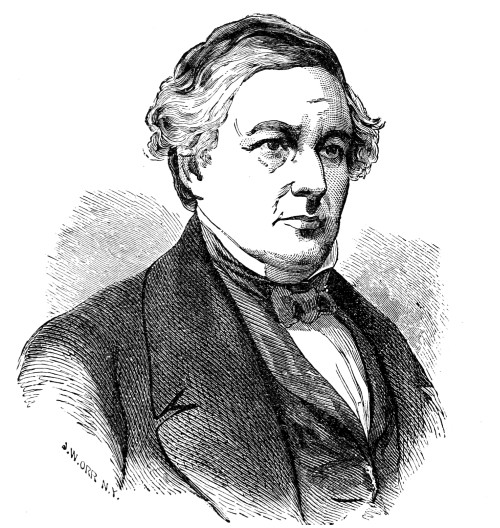
MILLARD FILLMORE.
ATTACK ON CHARLESTON.
April 7.—The Federal fleet was composed of nine iron-clad vessels, under the command of Commodore Dupont. The fight began in the afternoon of April 7th, and lasted about two hours. Keokuk was so badly damaged that she sunk in a few hours. Several other vessels were temporarily disabled. The fleet was then withdrawn.
April 10.—General Van Dorn’s forces attacked General Granger at Franklin, Tenn., and were driven back with loss.
April 17.—General Banks’ command left Baton Rouge, fought three battles, two on land and one on Grand Lake, capturing 2,000 prisoners. Our loss was 700. Six vessels of Porter’s fleet ran by the rebel batteries at Vicksburg.
April 18.—Fayetteville, Ark., attacked by 3,000 rebels, with four pieces of artillery; Union forces numbered but 2,000. The rebels were repulsed. Our loss was 5 killed and 17 wounded.
April 22.—The ram Queen of the West, was captured in Grand Lake, with Captain Fuller and all her officers and crew, numbering 90. General McClellan’s staff disbanded. A small mounted force under Colonel Wilder, attacked McMinnville, Tenn., at 1 o’clock, A. M., surprised the rebel force under Grigsby, destroyed the railroad depot and bridges, and an immense quantity of cotton and army supplies, capturing 300 prisoners. Banks occupied Opelousas and Washington, Miss. The Baltimore and Ohio R. R. destroyed between Cumberland and Grafton. The advance guard of Marmaduke’s army, under command of Colonel Newton, was surprised—the entire regiment being either killed or captured by the Union forces under Vandever.
April 30.—Colonel Mulligan repulsed by the rebels at Fairmont, Western Virginia, and the B. & O. R. R. bridges blown up at Fairmont and Cheat river.
MAY, 1863.
May 1.—General Carter with 5,000 men crossed the Cumberland, below Somerset, Ky., and attacked the rebel forces at Monticello, under Pegram, driving them from the field. Rebels lost 66 men. Marmaduke’s forces driven out of Missouri by Vandever.
BATTLE OF PORT GIBSON.
Grant defeated General Bowen with a loss of 1,550 men and 5 pieces of artillery.
GRIERSON’S RAID.
May 2.—On the morning of the 17th of April, 1863, the 6th and 7th Illinois cavalry, 900 strong, under command of Colonel Grierson, of the 6th Illinois, (together with 6 pieces of artillery,) set out from Lagrange, Tennessee, and pursuing in the main a Southerly course, marched through the center of Mississippi, destroying as they went, railroads, bridges, cars, locomotives, and stores of all kinds, belonging to the rebels, in immense quantities. Traveling on an average 40 miles a day, they reached Baton Rouge, Louisiana, on the evening of the 2d of May. They had traveled nearly 800 miles in 16 days, and traversed 17 counties. At several points the enemy made great attempts to capture them but failed. They brought into Baton Rouge over 1,000 horses and a large number of cattle; 500 negroes followed them.
FREDERICKSBURG.
May 3.—The second attempt to capture the rebel fortifications at Fredericksburg, Va., was made by the Army of the Potomac, under General Hooker, and failed. The army commenced marching April 27th, the main body crossing the Rappahannock at Kelley’s Ford, about 20 miles north-west of Fredericksburg, then marching south, crossed the Rapidan, and took their position at Chancellorville, about 10 miles west of Fredericksburg. Severe skirmishing took place on Friday and Saturday, May 1st and 2d; but the main battle was fought on Sunday, May 3d, resulting in the defeat of the Federal troops. In the meantime General Sedgwick had crossed the Rappahannock and occupied Fredericksburg. He, too, was defeated, and compelled to retire to the northern bank of the river. Hooker’s army recrossed the river on the night of May 5th. The loss on each side was about 15,000 killed, wounded and prisoners.
STONEMAN’S RAID.
While the fight was going on near Fredericksburg, General Stoneman, with a large cavalry force, crossed the Rapidan east of Orange Court House, and made a bold and partially successful raid into the enemy’s country. A portion of the railroad between Gordonsville and Charlottsville was destroyed, and considerable damage done to the Virginia Central, and Richmond and Fredericksburg R. R. Large quantities of provisions were destroyed at different points.
May 5.—Vallandigham arrested by order of General Burnside, at his residence in Dayton, Ohio. Office of the Dayton Journal destroyed by the mob. Suffolk, Va., abandoned by the rebel troops, and fortifications destroyed. Alexandria, La., captured by Admiral Porter. 100 prominent secessionists of St. Louis sent South.
May 8.—Colonel Streight’s command of 1,700 men captured by Forrest’s cavalry, two miles from Cedar Bluff, Ga., after severe fighting. The rebel General Van Dorn killed by Dr. Peters, in Manny county, Tennessee.
May 9.—Colonel Jacobs, with Kentucky cavalry, attacked and routed a guerrilla force near Horse Shoe Bend, on the Cumberland river; killed a number, took 8 prisoners and destroyed their camp.
May 10.—The rebel General Stonewall Jackson died at Richmond, Va., of wounds and pneumonia.
May 11.—The Buell Court of Inquiry adjourned, after a session of 165 days.
May 12.—General McPherson, of Grant’s command, attacked Raymond, Miss., and took the town after a hard fight of two hours. The enemy lost 76 killed, 639 wounded, and 186 prisoners.
BATTLE OF JACKSON, MISS.
May 13.—Grant defeated Joseph S. Johnson and captured Jackson, Miss., with 7 cannon, and large quantities of military stores, besides 400 prisoners. The State Capitol was destroyed by fire. Colonel W. K. Breckenridge, with only 55 men of the 1st Union Tennessee cavalry, attacked twice their number of rebels at Linden, Tennessee, and captured 43 officers and privates, 50 horses, and a quantity of other property.
May 15.—A severe fight near Suffolk, Va., in which the rebel detachment was defeated. Faulkner’s rebel cavalry defeated near Holly Springs, Miss.
BATTLE OF BAKER’S CREEK, MISS.
Between the rebel army under Lieut. General Pemberton, and the Union forces under General Grant, occurred at Baker’s Creek, Miss., on the 15th of May. About 25,000 men were engaged upon each side. The rebels met with a disastrous defeat, losing 2,600 in killed and wounded, 2,000 men prisoners, and 29 pieces of artillery.
BATTLE OF BIG BLACK RIVER.
May 17.—Grant again attacked Pemberton at Big Black River bridge, and defeated him with a total loss of 2,600 men and 17 cannon.
May 24.—Austin, Mississippi, burned by Colonel Ellet’s Marine brigade.
May 25.—Vallandigham delivered to the rebels at Murfreesboro’, Tenn. Rebel Navy Yard destroyed at Yazoo City.
May 28.—The gunboat Cincinnati sunk by the rebel batteries near Vicksburg. She went down with her flag flying. 25 men were killed and wounded, and 15 drowned.
May 29.—An immense train consisting of 600 wagons, 3,000 horses and mules, 1,500 head of cattle, and 6,000 negroes, arrived from the Teche country, within General Banks’ lines.
JUNE, 1863.
June 1.—General Hunter removed from the command of the Department of the South. General Gilmore succeeds him.
June 3.—Colonel Montgomery, of the 2d South Carolina (colored) regiment, made a most brilliant raid at the head of 200 men. He passed up the Coosaw river, landing in full view of two rebel regiments, who fled from the spot. He then penetrated 25 miles into the interior, and on his return brought away 725 negroes, a fine lot of blooded horses and other property, valued at $600,000.
June 11.—Forrest with 5,000 cavalry and two batteries of artillery, attacked the Union cavalry at Triune, Tenn., under command of Colonel R. B. Mitchell. The rebels were defeated, losing 21 killed and 70 wounded and prisoners. Six of Mitchell’s men were killed. The notorious blockade runner, Herald, was sunk at midnight by a broadside from our blockading fleet off Charleston.
June 14.—General Ewell defeated General Milroy at Winchester, Virginia, with a loss of 2,000 men, and drove him to Harper’s Ferry.
June 17.—The rebel ram, Atlanta, was decoyed into Wilmington Waters, off the coast of South Carolina, and captured after a brief fight, by the Weehawken, commanded by Captain John Rodgers. A division of our cavalry under Colonel Kilpatrick, encountered General Fitzhugh Lee’s cavalry brigade, consisting of five regiments, with artillery, near Aldie, Va., and a desperate hand-to-hand encounter followed, ending in a hasty retreat on the part of the rebel forces. 100 prisoners were captured.
June 21.—General McClernand removed by Grant, and General Ord put in his place.
June 23.—Rebels under Johnston attacked Osterhaus’ division on Big Black River, Mississippi, and were defeated with great slaughter.
June 24.—Rosecrans advanced from Murfreesboro’. Liberty Gap taken by Willich’s brigade, with a loss of 75 killed and wounded. Hoover’s Gap taken by Colonel Wilder’s mounted brigade, with a loss of 53 killed and wounded.
June 25.—Another fight at Liberty Gap, between a rebel division under Claiborne, and Willich, Wilder and Carter’s brigades. Our loss, 40 killed and 100 wounded, that of the rebels much greater. The rebels fled in disorder.
June 26.—Rear Admiral Foote died in New York City. Colonel Wilder’s brigade destroyed the Deckert bridge, in the rear of Bragg, between Tullahoma and Chattanooga.
June 28.—General Hooker was relieved of his command of the Army of the Potomac, at his own request, and General Meade succeeds him.
JULY, 1863. BATTLE OF GETTYSBURG, PENN.
July 1.—In the latter part of June the rebel army, under General Lee, invaded Pennsylvania. On the 1st of July they were attacked by General Meade near Gettysburg, and after a three days’ battle, driven from the field, leaving 5,000 killed and wounded in our hands. Meade took 20,000 prisoners. Missouri passed the Ordinance of Emancipation. Rosecrans drove Bragg from Tullahoma.
July 4.—General Prentice, with 3,500 men, defeated 18,000 rebels under Holmes at Helena, Ark. Union loss less than 100; that of the rebels 2,400, including 1,600 prisoners.
VICKSBURG.
July 4.—The siege of Vicksburg by the Union army under Grant, commenced May 18, and was pressed forward with almost unprecedented vigor until July 4, when Pemberton surrendered to General Grant 27,000 prisoners, 132 cannon, and 50,000 stand of arms.
July 5.—John Morgan captured Lebanon, Kentucky, with 100 prisoners.
PORT HUDSON.
July 8.—In the month of May General Banks invested Port Hudson. Two grand attacks were made by land and water on the 27th of May and 14th of June, in which portions of the enemy’s works were taken. At last, on the 8th of July, the commander, Major-General Gardner, surrendered with 7,000 prisoners, 60 cannon, and 10,000 stand of arms.
MORGAN’S RAID.
July 8.— Morgan, with 5,000 cavalry and 4 pieces of artillery, crossed the Ohio river into Harrison county, Indiana, and marched rapidly through the southern part of the State into Ohio, committing numerous depredations. On the 18th he was overtaken by the troops under Colonels Hobson and Judah, near Pomeroy, who captured all his artillery and 1,300 prisoners. With a mere fragment of his command he retreated to Columbiana county, where, on the 20th, he surrendered to General Shackleford.
July 17.—General Sherman attacked Jackson, Miss., routed Johnson and occupied the city. Large stores were captured, and also 40 locomotives, and all the rolling stock of the 3 railroads. General Ransom occupied Natchez. A large quantity of ammunition, 13 cannon, 2,000 head of cattle, and 4,000 hogsheads of sugar fell into his hands. A severe fight occurred on Elk creek, Ark., between General Blunt with 2,400 Union troops, and General Tooper, with 5,000 rebels, in which the former were victorious. Union loss 40, that of the rebels 184.
July 20.—A cavalry expedition sent out by General Foster, struck the Wilmington and Weldon railroad at Rocky Mount, N. C., burnt the long bridge over Tar river, tore up two miles of track, destroyed the depot, a large cotton factory, a valuable supply train, and 5,000 bales of rebel cotton. A cavalry force under Colonel Tolland, of the 34th Ohio mounted infantry, burned Wytheville, Va., after a severe fight, taking 3 cannon, 700 stand of arms, and 120 prisoners. Our loss was 65, including the brave Colonel Tolland; that of the rebels 75 killed and many wounded.
July 22.—Colonel Wilder, of Rosecrans’ advance, shelled Chattanooga. Brashear City, La., recaptured by the Union gunboat Sachem.
July 23.—A gallant fight occurred near Manassas Gap, in which 800 men of General Spinola’s brigade, utterly routed twice their number of Georgia and North Carolina troops, with 17 cannon.
July 23.—Kentucky again invaded. A small detachment of Union troops at Richmond, under Colonel Sanders, badly cut up by 2,000 rebels under Colonel Pegram, and compelled to retreat to Lexington. Kit Carson, with a part of the 1st New Mexico regiment, defeated the Navajoe Indians in a severe fight beyond Fort Canby.
July 31.—The Union forces in Kentucky, under Colonel Saunders, thoroughly routed the rebel troops under Scott and Pegram.
AUGUST, 1863.
August 2.—A severe though indecisive cavalry fight occurred at Culpeper, Va., between Buford and Stuart, in which 100 prisoners were captured by the Union troops.
August 17.—The rebels having collected an immense quantity of stores at Grenada, Mississippi, General Hurlbut sent out an expedition under the command of Lieut. Col. Phillips, of the 9th Illinois Mounted Infantry, to destroy them. Leaving Lagrange, Tenn., on the 13th, Col. Phillips attacked the rebel forces at Grenada, consisting of 2,000 men, under command of General Slimmer, and drove them in confusion from the place. He then destroyed all the ordnance and commissary stores, burnt the depot and machine shop, tore up the railroad track and destroyed 57 locomotives, and more than 400 cars.
August 20.—The town of Lawrence, Kansas, was surprised in the middle of the night by 300 guerillas, who had collected in Cass county, Mo., under the leadership of Quantrill. The town was set on fire and 182 buildings burned to the ground, and $2,000,000 worth of property destroyed. 191 persons were killed, many of whom were helpless women and children; 581 were wounded, many of them mortally. After the departure of the guerillas, the citizens organized under General James H. Lane and pursued them to their headquarters at Grand River, Mo., where they scattered in various directions. About 80 of the murderers were killed.
August 22.—Colonel Woodson’s cavalry made a successful onslaught upon numerous guerilla bands in Arkansas, capturing Jeff. Thompson with his entire staff. General Blunt, with 4,500 men, attacked General Cooper, with 11,000 rebel troops, in the Indian Territory, and compelled him to retreat to Red River.
August 29.—The rebel army in Arkansas, under General Price, severely pushed by the Union forces under General Steele. Steele’s advance, under General Davidson, drove 3,000 rebels, under Marmaduke, out of Brownsville, and across the Arkansas river.
SEPTEMBER, 1863.
Sept. 1.—General Blunt defeated the rebel forces in Arkansas under Cooper and Cobell, and captured Fort Smith. The rebels evacuated Little Rock.
Sept. 4.—Burnside occupied Knoxville, Tenn., and was hailed with delight by the inhabitants.
Sept. 8.—A land and naval force under the command of General Franklin, made an attack on the rebel fortifications at Sabine City, Texas, but were repulsed with a loss of two small boats.
Sept. 9.—General Crittenden’s Division of Rosecrans’ army, entered Chattanooga.
Sept. 10.—General Burnside captured Cumberland Gap, with 2,000 prisoners and 14 pieces of artillery, under the command of Major-General Frazer. General Steele took possession of Little Rock, Ark.
CHICKAMAUGA.
Sept. 19.—The battle was commenced by General Bragg in the morning and continued all day.—At night both armies occupied nearly the same position that they did in the morning. On the next day the battle was renewed by the rebels and lasted until dark. The Union army was defeated and driven back to Chattanooga. The Federal loss was about 1,800 killed and 9,500 wounded, and 2,500 prisoners.
OCTOBER, 1863.
Oct. 9.—Wheeler’s rebel cavalry, which had come north of the Tennessee river, for the purpose of cutting Rosecrans’ communications, was defeated with considerable loss, at Farmington, Tenn., and again near Shelbyville.
Oct. 20.—The Departments of the Cumberland and Mississippi were consolidated and placed under the command of General Grant. General Rosecrans removed and General Thomas appointed in his place.
NOVEMBER, 1863—CHATTANOOGA.
Nov. 25.—The rebel army under Bragg was badly whipped near Chattanooga, losing about 6,000 prisoners, and 52 guns. The Union loss was between 3,000 and 4,000 in killed and wounded.
DECEMBER, 1863.
Dec. 4.—General Longstreet commenced the siege of Knoxville, November 17th. On the 29th there was a severe fight, in which the Confederates were defeated. This, with the defeat of Bragg, at Chattanooga, compelled Longstreet to raise the siege. He retreated toward Virginia, pursued by Burnside’s forces; while another army under General Foster, started from Cumberland Gap to cut off their retreat.
FEBRUARY, 1864.
Feb. 1.—The Union outposts near Newburn were attacked by a strong force and fell back in good order, with but little loss.
Feb. 9.—A large number of prisoners, including Colonel Streight, escaped from Libby Prison, Richmond.
Feb. 15.—General W. T. Sherman, with his command, arrived at Meridian, Miss., on his great raid into the heart of the enemy’s country. After accomplishing his object in destroying railroads and stores, he returned to Vicksburg with immense booty.
Feb. 20.—The advance into Florida of the Union forces, about 5,000 strong, under General Seymour, was repulsed near Olustee, with a loss of 1,200. Rebel loss about the same.
Feb. 22.—A heavy reconnoitering force sent out from Chattanooga by General Grant, met and defeated the enemy at Tunnel Hill.
MARCH, 1864.
March 8.—General Grant was formally presented, by the President, with his commission as Lieutenant-General, and on the 12th was assigned to the command of the armies of the United States.
March 15.—The Union forces under General A. J. Smith, captured Fort De Russey, La., on Red river, with 325 prisoners, 12 pieces of artillery, 2,000 barrels of powder, with an immense amount of ammunition and stores.
March 25.—About 5,000 rebels under Forrester, captured Paducah, Ky., and fired the place. Union loss, 12 killed and 40 wounded; rebel loss, 150 killed.
March 28.—The 54th Illinois regiment attacked by Coles county copperheads, at Charleston, Ill.
APRIL, 1864.
April 8.—The advance of General Banks’ expedition up Red river, under the direction of General Stone, was repulsed near Shreveport, La.; but on the following day our men defeated the enemy. Our loss was about 2,000 and the enemy’s the same.
April 12.—General Forrest overpowered the Union forces at Fort Pillow, compelled them to surrender, and immediately after commenced an indiscriminate massacre of our wounded soldiers, both colored and white—not excepting women and children who had taken refuge in the fort.
April 17 and 18.—At Plymouth, N. C., the rebel ram and a battery sunk three Union gunboats.
April 23.—The Governors of Ohio, Illinois, Iowa, Wisconsin and Indiana offer to raise for the General Government 85,000 men for one hundred days.
April 26.—Government accept service of one hundred day men, and appropriated $20,000,000 for their payment.
MAY, 1864.
May 5.—Draft ordered in Massachusetts, New Jersey, Ohio, Minnesota, Kentucky and Maryland.
May 6.—General Grant crossed the Rapidan, and Lee fell back toward Richmond.
May 7.—Grant still advances driving Lee’s forces before him.
May 8.—Sherman occupied Dalton.
May 9.—After 3 days’ hard fighting Lee’s forces retreated, leaving 3,000 killed and 10,000 wounded on the field, in possession of the Union army.
BATTLE AT SPOTTSYLVANIA COURT HOUSE.
May 12.—Union troops victorious. They capture 4,000 prisoners and 25 pieces of artillery.
May 13.—General Sheridan, with cavalry, reached the rear of the enemy, near Hanover Junction, breaking two railroads, capturing several locomotives, and destroying Lee’s depot for supplies at Beaver Dam, containing over 1,000,000 rations.
May 15.—Sherman forced Johnson to evacuate Resaca, after two days’ fighting.
May 23.—Army of the Potomac flanked the rebels, under Lee, and forced them to evacuate their fortifications near Spottsylvania Court House. John Morgan enters Kentucky with 4,000 men.
May 27.—Grant crossed the Pamunkey, and occupied Hanovertown.
May 30.—Grant reached Mechanicsville.
JUNE, 1864.—BATTLE OF COAL HARBOR.
June 3.—In which the rebels are routed with heavy loss.
June 5.—Sherman flanked Johnson and captured Ackworth Station.
June 7.—General Hunter defeats the rebel General Jones, near Staunton, Va.
UNION CONVENTION AT BALTIMORE.
June 8.—Abraham Lincoln and Governor Andrew Johnson were nominated for President and Vice-President. Morgan defeated by General Burbridge, near Lexington, Ky.
June 11.—Morgan demanded of Governor Bramlette the surrender of Frankfort, which the Governor refused.
June 12.—General Hancock drove the rebels from Bottom Bridge at the point of the bayonet.
June 15.—General Smith attacked with a force of 15,000 men.
June 20.—Rebels strongly reinforced by Lee.
June 23.—Rebels attack Wright and Hancock, capturing 3 full regiments, after which they are repulsed.
June 27.—Sherman made an unsuccessful attack on the enemy’s position, losing from 2,000 to 3,000 men.
June 28.—Left wing of Grant’s army take possession of the Weldon railroad.
June 30.—Secretary Chase resigned, and Hon. Wm. P. Fessenden was appointed to fill the vacancy.
JULY, 1864.
July 10.—Rebels invade Maryland. The Union forces under General Wallace, defeated at the Monacacy river.
July 13 and 15.—The rebels under General Forrest, defeated in 5 different battles near Pontotoc, Mo.
July 17.—The rebel army was driven within the fortifications at Atlanta.
July 20.—The enemy assaulted General Sherman’s lines 3 times, but were repulsed each time with severe loss. General Averill defeated the enemy near Winchester, Va.
July 22.—A great battle was fought before Atlanta, resulting in the complete defeat of the Confederates.
July 25.—General Crook overtook the rebels retreating from the Maryland raid, and recaptured a large amount of stores. After severe fighting on the 23d and 24th July, General Averill is compelled to fall back to Harper’s Ferry.
July 30.—A mine containing 6 tons of powder, under a rebel fort at Petersburg, was exploded, destroying the fort and garrison.
AUGUST, 1864.
August 5.—Commodore Farragut’s fleet passed Forts Morgan and Gaines. The rebel ram Tennessee was captured, and several other vessels destroyed. Shortly after Fort Gaines surrendered and Fort Powell was evacuated.
August 7.—General Averill defeated the enemy at Morefield, Virginia.
August 15.—The rebel General Wheeler repulsed at Dalton, Georgia.
August 18.—The Weldon railroad seized by General Grant.
August 23.—Fort Morgan surrendered.
August 25.—General Hancock, who held the Weldon railroad south of Reams’ station, was attacked several times, but repulsed the enemy each time.
SEPTEMBER, 1864.
Sept. 1.—General Sherman defeated the enemy at Jonesboro, Georgia.
Sept. 2.—The Federal troops took possession of Atlanta.
Sept. 5.—The rebel General John Morgan was killed near Greenville, Tenn.
Sept. 7.—A force of 2,000 rebels defeated at Readyville, Tennessee.
Sept. 19.—General Sheridan gained a complete victory over the enemy in the Shenandoah valley.
Sept. 22.—The battle at Fisher’s Hill was fought, resulting in the defeat of the rebel army.
Sept. 28.—General Grant advanced his lines on the north side of the James river to within 7 miles of Richmond. The rebels under General Price invade Missouri.
OCTOBER, 1864.
Oct. 5.—The rebels attack Allatoona, Ga., but were repulsed with severe loss.
Oct. 7.—The pirate vessel Florida captured by the U. S. steamer Wachusett.
Oct. 8.—The rebels in the Shenandoah valley are again defeated by Sheridan.
Oct. 19.—General Sheridan gained his fourth victory over the rebels under Early, at Cedar creek, Va.
Oct. 23.—The rebel General Price defeated at Blue river, Missouri.
Oct. 28.—General Blunt defeated the rebels under Price, at Neosho, Mo.
Oct. 30.—General Hood made three attacks on Decatur, Ala., but was repulsed each time.
NOVEMBER, 1864.
Nov. 3.—The rebel ram Albemarle destroyed by Lieutenant Cushing. The Confederate army under Hood, attempted to cross the Tennessee, but were repulsed by the Federal army, under General Sherman.
Nov. 8.—The Presidential election took place. Lincoln and Johnson received 212, McClellan and Pendleton 21 electoral votes.
Nov. 16.—General Sherman left Atlanta, and began his march through Georgia, to Savannah.
Nov. 30.—The rebel army under General Hood, attacked the Union troops under General Schofield, at Franklin, Tenn., but were repulsed with great loss.
DECEMBER, 1864.
Dec. 13.—Fort McAllister captured by Gen. Sherman’s army.
Dec. 16.—General Thomas defeated the enemy at Nashville, Tenn., with heavy loss, capturing a large number of guns and prisoners.
Dec. 20.—The rebels under General Breckinridge defeated in South-Western Virginia, and the salt works destroyed.
Dec. 21.—General Sherman entered the city of Savannah, capturing 150 cannon, 30,000 bales of cotton, and a large amount of munitions of war.
Dec. 29.—Hood’s army crossed the Tennessee river, thus ending the Tennessee campaign.
JANUARY, 1865.
Jan. 3.—Massachusetts ratified Constitutional Amendment.
Jan. 8.—General Butler removed from the command of the army of the James, and is succeeded by General Ord.
Jan. 11.—The garrison at Beverly, Va., was attacked by a rebel force under General Rosser. The town and a large portion of the force defending it, were captured.
Jan. 16.—Fort Fisher, near Wilmington, N. C., captured with all its equipments.
Jan. 20.—Rebels evacuate Corinth.
Jan. 21.—Peace rumors.
Jan. 27.—Rebel incendiaries set fire to the city of Savannah.
FEBRUARY, 1865.
Feb. 1.—Illinois ratified the Constitutional Amendment.
Feb. 2.—Maryland, Michigan, New York and Rhode Island, ratified the Constitutional Amendment.
Feb. 4.—Illinois Black Laws repealed.
Feb. 7.—Maine ratified the Constitutional Amendment.
Feb. 12.—General Sherman occupied Branchville, S. C.
Feb. 13.—Indiana ratified the Constitutional Amendment.
Feb. 17.—Louisiana ratified the Constitutional Amendment. General Sherman’s victorious columns entered Columbia, S. C., and burned the city.
Feb. 18.—Charleston, S. C., evacuated and taken possession of by General Gilmore. Great amount of valuable property destroyed, six thousand bales of cotton. Ammunition stored in the railroad depot exploded, and many lives were lost. General Gilmore hoisted the old flag over Fort Sumter.
Feb. 19.—Fort Anderson, N. C. taken.
Feb. 21.—Wisconsin ratified the Constitutional Amendment. Fort Armstrong, N. C., taken.
Feb. 22.—Wilmington captured.
MARCH, 1865.
March 2.—General Sheridan fought and captured the rebel General Early, with 1,800 men, between Staunton and Charlottesville.
March 10.—General Bragg attacked General Cox near Kingston, N. C., but was defeated. General Sherman occupied Fayetteville, N. C.
March 12.—Mobile attacked.
March 13.—General Schofield occupied Kingston.
March 16.—Rebel General Hardee defeated at Averysboro’, North Carolina.
March 17.—Rebel Congress adjourned, sine die.
March 19.—Rebel General Johnson defeated at Bentonville, North Carolina.
March 25.—Rebels attack General Grant and got soundly whipped.
APRIL, 1865.
April 3.—Richmond taken.
April 9.—General Lee surrendered. Mobile captured.
April 12.—Salisbury, N. C., captured. Mobile captured by General Canby, 1,000 prisoners, 150 cannon, 3,000 bales of cotton. Columbus, Ga., captured.
April 13.—Raleigh, N. C., captured. Governor Vance taken prisoner.
April 14.—President Lincoln assassinated. Secretary Seward stabbed. Arkansas ratified the Constitutional Amendment.
April 15.—President Lincoln died about 7 o’clock, A. M.
April 16.—Andrew Johnson took the oath and was declared President of the United States.
April 26.—General Johnson surrendered. The war is over.
April 27.—Booth, the murderer of President Lincoln shot and captured. Dead.
MAY, 1865.
May 8.—Subscriptions to 7-30 loan $6,183,000.
May 9.—Subscriptions to 7-30 loan $15,165,300.
May 10.—Jefferson Davis captured at Irwinville, 75 miles south-west of Macon, Ga., by the 4th Michigan cavalry, under Colonel Pritchard, of General Wilson’s command. Also, his wife, mother, Postmaster-general Regan, Colonel Harrison, Private Secretary, Colonel Johnson and other military characters. Subscription to 7-30 loan $17,410,100.
May 11.—Subscription to 7-30 loan $15,411,800.
May 12.—Subscription to 7-30 loan $13,762,100.
May 13.—Subscriptions to 7-30 loan $30,451,950. Total for one week $98,000,000.
May 19.—Rebel Governor Watts, of Alabama, arrested.
May 21.—Rebel Governor Letcher, of Virginia, arrested.
May 24.—Grand review of General Sherman’s army at Washington. Jefferson Davis indicted for treason.
May 26.—Kirby Smith surrendered. The last armed rebel organization has succumbed.
May 31.—Rebel General Hood and staff surrendered.