Volume 1 — B (continued 2)
Reading edition
Religion. 8. Their chief deity, in Mirzapur, is the Vindhyabâsini Devi, of Bindhâchal, whom they worship on the ninth day of Chait, with hogs, goats, cakes (pûri), and pottage (lapsi). They honour the village gods (dih) with a sacrifice of a hog or goat; butter, barley, and treacle are burnt in a fire offering. On the fifth of Sâwan they lay milk and parched rice near a snake’s hole. They respect the pîpal tree, and will not cut or injure it. In Gorakhpur they worship Kâlika and Samai. The former is worshipped at marriages, child-birth, etc., with an offering of a young pig, one-and-a-quarter jars of liquor, flowers, and ground rice boiled in treacle and milk (pithi). To Samai is offered a yearling pig. Maidens and widows married by the Sagâi form are not permitted to join in this worship, which takes place in a corner of the house set apart for the purpose. They do not employ Brâhmans in their domestic ceremonies, which are carried out by some old man (syâna) of the family. In Hardoi their tribal deity is Kâla Deo, whose image is painted on the wall of the house, and worshipped at any event, such as marriage, birth, etc., in the family. They also sometimes sacrifice a goat or sheep to Devi, and the worshippers consume the offerings. Their holidays are the Phagua or Holi, at which they get drunk and eat choice food; the Râmnaumi, on the ninth of Chait, when they worship the Vindhyabâsini Devi; the Tîj, on the third of Sâwan, when women pray for the long life of their husbands, and the Kajari, on the third of Bhâdon, when women get drunk, and all rules of sexual morality are ignored. In Hardoi, on the Karwa Chauth feast, the women fast and worship the moon by pouring water out of an earthen pot (karwa), whence the name of the festival. At the Guriya feast girls make dolls of rags, which are beaten with sticks by boys on the banks of a tank. The dolls are believed to represent snakes, and the feast is in commemoration of the destruction of serpents by Garuda. They worship the dead by laying out food in seven leaf platters and letting the children or crows eat it. They have a great respect for the village shrine, and never dare to tread on the pieces of earthenware horses, etc., with which it is decorated. They also, as is shown in the birth ceremonies, worship wells. The sainted dead specially delight in the savour of pork, and give trouble if not honoured with this sacrifice.
Social customs. 9. Women wear in the ears the ornaments known as utarna and karnphûl, bead necklaces (dharkauwa), and bangles (chûri) on the arms: anklets (pairi), brass rings on their fingers. Boys and girls have two names, one for ordinary use and one kept secret. They swear on the sun or the heads of their children. Those who break an oath become smitten with leprosy or lose their property. Disease, generally due to demoniacal possession, is treated by the Ojha, who also prescribes in cases of the Evil-eye. They will not eat beef, nor touch a Dom, Dhobi, the wife of a younger brother, the wife of the elder brother-in-law, or the wife of their sister’s son. They will not mention their eldest son by his name. To do so is regarded as a sin. They eat pork, fowls, goats, and other animals, but not the cow, monkey, alligator, snake, lizard, jackal, or rat. Men eat before women. They salute their castemen in the form Râm! Râm!
Occupation. 10. Some work as ordinary day-labourers, but their business is making fans, baskets, and boxes of bamboo. Some work as sweepers and remove night-soil. No other caste will touch food or water from their hands.
Distribution of Bânsphors according to the Census of 1891.
District. Dhânuk. Others. Muhammadans. Total.
Dehra Dûn … 156 … 156
Sahâranpur … 5 87 92
Farrukhâbâd … 94 … 94
Mainpuri … 19 … 19
Bareilly … 7 … 7
Morâdâbâd … … 20 20
Shâhjahânpur … 66 … 66
Pilibhît … 353 … 353
Cawnpur … 44 … 44
Banda … 4 … 4
Lalitpur … 4,360 … 4,360
Mirzapur … 64 … 64
Ghâzipur … 28 … 28
Ballia … 447 … 447
Gorakhpur … 466 1 467
Basti … 7 … 7
Azamgarh … 67 … 67
Lucknow 1,102 729 … 1,831
Unâo … 36 … 36
Râê Bareli 422 7 … 429
Sîtapur 308 853 … 1,161
Kheri … 6 … 6
Gonda 295 327 … 622
Bahrâich 1,534 728 3 2,265
Partâbgarh 4,467 218 1 4,686
Total 8,128 9,093 112 17,333
2. The current proverbs abound with chaff at the Banya:—Na Banya mît na besva sati—“A Banya is as little a friend as a prostitute is chaste”; Banya mârê jan, thag mârê anjân—“The Banya cheats his friends, and the rogue, strangers,” and so on.
3. At the same time some of the Banya sub-divisions, like the Agarwâla and Oswâl, are perhaps some of the purest races in Northern India.
4. In his social habits the Banya is very precise in the matter of food. In religion he is either a Hindu or Jain, or, as he calls himself, a Sarâogi, a word derived from the Sanskrit srâvaka, “a disciple of the Buddha.”
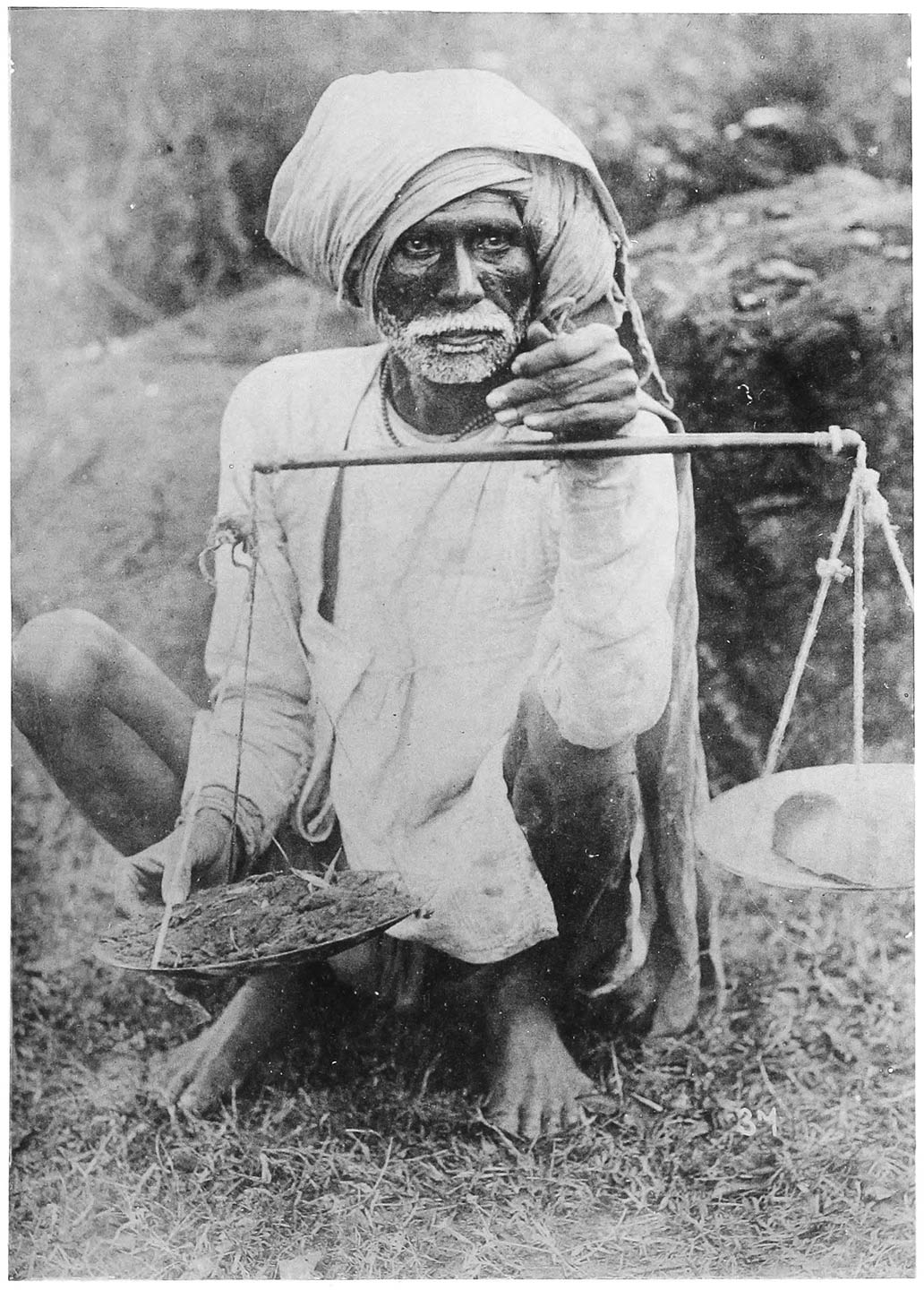
BANYA.
Distribution of Banyas according to the Census of 1891.
District. Hindu. Jain. Total.
Dehra Dûn 3,212 234 3,446
Sahâranpur 31,170 6,075 37,245
Muzaffarnagar 31,997 9,388 41,385
Meerut 51,943 16,378 68,321
Bulandshahr 39,579 1,265 40,844
Aligarh 46,472 2,507 48,979
Mathura 39,602 2,041 41,643
Agra 45,060 13,371 58,431
Farrukhâbâd 25,137 1,048 26,185
Mainpuri 21,452 5,759 27,211
Etâwah 27,608 2,117 29,725
Etah 23,864 4,933 28,797
Bareilly 22,191 4 22,195
Bijnor 18,331 998 19,329
Budâun 31,307 229 31,536
Morâdâbâd 31,970 1,002 32,972
Shâhjahânpur 23,573 36 23,609
Pilibhît 7,303 11 7,314
Cawnpur 33,939 415 34,354
Fatehpur 19,338 83 19,421
Bânda 22,274 282 22,556
Hamîrpur 14,667 107 14,774
Allahâbâd 46,131 568 46,699
Jhânsi 13,556 2,521 16,077
Jâlaun 14,304 164 14,468
Lalitpur 1,893 9,546 11,439
Benares 21,263 138 21,401
Mirzapur 23,754 281 24,035
Jaunpur 23,745 6 23,751
Ghâzipur 32,685 27 32,712
Ballia 44,248 … 44,248
Gorakhpur 100,209 40 100,249
Basti 53,155 … 53,155
Azamgarh 38,380 … 38,380
Kumâun 4,925 … 4,925
Garhwâl 1,920 2 1,922
Tarâi 2,850 39 2,889
Lucknow 17,231 797 18,028
Unâo 15,805 8 15,813
Râê Bareli 16,512 23 16,535
Sîtapur 15,013 234 15,247
Hardoi 27,175 … 27,175
Kheri 13,473 10 13,483
Faizâbâd 34,771 161 34,932
Gonda 33,108 … 33,108
Bahrâich 20,263 48 20,311
Sultânpur 23,524 … 23,524
Partâbgarh 13,420 130 13,550
Bârabanki 13,944 950 14,894
Total 1,279,246 83,976 1,363,222
Distribution of the Bârahseni Banyas according to the Census of 1891.
District. Number.
Sahâranpur 8
Meerut 3
Bulandshahr 1,791
Aligarh 12,936
Mathura 4,383
Agra 315
Farrukhâbâd 11
Mainpuri 625
Etah 2,329
Bareilly 3
Bijnor 12
Budâun 5,798
Morâdâbâd 4,511
Shâhjahânpur 33
Pilibhît 13
Tarâi 12
Total 32,783
Traditions of origin. 2. In the eastern part of the Province they have a curious legend to explain their origin:—“There were two Brâhman brothers so devout that after bathing they used to throw their loin cloths up to the skies, where they dried and came down when they were wanted. One day the brothers were in the forest and were athirst. The elder brother directed the younger to climb a mahua tree and see if there was any water in the cavities of the trunk. He did so and found water, which in his greediness he drank, and, lying to his elder brother, denied that there was any water in the tree. Next day they threw their loin cloths up to the sky as usual, and when they wanted them only that of the elder brother came down. So he knew that his brother had lied unto him. The younger brother denied the charge. Then Parameswar came down from heaven, and, convicting the younger brother of falsehood, ordered that the elder brother should remain a Brâhman, while the younger should tend the nâg bel or pân plant, which he formed out of the sacred thread of the offender, and that the elder brother should serve the younger brother as his priest.” Another story is that Brahma created them to save Brâhmans from the labour of growing the plant. Traditionally the Tâmbûlika or seller of betel is descended from a Sûdra woman by a Vaisya man. The caste is probably occupational and of mixed origin. In Gorakhpur they say that once a Brâhman had three sons. He came down with them from fairy land and was able to support them only by growing betel, for which he was excommunicated. They explain the name of the caste as derived from baraitha, the betel conservatory, which comes from the Sanskrit vriti. The Gorakhpur branch fix on Bîrbhânpur, in the Azamgarh District, as their head-quarters.
Internal structure. 3. In the last Census returns the Barais were recorded in no less than one hundred and forty-seven sub-castes. Of these a large number are local, such as the Aharwâr of Ahâr, the Ajudhyabâsi of Ajudhya, the Audha of Awadh, the Bindrabanbâsi of Bindraban, the Chaurasiya of Chaurâsi, in Mirzapur, the Dakkhinâha or “Southern,” the Gorakhpuri, Jaiswâr, Jaunpuri, Kânhpuriya, of Cawnpur, Mahobiya, Pachhwâhân or “Western”; Sarjupâri or “residents beyond the river Sarju,” Sribâstab of Srâvasti; and Uttarâha or “Northern.” Many, again, are connected by origin or function with other tribes, as the Banya, Banjariya, Baiswâr, Chauhân, Donwâr, Gaderiya, Gahlot, Gauriya, Gondar, Jâdubansi, Katheriya, Karwâra, Kokâs, Maharwa, Nâgbansi, Nânakshâhi, Ummar, Pansariya, Panwariya, Râjbansi, Rauteli, Sândil, Shuklabans. This will give some idea of the diverse elements out of which the caste has been composed.
Marriage rules. 5. Marriage within the endogamous sub-castes is regulated by a rule of exogamy, which forbids marriage in the family of the paternal and maternal uncle and paternal and maternal aunt as long as there is any recollection of relationship, which is usually after five or six generations. But at the same time they usually marry locally in the families of those with whom they are accustomed to eat and smoke. In Mirzapur the Partâbgarhi are distinguished from the Chaurâsi, inasmuch that the former permit the use of spirits while the latter prohibit it. They marry their daughters at the age of eight or nine, and their sons at twelve or thirteen. A man cannot take a second wife unless he proves to the satisfaction of the tribal council that the first wife is barren, disobedient, extravagant, or a thief, and even then he has to pay a fine to the council, which is spent in a tribal feast. They seldom take more than two wives. They have the usual forms of marriage,—Charhauwa for the well-to-do, Dola for poor people, and Sagâi for widows. In both the regular forms of virgin marriage the binding portions of the ceremony are the worshipping of the bridegroom’s feet (pair pûja, pânw pûja) by the father of the bride, and marking of the parting of the bride’s hair with red lead (sindurdan). In Sagâi the only ceremony is dressing the bride in a suit of clothes and ornaments provided by the bridegroom, and the feeding of his relations and clansmen. Intertribal infidelity is lightly regarded and is condoned by a tribal feast, but fornication with an outsider involves excommunication. They have the extraordinary rule that a woman who poisons her husband is excommunicated. If a man, in spite of the admonition and punishment administered by the tribal council, refuses to support his wife or loses caste, the council permit the woman to leave her husband, and, if she so pleases, to marry again by the Sagâi form.
Religion. 6. They are seldom initiated into any special sect. Like all Hindus of the same class, when the men get old they undergo a process of initiation and become devotees (bhagat: Sanskrit, bhakta). The only effect of this is that they abstain from meat and fish, and attend more carefully to their religious duties, such as attending temples, ceremonial bathing, etc. To the east of the Province their special deities are Mahâbîr, the Pânchonpîr, Bhawâni, Hardiha Deva, or Hardaur, Sokha Bâba and Nâgbeli. Sokha Bâba is the special deity of the Nâsarkhâni sub-caste, and, if neglected, ruins their pân gardens. They can tell nothing about him. He seems to be a deified exorciser or magician, sokha (Sanskrit: sukshma, “acute, subtle”) being the equivalent of Ojha. Nâgbel or Nâgarbel is the special deity of the pân plant. Hardiha is the special deity of the Barais of South Mirzapur. Mahâbîr receives an offering of sweetened bread (rota), gram, Brâhmanical threads (janeû), and loin cloths. His holy day is Tuesday. The Pânchonpîr receive rice cooked in milk (jawar), and fried cakes (puri), which are offered on Wednesday. Bhawâni is honoured with the sacrifice of a he-goat or ram, and sweets and cakes (halwa-puri). Hardiha is worshipped in secret inside the house on Monday. On Wednesday they fast in honour of the Pânchonpîr. Sokha Bâba is said to have a temple in Magadha (Behâr). His offering consists of sweets and cakes (halwa-puri). These deities are worshipped only by that member of the family who is under the influence of the special divinity—a fact shown by his getting into a state of ecstasy and uttering oracles. Only those who cultivate pân worship Nâgbel by lighting a lamp in the conservatory and making a burnt-offering (hom). The special day for the Nâgbel worship is the fifth of the first half of Sâwan. The greater gods are worshipped through Tiwâri Brâhmans, and the minor deities by some specially inspired member of the family. They cremate their dead in the ordinary way, and some go to Gaya to perform the srâddha ceremony.
Distribution of the Barais according to the Census of 1891.
District. Sub-Castes. Total.
Chaurasiya. Jaiswâr. Others.
Mathura … … 327 327
Fatehpur 142 … 32 174
Bânda 379 … 22 401
Hamîrpur 1,088 … 142 1,230
Allahâbâd 6,768 16 922 7,706
Jhânsi 163 … 193 356
Lalitpur 970 … 298 1,268
Benares 2,608 62 245 2,915
Mirzapur 4,329 11 25 4,365
Jaunpur 5,734 927 225 6,886
Ghâzipur 5,580 32 643 6,255
Ballia 5,512 426 461 6,399
Gorakhpur 12,856 9,884 6,258 28,998
Basti … 26,859 1,054 27,913
Azamgarh … 8,760 1,977 10,737
Lucknow 95 … 163 258
Unâo 579 … … 579
Sîtapur 780 … 461 1,241
Hardoi 5,177 … 253 5,430
Kheri 462 … 216 678
Faizâbâd 80 10,612 122 10,814
Gonda 7 16,594 23 16,624
Bahrâich … 21 1,045 1,066
Sultânpur 2,800 1,478 478 4,756
Partâbgarh 5,746 6 190 5,942
Bârabanki … 103 … 103
Total 61,855 75,791 15,775 153,421
Baranwâl, Baranwâr.—A sub-caste of Banyas who take their name from the old town of Baran, the modern Bulandshahr. They are principally found in the Rohilkhand, Benares, and Gorakhpur Divisions. Curiously enough they have entirely avoided Bulandshahr, their old home. As illustrating the domestic customs of Banyas the following account from Mirzapur may be given:—
Birth customs. 2. When a woman is in the eighth month of pregnancy the Athmâsa ceremony is performed. Two or three days before it commences the women sing songs. On the day of the ceremony the Pandit makes a square in the courtyard, in which the husband and his wife are seated with their clothes knotted together. The Pandit makes them worship Gauri and Ganesa, and sweetmeats are sent to the houses of the clansmen. In the evening a feast is given to the clansmen. When the child is born, what is called the Nandi mukh srâddha is performed, and then the Chamârin midwife is called in to cut the navel cord. She attends the mother only on the first day. Then follow the usual sixth and twelfth day ceremonies (chhathi, barahi), when the mother bathes, the house is purified, and she returns to her household duties. When the child is one or three years old comes the shaving (mûnran). All the women of the family and their friends go to the temple of some goddess and worship her; then they worship the barber’s razor, and offer a rupee to it, which is the perquisite of the barber. Then he shaves the boy’s head, and the mother receives the hair on a cake made of unbaked dough. But more generally this is done by the sister or father’s sister of the boy. The boy and his mother then put on yellow garments and return home. A feast is given, and some small sums distributed to Brâhmans. In some families the ceremony of ear-boring (kanchhedan) is done at the same time as the mûnran; sometimes it is deferred till the boy is five years old. The boring is done by a Sunâr, and the friends are entertained. When the boy is six months old the anna-prâsana ceremony is performed. The mother cooks some rice milk (khîr), and the eldest member of the family puts some of it on a rupee and makes the child lick it. The function ends with the distribution of betel and cardamoms among the guests.
Occupation. 3. The Baranwâls are bâzâr traders of the ordinary type, and deal in grain and various kinds of merchandise.
Distribution of the Baranwâl Banyas according to the Census of 1891.
District. Number.
Agra 26
Etah 28
Budâun 439
Morâdâbâd 1,825
Cawnpur 80
Bânda 1
Benares 776
Mirzapur 590
Jaunpur 2,140
Ghâzipur 1,337
Gorakhpur 466
Basti 1,880
Azamgarh 5,206
Râê Bareli 46
Faizâbâd 173
Partâbgarh 131
Grand Total 15,144
2. They marry in their own tribe; but they have no sections, and their rule of exogamy is not to marry in a family with which they have been once connected in marriage as long as any recollection of relationship exists. The marriage customs are of the usual type. In Mirzapur they practise adult marriage. The ceremony occupies three days—the sil, main, and bârât. On the day of the sil the grindstone and rice pounder (sil batta) are placed in the courtyard, and a Brâhman worships Gauri. The clansmen are fed on rice and pulse. On the main day the mâtri pûja and worship of deceased ancestors is performed, and a second feast is given. On the third day, the bârât, the procession, goes to the house of the bride. The pair are seated in a shed (mânro); the bride’s father worships the feet of the bridegroom and presents him with fruits, etc., the garments of the pair are knotted, and they revolve seven times round the shed. The bride’s father then marks the forehead of the bridegroom with turmeric and rice, and takes him and the bride into the retiring room (kohabar), a relic of the custom of immediately consummating the marriage. There the women of the family make the bridegroom join the lights of two lighted wicks as a sign of lasting affection between the pair. The girl is then sent off at once with her husband. They do not allow widow marriage or the levirate. Their death customs are of the usual orthodox type.
3. The Bargâhs are all Hindus, and appear chiefly to worship Mahâbîr, the Pânchonpîr and the Dih, or the collective body of the village godlings.
Distribution of the Bargâhs according to the Census of 1891.
District. Number.
Hamîrpur 392
Mirzapur 383
Basti 243
Total 1,018
Distribution of Bargaiyân Râjputs according to the Census of 1891.
District. Number.
Benares 2
Ghâzipur 2,659
Ballia 280
Râê Bareli 123
Faizâbâd 76
Sultânpur 10
Partâbgarh 4
Total 3,154
2. In the Upper Duâb, they are reported to give brides to the Bhâlê Sultân, Jaiswâr, and Bâchhal, and to take wives from the Jaiswâr.
Distribution of the Bargala Râjputs according to the Census of 1891.
District. Number.
Sahâranpur 2
Muzaffarnagar 2
Bulandshahr 8,250
Morâdâbâd 6
Total 8,260
Bargi.—A tribe found only in Mathura, according to the last Census, where they numbered 1,076. They are said to live by service, cultivation, and hunting. They are probably, if not identical, closely connected with the Bâri and Bargâh.
2. “The antiquity of the Katehar Bargûjars may be surmised from a passage in the Râthaur Genealogies:—
‘Bharat, the eleventh grandson of Nain Pâl, the Râthaur, at the age of sixty-one conquered Kanaksir, under the Northern Hills, from Rudra Sen, of the Bargûjar tribe.’ Nain Pâl is supposed to have lived in the fifth Century. Though there appears no reason for ascribing to his reign so early a date, he must, at any rate, have preceded the final Muhammadan conquest of Kanauj.
3. “While the Katehar Bargûjars and the Anûpshahr family have preserved their ancient faith, nearly all the Duâb tribes which preceded the expulsion of their chief from Rajor have turned Muhammadans; and the early opponents of the British in Kamona and Pindrâwal were Bargûjars of that persuasion. They still, however, appear proud of their Râjput lineage; for they assume the appellation of Thâkur. Thus we hear the strange combination of Thâkur Akbar’ Ali Khân and Thâkur Mardan’ Ali Khân. At their marriages they paint on their doors the image of a Kahârin or female bearer, under whose instructions they executed a stratagem by which they exterminated the Mewâtis, who had been engaged in a drunken revel during the Holi. Some of the Musalmân families have of late discontinued this custom. The Bargûjars to the west of Muzaffarnagar were all converted to the Muhammadan faith in the time of Alâ-ud-dîn Khilji; but they still retain most of their old Hindu customs. A stricter conformity to the Musalmân tenets was endeavoured to be introduced by some reformers, and all Hindu observances were sedulously proscribed by them; but when it was found, as they themselves assert, that all their children became blind and maimed in consequence of their apostacy, they were induced to revert to their ancestral customs, and still adhere to them with so much pertinacity, that it is almost doubtful which faith prevails most.
4. “The Muzaffarnagar Bargûjars state that they came from Dobandesar, near Dhain Dawâsa, south of the Alwar country, under one Kura Sen, whose ancestor, Bâba Megha, is still invoked when they make their offerings at the time of naming their children. They intermarry with the converted Pundîr Râjputs of Sakrauda in Sahâranpur, and the Râo Bargûjars, in Farîdâbâd, of Balabhgarh, to the south of Delhi. They seem to know but little of their brethren who reside in the neighbourhood of Anûpshahr.
5. “The place whence they migrated may be easily traced, for Dawâsa or Deosa lies on the Bânganga river about thirty miles east of Jeypur, and Dhain is about eight miles south of Deosa. Deosa is famous as being the first place belonging to the Bargûjars, which was occupied by the Kachhwâhas, after their emigration from Narwar, in the middle of the tenth Century. It is not improbable that the Kachhwâhas may at this period have compelled the Bargûjars to emigrate in search of other seats, and they, in turn, may have wreaked their vengeance on the Kachhwâhas of the Upper Duâb, and established their Chaurâsi among the brethren of their distant foe. Certain it is that tradition assigns a large tract of country in these parts to the Kachhwâhas before the Bargûjars, Jâts, and Pathâns obtained possession.
6. “The Sikarwâl Râjputs state that they are a branch of the Bargûjars; but they are separately entered among the thirty-six royal races in Colonel Tod’s list. It is to be observed, however, that in some of the other lists which he has given neither Bargûjars nor Sikarwâls are entered.”
8. In Bulandshahr they give brides to the Gahlot, Bhatti, Tomar, Chauhân, Katiyâr, Punwâr, and Pundîr; and take wives from the Gahlot, Pundîr, Chauhân, Bais, Janghâra, and Bâchhal. In Aligarh they take brides from the Janghâra, Gahlot, and Chauhân, and give wives to the Chauhân and Gahlot.
Distribution of Bargûjar Râjputs according to the Census of 1891.
District. Hindus. Muhammadans. Total.
Dehra Dûn … 9 9
Sahâranpur 55 64 119
Muzaffarnagar 166 1,092 1,258
Meerut 1,443 … 1,443
Bulandshahr 12,064 4,006 16,070
Aligarh 3,363 9 3,372
Mathura 383 140 523
Agra 588 9 597
Farrukhâbâd 227 6 233
Mainpuri 556 1 557
Etâwah 90 3 93
Etah 1,689 106 1,795
Bareilly 883 321 1,204
Bijnor 4 … 4
Budâun 2,790 363 3,153
Morâdâbâd 6,477 156 6,633
Shâhjahânpur 171 … 171
Pilibhît 78 40 118
Cawnpur 19 … 19
Jhânsi 26 … 26
Jâlaun 68 … 68
Lalitpur 24 … 24
Benares 2 … 2
Jaunpur 8 … 8
Tarâi 59 … 59
Lucknow 6 … 6
Faizâbâd … 3 3
Kheri 102 … 102
Total 31,341 6,328 37,669
Marriage rules. 3. To the east of the Province Barhais marry their daughters usually at the age of seven, nine, or eleven; and boys, at nine, eleven, and thirteen. They will not intermarry with a member of their own family or that of their maternal uncle or father’s sister as long as there is any recollection of relationship. They have four forms of marriage: Charhauwa, which is the respectable form; Dola, for poor people, Adala Badala, when two families exchange brides, and Sagâi, for widows.
The levirate is permitted but not enforced, and the widow’s right of selecting her second partner is recognised. The rules of morality are strict, and a woman intriguing with a clansman or a stranger is liable to excommunication. Those who are guilty of an intrigue with a member of the clan can be restored to caste by paying money to Brâhmans, and bathing in a sacred stream: in bad cases a pilgrimage to Prayâg (Allahâbâd), Benares, or Ajudhya, is necessary. When a woman is expelled for an intrigue with a clansman, and conducts herself respectably for some time, she is re-admitted to caste by the council, and allowed to contract a sagâi marriage.
Religion. 4. Barhais who live in cities are usually Saivas, because they are not prohibited from the use of meat and wine. The village Barhais seldom become initiated into any regular sect. Their clan deities in the Eastern Districts are the Pânchonpîr, Mahâbîr, Devi, Dulha Deo, and a deity of rather uncertain functions, known as Bibiha Deva, or the “lady god.” They also worship Viswakarma, their divine ancestor, and he is represented by the wooden yard measure (gaz, gaj). This has a special worship in the month of Sâwan. A square is made in which it is placed, and to it are offered sandalwood, flowers, red lead (rori), and sweetmeats (halwa). This worship is supported by a general contribution. The worship is done by a Brâhman, and the sweets distributed among the worshippers. In the month of Kuâr, the other tribal deities are worshipped. Sweetmeats (halwa), sweet bread, gram, and some sugar balls (laddu) are offered to Mahâbîr on a Tuesday. Bhawâni or Devi receives the sacrifice of a goat or ram, garlands of flowers, and coloured cloth (chunari). Rice milk (khîr), and cakes (pûri) are dedicated to the Pânchonpîr. Only wives married in the regular (charhauwa) form are allowed to share in the worship of the tribal deities. In Basti they worship Mahâbîr, Purabi Deota or “the Eastern godling,” and Phûlmati Bhawâni. Purabi Deota gets an offering of clothes and rude ornaments on a Saturday: Phûlmati and Mahâbîr get, respectively, sweets and flowers on Monday and Tuesday. Mâlis, Gusâîns, and Brâhmans receive the offerings made to Mahâbîr and Phûlmati, while the offerings to Purabi Deota are taken home and consumed by the worshippers themselves. Their priests are Tiwâri Brâhmans, who hold a low rank in the caste. The dead are cremated, and the ashes thrown into the Ganges or one of its tributaries. Water is poured on the ground in honour of the sainted dead during the first fortnight of Kuâr: lumps of rice and milk are offered on the thirteenth day, and uncooked grain is given to Brâhmans. Those who die of cholera or small-pox are either buried or their bodies thrown into running water. When the epidemic is over, they, as well as a person dying in a foreign land, are burnt in effigy in the regular way. This must be done within six months after the death.
Distribution of the Barhais according to the Census of 1891.
District. Ajudhyabâsi. Dhaman. Gaur. Golê. Kanaujiya. Khâti. Kokâs. Maithil. Mathuriya. Ojha. Suthar. Tânk. Others. Muhammadans. Total.
Dehra Dûn … 1,243 … … … 130 65 … … … … … 2,004 65 3,507
Sahâranpur … 12,367 … 7 … 198 14 6 … … … … 4,641 1,538 18,771
Muzaffarnagar … 6,954 21 10 10 2,333 … … … … … … 2,082 3,162 14,572
Meerut … 446 … … … 2,719 … … … … … 3,212 4,059 13,242 23,678
Bulandshahr … … … … … 164 … … 421 351 … 628 4,824 11,473 17,861
Aligarh … … … … … 159 … 2,864 … 3,782 … … 12,794 7 19,606
Mathura … … 1,078 4 … … 50 2,219 2,855 4,776 … … 3,017 3 14,002
Agra 106 … 1,638 … … 4 8 498 2,189 10,957 … … 3,679 7 19,086
Farrukhâbâd 136 … … … 35 10 2,874 … 4,580 240 … … 263 2 8,140
Mainpuri 904 … 107 509 … 4 342 56 1,072 10,474 … … 1,395 … 14,857
Etâwah 1,109 … … … … 154 948 … 2,422 3,430 6 … 2,271 … 10,340
Etah … 73 380 295 4 20 55 372 8,590 1,268 31 … 3,647 … 14,735
Bareilly … … … … … 82 1,502 … 17,284 48 … … 691 1,999 21,606
Bijnor … 14,496 … … … 75 … … … … … 8 624 2,746 17,949
Budâun … 28 … … … … … … 13,820 703 … … 2,114 1,005 17,670
Morâdâbâd … 1,133 … … … 213 … 1 1,809 45 … 424 1,578 17,305 22,508
Shâhjahânpur 58 3 8 … 12 … 1,107 … 4,677 32 … … 334 34 16,228
Pilibhît … … 2 … … 110 3,754 … 6,011 9 … 20 282 176 10,364
Cawnpur … … … … 12 51 9,104 … 83 5 … … 760 … 10,015
Fatehpur … … … … 11 … 2,920 … … … … … 367 … 3,298
Bânda … … … 48 … 20 6,174 … … … … … 616 … 6,860
Hamîrpur … … 3 … … 29 3,366 … … … … … 1,393 … 4,791
Allahâbâd … … … … … 17 1,237 … 3 … … … 566 … 1,823
Jhânsi … … … … … 407 3,617 … … … … … 2,385 2 6,411
Jâlaun … … … … … 1,491 1,984 … … … … … 1,550 … 5,025
Lalitpur … … … … … 2,308 2,507 … … … … … 790 … 5,605
Benares … … … … … … 320 … … … … … 261 … 581
Mirzapur … … … … … … 352 … … … … … 224 … 576
Jaunpur … … … … … … 1,315 … … … … … 70 … 1,385
Ghâzipur … … … … 114 … 947 … … … … … 258 … 1,319
Ballia … … … … 83 … 3,674 … … … … … 947 … 4,704
Gorakhpur 11 … 1 … 483 … 23,058 … … … 80 … 1,926 748 26,307
Basti … … … … … … 24,277 … … … 927 … 3,093 … 28,297
Azamgarh … … … … 649 … 8,295 … … … … … 1,625 26 10,595
Garhwâl … 32 … … … … … … … … … … … … 32
Tarâi … 434 … … … 8 … … 680 … … 118 127 2,890 4,257
Lucknow … 5 … 21 9 80 6,162 … 244 … 378 … 2,175 81 9,155
Unâo … … … … 20 … 12,335 … … … … … 842 1 13,198
Râê Bareli … … … … 130 … 8,411 … 6 … 1,199 … 1,537 117 11,400
Sîtapur … … … … … … 10,823 … 40 … 358 … 973 2 12,196
Hardoi … … … … … … 11,913 … 519 … 26 … 491 … 12,949
Kheri 13 … … … 7 … 12,296 … 4 … … … 171 … 12,491
Faizâbâd … … … … 207 … 10,029 … … … 2,659 … 291 … 13,186
Gonda … … … … … … 23,190 … … … 5 … 987 2,469 26,651
Bahrâich … … … 4 … 3 10,884 … … … 108 … 731 618 12,348
Sultânpur … … … … 69 … 8,268 … … … 1,123 … 1,529 … 10,989
Partâbgarh … … … … … … 843 … … … … … 553 1 1,397
Bârabanki … … … … … … 13,825 … … … 1,082 … 476 180 15,563
Total 2,339 37,214 3,232 898 1,855 10,789 242,808 6,016 67,309 36,120 7,982 4,410 78,013 59,899 558,884
Distribution of the Barhiya Râjputs according to the Census of 1891.
District. Number.
Agra 13
Hamîrpur 28
Lalitpur 22
Total 63
Distribution of the Barholiya Râjputs according to the Census of 1891.
District. Number.
Jâlaun 2
Azamgarh 104
Lucknow 19
Râê Bareli 199
Sîtapur 1
Faizâbâd 40
Gonda 22
Bahrâich 39
Bârabanki 2,316
Total 2,742
Traditions of origin. 2. In the Eastern Districts the Bâris have a curiously naïve legend to account for their origin. “Once upon a time,” so the legend runs, “Parameswar was offering rice milk to the spirits of his ancestors. In the course of this duty the celebrant has to make a gift known as Vikraya dâna, which no one cares to accept. Parameswar offered the gift to some Brâhmans, who refused it. Then he made a man of clay, and blowing upon the image invested it with life. Parameswar asked the man whom he had created to accept the offering, and he agreed on condition that all men should drink with him and recognise his claim to caste. Parameswar then told him to bring water in a cup, and drank of it in the presence of all the castes. Ever since Hindus drink water from the hands of the Bâri, though he himself eats the leavings of many castes.” They say that this first ancestor of theirs was named Sundar on account of his personal beauty. According to the Oudh legend, when Bhagwân had created the world he took a survey of it and reflected that he had created all manner of men except the menial, who would consume the leavings, which would otherwise be wasted. To remove this defect, he made a man of sand and called him Sundar. The caste derives its name from having been made of sand (bâlu bâru), a folk etymology which is probably at the bottom of the story. They say that the descendants of this Sundar lived at Ajudhya until the reign of Râja Dasaratha; after that they dispersed all over the country. The Purânic legend represents them as descended from a barber and a tobacconist girl. In Oudh they fix their head-quarters at Tulasipur, in the Kheri District.
Marriage rules. 3. The Census returns include no less than five hundred and three exogamous sections. Of these the most important locally are the Bilkhariya, who take their name from Bilkhar in Oudh, the Hinduiya and the Kariya in Ballia; the Kanaujiya, in Gorakhpur: the Desi and Sarwariya in Basti; the Dakkhinâha and Sarwariya in Râê Bareli; the Ghorcharha or “riders on horses,” and in Gonda and Bahrâich the Chauhân. Besides these, are the Donwâr, which is also the name of a sub-tribe of Bhuînhârs; the Mathuriya from Mathura; the Pattariha or makers of leaf-platters (pattar); the Râwat, and Sundar, whose name is that of their founder. To the east the rule of gotra exogamy appears to be reinforced by the condition that they do not intermarry with a family with whom previous relationship by marriage is established and admitted. In Mathura persons of the same gotra cannot intermarry, and the gotras of a man’s mother and grandmother are also barred. Marriage with two sisters is permitted. Sexual license before marriage is everywhere prohibited. Polyandry is nowhere recognized; and, while polygamy is allowed, it is restricted to cases when the first wife is barren or permanently disabled by disease. The actual marriage ceremony is of the usual low caste type. In the eastern districts, prior to the marriage, they have what is known as the panchmangari or timangari performed, as the name implies on the fifth or third day before the wedding, when the women bring clay from the village clay pit and lay it in the nuptial shed (mâro), where it is used for making the fireplace on which the food for the wedding feast is cooked. In the respectable form of marriage, called charhaua, where the bride is given away by her father, and the pair revolve round the sacred fire; there are in Oudh three stages—Barrachha or Barraksha, “fixing or holding of the bridegroom,” in which the father of the bride gives the boy a rupee as a sort of earnest money; the actual betrothal known as “the cup” (katora), because the friends on both sides drink sharbat together. Then follows what is the binding part of the function—the rubbing of the parting of the bride’s hair with red lead, and the walking round the sacred fire.
Widow marriage. 4. From Mathura it is reported that the caste now prohibits widow marriage. This is not the case elsewhere. In the Benares Division widows marry by sagâi, and the levirate is recognised but not enforced; in Oudh, irregular connections of widows are allowed. It is not called marriage; she is merely said to “take her seat” (baith jâna) in the house of her paramour. She is not obliged to form such a connection unless she pleases, and the preference is given to the younger brother of the late husband; those widows who set up house with an outsider are known as Urhari, a term which seems usually to bear a contemptuous meaning.
Disposal of the dead. 5. The dead are cremated, but only those who are well off are careful about disposing of the ashes in the Ganges or Jumna.
Religion. 6. The Bâris are Hindus. To the east of the Province they are seldom initiated into any recognised sect; if they are initiated they give the preference for the Saiva or Sâkta. They worship various local deities. Thus, in Jaunpur, they worship a form of the female energy known as Bibiha Devi, “Our Lady”; in South Mirzapur, Hardiha Deva or Hardaul Lâla, the cholera godling; and many of them worship Mahâbîr. Sacrifices of rams and goats are offered to Hardiha, with sweetmeats and a Brâhmanical thread (janeû). To Mahâbîr is offered a head-dress (muraith), a small loin cloth (langot), sweet bread (rot), and sweetmeats. Those only are allowed to worship Mahâbîr who do not eat the leavings of other people. Another local deity, Birtiya, receives a sacrifice of a young pig, once a year, in the month of Sâwan. The worship of all these clan deities is performed annually in the month of Sâwan (July–August) and Kuâr (September–October). Their family priests are Tiwâri Brâhmans, who are, as a rule, not received on equal terms by their brethren. In Mathura they worship Devi in the months of Chait and Kuâr with an offering of flowers and sweetmeats, the latter being consumed by the worshippers after dedication. They follow the tenets of the Vaishnava sect. In Unâo their clan deities are Bhitarihâi Devi, “the goddess of the inner house,” and Nara Sinh or the man-lion incarnation of Vishnu. These deities are worshipped on the eighth day of the waxing moon in the months of Chait and Kuâr. The offering to Devi consists of the sacrifice of goats and the burning of incense. Nara Sinha prefers the offering of parched barley mixed with treacle. This worship is done by the eldest son of the family. Their priests are Brâhmans, who are received on terms of equality by their brethren.
Occupation. 7. Their primary occupation is the making and sale of leaf-cups (dauna, pattari, gadaura) used at Hindu feasts, and in which articles such as sweetmeats, curds, etc., are commonly sold in bâzârs. They serve respectable Hindus as domestic servants and hand round water. They light and carry torches at marriages, entertainments, and on journeys, and perform many of the functions discharged by our house bearers. Their occupation as domestic servants seems to be on the decline, and many are taking to cultivation. Their women act as maids to high caste Hindu ladies, and, as they are always about the zenâna, they bear a somewhat equivocal reputation. To the east of the Province they certainly eat the leavings of Brâhmans, Banyas, Râjputs and, it is said, now-a-days even of Kâyasths. In Mathura they seem to be abandoning the practice of eating the leavings of other castes. In Mirzapur all Hindus drink water touched by them, and all, except Sarwariya and Kanaujiya Brâhmans, eat food cooked by them in the form of pakki, i.e., cooked with butter. Kachchi roti or food cooked in water by them is eaten by Chamârs and other menial castes. In Unâo, it is said that they will eat kachchi and pakki from the hands of a barber, but that no high caste Hindu takes anything but water from their hands. In Mathura they will eat kachchi cooked by a Banya or Kâyasth. Their loyalty and fidelity to their master is proverbial, and they rank high among the classes of Hindus who devote themselves to domestic service.
Distribution of the Bâris according to the Census of 1891.
District. Donwâr. Mathuriya. Pattariha. Râwat. Sundar. Others. Total.
Sahâranpur … … … … … 19 19
Meerut … … … … … 88 88
Bulandshahr … … … 43 … 61 104
Aligarh … … … 51 … 239 290
Mathura … … … 10 … 139 149
Agra … 2 … 123 2 828 955
Farrukhâbâd 7 15 … 119 125 705 971
Mainpuri 65 385 3 169 … 309 931
Etâwah 1 57 12 152 19 1,773 2,014
Etah 30 14 … 42 2 195 283
Bareilly … … … … … 450 450
Bijnor … … … … … 43 43
Budâun … 8 … 24 … 269 301
Morâdâbâd … … … … … 224 224
Shâhjahânpur 2 … … 35 182 279 498
Pilibhît … … … … 40 122 162
Cawnpur … 12 217 52 22 2,323 2,626
Fatehpur … … … … 83 599 682
Bânda … … 2 53 1 62 118
Hamîrpur … … … 28 … 87 115
Allahâbâd … … 26 7 393 1,024 1,450
Jhânsi … … … 37 … 84 121
Jâlaun … … … 185 2 578 765
Lalitpur … … … 4 … 45 49
Benares 174 … 10 175 … 1,971 2,330
Mirzapur … … … … 16 1,906 1,922
Jaunpur 351 … 390 673 68 578 2,060
Ghâzipur 214 … … 73 127 1,577 1,991
Ballia 597 … … 38 10 1,457 2,102
Gorakhpur 3,280 4 21 … 205 4,454 7,964
Basti 379 … 3,612 … … 1,615 5,606
Azamgarh 418 … … … 59 2,992 3,469
Lucknow … … … … 918 382 1,300
Unâo 69 2 127 … 374 1,581 2,153
Râê Bareli … … 318 24 1,214 1,901 3,457
Sîtapur … … 26 … 921 601 1,548
Hardoi … … … … 211 299 510
Kheri … … … … 821 211 1,032
Faizâbâd 1,946 … 138 … … 165 2,249
Gonda 2,574 … 1,635 … … 2,138 6,347
Bahrâich 338 … 537 … 455 2,297 3,627
Sultânpur … … … 196 263 1,879 2,338
Partâbgarh … … … … 31 2,182 2,213
Bârabanki … … 362 22 471 1,219 2,074
Total 10,445 499 7,436 2,335 7,035 41,950 69,700
Barua, Barwa.—A tribe of mendicant Brâhmans who are found in Sahâranpur and the neighbourhood. They bear an indifferent reputation on account of the vileness of the abuse which they shower on people who refuse to give them alms.
Traditional origin. 2. The story the Barwârs tell of themselves is as follows:—Some centuries ago the ancestor of the tribe, a Kurmi by caste, lived at the village of Yahyapur, which is said to be situated in the Sâran District, east of the river Nârâyani. One day he was ploughing his field near the river when the wife of a rich Mahâjan came down to bathe. She took off her pearl necklace and stepped into the water. A kite swooped down, and, carrying it off, dropped it in the field where the Kurmi was ploughing. When he saw the treasure he began to think that it was easier to live by thieving than by farming. From that time his prosperity increased, and his clan became known as Suvarna or golden. They began then to be known as Barwâr or men of violence. It happened one day that a Kingariya or Nat musician attended the death ceremony of a Barwâr at Yahyapur, and was given an empty purse as a present by the relatives of the deceased. By chance the Kingariya came to the village where the purse with two gold coins had been stolen. The owner recognized it; and enquiries proving that the theft had been committed by the Barwârs, they were expelled from Yahyapur. After this they divided into two sections. One went to Basti, in the North-Western Provinces, and settled at Barauli, which is four miles west of Basti. The other gang went to Hardoi, in Oudh, and settled there. After their arrival in Hardoi that section were given the name of Gânjar, which is said to mean “hoarders,” and by which they are still known. In Barauli the Barwârs lived for some two centuries, and supported themselves by thieving. At last, one day, they robbed the camp of the Râja of Basti, and he had them expelled from his territory. They then came to Gonda and settled at Dhanaipur, thirteen miles north of Gonda. They now occupy fifty-four villages in the Gonda District. They were again at one time forced to change their quarters by the influence of a money-lender named Sobha Sukl, whose name is still held in abhorrence among them. Another legend makes the Barwârs to be the descendants of a woman of low caste named Goli, by a Kurmi father. There seems nothing improbable in the story that they are a branch of the Kurmis, who separated from the parent stock owing to their bad character, or for some other reason. That the tribe is very much mixed is admitted on all sides. The Barwârs, in former times, were certainly in the habit of recruiting their numbers by kidnapping young children of various castes. These became a separate class known either as Ghulâm, an Arabic term meaning “slave,” or Tahla, a Hindi word meaning “one who walks about in attendance,” “a follower.” In contradistinction to this servile class the pure Barwâr calls himself Swâng, which in their slang means “master.” It would appear that the recruitment of these Ghulâms has ceased in recent years, and that the pure Barwârs and the Ghulâms no longer intermarry. While the custom prevailed among the Gonda branch the other divisions of the tribe would not intermarry with them. At present it is said that they neither give their daughters in marriage nor take girls from the Ghulâms, who have become themselves an endogamous section. Below the Ghulâms again is another section known as Tilâms or Talâms, who are the descendants of children kidnapped by the Ghulâms. These ostracised Ghulâms and Tilâms are the only members who have been as yet allowed by the tribe to enlist in the Police. Ghulâms will eat food prepared by Barwârs, but the latter will not touch a dish prepared by the former. Male Ghulâms and Tilâms both get their equal share of plunder from the thieving gangs they join. A dowry is given with the Ghulâm bride, but not with the bridegroom. The Tilâms possess the same privileges in every way as their kidnappers, the Ghulâms. The Ghulâms are still believed occasionally to seduce girls of other castes, such as Brâhmans, Chhatris, Murâos, Kurmis, Ahîrs and Kahârs. These are received and adopted into the community. The more respectable Barwârs are also known as Thakuriya in Gonda.
Marriage rules. 3. The marriage of two sisters is permitted, provided the elder sister is married before the younger. The custom of exchanging girls in marriage does not prevail among them. The bride is admitted into the family of her husband without any special ceremony; but it is significant that every Barwâr, on marrying, is obliged to give to the landlord four hundred betel leaves or the equivalent value in money, which looks as if it were a commutation of the jus primæ noctis, if it be not one of the ordinary dues levied by a landlord on his tenants. They may take two wives at one time. The favourite wife for the time being rules the household. Concubinage with women of the tribe is allowed; polyandry is prohibited. Marriage is both adult and infant. Divorce is permitted in case of infidelity on the part of the woman. The husband merely assembles the clansmen, and announces to them the fact of the divorce. Divorced wives cannot be re-married; but they may be kept as concubines by other men in the caste. They have a peculiar rule of inheritance by which the property is divided, half going to the children of the regularly married wife or wives, and the other half to the children of the concubines, provided they belong to the Barwâr caste. The offspring of a woman of a strange tribe have no rights of inheritance. When a pure Barwâr marries or keeps a woman of another caste he is excommunicated and sinks to the rank of a Ghulâm. Illicit intrigues within the caste are also punished by expulsion; but the offending parties can be restored on giving a tribal feast. Widow marriage is allowed. The only ceremony is that the man puts a set of bangles (chûri) on the woman and feeds the community. The levirate is permitted, not enforced, and the widow may, if she pleases, accept an outsider. In such cases she loses the right of guardianship over the children of the first marriage, and has no rights of succession to the estate of her first husband.
Birth ceremonies. 4. The mother is attended by a woman of the Kori caste, who acts as midwife. She attends for five days and then the barber’s wife acts as nurse for eight days. On the twelfth day after a birth the father purchases spirits and treats the brotherhood, and puts silver and gold ornaments on the child. This is supposed to bring luck in thieving. If a Barwâr fails to bring home plunder he is taunted by his comrades that his father did not perform the twelfth-day ceremony. If a child is thus initiated, he gets his share of the spoil; but if born after the Dasahra of Jeth he does not share till the next Dasahra of Kuâr. Similarly, during the rainy season, each man keeps his own plunder and has to share only with those who are incapacitated from thieving by blindness, old age, or some physical defect. But, as a rule, they seldom thieve in the rains from the Dasahra of Jeth to the Dasahra of Kuâr; and after the latter date the partnership of the whole community is revived, and every soul becomes entitled to a share in the spoil, whether he goes on a thieving excursion or remains at home. Widows and women who live in retirement get no share; but if a Barwâr is in prison his share goes to his wife.
Betrothal. 5. The girl’s father with some friends goes to the house of the boy, and pays his father a couple of rupees. He entertains his guests and sends to the bride, in return, some curds, fish, sweetmeats and a bottle of liquor. This settles the betrothal. This generally takes place when the girl is between three and seven.
Marriage ceremonies. 6. The marriage ceremonies begin with the lagan or fixing of the wedding day, which is carried out in the ordinary way. The actual ceremonies are of the usual type. The binding portions of the ritual are the kanyâdân or giving away of the bride, the pairpûja or worship of the feet of the bridegroom by his future father-in-law, and the bhanwar or walking of the pair round the sacred fire.
Funeral ceremonies. 7. The young are buried; adults are cremated, or the corpse is thrown into a river. After the cremation is over they bathe and then plant a piece of kusâ grass in the ground to act as a refuge for the spirit until the funeral rites are completed. The man who fired the pyre pours water on this for nine days; on the tenth day he is shaved, on the eleventh the Mahâbrâhmans are feasted; on the twelfth day the friends and relatives are fed; on the thirteenth the Brâhmans are fed. After this one Brâhman is fed for a year on the day of each month when the death occurred. On the anniversary there is a feast, and at this the family priest (purohit) receives five articles of wearing apparel—a jacket (angarkha); a loin cloth (dhoti); a turban (sâfa); a sheet (châdar); bedding (bistar); and five cooking utensils—a pot (lota), a tray (thâli), a cooking pot (batloi), a tongs (dastpanah), a spoon (karchhul). Besides these things he gets a cot (chârpâi); wooden sandals (kharaun); a pair of shoes (jûta); and a stool (pîrha). When the corpse cannot be found the ceremonies are performed on an effigy made of barley and sânwan.
Religion. 8. Their special deity is Bhâgawati. The household sacrifice is held on the third or fifth day of the first half of Bhâdon, when the master sacrifices a fowl and bakes thin cakes called lubra. These, with cooked gram, are given to a Muhammadan beggar as an offering to the Pânch Pîr. They make an annual pilgrimage to the tomb of Bâla Pîr, at Bahrâich, and offer a banner. They also worship Devi-Bhawâni; but in their depredations spare only the tomb at Bahrâich and the temple at Jagannâth. When a goat is sacrificed to Bhâgawati, the head is given to a gardener (mâli), and the rest of the meat is eaten by the worshippers. Sometimes a pumpkin (lauki) is substituted for a goat.
Festivals. 9. They observe all the ordinary Hindu festivals, and also some which are not so common—the Bahura on the fourth light half of Bhâdon, when the girls eat curdled milk and cucumbers; on the Barka Itwâr or “great Sunday,” the last Sunday of Bhâdon, they fast and drink milk at night; on the Sakat Chauth, or fourth light half of Mâgh, they eat sweet potatoes, sesamum, and new raw sugar. No spirits or intoxicating drugs of any kind are used at the Barka Itwâr, but at the other festivals they are freely consumed.
Omens. 10. Omens are much regarded on their expeditions. Tuesday, Friday, and Sunday, are lucky days, and sometimes Thursday. The ass is a lucky animal, and so are a dead body met on the road, a washerman, a woman, or a Pandit. Tuesday is, however, regarded by some as an unlucky day, and a jackal, a Gusâîn, an oilman, are also unlucky. A jackal or a fox crossing the road from right to left is lucky; the reverse is unlucky. When they go out to thieve they prefer to wear good clothes and a turban. When children are unhealthy they are given opprobrious names as a protection.
Taboos. 11. When worship is being done to keep off evil spirits, children are not allowed to be present. Any intercourse between the husband’s father and the wife’s relations is tabooed. The husband does not name his wife, and vice versâ. A father will not call his eldest son by his name, nor a disciple his Guru.
Social rules. 12. They eat the flesh of sheep and goats; they reject fowls, and will eat fish. Flesh of monkeys, beef, pork, crocodiles, snakes, jackals, rats, or other vermin, are not eaten. Spirits are freely drunk; they will eat the leavings of no one but a parent. Men and women eat apart. Before they eat they say Jay Thâkurji, “Glory to the Lord!” To Brâhmans they use the salutation Pâ lagan, to Banyas, Kalwârs, etc., Râm! Râm!; to Sâdhs Pranâm and Namaskâr; to Gusâîns Nâmonârâyan; to Aughars, Dandwat. Elders bless their juniors with Jiyo, “Long may you live.” Juniors say to their seniors Pâ lagan. Those who are equal in rank say Râm! Râm!
Occupation. 13. Of those who have been brought under the Criminal Tribes Act some are cultivators and some field-labourers. Like the Sanaurhiyas, they do not commit dacoity, theft with burglary, theft at night, or cattle-lifting. The Sanaurhiya leaders are known as Nal, and those of the Barwârs, Sahua. The leaders of the Barwârs enjoy no rights or privileges from their zamîndârs, unlike the Sanaurhiyas. The Barwârs consult astrologers and go on predatory expeditions after the Dasahra; the Sanaurhiyas after the Diwâli. Among the Sanaurhiyas if any one renounce the profession of thieving, he is debarred from marrying in the caste; but a Barwâr under similar circumstances is debarred only from a share in the booty. The Sanaurhiyas associate with the children of any caste, even Chamârs, but the Barwârs jealously exclude outsiders. The Sanaurhiya gangs consist of not less than forty or fifty men; those of the Barwârs from twenty to fifty. The Sanaurhiyas teach their children thieving, and punish them if they forget their sleight of hand; but the Barwârs leave their children to learn themselves. The Sanaurhiyas have an umpire called Nahri, who settles disputes and divides the plunder. This is not the case with the Barwârs. The Sanaurhiyas administer oaths to each other to prevent misappropriation of stolen property; the Barwârs do not do this, but excommunicate the offender. The Sanaurhiyas go in for zamîndâri and cultivation, of which the Barwârs do little. In emergencies the leader is expected to feed his gang; but he usually stays at home and looks after the families, and whatever property is acquired is left to the Sahua or actual commander to be divided. The Sahua is generally a Barwâr, but he may be a Brâhman or Râjput, and is often the headman of the village. Another official is the Dhebra or Naliha (a term also applied to a Barwâr who gives up thieving and is excommunicated). He carries a spade, a knife, or dagger, and some leaf-platters, on which he serves meals to the gang. He receives three rupees per mensem in addition to his share of the spoil. He does not join in thieving. Some go out in smaller gangs, and these are usually more successful than those who go in large bodies. If a single Barwâr brings in plunder he keeps it for himself, and any articles of clothing he acquires are his own at whatever season he gets them. During the rains they engage in drinking and amusement and do not work, the house and farm work being done by the women. A Barwâr who secretes property which should go to the gang is called Kabkatta. If he readily surrenders his spoils he is known as Khiliya. One who holds an influential position in the community is called Jûsar, and one who, from poverty, is obliged to take service is called Rih. A person in ordinary circumstances is Rotikhâha. If within a year a Barwâr does not secure property of some value he does not return home through shame and mortification. Each man has a bag of net-work secured at both ends with a strong cotton string. It is kept tied to the waist and holds jewelry and valuables. It is so carefully concealed that it often escapes detection. The slang phrase for the mode of tying this bag is langri bigâna. The women are usually employed in service with the village zamîndârs, and receive very petty remuneration. If a Barwâr is dissatisfied or suspects misappropriation on the part of his Sahua, he can leave his gang or can discharge his Dhebra from his service, provided in the month of Asârh he clears up accounts with both Sahua and Dhebra.
Morality. 14. As might have been expected, when the women are left to themselves for a large part of the year adultery is very prevalent. If a woman be detected in a lonely or retired place or in a field or jungle in sexual intercourse with a man, whether it be compulsory or by consent, no Barwâr will take offence at it, nor will the woman be excluded from the brotherhood, and a child born in adultery is not considered illegitimate, but admitted to all rights and privileges as if it were legitimate. But if detected otherwise in the act of adultery, both the woman and her paramour are both excommunicated, and are re-admitted only after giving a feast to the community.
Modes of theft. 15. When they get booty, they return in November or December. When they go to a fair they always sojourn in the vicinity and some dress as devotees, Brâhmans, Mahâjans, soldiers, tradesmen, etc. Some mark their foreheads, wear the Brâhmanical thread, wear the dress, beads, etc., of learned Brâhmans, and shave their beards and moustaches. They generally keep a brass vessel with a string tied to it, and a stone pot tied up in a cloth. They generally go about with their backs naked, and carry some meal or dry gram in a bag and a stick in their hands. Thus they stroll about in a simple, dejected way intended to excite compassion. When interrogated they claim to be Brâhmans or Râjputs, and when arrested call themselves Kurmis, Bâris, or Tamolis, and say that they are going on a pilgrimage to some famous shrine. They never divulge their real names. When they see valuable goods in a shop they pretend to barter or buy. If they observe the shop-keeper to be suspicious, they say Biroh hai budah rahê deo,—“He is on his guard; let him alone.” When they conceal some article and say Buthahr hai dhokar, pherai kar laê,—“The shop-keeper is suspicious; take off the booty,” then those who are near snatch up the article and run away, while those who are at the shop pretend to disagree about the bargain and leave. If a Barwâr wishes to call his friends to his aid he waves his handkerchief, or puts as many fingers to his cheek as he wants Barwârs to help him. At this signal those in the neighbourhood collect. When he wishes his confederate to carry off an article he puts his hand on his neck. In fact they have a more complete language of signs than any other thieving fraternity. When a Barwâr sees a man bathing with his clothes on the bank he puts his own bundle of rags close to it and changes his articles for it. Sometimes another Barwâr assists, and in this case the signal is Teri âi dâl,—“Leave your own bundle and take his.” For a single garment the signal is Roto,—“Leave your own cloth and take his.” Whenever they see a crowd and property scattered in different places two of them join the crowd, while a third keeps watch. The signal is Anchri sahâike chânsi râg lâi,—“Throw the covering of your sheet over the property and make off with it.” They tell how a soldier once concealed some jewelry under his shield and sat upon it. A Barwâr with studied inadvertence dropped two gold coins near him, and as the soldier stretched out his hand to seize them a confederate carried off the jewels. Another plan is to get up a mock fight among themselves in a bâzâr, under cover of which thefts are committed. The Barwâr women also frequent fairs like Ajudhya, Devi Pâtan, etc., and in rich dresses attend shrines and rob the worshippers. They also adopt the disguise of Brâhman women, and thus gaining admission to the private apartments of native ladies, commit depredations. Barwârs freely use the railway, and rob travellers.
Disposal of the booty. 16. Formerly they used always to take the stolen property home; but this has been in a great measure discontinued, since the police began to make searches and the tribe has come under special supervision. Some is left with receivers in the chief places frequented by them. With some they come home after sunset, and keep it that night at their houses, and next day make it over to the Sahua for distribution. First a deduction is made of 3¾ per cent.—1¼ for Mahâbîr or Hanumân, 1¼ for Bâlapîr, 1¼ for Deviji. Out of the remainder, 28 per cent. is made over to the Barwâr who stole the property, and the balance is equally divided among the whole clan, including the thief himself. Out of the 28 per cent. paid to the thief, the Sahua appropriates half, and also receives his own share as a member of the gang. Thus the gains of the thief and Sahua are equal. It is also a rule that if a Barwâr returns with gold muhars the Sahua pays him Rs.12 for each, and retains them himself. The rate is the same whatever the value of the coin may be, and this Rs.12 is divided. Again, for silver bullion the Sahua pays only 10 annas for each rupee. Cloth and arms are the property of the thief. As to coral beads, one-sixth is given to the thief and five-sixths to the Sahua, who pays one anna for each bead; and this sum is divided among the clan, including the thief and the Sahua. For pearls, the Sahua pays Re.1–4–0 for each lot of 24, and the sum is divided. Then, when the spoils are divided, the Sahua produces his account and charges from Re.1–8–0 to Re.1–12–0 for each rupee he has advanced to the thief’s family during his absence. For any balance due the Sahua takes a bond for a year at 100 per cent. All Barwârs are always in debt to the Sahua. The zamîndârs of villages in which Barwârs live realise from them a poll-tax of Re.1–8–0 per head, known as subhâi, and 3 per cent. on the value of property known as chaunâi. They also get R1 per house known as mûnr-ginni. Besides this the zamîndâr gets presents after a successful raid, and on occasion of births, marriages, etc., in his family. This tribute is known as kavaila. In the same way the zamîndâr takes fees for bailing a Barwâr.
This account has been mainly taken from a report prepared shortly after the Mutiny on the methods of the Barwârs. Their criminality has much diminished since they have been brought under the Criminal Tribes Act; but the details are so interesting from an ethnographical point of view that they deserve reproduction.
Thieves’ patois of the Barwârs. 17. The Barwârs have an elaborate thieves’ Latin of their own. The following list has been prepared by M. Karam Ahmad, Deputy Collector of Gonda, with the assistance of the police officers at present in charge of the tribe. It would be easy to show that many or most of the words are corrupted Hindi:—
Sahua—the leader of a gang.
Dhebra—the attendant of a gang.
Kabkatta—a man who conceals part of the property.
Khiliya, Nalhiya—a man who faithfully gives up all he steals.
Jûsara—a rich Barwâr.
Rih, Sajurha—one who works for wages.
Roti khâha—one in ordinary circumstances.
Langri bigâna—to tie a purse round the waist.
Nal budâna—to fix a lucky day for a journey.
Phânr chhûrna—to put on the Brâhmanical thread.
Lût âi ao khankhur âte hain—clear out; the police are coming.
Bhûnk âi âo—disperse.
Langri lagâo—conceal the goods in your belt.
Wahi tir mâl dabâva hai—let us go where there is much to gain.
Akauti na kurais—don’t betray your companions.
Murih ka asrâi deo—I am caught; give up hope for me.
Mâti lai—roll on the ground.
Chhâwa kuchâyo na nehti na kîno, nahîn tau uthai jâo gâi—do not reveal anything or you will be put to death.
Anchari sahâike châns râg lâe—throw your sheet over the goods and escape.
Pohina hai khâli lâi na—let us dig the property from the ground.
Subâi—tax paid by the Barwârs to the zamîndâr.
Chaunâi—tax paid on value of stolen property.
Mûnr ginni—house-tax paid by Barwârs.
Kavaila—presents given to zamîndârs at marriages.
Namut—man.
Bân—woman.
Bahub—Barwâr man.
Bahuban—Barwâr woman.
Kiryâr—son.
Chhâwa—grandson.
Tiryâr—boy of another tribe.
Dhûchar—old man.
Dhûchari—old woman.
Chhâi—Barwâr’s daughter.
Kûsar—Brâhman.
Tenwâr—Râjput.
Phairu—Musalmân.
Chorka—British officer.
Baijarâi—a Râja.
Sahâjan—a merchant.
Muskâr—a Kâyasth.
Sûgha—a goldsmith.
Savat—a Bhât.
Kitiha—a blacksmith.
Lûdukha—a confectioner.
Kârikha—a torch-bearer.
Maskâta—a barber.
Chipta—an oil-man.
Matiha—a potter.
Leduha—a Kurmi or Lodha.
Sisuha—a washerman.
Bamâr—a sweeper; tanner; shoe-maker.
Suldaha—a bearer.
Guvaha—a cowherd.
Benu—a tailor.
Pûtaha—a liquor seller.
Aluhya—a beggar.
Satûrya—a dancing girl.
Benâri—a prostitute.
Lumit—a Kurmi or Barwâr.
Bisni—valuable property. Guga— various kinds of Barwârs. Pachhâdha— Auhiriya— Udh—

Ruh—a poor Barwâr.
Siyâhi—a money-changer.
Kula dhânsu—officer in charge of a police station.
Nahkiar—a head police officer.
Churga—a constable.
Chuktahwa—a peon.
Bingar—a slave.
Pân—one acquainted with the Barwâr language.
Bantikhar—a handsome woman.
Karchhi—a cowry.
Beng—pice; a Barwâr’s fees.
Chikain—a gold muhar.
Bikâsu—four annas.
Telahi—eight annas.
Kinâra—ten or fifteen rupees.
Sût—twenty rupees.
Bhîta bhâri—one hundred rupees.
Audh durgani—fifty or five hundred rupees.
Bajâr—a thousand rupees.
Ganda—twenty-four rupees.
Kajari—night.
Kaira—a garden.
Dîp—day.
Nehâi—a fair; collection of people.
Dari—a highway.
Bepur—an unfrequented road.
Butahar—simple, careless.
Birah—wide awake.
Mudhar—not on guard.
Thûk—a gang.
Tikhurki—valuable things.
Ghavar—an army.
Chhulu—be silent.
Bel—head.
Bûl—face.
Chandrukh—eyes.
Pâlu—hand.
Sunghni—nose.
Gavana—shoe, foot.
Lutakha—breast.
Thâru—grove, timber.
Chanduph—wood.
Sukhar—river.
Laupju—water, fish.
Keli—fire.
Bhâbhi—box, well, pit.
Sonra—chair, stool.
Tinra—bundle.
Basuth—book.
Benâcha—looking-glass.
Gudara—shrine, bathing place.
Sunrhi—boat, elephant.
Nât—temple.
Pheru swâmi—Mosque.
Belâcha—Hindu temple.
Songala—European bungalow.
Mâr—dwelling-house.
Chivâri—thatch, cot.
Sullu—gate.
Aijâpu—priest.
Kalhâri—wheeled carriage.
Dehânu—bribe.
Chikâri—cattle.
Putâi—lamp.
Kunkhar—village watchman.
Chânsu, Khalna, Milavi—theft.
Lûni—plunder.
Uthai dâlna—to murder.
Tipaha—murder by poison.
Khurkana—kidnapping of children.
Kailiyâna—arson.
Bumv—affray, riot.
Jhumni—flogging.
Chamgaya—imprisonment.
Dîp—term of imprisonment.
Benbi—cohabitation.
Urso—comfortable sleep.
Gudhana—to eat.
Gânth—to drink.
Dîb—to sit.
Nusi—to plunder.
Phona baikali—to dig property out of the ground.
Lutiâna—to come hastily.
Bhaunkana—to leave the road.
Debidina—to conceal stolen property.
Gainjai lâna—to call up the whole gang.
Kachhana—to be afraid of.
Patâkhu—a gun.
Dharâr—a sword or other weapon.
Khopuri—a shield.
Unâva—corn.
Churki—milk, butter.
Pitâri—pepper.
Phurvâni—garlic, onion.
Lang—meal.
Dutar—intoxicating liquor.
Bhagâvati—meat.
Chupra—butter, oil.
Pharoti—pickles, vegetables.
Rasosi—salt.
Gurni—rice, bread, and pulse.
Lingi—parched grain.
Digna—to smoke and chew tobacco.
Lurhi—a camel.
Phûnk—bullock, a buffalo.
Nikûlha, Dautâra—a horse.
Chukarahwa—a mule or ass.
Sûnha—a tiger, a wolf.
Nemi—a sheep, a goat.
Sithâi—sweetmeats.
Bakalsithâi—coarse sweetmeats.
Sethar—pearls, precious stones.
Chuksar—silver.
Rih—copper.
Sul, Bakhil—bell metal.
Dharârwâla—iron.
Phoridata—corn.
Kharâi dâlna—to sell stolen property.
Nikra—gold and silver ornaments.
Phûdiha—pearl or coral necklace.
Sunhi, Banthi—gold bead necklace.
Tungani—nose ring.
Betâl—gold necklace.
Tevaki—a bangle.
Gulchimni, Putpata—an ear ornament.
Gûna—a wrist ornament.
Bisendhi—metal plates, etc.
Chunti—a lota.
Bugna—a tub.
Dagana—a huqqa.
Ghaigha—a large metal vessel.
Biguli—a metal dish.
Kadenla—a vessel.
Munhlagani—grass.
Bhambhi—a bucket.
Kaili—a lamp stand.
Banauti—a metal box.
Chihu—a large metal pot.
Bijra—cloth.
Lamaicha—apparel.
Phutkan—a turban or waist-band.
Chappar—a sheet.
Dûna, Agasi—a cap.
Tilauthi—a waist cloth.
Sirki, Sulga—a small cloth worn over the head.
Padangarer—trousers.
Banri—a woman’s head dress.
Salaicha—a woollen carpet.
Datta—a handkerchief.
Murghumana—a petticoat.
Thâphu, baklas—a quilt.
Tikhuri—rich clothes.
Selva—a small bag.
Kulahi—a large bag for cash.
Basîth—a bundle of cloth.
Davaiwâla—a carpet.
Chîn—brocade.
Bambu—tents.
Sûnvi—a double shawl.
Betachha—an umbrella.
Rutika—gold and silver articles.
Lugra—money offered to the gods.
Distribution of the Barwârs according to the Census of 1891.
District. Number.
Sahâranpur 11
Mathura 206
Agra 73
Bareilly 361
Morâdâbâd 664
Shâhjahânpur 190
Cawnpur 284
Allahâbâd 445
Jhânsi 145
Hardoi 6
Faizâbâd 42
Gonda 2,579
Bahrâich 76
Total 5,082
Distribution of Barwâr Râjputs according to the Census of 1891.
District. Number.
Aligarh 5
Allahâbâd 80
Jâlaun 34
Benares 50
Jaunpur 46
Ballia 7,603
Gorakhpur 300
Basti 1,716
Azamgarh 5,249
Faizâbâd 3,402
Gonda 54
Sultânpur 23
Total 18,562
Marriage rules. 2. Women are allowed full freedom before marriage, and fornication, if it do not become a public scandal, and particularly if the woman’s paramour be a fellow caste-man, is lightly regarded. They usually marry their girls at puberty at the age of ten or twelve; if they are orphans, they settle the marriage themselves, and in any case a considerable freedom of choice seems to be allowed. This choice, curiously enough, is always notified through a female relation, sister, mother, or aunt of the boy or girl, and she notifies it to the tribal council, who, if they agree, permit the marriage to proceed. Widows and widowers living by themselves have full freedom of choice. Some small sum of money, or some vessels, clothes, etc., are usually given by the parents of the bride as dowry, and these become the property of the husband. There is no regular divorce, but if a pair do not agree, or if the husband is dissatisfied with the conduct of his wife, they can separate at any time, and re-marry or take a partner by the sagâi form, within the caste. If the parties agree to separate, the case need not necessarily come before the tribal council unless there is some dispute about the property, or the woman protests against the charge brought against her and challenges her husband to prove it in the presence of the assembled brethren. In such case it appears to be the rule that no circumstantial evidence of adultery is accepted; if there are no actual eye-witnesses, the charge will be dismissed. Any child born by any woman or by any form of connection recognised by tribal usage is admitted as legitimate, and ranks as an heir to any property, which is seldom much, that may be left by his father. If a Basor woman have a child by a man of a higher caste, such children will not be allowed to intermarry with a Basor of pure blood, but must find a husband or wife from among families which suffer from the same bar sinister. On the contrary, if a Basor keep a woman of a higher caste than his own, he has seldom any difficulty, particularly if he be a man of standing and substance in the tribe, in marrying his children in a family of pure blood.
Widow marriage. 3. As a rule all widows of marriageable age find a new partner. Such connection is fully recognised, and is known in Mirzapur as sagâi, and in Bundelkhand as dharauna or baithâna, “making her sit in the house.” There is no particular ceremony in widow marriage, except the announcement of the connection and the giving of a feast to the brethren. The levirate is recognised, but is not compulsory on the widow. In a recent case at Jhânsi the tribe excommunicated a man who formed a connection with the widow of his younger brother, and expressed extreme horror at such an act. If the children of a widow are very young she generally takes them with her to the house of her new husband, who adopts them as his own, and is held responsible for getting them married and starting them in the world. In this case they lose all rights to the property of their own father. But if the children are grown up they usually stay with the family of their late father, and are heirs to his estate. If the widow is old and does not form a new connection, she is entitled to a life maintenance in the house of her late husband. If a widow forms a connection with the younger brother of her late husband, he takes all the property and adopts his nephew or nieces as his own. In Mirzapur there is a regular bride-price fixed by tribal custom: this is nine and a half rupees in cash, liquor to the value of three rupees, two sheets, three sers of coarse sugar, and two sers of sweetmeats. More or less than this cannot be given without leave of the council. An outsider marrying a virgin widow has to pay twenty-two rupees, and it is a peculiarity among them that the man, as in other castes, does not go to fetch his wife, but her relatives bring her, realise the marriage fee, and then make her over to her new partner.
Birth customs. 4. A woman during delivery is attended by a woman of the tribe. With the umbilical cord a few pice are buried, and at the door of the delivery room a broken shoe or the horn of some animal is burnt to ward off evil from mother and child; the foul smelling smoke thus produced is supposed to be particularly offensive to evil spirits. They have the usual sixth (chhathi) and twelfth day (barahi) ceremony, and on the latter a young pig is sacrificed in the name of some godling, about whom they are most reluctant to give any information or even to mention him by name. After her purification the mother worships the family well by rubbing red lead on the platform and pouring some water and a few grains of rice near it. Children have their ears bored and are ceremonially shaved at the age of five or six.
Marriage ceremonies. 5. In Mirzapur the betrothal is arranged by the husband of the father’s sister of the boy, possibly a survival of the matriarchate. The betrothal (mangni) is concluded by sending a skirt (ghaghri) and a sheet (orhni) with some liquor and treacle for the bride, after which the clansmen are feasted on pork and liquor. Some time after is a second ceremony in which the two fathers exchange leaf-platters filled with water or spirits, into one of which the boy’s father drops a rupee or two. In Jhânsi the marriage is first arranged by the women, and then a day is fixed on which the friends of the bride send a turban and a rupee for the bridegroom. This is received in the presence of the brethren, who are entertained with tobacco and spirits, which last in the case of poor people is replaced by sharbat. When the present has once been accepted, the engagement is held final, and either party repudiating it is suitably dealt with by the tribal council. Then follows the matmangara ceremony common to all low castes in the Eastern Districts. Among the Basors the earth, on this occasion, is dug by the brother-in-law of the boy’s father and the father of the bride, in which, again, we seem to find a survival of the matriarchate. In the centre of the marriage shed is a bamboo, and some wooden images of parrots are fixed up, with a jar full of water covered with a saucer filled with rice. Then one of the senior men of the tribe makes a fire offering (hom) in honour of the deceased ancestors, and the clothes of the pair are knotted together, and they are made to walk seven times round the sacred fire. In Jhânsi an old man says this prayer: “Ye godlings (deota), stand witness that this pair are joined by the knot. Keep them as closely joined in love as the knot which ties their raiment.” On the fourth day is the chauthi chhorna, when the marriage pitchers (kalsa) are thrown into water by the mother of the bridegroom. The binding part of the ceremony is the giving away of the bride (kanyâdân) by the bridegroom.
Death ceremonies. 6. When they can afford it, they burn the dead in the usual way; poor people simply fling the corpse into running water; if no river be convenient, it is buried. Some sacrifice a hog in the name of the dead man; some do not. After six months the brethren are feasted. Some kill a pig, cut off its legs, and bury the trunk (thûnth, thûthan) in the court-yard, in the belief that this prevents the ghost of the dead from giving annoyance to the survivors. In Mirzapur it appears that, as among the Doms, the sister’s son of the dead man acts as priest at his obsequies; but this is denied at Jhânsi. At any rate it is quite certain that no Brâhman officiates, and that all the ceremonies are performed by some old man of the tribe. The death impurity lasts only three days, and is then removed by bathing.
Social customs. 8. The women wear nose-rings (nathya, phurhur), ear-rings (bâli), ear ornaments (karanphûl), bangles (chûri, kara), ankle ornaments (pairi, sânkar). They swear by the Ganges, Kâli-Bhawâni, and on their sons’ heads. They will eat almost any meat, including beef and pork, and all kinds of fish, but not monkeys, vermin, and the like. They will not eat other people’s leavings, nor food touched by a Musahar, Dom, Chamâr, Dhobi, Halâlkhor, or Dharkâr. Like all of the Dom race, they have a hatred for Dhobis, and consider them the vilest of all castes. They have the usual taboos. They will not touch their younger brother’s wife, their child’s mother-in-law (samdhin), nor will they mention their wives by name. The elder brother’s wife can eat out of the same dish as her husband’s younger brother; but no wife or younger brother’s wife will eat with a husband or his elder brother or father. Their salutation is Râm! Râm! and the juniors touch the feet of their elders. Women seem, on the whole, to be fairly well treated; but they are soundly beaten if they misbehave themselves. No one, not even a Dom or Mehtar, will drink water from their hands. They will eat food cooked by a Nâi or any higher caste.
Occupation. 9. They live by making baskets and other articles manufactured out of bamboo, and playing on the flute (bânsuli), or the tambourine (dafla), at marriages. Their women are midwives.
Distribution of the Basors according to the Census of 1891.
District. Number.
Cawnpur 42
Bânda 12,264
Jhânsi 7,912
Jâlaun 5,231
Total 25,447
Manner of hunting practised by the Western Bâwariyas. 3. “Whole families of Bâwariyas come South in the rains for a lizard hunt, and may be seen returning with baskets full of their game, which live for days without food, and thus supply them with a succession of fresh meat. The lizard has a soft fat body and a broad tail with spikes along each side. He lives on grass, cannot bite severely, and is sluggish in his movements, so that he is easily caught. He digs a hole for himself of no great depth, and the easiest way to catch him is to look out for the scarcely perceptible air-hole and dig him out; but there are various ways of saving oneself this trouble. One, which I have seen, takes advantage of a habit the lizard has in cold weather (when he never comes out of his hole) of coming to the mouth for air and warmth. The Chûhra or other sportsman puts off his shoes and steals along the prairie till he sees signs of a lizard’s hole. This he approaches on tiptoe, raising over his head with both hands a mallet with a round, sharp point, and fixing his eyes intently upon the hole. When close enough, he brings down his mallet with all his might on the ground just behind the mouth of the hole, and is often successful in breaking the lizard’s back before he awakens to a sense of his danger. Another plan, which I have not seen, is to tie a wisp of grass to a long stick and move it over the hole, so as to make a rustling noise. The lizard within thinks “Oh here’s a snake! I may as well give in,” and comes to the mouth of the hole, putting out his tail first that he may not see his executioner. The sportsman seizes his tail and snatches him out before he has time to learn his mistake.
4. “Again, a body of them, men, women, and children, go out into the prairie in search of game. When they have sighted a herd of antelope in the distance, they choose a favourable piece of ground and arrange their banwars, which are a series of many running nooses of raw hide tied together and fastened loosely to the ground by pegs; from the banwars they rapidly make two lines of bogies by sticking bits of straw with black rags tied to them into the ground at distances of a foot or two apart. These lines widen away from the snares so as to enclose a V-shaped piece of ground with sides perhaps a mile in length, the unsuspecting herd of antelope being enclosed within the V, at the pointed end of which are the snares. All this is arranged in a wonderfully short space of time, and when it is all ready, the main body of hunters, who have meanwhile gone round the herd of antelope and formed a line across the open mouth of the V, suddenly start up, and by unearthly yells drive the herd inwards towards the point. The first impulse of the antelopes is to rush directly away from their tormentors, but they soon come to the long lines of fluttering bits of rag which forms one line of the V. They are thus directed into the place occupied by the snares. It is interesting as one of the methods by which an ignorant tribe with the simplest means can by their superior cunning circumvent the swift antelope on his native prairies.”
Dialect of the Western Bâwariyas. 5. “The Bâwariyas have a dialect of their own, which has sometimes been considered a sort of thieves’ slang kept up to facilitate their combination for purposes of crime; but the great mass of the Bâwariyas in this district are not at all given to crime, and have no desire to conceal their dialect; moreover it is spoken most generally by the women and children, while the men, at all events in their intercourse with their neighbours, speak in ordinary Bâgri or Panjâbi. It seems probable that it is simply the dialect of the country of their origin, kept up by them in their wanderings. I had not much time to make much enquiry about it, but was given the following as their names for the numbers by their leading men—ek, bai, tren, châr, pânch, chhau, hât, âth, nau, daukh, vik, (20) and the following words—khakhra for susra (father-in-law), khakhu for sâsu (mother-in-law), hândo for sândo (lizard), manukh (man), châro (antelope), haru (snake), laukra (fox), nauri (jackal), jamna (right hand), dava (left hand). Some of these words may be Bâgri, and they are not much to go upon, but the use of h, for s, and the peculiar kh for the Sanskrit palatal sibilant should afford some clue to the origin of the dialect; for this kh sound, like the Arabic kh in khâwind, is not found in any dialect indigenous in this part of India.” The numerals are obviously of Sanskrit origin, and so are most of the words—châro, harina; haru, sarpa; laukra, lomasa; nauri, nakula; jamna is the direction of the river Yamuna, Jumna; dava, dakshina.
Religion and customs of the Western Bâwariyas. 8. They are Hindu by religion and worship Kâli-Bhawâni and Zâhir Dîwân. The women in particular worship Kâli-Bhawâni. As already stated, they do not employ Brâhmans, but get their religious business done by the brother-in-law. They usually burn the adult dead, and bury those who have not been married. They are in constant fear of the ghosts of the dead, and lay out food for them in platters made of leaves. They now principally live by catching birds of all kinds. Those that are eatable, they sell; others they take to the houses of rich Jain merchants, and make an income by releasing them from their cages. They do not prostitute their married women or girls. They will eat almost any kind of meat except beef, and indulge freely in liquor. They will eat and drink from the hands of any Hindu except Nats and the regular outcaste tribes.
10. They tell their story as follows:—There were two Chhatri brothers named Sûrê and Bîrê, who left Baiswâra in search of employment, and went to Chayanpur, in the Shâhâbâd District. There they took service with a Râja who had a lovely daughter. When her suitor, a neighbouring Râja, came to woo her, the two brothers challenged his wrestlers. To show their prowess they took a well-burnt tile and crushed it into dust, with which they rubbed their bodies as athletes do before they enter the arena. Then they tore up a great tamarind tree by the roots, and the rival wrestlers ran away in fear. This so pleased their master that he gave them a village called Bâwari or Chân Bâwari, from whence they take their name. They appear now to be fully recognised as Chhatris, and marry in the Chauhân, Jethi, and Gaharwâr clans.
11. They have now no landed property, but settle as tenants wherever they can find land. They do not admit outsiders into the tribe. Their marriage rules are of the type common to the more respectable tribes, but their special worship of Dulha Deo at marriages suggests a connection with some of the non-Aryan races. This is done on the eve of the marriage. The house kitchen is plastered, and the oldest woman of the family draws a lota full of water from the well, but in doing this she must use only her right hand. A burnt offering is then made with one-and-a-quarter sers of butter, and the water is poured on the floor in honour of the godling. Widow marriage is forbidden, and a woman caught in adultery must be discarded. They are generally initiated into either the Saiva or Sâkta sect, and specially worship Dulha Deo and one Sinha Bâba, who was a Nânak Shâhi faqîr. To him is made a burnt offering of sugar and butter once a year; the butter must be of the weight of one pice and the sugar one quarter pice. A goat is also sometimes offered in the house court-yard. The priests of the clan are known as the Pânres of Machhiâwan, who have come with them from their original settlement. Their death ceremonies are such as are performed by the higher castes. They abstain from spirits, and their women are kept under careful control. They eat the flesh of deer and goats, and all kinds of fish except the gûnch or Gangetic shark. Brâhmans will eat pakki from their hands, and they will eat kachchi cooked by their Brâhman spiritual guides. They smoke only with their clansmen. Lower castes, like Kahârs and Nâis, will eat both kachchi and pakki from their hands.
Distribution of Bâwariyas according to the Census of 1891.
District. Hindu. Musalmân. Total.
Muzaffarnagar 1,107 … 1,107
Agra 40 … 40
Mirzapur 1,333 … 1,333
Gorakhpur 1 … 1
Tarâi 9 … 9
Ballia … 239 239
Total 2,490 239 2,729
Internal organization. 2. The Beldârs of these provinces classified themselves at the last Census under three sub-castes—Bâchhal, Chauhân, and Kharot. The two former are, of course, well known Râjput tribes. The Kharot appear to take their name from khar (Sanskrit, khata), “grass.” They are described as a tribe of mat-makers in Basti, and a number have entered themselves separately at the last enumeration. Besides these, among the most important local sub-castes, we find the Mahul and Orh of Bareilly; the Desi, Kharêbind, and Sarwariya, or “dwellers beyond the Sarju,” of Gorakhpur; and the Kharêbind and Maskhauwa, or “flesh-eaters,” of Basti. The Census returns give 186 sub-castes of the usual type. Some taken from the names of existing well known tribes, such as Bachgoti, Bâchhal, Baheliya, Bindwâr, Chauhân, Dikhit, Gaharwâr, Gaura, Gautam, Ghosi, Kurmi, Luniya, Orh, Râjput, Thâkur; others, local terms of the usual type, like Agarwâl, Agrabansi, Ajudhyabâsi, Bhadauriya, Dehliwâl, Gangapâri, Gorakhpuri, Kanaujiya, Kashiwâla, Purabiya, Sarwariya, and Uttarâha. The Beldârs have no definite traditions of their origin, save that they were once Râjputs who were compelled by some Râja to work as navvies, and were in consequence degraded. There can, however, be little doubt that they are an occupational offshoot from the great Luniya, Orh, or Bind tribe, who are certainly to a large extent of non-Aryan origin.
Occupation and status. 3. Besides their trade of doing earth-work, they also make their living by fishing. They are very fond of field rats, which they dig out of the rice fields after the harvest is over, and boil down with the grain which they have collected in their granaries. They also eat pork, but in spite of this it is reported from Gorakhpur that Brâhmans and Kshatriyas drink water from their hands. Their widows marry by the sagâi form, and a man may discard his wife for adultery; but if she marries her paramour, the council compels him to repay the original cost of her marriage to her first husband.
Religion. 4. To the east of the province they worship the Pânchonpîr, to whom they offer a turban (patuka) and a sheet (patau) made of coarse country cloth, and occasionally a fowl. The sheets before being offered are marked by a streak of red. Another form of offering is what is known as kâra, which is made of flour and urad pulse. Some worship Mahâdeva once a year in the month of Phâlgun or at the Sivarâtri.
Distribution of Beldârs according to the Census of 1891.
District. Bâchhal. Chauhân. Kharot. Others. Musalmâns. Total.
Sahâranpur … … … 32 5 37
Muzaffarnagar … … … … 29 29
Mathura … … … 2 … 2
Etâwah … … … 222 … 222
Bareilly 5,688 … … 748 … 6,436
Budâun … … … 17 … 17
Morâdâbâd … … … 160 … 160
Shâhjahânpur 62 350 … 369 … 781
Pilibhît 627 149 … 1,579 … 2,355
Cawnpur … … … 56 … 56
Fatehpur … … … 96 … 96
Bânda … … … 148 3 151
Hamîrpur … … … 212 … 212
Allahâbâd … … … 1 2 3
Jhânsi … … … 246 … 246
Jâlaun … … … 586 … 586
Lalitpur … … … 248 … 248
Ghâzipur … … … 2 … 2
Ballia … … … 35 … 35
Gorakhpur … … 9,782 5,463 3 15,248
Basti … … 3,623 3,162 … 6,785
Azamgarh … … … 31 1 32
Tarâi 973 … … 42 … 1,015
Lucknow … … … 69 … 69
Unâo … … … 79 5 84
Râê Bareli … … … 122 2 124
Sîtapur … 59 … 115 … 174
Hardoi … … … 216 … 216
Kheri … … … 336 … 336
Faizâbâd … … … 110 … 110
Gonda … … … 170 … 170
Bahrâich … … … 226 … 226
Sultânpur … … … 148 1 149
Partâbgarh … 16 … 92 10 118
Bârabanki … 520 … 249 … 769
Total 7,350 1,094 13,405 15,389 61 37,299
Belwâr, Bilwâr.—A tribe in Oudh of whom no satisfactory account has been received. According to Mr. Nesfield, they take their name from bela, “a purse”; but this is very uncertain. They are said to deal in grain and cultivate.
2. According to the last Census their chief sub-caste is the Sanâdh. In Kheri the chief sub-castes are Baghel, Bhonda, and Gaur.
Distribution of the Belwâr according to the Census of 1891.
District. Sanâdh. Others. Total.
Dehra Dûn … 42 42
Etâwah 7 35 42
Lucknow … 22 22
Sîtapur 1,255 793 2,048
Hardoi 605 146 751
Kheri 1,269 1,412 2,681
Bahrâich … 608 608
Total 3,136 3,058 6,194