UNDER THE JUDGES (continued 2)
Reading edition
It was not enough that the ark and the sanctuary were in the midst of Israel. It was not enough that the priests offered sacrifices, and that the people were called the children of God. The Lord does not regard the request of those who cherish iniquity in the heart; it is written that “he that turneth away his ear from hearing the law, even his prayer shall be abomination.”[1011]
When the army went out to battle, Eli, blind and old, had tarried at Shiloh. It was with troubled forebodings that he awaited the result of the conflict “for his heart trembled for the ark of God.” Taking his position outside the gate of the tabernacle, he sat by the highway-side day after day, anxiously expecting the arrival of a messenger from the battle-field.
At length a Benjamite from the army, “with his clothes rent, and with earth upon his head,” came hurrying up the ascent leading to the city. Passing heedlessly the aged man beside the way, he rushed on to the town, and repeated to eager throngs the tidings of defeat and loss.
The sound of wailing and lamentation reached the watcher beside the tabernacle. The messenger was brought to him. And the man said unto Eli, “Israel is fled before the Philistines, and there hath been also a great slaughter among the people, and thy two sons also, Hophni and Phinehas, are dead.” Eli could endure all this, terrible as it was, for he had expected it. But when the messenger added, “And the ark of God is taken,” a look of unutterable anguish passed over his countenance. The thought that his sin had thus dishonored God, and caused him to withdraw his presence from Israel, was more than he could bear; his strength was gone, he fell, “and his neck brake, and he died.”
The wife of Phinehas, notwithstanding the impiety of her husband, was a woman who feared the Lord. The death of her father-in-law and her husband, and above all, the terrible tidings that the ark of God was taken, caused her death. She felt that the last hope of Israel was gone; and she named the child born in this hour of adversity, Ichabod, or “inglorious;” with her dying breath mournfully repeating the words, “The glory is departed from Israel; for the ark of God is taken.”
But the Lord had not wholly cast aside his people, nor would he long suffer the exultation of the heathen. He had used the Philistines as the instrument to punish Israel, and he employed the ark to punish the Philistines. In time past the divine presence had attended it, to be the strength and glory of his obedient people. That invisible presence would still attend it, to bring terror and destruction to the transgressors of his holy law. The Lord often employs his bitterest enemies to punish the unfaithfulness of his professed people. The wicked may triumph for a time as they see Israel suffering chastisement; but the time will come when they too must meet the sentence of a holy, sin-hating God. Wherever iniquity is cherished, there, swift and unerring, the divine judgments will follow.
The Philistines removed the ark in triumph to Ashdod, one of their five principal cities, and placed it in the house of their god Dagon. They imagined that the power which had hitherto attended the ark would be theirs, and that this, united with the power of Dagon, would render them invincible. But upon entering the temple on the following day, they beheld a sight which filled them with consternation. Dagon had fallen upon his face to the earth before the ark of Jehovah. The priests reverently lifted the idol, and restored it to its place. But the next morning they found it, strangely mutilated, again lying upon the earth before the ark. The upper part of this idol was like that of a man, and the lower part was in the likeness of a fish. Now every part that resembled the human form had been cut off, and only the body of the fish remained. Priests and people were horror struck; they looked upon this mysterious event as an evil omen, foreboding destruction to themselves and their idols before the God of the Hebrews. They now removed the ark from their temple, and placed it in a building by itself.
The inhabitants of Ashdod were smitten with a distressing and fatal disease. Remembering the plagues that were inflicted upon Egypt by the God of Israel, the people attributed their afflictions to the presence of the ark among them. It was decided to convey it to Gath. But the plague followed close upon its removal, and the men of that city sent it to Ekron. Here the people received it with terror, crying, “They have brought about the ark of the God of Israel to us, to slay us and our people.” They turned to their gods for protection, as the people of Gath and Ashdod had done; but the work of the destroyer went on, until, in their distress, “the cry of the city went up to heaven.” Fearing longer to retain the ark among the homes of men, the people next placed it in the open field. There followed a plague of mice, which infested the land, destroying the products of the soil, both in the store-house and in the field. Utter destruction, by disease or famine, now threatened the nation.
For seven months the ark remained in Philistia, and during all this time the Israelites made no effort for its recovery. But the Philistines were now as anxious to free themselves from its presence as they had been to obtain it. Instead of being a source of strength to them, it was a great burden and a heavy curse. Yet they knew not what course to pursue; for wherever it went, the judgments of God followed. The people called for the princes of the nation, with the priests and diviners, and eagerly inquired, “What shall we do to the ark of Jehovah? Tell us wherewith we shall send it to his place?” They were advised to return it with a costly trespass-offering. “Then,” said the priests, “ye shall be healed, and it shall be known to you why his hand is not removed from you.”
To ward off or to remove a plague, it was anciently the custom among the heathen, to make an image in gold, silver, or other material, of that which caused the destruction, or of the object or part of the body specially affected. This was set up on a pillar or in some conspicuous place, and was supposed to be an effectual protection against the evils thus represented. A similar practice still exists among some heathen peoples. When a person suffering from disease goes for cure to the temple of his idol, he carries with him a figure of the part affected, which he presents as an offering to his god.
It was in accordance with the prevailing superstition that the Philistine lords directed the people to make representations of the plagues by which they had been afflicted,—“five golden emerods, and five golden mice, according to the number of the lords of the Philistines; for,” said they, “one plague was on you all, and on your lords.”
These wise men acknowledged a mysterious power accompanying the ark—a power which they had no wisdom to meet. Yet they did not counsel the people to turn from their idolatry to serve the Lord. They still hated the God of Israel, though compelled by overwhelming judgments to submit to his authority. Thus sinners may be convinced by the judgments of God that it is in vain to contend against him. They may be compelled to submit to his power, while at heart they rebel against his control. Such submission cannot save the sinner. The heart must be yielded to God—must be subdued by divine grace—before man’s repentance can be accepted.
How great is the long-suffering of God toward the wicked! The idolatrous Philistines and backsliding Israel had alike enjoyed the gifts of his providence. Ten thousand unnoticed mercies were silently falling in the pathway of ungrateful, rebellious men. Every blessing spoke to them of the Giver, but they were indifferent to his love. The forbearance of God was very great toward the children of men; but when they stubbornly persisted in their impenitence, he removed from them his protecting hand. They refused to listen to the voice of God in his created works, and in the warnings, counsels, and reproofs of his word, and thus he was forced to speak to them through judgments.
There were some among the Philistines who stood ready to oppose the return of the ark to its own land. Such an acknowledgment of the power of Israel’s God would be humiliating to the pride of Philistia. But “the priests and the diviners” admonished the people not to imitate the stubbornness of Pharaoh and the Egyptians, and thus bring upon themselves still greater afflictions. A plan which won the consent of all was now proposed, and immediately put in execution. The ark, with the golden trespass-offering, was placed upon a new cart, thus precluding all danger of defilement; to this cart, or car, were attached two kine, upon whose necks a yoke had never been placed. Their calves were shut up at home, and the cows were left free to go where they pleased. If the ark should thus be returned to the Israelites by the way of Beth-shemesh, the nearest city of the Levites, the Philistines would accept this as evidence that the God of Israel had done unto them this great evil; “but if not,” they said, “then we shall know that it is not his hand that smote us; it was a chance that happened to us.”
On being set free, the kine turned from their young, and lowing as they went, took the direct road to Beth-shemesh. Guided by no human hand, the patient animals kept on their way. The divine presence accompanied the ark, and it passed on safely to the very place designated.
It was now the time of wheat harvest, and the men of Beth-shemesh were reaping in the valley. “And they lifted up their eyes, and saw the ark, and rejoiced to see it. And the cart came into the field of Joshua, a Beth-shemite, and stood there, where there was a great stone; and they clave the wood of the cart, and offered the kine a burnt-offering unto the Lord.” The lords of the Philistines, who had followed the ark “unto the border of Beth-shemesh,” and had witnessed its reception, now returned to Ekron. The plague had ceased, and they were convinced that their calamities had been a judgment from the God of Israel.
The men of Beth-shemesh quickly spread the tidings that the ark was in their possession, and the people from the surrounding country flocked to welcome its return. The ark had been placed upon the stone that first served for an altar, and before it additional sacrifices were offered unto the Lord. Had the worshipers repented of their sins, God’s blessing would have attended them. But they were not faithfully obeying his law; and while they rejoiced at the return of the ark as a harbinger of good, they had no true sense of its sacredness. Instead of preparing a suitable place for its reception, they permitted it to remain in the harvest-field. As they continued to gaze upon the sacred chest, and to talk of the wonderful manner in which it had been restored, they began to conjecture wherein lay its peculiar power. At last, overcome by curiosity, they removed the coverings, and ventured to open it.
All Israel had been taught to regard the ark with awe and reverence. When required to remove it from place to place, the Levites were not so much as to look upon it. Only once a year was the high priest permitted to behold the ark of God. Even the heathen Philistines had not dared to remove its coverings. Angels of heaven, unseen, ever attended it in all its journeyings. The irreverent daring of the people at Beth-shemesh was speedily punished. Many were smitten with sudden death.
The survivors were not led by this judgment to repent of their sin, but only to regard the ark with superstitious fear. Eager to be free from its presence, yet not daring to remove it, the Beth-shemites sent a message to the inhabitants of Kirjath-jearim, inviting them to take it away. With great joy the men of this place welcomed the sacred chest. They knew that it was the pledge of divine favor to the obedient and faithful. With solemn gladness they brought it to their city, and placed it in the house of Abinadab, a Levite. This man appointed his son Eleazar to take charge of it, and it remained there for many years.
During the years since the Lord first manifested himself to the son of Hannah, Samuel’s call to the prophetic office had come to be acknowledged by the whole nation. By faithfully delivering the divine warning to the house of Eli, painful and trying as the duty had been, Samuel had given proof of his fidelity as Jehovah’s messenger; “and the Lord was with him, and did let none of his words fall to the ground. And all Israel, from Dan even to Beersheba, knew that Samuel was established to be a prophet of the Lord.”
The Israelites as a nation still continued in a state of irreligion and idolatry, and as a punishment they remained in subjection to the Philistines. During this time, Samuel visited the cities and villages throughout the land, seeking to turn the hearts of the people to the God of their fathers; and his efforts were not without good results. After suffering the oppression of their enemies for twenty years, the Israelites “mourned after the Lord.” Samuel counseled them, “If ye do return unto the Lord with all your hearts, then put away the strange gods, and Ashtaroth, from among you, and prepare your hearts unto the Lord, and serve him only;”—here we see that practical piety, heart religion, was taught in the days of Samuel as taught by Christ when he was upon the earth. Without the grace of Christ, the outward forms of religion were valueless to ancient Israel. They are the same to modern Israel.
There is need to-day of such a revival of true heart religion as was experienced by ancient Israel. Repentance is the first step that must be taken by all who would return to God. No one can do this work for another. We must individually humble our souls before God, and put away our idols. When we have done all that we can do, the Lord will manifest to us his salvation.
With the co-operation of the heads of the tribes, a large assembly was gathered at Mizpeh. Here a solemn fast was held. With deep humiliation the people confessed their sins; and as an evidence of their determination to obey the instructions they had heard, they invested Samuel with the authority of judge.
The Philistines interpreted this gathering to be a council of war, and with a strong force set out to disperse the Israelites before their plans could be matured. The tidings of their approach caused great terror in Israel. The people entreated Samuel, “Cease not to cry unto the Lord our God for us, that he will save us out of the hand of the Philistines.”
While Samuel was in the act of presenting a lamb as a burnt-offering, the Philistines drew near for battle. Then the Mighty One who had descended upon Sinai amid fire and smoke and thunder; who had parted the Red Sea, and made a way through Jordan for the children of Israel, again manifested his power. A terrible storm burst upon the advancing host, and the earth was strewn with the dead bodies of mighty warriors.
The Israelites had stood in silent awe, trembling with hope and fear. When they beheld the slaughter of their enemies, they knew that God had accepted their repentance. Though unprepared for battle, they seized the weapons of the slaughtered Philistines, and pursued the fleeing host to Beth-car. This signal victory was gained upon the very field where, twenty years before, Israel had been smitten before the Philistines, the priests slain, and the ark of God taken. For nations as well as for individuals, the path of obedience to God is the path of safety and happiness, while that of transgression leads only to disaster and defeat. The Philistines were now so completely subdued that they surrendered the strongholds which had been taken from Israel, and refrained from acts of hostility for many years. Other nations followed this example, and the Israelites enjoyed peace until the close of Samuel’s sole administration.
That the occasion might never be forgotten, Samuel set up, between Mizpeh and Shen, a great stone as a memorial. He called the name of it Ebenezer, “the stone of help,” saying to the people, “Hitherto hath Jehovah helped us.”
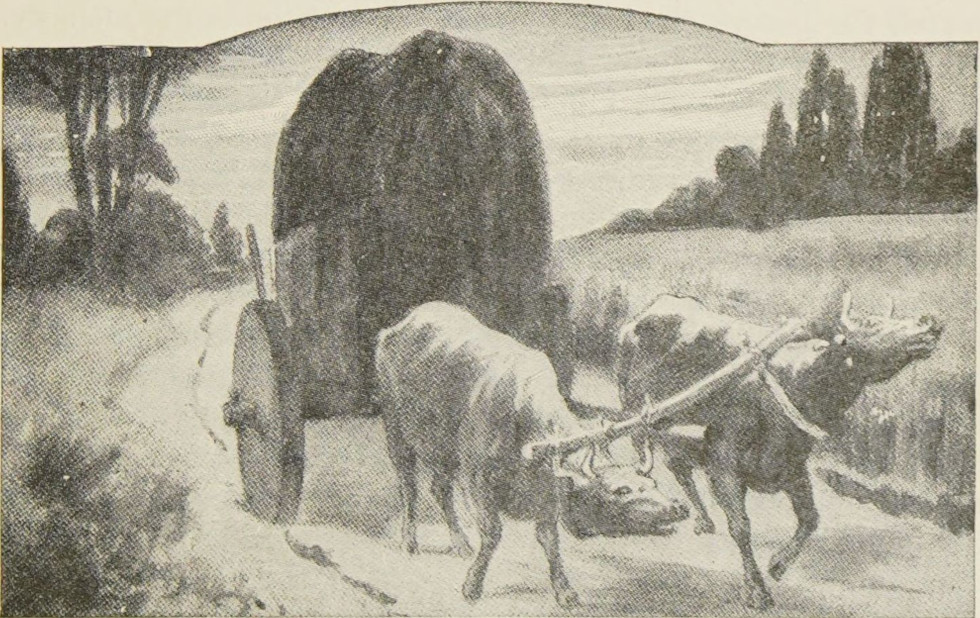
“Guided by no human hand, the patient animals kept on their way.”
THE SCHOOLS OF THE PROPHETS—58

The Lord himself directed the education of Israel. His care was not restricted to their religious interests; whatever affected their mental or physical well-being was also the subject of divine providence, and came within the sphere of divine law.
God had commanded the Hebrews to teach their children his requirements, and to make them acquainted with all his dealings with their fathers. This was one of the special duties of every parent,—one that was not to be delegated to another. In the place of stranger lips, the loving hearts of the father and mother were to give instruction to their children. Thoughts of God were to be associated with all the events of daily life. The mighty works of God in the deliverance of his people, and the promises of the Redeemer to come, were to be often recounted in the homes of Israel; and the use of figures and symbols caused the lessons given to be more firmly fixed in the memory. The great truths of God’s providence and of the future life were impressed on the young mind. It was trained to see God alike in the scenes of nature and the words of revelation. The stars of heaven, the trees and flowers of the field, the lofty mountains, the rippling brooks,—all spoke of the Creator. The solemn service of sacrifice and worship at the sanctuary, and the utterances of the prophets, were a revelation of God.
Such was the training of Moses in the lowly cabin home in Goshen; of Samuel, by the faithful Hannah; of David, in the hill dwelling at Bethlehem; of Daniel, before the scenes of the captivity separated him from the home of his fathers. Such, too, was the early life of Christ at Nazareth; such the training by which the child Timothy learned from the lips of his “grandmother Lois, and his mother Eunice,”[1015] the truths of Holy Writ.
Further provision was made for the instruction of the young, by the establishment of the schools of the prophets. If a youth desired to search deeper into the truths of the word of God, and to seek wisdom from above, that he might become a teacher in Israel, these schools were open to him. The schools of the prophets were founded by Samuel, to serve as a barrier against the wide-spread corruption, to provide for the moral and spiritual welfare of the youth, and to promote the future prosperity of the nation by furnishing it with men qualified to act in the fear of God as leaders and counselors. In the accomplishment of this object, Samuel gathered companies of young men who were pious, intelligent, and studious. These were called the sons of the prophets. As they communed with God, and studied his word and his works, wisdom from above was added to their natural endowments. The instructors were men not only well versed in divine truth, but those who had themselves enjoyed communion with God, and had received the special endowment of his Spirit. They enjoyed the respect and confidence of the people, both for learning and piety.
In Samuel’s day there were two of these schools,—one at Ramah, the home of the prophet, and the other at Kirjath-jearim, where the ark then was. Others were established in later times.
The pupils of these schools sustained themselves by their own labor in tilling the soil or in some mechanical employment. In Israel this was not thought strange or degrading; indeed, it was regarded a crime to allow children to grow up in ignorance of useful labor. By the command of God, every child was taught some trade, even though he was to be educated for holy office. Many of the religious teachers supported themselves by manual labor. Even so late as the time of the apostles, Paul and Aquila were no less honored because they earned a livelihood by their trade of tent-making.
The chief subjects of study in these schools were the law of God, with the instructions given to Moses, sacred history, sacred music, and poetry. The manner of instruction was far different from that in the theological schools of the present day, from which many students graduate with less real knowledge of God and religious truth than when they entered. In those schools of the olden time it was the grand object of all study to learn the will of God, and man’s duty toward him. In the records of sacred history were traced the footsteps of Jehovah. The great truths set forth by the types were brought to view, and faith grasped the central object of all that system,—the Lamb of God that was to take away the sin of the world.
A spirit of devotion was cherished. Not only were students taught the duty of prayer, but they were taught how to pray, how to approach their Creator, how to exercise faith in him, and how to understand and obey the teachings of his Spirit. Sanctified intellects brought forth from the treasure-house of God, things new and old, and the Spirit of God was manifested in prophecy and sacred song.
Music was made to serve a holy purpose, to lift the thoughts to that which is pure, noble, and elevating, and to awaken in the soul devotion and gratitude to God. What a contrast between the ancient custom and the uses to which music is now too often devoted! How many employ this gift to exalt self, instead of using it to glorify God! A love for music leads the unwary to unite with world-lovers in pleasure-gatherings where God has forbidden his children to go. Thus that which is a great blessing when rightly used, becomes one of the most successful agencies by which Satan allures the mind from duty and from the contemplation of eternal things.
Music forms a part of God’s worship in the courts above, and we should endeavor, in our songs of praise, to approach as nearly as possible to the harmony of the heavenly choirs. The proper training of the voice is an important feature in education, and should not be neglected. Singing, as a part of religious service, is as much an act of worship as is prayer. The heart must feel the spirit of the song, to give it right expression.
How wide the difference between those schools taught by the prophets of God, and our modern institutions of learning! How few schools are to be found that are not governed by the maxims and customs of the world! There is a deplorable lack of proper restraint and judicious discipline. The existing ignorance of God’s word, among a people professedly Christian, is alarming. Superficial talk, mere sentimentalism, passes for instruction in morals and religion. The justice and mercy of God, the beauty of holiness, and the sure reward of right-doing, the heinous character of sin, and the certainty of its terrible results, are not impressed upon the minds of the young. Evil associates are instructing the youth in the ways of crime, dissipation, and licentiousness.
Are there not some lessons which the educators of our day might learn with profit from the ancient schools of the Hebrews? He who created man has provided for his development in body and mind and soul. Hence, real success in education depends upon the fidelity with which men carry out the Creator’s plan.
The true object of education is to restore the image of God in the soul. In the beginning, God created man in his own likeness. He endowed him with noble qualities. His mind was well balanced, and all the powers of his being were harmonious. But the fall and its effects have perverted these gifts. Sin has marred and well-nigh obliterated the image of God in man. It was to restore this that the plan of salvation was devised, and a life of probation was granted to man. To bring him back to the perfection in which he was first created, is the great object of life,—the object that underlies every other. It is the work of parents and teachers, in the education of the youth, to co-operate with the divine purpose; and in so doing they are “laborers together with God.”[1016]
All the varied capabilities that men possess—of mind and soul and body—are given them by God, to be so employed as to reach the highest possible degree of excellence. But this cannot be a selfish and exclusive culture; for the character of God, whose likeness we are to receive, is benevolence and love. Every faculty, every attribute, with which the Creator has endowed us, is to be employed for his glory and for the uplifting of our fellow-men. And in this employment is found its purest, noblest, and happiest exercise.
Were this principle given the attention which its importance demands, there would be a radical change in some of the current methods of education. Instead of appealing to pride and selfish ambition, kindling a spirit of emulation, teachers would endeavor to awaken the love for goodness and truth and beauty,—to arouse the desire for excellence. The student would seek the development of God’s gifts in himself, not to excel others, but to fulfill the purpose of the Creator and to receive his likeness. Instead of being directed to mere earthly standards, or being actuated by the desire for self-exaltation, which in itself dwarfs and belittles, the mind would be directed to the Creator, to know him, and to become like him.
“The fear of the Lord is the beginning of wisdom; and the knowledge of the Holy is understanding.”[1017] The great work of life is character-building; and a knowledge of God is the foundation of all true education. To impart this knowledge, and to mould the character in harmony with it, should be the object of the teacher’s work. The law of God is a reflection of his character. Hence the psalmist says, “All thy commandments are righteousness;” and “through thy precepts I get understanding.”[1018] God has revealed himself to us in his word and in the works of creation. Through the volume of inspiration and the book of nature, we are to obtain a knowledge of God.
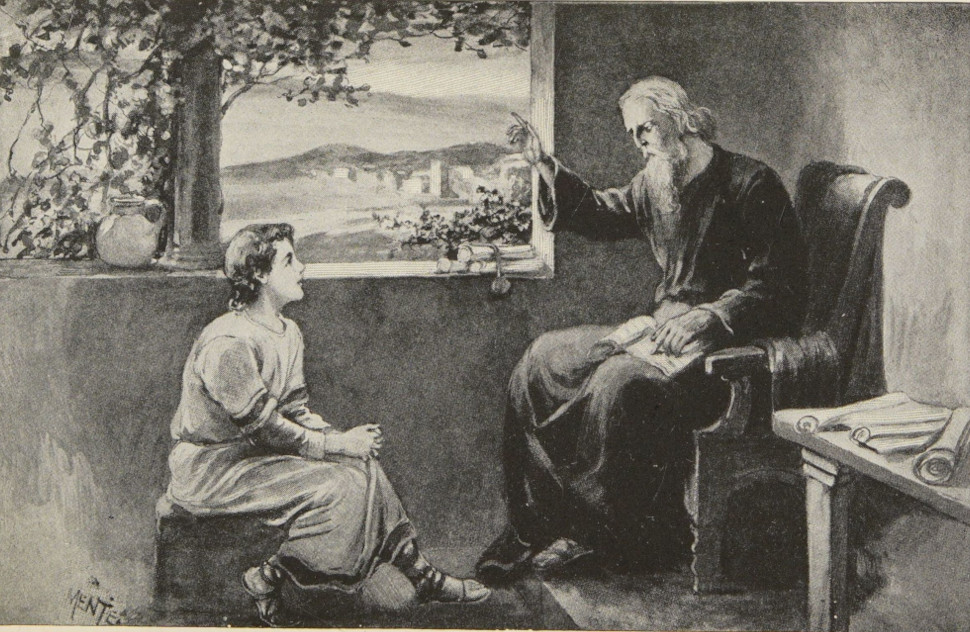
THE ESSENTIAL KNOWLEDGE. “The fear of the Lord is the beginning of wisdom; and the knowledge of the Holy is understanding.”
It is a law of the mind that it gradually adapts itself to the subjects upon which it is trained to dwell. If occupied with commonplace matters only, it will become dwarfed and enfeebled. If never required to grapple with difficult problems, it will after a time almost lose the power of growth. As an educating power, the Bible is without a rival. In the word of God the mind finds subject for the deepest thought, the loftiest aspiration. The Bible is the most instructive history that men possess. It came fresh from the fountain of eternal truth, and a divine hand has preserved its purity through all the ages. It lights up the far-distant past, where human research seeks vainly to penetrate. In God’s word we behold the power that laid the foundation of the earth and that stretched out the heavens. Here only can we find a history of our race unsullied by human prejudice or human pride. Here are recorded the struggles, the defeats, and the victories of the greatest men this world has ever known. Here the great problems of duty and destiny are unfolded. The curtain that separates the visible from the invisible world is lifted, and we behold the conflict of the opposing forces of good and evil, from the first entrance of sin, to the final triumph of righteousness and truth; and all is but a revelation of the character of God. In the reverent contemplation of the truths presented in His word, the mind of the student is brought into communion with the infinite mind. Such a study will not only refine and ennoble the character, but it cannot fail to expand and invigorate the mental powers.
The teaching of the Bible has a vital bearing upon man’s prosperity in all the relations of this life. It unfolds the principles that are the corner-stone of a nation’s prosperity,—principles with which is bound up the well-being of society, and which are the safeguard of the family,—principles without which no man can attain usefulness, happiness, and honor in this life, or can hope to secure the future, immortal life. There is no position in life, no phase of human experience, for which the teaching of the Bible is not an essential preparation. Studied and obeyed, the word of God would give to the world men of stronger and more active intellect than will the closest application to all the subjects that human philosophy embraces. It would give men of strength and solidity of character, of keen perception and sound judgment,—men who would be an honor to God and a blessing to the world.
In the study of the sciences also, we are to obtain a knowledge of the Creator. All true science is but an interpretation of the handwriting of God in the material world. Science brings from her research only fresh evidences of the wisdom and power of God. Rightly understood, both the book of nature and the written word make us acquainted with God by teaching us something of the wise and beneficent laws through which he works.
The student should be led to see God in all the works of creation. Teachers should copy the example of the Great Teacher, who from the familiar scenes of nature drew illustrations that simplified his teachings, and impressed them more deeply upon the minds of his hearers. The birds caroling in the leafy branches, the flowers of the valley, the lofty trees, the fruitful lands, the springing grain, the barren soil, the setting sun gilding the heavens with its golden beams,—all served as means of instruction. He connected the visible works of the Creator with the words of life which he spoke, that whenever these objects should be presented to the eyes of his hearers, their thoughts might revert to the lessons of truth he had linked with them.
The impress of Deity, manifest in the pages of revelation, is seen upon the lofty mountains, the fruitful valleys, the broad, deep ocean. The things of nature speak to man of his Creator’s love. He has linked us to himself by unnumbered tokens in heaven and in earth. This world is not all sorrow and misery. “God is love,” is written upon every opening bud, upon the petals of every flower, and upon every spire of grass. Though the curse of sin has caused the earth to bring forth thorns and thistles, there are flowers upon the thistles, and the thorns are hidden by roses. All things in nature testify to the tender, fatherly care of our God, and to his desire to make his children happy. His prohibitions and injunctions are not intended merely to display his authority, but in all that he does, he has the well-being of his children in view. He does not require them to give up anything that it would be for their best interest to retain.
The opinion which prevails in some classes of society, that religion is not conducive to health or to happiness in this life, is one of the most mischievous of errors. The Scripture says: “The fear of the Lord tendeth to life; and he that hath it shall abide satisfied.”[1019] “What man is he that desireth life, and loveth many days, that he may see good? Keep thy tongue from evil, and thy lips from speaking guile. Depart from evil, and do good; seek peace, and pursue it.”[1020] The words of wisdom “are life unto those that find them, and health to all their flesh.”[1021]
True religion brings man into harmony with the laws of God, physical, mental, and moral. It teaches self-control, serenity, temperance. Religion ennobles the mind, refines the taste, and sanctifies the judgment. It makes the soul a partaker of the purity of heaven. Faith in God’s love and overruling providence lightens the burdens of anxiety and care. It fills the heart with joy and contentment in the highest or the lowliest lot. Religion tends directly to promote health, to lengthen life, and to heighten our enjoyment of all its blessings. It opens to the soul a never-failing fountain of happiness. Would that all who have not chosen Christ might realize that he has something vastly better to offer them than they are seeking for themselves. Man is doing the greatest injury and injustice to his own soul when he thinks and acts contrary to the will of God. No real joy can be found in the path forbidden by Him who knows what is best, and who plans for the good of his creatures. The path of transgression Leads to misery and destruction; but wisdom’s “ways are ways of pleasantness, and all her paths are peace.”[1022]
The physical as well as the religious training practiced in the schools of the Hebrews may be profitably studied. The worth of such training is not appreciated. There is an intimate relation between the mind and the body, and in order to reach a high standard of moral and intellectual attainment, the laws that control our physical being must be heeded. To secure a strong, well-balanced character, both the mental and the physical powers must be exercised and developed. What study can be more important for the young than that which treats of this wonderful organism that God has committed to us, and of the laws by which it may be preserved in health?
And now, as in the days of Israel, every youth should be instructed in the duties of practical life. Each should acquire a knowledge of some branch of manual labor, by which, if need be, he may obtain a livelihood. This is essential, not only as a safeguard against the vicissitudes of life, but from its bearing upon physical, mental, and moral development. Even if it were certain that one would never need to resort to manual labor for his support, still he should be taught to work. Without physical exercise, no one can have a sound constitution and vigorous health; and the discipline of well-regulated labor is no less essential to the securing of a strong and active mind and a noble character.
Every student should devote a portion of each day to active labor. Thus habits of industry would be formed, and a spirit of self-reliance encouraged, while the youth would be shielded from many evil and degrading practices that are so often the result of idleness. And this is all in keeping with the primary object of education; for in encouraging activity, diligence, and purity, we are coming into harmony with the Creator.
Let the youth be led to understand the object of their creation,—to honor God, and bless their fellow-men; let them see the tender love which the Father in heaven has manifested toward them, and the high destiny for which the discipline of this life is to prepare them,—the dignity and honor to which they are called, even to become the sons of God,—and thousands would turn with contempt and loathing from the low and selfish aims and the frivolous pleasures that have hitherto engrossed them. They would learn to hate sin, and to shun it, not merely from hope of reward or fear of punishment, but from a sense of its inherent baseness,—because it would be a degrading of their God-given powers, a stain upon their God-like manhood.
God does not bid the youth to be less aspiring. The elements of character that make a man successful and honored among men,—the irrepressible desire for some greater good, the indomitable will, the strenuous exertion, the untiring perseverance,—are not to be crushed out. By the grace of God they are to be directed to objects as much higher than mere selfish and temporal interests as the heavens are higher than the earth. And the education begun in this life will be continued in the life to come. Day by day the wonderful works of God, the evidences of his wisdom and power in creating and sustaining the universe, the infinite mystery of love and wisdom in the plan of redemption, will open to the mind in new beauty. “Eye hath not seen, nor ear heard, neither have entered into the heart of man, the things which God hath prepared for them that love him.”[1023] Even in this life we may catch glimpses of His presence, and may taste the joy of communion with heaven; but the fullness of its joy and blessing will be reached in the hereafter. Eternity alone can reveal the glorious destiny to which man, restored to God’s image, may attain.
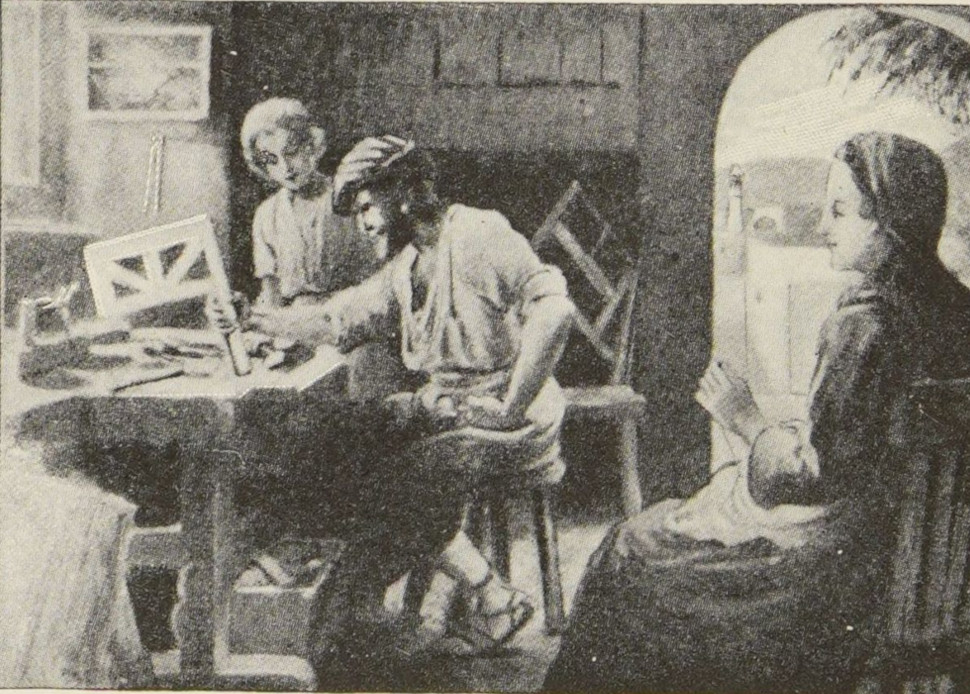
“Every youth should be instructed in the duties of practical life.”