THE SPANISH-AMERICAN WAR. (continued 2)
Reading edition
Very frequently the committee furnished handkerchiefs and soap, as well as reading matter. The sick were given soup and milk packed in ice, fruit, medicines, etc. Forty-five were removed from the trains and taken to the hospitals in Washington. We used, in this connection, not only the services of trained nurses in the employ of the Red Cross, but Dr. Bayne was detailed by the War Department, and rendered most efficient service, as he was always ready and willing to do everything in his power, day or night, for the relief of the sick.
The War Department ordered for the use of the committee the erection of two tents in close proximity to our rooms, which were at 915 Maryland Avenue. One of these tents was filled with fully equipped cots, on which the invalids were placed while waiting the arrival of ambulances, and the other was used as a general depot for supplies. The War Department paid for the bread we used in this work, and, also, for 4346 loaves furnished to the Pension Office Relief Committee, which was engaged in the same kind of work. Many donations of food and material were received, and as stated, nearly forty thousand men were fed, and how some of them did eat not only as if they were making up for the fasts of the past, but for any which might occur in the future.
Mrs. James Tanner had charge of this work, which was very exacting, and she had been appointed a committee to secure reading matter for the different camps, before the Red Cross Committee was organized, and collected several wagon loads of books, magazines, and other periodicals, which were sent to Camp Alger, Fort Myer, Point Sheridan, Fort Washington, Chickamauga, Tampa and Santiago. Distribution of this reading matter was also made at the Red Cross quarters at 915 Maryland Avenue and handed to the soldiers who passed through the city on trains.
All bills for ice furnished to Point Sheridan, Va., Washington Barracks, and to the Diet Kitchen at Fort Myer have been paid by the Red Cross Ice Plant Auxiliary of New York, which also furnished the large ice chests for the latter point.
The Legion of Loyal Women, of which Mrs. Thomas W. Calver, a member of our committee, was president, acted as an auxiliary for the Red Cross Committee, and made a large number of mosquito nets, flannel bandages, wash cloths, and pajamas. Besides this, they collected many supplies, consisting of boxes of oranges, lemons, tea, coffee, jelly, condensed milk, crackers, yeast powder, cocoa, stamps, writing paper, tobacco, fruit, soap, socks, handkerchiefs, towels, nightshirts, underclothes, pajamas, quinine and other medicine, which were sent to the various camps.
Generous donations of clothing, jellies, cordials and money were also received from various auxiliaries of the ladies’ of the Union Veteran Legion.
The Red Cross Committee assisted in the establishment of a temporary home in this city for the returning volunteers. The existence of this home was limited to two months. The time will expire November 10, when it will be broken up. It has cared for a daily average of sixty soldiers. The Red Cross assisted by furnishing cots and furniture. Mrs. Calver, of our committee, is in charge, and it is conducted without expense to the Red Cross.
The total amount expended in the Railway Relief work, in feeding men as they passed through the city, was $2637.13.
Arrangements were also made after this work closed to look after all the sick soldiers, who came in at the several railroad stations.
The treasurer, C.J. Bell, will transmit a full report, with vouchers for all expenditures which have been up to this date, $7560, and with outstanding bills amounting to about $1000 more.
A large number of ladies rendered excellent service in making sheets, pillow-cases, mosquito nets, pajamas, bandages and articles too numerous to mention. Many volunteer nurses were anxious to go where they could render service to the sick and wounded.
It is gratifying to be able to state that whatever view the surgeons and other officers may have had as to the need of the Red Cross at the beginning of the war, at the close they joined with the private soldiers in testifying to its wonderful and efficient work.
Among the principal donations were those from the Lutheran Church Society, Hagerstown, Md., consisting of 50 pajamas, 50 suits of underclothing, 50 nightshirts, 40 sheets, 250 pairs of socks, 100 towels, 200 handkerchiefs, 75 rolls of bandages, delicacies and sundry articles. There were also daily contributions of different supplies, demonstrating the general interest taken in our work.
There were distributed by this committee, in part, 800 sheets, 500 pillow-cases, 800 suits of pajamas, 1500 suits of underclothing, 1600 abdominal bandages, 800 pairs of socks, 750 nightshirts, 350 mosquito bars, 100 rubber sheets, 400 pairs of slippers, 2000 palm leaf fans, 75 large boxes of soap, 150 cots, 250 mattresses, 100 pairs of blankets, 275 pillows, $1000 worth of groceries, $300 malted milk, $850 soups and bouillons, $725 medicines and surgical supplies, $250 wines and liquors, and $1050 milk, a great variety and quantity of smaller articles and supplies.
The following supplies were received from the general New York Committee: 50 boxes of ivory soap, 50 rubber sheets, 400 suits of underwear, 250 sheets, 250 pillow-cases, 250 nightshirts, 200 pairs of slippers, 500 suits of pajamas, $200 worth of malted milk, beef extract and Mellin’s food, $700 worth of canned soups and bouillons and $6000 cash.
In closing, permit me to thank Vice-President Barton and the Executive Committee for prompt and liberal responses to every request made for aid of any character, and for immediately recognizing the fact that the committee at this point had a work placed upon it very extensive and unique in character, and requiring a large outlay of money and service.
I desire to call to your special attention the great service rendered by Mrs. E.S. Mussey, who, during the absence of Mrs. Foster and myself from the city, acted as chairman of the committee, and for two months gave nearly all of her time to its service, visiting different camps and hospitals, and in the work devolving upon her she was untiring and unusually efficient.
Much complaint has been made as to the location of Camp Alger, because of the prevalence of typhoid and malarial fever, and the absence of water supply both for drinking and bathing purposes. A personal knowledge of this section of Virginia, extending over many years, enables me to state that it has been regarded as unusually healthy, and a most desirable section for homes, the growth and development of which would have been very rapid had there been an additional bridge giving greater facilities for crossing the Potomac. The water there has been considered pure and healthy, and used by many families without bad results.
Falls Church, near this camp, has been regarded as one of the healthiest and most desirable suburbs of the National Capital. The topography of the ground and the presence of a large amount of shade were very suitable for the purposes of camp life. It was, however, evident, even to the inexperienced eye of a layman, that good, practical daily scavenger service aided by the effective use of disinfectants was sadly needed both for the comfort and health of the men; that the presence of numerous booths, stands and peddlers engaged in selling soft drinks, fruits, cakes, candy, etc., tended to further demoralize the already interrupted digestion of the soldiers. No matter what the general orders were they could not be made effective without the earnest and intelligent co-operation of regimental officers and soldiers. Could this be secured within two or three months from men not experienced in war? A feeling of individual responsibility appeared to be lacking. One of the most useful officers who can be detailed for camp duty is an inspector, one who will not only inspect daily, but insist that the men take care of themselves, and co-operate to prevent disease, especially in keeping the camp in proper sanitary condition by constant attention to sinks and the water supply.
The Red Cross entered upon its great work at the beginning of the war under many difficulties. Instead of being aided and encouraged in an undertaking that comprehended the generous spirit of the nation, its mission was oftimes interrupted and hindered by officers of prominence and rank. It is proper to say, however, that the President and Secretary of War were at all times deeply interested in our work, and did all in their power to expedite our plans. There appeared to be a jealous apprehension in some quarters that the Red Cross would interfere with established institutions. What it has accomplished is a matter of history, daily recorded in the public press, it has not been aggressive, nor has it dominated any legitimate authority. It has sought to be the servant and not the master. As one general particularly friendly to the organization remarked, “the Red Cross has not been the foe, but the friend of every one, even of red tape.”
If we had any criticism to make it would be in favor of more practical common sense dealing with all matters especially those pertaining to the camp and hospital, and of the necessity of fixing individual responsibility so as to be certain of results as well as orders.
Many high-minded and patriotic officers have been blamed where they ought to have been praised; one distinguished professional man dying from the effects of undeserved fault finding.
If another war should ever come to us as a nation, we trust the lessons of that which has just closed will not be forgotten. Many of the very best and most conscientious surgeons are not business men. Men who have not had business experience in time of peace cannot be expected to learn at once new methods in time of war so as to perfect or harmonize a great system. Should not the executive officer in every large hospital be selected somewhat with reference to his business capacity? Good surgeons and physicians have enough to occupy them in attending to their professional duties. They had too much to attend to in most instances during the Spanish war, and the number of deaths in comparison to the number of sick and wounded has been surprisingly small.
I want to place upon record the generous kindness of Dr. and Mrs. J. Ford Thompson in tendering to the committee the use of house No. 1310 G Street for headquarters; W.B. Moses & Sons for furniture loaned for our use; Springman & Sons for free transportation of goods; to the railroads for reduction of fare; to the Falls Church Electric Railroad, and Washington and Norfolk Steamship Company for free transportation; to the Chesapeake and Potomac Telephone Company for telephone, and to all who generously worked and contributed for the success of the committee.
The army and navy embodied the power of the government in the Spanish war, but the Red Cross in a large degree represented the affectionate regard of the American people, for those who went out to defend the flag of the Union, and their great desire to mitigate in every possible way the sufferings resulting from exposure, disease and conflict, as well as to relieve distress wherever it existed.
Courage and charity go hand in hand, and when the smoke of battle has rolled away, and the tattoo and reveille are memories of the past; when the white tents of the camps are folded; the equipment of war is exchanged for the implements of peace the appreciation of the citizen soldier for the Red Cross will grow in volume as he sits by his fireside and tells how its ministries gave relief and aid to his comrades and himself in the camp, the hospital, at Siboney, Santiago, Porto Rico and elsewhere, and how it extended succor even to his enemies when the conflict ceased.
The Red Cross of peace will outlive the Red Flag of war, even as charity shall survive the force of arms. Let us hope that the former ensign may soon float by the side of the flags of all the nations and peoples of the world, as an evidence of the advance of civilization, and the universal desire that there be no more war; that men everywhere are ready to extend a helping hand to all who suffer from disaster or disease. When this glad day comes war will be no more. Arbitration will be the supreme power.
And may I say, in closing, that no one during the past quarter of a century has in a larger degree aided in the cultivation of peace and good will among men and the promotion of a spirit of fraternity among the peoples of the earth than the president of the American National Red Cross, who, during the Spanish war, has rendered such valuable and indefatigable service in the cause of humanity.
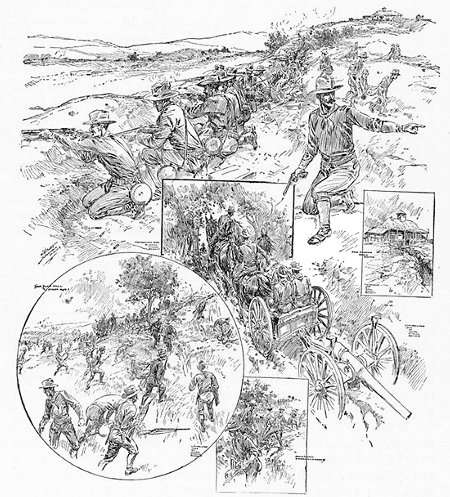
ON SAN JUAN HILL, SANTIAGO.
CAMP THOMAS.
The agent first appointed for Chickamauga Park, was Dr. Charles R. Gill. Shortly afterwards, however, Dr. Gill expressed a desire to go to Cuba, and he was relieved, Mr. E.C. Smith being placed in charge of this field, which proved eventually to be one of the most important stations of the Red Cross. As the demands of the camp increased, Mr. A.M. Smith was sent to assist his brother in the work. Their services have been eminently satisfactory to all concerned, and many voluntary expressions of appreciation have been received. All requisitions for assistance were promptly filled by the Executive Committee in New York, and in addition to the large amount of supplies sent, about $16,000 in cash were expended at the camp. Mr. Smith, in his report on the work done at this camp, says:
The headquarters of the American National Red Cross, at Camp Thomas, Chickamauga Park, Ga., was located alongside the historic Brotherton House, which was in the thickest of the fight in 1863. No array of mere numerals written to express dollars, or tables of figures standing for quantities, could in comprehensive sense tell the story of Red Cross work at Chickamauga, in 1898. The record is written indelibly in the hearts of thousands of soldiers who were stricken with disease on this battlefield, and the story has been told at quiet home firesides in every State of the Union.
All those who have labored in the work of mercy have been repaid a thousandfold in words of thankfulness and appreciation from fevered lips, and the praise of Christian men and women throughout the country. In answer to the petitions of anxious wives, mothers and fathers, and the tender prayers of prattling infants, God put strength in the arms of the noble women who wore the badge of the Red Cross, and made them heroic in an hour of great trial.
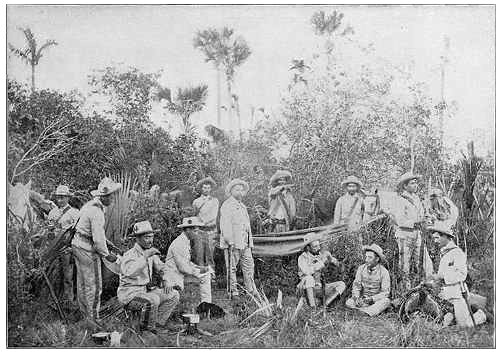
SPANISH GUERILLAS.
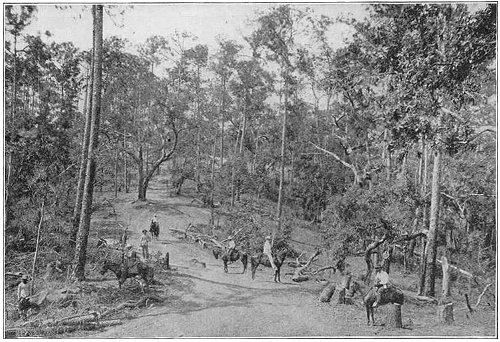
A MOUNTED ADVANCE, RECONNOITRING.
It has been testified by the gallant survivors of Santiago, and other sanguinary engagements, that the chief terror was carried to the hearts of our gallant men through the awful silence of the enemy’s bullets, and the mystery which enshrouded their position because of the use of smokeless powder, leaving no mark for retaliation. Here in Chickamauga, men fell from the ranks day after day, who seemed to have been singled out as the most robust and hardy of all, and were carried helpless to the regimental, division, corps, and general hospitals, stricken by an unseen foe. The danger lurked in the air that all breathed, and the apparently pure, limpid water, God’s greatest gift to man, became his deadliest enemy.
When the plague descended on the camp, and a full realization of present and impending horrors was forced upon all intelligent minds, frantic efforts were made to stay the progress of the destroyer, but the seeds had been sown, and the epidemic was fated to run its course. It seemed incongruous that such a spot should be so afflicted; in all the wide continent there is no fairer place. The valley stretching between Lookout Mountain and Missionary Ridge is one of the most beautiful of all the fertile valleys of the world; sunshine and shade here mingle to satisfy every sense. Our boys entered the park joyfully, and all who should have known of the requirements of a camp, pronounced it an ideal spot. There was no adequate preparation for the unexpected, which some say “always happens.” The action of the Red Cross redeemed the situation. Stephen E. Barton, chairman of the Executive Committee, promptly authorized measures to alleviate suffering, to quote the language of the authorization, “without stint.” Elias Charles Smith, the field agent of the Red Cross, acting at once on the orders of his superior, proceeded to find ways, the means being furnished. Milk and ice were the chief requisites. All the farming country surrounding the camp was called upon to supply the milk, some of it coming from as far as Biltmore, N.C., from the celebrated dairy of a millionaire.
The ice came from Chattanooga, and both ice and milk were supplied without delay, with no red tape, no halting, “without stint,” to the sick. Requisitions for carloads of delicacies were sent by telegraph, and when the needs were urgent the goods came, not by freight but by express. Soups, wines, fruit, and in fact every conceivable article that could contribute to the comfort and recovery of the sick was sent for, dispatched, received and distributed. There were no “middle men” to question or quibble about the advisability of things being done, no halting and haggling about how things should be done. The field agent of the Red Cross ascertained the urgent necessities of the sick, through the best official sources, and—presto!—the necessities were on the ground and in use.
The problem of nursing was coincident. Men in the division and other hospitals were willing, no doubt, but there was “lack of woman’s nursing.” There was no “dearth of woman’s tears,”—at home.
The Red Cross Auxiliary No. 3 of New York, through the agency of Miss Maud Cromlein in the field, took up this work. At one time there were 140 young women graduate nurses in the service of the Red Cross in this camp, mainly at Sternberg Hospital. How to care for this large number of refined young women, unused to the hardships of camp life, was a serious problem. Dormitories were built to shelter them, and furnished for their comfort. A contract was made with a steam laundry at Chattanooga to wash their clothing and everything possible was done to make their stay at least endurable. Some fell sick, of course, and were tenderly cared for or furloughed and sent to their homes. Under the direction of Miss Maxwell a perfect system was established in all the work, which commanded the respect and approbation of the medical officers. Diet kitchens were introduced, and the sick were furnished with every necessary delicacy.
It is now a matter of history that this first organized experiment of using women in large numbers as nurses in a field hospital has been an unqualified success. It has the official approval of the medical officers of the government from Surgeon-General Sternberg to the smallest, humblest subaltern.
The Red Cross did not confine its efforts to the help of nurses wearing the Red Cross. At the old Third Division First Corps Hospital, afterward called Sanger, Sisters of Charity and Sisters of Mercy ministered to the sick. The same attention was given to them; all requisitions for milk and ice and delicacies were promptly filled. One of these noble women, Sister Stella Boyle, wrote, “We are overwhelmed with your kindness—what should we have done without the Red Cross!” Leiter Hospital received the same help; milk and ice and delicacies were furnished “promptly and without stint.” That was the watchword. And so with the regimental hospitals; the surgeons in charge made requisition for necessary supplies and they were forthcoming, even to the day of the departure of the last troops from the camp, the hospital trains being supplied as well. Thus the Red Cross followed the sick to the doors of their own homes.
The Christian women of Chattanooga belonging to the Epworth League and the churches of that city, did a greatly needed work in establishing hospitals for the care of sick soldiers enroute. They were amazed and delighted when they learned they could make requisition on the Red Cross for necessary supplies.
Field Agent E.C. Smith, frail of body but stout of soul, was stricken at his post of duty with typhoid September 12, but is convalescent and rapidly gaining strength. When Miss Cromlein and Miss Maxwell retired about the same date, they were succeeded by Miss Gladwin and Miss Lounsbury, who have ably managed the affairs of the Red Cross at Sternberg. Under my direction Miss Gladwin recently visited Anniston, Ala., and found the service of the Red Cross greatly needed at Camp Shipp. Miss Gladwin has established a Diet Kitchen at that camp and has done much to better the condition of the soldiers in the camp hospitals.
There are still 200 sick at Sternberg and 50 at Leiter, but these will soon I hope be furloughed and returned to their homes.
All who have represented the Red Cross at Chickamauga have worked with the greatest self-denial and enthusiasm with full appreciation of the lofty aims of the society and with personal pride. When the roll of honor is made up, I know of no name that should be omitted.
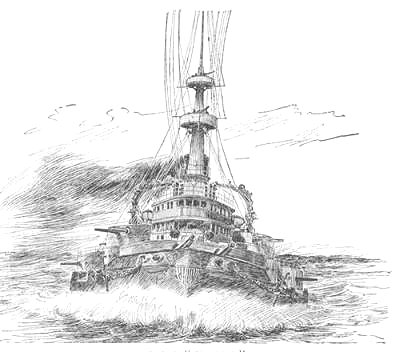
U.S.S. “OREGON.”
JACKSONVILLE, FLA.
At Jacksonville, Fla., the work at the camp was under the direction of the Rev. Alexander Kent, of Washington, D.C., who has been a member of the American National Red Cross for many years. He began his duties about the middle of June and, assisted by his son, continued until the order for the abandonment of the camp was issued. The territory covered by this agency included also the camps at Miami and Fernandina. The affairs of the Red Cross in this field were most efficiently conducted and with great credit to Dr. Kent and his assistant. In addition to the medical and hospital supplies and delicacies, which were furnished in great quantities, over thirteen thousand dollars were spent in adding to the comforts of the sick and convalescent. Dr. Kent makes the following interesting report:
On June 16 I arrived in Jacksonville, in company with Miss Clara Barton, then on her way to Key West and Santiago. We visited Camp Cuba Libre in the afternoon, when I enjoyed the great advantage of being presented by Miss Barton to several of the officials as the representative of the Red Cross at this point. On the following morning I visited the hospital—that of the Second Division, the First being at Miami and the Third not formed—where I found what appeared to me to be very distressing and unhealthful conditions. The number of patients at that time was small, but, few as they were, no adequate provision had been made for their comfort. Most of them, indeed, were on cots, but few had either sheets or nightshirts to cover their nakedness. They were either lying in soiled underclothing, sweltering in the heat under army blankets, or destitute of any clothing whatever. I lost no time in ordering one hundred sheets, with the same number of pillow-cases and ticks, having assurance from one of the surgeons that the latter could be readily filled with moss and pine needles, making a comfort-giving and healthful pillow. By the time this need was met I learned that the sick were destitute of suitable food, so I made it my next business to provide a sufficiency of this. No sooner had I begun this work than I had to face the fact that the hospital had no proper facilities for cooking this food and no place in which to care for it and keep it cool and sweet when prepared. So I purchased a large Blue Flame oil stove and a No. 6 Alaska ice chest. I soon discovered that the patients were suffering from want of ice and made haste to secure an adequate supply of this. But in all these things adequate provision for one week was no adequate provision for the next. Patients came into the hospital in ever-increasing numbers; cots, sheets, pillows and pillow-cases had to be doubled and trebled and quadrupled as the weeks went by. The government provided many sheets, many cots and many pillows, but the demand ever outran the supply, and the Red Cross was called on continually to make up the lack. In the matter of ice, milk, eggs, lemons, malted milk, peptonoids, clam bouillon, beef extract, calfsfoot jelly, gelatine, cornstarch, tapioca, condensed milk, rice, barley, sugar, butter, and delicacies of all kinds, the government made no provision, neither did the hospital from its ration fund. All supplies of this kind were furnished by the Red Cross or by other charitable or beneficent agencies. So far as I have been able to learn, and I questioned those in charge of the division hospitals, no use was made of the ration fund in the Jacksonville hospitals in the way of procuring delicacies for patients. The sole reliance for these things was the Red Cross and similar agencies of individual and organized beneficence.
Of individual beneficence the most marked examples were Mrs. Marshall, proprietor of the Carleton Hotel; Mrs. Moulton, wife of Colonel Moulton, of the Second Illinois, and Mrs. Rich, a quiet, modest lady of this city. These gave their whole time to the work of devising ways and means for promoting the comfort and health of the sick. They made chicken broth, ice cream, wine jellies and a variety of delicacies grateful to the palates of the sick soldiers. Other Jacksonville ladies did much in this direction, but these ladies were constant and untiring in their efforts. Though Mrs. Marshall had many of the soldiers cared for free of charge at her own hotel, never for a day was she absent from the camp. She was a veritable ministering angel, and the Red Cross is greatly indebted to her for much of the information that helped us to give wisely and when most needed. Through Mrs. Moulton many of the good people of Chicago bestowed their benefactions. Five days out of every week found Mrs. Rich at one of the division hospitals, making her ice cream for the boys and giving them a taste of her delicious wine jellies. When the Red Cross learned of her excellent work it took pains to keep her supplied with all needed material, beside furnishing a twenty-five quart ice cream freezer with which to do her work. All of these women deserve a more extended and a worthier tribute than we can pay them in this report.
With the growth of the hospital there came ever-increasing demands for ice and milk, for delicacies of every sort, and for all the comforts and conveniences that tend to make hospital work pleasant and effective. Early in the history of the Second Division hospital, the Red Cross paid the bills for a bath house and a kitchen. It furnished also the large circular wall tent for convalescents. It gave over a hundred cots and mattresses, and nearly a thousand pillows. Of sheets and pillow-cases, nightshirts and pajamas, it gave many thousands. We not only distributed a large number sent from New York; boxes were sent us from St. Augustine, from Augusta, Ga., from Connecticut, Pennsylvania and the District of Columbia. Few people have any conception of the quantity of such articles required to keep a hospital with five hundred to seven hundred patients in good running order. So often are these things soiled that there must be at least three or four sets to every cot. When there are three or four hospitals, with an aggregate sick list ranging from fifteen hundred to two thousand, the number of sheets and pillow-cases, nightshirts and pajamas necessary to keep the beds and the patients presentable is surprisingly large. Of course the government has supplied the greater number of sheets and pillow-cases, but the Red Cross has furnished probably the greater number of pillows, nightshirts and pajamas. In none of these things has the supply ever quite equaled the demand. Even at the present time the cry of need is almost as loud as ever. When the recuperating hospital was established at Pablo Beach, the Red Cross, at the request of the chief-surgeon, supplied two hundred and fifty sets of dishes with a complete outfit of pitchers, trays, buckets and many other things. Even the business of the chief-surgeon’s office and that of the surgeon at Pablo Beach is transacted on desks furnished by the Red Cross at the request of these parties. It has contributed to furnish the diet kitchens with stoves, utensils and dishes, and has supplied the hospitals themselves with many articles of convenience and comfort. It provided four dozen large clothes hampers, printed many thousands of patient records and other papers. It had fifty large ice chests manufactured and placed one in each ward of the principal hospitals. It gave over seven hundred buckets for the carrying of offal, and furnished screens for the use of the nurses. It gave bed-pans and urinals in large numbers, over a thousand tumblers, medicine glasses, graduated glasses, a sterilizing apparatus, hypodermic syringes and needles. Of the latter we learned that there was not a single whole one in the hospital at the time we were called on. Scores of men had been obliged to receive their hypodermic injections from a broken point, suffering greatly from the operation and subsequent results. The Red Cross has furnished over one thousand dollars worth of medicines not on the government list, besides malted milk, peptonoids, pepto mangan, peptogenic milk powder, maltine and a large shipment of medicines sent from New York. It has given over a thousand bath and surgical sponges and towels in immense quantities. In short, with the exception of tents, cots, blankets, and, to a considerable extent, sheets, furnished by the government, the Red Cross, up to September 1st, furnished the greater part of the hospital equipment. As the several heads of divisions have said to me again and again. “The hospitals never could have equipped themselves from their ration fund. They would have broken down utterly without the aid of the Red Cross.”
We have spent here over thirteen thousand dollars in cash for hospital equipment and supplies of various kinds, including ice and milk, in addition to the large quantities of goods sent from New York the cost of which we do not know. And with all this, the need has not been met as fully or as promptly as it should have been. The number of the sick increased so greatly beyond the expectations of the officers in charge that the supply has never, for any considerable time, been equal to the demand. Even now, when the government has allowed sixty cents a day for each patient in the hospital, and has recently so extended the order as to include regimental as well as division hospitals, there is still continuous appeal to the Red Cross for a variety of things, which those in charge of the hospital fund do not feel warranted in buying, and as yet few of the regiments have gotten their hospitals into shape to ask for anything. As they move to Savannah in a few days, they will not be in condition to draw any money for weeks to come. It is very fortunate therefore, that your committee has seen fit to grant our last requisition, for the goods you have shipped will be of great benefit to the soldiers on their way to Cuba.
I have omitted to state that a most important part of the work of the Red Cross has been the supplying of ice for the purpose of cooling the drinking water of the camps. Our ice bills for camp and hospitals, at an average of thirty-five cents per hundred pounds have been over six thousand dollars, the Second Division hospital alone often consuming from four to five tons a day. Our milk bills were also large, averaging for some time over five hundred dollars a week, at a cost of forty cents a gallon.
Our relations with both army and medical officials have been, on the whole, harmonious and pleasant. Perhaps the best evidence of this is the fact that the government teams and men have always been at our service whether to haul the goods from the wharf to the store or from the store to the camp. Some little feeling arose over my attitude in regard to the necessity for female nurses, but as the outcome has abundantly shown the soundness of my contention, that has pretty much passed away. Our hospitals have been far from ideal but I believe they are generally regarded as the best in the country, and perhaps none have realized their shortcomings and defects more than the men charged with their administration. It is not an easy matter to select, even from an American army, a sufficient number of capable and reliable men for so large and complex an institution, and incapacity or infidelity at any point is liable not only to bring most serious results, but to throw discredit upon the entire management. Doubtless many things have been done that should never have been permitted, and many left undone that constitute a record of what ought to be criminal neglect, yet these things can be wholly avoided only by men of the highest ability and largest experience, working with trained subordinates, and with every facility for successful endeavor. It has not been possible to secure such conditions in any of the hospitals. The men in charge have been obliged to use such material as they could get, and often the commanding officers of regiments, when asked for a detail for hospital work, have given the very poorest material they had. I am disposed, therefore, to have pretty large charity always for the surgeon-in-charge. He has a most difficult task, and at the very best, can only hope for moderate success. Ideal results he can never secure.
I have said nothing of our work at Miami or Fernandina, for there is little to say. The troops were moved from Miami so soon after we were made acquainted with their needs, that we did little more than supply the hospital with ice, during the weeks in which the sick were convalescing. We were not permitted to do even this at Fernandina. Those in charge of the hospitals, division and regimental, disclaimed all need of aid. The government supplied them with all that they required. We have had many testimonies from officers and privates, showing the profound appreciation everywhere felt for the work of the Red Cross. Perhaps no other part of its work was so highly prized by the soldiers at large as that which furnished them cool drinking water.
Had the chief-surgeon, Colonel Maus, not been so deeply prejudiced against female nurses in general, and Red Cross nurses in particular, we might have done a much greater work in the hospitals than was permitted to us. While the Second Division hospital was still young, the Red Cross offered its nurses freely and gratuitously. It offered to shelter and feed them at its own expense, but the offer was spurned indignantly and with scarcely disguised contempt. We were told that female nurses were not needed, that the hospital had already more skilled nurses that it could use, and that the female nurses were a nuisance round a camp anyway. Most of them, the chief-surgeon affirmed, were drawn to the work by a morbid sentimentality or by motives of even a more questionable character. He would have none of them. But the time came when even this officer had to change his attitude if not his opinions, and women nurses were sought for and welcomed to the hospital by hundreds. That they have proven a great blessing to the boys, no one now questions; many most pronounced in their opposition are now loudest in their praise, and the Red Cross rejoices that the good work is being done, though itself denied the privilege of doing.
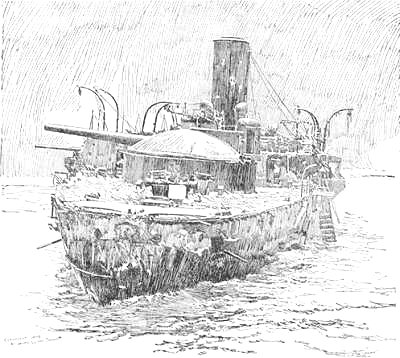
“ALMIRANTE OQUENDO” AFTER THE ENGAGEMENT.
FORT MCPHERSON, GA.
Early in August Mr. D.L. Cobb, on a tour of inspection, arrived at Fort McPherson, Georgia, to see if any assistance was required at the post, and if an agency could be established. It was found that Mrs. Anna E. Nave, wife of Rev. Orville J. Nave, chaplain of the post, and their daughter, Miss Hermione Nave, had established a small dietary kitchen and were supporting a table for convalescents. The object of the kitchen was to provide light and nutritive diet for the soldiers in the barracks who were suffering from stomach troubles, dysentery and kindred digestive disorders, and to care for the convalescents from typhoid fever and other serious sickness, until they were sufficiently recovered to be again returned to the company mess.
As this kitchen was performing an important part in the care of the men, and the demands upon it were daily increasing, it was proposed that it be continued, and its work extended as the demands increased, and that the Red Cross would pay all expenses and furnish all the supplies required. Rev. Orville J. Nave was accordingly appointed as the field agent at Fort McPherson, the kitchen remaining under the immediate care and supervision of Mrs. Nave and her daughter, assisted by a committee of representative women of the city of Atlanta, including Mrs. Governor Atkinson, Miss Mary L. Gordon-Huntley, Mrs. Loulie M. Gordon, Miss Junia McKinley, Mrs. E.H. Barnes, and others.
Under the auspices of the Red Cross the capacity of the kitchen was soon doubled, and the table was maintained until the first of October, when assistance was no longer necessary. At the table about 20,000 meals were served. By this means doubtless many lives were saved, for the percentage of relapses among the typhoid fever cases, ordinarily quite large, was very small at this post. In addition to the supplies of food, medicines and clothing sent to this field, in response to the requisitions, some $1400 in cash were expended in support of the table and in furnishing those things which were at times needed quickly, and which could be purchased in the local markets at Atlanta.
A stenographer was also furnished, so that Dr. Nave might be able to answer the many inquiries from parents and relatives of men in the hospitals, and attend to the ordinary correspondence connected with the work. Seven nurses were supplied to assist in the hospital work. Dr. Nave in his report says:
The importance of this work, as a supplement to that done by the government for the relief of the sick, cannot be overstated. An institution, such as an army hospital, deals with the sick by masses. Much must be left to subordinates, many of whom have little or no experience in caring for the sick. The system is devised for the many. But, where many are sick, a percentage of the patients cannot regain health without special care. The work done by the Red Cross at Fort McPherson was that which could not be done effectually by institutional methods. Furthermore, those who assisted in the work were actuated solely by philanthropic motives. They therefore brought elements to their work that employes too often lack, elements of gentleness and love. Two thousand soldiers in as many homes, nursed back to health, live to love and honor the Red Cross in memory of the helping hand sent to them and administered through the hospital at Fort McPherson. The total cash expenditures, including the cost of maintaining the kitchen, was $2242.
To Dr. Nave, his wife and daughter, and to the Atlanta Committee of the Red Cross, great credit is due for the efficient manner in which the auxiliary work at this point was carried on. Acting with discretion, and with loyalty to the principles of the Red Cross, they have carried their work to a successful conclusion without a complaint from any source.
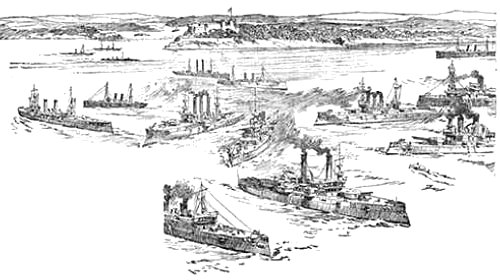
U.S. WAR SHIPS BEFORE THE ENTRANCE TO SANTIAGO HARBOR.
U.S. WAR SHIPS BEFORE THE ENTRANCE TO SANTIAGO HARBOR.
CAMP HOBSON, GA.
At Camp Hobson, Lithia Springs, Ga., a diet kitchen was also maintained, under the direction of Miss Junia McKinley, assisted by the Atlanta Committee of the Red Cross, of which the following account is received:
The diet kitchen was opened here on Monday, August 9, and remained in operation three weeks, at the expiration of which time the camp broke up. During the first week after the kitchen was established, when detachments from the Sixth, Seventh, Eighth, Twenty-first and Twenty-fifth regiments were in camp, 1176 meals were served. The next week orders were received for the removal of the Eighth and part of the other regiments to Montauk Point, consequently the number of convalescents was reduced, but during the second and third week 2066 meals were served, making a total of 3242 meals served at the table and in the hospital during the time the kitchen was in operation. The meals were furnished to convalescents in the hospital, men relieved from duty but not sick enough to be in the hospital, and to the hospital corps. The table meals consisted of the following: For breakfast, cereals, coffee, tea, fresh milk, eggs, toast, bread and butter. For dinner, soups, bouillons, rice and milk, eggs, crackers, bread and fresh milk, coffee, California fruits (canned), wine, jelly or simple dessert. Supper was the same as breakfast, with the addition of stewed fruit. To patients in hospital, beef tea (made from fresh beef as well as extracts), soft-boiled eggs, cream toast and fresh milk was served at regular hours.
The only paid help were two men and one woman, the latter lived near the camp and reported for duty at first meal call and remained until dining tent and kitchen were in order. The other work in kitchen was gratuitously done by Atlanta members of Red Cross Society, assisted by Mrs. Edward H. Barnes, Miss Loulie Gordon Roper (niece of General J.B. Gordon), Miss Emmie McDonnell, Miss Estelle Whelan, Mrs. George Boykin Saunders, all of Atlanta, and the ladies from Sweetwater Park Hotel, who came over daily from the hotel, about half a mile distant from camp, and assisted in serving table meals, also in carrying delicacies to hospitals and distributed flowers among the patients.
It affords us pleasure to acknowledge the uniform courtesy of the army officials, especially the commandant, Major Thomas Wilhelm, Chief Surgeon Major E.L. Swift, Assistant Surgeons Street, Bak and Johnson and Lieutenant Norman, quartermaster. Major Wilhelm had our kitchen built and fly tent for dining hall put up in a few hours after our arrival, detailed men to help whenever needed in kitchen, and with finest courtesy assured us of his appreciation of what was being done to add to the comfort of his sick and convalescent men.
Besides the regular kitchen work at Camp Hobson, the Red Cross furnished for a short time to the hospitals one special nurse (Miss McKinley) and one trained nurse (Miss McLain), who remained until our last patients were sent to Fort McPherson General Hospital and went with them in the hospital train, ministering to their wants until they were transferred to their respective wards there. In this connection we think proper to state that many of our Camp Hobson patients now in Fort McPherson Hospital, one of the best equipped and best managed hospitals in the country, assure us that they can never forget the unfailing kindness of Chief Surgeon Swift and assistants, the faithful care of their Red Cross nurses, nor the delicacies furnished by the diet kitchen at Camp Hobson.
The Red Cross having authorized Miss McKinley to furnish anything necessary for the sick, medicines, fine whiskey and hospital supplies were ordered by telephone from Atlanta, as there was some delay in shipment of government supplies, the orders were promptly filled and proved important factors in improving hospital wards. Clothing was furnished to some of the Camp Hobson men who were left behind and could not draw needed articles of clothing as their “descriptive lists” had not been furnished. When the Twenty-first Regiment left for the North coffee was served on the train to the entire regiment in second section. Most of the ice used after the diet kitchen was established was furnished through Mr. Percy R. Pyne, of New York, who kindly supplied what was needed. Thanks are due G.F. Matthews & Co., of New York, who wrote that they would furnish all the tea needed in the kitchen, but as the camp was about to break up, their kind offer was not accepted.
Special thanks are due to H.W. Blake, manager of Sweetwater Park Hotel at Lithia Springs, for many courtesies extended, when our milkman was late, or our groceries (ordered from Atlanta) were delayed, he furnished fresh milk and eggs for the patients until our supplies arrived. Mrs. Blake sent daily from the beautiful hotel gardens, flowers for hospitals and dining table, also for distribution in hospital trains before leaving Camp Hobson.
In conclusion, we can venture to assure you that while the time of our work at Camp Hobson was short, great good was accomplished, the improvement of convalescents who took meals at the kitchen was very rapid, owing to the well prepared and nourishing food furnished them. The surgeons, as well as hospital stewards, were much gratified at marked improvement in hospital wards after the arrival of Red Cross nurses.
Upon the departure of every hospital train, we served iced milk to fever patients, milk toast to those not restricted to liquid diet, and supplied milk and stimulants for their journey. We thank the Red Cross for the privilege of assisting in their relief work for our soldiers at Camp Hobson, whose appreciation for all that was done for them was unbounded and their gratitude a delight for those who ministered to their wants.
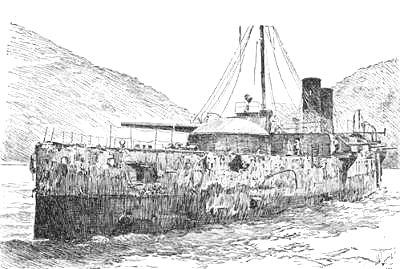
“MARIE TERESA” AFTER THE ENGAGEMENT.
ST. PAUL, MINN.
The story of the Red Cross of St. Paul, Minn., is briefly told in the report by Miss Caroline M. Beaumont, the recording secretary:
The St. Paul Red Cross Aid Society was organized on the ninth of May, 1898, shortly after the beginning of the war, pursuant to a general call for aid, with Mr. A.S. Tallmadge as president, and a full board of officers. It was at first intended to form a regular auxiliary of the Red Cross, directly tributary to the National Organization, and distribute supplies through headquarters only. But the fact that the State volunteer regiments were actually in need of immediate aid to equip them to leave for points of mobilization, induced the society to turn their attention to local needs first.
The Twelfth, Thirteenth and Fourteenth Minnesota Volunteers were first furnished with hospital supplies, delicacies for the sick, and all those necessary articles which the government does not supply, or furnishes only in meagre quantities. Working headquarters were established, requests for donations were published which met with immediate response, which testified to the generosity of the citizens of St. Paul and surrounding towns. Successful entertainments were also given, sewing and packing committees were appointed, and women from all over the city gave freely of their means, their time and their efforts, as they thought of a husband, a son or a dear one in far away Cuba or Manila. The patriotism and loyalty of the men of Minnesota was shared and often inspired by the women who gave so freely. The women of St. Paul with willing hands and loving hearts, have shared in the glories of the war, and the sorrows of personal loss has been mitigated by pride of race, and the love of a country that has borne such soldiers and sailors as our brave boys.
Not in Minnesota alone, but in all the States, the willing hands and loving hearts of the women of America have been among the foremost in affording relief to the sick and wounded. At home in the auxiliaries, in the hospitals, on the transports and at the front, wherever sickness and suffering called.
Early in the campaign they seemed to awaken to the true meaning and the great mission of the Red Cross, and, setting before them the standard, they have followed it from one field of suffering to another. True soldiers of humanity, they have labored earnestly and incessantly, and have proven themselves worthy to wear the emblem of their loving, faithful service—the Red Cross of Geneva.
MONTAUK POINT, L.I.
At the request of the New York Relief Committee, the executive committee of the Red Cross appointed Mr. Howard Townsend as the field agent at Montauk Point, Long Island, under whose supervision the work of the Red Cross at this important station was admirably conducted. Mr. Townsend in his report says:
The Red Cross appeared on the ground on Sunday, August 7, 1898, and its representative remained there permanently after August 10. The first, and in some respects the most important work, was the delivery of a daily supply of pure water to the government officials at the camp. For the first ten days the most serious problem was how to obtain good water, and until the great well was dug, the hospitals were supplied by the Red Cross. Ten thousand gallons of Hygeia water were delivered at the camp, and four tank cars brought daily from Jamaica sufficient spring water to prevent a water famine.
There was important work to be done also in connection with the general hospital, furnishing to it such supplies as were rendered necessary by the hurry and confusion of the first two weeks of the camp’s existence. Cots, clothing, bed-clothing, household appliances and cooking utensils, refrigerators and other articles, in short a large part of the things necessary for a hospital. All of these things were promptly supplied, through the quick communication established with the Red Cross supply depot in New York City, and the system of placing orders by telegraph, by which supplies most needed were often on hand within a few hours after the need was discovered.
Delicacies, fruits and milk were furnished to the hospitals until the government itself was able to meet the demand in this direction. Although the quarantine regulations prevented the Red Cross from being in constant attendance at the detention hospital, yet we kept it abundantly supplied with delicacies, and quite often with necessities. Many tons of supplies were furnished, including food, clothing and stimulants.
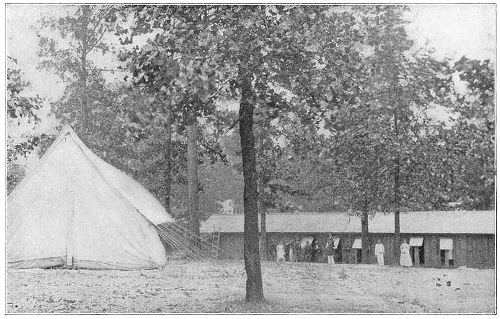
CHICKAMAUGA CAMP.
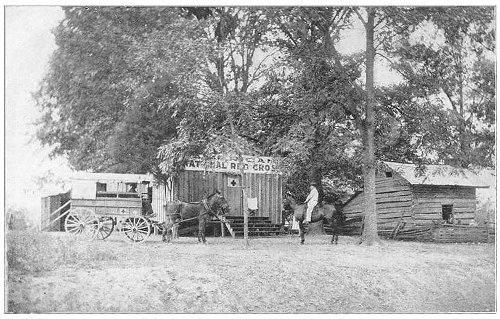
CAMP THOMAS, HEADQUARTERS AMERICAN NATIONAL RED CROSS.
The necessity arising for trained nurses at the general hospital, the services of twenty trained women nurses were offered about August 16, their salaries and all expenses to be paid by the Red Cross. The Secretary of War promptly directed the acceptance of the offer, although insisting that the government should pay all expenses. Since that time there have been as many as one hundred and forty nurses in the hospital at one time, in addition to about one hundred and ten Sisters of Charity. These women nurses uniformly conducted themselves with decorum in the camp, and their services undoubtedly saved the lives of many patients. All the nurses, except the Sisters of Charity, were furnished through the instrumentality of the Red Cross. The division hospitals were established later in the history of the camp, and these were also supplied with suitable provisions, delicacies, medical stores and instruments, and Red Cross nurses.
The Red Cross yacht arrived at Camp Wyckoff on the eleventh of August with the first load of supplies. The boat was furnished for the use of the Red Cross by the Relief Committee of the Red Cross in New York. This vessel is admirably fitted for carrying a small number of sick people, and was offered to the government by the relief committee, and has been in steady use as a hospital ship, conveying fifteen invalids at a time to the various hospitals along the Connecticut coast and in New York City.
After the first confusion incident to the establishment of the camp, the Red Cross extended its field to include a visit to the regimental hospitals, which were discovered to be in great need of food and equipment suitable for sick, particularly in the hospitals of the infantry divisions. The assistant agent, Dr. Brewer, and Mr. Samuel Parrish, of Southampton, N.Y., devoted themselves particularly to daily visits to the regiments, and were able to materially help the regimental surgeons in their discouraging work, hampered as they were by lack of medical stores and equipment.
The auxiliary for the maintenance of trained nurses sent to the camp Mrs. Willard, a dietary expert, who, in conjunction with the Massachusetts Volunteer Aid Association, and with the assistance of Dr. Prescott, established diet kitchens in the various hospitals, and supplied the patients with such satisfactory diet that the government agreed to pay the expense of this part of the work.
Another branch of work was carried on by the Red Cross and which appealed particularly to the sick, which was an attempt made to answer, each day, inquiries from all parts of the country concerning men from whom their relatives and friends had heard nothing perhaps since the army left Cuba.
Another division of the work was that concerning the feeding of the sick and hungry men arriving on the transports. Dr. Magruder, the chief quarantine officer, gave much of his time to this part of the service, carrying continually in his boats stores of Red Cross provisions and delicacies with which he supplied those ships that were in quarantine and suffering most from lack of food. At the quarantine dock, where the sick men were landed, Captain Guilfoyle of the Ninth Cavalry rendered most efficient service in helping the sick, while at the same time enforcing the quarantine regulations.
At the railroad dock an important part of this work was carried on. There Dr. and Mrs. Valentine Mott were stationed day after day as the transports unloaded their men. Captain Edwards, of the First United States Cavalry, had already volunteered to aid and, by order of Major-General Young, he was permitted to have his men assist. Every regiment that landed stacked arms, and in single file passed by a tent, erected by the military officials, where each man was given a glass of milk, or a cup of beef tea, and in some instances the men volunteered the statement that they were too weak to have marched to the hospital, and could have gone no further but for this friendly help at the dock.
In the meantime, at the railway station, the men going on sick furlough frequently collapsed just before the departure of the train, or became faint through want of food. Here the Red Cross arranged that every sick man should be supplied with milk, and, where it was necessary, given a few ounces of whiskey, so as to enable him to continue his journey. The increasing number of furloughed men required the establishment of an emergency hospital near the railway station, and this was installed in two tents erected for the Red Cross by the army officers.
These tents at times sheltered for the night as many as twenty sick men who were unable to catch the train, and who would otherwise have been obliged to sit up in the station until morning. This work, and the emergency hospital, were under the charge of Miss Martha Draper.
Owing to the cheerful recognition given to the Red Cross, when the camp was first opened, due to the courtesy of Major-General Young, the Red Cross was able to enter into a far broader sphere of usefulness than would otherwise have been possible. We are also particularly indebted to Captain Chase, of the Third Cavalry, Captain Guilfoyle, of the Ninth Cavalry, and Captain Fuller, of the First Cavalry, for their constant endeavors to aid the representatives of the Red Cross in carrying out their work of supplementing the efforts of the government, to relieve the suffering and in ministering to the comfort of the men and officers of the Fifth Army Corps.
THE PACIFIC COAST.
The States of the Pacific coast, Washington, Oregon, California, Nevada and others, have taken a very prominent part in the relief work during the war, under the Red Cross. It is yet too soon to write the story of the great service they have rendered, for the work still continues and only partial reports are at hand. In the latter part of June the following letter was received by the chairman of the executive committee of the Red Cross, from Mrs. L.L. Dunbar, secretary of the Red Cross of San Francisco:
Dear Sir:—Referring to my letter of a few days since, I enclose herewith summary of the Red Cross work in California to date, which I trust will prove of interest to you.
You will note that there has been a generous response by the citizens of California to the call for funds with which to establish the work of the Red Cross.
This society seems to have sprung into life fully equipped for any emergency. Committees have been formed. Ten to twelve thousand dollars on hand available for further use; soldiers welcomed on arrival with friendly words and good cheer; none have left the port of entry for their long march to the camping ground without a good breakfast furnished by the Red Cross; further comforts provided while in camp, and physical welfare carefully looked after.
Without working on constitutional lines, not having to this date received details of the plan of operation as carried out under the rules or regulations of the American National Red Cross, we have adopted common sense methods as seem proper in war times, or as would suggest themselves in case of any great public calamity, not standing on the order of doing, but doing as occasion seems to require.
The primary movement toward organization was the result of a desire to equip our National Guard to a war footing, it having been pointed out to a few leaders in charitable and patriotic work after the first call for troops that the need existed for medical supplies and surgical appliances in the National Guard to properly outfit them to meet all contingencies. At that time they were not aware that the Spaniards were so poor at target practice as they proved to be at Manila. While it is the province of the State to supply above needs, the Legislature was not in session, time was limited, ships for Manila were soon to sail, therefore it seemed proper not to wait on uncertain legislation, and it was resolved and immediately made effective to supply above needs which was done, involving the expenditure of three thousand dollars.
Referring to the minutes of the Red Cross Society of San Francisco, we find a communication was forwarded to Washington, placing all resources at the service of the government. The supplies for the National Guard, mentioned above, were purchased under the direction of Surgeon-General Hopkins, National Guard of California. As the movement enlarged and we learned the intention to concentrate large bodies of troops from all over the United States, our work expanded. The government was inadequately prepared to take care of so many troops on the coast and for some time after their arrival, to prevent positive suffering, the Red Cross Society by and with the consent of the United States commanding officers, supplied any and everything that seemed to be needed by the soldiers for their health and comfort. All of the ladies connected with the society vied with each other in giving their whole time and attention to the work, and the number of letters that have since been received by the society from the soldiers is the best evidence of the appreciation of the manner in which this work has been done. We erected a Red Cross hospital tent, supplied trained nurses, medical supplies, etc., and from that day to this the tent has been occupied by those in need of medical attention.
The matter of sending an expedition to the Philippines was discussed, but as we got along in our work we found to do effective work in this connection it was necessary to have the authority of the government through the American National Red Cross, and my previous letter upon this subject explains in detail our views in regard to this expedition. This will remain in statu quo until we hear further from you.
We furnished twenty thousand bandages to the troops, made after patterns given to us by the army officers. We arranged with several of the hospitals here to receive and care for very sick men, and they have been generous in this respect. The French hospital has been very kind. That you may see the scope of our work, we have the following committees at work harmoniously under the intelligent direction of a most efficient chairman, aided by the noble work on the part of their assistants: Hospital Committee, Finance Committee, Nursing Committee, Subscription Committee, Society Badge Committee, Identification Medal Committee, Printing, Entertainments, Hospitality, Press, Information, Auditing, Stores, Ambulance, Schools, Clubs. From this you will see that the field has been very comprehensively covered, and as a sample of the work of each committee, I enclose herewith the report of the Nursing Committee, from which you can judge the nature of the work and how it is conducted by each committee, and I trust that this will give you the information required to judge what has been done here, and we would be glad to receive such suggestions from you in reference to this matter as you, from your large experience, may find necessary to make.
We hope that your representative will visit San Francisco to confer with the State Association. It seems to us necessary.
In response to this appeal it was decided to send a representative of the American National Red Cross to confer with the proposed societies of the Pacific Coast, to acquaint them with the rules governing the Red Cross in time of war, to explain the relationship that exists between such societies and the national body, and to accord to them official recognition, so that they might proceed as regular auxiliaries of the Red Cross.
THE RED CROSS OF CALIFORNIA.
The Red Cross of California has, perhaps, been the most prominent in war relief on the coast, and in the islands of the Pacific. To add to the comforts of the men, and to assist in the care of the sick and wounded, the people of the State of California have contributed, and expended through their own auxiliaries of the Red Cross, over one hundred thousand dollars. I here insert, as an example of the work done by the people of the Pacific Coast, the report of one of the leading central State organizations, the California Red Cross:
The beginning of Red Cross organization and work in California can best be told in the reports of the San Francisco, Oakland, Berkeley and other societies, as they existed some little time before the State Association was formed. In less than one month after the organization of the San Francisco Red Cross, the necessity for a central organization through which the many societies forming throughout the State could work intelligently, became apparent. All were desirous of doing something to aid the “Boys in Blue,” and realizing the truth of the old statement, “In union there is strength,” it was decided to form a State organization, which all Red Cross Societies would be invited to join. An advisory council met on May 16, in the Occidental Hotel, and the question of a State organization was thoroughly discussed. On May 25 the council again met and final steps were taken toward organizing a State Association. It was resolved that the governing body of the association should be an executive board, consisting of fifteen members, six of whom should be from San Francisco, four from Alameda County and five from the State at large, and that the headquarters should be in San Francisco.
Pursuant to this resolution the following were elected an executive board: Mrs. W.B. Harrington, Mrs. W.R. Smedberg, Mrs. J. F. Merrill, Mrs. E.R. Dimond, Mrs. L.L. Dunbar, of San Francisco; Mrs. J.M. Griffith, of Los Angelés; Mrs. Granville Abbott and Mr. F.B. Ginn, of Oakland; Mrs. G.W. Haight, of Berkeley; Mrs. S.A. O’Neill, of Alameda; Mrs. A. Elkuss, of Sacramento, and Mrs. W. Baker, of Marin County; leaving two vacancies, which were later filled by Mrs. S.F. Lieb, of San Jose, and Mrs. D.H. Webster, of Fresno. Several changes have occurred in the board since its formation. Mrs. Merrill, having been elected President of the San Francisco Society, resigned from the State Board, and Mr. Adolph Mack was elected to fill the vacancy thus caused. Mrs. Granville Abbott and Mr. Ginn, of the Oakland Society, resigned, their successors being Mrs. O. F. Long and Mrs. J.G. Lemmon. Mrs. Haight, of the Berkeley Society, was succeeded by Mrs. Warring Wilkinson, and Mrs. Louis Weinman was elected to fill the vacancy created by the resignation of Mrs. E.R. Dimond. The officers of the board are Mrs. W.B. Harrington, president; Mrs. J.M. Griffith, vice-president; Mrs. L.L. Dunbar, secretary; William E. Brown, treasurer, and Mrs. E.R. Dimond, assistant treasurer.
Later the positions of second and third vice-presidents were created and Mrs. Long was elected second vice-president and Mrs. Elkus third vice-president. Mrs. Louis Weinman was elected corresponding secretary. Mrs. Dimond, who had been in the work since its inception, was compelled to resign on account of ill health, early in September, her positions both as a member of the board and as assistant treasurer, the vacancies being filled by the election of Mrs. Weinman, Miss Miriam K. Wallis being elected corresponding secretary in place of Mrs. Weinman. It was with sincere regret that Mrs. Dimond’s resignation was received, her work, both as assistant treasurer and as a member of the board, having been most satisfactory.
Shortly after the formation of the State Association, through the kindness of Mrs. P.A. Hearst, two rooms were given us rent free in the Examiner Building for headquarters. We owe a very large debt of gratitude to Mrs. Hearst, and take this occasion to thank her most sincerely for her kindness. Since its organization the executive board has held twenty-three meetings, besides these there have been two meetings of the association.
One of the first steps taken by the board was to open a correspondence with the American National Red Cross, with a view to becoming an auxiliary to the parent organization, and also to gain official information in regard to the work of the Red Cross.
While awaiting a reply to our communication a constitution was framed and adopted. A circular letter was prepared, giving information in regard to the formation of auxiliary societies, the conditions of membership in the State Association and other matters of detail. This circular letter, the constitutions of the State Association and the San Francisco Red Cross, and a form of constitution for local societies were printed in pamphlet form and sent to all Red Cross societies throughout the State, also to societies in Nevada, Oregon, Idaho, Dakota, Nebraska, Kansas and Iowa. Applications for membership were rapidly received until we had enrolled 101 auxiliary societies. Besides these there are a number of Red Cross societies not enrolled which have aided us with both money and supplies. A copy of the pamphlet, together with a detailed statement of the work of the Red Cross of California, was sent to Mr. Stephen E. Barton, vice-president of the American National Red Cross, and soon after a response was received, expressing pleasure at what had been done and promising that a delegate should be sent to inspect our work and advise in organizing.
Judge Joseph Sheldon, the promised delegate, arrived about the middle of July; he informed himself fully as to what had been done; expressed his surprise that without definite knowledge of the work of the American National Red Cross, we had planned our work so closely on its lines. Being satisfied with the work, Judge Sheldon recognized California Red Cross State Association as an auxiliary to the American National Red Cross. Leaving each auxiliary to tell its own story of the work it has done, we shall give an account of our own stewardship.
With the first expedition, two finely trained nurses, Messrs. Waage and Lewis, were sent by the San Francisco Red Cross to Manila. The splendid work of these men, who gave up lucrative positions, and volunteered their services, has been told over and over again in letters received from both officers and men. Following the formation of the State Association, it was decided that it should take charge of the nurses, and Mrs. Wendell Easton, chairman of the Committee on Nurses, transferred her work to the State Society. Through the efforts of Mrs. Easton, aided by Dr. Beverly Cole, a course of lectures and clinics was arranged. Fifty or sixty enthusiastic men and women were in daily attendance on these lectures. Drs. Cole, Kugeler, McCone, Rixford, Stafford, Somers and Weill gave much of their valuable time to this work, and aided Mrs. Easton greatly. The sincere thanks of the society are again extended to them.
It was not until the fourth expedition was ordered to Manila that an opportunity was given us to send more nurses. Mrs. Easton reported four good men available, Dr. F.J. Hart, Leon Crowther, Eugene Rosenthal and O.H.J. Schlott, all of whom were engaged at once. It being deemed advisable, and strongly urged by army surgeons, it was decided to establish on the arrival of this expedition at Manila a Field Hospital. A financial agent, and a steward who would take charge of the bulk of the supplies for such a hospital, and such funds as the society should see fit to place at his disposal, being a necessity, Mr. Schlott was selected to fill the position. There being four transport ships, Dr. Hart was assigned to duty on the “Puebla,” Mr. Crowther on the “Peru,” Mr. Rosenthal on the “Pennsylvania,” and Mr. Schlott on the “Rio Janeiro.” With each of the ships, supplies were sent in charge of our nurses for the use of the sick men en route.
In Mr. Schlott’s care was also sent the greater portion of an equipment for a Field Hospital of 125 beds, and supplies sufficient for five or six months’ use. The balance of the equipment was sent on the “Scandia,” as there was not sufficient room on the “Rio Janeiro.” Five hundred dollars was placed in the Hong-Kong and Shanghai Bank to be drawn upon by Mr. Schlott. We have received letters telling of the excellent work done by our nurses on the ships. All have arrived in Manila and our Field Hospital has been established. A cablegram signed by Majors McCarthy and Woodruff, surgeons, was received recently apprising us of the success of the work. The State Association had now sent six nurses to the front. Not nearly enough considering the reports of sickness among the troops; it was therefore decided, if possible, to send more. The great desire of the board was to send women nurses as well as men.
In the earlier stages of our work, it was decided to take initiatory steps toward securing a hospital ship for the Pacific Coast, but in response to telegrams sent to the President, and Secretaries of War and Navy, we were assured that such a ship would be furnished by the government, and the matter was dropped. In August, the ships “Scandia” and “Arizona” were purchased by the government, to be used for transportating troops and government hospital supplies to Manila and to return as hospital ships. We were notified that we could send nurses on these ships and steps were taken at once to secure them. Shortly after, the office was thrown into a commotion by the announcement from General Merriam that a limited number of women nurses would be sent. Mrs. Easton had a long list of names of nurses who had offered their services and were ready to go at a moment’s notice. Eight of these were: Misses Garlick, Smythe, Ralph, Elsifer, Laswell, Shaefer, Mrs. Palm, and Mrs. Leman. The men selected were: Drs. Ross, Caldwell, Dwight, and Messrs Leonard, Durst, Kibbel, Heyl, and Tanner. Four were sent on the “Scandia,” the remaining twelve on the “Arizona.” We were rejoiced at being able to send the women nurses and feel sure they will do excellent work. As many of the nurses as are needed will remain on duty at the Field Hospital, the others will return with the ships, caring for the sick men being sent back. We have not as yet had time to receive reports from our agent Mr. Schlott, but feel assured that the work is in good hands and that our Field Hospital at Manila will prove a blessing to many a sick boy.
No provision having been made by the government, for the care of convalescent soldiers, who upon leaving the hospital went back to their tents and in their weakened condition in many instances contracted cold or suffered relapses that perhaps resulted in death, it was decided to secure a home where convalescent men could have better care. An effort was made to secure a suitable house in the neighborhood of the Presidio. This being impossible, upon consultation with the military authorities, it was decided to build a house at the Presidio. General Miller looked over the ground and selected the most eligible spot. The idea of erecting the home was taken up most enthusiastically by the auxiliaries, and the money required was soon in the treasury. Messrs Newsom and Meyers kindly donated plans and in three weeks from the day of starting, it was finished. It is a one story building, containing a large ward, four small rooms, dining and sitting room combined, kitchen, office, storerooms, two bath rooms, etc. The large ward accommodates twenty beds, the fourth room is used by the nurses.
Requests came quickly from both private individuals and auxiliaries to be allowed to completely furnish one or more beds, so that by the time the building was finished the furnishings were ready. Fourteen patients were admitted the day of opening and within a few days every bed was occupied. It is a most inviting and homelike place, exquisitely neat, with health-giving sunlight pouring in all day. Trained nurses are in attendance night and day and everything possible is done to bring back health and strength. The happiness of the boys is unbounded, and their expressions of joy are pathetic. “It’s most like heaven” was one boy’s sentiment. It is talked of in the Division Hospital and is the goal to which the sick men look forward. Miss McKinstry who has been superintendent since the opening, has done splendid work. She received no compensation whatever, other than the gratitude of her charges and the high commendation of the surgeons.
The sincere thanks of the executive board are extended to Miss McKinstry, and it is with deep regret that her resignation, which she was compelled to send in because of illness in her family, was accepted. Sixty-three men have been cared for in the home, and thirty-seven discharged. They are under the care of Major Surgeon Matthews, of the Division Hospital, who regulates their coming and going. He expresses himself in most unqualified terms of praise of Miss McKinstry’s work, and also of the benefit the home has been to the boys.
All of the troops leaving for Manila have been supplied with identification medals by the State Society, irrespective of the States from which they came. In several instances the money expended for these has been refunded by either the governor of the State, or Red Cross societies. The executive board desires to express its sincere appreciation of the aid it has received from its auxiliaries. All have responded promptly and royally to our calls for aid, which have only been made when absolutely necessary. It has been our endeavor to expend all money sent to us as carefully and judiciously as possible, considering the trust placed in us as sacred. Our treasurer’s report will show how the money has been expended. Not a dollar has been paid for the services of our women since the organization of the association. We have been in the office from 9 a.m. until 5 and 6 p.m., gladly giving our time and strength for the cause.
We have endeavored in all our work not to transgress army regulations. To that end our president has held many conferences with Generals Merritt and Merriam, as well as the surgeons in charge. They have aided us courteously and kindly in our work, and have granted us all the privileges possible, for which we are most grateful. We have also kept in touch with the American National Red Cross, and have reported our work fully.
The parent organization has shown its confidence in us by delegating the work in the Philippines to our association. Mr. Barton, the chairman of the executive board and vice-president of the American National Red Cross, has referred all societies in the West to us, advising them to work through the California Red Cross. We have in our membership a society in Pocatello, Idaho; one in Almo, Idaho; one in Corvallis, Oregon; and one in Beatrice, Nebraska.
The Elko (Nevada) Red Cross has withdrawn to become an auxiliary of their own State organization. Two societies have disbanded, their members were only summer residents, who have returned to their city homes. It is our earnest desire that our auxiliary societies will not disband, feeling that the war is over. We have assumed certain obligations in establishing the Field Hospital at Manila, as well as the Convalescent Home at the Presido, and our work cannot cease at this time. We sincerely hope the auxiliaries will stand loyally by us as they have done in the past.
A short time since, an appeal was made for a regular monthly contribution, no matter how small, from each auxiliary. Many of the societies have responded, and we hope soon to hear from others. We have certain and sure expenses to meet and a variable income is rather a source of uneasiness.
The thanks of the executive board are extended to the Pacific Telephone and Telegraph Company for the free use of the telephones; to the Western Union Telegraph Company for the free use of their wires in the State; to Wells, Fargo & Co., and the Southern Pacific Railroad Company for free transportation of supplies. Our demands upon them have been heavy, and were generously granted. To the press of San Francisco we are most deeply indebted for the generous and courteous treatment we have received, and we extend our sincere thanks. To the 20,000 people of California, wearing the little badge of membership in the Red Cross, we extend cordial greetings and thanks for their kind interest in our work.
We have been helped more than we can tell by the kind words and expression of confidence from our auxiliaries. How well we have done our work, we leave you to judge.
Consolidated Financial Statement of the Red Cross of California.
While this statement is incomplete, inasmuch as reports from all the local auxiliaries have not yet been received, it illustrates how universal was the organization of the Red Cross in one of the States of the far West:
PLACE.RECEIPTS.EXPENSES.BALANCE.
California Red Cross State Association, Cal.$22,119.74$10,472.63$11,647.11
Red Cross Society, San Francisco, Cal.55,408.8333,434.1821,974.65
” ” ”San Jose, Cal.2,274.661,465.03809.63
” ” ”Lompoc, Cal.234.70124.35110.35
” ” ”Palo Alto, Cal.222.90153.1569.75
” ” ”Ventura, Cal.193.40179.9513.45
” ” ”San Leandro, Cal.73.5069.653.85
” ” ”Centerville, Cal.165.90133.552.35
” ” ”Suisun, Cal.405.80154.65251.15
” ” ”Tulare, Cal.55.7053.452.25
” ” ”Sacramento, Cal.6,373.432,749.753,623.68
” ” ”Mendocino, Cal.105.10102.292.81
” ” ”Grass Valley, Cal.787.10571.09216.01
” ” ”Berkeley, Cal.1,092.91485.37607.54
” ” ”Sausalito, Cal.612.30322.20290.10
” ” ”Redwood City, Cal.335.55222.63112.92
” ” ”Galt, Cal.67.7559.048.71
” ” ”Auburn, Cal.257.67200.7756.90
” ” ”Santa Cruz, Cal.493.45393.6099.85
” ” ”San Diego, Cal.410.25257.39152.86
” ” ”Fresno, Cal.326.00292.3033.70
” ” ”Los Angeles, Cal.2,586.281,397.921,188.36
” ” ”Walnut Creek, Cal.171.75142.2829.47
” ” ”Belvedere, Cal.310.00192.35117.65
” ” ”Martinez, Cal.233.31199.8033.51
” ” ”Monterey, Cal.312.38177.95134.43
” ” ”Stockton, Cal.316.10176.00140.10
” ” ”San Rafael, Cal.1,416.55750.10666.45
” ” ”Colfax, Cal.116.1350.0066.13
” ” ”Nevada City, Cal.365.05342.7722.28
” ” ”Vacaville, Cal.211.85141.2670.59
” ” ”Calistoga, Cal.168.80135.5333.27
” ” ”Downieville, Cal.43.0025.1617.84
” ” ”Willow Glen, Cal.97.3552.4044.95
” ” ”Hopeland, Cal.58.0050.057.95
” ” ”New Almaden, Cal.45.0010.1034.90
” ” ”Marysville, Cal.527.04400.56126.48
” ” ”St. Helena, Cal.229.05173.2555.80
” ” ”Dixon, Cal.152.30124.1728.13
” ” ”Point Arena, Cal.48.0035.0013.00
” ” ”Pasadena, Cal.382.14298.5883.56
$99,806.72$56,772.25$43,034.47
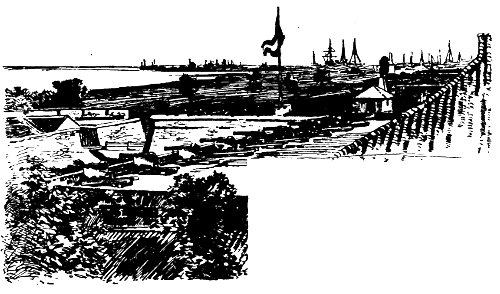
FORTIFICATIONS OF MANILA.
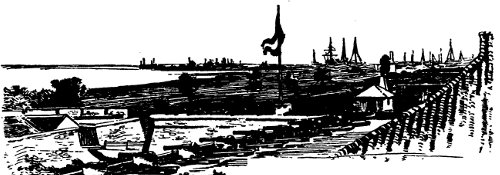

FORTIFICATIONS OF MANILA.
THE RED CROSS OF OREGON.
From the Red Cross of Oregon, comes the following report, forwarded by Mrs. Levi Young. In transmitting the report Mrs. Young says: “While it may be longer than desired, still we feel that the eyes of our country have been more particularly turned toward Cuba and the relief work done by the eastern branches, while the Pacific Coast has been doing a work second to none. Conditions here make it difficult to raise the necessary funds, and every dollar expended represents untiring devotion to the cause:”
The call “to arms” was still ringing through the land, when a band of patriotic women responding to an appeal for assistance assembled at the armory in Portland, Oregon, on the morning of April 26, to offer their services to the military board of the State in providing material, aid and comfort for the Second Regiment Oregon Volunteers.
Colonel O. Summers was present and briefly explained the object of the appeal. He suggested that as speedily as possible a society be formed to take up that branch of work which belongs alone to women in time of war and consists in providing the requisites for a soldier’s welfare not laid down in army regulations.
Temporary offices were chosen, and twelve committees were appointed. Each committee consisted of six members, the chairman selecting those she desired as helpers. The duty of each committee was the personal supervision of one company alphabetically assigned to it.
Final organization was perfected April 27, when the following permanent officers were elected: Mrs. Henry E. Jones, president; Mrs. W.A. Buchanan, vice-president; Mrs. F.E. Lounsbury, recording secretary; Mrs. Martin Winch, treasurer. The executive committee, Mrs. O. Summers, Mrs. A. Meier, Mrs. Levi White, Mrs. W.T. Gardner, Mrs. B.E. Miller, Mrs. J.E. Wright, Mrs. E.C. Protzman, Mrs. R.S. Greenleaf, Mrs. G.T. Telfer and Mrs. J.M. Ordway.
The name, “Oregon Emergency Corps,” was adopted and Mrs. W.A. Buchanan, Mrs. Levi Young appointed to draft a constitution. This was presented at the next regular meeting and after a slight revision, unanimously adopted.
Preamble to Constitution.
“The Oregon Emergency Corps realizing that its aims and objects are far-reaching, will remain a permanent organization to aid not only the brave Oregon Volunteers upon land or sea, but assist in the welfare of the wives and children, many of whom may need care and support while their loved ones are absent.”
In compliance with the provisions of the constitution, the following standing committees were appointed:
Finance Committee.—Mrs. Charles F. Beebe, Mrs. Ben Selling, Mrs. H.W. Goddard.
Auditing Committee.—Mrs. H.W. Wallace, Mrs. James Jackson, Mrs. J. Frank Watson.
Purchasing Committee.—Mrs. H.H. Northrup, Mrs. Adolph Dekum, Mrs. B. Blumauer.
Sewing Committee.—Mrs. Wm. Patterson, Mrs. W.C. Alvord, Mrs. A.E. Rockey, Mrs. E. Nollain, Miss T. Rose Goodman.
Press Committee.—Mrs. Levi Young, Mrs. H.L. Pittock, Miss Ida Loewenberg.
Naval Committee.—Mrs. John Cran, Miss Nina Adams, Miss Zerlina Loewenberg, Miss Carrie Flanders, Miss Lena Brickel.
A suitable badge was adopted and a membership list opened, affording all patriotic women an opportunity to enroll their names and become active workers of the corps. Regular meetings were held at the armory once a week, the executive committee meeting at the call of the president as often as the business of the society required. Being now in readiness for work, the question arose as to what should be done and the most practical way of doing it. To this end the military board was consulted and valuable suggestions received from General Charles F. Beebe, Colonel James Jackson, Colonel B.B. Tuttle and Major Daniel J. Moore, brigade commissary, O.N.G., each advising that a regimental fund for the Second Regiment Oregon Volunteers be raised; also the making and purchasing of such articles for a soldier’s knapsack as army quartermasters do not keep in stock.
A room on First street was placed at the disposal of the society by Mr. Adolph Dekum, and here the Oregon Emergency Corps’ headquarters opened May 5, 1898. Captain R.S. Greenleaf, of Battery A, kindly detailed members of the company to decorate and make attractive the room, loaning for this purpose the historic centennial flag which, for the first time in over twenty years, passed from the custody of the company. Members of the battery reported for duty each morning, thus assisting the committee of ladies in charge in many ways.
A telephone was put in by the Oregon Telephone Company, electric lights supplied by the General Electric Company, chairs, tables and other furnishings provided by the business houses of the city. The Singer Machine Company sent sewing machines for the use of the supply committee and work began in earnest. Women from every part of the community representing church, club and society organizations, enrolled their names and offered their services in the emergency call, showing more plainly than words can describe the broadening influence of these organizations upon the mother heart of the land. Laying aside prejudices, creeds and personal affiliations, they became a unit in this patriotic work. Day after day with aching hearts but smiling faces they toiled—the membership grew into the hundreds—subscriptions came pouring in, the sums ranging from $100 to the dimes, nickels and pennies of the children.
Word was received that the volunteers of Oregon were to be mobilized at Portland and on April 27, Brigadier-General Charles F. Beebe, O.N.G., issued special orders for the preparation of a suitable camp within the city limits. The site selected was the Irvington race track, and April 29 one hundred and sixty-one tents were pitched, the name, Camp McKinley, adopted and on the morning of April 30, 1898, the first company arrived and active camp life began.
Members of the different committees of the Emergency Corps visited the camp daily, consulting with the commanding officers as to the health, comfort and needs of the soldiers in their charge. Open house was kept at headquarters for the volunteers when in the city and everything human ingenuity could suggest and loving hearts contribute to smooth the pathway from comfortable civil life to the hardship and discipline of camp life was done. This was not planned nor worked out by one person but by united effort on the part of all, whose kindly ministrations grew out of a desire to cheer and encourage these brave Oregon volunteers—the flower of the State—who had given up home and position, offering their lives to their country in the noble work of liberating an oppressed and outraged people.
Meantime circular letters had been sent to the cities and towns throughout the State urging the patriotic women to form auxiliaries for the purpose of raising money to swell the regimental fund and also help in the purchasing of a flag to be presented to the volunteers by the women of the State.
Hood River was the first to respond with Roseburg, Pendleton, Corvallis, Hillsboro, LaFayette, LaGrande, Hubbard, Weston, Woodburn, Astoria and The Dalles, quickly falling into line. Faithfully have these auxiliaries assisted in every line of work that it has been found necessary to take up—contributions of money and supplies have been given, while in their respective localities a fund has been raised to assist the families of the volunteers. Hospital supplies of caps, fever belts and cordials are constantly forwarded, and daily, letters are received asking for instructions.
On Sunday, May 8, a patriotic and sacred concert was given at Camp McKinley to increase the regimental fund that the Emergency Corps were raising and the proceeds netted the creditable sum of $1399.35. The attendance of over ten thousand people was an evidence of their zeal and desire to contribute their mite toward the object. The program was furnished by the First Regiment Band, Miss Rose Bloch and Madame Norelli. It was a scene never to be forgotten by that vast audience when, at the close of the evening drill, the stars and stripes were slowly lowered at the booming of the sunset gun, and the long lines of volunteers, motionless as statues, listened as the inspiring strains of the Star Spangled Banner floated upon the summer air, while the setting sun, kissing the peak of the distant snow-crowned mountain, shed its departing rays like a heavenly benediction upon these sons of valor.
May 11, 1898, the first battalion consisting of Companies A, B, C, D, Second Regiment Oregon Volunteers, under command of Major C. H. Gantenbein, by order of the War Department, left for San Francisco and one week later, May 16, Companies E, F, G, H, I, K, L and M, under command of Colonel O. Summers, broke camp and proceeded to join the others at the Presidio to await transportation to Manila.
To the captains of these respective companies, the Oregon Emergency Corps gave one hundred dollars in gold coin as an emergency fund. To Major M.H. Ellis, commanding regimental surgeon in charge of the Hospital Corps, was given one hundred dollars, also eight hundred yards of flannel for bandages. In addition to this, contributions from other sources made the available amount fully two thousand dollars.
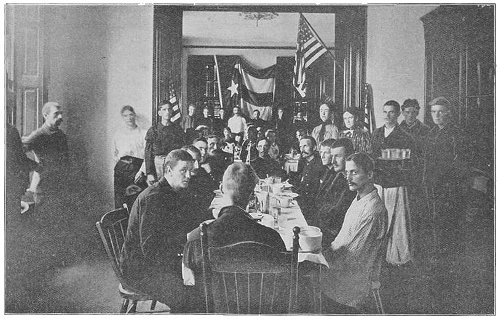
RED CROSS DINING ROOM FOR CONVALESCENTS, FORT McPHERSON, GA.
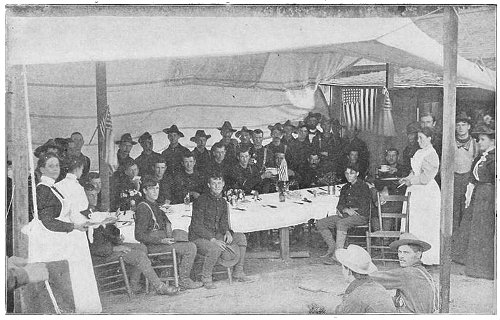
DINING TENT ATTACHED TO RED CROSS KITCHEN, AT CAMP HOBSON, GA.
After the departure of the volunteers for San Francisco the headquarters were transferred from First street to the Armory which the military board turned over to the Emergency Corps for their use. Here meetings were held, a bureau of information established with a committee in charge, and all other business transacted.
On May 14 an offer was made by the firm of Lipman, Wolfe & Co., to turn over their department store to the Emergency Corps upon any date they might select. The entire charge of this establishment was to be assumed by the organization for one day—ten per cent of all sales to go to the regimental fund. To this generous offer was added the privilege of serving a mid-day lunch and introducing other suitable features that would help to swell the treasury. This offer was unanimously accepted and on May 17 the most novel scene ever witnessed in Portland’s business history, was presented. Women, prominent in charitable and philanthropic work, leaders of society, sedate and stately matrons, assumed control of the various departments of this large business house, acting as superintendent, assistant superintendent, cashier and floor managers, while a hundred or more of Portland’s fair daughters from early morning till late at night stood behind the counters serving customers. The store was gaily decorated with flags, bunting and roses; music was furnished by the Kinross Orchestra and Columbia Mandolin Quartette. Thousands of purchasers who had waited for this day surged back and forth through the aisles, crowded stairways and elevators in their haste to give their ten per cent to the soldiers’ fund. The East Indian department which was transformed into a most enticing restaurant proved inadequate to the demand, as hundreds whom it was impossible to serve, were turned away. The result proved the success of the venture, one thousand dollars being added to the treasury of the society while the remark made by the senior member of the firm that it had “been the happiest day in a business career of over thirty-five years,” left no other conclusion than that a twofold blessing follows such generous deeds.
After the departure of the Second Regiment for San Francisco the Emergency Corps continued the work of its supply department in meeting the wants of the soldiers—not only Oregon volunteers but all or any needing assistance. May 23 an appeal was received from a member of the Red Cross Society in San Francisco for fever belts and sleeping caps as it was impossible to meet the needs for these articles then existing. The following telegram was at once sent:
Red Cross Society, San Francisco, Cal.
Greeting:—Count on us; will send one thousand caps and one thousand fever belts.
Oregon Emergency Corps.
Work was at once begun and in a few days the supplies were shipped to 16 Post street.
The Sewing Committee has continued its labors, hundreds of articles being made and furnished to the Second Regiment Engineer Corps Oregon recruits and Washington volunteers, etc.
It has been the privilege of the Oregon Emergency Corps to entertain all troops passing through Portland en route to different stations on the coast. This was at first done at the Union depot, where the soldiers were met by committees and served a substantial lunch, consisting of coffee, sandwiches, cake, fruit, etc. In this branch of work the Flower Mission, composed of twenty or more young women, have rendered valuable assistance in serving refreshments and decorating the trains. Tons of flowers have been donated for this purpose and the departing soldier has been given a bouquet of Oregon roses in addition to his box of lunch. Frequently has a letter accompanied by a box of flowers been sent at the request of husbands, brothers and sons to their distant homes, and replies received from many have made sweeter the saying, “Small service is true service while it lasts.”
After the use of the armory was tendered the corps by the State Military Board, the soldiers were met on their arrival at the depot and escorted to military headquarters and lunch served in the spacious drill hall. The freedom of the building was extended, the gymnasium, bowling alley, reading room, etc., affording rest and recreation for all.
In July the work was found to be increasing so rapidly that it was necessary to enlarge the executive staff. To this end the president made the following appointments: first assistant, Mrs. Levi Young; second assistant, Mrs. H.W. Wallace; assistant to treasurer, Mrs. Wm. Patterson; assistant for correspondence, Mrs. Edmund Nollain; assistant for recording, Mrs. Lischen Miller.
Headquarters were again established at 137 First street, to meet the request of business men and others who wished to contribute to the society and found the armory at an inconvenient distance.
An honorary membership list was opened with the fee fixed at one dollar. This list at present numbers over 300, and among the named recorded are those of Captain C.E. Clark, of the battleship “Oregon,” Hon. Edward Everett Hale, General Longstreet, Hon. Jos. E. Sheldon and Mrs. James Shafter.
The total membership of the society is 1557. Of this number 553 are members of auxiliary corps, leaving 1004 members for the Portland organization. The membership of the various auxiliaries is as follows:
Weston27
Astoria69
Hillsboro69
Pendleton38
Lafayette33
Corvallis51
La Grande39
Hood River21
Hubbard10
Roseburg100
Woodburn23
The Dalles80
Valuable service has been rendered the State of Oregon by a member of the corps, Madame A. de Fonfride Smith, who has compiled an “Official Roster” of the enlisted men for 1898. This has been entirely her own work and contains a careful history sketch of each member of the State Military Board, officers of the Second Regiment and the name of every volunteer. This little book is tastefully bound and illustrated with views of Camp McKinley and photographs of the officers of each company. The author has visited nearly every town in the State from which volunteers were recruited circulating the work, while a copy has been kept for every man whose name is recorded on its pages. Several thousand copies have been sold and the net proceeds are to be a contribution to the treasury of the Emergency Corps. In work of this kind Oregon stands alone, being the only State that is the fortunate possessor of so concise and comprehensive history of its brave sons.