Chapter XIII · SHOT DOWN.
Reading edition
A wasp flew out upon our fairest son,
And stung him to the quick with poisoned shaft,
The while he chatted carelessly and laughed,
And knew not of the fateful mischief done.
And so this life, amid our love begun,
Envenomed by the insect’s hellish craft,
Was drunk by Death in one long feverish draught,
And he was lost—our precious, priceless one!
Oh, mystery of blind, remorseless fate!
Oh, cruel end of a most causeless hate!
That life so mean should murder life so great!
What is there left to us who think and feel,
Who have no remedy, and no appeal,
But damn the wasp and crush him under heel?—Holland.
The Senate had adjourned. The bitterness of the political contest at Albany had subsided. Washington was deserted for the summer. Mrs. Garfield, slowly recovering from her long illness, was regaining health and courage at Long Branch. It was the purpose of the President, as soon as the pressing cares and anxieties of his great office could be put aside, to join his wife by the sea-side, and to enjoy with her a brief respite from the burdens and distractions which weighed him down. His brief life at the White House had been any thing but happy. Sickness had entered almost from the date of his occupancy. The political imbroglio in the Senate, and afterwards in New York, had greatly annoyed him. He had had the mortification of seeing, in the very first months of his administration, his party torn with feuds, and brought to the verge of disruption. The clamor for office was deafening, and he had been obliged to meet and pacify the hungry horde that swarmed like locusts around the capital. All this he had, during the spring and early summer, met with the equanimity 518and dignity becoming his high station. So with the coming of July he purposed to rest with his family for a brief season by the sea. Afterwards he would visit Williams College and make arrangements for the admission of his two sons to those same classic halls where his own youthful thirst for knowledge had been quenched.
On the morning of the 2d of July—fatal day in the calendar of American history—the President made ready to put his purpose into execution. Several members of the Cabinet, headed by Secretary Blaine, were to accompany him to Long Branch. A few ladies, personal friends of the President’s family and one of his sons, were of the company; and as the hour for departure drew near, they gathered at the dépôt of the Baltimore and Potomac Railway to await the train. The President and Secretary Blaine were somewhat later than the rest. On the way to the dépôt the Chief Magistrate, always buoyant and hopeful, was more than usually joyous, expressing his keen gratification that the relations between himself and the members of his Cabinet were so harmonious, and that the Administration was a unit.
When the carriage arrived at the station at half past nine o’clock, the President and Mr. Blaine left it and entered the ladies’ waiting-room, which they passed through arm in arm. A moment afterwards, as they were passing through the door into the main room two pistol shots suddenly rang out upon the air. Mr. Blaine saw a man running, and started toward him, but turned almost immediately and saw that the President had fallen! It was instantly realized that the shots had been directed with fatal accuracy at the beloved President. Mr. Blaine sprang toward him, as did several others, and raised his head from the floor. Postmaster-General James, Secretary Windom, and Secretary Lincoln, who had arrived earlier at the train, were promenading on the platform outside. They, together with the policemen who were on duty in the neighborhood, immediately rushed to the spot where their fallen chief lay weltering in blood. A moment afterwards the assassin was discovered, and before he could lose himself in the crowd the miserable miscreant was confronted 519by the rigid, passionate faces and strong uplifted arms of those to whom their own lives were but a bauble if they might save the President. The dastardly wretch cowered before them, and in the middle of B Street, just outside of the dépôt, was seized by the policemen and disarmed. A pistol of very heavy caliber was wrenched out of his hand, and it became clear that a large ball had entered the President’s body. The assassin gave his name as Charles Jules Guiteau, and begged to be taken safely to jail. He was instantly hurried to police head-quarters and confined; and it was well for him that he was thus out of the way of the angry populace, who would not have hesitated to put an instant and tragic end to his despicable career.
The poor President was borne on a couch to a room in the second story, and a preliminary examination of his wounds was made; but the ball, which had entered the right side of his back, near the spinal column and immediately over the hip bone, could not be found. The sufferer moaned at intervals, but otherwise uttered no complaint; was conscious at all times except when under the influence of opiates, and was cheerful. When, in answer to his eager question, the physicians informed him that he had “one chance in a hundred” of living, he said calmly and bravely: “Then, doctor, we will take that chance!” Before he was removed from the dépôt his heart turned anxiously to his wife, and to her he dictated, by Colonel Rockwell, the following touching and loyal dispatch:
“Mrs. Lucretia R. Garfield:
“The President wishes me to say to you from him that he has been seriously hurt. How seriously he can not yet say. He is himself, and hopes you will come to him soon. He sends his love to you.
“A. F. Rockwell.”
Colonel H. C. Corbin, Assistant Adjutant-General, immediately telegraphed for a special train to convey Mrs. Garfield to Washington, and frequent dispatches, giving the latest intelligence of the President’s condition, were sent to meet her at different stations. In a few minutes after the shooting several physicians were beside the wounded President. First of those who were summoned 520was Dr. D. W. Bliss, who from first to last remained in charge as chief attending surgeon. Associated with him were Surgeon-General J. K. Barnes and Drs. J. J. Woodward and Robert Reyburn. It was at once determined to remove the President to the White House at the earliest practicable moment. Within a half hour preparations to that end had been made. At ten o’clock every thing was in readiness. The main room of the dépôt building was cleared, and in a few moments the wounded President was borne through the building and placed in an ambulance which was in waiting on the outside. He bore the removal with great fortitude, not uttering a complaint or groan. The ambulance was surrounded by a cordon of police, and the horses were whipped into a gallop all the way to the White House. An excited crowd followed at a run, but were stopped at the White House, and none but a select few admitted.
Meanwhile the excitement was at fever heat throughout the panic-struck city. Even before leaving the dépôt the pressure for admittance to the room where the President was lying was so great that the police could not keep back the crowd. Men persisted that they must see the President, despite the surgeons’ orders that the room and hallways must not be filled up. Upon the arrival of the ambulance at the White House the gates of the Executive grounds were immediately closed and guarded by soldiers and policemen, and nobody was admitted without authority from the President’s private secretary. Those members of the Cabinet who were not at the dépôt when the shooting took place were immediately summoned, and all of them remained in attendance at the Executive Mansion during the day.
After the President’s removal, he began to react from the first shock of the wound. Several encouraging dispatches were sent out. At 11:30 A. M. the first official bulletin was issued by the physicians in attendance. It was as follows:
“The President has returned to his normal condition. Will make another examination soon. His pulse is now 63.”
An hour later a second bulletin was issued:
521“The reaction from the shot injury has been very gradual. The patient is suffering some pain, but it is thought best not to disturb him by making an exploration for the ball until after the consultation at 3 P. M.”
From that hour, however, the symptoms became unfavorable; and at 2:45 P. M. the following unofficial dispatch was issued:
“Executive Mansion, 2:45 P. M.
“No official bulletin has been furnished by Dr. Bliss since 1 o’clock. The condition of the President has been growing more unfavorable since that time. Internal hemorrhage is taking place, and the gravest fears are felt as to the result.”
As yet no critical knowledge of the President’s injury had been reached. There was nothing on which the people could base a judgment of the relative probabilities of recovery and death. The shadows of evening gathered, and the darkness of night settled over fifty millions of sorrowing people.
The minds of all naturally reverted to the assassin. The hope was cherished that he would prove to be a lunatic or madman, and that the American people would thus be spared the horrid contemplation of a cold-blooded attempt against the life of the noble statesman who had been called by the voice of his countrymen to the highest place of honor. This hope, however, was soon dispelled. The assassin was found to be a mixture of fool and fanatic, who, in his previous career, had managed to build up, on a basis of total depravity, a considerable degree of scholarship. He was a lawyer by profession, and had made a pretense of practicing in several places—more particularly in Chicago. In that city and elsewhere he had made a reputation both malodorous and detestable. In the previous spring, about the time of the inauguration, he had gone to Washington to advance a claim to be Consul-General at Paris. He had sought and obtained interviews with both the President and Mr. Blaine, and pretended to believe that the former was on the point of dismissing the present consul at Paris to make a place for himself! Hanging about the Executive 522Mansion and the Department of State for several weeks, he seems to have conceived an intense hatred of the President, and to have determined on the commission of the crime. Unless his motive can be found in this, it would seem impossible to discover for what reason his foul and atrocious deed was committed. In the whole history of crime, it would, perhaps, be impossible to find a single example of a criminal with a moral nature so depraved and loathsome as that displayed by Guiteau in the cell to which he was consigned.
The second day.—The morning was anxiously awaited. The first news from Washington gave grounds of hope. The President’s mind had remained clear, and his admirable courage had had a marked effect in staying his bodily powers against the fearful effects of the wound. Mrs. Garfield had, meanwhile, reached Washington, and was at her husband’s bedside. Both were hopeful against the dreadful odds, and both resolved to face the issue with unfaltering trust. In the course of the early morning the President was able to take nourishment, thus gaining a small measure of that strength so needful in the coming struggle. The morning bulletins from the attending surgeons were as follows:
“Washington, July 3, 2:45 A. M.
“The President has been quietly sleeping much of the time since 9 P. M., awakening for a few moments every half hour. He has not vomited since 1 A. M., and is now taking some nourishment for the first time since his injury. Pulse, 124; temperature, normal; respiration, 18.
“D. W. Bliss, M. D.
“4 A. M.—The President has just awakened, greatly refreshed, and has not vomited since 1 A. M., having taken milk and lime-water on each occasion, frequently asking for it. Pulse, 120—fuller and of decidedly more character; temperature, 98 2–10; respiration, 18. The patient is decidedly more cheerful, and has amused himself and watchers by telling a laughable incident of his early career.
“D. W. Bliss, M. D.
“6 A. M.—The President’s rest has been refreshing during the night, and only broken at intervals of about half hours by occasional pain in the feet, and to take his nourishment of milk and lime-water and bits 523of cracked ice, to relieve the thirst, which has been constant. He is cheerful and hopeful, and has from the first manifested the most remarkable courage and fortitude.
“7:50 A. M.—This morning the physicians decide that no effort will be made at present to extract the ball, as its presence in the location determined does not necessarily interfere with the ultimate recovery of the President.
“7:57 A. M.—Most of the members of the Cabinet who watched at the Executive Mansion last night remained until a late hour this morning.
“11 A. M.—The President’s condition is greatly improved. He secures sufficient refreshing sleep; and, during his waking hours, is cheerful, and is inclined to discuss pleasant topics. Pulse, 106—with more full and safe expression; temperature and respiration, normal.
“D. W. Bliss, M. D.”
In the afternoon of the second memorable day, however, the President’s symptoms grew worse, and news well calculated to alarm was telegraphed to all parts of the country. Of one thing there could be no doubt, and that was that the heart of the Nation was stirred to its profoundest depths, and that the whole civilized world was in sympathy with the American people and their stricken head. In London the news created the profoundest sensation. The Queen, from Windsor Palace, at once telegraphed to learn the facts, and then ordered her Minister of Foreign Affairs to send the following dispatch:
“To Sir Edward Thornton, British Embassy, Washington: The Queen desires that you will at once express the horror with which she has learned of the attempt upon the President’s life, and her earnest hope for his recovery. Her Majesty wishes for full and immediate reports as to his condition.
Lord Granville.”
From almost every civilized nation came similar messages of sympathy. Hardly a distinguished man in America failed to go on record in some way to express his horror and detestation of the crime that had been committed. The spirit of party was utterly forgotten. The South and the North were at last as one. 524The old Southern soldiers who had fought many a fierce battle under Lee and Johnston, as well as the legionaries who sprang up at the call of Lincoln, burst into tears at the thought of Garfield bleeding!
The afternoon bulletins of this first sad Sunday of July were well calculated to excite apprehension. The physicians said:
“2 P. M.—The President has slept a good deal since last bulletin, though occasionally suffering from pain in both feet and ankles. Pulse, 104; respiration, 18; temperature, nearly normal. While the President is by no means out of danger, yet his symptoms continue favorable.
“D. W. Bliss, M. D.
“6 P. M.—There is no appreciable danger since last bulletin. The President sleeps well at intervals. Pulse, 108; temperature and respiration normal.
“D. W. Bliss,
“J. K. Barnes,
“J. J. Woodward.
“10:30 P. M.—The condition of the President is less favorable. Pulse, 120; temperature, 100; respiration, 20. He is more restless, and again complains of the pain in his feet.
“D. W. Bliss,
“J. K. Barnes,
“J. J. Woodward,
“Robert Reyburn.”
The third day.—For the American people the morning sun of the Glorious Fourth shed only a disastrous twilight. Never before did this vast and sensitive citizenship waken to the realization of such a Fourth. In almost all parts of the country preparations had been made to observe the day with more than the usual outburst of patriotism. All this was turned to doubt and sorrow. The orator could speak of nothing but the wounded President and his probable fate. The people would hear nothing but dispatches that told of either reviving hope or coming despair. In many cities and country places the celebration was wholly abandoned; in others the ceremonies were changed so as to be in keeping with the great national calamity. The people sat down in the shadow of their grief and waited for the worst.
On the morning of the Fourth the distinguished Dr. D. Hayes 525Agnew, of Philadelphia, and Dr. Frank H. Hamilton, of New York City, arrived at Washington, having been called thither as consulting surgeons. On their arrival they made a critical examination of the President’s condition and the method of treatment adopted by the physicians in charge, and thereupon issued the following bulletin:
“Executive Mansion, 8:15 A. M.
“We held a consultation with the physicians in charge of the President’s case at 7 o’clock this morning, and approve in every particular of the management and of the course of treatment that has been pursued.
“Frank H. Hamilton, of New York.
“D. H. Agnew, of Philadelphia.”
The regular announcement appeared at the same time and carried to the people, far as the lightning’s wings could bear it, the following message:
“8:15 A. M.—The condition of the President is not materially different from that reported in the last bulletin (12:30 A. M.). He has dozed at intervals during the night, and at times has complained of the pain in his feet. The tympanitis has not sensibly increased. Pulse, 108; temperature, 99.4; respiration, 19.
“D. W. Bliss,
“J. K. Barnes,
“J. J. Woodward,
“Robert Reyburn,
“Frank H. Hamilton,
“D. Hayes Agnew.”
To this bulletin was added the report of a free conversation with Dr. Bliss, in which he said of the President’s condition and prospects:
“I admit that his state is very precarious, and the balance of probabilities is not in his favor, and yet there is reasonable ground for hope. We can not say that he is better or worse than he was last night, except that he has gained eight hours of time, and his strength appears not to have declined. The symptoms of peritoneal inflammation are not more grave now than they were eight hours ago.”
The morning wore away in suspense, and the noonday report of the physicians was anxiously awaited. It was felt, however, that every hour now added to the President’s life was a fair indication 526that he would have some chance in the final struggle for recovery. Just after noon the following report was issued by the surgeons:
“12:30 P. M.—There has been but little change in the President’s condition since the last bulletin. Complains much less of the pain in his feet. Light vomiting occasionally. Pulse, 110; temperature, 100; respiration, 24.
“D. W. Bliss,
“J. K. Barnes,
“J. J. Woodward,
“Robert Reyburn.”
Meanwhile a diagnosis of the President’s condition had been made, and though there was not entire unanimity as to the course of the ball and the consequent character of the wound, yet the physicians gave it as their opinion—some of them positively so declaring—that the ball, after striking the President’s back above the twelfth rib and about two and a half inches to the right of the spine, had plunged forward and downward, fracturing the rib, penetrating the peritoneal cavity, piercing the lower lobe of the liver, and lodging perhaps in the front wall of the abdomen. The treatment during the first week after the President was wounded was based upon this diagnosis, but gradually thereafter the idea that the ball had traversed the body in the manner indicated was abandoned and a modified theory adopted in its stead.[1]
527As the Fourth wore away the fear of immediate death somewhat subsided. At half-past seven in the evening the surgeons’ bulletin carried the following message to the public:
“7:35 P. M.—The President this evening is not so comfortable. He does not suffer so much from pain in the feet. The tympanitis is again more noticeable. Pulse, 126; temperature, 101.9; respiration, 24. Another bulletin will be issued at 10 P. M., after which, in order not to disturb the President unnecessarily, no further bulletins will be issued until to-morrow morning.
“D. W. Bliss,
“J. K. Barnes,
“J. J. Woodward,
“Robert Reyburn.”
Taken all in all the advices during the day respecting the President’s condition had been more encouraging than those of the day before, when despondency seemed to be making itself generally felt in Washington and throughout the country.
An unofficial bulletin at midnight—the last issued for the day—announced a further improvement, the pulse and temperature having again changed slightly for the better. At that hour the President was sleeping quietly. The peritoneal inflammation had decreased somewhat during the evening, and there was, generally speaking, a larger ground for hope. During the day from the extremes of the earth had come the profoundest expressions of sorrow for the great calamity to the Republic. From Prince Charles, of Bucharest, was received the following touching dispatch:
“Bucharest, Catrocini, July 4, 1881.
“To President Garfield, Washington:
“I have learned with the greatest indignation, and deplore most deeply, the horrible attempt against your precious life, and beg you to accept my warmest wishes for your quick recovery.
Charles.”
On the same day from far-off Japan this message of sympathy was sent to the Minister resident of the Royal Government at Washington:
“Tokio, July 4, 1881.
“To Yoshida, Japanese Minister, Washington:
“The dispatch announcing an attempt upon the life of the President 528has caused here profound sorrow, and you are hereby instructed to convey, in the name of His Majesty, to the Government of the United States, the deepest sympathy and hope that his recovery will be speedy. Make immediate and full report regarding the sad event.
“Wooyero,
“Acting Minister for Foreign Affairs.”
So the sun went down upon the national anniversary, and the stars of the summer night looked upon an anxious and stricken people.
The fourth day.—The morning of the 5th of July broke with a more cheerful message. The President was decidedly better. The improvement in his condition was noticed shortly before midnight of Monday, and had become marked. The first bulletin of the morning was so reassuring that the feeling of relief became general, and a cheerful hopefulness succeeded the dread of the previous day. The crowds of anxious people in all parts of the country returned slowly to their vocations—not, indeed, with a feeling of security, but with a good degree of hope for the President’s ultimate recovery. The members of the Cabinet experienced such a sense of relief that they were enabled to give consideration to their official duties. The President’s physicians, while not taking a sanguine view of his case, did not discourage the hope of final recovery. The President—so said the bulletins—took nourishment and retained it. His pulse was lower throughout the day, and altogether his symptoms were such as to afford no little encouragement. The first official bulletin was issued at half-past eight in the morning. It was as follows:
“8:30 A. M.—The President has passed a comfortable night, and his condition this morning is decidedly more favorable. There has been no vomiting since last evening at 8 o’clock, and he has been able to retain the liquid nourishment administered. There is less tympanitis and no abdominal tenderness except in the wounded region. Pulse, 114; temperature, 100.5; respiration, 24.
“D. W. Bliss,
“J. K. Barnes,
“J. J. Woodward,
“Robert Reyburn.”
529Drs. Agnew and Hamilton had both, in the meantime, been called to their homes. To them the attending surgeons communicated their views of the President’s condition more fully in a message during the forenoon, as follows:
“Executive Mansion, 9:30 A. M.
“After you left the urgent symptom continued. There was much restlessness, constant slight vomiting, and by 8 o’clock P. M. the President’s condition seemed even more serious than when you saw him. Since then the symptoms have gradually become more favorable. There has been no vomiting nor regurgitation of fluid from the stomach since 8 o’clock last evening.
“The President has slept a good deal during the night, and this morning expresses himself as comparatively comfortable. The spasmodic pains in the lower extremities have entirely disappeared, leaving behind, however, much muscular soreness and tenderness to the touch. There is less tympanitis, and no abdominal tenderness whatever, except in the hepatic region. Since 8 P. M. he has taken an ounce and a-half of chicken broth every two hours, and has retained all. The wound was again dressed antiseptically this morning. Altogether but one-half a grain of morphia has been administered hypodermically during the last twenty-four hours, and it has been found quite sufficient. His pulse, however, still keeps up. At 8:30 A. M. it was 114; temperature, 100.5; respiration, 24. Seventy-two hours have now elapsed since the wound was received. We can not but feel encouraged this morning, although, of course, we do not overlook any of the perils that still beset the path toward recovery. The course of treatment agreed upon will be steadily pursued.
“D. W. Bliss,
“J. K. Barnes,
“J. J. Woodward,
“Robert Reyburn.”
In the course of the day the feeling of confidence grew apace. There were not wanting many grave apprehensions, the most serious of all being the fear that the dreaded peritonitis would set in and destroy the President’s life. But the hours crept by, and no symptoms of such inflammation appeared. The President, though restless and somewhat weakened, kept in good courage; and during the forenoon, awaking from sleep, denounced with not a little spirit the “wishy-washy” food which the doctors prescribed for him. During the day it was quite clearly determined from the 530natural indications of the case, that, contrary to the previously expressed views of the attending physicians, the President’s internal organs had not been perforated by the ball. This discovery gave additional grounds of hope. The noonday bulletin strengthened rather than discouraged the idea of ultimate recovery:
“12:30 P. M.—The favorable condition of the symptoms reported in the last bulletin continues. There has been no recurrence of the vomiting. Pulse, 110; temperature, 101; respiration, 24. The President lies at present in a natural sleep. No further bulletins will be issued till 8:30 P. M., unless in case of an unfavorable change.
“D. W. Bliss,
“J. K. Barnes,
“J. J. Woodward,
“Robert Reyburn.”
Under the assurances given by the surgeons the people began to find time to discuss the collateral circumstances of the crime, the character of the criminal, what should be his punishment, the course of events in case of President Garfield’s death, and the danger in general to be apprehended from political assassins. At first it was believed that the criminal had committed the deed on account of rebuffs received in seeking an appointment. This, Guiteau himself stoutly denied, declaring that he had tried to destroy the President wholly and solely for the good of the country, and at the command of God! He had been influenced only by high and patriotic motives! When the people came to understand the reasons why he had shot the President, against whom he had not the slightest enmity, they would change their mind as to him and his deed! Every utterance of the monstrous villain was of the self-same character, and to all his loathsome speeches was added the disgusting cowardice which he constantly exhibited in his cell.
Many incidents in the previous life of Guiteau came to the surface and were published. It was found that he had come to Washington shortly after March 4. On April 8 he made his appearance at the Navy Department library and registered his name on the visitors’ book. He returned on April 14, and from that time up to the time of the adjournment of the Senate he was a daily 531visitor. On one occasion he had told the librarian, Captain J. Ross Browne, that he was going to be appointed Consul to France. He had been on hand every day, sometimes before the library was opened, and remained all day. He had never shown himself very communicative, and when spoken to he responded in monosyllables. He seemed to be of a morose disposition, but was quiet and orderly in his manner. While in the library he sat in a corner reading a book. He had thus read Lang’s American Battles, and frequently called for the manual of the Consular Service, over which he would sit pouring for hours. The last book he had read was John Russell Young’s Tour of General Grant. Mr. Browne one day said to him: “I should think if you wanted a place you ought to be up at the Senate or at the State Department. Some one will get ahead of you.”
“I can attend to my own affairs,” was the rather sullen retort, and then glancing up suspiciously, he asked: “Have you told any one about my place?” Further efforts at conversation he repulsed.
The possible event of the President’s death was a subject of the gravest anxiety. It was well known that Vice-President Arthur had not, in the recent imbroglio between the friends of the administration and Senator Conkling, been in sympathy with the President. It was to the Senator indeed that General Arthur owed his nomination. And so among the immediate supporters of the President and a large part of the people generally, there were, in prospect of the Chief Magistrate’s death, deep forebodings of a disastrous reversal of the policy of the government and a universal uproar in the circles of office-holding. General Arthur became the central figure among the possibilities of the future. To the Vice-President the situation was exceedingly trying; but fortunately for the good name of the Republic he so demeaned himself as to win universal respect. His whole bearing from the day of the crime to the close of the scene was such as to indicate the profoundest sorrow and anxiety. His forbearance from comment, beyond giving expression to his grief, was noticed as the result of the exercise of sound common sense under trying circumstances, and the hasty opinions which had been pressed in many quarters when the 532worst was feared were quickly revised and recalled.[2] General Arthur visited the Executive Mansion on the afternoon of the 5th, and remained for an hour in conversation with members of the Cabinet. He did not see the President, the physicians deeming it unwise to admit him. The members of the Cabinet, however, spoke of him in terms of warm friendliness, feeling that he fully shared with them the sympathy and sorrow which they entertained in common with the Nation at large.
The evening bulletin, issued at half-past eight o’clock, was briefly as follows:
“8:30 P. M.—The condition of the President continues as favorable as at the last bulletin. Pulse, 106; temperature, 100.9; respiration, 24. No further bulletin will be issued till to-morrow morning, unless in case of an unfavorable change.
“D. W. Bliss,
“J. K. Barnes,
“J. J. Woodward,
“Robert Reyburn.”
At eleven o’clock of this (Tuesday) evening, Secretary Blaine sent out a dispatch announcing, as the result of the day, “a substantial gain.”
The fifth day.—It was now the crisis of summer. The intense heat was an unfavorable circumstance with which the physicians in charge of the wounded President had to contend. Wednesday was ushered in with a fearfully high temperature. In order to relieve the President as far as possible from the oppression caused by the intense heat, the attending physicians put into operation a simple refrigerating apparatus, which it was thought would render the atmosphere of his room much more comfortable than it had 533been hitherto. It consisted of a number of troughs of galvanized iron, about ten inches in width and fourteen feet in length, placed on the floor along the walls, and filled with water and broken ice. Over these troughs, and corresponding with them in length, were suspended sheets of flannel, the lower edges of which were immersed in the ice-water which filled the troughs. The water was thus absorbed and carried upward by capillary attraction in the flannel, as oil is in the wick of a lamp, until the sheets were saturated. This cold water, both by direct contact with the air, and by the rapid evaporation which took place over the extended surface of the saturated flannel, lowered the temperature of the room. Very soon after this apparatus was put into operation, it made a perceptible change in the temperature, and the President was greatly refreshed. The morning bulletin was given to the public at half-past eight. It said:
“8:30 A. M.—The President has passed a most comfortable night, and has slept well. His condition has remained throughout as favorable as when the last bulletin was issued. The pulse is becoming less frequent, and is now 98; temperature, 98.4; respiration, 23.
“D. W. Bliss,
“J. K. Barnes,
“J. J. Woodward,
“Robert Reyburn.”
This was decidedly the best report which the physicians had yet been able to make. The effect was immediate and wide-spread. What might almost be called a feeling of confidence supervened; the channels of trade flowed on, and the people were elated at the prospect of a complete restoration to life and the duties of his high office of him whom their votes had raised to that high eminence. In all parts of the world expressions of sympathy continued to be given and transmitted to our Government.
His Majesty, the Emperor of Germany, inquired with great anxiety about the condition of President Garfield, and directed his Charge d’Affaires, Count Beust, to inform him thereof by cable. In consequence of Count Beust’s report, His Majesty ordered him to express to Secretary Blaine his satisfaction on account of the favorable information, and his best wishes for the speedy recovery 534of the President. Count Beust, in obedience to the wishes of his Government, and in manifestation of his personal sympathy, called three times during the day at the Executive Mansion.
The noonday bulletin was brief, but satisfactory:
“12:30 P. M.—The President remains quite as comfortable as at the date of the last bulletin. He takes his nourishment well. Pulse, 100; temperature, 99.7; respiration, 23.
“D. W. Bliss,
“J. K. Barnes,
“J. J. Woodward,
“Robert Reyburn.”
Presently, after this report was made, the attending physicians sent to the consulting surgeons a somewhat lengthy dispatch, stating in detail the progress of the President’s case. The general effect of this, as well as of the previous bulletin, was further to allay public anxiety and to strengthen the belief that the President would triumph in the fearful struggle which he was making against the effects of his wound. And to this end, whatever the faith and hope of a great and sincere people could do to alleviate and save was gladly and earnestly given in sympathy and words of cheer. The bulletin of the evening was in the same general tone as the two preceding. It said:
“8:30 P. M.—The President’s condition continues as favorable as at last report. He has passed a very comfortable day, taking more nourishment than yesterday. Pulse, 104; temperature, 100.6; respiration, 23. Unless unfavorable symptoms develop, no further bulletins will be issued until to-morrow morning.
“D. W. Bliss,
“J. K. Barnes,
“J. J. Woodward,
“Robert Reyburn.”
Altogether, the day was the least eventful—certainly the least exciting—of any since the great crime was committed. Discussions as to the character of the President’s injury, and of the probable disposition of Guiteau, took the place of those eager inquiries and indignant comments of the first few days after the deed was done.
The sixth day.—The morning brought nothing in the nature of 535the unexpected, in relation to the President’s condition or his surroundings. If his chances for recovery had not advanced, they had at least not become less than on the previous day. Callers at the White House came and departed in considerable numbers, and the natural tendency of the human mind to build high hopes upon narrow foundations, served to keep the general public, as well as those having more intimate relations with the President, in excellent spirits. While a hundred dangers yet surrounded the path toward restored health, confidence that the courageous Chief Magistrate would travel that path in safety, prevailed more and more. During the day, Dr. Boynton, of Cleveland, for a long time the friend of the President’s family, and recently the attending physician in the case of Mrs. Garfield’s protracted illness, reached Washington, and although not invited to become one of the consulting surgeons, he took his place as an attendant upon the President, and remained near him to the end. The morning bulletin was almost sanguine in its tone:
“Executive Mansion, 9:15 A. M.
“The President has passed a most comfortable night, and continues steadily to improve. He is cheerful, and asks for additional food. Pulse, 94; temperature, 99.1; respiration, 23. There will be no further bulletins issued until 1 o’clock.
“D. W. Bliss,
“J. K. Barnes,
“J. J. Woodward,
“Robert Reyburn.”
This report incited additional hope, and the belief prevailed more and more, both in medical circles and among the people at large, that the President would win the battle. One of the episodes of the day was the publication of a letter from Senator Conkling, which, though really an earnest expression of sympathy for the President and his family, was largely devoted to the question as to whether a discrimination should not be made in the punishment of attempted murder, based on the rank of the person assailed. The distinction was drawn between murder, which seems to require the same punishment whoever may be the victim, and the 536attempt to murder. The Senator’s letter was addressed to Attorney-General MacVeagh, and was as follows:
“Fifth Avenue Hotel, New York, July 5, 1881.
“My Dear Sir: In the abhorrence with which all decent men alike shudder at the attempt to murder the President, I have given thought to a matter to which your attention may or may not have turned. Our criminal code treats premeditated homicide in all cases alike, irrespective of the victim. Murder being visited by the greatest penalty, perhaps no distinction between one case and another could be founded on the public relations held by the person slain. But in case of attempt to murder broad distinctions can be made between assailing the life of an individual, and an attempt to take a life of special value to the whole people. The shocking occurrence of Saturday I think demands that the definition and punishment of assaults aimed at high executive officers, whether successful or not, should be made thoroughly rigorous. The man who attempts the life of the President, if morally responsible, commits an offense which the Nation ought to guard against, and punish by the exertion of all the power civilized nations may employ. I suggest this as deserving consideration.
“My profound sympathies are with the President, and with all of you every hour. The conflict of reports keeps hope and fear striving with each other, with nothing stable except faith and trust, that the worst is overpassed. I wish you would express to the President my deepest sympathy in this hour, which should hush all discords and enlist all prayers for his safe deliverance. Please also give to Mrs. Garfield my most respectful condolence. Trusting that all will be well, cordially yours,
“Roscoe Conkling.”
In the early afternoon another bulletin was issued by the surgeons. The report said
“Executive Mansion, 1 P. M.
“The condition of the President continues quite as favorable as this morning. Pulse, 100; temperature, 100.8; respiration, 23. Unless some unfavorable change should occur no further bulletin will be issued until 8:30 P. M.
“D. W. Bliss,
“J. K. Barnes,
“J. J. Woodward,
“Robert Reyburn.”
It was noticed during the day that the preparations made by the surgeons in attendance on the President indicated their belief 537in a long illness, and the public came to understand that an indefinite period of suspense might be anticipated. As it related to the criminal, it was clear that he would simply be held in custody until such time as might, by the recovery or death of his victim, indicate the technical character of the crime committed, and the punishment consequent thereon. The bulletins sent abroad by Secretary Blaine during the day, especially the one directed to Minister White at Berlin, stated that for the preceding thirty-six hours the improvement in the President’s condition had been steady and constant, and the evening report of the attending surgeons was essentially a repetition of that issued in the afternoon.
The seventh day.—With the morning of Friday there was practically no change to record in the President’s condition. He had passed the night as usual, sleeping and waking at intervals. The weather was excessively hot. Many contrivances and machines were invented and offered to the authorities, the purpose of which was to reduce, by mechanical means, the temperature of the President’s apartment. Several of these instruments were tried, and one, invented by Mr. Dorsey, a skillful mining engineer, was selected and set up in the Executive Mansion. The temperature of the room where the patient lay was thus brought under control and reduced to the desired degree. The morning bulletin of the surgeons was considered especially favorable:
“Executive Mansion, July 8, 8:15 A. M.
“The condition of the President continues favorable. He is more comfortable than on any previous morning. Pulse, 96; temperature, 92; respiration, 23. The wound is beginning to discharge laudable pus.
“D. W. Bliss,
“J. K. Barnes,
“J. J. Woodward,
“Robert Reyburn.”
Soon after this report was issued, however, there was an unfavorable turn in the case, and one of those flurries of excitement, so common in the subsequent history of the President’s progress, occurred. The President grew restless, and complained of weariness. The temperature and pulse and respiration ran up, indicating the presence of considerable fever. This change, however, was 538explained by the physicians as the necessary concomitant of suppuration then beginning in the wound. The noonday bulletin was brief:
“12:30 P. M.—The progress of the President’s case continues to be favorable. Pulse, 108; temperature, 101.4; respiration, 24.
“D. W. Bliss,
“J. K. Barnes,
“J. J. Woodward,
“Robert Reyburn.”
One of the marked circumstances attending the tragic event, the course of which is outlined in these pages, was the universal desire of the American people to do something to contribute towards the President’s recovery. It would be vain to attempt to enumerate the thousand and one expedients and suggestions which, out of the goodness of the popular heart, came from every direction. Each out of his own nature added his own gift. The poet contributed his verse; the physician, his cure; the inventor, his contrivance; the gardener, his choicest cluster; and even the crazy beldam her modicum of witchcraft. From the center of the crowded city to the remotest corners of the prairie the slightest syllable of indifference to the President’s condition would have been instantly resented—first with a look of contempt and then with a blow. The evening bulletin, though pitched in a tone of encouragement, still indicated fever:
“8 P. M.—The President’s condition continues favorable. He has passed a very comfortable afternoon, and has taken more nutriment than on previous days. Pulse, 108; temperature, 101.3; respiration, 24. The conditions continue so favorable that there will be no further bulletin until to-morrow morning.
“D. W. Bliss,
“J. K. Barnes,
“J. J. Woodward,
“Robert Reyburn.”
During the day a brief but touching dispatch was received from the surviving members of the family of the Marquis de LaFayette. Another message came from St. Petersburg expressing, as well it might, the horror of the Czar and his government for the crime of 539assassination.[3] A third was received from the minister for foreign affairs of the Argentine Republic, expressing the sorrow of that government for the great crime which had darkened the annals of American history.
The eighth day.—A week had now elapsed since the President was wounded. His condition was not materially changed. His will and courage were unimpaired, and the reports of the surgeons and attendants indicated—indeed positively declared—a continual improvement. During the day, for the first time since the President was wounded, the three younger members of his family were permitted to visit their father, one at a time. The President had repeatedly asked for them, but it had not been thought advisable to gratify his wish before. Vice-President Arthur also called during the morning.
The morning bulletin appeared as usual, and was as follows:
“Executive Mansion, July 9, 8:30 A. M.
“The President has passed a tranquil night, and this morning expresses himself as feeling quite comfortable. We regard the general progress of the case as very satisfactory. Pulse, this morning, 100; temperature, 99.4; respiration, 24.
“D. W. Bliss,
“J. K. Barnes,
“J. J. Woodward,
“Robert Reyburn.”
Whatever might be the progress of the President’s wound towards recovery, there could be no doubt that the vigor of his mental faculties was nearly up to the standard of health. At times, indeed, there seemed to be an unusual, and, perhaps, unnatural, exhilaration of his faculties. He heard every thing, and 540was eager to talk and to read the papers. Of course, all exciting causes were excluded by the physicians, but the President was restless under the restraint. Sometimes he wished to debate questions with his attendants, and, anon, when that was forbidden, he would indulge in some pleasantry, as was his custom in health. The surgeons noticed that he managed to convey a great deal in a few words. Sometimes he comprised sentences into a single expression. When some one told him that the heart of the people was in bed with him, he replied: “Sore heart.” He did not complain, however; not a querulous word escaped his lips. When he was inclined to debate propositions, and reasons were given him why a thing should be thus, he was very ready to point out any weakness in the reasoning. In a word, the President was himself, and retained possession of all his mental faculties.
The afternoon and evening bulletins were issued at the usual hours. They said:
“1 P. M.—The condition of the President continues to be favorable. Pulse, 104; temperature, 101.2; respiration, 22. The next bulletin will be issued at 8 P. M.
“D. W. Bliss,
“J. K. Barnes,
“J. J. Woodward,
“Robert Reyburn.”
“8:15 P. M.—The President’s condition has continued favorable during the day. The febrile reaction does not differ materially from that of yesterday. Pulse, 108; temperature, 101.9; respiration, 24.
“D. W. Bliss,
“J. K. Barnes,
“J. J. Woodward,
“Robert Reyburn.”
So, after a week of intense anxiety, the twilight of Saturday evening closed around the world, hiding in its folds alike the hopes and the fears of the people.
The ninth day.—It was Sunday again. The Christian public had, from the first, taken up the President’s cause with heartfelt anxiety. Scarcely a pulpit or pew in the land had failed to respond in yearning and prayer for his recovery. This anxiety had been confined to no sect or creed or party. From Romanist to Free-Churchman it was all one voice of sympathy and entreaty 541to heaven for the President’s life. In greater or less degree, millions of men found in themselves a change of feeling, and a growth of appreciation, of thorough trust and of high regard, as they looked anxiously to the bedside of the President. His calm resignation and readiness to meet death, with his cool courage and unwavering resolution to do his best to preserve a life useful and precious to millions; his patient endurance of pain, and of all the restraints deemed essential to his recovery; his tenderness of feeling and his royal strength of will, made him loved with an unspeakable love by millions of true-hearted men and women throughout the land. It was not too much to say that the week which had elapsed had lifted the National standard of true Christian manhood for all time to come. The whole nation was educated by the affliction of one. The people will, perhaps, never realize how much they learned by the bedside of the wounded President. In knowledge of merely material things the whole Nation grew wiser. It had been studying physical injuries, their nature and treatment, with such intense interest, that there were thousands of school-boys who knew more of such subjects than their fathers did when the crime was committed. This, however, was an insignificant part of the knowledge gained. Moral culture was advanced; how much, the people could but surmise. There were millions of men and women who realized, as they had never done before, the value of calm fortitude, resolute will, and strict obedience in time of trial.
The first bulletin of Sunday morning was specially encouraging. It said:
Washington, July 10, 8 A. M.
“The President has passed the most comfortable night he has experienced since he was wounded, sleeping tranquilly, and with few breaks. The general progress of his symptoms continues to be favorable. Pulse, 106; temperature, 100; respiration, 23.
“D. W. Bliss,
“J. K. Barnes,
“J. J. Woodward,
“Robert Reyburn.”
The church services of the day were almost exclusively devoted to sermons on the lessons derived and derivable from the Nation’s 542sorrow, and to prayers for the restoration of the beloved Chief Magistrate. Lessons not a few were drawn from the great national catastrophe, and more particularly from the example which the afflicted chieftain had set to all the people—an example so full of patience and courage as to be cited in praise and panegyric for all time to come. For more than a week it had been as if the Nation were sitting at the bedside of a man in sore distress, counting his pulses, noting his temperature and breathing, and listening for every whispered word. But neither the imminent presence of death nor the agony of long-continued suffering had drawn from the President a single word of anger or vindictiveness toward any one. Such a lesson was not to be lost on the American people, and it was clearly foreseen that if his life should be spared, he would rise to an influence over the public mind and destiny not equaled in the case of any man since the days of Lincoln. In the early afternoon, and again in the evening, the usual bulletins came with brief but encouraging words from the surgeons:
“1 P. M.—The President’s symptoms continue to be favorable. Pulse, 102; temperature, 100.5; respiration, 22. 7 P. M.—The President’s symptoms continue to make favorable progress. Pulse, 108; temperature, 101.9; respiration, 24.”
Unofficial information from the President’s bedside was, however, less favorable than the official reports. Many candid and cautious observers about the sick-room were more apprehensive than the physicians seemed to be, that the President was not so clearly on the road to recovery as could have been hoped. Among the latter was Professor B. A. Hinsdale, of Hiram College, who sent to Cleveland during the day a dispatch for publication among the old friends of the Garfield family, in which he said:
“The President is by no means out of danger, and I do not think it wise for people to settle down in a belief that he is. Of course we have a strong reason to hope that he will recover, but people ought to remember that the road to recovery will be a long one, beset with many dangers.”
543One of the peculiarities of the President’s case was the invariable cheerfulness of the patient. He seemed to regard it as a part of his duty to keep those about him in good spirits, and to aid the physicians in the work of bringing him through. He frequently asked to see the bulletins, and sometimes made humorous remarks about their contents. His food was many times a subject of some jest, and when it did not suit him, he had his revenge by perpetrating some pleasant satire about the offending article, or the cooks who had prepared it. On one occasion, the President asked for a drink, whereupon Major Swaim handed him some milk, to which the physicians had added a small quantity of old rum. The President, after drinking it, looked at Major Swaim with a dissatisfied expression, and said: “Swaim, that’s a rum dose, isn’t it?” On other occasions the sufferer spoke gravely, but always hopefully, of his conditions and prospects, expressing the most earnest hopes for speedy and perfect recovery.
The tenth day.—The weather was still oppressive, and the President was distressed with the heat. The artificial contrivances hitherto employed to reduce the temperature of his room, and to maintain the same at a given degree, had been but partly successful. An effort was now made on a more elaborate scale to overcome the heat by artificial means, and thus to furnish the President as much comfort as a moderate and equable temperature could afford. Monday, the eleventh of July, was mostly devoted to this work. Several fire-engines and large cast-iron boilers were put in position near the east basement door of the White House, and carpenters and machinists were set to work putting up apparatus of enormous proportions, connected with the ventilating machinery. Locomotive head-lights to illuminate the scene were supplied, so that there should be no interruption until the work was done. The basis of the refrigerating apparatus was the Jennings machine, heretofore referred to; but Professor Newcomb and Major Powell jointly assisted in perfecting some additional appliances for drying and purifying the air to be admitted to the sick chamber. Several other devices of an entirely different character were brought to the attention of the physicians in attendance, and experimental machinery 544was set up to exhibit some of them, but they were mostly unsuccessful. The President was not aware of the efforts of their inventors to benefit him.
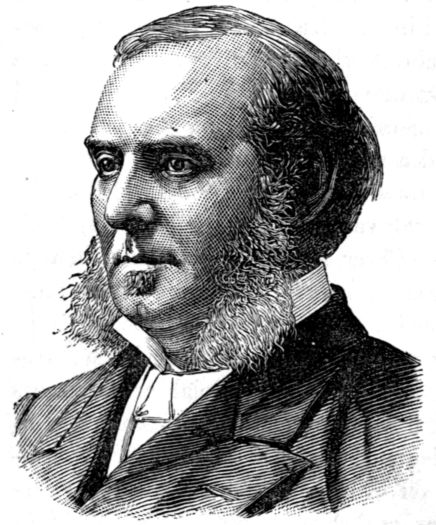
DR. D. W. BLISS.
But by means of the Jennings machine an even temperature of 77° Fahrenheit was preserved in the sick room, and the capacity of the machinery was found to be sufficient to reduce the temperature several degrees lower, if it should be thought necessary to do so. The windows of the President’s room remained open, so that the air which was forced into his chamber found ready exit, thus insuring perfect ventilation.
The bulletin issued by the surgeons on Monday morning was more encouraging. The report said:
“July 11—8 A. M.—The President passed a comfortable night, and his condition shows an improvement over that of yesterday. Pulse, 98; temperature, 99.2; respiration, 22.”
The President continued talkative. Only the positive injunction of the physicians could keep him from speaking out on all subjects that came into his mind. During the day he indulged in his accustomed pun. To one of his attendants he said, jocosely: “I wish I could get up on my feet; I would like to see whether I have any backbone left or not!” The sly backward look at the recent political struggle in which his administration had been engaged, involving the question of the presidential backbone, was not bad for a sick man battling for his life.
Justly or unjustly, the regular bulletins came to be somewhat 545distrusted by the people. The feeling began to spread that, although the naked facts of temperature, pulse, and respiration reported in the bulletins were not to be questioned as to their accuracy, yet the comments and construction put by the attending surgeons upon the facts, were too rose-colored to meet the conditions of exact truth. At the same time this opinion gained ground with the public, a feeling of quite implicit confidence sprang up respecting the official reports of the President’s condition sent abroad, more especially in reference to those sent to Lowell, Minister at St. James, by Secretary Blaine. These messages from the principal member of the President’s cabinet came, by and by, to be looked for with fully as much confidence as to their accuracy as did the surgeons’ official bulletins. On the 11th of July, Secretary Blaine sent out one of these messages which gave great comfort, as follows:
“Lowell, Minister, London:
“At the beginning of the tenth day since he was wounded, the symptoms of the President are all hopeful and favorable. Suppuration goes on with no higher pulse or temperature than should be expected. His milk diet, of a pint and a half per day, is relished and digested. His physical strength keeps up wonderfully, and his mind is entirely clear and active, without showing excitement. His physicians do not count him beyond danger, but the general confidence in his recovery is strengthened every hour.
“Blaine, Secretary.”
Later in the day, however, the condition of the President was less favorable than that presented in Mr. Blaine’s dispatch, and the evening bulletin was constrained to admit a higher fever than at any time previously. The afternoon and evening official reports were as follows:
“1 P. M.—The favorable progress of the President continues. Pulse, 106; temperature, 99.8; respiration, 24. 7 P. M.—The President has had rather more fever this afternoon. In other respects, his condition is unchanged. Pulse, 108; temperature, 102.8; respiration, 24.”
The eleventh day.—As the President’s case progressed, the public 546became divided in their views of the prospect of recovery. Physicians themselves disagreed as to both the diagnosis and the treatment of the President’s injury. The distinguished Dr. Hammond, of New York, did not hesitate openly to condemn the course pursued by the attending surgeons. Other noted physicians, not a few, held similar opinions; and a series of able and exhaustive articles appeared in the New York Herald, criticising with severity the methods and views of those who were immediately responsible for the management of the case. The attending surgeons were considerably annoyed by these strictures, and many sharp replies were returned to those physicians who, without having personally examined the President’s wound, ventured to express definite opinions on questions which those for more than a week in immediate attendance upon the patient, had been unable to decide. The newspapers also divided, one part of them publishing all the favorable, and the other all the unfavorable news from the sick chamber of the White House. The former felt called upon to explain away every unfavorable symptom which appeared; and the latter, to becloud all the favorable news with doubt. This diversion in public opinion continued manifest during the remainder of the President’s illness.
The first news for Tuesday, the 12th of July, came in the bulletins of the surgeons, and was as follows:
“8 A. M.—The President is comfortable this morning. Pulse, 96; temperature, 99.6; respiration, 22.”
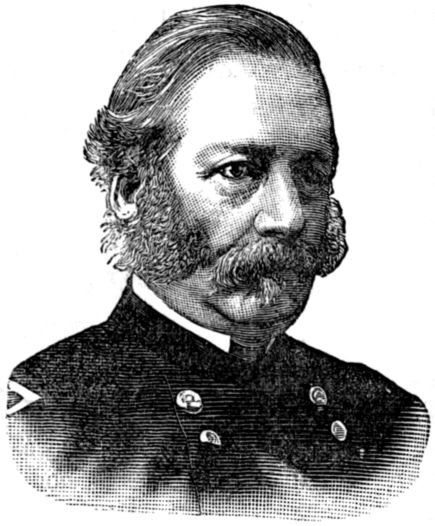
SURGEON-GENERAL J. K. BARNES.
In addition to these regular reports of the attending physicians, much unofficial information of the President’s condition was constantly given to the public through the daily press. Nearly all of the leading newspapers had regular correspondents at the Capital, and the reports which they sent each day were quite extended and generally full of interest. These unofficial communications were, in large part, made up of conversations which the reporters held from time to time with the surgeons and nurses of the President; and, although in many cases the news sent out from these sources 547was conflicting and contradictory, yet the public was greatly indebted to the industry and skill with which each morning’s accounts were prepared. During the 12th of July, Dr. F. H. Hamilton, one of the consulting surgeons, was asked by a reporter of the New York Tribune to give his opinion of the President’s condition. He replied that nothing had occurred within the preceding twenty-four hours to cause the alarm that some professed to feel. The rise in temperature and increase in pulse had occurred for several evenings, and both were natural at that time of day, even in a well person. He added, however, that the President’s condition would be more favorable, if these symptoms were absent altogether. There was nothing discouraging in the official bulletins, which he thought were scrupulously correct, as in the private intelligence sent him by the attending surgeons. He repeated the assertion that he had made from the beginning, that every hour that elapsed without more dangerous symptoms, increased the patient’s chances of recovery.
The bulletins of the afternoon and evening were couched in the usual language; but it was evident, on critical examination of the figures, that the construction put by the surgeons upon them, was hardly justified by the facts. The reports said:
“1 P. M.—The President is passing a comfortable day. Pulse, 100; temperature, 100.8; respiration, 24. 7 P. M.—Pulse, 104; temperature, 102.4; respiration, 24.”
548The twelfth day.—During the second week of the President’s prostration the public mind settled down to the expectation of a long, tedious illness. The suspense of the first few days had passed—as such things always pass—and people came to understand that they must wait until the silent forces of nature should restore, if they ever could restore, the wounded Chief Magistrate to health. The Wednesday morning bulletin was of the most cheering kind—more so, for once, than was expressed in the words of the surgeons:
“8:30 A. M.—The President is doing well this morning. Pulse, 90; temperature, 98.5; respiration, 20. His gradual progress toward recovery is manifest, and thus far without serious complication.”
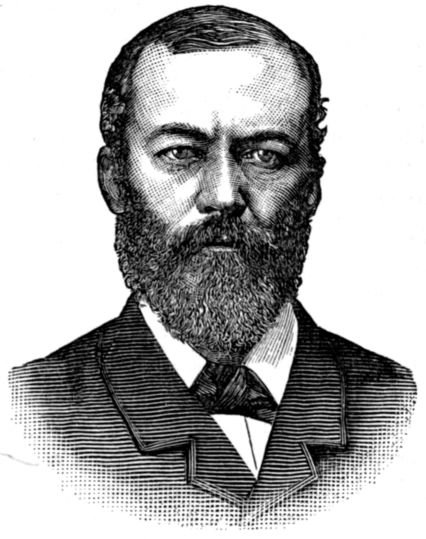
DR. J. J. WOODWARD.
The temperature of the President’s room had now been completely mastered by artificial means. The degree finally decided on as most favorable to the patient was 81° Fahrenheit. About 10,000 cubic feet of fresh air was forced into the room each hour, and this great volume making its escape through the open windows carried away all odors and impurities. The President’s wound was now in full process of suppuration. This became a heavy drain upon his constitutional and reserved forces, and his strength was rapidly depleted. He grew worse—unable to move his body or even his limbs without great exertion. At intervals, moreover, the stomach refused to perform its functions, and there was, in consequence, instant anxiety on the question of keeping life in the President until he could get well. The fluid food, upon which only he was nourished, neither satisfied the longings of nature nor furnished sufficient aliment to sustain the flagging powers of life. Moreover, at this epoch began the great blunder in the President’s treatment. Owing to the mistaken diagnosis of the surgeons the course of the ball had been altogether misjudged. According to the theory of the physicians the ball had gone forward and downward. As soon as the wound began to suppurate it was found desirable to insert therein a drainage tube to the end that the discharge might be perfectly free. This tube—though 549pliable—was, in the process of insertion, constantly so manipulated by the surgeons as to carry it forward and downward in the supposed track of the ball, rather than horizontally to the left, in the real course of the ball. It thus came to pass that the natural tendency of the pus, making its way to the external opening of the wound to sink into the tissues before reaching the wound, was augmented by the erroneous theory and manipulation of the surgeons. Having once started an opening downward through the tissues, this was immediately filled with pus, and into this pseudo wound, at each insertion in the path of the burrowing pus, the physician’s tube was thrust further and further. This mistake—albeit unforeseen and possibly undiscoverable—was the rock on which all hope of recovery was ultimately shivered. The noonday and evening bulletins came at the appointed hours and were as follows:
“1 P. M.—The President’s condition continues favorable. Pulse, 94; temperature, 100.6; respiration, 22. 7 P. M.—The President has had less fever this afternoon than either yesterday or the day before. He continues slowly to improve. Pulse, 100; temperature, 101.6; respiration, 24.”
The large and not very reputable army of busybodies now made a great discovery. It was the great question of the 550President’s “disability” to be President any longer. Certainly he was wounded, stricken down, lying at death’s door. He was disabled; there was no doubt of that. The Constitution indicates disability of the President as one of the contingencies under which the Vice-President shall discharge the duties of the presidency. But was President Garfield disabled in the sense contemplated by the framers of the Constitution? Does that kind of prostration of the bodily powers, in which there is still a prospect of recovery, which leaves the will free to act, and the mental powers unimpaired, really involve disability? These were the questions which now came up for public discussion. However they might or should be decided as abstract questions of constitutional construction, certain it is that, as a practical issue, there was quite a universal judgment that, as yet, President Garfield was not “disabled” in the sense of the Constitution. Such was the temper of the people, moreover, that they would not have patiently brooked any real effort to make the Vice-President acting Chief Magistrate of the Nation.
The thirteenth day.—Thursday, July 14th, was a quiet day at the White House, and a like quiet was gradually diffused through the country. The President was reported as having gained a little strength—a very desirable thing. The unofficial accounts from the sick chamber were more than usually encouraging. The reports of the President’s condition occupied a less conspicuous place in the papers of the day, and there was less popular discussion. The morning bulletin said:
“8:30 A. M.—The President has passed a comfortable night and continues to do well. Pulse, 90; temperature, 99.8; respiration, 22.”
Hardly second in interest to the regular bulletins were the dispatches constantly arriving from foreign powers, expressing either some hope of recovery or asking for the latest news. On this day, the Secretary of State received the following telegram from Mr. Lowell:
“Blaine, Secretary, Washington:
“I have received the following from the Queen: ‘I wish to express 551my great satisfaction at the very favorable accounts of the President, and hope that he will soon be considered out of danger.’
“Lowell, Minister, London.”
The Japanese Minister also handed to the Secretary of State a telegraphic communication which he received from his Government, of which the following is a copy:
“Yoshida, Japanese Minister, Washington:
“His Majesty was greatly rejoiced to receive your dispatch announcing the steady recovery of the President, and commands you to present his hearty congratulations.
“Mooyeno, Acting Minister Foreign Affairs, Tokio.”
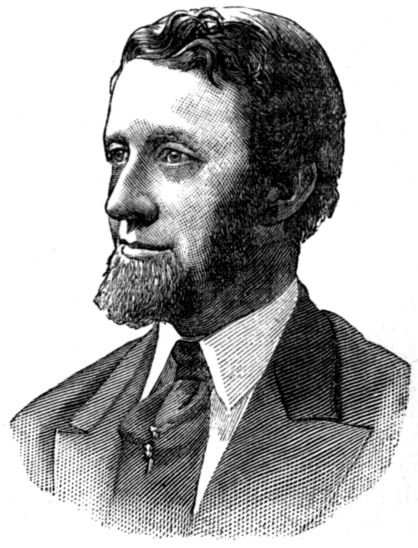
DR. ROBERT REYBURN.
During the day Senator Conkling, of whose attitude towards the Administration so much had been recently said, again visited Washington. In the evening he called at the Executive Mansion and handed the usher his card for Mrs. Garfield. He said he did not wish to disturb her, but desired that his sympathies might be made known to her, as well as his gratification that the President was recovering from his wounds.
The afternoon and evening bulletins were duly issued, and gave the following account of the President’s progress:
“1 P. M.—The progress of the President’s condition continues to be satisfactory this morning. Pulse, 94; temperature, 98.5; respiration, 22. 5527. P. M.—The febrile rise this afternoon has been less pronounced, and has not caused the President so much discomfort. His general condition is good. Pulse, 98; temperature, 101; respiration, 23.”
The interpretation put by the surgeons upon these reports, and generally—though not universally—accepted by medical men, was that the so-called “surgical fever,” that is, a certain exacerbation of bodily temperature always noticeable in persons recovering from physical injury, had passed its crisis and would soon disappear. This belief was strengthened during the day by the presence of perspiration and other concomitants of a waning fever.
For the first time in five days the patient’s temperature fell to the normal degree (98.6°). A new drainage pipe of rubber was inserted into the wound to a greater depth than the original pipe had reached.[4] The President was able to move his limbs more easily than heretofore, and in other ways manifested his improvement. He asked more frequently about public affairs, and his curiosity was gratified in matters which would not produce excitement.
Thus day by day the battle went on between the recuperative forces of nature and the destructive agency of a dreadful wound.
The fourteenth day.—The improvement in the President’s condition, first distinctly manifested about the beginning of this week, was now more marked than hitherto. The patient took food with relish. The wound showed signs of healing. The febrile symptoms during most of the day were wholly wanting. Taken all in all there was a distinct progress toward recovery. The morning bulletin said:
“8:30 A. M.—The President has rested well during the night, is doing admirably this morning, and takes his food with relish. Pulse, 90; temperature, 98.5; respiration, 18.”
553The physicians, on the strength of these indications, declared in unofficial conversation that the progress of their distinguished patient toward recovery could not be more satisfactory. So both surgeons and people fell to the discussion of minor topics instead of the great question of life or death. One question about which all were specially curious was the location of the ball in the President’s body. Several electricians thought to determine this matter by a new application of scientific principles. It was suggested that the deflection of an electric needle, when brought near to the ball, could be used as an index of the exact spot where the missile was hidden. Professor Bell, of New York, was specially confident of success by this method. He was firm in the belief that, by the application of Hughes’s induction balance to the surface of the President’s body, he would be able to mark definitely the spot where the ball lay imbedded. The attending surgeons gave their consent that the attempt might be made, and it was agreed that as soon as Professor Bell had completed some modifications in the instrument, and some experimental tests for the discovery of leaden balls under similar conditions, the trial should be made.
The afternoon and evening bulletins of the fourteenth day were of the most encouraging purport:
“1 P. M.—The President continues to do very well this morning. Pulse, 94; temperature, 98.5; respiration, 18. 7 P. M.—The President has continued to do well during the day. The afternoon fever has been slighter than on any day since the 3d. Pulse, 98; temperature, 100.4; respiration. 20.”
There was, at this epoch in the history of President Garfield’s case, a good deal of monotony. The regular reports were in a measure duplicates of each other, and the unofficial accounts which were sent out by the newspaper correspondents were not characterized by the sensational quality which marked the early reports of the tragedy. The people, moreover—and with good reason—grew somewhat suspicious of startling dispatches, for it was found that the stock jobbers of New York City were not unwilling to use the President’s condition as a basis of speculation. With sorrow 554and mortification it was discovered that there were men so lost to the sense of shame as to wager fictitious shares against the hopes of the Nation and to speculate on a manufactured death-rattle in the throat of the Republic!
The fifteenth day.—From the beginning of the healing of the President’s wound, the surgeons had been more or less apprehensive that the blood of their patient would be poisoned by the absorption of purulent matter, and his life be thereby imperiled. There are two secondary diseases thus likely to arise from the presence of a wound in the body—pyæmia and septicæmia. The first of these is by far the most to be dreaded. The malady results from the absorption of the poisonous pus corpuscles into the circulation with the consequent horrors of rigors and burning fever. The latter disease, septicæmia, is a less fearful complication, resulting from the absorption of the fluid ichor peculiar to healing wounds and the infection of the blood thereby. Both of these ills were to be feared in the case of the President. Day by day went by, however, and the dreaded symptoms did not appear. The bulletins of the 16th of July were of a sort to indicate that blood poisoning was hardly to be apprehended. The reports said:
“8:30 A. M.—The President has passed another good night, and is steadily progressing toward convalescence. Pulse, 90; temperature, 98.5; respiration, 18. 7 P. M.—The President has passed a better day than any since he was hurt. The afternoon fever is still less than yesterday. His pulse is now 98; temperature, 100.2; respiration, 19.”
In view of the favorable progress of the President’s case the surgeons decided, for the time, to issue bulletins only in the morning and evening, thus dispensing with the noonday report.
One of the most interesting episodes in connection with the assassination of the President was the raising of a fund for the support of his family. The enterprise was proposed by Cyrus W. Field of New York, who headed the subscription with $25,000. The fund was for Mrs. Garfield, and was to be hers absolutely independent of any contingencies. It was proposed that any and all who felt disposed should add to the sum until the amount contemplated 555was secured. Then it was designed to invest the whole in Mrs. Garfield’s name, the interest to go to her and her family in perpetuity. Notwithstanding the strong hopes which were entertained of the President’s recovery, the subscription was rapidly augmented until, before the President’s death, the sum had reached more than $300,000. After the tragedy was ended the trustees having the fund in charge invested $275,000 of the amount in four per cent. Government bonds, placing the whole to Mrs. Garfield’s credit. It was thus that the American people, of their own accord, made provision for the wife and children of the great citizen who had never found time to get riches.
The sixteenth day.—The news on this day opened with the cheering information that the President was now permitted to order his own meals, and that he was making good use of the privilege. The day at Washington was one of the least exciting in the whole course of the President’s illness. The future was freely discussed—how soon the wounded Chief Magistrate might go abroad and what measures should be adopted for his more rapid restoration to health. The morning and evening bulletins were almost a mere matter of form:
“8:30 A. M.—The President continues to improve. He passed an excellent night and has a good appetite. This morning, pulse, 90; temperature, 98.4; respiration, 18. 7 P. M.—Our expectations of favorable progress have been fully realized by the manner in which the President has passed the day. He has taken more solid food and with greater relish than hitherto, and his afternoon fever, which is as slight as that of yesterday, came on later. His pulse is 98; temperature, 100.2; respiration, 20.”
The informal reports of the day showed, from the conversations of the surgeons, that they were still in some measure under the delusion that the ball had passed through the President’s body and was imbedded in the anterior wall, in a position of easy removal in the future.
The seventeenth day.—This was similar to the day before. Notwithstanding the febrile rise of the preceding evening, the 556President was reported as having passed a restful night. In the morning he had a friendly altercation with the doctors, he contending that he might smoke a cigar and they refusing. He was cheerful, confident, and strong in the faith that he was on the way leading to recovery. The symptoms had a reassuring complexion in the general view and to the immediate attendants. The President felt that he was better, and he said so. There was no question about his fever; that showed for itself; but it did not lead to serious apprehension. Improvement in his condition was what the people wanted to hear about, and they did not expect any thing else. The great majority had determined upon not hearing any thing contrary to their hopes, and this feeling was participated in by the public press. Under these conditions it is not surprising that the physicians, who knew just how the popular heart was throbbing, made extraordinary effort to respond to its requirements. No one accuses them of deception. No one believes they were actuated by any but the best motives in their examinations and reports. Admitting that a portion of their theory was wrong, who will contend that a better theory could have resulted from the examination of any equivalent number of physicians and surgeons? This question has been widely discussed, without finding a conclusion in anywise discreditable to the corps of eminent scientists who ministered to the sufferings of President Garfield.
The physicians explained to the public that the present feverishness of the patient had arisen from his recent over-eating of solid food. The more thoughtful, however, who had carefully scanned the reports for the last few days, were not satisfied, and awaited the morning bulletin with a little fear. The report ran thus:
“8:30 A. M.—The President has passed another comfortable night and is doing well this morning; pulse, 88; temperature, 98.4; respiration, 18.”
This was reassuring; so the people took up the subject of the thanksgiving which had been proposed by Governor Charles Foster, of Ohio. During the day a letter was published from Hon. O. M. Roberts, Governor of Texas, giving his hearty approval of what Governor Foster had proposed. An 557interesting conversation with Dr. Bliss was also reported for the Eastern press, in the course of which he declared that the President’s wound was in the healing stage, and that the track of the ball was slowly but surely clearing by the processes of nature. The evening bulletin, however, was not as fair as had been hoped. It said:
“7 P. M.—The President has had a little more fever this afternoon, which is regarded as merely a temporary fluctuation. At 1 P. M. his pulse was 98; temperature, 98.5; respiration, 18. At present his pulse is 102; temperature, 100.7; respiration, 21.”
The eighteenth day.—Something has already been said of the Hughes Induction balance with which Professor Bell was to discover the position of the ball in the President’s body. The preliminary experiments had been continued, and the electricians had strong hopes of success, but the test had not yet been made. The press reports of the day were largely devoted to descriptions of the delicate apparatus which was to enable the scientists to determine the exact location of the ball. The great difficulty in the way was the non-susceptibility of lead to the inductive effect of electricity. Professor Bell and his co-electricians were, however, quite confident that this obstacle could be overcome and the position of the ball determined. The two bulletins of July 19th were as follows:
“8:30 A. M.—The President has passed a very good night, and this morning he is free from fever, and expresses himself as feeling quite comfortable. Pulse, 90; temperature, 98.5; respiration, 18. 7 P. M.—The President has passed an excellent day, and the afternoon fever has been less than on any day since he was wounded. At 1 P. M. his pulse was 92; temperature, 98.5; respiration, 19. At present his pulse is 96; temperature, 99.8; respiration, 19.”
The nineteenth day.—The reports, both official and unofficial, were of a sort to justify a belief in the early convalescence of the President—if indeed convalescence had not already supervened. The fever was so slight as to be scarcely any longer 558noticeable. The President’s appetite and spirits were of a sort to suggest immediate recovery. It was said by the attending surgeons on the 20th of July, that the wounded man had passed his best day since his injury was received. He was still represented as weak and weary from lying so long in bed. He was looking forward eagerly to the time when he could take the trip upon the Potomac, and possibly a sea voyage, which had been promised him by the middle of August, if he should continue to improve. Arrangements were already made so that the trip might be as safe and comfortable as possible.
The Tallapoosa, a United States steamer, underwent repairs and was made ready for service. The Secretary of the Navy issued orders to put additional men at work upon her, so that she might be ready to sail at any time after the 15th of August.
The bulletins of the surgeons were issued as usual, morning and evening. They said:
“8:30 A. M.—The progress of the President toward recovery continues uninterruptedly. He has passed another quiet night. Pulse this morning 86; temperature, 98.4; respiration, 18. 7 P. M.—The President has passed an excellent day. At 1 P. M. his pulse was 88; temperature, 98.4; respiration, 18. At the present time his pulse is 98; temperature, 99.6; respiration, 19.”
The twentieth day.—The physicians were unwilling to say that their patient was out of danger, but they permitted the attendants to think so, and the people accepted it as true. At the morning dressing of the wound a discovery was made. It was found that some of the clothing had entered the wound with the bullet. There came away, spontaneously with the pus, from the deeper part of the wound, what the surgeons called a “morsel of clothing,” about one-quarter of an inch square. Upon being examined under the microscope by Dr. Woodward, it was found to consist chiefly of cotton fibers, with a few woolen fibers adhering. It was a portion of the President’s shirt, with a few fibers of wool from the coat.
The two bulletins of the day were brief but satisfactory:
559“8:30 A. M.—The President has had a good night and is doing excellently. This morning, pulse, 88; temperature, 98.4; respiration, 18. 7 P. M.—The President has had another good day. At 1 P. M. his pulse was 92; temperature, 98.4; respiration, 19. At 7 P. M., pulse, 96; temperature, 99.9; respiration, 19.”
For some time past the consulting surgeons had not been called to the President’s bedside, but daily reports were made to them by the physicians in charge. These reports, however, were but a more extended statement of the facts contained in the official bulletins, and generally added nothing in the way of information.
The twenty-first day.—The recovery of the President was now generally believed to be assured. The surgeons gave it as their opinion that about the only danger to be apprehended was the prolonged suppuration of the wound. Under the influence of this drain the President was wasting from day to day, and the amount of food which he was able to take was hardly sufficient to supply the waste. Nevertheless he held up well under this exhaustive process, and although greatly reduced in flesh and strength, his vital energies did not as yet seem to be seriously impaired. Almost the only item of news which came from the White House was the somewhat monotonous bulletins, which said:
“8:30 A. M.—The President rested well during the night and is quite easy this morning. Pulse, 88; temperature, 98.4; respiration, 17. 7:30 P. M.—The progress of the President’s case continues without material change. At 1 P. M. his pulse was 98; temperature, 98.4; respiration, 18. At 7 P. M., pulse, 98; temperature, 100.2; respiration, 19.”
The twenty-second day.—Bad news! The President was worse. The morning bulletin did not appear. At first this fact created no anxiety, but soon there was alarm. At ten o’clock a bulletin was posted by the surgeons, which said:
“10 A. M.—The President was more restless last night; but this morning at 7 A. M., while preparations were made to dress his wound, his 560temperature was found to be normal; pulse, 92; temperature, 98.4; respiration, 19. At 7:30 he had a slight rigor, in consequence of which the dressing of his wound was postponed. Reaction followed promptly, and the dressing has just now been completed. At present his pulse is 110; temperature, 101; respiration, 24.”
“Rigor” was a bad word. Physicians understood it to portend blood poisoning. It was remembered, moreover, by the attendants that for the last two days the President had complained of a sense of great fatigue. The symptoms were well calculated to inspire a fear that the dread pyæmia had made its appearance. The consulting surgeons were immediately sent for. At half-past eleven the President had another chill, and the news given to the people in the afternoon papers was of a kind to create the most serious apprehensions. The evening bulletin was awaited with the utmost anxiety. In the towns and cities crowds filled the streets as had happened three weeks before when the news came of the assassination. At seven o’clock the bulletin came as follows:
“7 P. M.—After the bulletin of 10 A. M. the President’s fever continued. At 11:30 A. M. he again had a slight rigor, and his temperature subsequently rose, until, at 12:30 P. M. it was 104, with pulse 125, respiration, 26. Between this time and 1 P. M. perspiration made its appearance, and the temperature began to fall gradually. It is now 101.7; pulse, 118; respiration, 25.”
Soon after this bulletin was made public, Drs. Agnew and Hamilton reached Washington, but it was thought not best to disturb the President further, and so no consultation was held until the morrow.
The twenty-third day.—This was an anxious day in Washington and throughout the country. With the coming of morning it was learned that during the night the President had had another chill. It also transpired that at the evening dressing of the wound, the physicians discovered in the region below where the ball had entered, a pus sac, that is, an accumulation of purulent matter in a cavity inclosed in the tissues of the back. At nine o’clock there 561was an examination by the attending and consulting surgeons, and an operation was determined upon. An incision was accordingly made about two inches in length, an inch and a half in depth, reaching down to the bottom of the cavity or sac. It was about three inches below the wound and farther back toward the spine. A large drainage tube was inserted, and in the afternoon, when the wound was again dressed, it was found that the pus was escaping from the tube and not from the old wound at all.
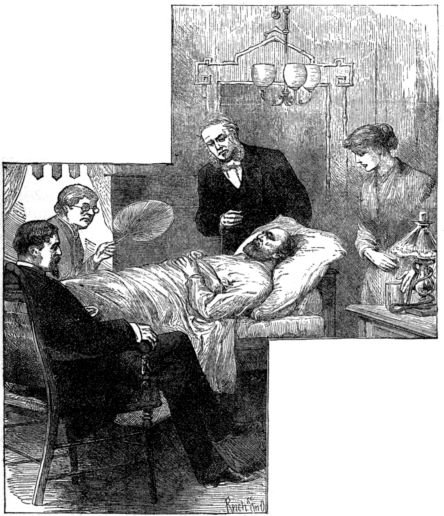
SCENE IN THE SICK CHAMBER.
In making this artificial opening some farther discoveries were made regarding the character of the wound. It was found that the eleventh rib had suffered a compound fracture, being broken in two places. The piece of bone thus displaced 562was driven inwards from its natural position. This the surgeons restored to its place, and it was decided that in a few days the old opening, where the ball had entered, should be allowed to heal, leaving only the orifice made by the surgeons. During the operation the President displayed his usual courage. He neither flinched nor moved, though nothing was given him in the nature of an anæsthetic. Probes were thrust down through the old wound to the bottom of the pocket, and against these probes the surgeons cut their way to the lower end of the sac. The operation thus performed was in every way successful. The beneficial effects were immediately apparent in an improved condition of the sufferer. The bulletin issued by the surgeons in the evening was as follows:
“7 P. M.—The President has been much relieved by the operation of this morning, and the pus has been discharging satisfactorily through the new opening. At noon to-day his pulse was 118; temperature, 99.8; respiration, 24. At present his pulse is 104; temperature, 99.2; respiration, 23.”
The unofficial conversations of the surgeons with reporters and others was to the effect that, taken all in all, the prospects for the President’s ultimate recovery were not lessened by the events of the last two days.
The twenty-fourth day.—The news was somewhat reassuring. There had been no very marked change in the President’s condition, either for better or worse. But he had passed a comparatively comfortable night, sleeping at intervals, and suffering no recurrence of the chill. The operation performed had entailed no serious consequence, and the outlook again began to be hopeful. The surgeon’s bulletins were of a sort to cheer rather than discourage. They said:
“8:30 A. M.—The President has passed a more comfortable night, and has had no rigor since that reported in the bulletin of yesterday morning. He is doing well this morning. Pulse, 96; temperature, 98.4; respiration, 18. 7 P. M.—The President has done well during the day. His afternoon fever did not come on until after three o’clock. It is somewhat 563higher than yesterday, but there has been no chill. At noon his pulse was 104; temperature, 98.4; respiration, 20. At 7 P. M. his pulse was 110; temperature, 101; respiration, 24.”
The attendants upon the President who were often at the bedside, and had every opportunity of judging of the general course of the case, and also the members of the Cabinet, reiterated in many informal conversations the views expressed officially by the surgeons in charge. None the less, to one who could read between the lines and could not be blown hot or cold with every rumor, it was clear, even from the surgeons’ bulletins, that the recovery of the President was still problematical.
The twenty-fifth day.—The reports for Tuesday, July 26th, showed that the President was gaining ground, and that he had in a good measure realized the relief hoped for from the operation of the previous Sunday. This belief was plainly present in the dispatch of the cool-headed Mr. Blaine. He said:
“Lowell, Minister, London:
“At 11 o’clock P. M. the President’s physicians report temperature and respiration normal, and pulse, 96—best report at same hour for five nights. The entire day has been most encouraging, and a feeling of confidence is rapidly returning.
“Blaine, Secretary.”
This dispatch of the Secretary of State was, of course, based upon the official bulletins of the surgeons, who said in their reports for the day:
“8:30 A. M.—The President was somewhat restless during the night, and the fever which had subsided after the last bulletin rose again about midnight, and continued till three o’clock, after which it again subsided. He is now about as well as yesterday at the same hour. Pulse, 102; temperature, 98.4; respiration, 18. 7 P. M.—The President has done well during the day. At noon his pulse was 106; temperature, 98.4; respiration, 19. At 7 P. M. pulse, 104; temperature, 100.7; respiration, 22.”
One of the distressing features of the times was the presence in Washington of great numbers of irresponsible newspaper correspondents who shamed their profession by the publication of 564whatever came uppermost. The Capital appeared to be at the mercy of sensational rumor-mongers, and they made the most of their opportunity. According to them, the doctors had said that the President would not live an hour; mortification had set in; an important surgical operation had been necessary, and the result had been unsatisfactory; the surgeons refused to give any information concerning it or the President’s condition; it had been decided by the surgeons that an attempt must at once be made to find and extract the bullet as a last desperate effort to save the President’s life; the flag on the building occupied by the Department of Justice was at half-mast, as a sign of the President’s death, etc.
The twenty-sixth day.—There could be no doubt that the reports of the 27th indicated a marked improvement in the President’s condition. He continued all day without fever. The bulletins were unequivocal:
“8 A. M.—The President slept sweetly last night from about 8 P. M. to 5 A. M., with but a slight break of short duration at 11 P. M. There have been no rigors. He takes his nourishment well, and his general condition is improving. He expresses himself as feeling better and more rested. Pulse, 94; temperature, 98.4; respiration, 18. 12:30. P. M.—The President’s wound was dressed just after the morning bulletin was issued. Since then he has rested quietly, and takes his nourishment readily and without gastric disturbance. At present his pulse is 90; temperature, 98.4; respiration, 18. 7 P. M.—The President is still resting quietly. He has been able to take more nourishment to-day than for several days past, and, up to the present hour, has had no febrile rise of temperature. His wound has just been dressed. It looks well, and has continued to discharge healthy pus in sufficient quantity during the day. His pulse is now 95; temperature, 98.5; respiration, 20.”
The news sent abroad by Secretary Blaine to Minister Lowell was of the same tenor. The dispatch said:
“Lowell, Minister, London.
“At 11 o’clock P. M. the President’s physicians gave a most favorable account of his condition. There is a conspicuous improvement in his 565digestion and in the restfulness of his sleep. We are by no means relieved from anxiety, but are growing more hopeful.
“Blaine, Secretary.”
In a conversation during the day, Dr. Bliss, referring to the outlook, said: “There is only one more danger to be apprehended in the President’s case. That danger is pyæmia, and it is not likely to occur for a long time; and we are extremely confident, almost certain, that it will not occur at all. The President is doing very, very well. We could not hope to have him do better. His sleep last night was the best that he has had since he was wounded.”
The twenty-seventh day.—The incident of the day was the removal of the President from his room, in order that the apartment might be thoroughly cleaned and aired. The removal was effected without difficulty, and the President remained in the adjacent room until five o’clock in the afternoon, when he was quietly returned to his own chamber. He greatly enjoyed the slight change of scene thus afforded, and was much pleased with the maneuver by which his room had been brought to order. His spirits were revived not a little, and an improvement in his appetite was again thankfully noted. The official bulletins of the day were as follows:
“8 A. M.—The President rested well during the night, and no rigor or febrile disturbance has occurred since the bulletin of yesterday evening. This morning the improvement of his general condition is distinctly perceptible. He appears refreshed by his night’s rest, and expresses himself cheerfully as to his condition. Pulse, 92; temperature, 98.4: respiration, 18. 12:20 P. M.—The President bore the dressing of his wound this morning with less fatigue than hitherto. It appears well and is discharging sufficiently. His pulse is now 94; temperature, 98.5; respiration, 18. 7 P. M.—The President has passed a pleasant day, and has taken his nourishment with apparent relish. His temperature continued normal until about 5 o’clock, when a moderate afternoon rise occurred, which, however, gives the patient but slight discomfort, and causes no anxiety. At present his pulse is 104; temperature, 100.5; respiration, 20.”
During the day a sensational report was started to the effect that 566Dr. Agnew—in whose skill as a surgeon the people had come to have the greatest confidence—had said that the President’s life could not be saved unless the ball was excised at an early day. This rumor, however, was promptly denied, as were also some alleged unfavorable remarks of Dr. Hamilton. About this time, however, some eminent surgeons—notably Dr. Hammond, of New York City—began to express, and even to publish, very serious strictures upon the views and treatment adopted by the attending and consulting physicians of the President; and, in some instances, the reasoning of the critics seemed to be so well borne out by the facts as to put the medical and surgical skill of those who managed the President’s case to a very hard strain.