APPENDICES.[39]
Reading edition
APPENDICES.[39]
1. Note on a Nematoid Worm (Gordius verrucosus) Obtained by MR. H. H. Johnston on Kilima-njaro. By F. Jeffrey Bell, M.A., F.Z.S.
The single specimen of Gordius which was obtained by Mr. Johnston belongs to a well-known and widely-distributed species, but yet presents points of interest such as are almost always absent from so-called new species.
So far as my knowledge extends (and on this particular point it is in advance of that of Dr. Linstow, who, in his valuable “Compendium der Helminthologie,” does not mention the parasite now under consideration), Gordius verrucosus is in earlier life parasitic on a species of the genus Mantis; and there is in the British Museum a specimen of “Mantis, sp.,” which, as Mr. Waterhouse has been good enough to point out to me, is really M. membranacea, accompanying a Gordius. The whole of the abdomen of this Orthopteron is completely emptied of its contents. A similarly excavated Mantis, the appearance of which had excited Mr. Waterhouse’s wonder, is to be found among the insects collected by Mr. Johnston between 3000 and 5000 feet.
A specimen, belonging apparently to the same species, is to be found half-in and half-out of the abdomen of Hierodula bioculata, a Mantid collected on the west coast of Africa, and lately presented to the trustees by Dr. Günther, F.R.S.
With regard to the geographical distribution of the species, it is to be noted that it is sufficiently wide to include South Africa and Ceylon; while there are in the British Museum specimens named respectively by Dr. Baird, the author of the species, and by Dr. Örley, who in 1881 went carefully through the collection in the Museum; these specimens are reported as coming from Vera Paz, Guatemala (presented by O. Salvin, Esq.), and the “neighbourhood of Irazu, Costa Rica” (presented by Messrs. Godman and Salvin). The fact that the same parasite is to be found in hosts of different species is well 365known. The present case, in which Mantis membranacea from Ceylon, Idoleum diabolicum from Kilima-njaro, and Hierodula bioculata from West Africa, are infested by a common form, is almost exactly paralleled by the case of the Tænia described by Peters from a rhinoceros from the Mozambique, and by Murie and Garrod in rhinoceri from India.
As to the second point which has arisen, the presence of G. verrucosus in Central America, I note differences in the form of the integumentary papillæ, which are sufficient to induce me to suggest that no stress should be at present laid on this point, though they are not enough, when taken in conjunction with my own want of experience in the degrees of possible variations, to lead me to put myself into more decided opposition to the views or determinations of such workers as Dr. Baird or Dr. Örley.
2. Description of a new Variety of River-Crab of the Genus Thelphusa, From Kilima-njaro. by E. J. Miers, F.L.S., F.Z.S.
The species of Thelphusa, or River-Crabs, are extremely numerous, and their discrimination is often very difficult, on account of the changes which the species undergo as they increase in age and size.
In the collection brought by Mr. H. H. Johnston from Kilima-njaro are two specimens of this genus, which I assign, though not without some hesitation, to the Thelphusa depressa, Krauss, described from types taken near Pietermaritzburg, Natal. They agree with the description and figure in their depressed carapace, which is considerably dilated at the branchial regions, in the non-development of the lateral epibranchial tooth, and in other essential characters; but differ in the more strongly defined cervical suture of the carapace, and the more strongly denticulated merus, and much less strongly arcuated dactylus of the chelipedes. As regards this latter character, I may observe that in a series of Thelphusæ (perhaps T. difformis) in the Museum collection, the dactyli of the chelipes are in some males arcuated, and in others nearly straight.
I append a detailed description of the specimens from Kilima-njaro, which I propose to designate T. depressa, Krauss, var. Johnstoni, but which may prove to belong to a distinct species.
Thelphusa Depressa, Krauss, var. Johnstoni.
Cf. Thelphusa depressa, Krauss, Sudafrik. Crustaceen, p. 38, pl. 11. fig. 4 (1843).
Carapace transverse, widest in its postfrontal region, depressed, with the dorsal surface nearly smooth, and divided into two nearly 366equal portions by the zigzag cervical suture, which extends transversely across the carapace to the postero-lateral margins; behind this a second transverse depression (not a suture) crosses the carapace behind the cardiac region. The postfrontal crest extends to the antero-lateral margins of the carapace, and is interrupted only by the meso-gastric suture, which bifurcates posteriorly (as usual in the genus); this crest is granulated near to the antero-lateral margins, which are defined by a distinctly granulated line; the lateral epibranchial teeth are not developed. On the hepatic and branchial regions are several faintly indicated lines, which extend inward for a short distance over the dorsal surface of the carapace from the lateral margins. The front is about one-third the width of the carapace, punctulated above, with its anterior margin sinuated, its antero-lateral angles obtuse and not prominent. The orbital margins are entire, and defined by a raised line, which is granulated except near to the front; the inferior orbital margin is regularly arcuate, not (as in T. perlata) angulated near to the interior subocular lobe, which is not at all prominent; the tooth, also, at the exterior orbital angle is very little developed; the parts of the carapace adjoining the antero-lateral angles of the buccal cavity are very distinctly granulated. The eye-peduncles are slender (for a species of this genus), and the eyes do not attain the exterior angle of the orbit. The exterior maxillipedes are formed as in T. perlata, having the ischium and merus of the endognath distally truncated, the merus rounded at its antero-external angle, and scarcely emarginate at its antero-internal angle. The chelipedes in the adult male are unequal, the right the larger; in both the merus is armed with a series of spinules on the anterior margin, and with a somewhat longer spine near the distal extremity; the carpus with a spine followed by a smaller spinule on the inner margin; the palm is somewhat compressed and nearly smooth, rounded above; the dactyl and pollex are denticulated on the inner margins, and have between them, when closed, a rather narrow interspace; the dactyl is slightly arcuated and as long as, or rather shorter than, the palm. The ambulatory legs are of moderate length, with the fourth to sixth joints compressed, and with the superior margins acute; the margins of the penultimate joints near to the distal extremity and the dactyli are armed with small spinuliform teeth, which on the dactyli are disposed in four longitudinal series.
Adult male.
Lines. Millims.
Length of carapace 17¼ 37
Breadth of carapace about 25½ 54·5
Length of a chelipede. 44 93·5
367This form may be distinguished from other African species in which the postfrontal crest is distinctly developed, by the following characters:—From T. perlata, M. Edw., which is found at the Cape and Port Natal, by the wider transverse carapace, which is more dilated at the branchial regions, and not dorsally granulated near the antero-lateral margins, and by the form of the orbit, whose inferior margin is regularly concave (not as in specimens referred to T. perlata in the Museum collection), abruptly angulated near the interior subocular lobe. From T. inflata, M. Edw., by the less convex carapace, straight postfrontal crest, and the granulated line which borders the antero-lateral margins of the carapace. T. aubryi, M. E., T. africana, A. M. E., and T. emarginata, Kingsley, from the Gaboon, West Africa, and Port Natal, have an additional tooth between the exterior angle of the orbit and the postfrontal crest. In T. goudoti, M. E., from Madagascar, the postfrontal crest is less developed, and the immobile finger of the chelipedes forms more or less of an angle with the inferior margin of the palm. Another species from Madagascar, T. madagascariensis, A. M. E., which has not, I believe, been figured, is distinguished by the lesser development of the postfrontal crest and the straighter fingers of the chelipedes, which meet along their inner margins. In the West African T. bayoniana, T. anchietæ, and T. dubia, Brito Capello, the lateral epibranchial tooth is more developed. In T. limula Hilgendorf, from Senegambia, the postfrontal crest is less distinctly developed near the lateral epibranchial teeth, behind which, in the males, are indications of two other teeth.
3. A List of the Lepidoptera collected by Mr. H. H. Johnston during his recent Expedition To Kilima-njaro. By F. D. Godman, F.R.S., &c.
Mr. Johnston’s collection of Lepidoptera contains 61 specimens, including 27 species; of the latter there are 21 species of Rhopalocera and 6 of Heterocera. Of the Rhopalocera I have described three species as new, and a fourth, a Chrysophanus, of which only one specimen of a female is in the collection, remains unnamed, though it too is probably new. This small collection therefore contains nearly twenty per cent. of novelties, which must be considered a high proportion.
But so small is the series that I do not think any comparison of the Lepidopterous fauna of this region with that of the rest of Africa can be entered upon with advantage. Suffice it to say that by far the majority of the species are widely distributed African ones; that there is a northern element, as shown in Colias edusa, 368and perhaps the Chrysophanus; and that there is barely a trace of the Abyssinian fauna in the materials before me. But these suggestions may all be set aside whenever a representative collection is made. Of the 27 species no less than 19 are represented by single specimens.
Rhopalocera.
1. Danais Dorippus.
Euplœa dorippus, Klug, Symb. Phys., Insecta, t. 48. f. 1–5.
Kilima-njaro, rocky, wooded, and cultivated country and grassy downs, at 4000–5000 feet, July.
Four examples (2 ♂︎, 2 ♀︎).
None of these specimens have any white on the secondaries, and agree best with Fig. 5 of Klug’s plate. D. dorippus is a common East African species.
2. Acræa Johnstoni, sp. nov.
Alis anticis rufis, apicibus et marginibus externis (introrsum valde sinuatis; nigro-fuscis) posticis ad basin et marginibus externis late nigrescentibus, area discali albida venis fuscis divisa; subtus anticis fere omnino rufis ad marginem externum canescentibus, venis nigris et inter eas striolis fuscescentibus; posticis ut supra limbo externo canescente venis et striolis inter eas diviso; maculis quibusdam ad basin nigris; palpis, femoribus iuterne, abdomine infra, et maculis costalibus, rufis; capite et thorace maculis albis notatis.
Kilima-njaro, clearing in forest at 5500 feet, September.
A single male specimen of this apparently very distinct species.
3. Acræa Insignis.
Acræa insignis, Distant, P. Z. S. 1880, p. 184, t. xix. f. 6.
Acræa Buxtoni, Hew. Ent. Month. Mag. xiv. p. 154.
Kilima-njaro, wooded hills at 5000 feet, August.
This insect was first described by Hewitson from examples procured by Buxton in the neighbourhood of Zanzibar, and was named by him after its discoverer. Mr. Distant pointed out that the name A. Buxtoni had been already applied to another species by Mr. Butler, and hence renamed it as above. Our collection contains a good series of this insect, chiefly taken by Mr. Last at Mamboia in Eastern Central Africa. These exhibit considerable variation in the amount of black at the base of the secondaries, for while some specimens have only four or five isolated spots, others have a large confluent patch occupying the basal third of these wings, and between these two extremes we have every intermediate, all captured in the same locality and at the same time.
369Mr. Johnston procured but a single example, which has the confluent black patch, and agrees in this respect with some of our own specimens from Mamboia.
4. Acræa Bræsia, sp. nov.
Alis anticis semihyalinis ad basin rosaceo suffusis macula in cellula altera ad finem ejus quinque in serie fere recta ultra eam, una inter ramos medianos, duabus inter ramum medianum primum et venam submedianano nigris, margine externo fusco nigro maculis lunulatis submarginalibus rufis, posticis rosaceis ad basin obscurioribus margine externo nigro area discali plus minusve maculata; subtus anticis fere ut supra posticis flavidis nigro distincte maculatis, ad basin et marginem internum rosaceo notatis, margine externo nigro lunulis septem flavidis includente; fronte, palpis et pedibus fulvis; abdomine subtus flavido, lateribus albo maculatis; capite, prothorace et thorace albido distincte maculatis.
Kilima-njaro, in wooded country at 5000 feet, August.
A single male specimen allied to A. oncæa, differing in its diaphanous primaries and its more rosy secondaries.
5. Acræa Natalica.
Acræa natalica, Boisd. Voy. Deleg. ii. p. 590; Hopff. Pet. Reise, Zool. v. p. 371, t. 23. f. 12, 13.
Kilima-njaro, grassy downs at 6000 feet, June.
One example (♀︎).
Agrees best with specimens of this species, but the disk of the secondaries is whiter and the spots in general are larger.
6. Pyrameis Cardui.
Papilio cardui, Linn. Syst. Nat. i. p. 276.
Kilima-njaro, in thin forest country at 7000 feet, July.
One much worn male.
7. Junonia Clelia.
Papilio cletia, Cram. Pap. Exot. t. 21. f. E, F.
Kilima-njaro, rocky country at 4000 and 5000 feet, wooded country and grassy downs at 5000 feet, June and July.
8. Junonia Ænone.
Papilio ænone, Linn. Mus. Ulr. pp. 274, 275.
Kilima-njaro, in rocky, grassy, and wooded country at 5000 feet, wooded country at 6000 feet, June and July.
Six specimens, all males, of this widely ranging species.
9. Precis Sesamus.
Precis sesamus, Trimen, Trans. Ent. Soc. 1883, p. 347.
Kilima-njaro, forest country at 7000 feet, July.
One example (♂︎).
37010. Lycæna Gaika.
Lycæna gaika, Trimen, Trans. Ent. Soc. 3rd ser. i. p. 403.
Kilima-njaro, grassy downs at 5000 feet, June.
One male.
The single specimen agrees with Trimen’s description and with our series of this species. It appears to us to be distinct from L. lysamon, with which Mr. Trimen united his L. gaika in the “Rhopalocera Africæ Australis.” Both species occur in South Africa, but L. lysamon may always be distinguished by the presence of a black spot within the cell of the primaries.
11. Chrysophanus, sp.?
Kilima-njaro, grassy downs at 5000 feet, June.
A single female example of a true Chrysophanus, which we are unable to recognize and which we hesitate to describe without specimens of the other sex.
12. Terias Rahel?
Papilio rahel, Fabr. Ent. Syst. iii. p. 204 (apud Trimen).
Kilima-njaro, wooded country at 5000 feet, August.
A single female specimen, which we cannot undertake to determine with certainty without examples of the other sex. It may possibly be a female of T. candace, Feld., from Abyssinia.
13. Pieris Severina.
Papilio severina, Cram. Pap. Exot. t. 338, f. G, H.
Kilima-njaro, wooded country at 5000 to 6000 feet, July and August. Taveita, dense forest at 2300 feet, September.
One male and three females.
14. Pieris Hellica.
Papilio hellica, Linn. Syst. Nat. i. p. 760.
Kilima-njaro, wooded, rocky, and cultivated ground, grassy downs, at 4000 to 5500 feet, July and August.
Thirteen males and one female.
All the specimens have the primaries rather more pointed, with a slightly blacker apex, and the colouring of the underside is brighter than in the examples in our collection.
15. Eronia Cleodora.
Eronia cleodora, Hübn. Samml. exot. Schmett. ii. t. 130.
Tavieta, in dense forest at 2300 feet.
16. Callidryas Pyrene.
Colias pyrene, Swains. Zool. Ill. i. t. 51.
Kilima-njaro, in wooded country at 5000 feet.
Two females only.
17. Callidryas Florella.
Papilio florella, Fabr. Syst. Ent. p. 479.
371Kilima-njaro, in wooded country at 6000 feet.
A single female specimen.
18. Colias Edusa.
Papilio edusa, Fabr. Mant. Ins. ii. p. 23.
Kiliman-njaro, wooded and grassy country at 4000 and 5000 feet, July.
Four males and one female.
19. Teracolus Auriginius.
Teracolus auriginius, Butl. Ann. Mag. Nat. Hist. ser. 5, vol. xii. p. 103.
Kilima-njaro, in wooded and grassy country, 5000 and 6000 feet.
Two examples agreeing with specimens in the British Museum thus named by Mr. Butler.
20. Papilio Demoleus.
Papilio demoleus, Linn. Syst. Nat. i. p. 753.
Kilima-njaro, in wooded country at 5000 feet, August.
A single specimen of this common African species.
21. Papilio Brontes, sp. nov.
Alis nigris fascia lata communi, ad costam anticarum disjuncta, metallico-cæruleo, macula parva ad anticarum apicem et posticis serie submarginali ejusdem coloris; subtus fusco-nigris anticis ad apicem et posticis omnino, brunnescentioribus, his venis et striis tribus in cellula longitudinalibus nigris, fascia communi submarginali a vena mediana anticarum ad angulum posticarum analem transeunte, venis nigris divisa, in anticis quoque inter venas bisecta lactescente-alba, margine posticarum interno maculis parvis duabus ejusdem coloris, posticis subcaudatis, vena mediana producta.
Kilima-njaro, in forest country at 5000 feet, August.
Allied to Papilio bromius, but the transverse band is of a deeper blue, both wings are less elongated, the secondaries are more acutely produced at the anal angle. Beneath, the light coloured submarginal band is straighter on the secondaries and less broken up, moreover it is extended on the primaries as far as the median nervure beyond the cell, the apex of primaries and the secondaries are browner and though the latter have three radiating streaks in the cell as in P. bromius, there are no intervenal streaks beyond it.
A single male specimen is the only one Mr. Johnston obtained.
Heterocera.
Mr. Johnston’s collection contains six specimens of as many species of Heterocera, and for these Mr. Butler has kindly given us the following names.
37222. Acherontia Atropos.
Kilima-njaro, forest at 3000 feet, September.
23. Mecyna Polygonalis.
Kilima-njaro, wooded country at 5000 feet, August.
24. Hypina, sp.?
Kilima-njaro, wooded country at 5000 feet, July.
25. Sterrha Oacraria.
Kilima-njaro, scrubby heath at 8000 feet, July.
26. Prodenia?
Kilima-njaro, wooded country at 5000 feet, September.
27. Amyna, sp.?
Kilima-njaro, wooded country at 5500 feet, August.
4. On the Insects collected on Kilima-njaro by Mr. H. H. Johnston. By Chas. O. Waterhouse.
COLEOPTERA.[40]
The series of Coleoptera collected by Mr. Johnston comprises examples of fifty-six species. Many of them belong to widely distributed genera and are not of special interest.
Of the nine species taken at an elevation of 10,000 to 14,000 feet, the following are worthy of note:—Two male examples of Carabus Deckeni, Gerstaecker, which was described from a single female example found in this mountain. The species, however, proves to be a Calosoma, and not a Carabus, and is nearly allied to a species found in Abyssinia.
There is a single specimen of one of the Trichiidæ, which I have provisionally placed in the genus Calometopus, although the clypeus not being emarginate it is possible that a new genus may have to be made for its reception. I have named the species Calometopus planatus. There are only two species of this genus known, C. senegalensis and C. nyassæ.
The third species which I would mention is one of the Heteromera of the family Moluridæ. I have named it Melanolophus ater; it appears to be most nearly allied to M. septemcostatus, described by Fairmaire in Revoil’s “Faune et Flore des Pays Çomalis,” but which, if I have correctly determined it, occurs also in Abyssinia.
Of the species found at lower elevations the majority, so far as I have identified them, are only known from South-east Africa (e.g. 373Melyris parvula, Gerst., Himatismus buprestoides, Gerst., Amiantus castanopterus, Haag, Sepidium muscorum, Gerst., Anomalipus heraldicus, Gerst., Mylabris kersteni, Gerst., Epicauta dichrocera, Gerst., Rhopalizus sansibaricus, Gerst., Phrissoma giganteum, Guérin); others are found in most parts of Africa (e.g. Calosoma senegalensis, Dej., Oryctes boas, Fabr.).
Of the new species which I describe, Scarabæus cribricollis has its nearest ally, so far as I know, in an Indian species S. sanctus, Fabr.; Amblysterna Johnstoni is nearest to A. natalensis, Fabr.
Carabidæ.
Carabus Deckeni, Gerst.
This interesting species was described by Dr. Gerstaecker (Wiegm. Arch. f. Naturg., 1867, p. 10; Von der Decken’s Reise in Ost-Africa, iii. p. 56, pl. iv. f. 2) from a single female example found by Dr. Kersten on Kilima-njaro at an elevation of 8000 feet.
The two examples male and female found by Mr. Johnston differ from the female described by Dr. Gerstaecker in being rather smaller (only 13 millim. long), and, so far as one can judge from description, in having the elytra smoother with less impressed striæ.
Dr. Gerstaecker remarks on the fact of a species of Carabus being found in this locality, none ever having been found before in South Africa. The species, however, is not a Carabus, but a Calosoma, as is indicated by the compressed third joint of the antennæ; a character which Dr. Gerstaecker overlooked when he stated that the separate joints of the antennæ are formed as in Carabus pumilio.
Scarabæidæ.
Scarabæus Cribricollis, n. sp.
Black, somewhat dull. Head closely and very strongly punctured, the punctures longitudinally confluent on the front of the clypeus, the anterior teeth of which are rather acute and moderately reflexed. Thorax nearly twice as broad as long, moderately convex, with a transverse impression in the middle of the base. In the middle of the disk is a shining (but finely punctured) line, which does not extend much beyond the middle; all the rest of the surface is strongly punctured; the punctures near the shining line are a little separated from each other, but at the sides and on the fore part they are crowded together and asperate; the sides are strongly rounded, finely serrate, and fringed with black hair. The elytra are a little narrower than the thorax, very slightly narrowed posteriorly, dull, but with the suture shining; the striæ are fine, the interstices flat and finely coriaceous (except the sutural interstices and the scutellar 374region), with numerous dull shallow punctiform impressions placed very irregularly. Femora and tibiæ fringed with black hair. Sternum smooth and shining, with a well-marked broad impression between the intermediate legs.
Length 22 millim.
This species most nearly resembles the Indian Scarabæus sanctus, Fabr. The sides of the thorax are, however, more regularly rounded, much less sinuate before the posterior angles; the shining discoidal line is broader, and there are no smooth spots on each side of this line. The elytra have the striæ finer and neater, the interstices are flatter, coriaceous, with the punctiform impressions smaller and more separated from each other.
Onthophagus Johnstoni, n. sp.
Entirely black, except the apex of the antennæ, which is rusty-yellow. Head as long as broad, obliquely narrowed in front of the middle, rounded at the apex, closely and coarsely rugose, except near the eyes. There is a slightly raised straight ridge between the eyes, and a second, longer one halfway between this and the front of the clypeus. The thorax is smooth, shining at the sides and in front, slightly dull above; the fore part is perpendicularly truncate; the truncature bounded above by a slightly prominent ridge; viewed from the front there are three shallow impressions: on each side there is a line of small tubercles bounding the discoidal area; the surface of the disk is moderately closely but extremely delicately punctured, and appears impunctate to the naked eye; the sides are more distinctly punctured: the base is oblique on each side, and is angularly produced in the middle. The elytra are convex, shining, not quite twice as wide as the length at the suture, rounded at the sides and apex, very delicately striated, the striæ delicately punctured; the interstices flat, sparingly punctured; near the suture the punctures are extremely delicate but become more distinct towards the sides. The pygidium is rather sparingly but distinctly punctured. The sides of the sterna, the margins of the femora, and the posterior tibiæ are fringed with long black hair.
Length 21–25 millim.
I know of no species which much resembles this. Its most near ally is a species which I have seen named O. noctis, Th., in Mr. Bates’s collection. The species has somewhat the general build of O. marsyas, Ol.; the head is longer, the clypeus not sinuous at the sides; the thorax rather flatter above, with a prominent, nearly straight ridge in front above the anterior perpendicular truncature; the anterior angles are as if truncated; the base is more angularly produced in the middle of the base; the elytra are scarcely narrowed at the base, &c.
375
Trichiidæ.
Calometopus? planatus, n. sp.
Nearly black; the elytra dark testaceous, with the suture, margins, and a lunate spot near the scutellum smoky black. Antennæ and tibiæ reddish yellow, the margins of the abdominal segments pale yellow. Head very closely and rather strongly punctured; the clypeus more finely punctured, a little broader than long, not emarginate at the apex, but slightly arcuate, the angles obtuse; all the margins reflexed. Thorax a very little broader than long, moderately convex, very strongly and rather closely punctured, parallel at the sides to considerably in front of the middle, where it is obliquely narrowed; the anterior angles nearly right-angles, very slightly prominent; the posterior angles obtusely rounded; the base gently arcuate and margined: on the disk there is a slight impression a little in front of the middle: the sides have the lateral ridge only behind the middle and at the anterior angle; the slightly swollen under flank is thus not separated from the upper surface of the thorax in front of the middle. Scutellum elongate, triangular, strongly punctured. Elytra twice as broad as the thorax, a little longer than broad; flat, with the sides nearly perpendicularly deflexed; dull, the suture and sublateral ridge shining: each elytron with six somewhat irregular dorsal lines of dark punctures; the apex closely rugulose. Pygidium closely vermiculate-strigose. Club of the antennæ a little longer than all the previous joints taken together. Body beneath and the legs sparingly clothed with yellow hair. Anterior tibiæ obtusely tridentate. The posterior tibiæ with a triangular tooth a little below the middle; the edge above this tooth with four or five small teeth. Tarsi long and slender; claws red. Abdomen shining, not very closely but strongly punctured; the basal segment yellow in the middle, margined with yellow at the sides.
Length 12 millim.
A single example was met with. It is probable that this species may have to be separated from Calometopus on account of the form of the clypeus, which is not emarginate. Never having seen the type of the genus (C. senegalensis), I am unable at present to say in what other way it differs.
Buprestidæ.
Amblysterna Johnstoni, n. sp.
Size and general form of A. natalensis, Fabr. Golden green, shining, the underside and legs coppery, the sides of the abdomen violet. Thorax more convex than in A. natalensis, more closely and much more strongly punctured; the sides more regularly arcuate, with 376only a very small lateral impression; the dorsal median channel well-marked. Elytra very strongly and irregularly punctured, with small punctures interspersed; the punctures near the shoulders are somewhat transverse, and the interspaces being very narrow become transverse rugæ. All the large punctures are finely punctured and filled with pale pubescence, which gives the elytra a speckled appearance. The lateral and apical costæ are as in A. natalensis, but not so strongly marked, and there is no lateral stripe above the lateral costa. Antennæ black, with the opaque portions smoky. Underside of the body somewhat violet, the abdominal segments margined with green. Legs coppery.
Length 25 millim.
Psiloptera læta, n. sp. (Illustrated P. Z. S. 1885, p. 235.)
Rather parallel, depressed, bluish green above, brassy green below. Head very rugose. Thorax nearly one-third broader than long, a little broader across the middle than at the base, and then obliquely narrowed in front, with a shallow median impression and one on each side; the surface rather strongly but very irregularly punctured, coarsely rugulose-punctate at the sides; the irregular space on each side of the median impression sparingly punctured, shining coppery; and a little more removed from the middle there is an irregular-shaped coppery spot a little in front of the middle. Scutellum black. Elytra nearly parallel for two-thirds their length, then narrowed to the apex, not very convex, with lines of somewhat strong punctures; the alternate interstices flat, the others in parts very slightly convex; the flat interstices are strongly and not very closely punctured; the others have each about eight ovate finely punctured impressions; the raised parts smooth and slightly brassy. At the sides there is a submarginal, closely, and finely punctured impressed line, extending from under the shoulder to near the apex; in this stripe there is some very fine whitish pubescence, which is only visible in certain lights. Prosternum with a triangular projection on each side of the front margin. Abdomen irregularly and strongly punctured, and finely pubescent.
Length 30 millim.
Moluridæ.
Melanolophus ater, n. sp. (Illustrated P. Z. S. 1885, p. 235.)
Dull black. Head closely and strongly punctured, with a slight impression on the forehead. Antennæ with the third joint nearly as long as the fourth and fifth taken together; the fourth joint a little longer than broad, the following joints very similar; the tenth joint the same length as the ninth, but broader than long; the eleventh as broad as the tenth, but short, truncate at the apex. Thorax as long as broad, or even a trifle longer, very convex (densely and strongly punctured, the intervals irregular, shining, rugæ or granules), 377moderately narrowed at the base and apex; arcuate at the sides, with no lateral ridge; the front margin nearly straight, the anterior angles not prominent, the base slightly bowed. Elytra not quite twice as broad as the thorax, oblong-ovate, moderately convex; each elytron with three zigzag shining costæ (two dorsal, one lateral), the interstices plicate and rugulose; the suture not costiform. The sides of the elytra shining, the surface uneven and sparingly punctured. Prosternal process closely and rather strongly punctured; the meso- and metasterna less so. Abdomen dull, very finely punctured, the punctuation of the apical segment rather stronger. Legs rugose, not clothed with paler tomentum.
Length 14–15 millim.
The females are rather broader than the males, especially in the elytra, which are more oblong and somewhat flattened dorsally. The males have two very small shining spots on the disk of the thorax in front of the middle, and there is an indication of a fine median line.
I have been in doubt whether to place this species in the genus Amiantus or the more recent genus Melanolophus, Fairm. (Faun, et Fl. des Pays Çomalis, 1882, p. 69). The general form is, however, more that of Melanolophus, but the suture of the elytra is not costiform. The anterior angles of the thorax are not produced forward as in Amiantus. The antennæ are rather shorter than in either of these genera.
HYMENOPTERA, ORTHOPTERA, &c.
The other Insects collected by Mr. Johnston do not present anything remarkable. There is, however, a very fine specimen of Mantis (Idolum diabolicum, Saussure), of which a male example in the British Museum is from the White Nile.
LIST OF BIRDS COLLECTED OR OBSERVED ON KILIMA-NJARO AND ITS VICINITY.[41]
By Captain G. E. Shelley, F.Z.S., and Mr. H. H. Johnston, F.Z.S.
⁂ Those birds which were only observed by the author, and the skins of which were not obtained, have their numbers inserted in brackets.
1. Alseonax Minima (Heugl.).
Muscicapa minima, Heugl. Orn. N. O.-Afr. p. 435, pl. 18. f. 1. ♂︎, 4000 feet; ♂︎, 6000 feet; ♂︎, 7000 feet.
3782. Muscicapa Johnstoni.
Muscicapa Johnstoni, Shelley, P. Z. S. 1884, p. 558.
♀︎, 6000 feet.
Found on the southern slope of the mountain just above Moši, on the borders of the cultivated district.
3. Lanius Caudatus, Cab.
Lanius caudatus, Gadow, Cat. B. Brit. Mus. viii. p. 254; Fischer, Zeitschr. ges. Orn. (Madaraz), 1884, p. 344.
♂︎, 3000 feet. In immature plumage.
This species affects the desert and waterless districts at the foot of the mountain, where it perches upon the low shrubs, and pounces upon the grasshoppers, which are very abundant in these districts, and form its principal food.
4. Lanius collaris, Linn.
Lanius collaris, Gadow, Cat. B. Brit. Mus. viii. 1883, p. 255.
Lanius humeralis, Fischer, Zeitschr. ges. Orn. (Madaraz), 1884, p. 344.
♂︎, 4000 feet; ♂︎ ♀︎, 5000 feet; ♂︎, 6000 feet; 2 ♀︎, 7000 feet.
One of the commonest birds on the mountain, and very bold.
5. Dryoscopus sublacteus, Cass.
Dryoscopus sublacteus, Gadow, Cat. B. Brit. Mus. viii. 1883, p. 140; Fischer, Zeitschr. ges. Orn. (Madaraz), 1884, p. 348.
♂︎, 3000 feet; ♂︎, 5000 feet; ♂︎, 8000 feet.
6. Dryoscopus cubla (Shaw).
Dryoscopus cubla, Gadow, Cat. B. Brit. Mus. viii. p. 148; Fischer, Zeitschr. ges. Orn. (Madaraz), 1884, p. 345.
♂︎ ♀︎, 3000 feet; ♂︎, 5000 feet; ♂︎, not labelled. The female had the irides scarlet.
7. Crateropus Kirki, Sharpe.
Crateropus Kirki, Fischer, Zeitschr. ges. Orn. (Madaraz), 1884, p. 316.
♂︎, 5000 feet.
Very common and bold.
8. Pycnonotus Layardi, Gurney.
Pycnonotus Layardi, Sharpe, Cat. B. Brit. Mus. vi. 1881, p. 132; Fischer, Zeitschr. ges. Orn. (Madaraz), 1884, p. 341.
♀︎, 3000 feet; 2 ♀︎, 5000 feet.
9. Turdus cabanisi, Bp.
Turdus cabanisi, Seebohm, Cat. B. Brit. Mus. v. 1881, p. 229.
♂︎, 5000 feet; ♂︎, 6000 feet.
The most northern locality of this species, whence it ranges southward on the east coast to the Transvaal.
Almost confined to inhabited districts.
37910. Pinarochroa hypospodia, sp. n.[42]
Kilima-njaro, ♀︎, 14,000 feet.
Close to P. sordida (Rüpp.), which is the type of the genus Pinarochroa; but the present bird is slightly larger, paler and less isabelline beneath, and has the white on the tail more limited, each feather having broad blackish-brown ends.
Upper parts brown, slightly darker on the crown and quills; tail—the four outer pairs of feathers white with broad blackish-brown ends; this colour extends somewhat down their shafts, and covers about one-third of the end-portion of the outer web of the exterior feather, and nearly the entire inner web of the third feather from the centre; the centre two pairs entirely black. The wing-coverts and inner secondaries are broadly edged with sandy brown, and the remainder of the quills have almost obsolete similarly coloured edges. Sides of the head in front of the eye and the cheeks slightly washed with ashy brown. Underparts ashy buff, slightly darker on the lower throat and front and sides of the chest, and passing into rufous-shaded brown on the flanks, thighs, and under tail-coverts; under surface of the wings dark brown with the coverts rufous-brown; the axillaries and inner margins of the quills ashy buff. Total length 5–7 inches, culmen 0·55, wing 3, tail 2·2, tarsus 1·25.
Found only at great altitudes, affecting the grassy and boulder regions, where they are to be seen in family parties of from three to five. Here they enliven the desert scenery by flitting before the traveller with a constantly repeated pleasing chirp, and perched upon the boulders flit their tails up and down after the manner of Chats.
11. Pratincola axillaris.
Pratincola axillaris, Shelley, P. Z. S. 1884, p. 556.
♂︎ ♀︎, 5000 feet; 3 ♂︎, 6000 feet; ♀︎, 7000 feet; ♂︎, 8000 feet; ♂︎, 10,000 feet. Breeds in September.
Very abundant but not met with below 5000 feet. They are bold, and frequent the native villages in their lower range.
12. Prinia mystacea, Rüpp.
Prinia mystacea, Sharpe, Cat. B. Brit. Mus. vii. p. 191.
Drymæca tenella, Fischer, Zeitschr. ges. Orn. (Madaraz), 1884, p. 312. ♂︎ ♀︎, 5000 feet.
13. Cisticola subruficapilla (Smith).
Cisticola subruficapilla, Sharpe, Cat. B. Brit. Mus. vii. p. 283.
♂︎, 5500 feet; ♀︎, 8000 feet.
14. Nectarinia famosa (Linn.).
Nectarinia famosa, Shelley, Monogr. Nect. p. 13, pl. 5.
380♂︎ in partial moult, 2 ♀︎, 5000 feet; ♀︎, 6000 feet; ♂︎ in moult, 7000 feet.
Very abundant.
15. Nectarinia Johnstoni, sp. n.[43]
♂︎, Kilima-njaro, 11,000 feet.
Very similar in size, form, and colour to N. famosa, but readily distinguished by the pectoral tufts being bright scarlet.
Entire head, neck, back, least and median wing-coverts, and chest metallic green, with the base of the feathers black; a small black patch from the gape to the eye. The head, neck, and back have a slight golden shade, not so strong as is generally the case in N. famosa, while the rump and upper tail-coverts have a bluish lustre; remainder of the wings brownish black with a slight purple gloss; the greater wing-coverts are partially edged with metallic green, shaded with bronzy violet on a few of the outer feathers; the primary-coverts and the greater secondaries show, in certain lights, faint indications of similar metallic edges. Tail purplish black, the feathers towards the centre being narrowly and partially edged with bluish green. Axillary tufts bright scarlet; abdomen, thighs, and under surface of the wings blackish brown; under tail-coverts purplish black, with slight traces of metallic bluish-green margins to a few of the feathers. The under wing-coverts towards the bend of the wing are tipped with metallic green. Bill and legs black. Total length 10·6 inches, culmen 1·25, wing 3·3, tail 6·6, tarsus 0·7.
Very abundant. Not seen lower than 5000 or 6000 feet, but reaches higher up the mountain than any other bird with the exception of Corvultur albicollis and Pinarochroa hypospodia. Found very much round a curious teazle-like lobelia (L. Deckeni). Also at lower levels it affects the tall aloe flower-shoots.
16. Nectarinia kilimensis, Shelley.
Nectarinia kilimensis, Shelley, P. Z. S. 1884, p. 555.
Two ♂︎, 3000 feet; ♂︎ ♀︎, 4000 feet; 4 ♂︎, 5000 feet; ♀︎, 5600 feet; ♂︎, not labelled.
Found mostly near base of mountain, very common. Rarely if ever seen above 5600 feet.
17. Nectarinia Reichenowi (Fischer).[44]
Nectarinia Reichenowi, Shelley, P. Z. S. 1884, p. 556, pl. 51.
Drepanorhynchus Reichenowi, Fischer, Zeitschr. ges. Orn. (Madaraz), 1884, p. 338.
♂︎, 4000 feet; 2 ♀︎, 5000 feet. Never seen above 5000 feet.
381They abound in the native plantations, being, in common with most of the other Sun-birds, attracted there by the flowers of the sweet potato and of various beans and peas.
18. Cinnyris affinis, Rüpp.
Cinnyris affinis, Shelley, Monogr. Nect. p. 239, pl. 74. fig. 2.
♂︎, 4000 feet; ♂︎, 5000 feet; ♂︎, not labelled.
Very abundant at low levels.
19. Cinnyris mediocris, sp. n.
♂︎, Kilima-njaro, 12,000 feet.
Intermediate between C. chalybeus and C. chloropygius, but with the bills lightly more curved than in either. It resembles C. chalybeus in the colouring of the metallic parts, having the blue terminal collar to the throat and blue upper tail-coverts; but differs from that species and resembles C. chloropygius in the colouring of the abdomen, thighs, under tail-coverts, and wings, which are darker and more olive than in C. chalybeus.
Entire head, neck, back, least and median wing-coverts uniform metallic golden green; upper tail-coverts steel-blue; remainder of the wings dark brown, with the margins of the feathers shaded with olive; the green of the throat terminates in a narrow steel-blue collar, followed by a broad scarlet collar; pectoral tufts yellow; remainder of the underparts brownish olive, slightly washed with olive-yellow; thighs dark-brown; bill and legs black. Total length 4·6 inches, culmen 0.7, wing 2·1, tail 2, tarsus 0·7.
Fairly abundant. Only remarked in upper regions.
20. Cinnyris Kirki, Shelley.
Cinnyris Kirki, Shelley, Monogr. Nect. p. 273, pl. 85; Fischer, Zeitschr. ges. Orn. (Madaraz), 1885, p. 339.
♂︎ in moult, 3000 feet; ♂︎ ♀︎, 5000 feet; ♀︎, 7000 feet.
21. Motacilla longicauda, Rüpp.
Motacilla longicauda, Rüpp, Neue Wirb. pl. 29. fig. 2.
Two ♂︎, 6000 feet.
22. Poliospiza tristriata, Rüpp.
Poliospiza tristriata, Heugl. Orn. N.O.-Afr. p. 642.
♀︎, 8000 feet. Found in small flocks.
23. Citrinella citrinelloides, Rüpp.
Citrinella citrinelloides, Heugl. Orn. N.O.-Afr. p. 644.
♀︎, 6000 feet; ♂︎, 7000 feet.
24. Vidua principalis (Linn.).
Vidua principalis, Fischer, Zeitschr. ges. Orn. (Madaraz), 1884, p. 325.
Two ♂︎, 5000 feet.
25. ?Penthetria eques, Hartl.
Penthetria eques, Fischer, Zeitschr. ges. Orn. (Madaraz), 1884, p. 326.
382♂︎, 5000 feet; ♀︎, 7000 feet.
These are immature specimens or in the brown winter plumage, and can therefore only be doubtfully referred to this species.
26. Hyphantornis ocularius (Smith).
Hyphantornis ocularius, Fischer, Zeitschr. ges. Orn. (Madaraz), 1884, p. 331.
♂︎, 2300 feet; ♂︎, 6000 feet.
27. Sycobrotus Reichenowi, Fischer.
Sycobrotus Reichenowi, Shelley, P. Z. S. 1884, p. 557.
Hyphanturgus Reichenowi, Fischer, Zeitschr. ges. Orn. (Madaraz), 1884, p. 331.
2 ♂︎, 3 ♀︎, 5000 feet; ♂︎, 6000 feet.
Breeds in colonies, especially affecting palm-trees.
28. Oriolus notatus, Peters.
Oriolus notatus, Sharpe, Cat. B. Brit. Mus. iii. p. 196; Fischer, Zeitschr. ges. Orn. (Madaraz), 1884, p. 334.
♂︎, 2500 feet. Irides carmine.
29. Amydrus morio (Linn.).
♂︎, 7000 feet.
This is a full adult male, agreeing perfectly in its measurements with Natal specimens.
Met with in small flocks of five or six. They utter a low pleasing cry or soft whistle and frequent small thickets.
30. Corvultur albicollis (Lath.).
Corvultur albicollis, Sharpe, Cat. B. Brit. Mus. iii. p. 24.
Archicorax albicollis, Fischer, Zeitschr. ges. Orn. (Madaraz), 1884, p. 336.
♂︎, 5000 feet.
Inhabits the whole mountain up to the snow, and breeds in August in crevices in the most inaccessible rocks.
31. Corvus Scapulatus, Daud.
Corvus scapulatus, Sharpe, Cat. B. Brit. Mus. iii. 1877, p. 22; Fischer, Zeitschr. ges. Orn. (Madaraz), 1884, p. 337.
♀︎, 5000 feet.
More a bird of the plains than the mountainous region, where its place is taken by Corvultur.
32. Barbatula Leucotis, Sundev.
Barbatula leucotis, Marshalls, Monogr. Capitonidæ, p. 131, pl. 52.
Megalæma leucotis, Fischer, Zeitschr. ges. Orn. (Madaraz), 1884, p. 371.
♂︎, 3000 feet; ♀︎, 6000 feet.
It inhabits the dense forest, where its presence is often proclaimed by its harsh strident note, which it repeats at intervals, and being a 383bold bird is easily killed. The first pair were met with at Taveita, perched on the bough of a mimosa, and others were seen on the southern flank of the mountain up to 6000 feet.
[33.] Dendropicus sp.
Shot in country of Taita, alt. 3000 feet. Skin lost.
34. Hapaloderma narina (Vieill.).
Hapaloderma narina, Fischer, Zeitschr. ges. Orn. (Madaraz), 1884, p. 368.
♂︎, 3000 feet.
This specimen agrees better with the Natal birds, with which we have compared it, than with the equatorial race, H. constantia, Sharpe.
Only one specimen seen at Taveita, in the forest, and must be scarce, as the natives appear to have no name for it.
35. Eurystomus afer (Lath.).
Eurystomus afer, Sharpe, Ibis, 1871, p. 274.
Two ♂︎, 4000 feet.
Often mob birds of prey.
36. Halcyon orientalis, Peters.
Halcyon orientalis, Sharpe, Monogr. Alcedinidæ, p. 181, pl. 66; Fischer, Zeitschr. ges. Orn. (Madaraz), 1884, p. 361.
♂︎, 5000 feet.
Feeds principally upon the small crabs which inhabit the mountain-streams.
37. Buceros cristatus, Rüpp.
Bycanistes cristatus; Elliot, Monogr. Bucerotidæ, pl. 26.
Buceros cristatus, Fischer, Zeitschr. ges. Orn. (Madaraz), 1884, p. 361.
♂︎, 4000 feet; ♀︎, 5000 feet; ♀︎, 6000 feet.
Generally distributed over the mountain up to 6000 feet, especially near habitations. They show no fear of man, being generally protected by the natives, who look upon them with superstitious awe, arising possibly from their being useful scavengers, as well as from their peculiar loud cry, which resembles at times that of the wailing of a woman in distress, at others that of the braying of an ass. In August and September they were breeding, and occasionally the head of the female might be seen peering out from a hole in a tree some thirty or forty feet high, where she had been plastered in by her affectionate husband. By the chips lying about, it would appear that these holes are excavated by the birds to the required size. They are monogamous, and show great affection for each other, which is fortunate, as the female during incubation has entirely to rely on her mate for daily subsistence.
38438. Buceros melanoleucus, Licht.
Tockus melanoleucus, Elliot, Monogr. Bucerotidæ, pl. 49.
♂︎ ♀︎, 5000 feet.
[39.] Bucorvus abyssinicus.
The ground hornbill, very frequently seen on Kilima-njaro and elsewhere in vicinity of native villages, not higher than 5000 feet. Never noticed in open country away from human habitations. Rigorously protected by natives, on account of its scavenging habits.
40. Turacus Hartlaubi (Fischer and Reichenow).
Corythaix Hartlaubi, Fischer, Zeitschr. ges. Orn.(Madaraz), 1884, p. 363.
♂︎ ♀︎, 10,000 feet. Bill red and green. Skin round the eyes scarlet. Sexes similar.
It frequents the forest, and is most abundant at about 9000 feet. Its loud cry may be frequently heard, but it is difficult to see amongst the thick foliage, and still more difficult to approach, being very shy.
41. Colius leucotis, Rüpp.
Colius leucotis, Fischer, Zeitschr. ges. Orn. (Madaraz), 1884, p. 363.
♂︎, 5000 feet; 2 ♂︎, 6000 feet.
[42.] Pœocephalus Rüppellii.
Observed in the country of Taita.
Not met with on Kilima-njaro.
43. Francolinus Schuetti, Cab.
Francolinus (Scleroptera) Schuetti, Cab. J. f. O. 1880, p. 351; 1881, pl. 2.
Francolinus Schuetti, Fischer, Zeitschr. ges. Orn. (Madaraz), 1884, p. 382.
♂︎, 6000 feet.
Frequents the rocks and was very abundant at 5000 feet. It was not met with in the plains.
44. Francolinus Altumi, Fischer and Reichen.
Francolinus Altumi, Fischer and Reichen. J. f. O. 1884, p. 179, pl. 2; Fischer, Zeitschr. ges. Orn. (Madaraz), 1884, p. 383.
♂︎, 6000 feet.
This species frequents the plains more than the mountains.
[45.] Numida cristata.
The crested guinea-fowl. Often killed in plains and ravines at the base of the mountain.
[46.] Numida cornuta.
Very common in low country.
[47.] Coturnix histrionica.
Common in plains.
[48.] Otis sp.
Frequently met with in plains at base of the mountain.
385[49.] Lobivanellus albiceps.
On Lake ǰipé.
[50.] Sterna caspia.
On Lake ǰipé,
[51.] Treron Wakefieldi, Sharpe.
Treron Wakefieldi, Shelley, Ibis, 1883, p. 269.
Two ♂︎ ♀︎, 5000 feet; ♀︎, 6000 feet.
Seen generally in pairs, eats the sycamore-figs.
Proc. Zool. Soc.—1885, No. XVI.
[52.] Palumbus arquatrix (Temm.).
Palumbus arquatrix, Shelley, Ibis, 1883, p. 283.
♂︎, 10,000 feet.
Bare skin round eyes, bill, and feet saffron-yellow. This specimen agrees perfectly with others from Natal. Only noticed at great altitudes from 8500 feet to 10,300 feet. Seen in pairs in the dense forests, sometimes in company with Turacus Hartlaubi.
[53.] Tympanistria tympanistria (Temm.).
Tympanistria tympanistria, Shelley, Ibis, 1883, p. 326.
Peristera tympanistria, Fischer, Zeitschr. ges. Orn. (Madaraz), 1884, p. 278.
♀︎, 5000 ft.
[54.] Turtur vinaceus.
Everywhere at base of mountain.
[55.] Turtur semitorquatus.
Common in plains, near water.
[56.] Chalcopelia afra.
In low country.
[57.] Balearica pavonina.
In numbers near Lake ǰipé.
[58.] Porphyrio, sp.
In the vicinity of Lake ǰipé and the River Ruvu.
[59.] Chenalopex æygyptiaca.
Lake ǰipé.
[60.] Anas xanthorhyncus?
Streams at high altitudes, 8000 feet to 11,000 feet.
[61.] Pelicanus onocrotalus.
Lake ǰipé.
[62.] Nycticorax, sp.?
Lake ǰipé and R. Lumi.
[63.] Ardea purpurea.
Lake ǰipé and R. Lumi.
[64.] Ardea goliath.
Lake ǰipé.
386[65.] Ardea alba.
Lake ǰipé.
[66.] Ardea bubulcus.
Lake ǰipé and most rivers. This bird often follows the cattle of natives to pick off the ticks that infest them.
[67.] Scopus umbretta.
Lake ǰipé and R. Lumi. Very common.
[68.] Xenorhyncus senegalensis.
Lake ǰipé.
[69.] Leptoptilus crumeniferus.
Very common in plains. Follows the Masai armies in their raids, and frequents Masai settlements. Rarely seen away from the society of man.
70. Ibis hagedash (Lath.).
Ibis hagedash, Fischer, Zeitschr. ges. Orn. (Madaraz), 1884, p. 386.
♀︎, 3000 feet. Irides scarlet.
Shot in a marsh near Taveita out of a small flock of ten or twelve.
[71.] Serpentarius secretarius.
The “Secretary Bird.” Very common in the plains.
72. Polyboroides typicus, Smith.
Polyboroides typicus, Sharpe, Cat. B. Brit. Mus. i. p. 48.
♀︎, 5000 feet.
Only met with in the neighbourhood of villages. Their feathers and those of the kite are much prized by the natives for the ornamentation of their capes.
[73.] Neophron percnopterus.
The Egyptian vulture. Common up to an alt. of 5000 feet.
74. Neophron monachus (Temm.).
Neophron monachus, Sharpe, Cat. B. Brit. Mus. i. p. 19.
Neophron pileatus, Fischer, Zeitschr. ges. Orn. (Madaraz), 1884, p. 376.
♂︎, 5000 feet.
Not observed higher up the mountain, as it frequents the more thickly inhabited parts; often in flocks associated with the ground hornbills and the white-necked ravens.
[75.] Vultur cinereus?
Plains round Kilima-njaro.
[76.] Gyps Rüppellii.
[77.] Otogyps?
Plains round Kilima-njaro.
[78.] Spizaetus, sp.
Found on Kilima-njaro up to 8000 feet alt.
[79.] Haliætus vocifer.
Lake ǰipé and Ruvu R.
387[80.] Heliotarsus ecaudatus.
Plains round Kilima-njaro.
81. Buteo augur, Rüpp.
Buteo augur, Sharpe, Cat. B. Brit. Mus. i. p. 175; Fischer, Zeitschr. ges. Orn. (Madaraz), 1884, p. 374.
♂︎, 4000 feet; ♂︎, 5000 feet; ♂︎, 8000 feet.
82. Buteo desertorum (Daud).
Buteo desertorum, Sharpe, Cat. B. Brit. Mus. i. p. 179; Fischer, Zeitschr. ges. Orn. (Madaraz), 1884, p. 374.
♂︎, 5000 feet.
83. Asturinula monogrammica (Temm.).
Asturinula monogrammica, Sharpe, Cat. B. Brit. Mus. i. p. 275; Fischer, Zeitschr. ges. Orn. (Madaraz), 1884, p. 374.
♂︎, 5000 feet.
84. Struthio danaoides, Shelley.
The ostrich of E. Equatorial Africa. Eggs brought back; collected in vicinity of Taveita. Young ostriches kept in captivity by me in that place.
This ostrich, I am informed by the natives, lives a good deal on insects and small reptiles, as well as on leaves and herbage. The young ostriches I kept at Taveita ate raw meat in preference to anything else, though they would also swallow leaves and chopped grass.
LIST OF MAMMALS OBTAINED AND OBSERVED ON MOUNT KILIMA-NJARO AND ITS VICINITY.
By Oldfield Thomas, F.Z.S. With a few additional notes by the Author.
⁂ The species which have their numbers bracketed were those of which skins or horns were not brought home, and which were either identified by the Author in their particular habitat, or approximately named by Mr. Oldfield Thomas from the Author’s drawings. It is needless to say these drawings, wherever made, were carefully executed from specimens living or dead, and their fidelity may be relied on.
[1.] Cynocephalus hamadryas.
Country of Taita and vicinity of River Lumi.
[2.] Cynocephalus sphinx.
Kilima-njaro up to 6000 feet, especially in vicinity of native villages. Also in adjacent plains and along the River Lumi. Especially abundant near Taveita.
388[3.] Cynocephalus babouin.
On Kilima-njaro up to 5000 feet, and in and near Taveita.
[4.] Cercopithēcus albicularis.
In and near Taveita.
[5.] Cercopithēcus Lalandii.
In and near Taveita and along River Lumi.
[6.] Cercopithēcus griseo-viridis.
On Kilima-njaro up to 7000 or 8000 feet, and everywhere near water in the plains below. Naturally the commonest monkey to be seen.
7. Cercopithēcus pygerythrus, Geoffr.
a, b. Moši, on the south side of the mountain, 5000 feet, June to August.
Very common in the cultivated gardens round the village, and in the forests lower down at Taveita. These monkeys are exceedingly familiar and mischievous, coming into the gardens to steal fruit, &c., and are entirely without any fear of man.
8. Colobus guereza, Rüpp., var. caudatus, var. nov.
a. Useri, N.E. flank of mountain, 3000 feet, end of October.
Very common all round the base of Kilima-njaro.
The specimen brought, like two or three beautiful skins obtained by Mr. Thomson in the same neighbourhood, belongs to a peculiar race or variety apparently restricted to this region, and characterized by having the white brush of the tail very much larger and finer than is the case in the true Abyssinian C. guereza. In the latter animal the proximal 12 to 16 inches of the tail is short-haired and quite black, only the terminal 8 to 12 inches being white and tufted, and the white mantle hanging down from the body hides only about one-third of the black part of the tail. In the Kilima-njaro race, however, only some 3 or 4 inches of the base of the tail are black, and the remainder (with the hairs about 20 or 21 inches) is developed into a magnificent white brush, of which individual hairs are from 7 to 9 inches in length. The hairs of the white body-mantle, moreover, entirely cover the black at the base of the tail, the white of the latter and of the mantle being quite continuous.
In addition to this race, however, the true Guereza is also found in the neighbourhood of Kilima-njaro, as the mantle of the lowland Masai warrior, of whom a drawing is given in Chapter XIX., is made of the skin of this animal, but this is, of course, a rather vague indication of the original locality of the specimen. Mr. Johnston tells me that the natives clearly distinguish the two races, and that the white-tailed form is, at least in the Kilima-njaro district, a more strictly mountain animal than the other.
389Taking now into consideration the extreme constancy of the markings of the Colobi, the very different appearance that the present animal has from the usual type, its restriction to a small district round Kilima-njaro, and the distinction by the natives of the two forms, I think it will be necessary to distinguish Mr. Johnston’s animal as a separate variety or sub-species, to which the name of C. guereza caudatus might be applied.
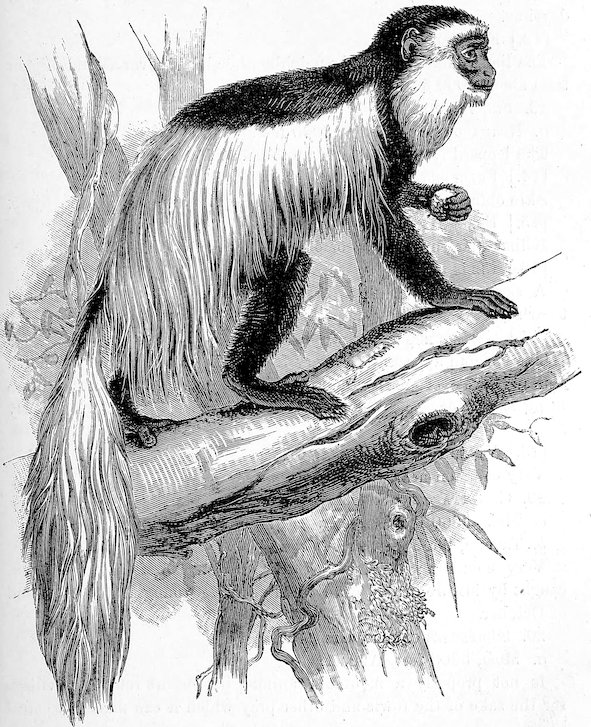
Fig. 72.—Colobus Guereza, var. Caudatus.
[9.] Galago crassicaudata?
Found in Taita and near the coast, but not on the mountain.
390[10.] Cynonycteris collaris.
Taveita forests.
11. Vesperugo nanus, Peters.
Moši, 5000 feet, September 12. Found hanging to a tree in daytime.
[12.] Felis leo, L.
The lion is abundant in the neighbourhood, but never ascends higher than about 3000 feet.
13. Felis pardus, L.
a. Near foot of mountain, 3000 feet.
The leopard is very common up to about 7500 feet.
[14.] Felis serval.
Skin obtained in Taita. Common in country at base of Kilima-njaro.
[15.] Felis caffra.
Kilima-njaro up to 5000 or 6000 feet, and forest of Taveita.
[16.] Felis caracal.
A skin seen near Useri, in possession of natives. According to their report common in the plains.
[17.] Cynælurus venator.
The cheetah appears to be very frequently met with to the north and north-east of Kilima-njaro. The Masai and Endurobo often bring skins for sale. One was purchased at Useri, but subsequently lost.
[18.] Viverra civetta.
Very common near base of mountain.
19. Genetta tigrina, Schr.
a. Moši, 5000 feet, October.
b. Taveita, 2300 feet, August.
Very common; occurs up to 7000 feet. A female specimen, caught by Mr. Johnston, gave birth to three young at about the end of October.
20. Herpestes caffer, Gm. (?).
a. Moši, 5000 feet, August.
Is not properly a mountain animal, but occurs round the village for the sake of the fowls and other prey which it can manage to steal there.
Without the skull it is impossible to determine with certainty whether this is H. ichneumon, L., or H. caffer, Gm.; but the skin has, on the whole, rather more the appearance of H. caffer, and it is, therefore, provisionally referred to the southern form.
[21.] Hyæna crocuta.
Very abundant in vicinity of Kilima-njaro, but scarcely ascends higher than 3000 feet.
391[22.] Hyæna striata.
Found on the mountain from 3000 to 6000 feet. Prowls round native villages. Also met with in Taveita and Taita.
23. Canis lateralis, Scl.
a. Moši, 5000 feet, August.
Very common round the village, to which it is attracted by the chance of stealing refuse, &c.; not otherwise found much above 3000 feet.
[24.] Canis, sp.
Mr. Johnston several times saw and heard a species of dog or fox, which he was not able to obtain, but which looked rather like a large fox, and emitted a distinct bark, similar to that of a domestic dog. It is just possible that this was the rare Abyssinian Canis simensis, Rüpp., no other animal appearing at all to agree with Mr. Johnston’s description. Native name, Nzudu.
[25.] Sciurus erythropus?
On Kilima-njaro, between 3000 and 7000 feet.
[26.] Xerus, sp.
Taveita forest.
[27.] Graphiurus capensis.
Kilima-njaro, 6000 feet. Nocturnal habits. Vide illustration, p. 392.
[28.] Mus, sp.?
A small black rat infesting native houses.
[29.] Aulacodus swindernianus?
Reported by natives near Taveita. Native name, Mbuku.
[30.] Hystrix cristata.
Very common in plains.
[31.] Lepus capensis.
Killed near Taveita in plains.
32. Hyrax Brucei, Gray (?).
a, b. ♂︎ and ♀︎, 10,000 feet, on the south side of the mountain, 26th October.
Native name in Ki-čaga, Kimburu.
Fairly common in the mountain-forests, where they live entirely in the trees, and not among the rocks. They do not descend below about 7000 feet and range up to 11,000 feet. These two specimens were brought alive to Mr. Johnston; but the female, after giving birth to three young, died almost at once, and the male, refusing to eat, also died in three or four days.
The specimens agree exactly, so far as can be made out from skins only, with the type of Gray’s H. irrorata (Ann. Mag. N. H. 1869, p. 242), a species, however, which Mr. Blanford (Geol. Zool. Abyss. p. 252, 1870) has shown to be probably not specifically separable 392from the same author’s H. Brucei. Mr. Blanford obtained his Abyssinian conies at elevations varying from 2000 to 8000 feet, and it was only to be expected that specimens inhabiting a locality so much further south as Kilima-njaro should have been found ranging as high as 11,000 feet above the sea.
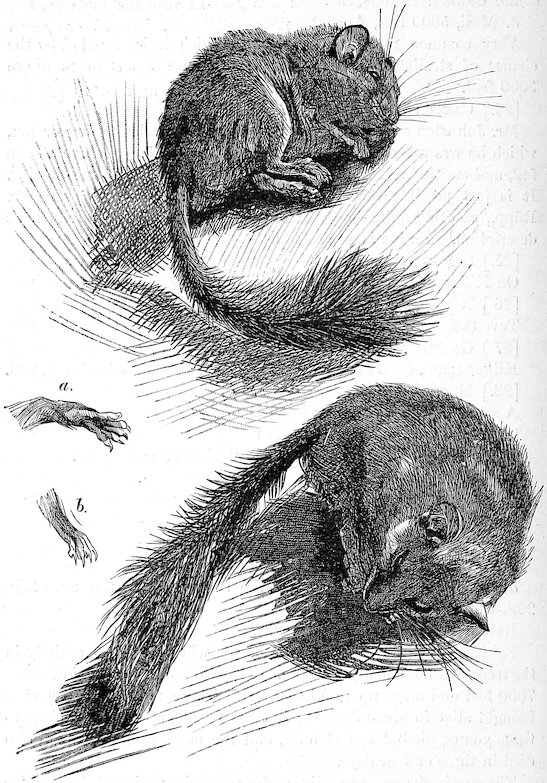
Fig. 73.—Graphiurus Capensis. (a) foot. (b) hand.
393[33.] Elephas africanus, L.
Mr. Johnston states that he himself saw and shot at elephants at an altitude of no less than 13,000 feet.
34. Rhinoceros bicornis, L.
a, b, c. Horns; Taveita, 2300 feet, end of October.
Very common on the elevated plains at the base of Kilima-njaro, but not ascending the mountain itself. Is not found in the true forest, but only in the bush.
These horns were brought in to Mr. Johnston by the A-kamba people, who obtain them by killing the animals with poisoned arrows.
35. Equus Burchelli, var. Chapmani. Thomas.
a. Taveita, 2300 feet, 25th August.
Very common, in herds of about twenty, on the open plains round the mountain, never ascending above about 2400 feet.
This specimen, like all those I have seen or heard of from localities on or north of the Zambezi, belongs to the so-called Equus Chapmani, Layard,[45] in which the dark stripes extend on the limbs right down to the hoof.
That this form, however, cannot be distinguished specifically from the true E. Burchelli is sufficiently proved by the following sentence, extracted from Mr. T. E. Buckley’s useful paper on the distribution of South African mammals:[46]—“Out of five of these animals shot in one herd, there were individuals showing every variation of colour and marking, from the yellow and chocolate stripes to the pure black and white, the stripes in some ceasing above the hock, and in others being continued distinctly down to the hoof.” On the whole, the somewhat ugly trinomial “Equus Burchelli Chapmani” seems to express fairly correctly the degree of distinctness to which this northern race has attained.
I am told by Mr. Thomson also that throughout his travels in Eastern Equatorial Africa he has never seen any but this leg-striped race of Burchell’s zebra.
[36.] Hippopotamus amphibius.
Common in Lake ǰipé.
[37.] Phacochœrus, sp.
Wart-hogs are found on Kilima-njaro up to an elevation of 8000 feet.
[38.] Bubalus caffer, Sparrm. (?).
According to Mr. Johnston, buffaloes occur commonly in the forests up to 14,000 feet. Whether these are B. caffer or B. æquinoctialis, Blyth (B. centralis, Gray), is doubtful, but a magnificent pair of horns brought by Mr. Thomson from the same region belong undoubtedly to 394B. caffer; and I therefore provisionally refer those seen by Mr. Johnston to the same species.
[39.] Giraffa camelopardalis.
Very abundant near Taveita, and along Ruvu valley. For native name, see Vocabulary of Ki-čaga, &c.
[40.] Oreas canna.
The eland is everywhere most abundant in the plains.
[41.] Strepsiceros kudu, Gray.
Mr. Johnston states that the kudu ranges up to no less than 14,000 feet, at which height it is by no means rare.[47]
[42.] Tragelaphus sylvaticus.
Common in plains, especially near Taveita.
[43.] Oryx beisa?
A species of Oryx, apparently O. beisa seen at Nguruṅgani.
[44.] Hippotragus niger.
Frequently seen in vicinity of Taveita.
[45.] Hippotragus equinus.
♀︎ shot near Taveita. Vide illustration, Chapter X.
[46.] Alcelaphus Cokei.
Most parts of the plains. Vide Chapter IV.
[47.] Connochœtes gnu.
Common in plains.
[48.] Æpyceros melampus.
The beautiful pallah is everywhere common in the plains. Shot near Taveita. Vide illustration, Chapter X.
[49.] Gazella Granti?
A Taita hunter showed the author a pair of horns which he had procured from the scene of a lion’s repast near Taveita, which seemed to belong to this graceful antelope.
[50.] Cervicapra bohor.
Common in plains, and apparently inhabiting mountains up to 10,000 feet.
[51.] Neotragus Kirki?
Vide illustration, ante.
This Neotragus here illustrated was killed in Kilima-njaro at an altitude of over 11,000 feet. It apparently ranges up to 14,000 feet altitude in the dry season.
[52.] Cephalopus mergens.
Met with in the grassy plains and near rivers.
[53.] Orycteropus æthiopicus.
Common in the plains.
395