SUPPLEMENTARY CHAPTER. (continued 2)
Reading edition
August found the English officers and seamen very little satisfied with their position and duties in the Chinese waters. An occasional junk-hunt was all that occurred to break the monotony. Of fighting, such as men-of-war’s men would dignify by the name, there was little or none. Yeh continued to govern Canton; the Cantonese continued to suffer by the suspension of their trade with the British. The four northern ports managed to retain a trade which was very lucrative to them—selling tea and silk to the English, and buying opium, which the Chinese dealers sold again at an enormous profit in the upper or inner provinces. As for the emperor at Pekin, the English authorities at Hong-kong had no means of determining to what extent he was cognizant of affairs in the south, nor how far he sanctioned the immovable line of policy followed by his viceroy at Canton.
In the early part of September, Yeh took advantage of the lull in warlike operations; he built more junks, cast more cannon, raised up several guns which had been sunk by the English, and collected a fleet of two hundred war-junks in the Canton and Fatshan waters, ready to encounter the ‘barbarians’ again in time of need. As a means of ascertaining what was in progress in this quarter, Commodore Elliot set forth from Hong-kong to make a reconnaissance. He started up the Canton river on the 9th, taking with him the gun-boats Starling, Haughty, and Forester, and the heavy boats of the Sybille and Highflyer. He steamed through some of the channels, which are so numerous as to convert the banks of the river into a veritable archipelago, difficult to explore on account of the shallowness of the water in the channels. He met with a vast array of trading-junks, which he did not molest because they were engaged in peaceful commerce; and a few war-junks, which he destroyed; but he did not reach any spot where war-junks in large numbers were congregated. One event of this month was the appearance of Russia on the scene. Admiral Count Putiatine, who had been appointed governor of the Russian province of Amoor, and who had made a rapid overland journey from St Petersburg to the mouth of the Amoor in seventy days, steamed from that river to the Pei-ho on a diplomatic mission. The purport of this mission was not revealed to the English; but there were many at Hong-kong who surmised that Russia, like the United States, was secretly planning that a goodly share of any contingent advantages arising from the struggle should fall to her—leaving all the odium of hostilities on the shoulders of England and France.
596When October arrived, the stormy state of the China seas rendered it doubtful how soon the Earl of Elgin’s diplomatic expedition to Pekin would take place. The British community at Hong-kong rather rejoiced at this; for they had all along advocated the simple formula—take Canton first, and negotiate with the emperor afterwards. The earl’s intention to postpone his visit becoming clearly known, many of the staff-officers who had been in enforced idleness at Hong-kong took their departure—some to Calcutta, some to other places. When Baron Gros arrived in the Audacieuse, which was not until the middle of October, the talk of the fleet was that Canton would be really and effectually besieged, as a preliminary to any proceedings further north. The Imperador arrived towards the close of the month, bringing five hundred marines direct from England; and large accessions of warlike stores denoted a resolution on the part of the government to bring about some definite termination of this Chinese quarrel.
In November, General Ashburnham, apparently tired of doing nothing in China, gave up the military command and went to India, where a proffer of his services was courteously declined by Lord Canning and Sir Colin Campbell. His sudden return to England, without leave, gave rise to much comment in and out of parliament. General Straubenzee now became military commander in China, that is, commander of the British troops whenever they should arrive. Captain Sherard Osborne was collecting gun-boats from various quarters. Baron Gros undertook that France would operate in the capture of Canton, with three frigates, two corvettes, and four gun-boats, containing altogether about a thousand men. Mr Reed arrived in the Minnesota, as American commissioner to represent the interests of his country, but without any intention of taking part in the hostile demonstration. Throughout the whole affair, indeed, the United States ‘fraternised’ much more freely with Russia than with England and France.
At length the month arrived (December 1857) which was to witness the conquest of Canton. At the beginning of this month the European war-vessels in Chinese waters were really formidable in number. Besides the Calcutta (80), there were, including everything from steam-frigates down to gun-boats, a total of 70 European and American war-vessels, of which no less than 49 were British. On the 12th of the month, the Earl of Elgin sent a formal letter to Commissioner Yeh—announcing his arrival as ambassador extraordinary from Queen Victoria to the Emperor of China, and as plenipotentiary to settle all existing differences; expressing the pleasure which England would feel in being on friendly terms with China; enumerating the causes of complaint against the Chinese authorities; demanding ‘the complete execution at Canton of all treaty engagements, including the free admission of British subjects into the city,’ and ‘compensation to British subjects and persons entitled to British protection for losses incurred in consequence of the late disturbances;’ threatening a seizure of Canton if these terms were not acceded to; and hinting that the terms would in that case be rendered much more severe. On the 14th Yeh sent a reply, very tortuous and cunning, justifying the conduct of himself and his countrymen, but evading any direct notice of Elgin’s demand and threat. On the 24th the British plenipotentiary wrote to announce that, as his desire for a peaceful termination of the dispute had not been properly met, he should at once prepare for war. The next day (Christmas-day) brought a second letter from Yeh, repeating his former arguments in a very discursive fashion, but evading everything in the way of concession.
When December had brought what few troops the home-government and Lord Canning thought they could spare for China, the available numbers appeared as follow—800 men of various services, principally of the 59th foot, from the garrison of Hong-kong; 2500 marines belonging to the various ships; 1500 naval brigade formed from the ships’ crews for service on shore; and 900 French troops and seamen—making a total of 5700 men. These were aided by about 1000 Chinese and Malay coolies, as carriers and labourers—men who readily sold their patriotism for silver and copper. On the 16th, while the attempt at negotiation with Yeh was still going on, the English and French took possession of Honan, as a measure of precaution. This is an island just opposite Canton; its shore forms the Southwark of the great city. The merchants and traders were allowed all possible facilities for removing their families and goods from such buildings as the captors chose to appropriate—the wish being to inflict as small an amount of suffering as possible on the Chinese people, whom the Earl of Elgin carefully distinguished from the Chinese government. From the 16th to the 23d, steamers and gun-boats were daily arriving, and taking up positions mostly between Canton and the island. On the 22d a council was held, at which the Earl of Elgin and Baron Gros, having virtually declared war against China, gave up the command of the operations to the general and the two admirals—namely, General Straubenzee, Admiral Sir Michael Seymour, and Admiral R. de Genouilly. On the 23d, several military and naval officers steamed in gun-boats past the whole length of the city, landed at a point beyond its northwestern extremity, walked a mile and a half under the escort of a party of marines and sailors, mounted a hill, made accurate observations on a series of forts north of the city, and returned without the loss of a man. On the 24th there was a similar reconnaissance east and northeast of the city. These examinations satisfied the officers that the capture of the northern forts must be made from the east rather than the west. Christmas-day and the two following days were spent in making preparations for the bombardment; and in distributing papers 597along the shore, announcing to the Cantonese what calamity was in store for their city if Yeh did not yield before midnight on the 27th. The viceroy remained as immovable as ever, and so the terrible work began.
At daylight on the morning of the 28th of December the guns opened fire. Their number was enormous—some in war-steamers, some in gun-boats, some on Honan Island, some in the captured forts. The general orders were to fire at various parts of the city-wall, and over the city to the northern forts, but to work as little mischief as possible to the inhabited streets. Meanwhile the troops, marines, and naval brigade gradually effected a landing at about a mile from the eastern extremity of the city; they landed guns and vast quantities of stores and ammunition, and then proceeded by regular siege-operations to capture all the forts on the northern side of the city—the bombardment of the southern and western wall still continuing. These fearful operations continued throughout the last four days of the year, during which an immense number of fragile wooden buildings were burned—not purposely, but of necessity. The Chinese soldiers did not shew in any vast numbers, nor did they display much heroism; the assailants conquered one fort after another, until they held the whole of the eastern and northern margin of the city—having free communication with their ships by a line of route to their unmolested landing-place. Great as was the amount of burning of wooden tenements, the loss of life was very small; the allied killed and wounded were less than 150, and the Chinese loss was believed to be not more than double that number—so careful had the soldiers and sailors been to avoid bringing slaughter into a place containing a million of human beings.
Rarely has a city been held under a more singular tenure than Canton was held by the English and French on New-year’s Day 1858. They were masters of all the defences, and naturally inferred that the city would formally yield. Nothing of the kind, however, took place. The Cantonese resumed trade in their streets and shops, but Yeh and his officers kept wholly out of sight. The ordinary usages of war were ignored by this singular people. Elgin, Gros, Straubenzee, Seymour, Genouilly—all came to the captured forts on the northern heights, and all were perplexed how to deal with these impassible Cantonese. On the 2d of January and two following days the captors lived in much discomfort on the heights; but on the 5th a very decided advance was made. Mr Parkes, and a few other Englishmen who were familiar with the Chinese language, had been busily engaged collecting information concerning the hiding-places of the dignitaries within the city; and, acting on the information thus obtained, Straubenzee sent several strongly armed parties into different districts of the city. The results were very important. The explorers captured Commissioner Yeh, the lieutenant-governor Peh-kwei, the Tatar general of the Chinese forces in and near Canton, fifty-two boxes of dollars in the treasury, and sixty-eight packages of silver ingots.
From the 5th of January to the 10th of February the city was placed under very anomalous government. In the first place, Yeh was sent as a sort of prisoner to Calcutta. In the next place, Yeh’s palace became the head-quarters of the allied authorities; while other large buildings were appropriated as barracks. The Earl of Elgin decided that the Tatar general and the lieutenant-governor of Canton should be liberated. The general, Tseang-keun, was obliged to disarm and disband his troops, as a condition of his liberation. Elgin thought it prudent that Peh-kwei should be formally made governor of the city, to save it from pillage. On the 9th the installation of this functionary took place, in the presence of Elgin, Gros, Bowring, Parkes, Straubenzee, Seymour, Genouilly, and other officials. Colonel Holloway, Captain Martineau, and Mr Parkes were appointed commissioners, or a council of three, to assist Peh-kwei in his municipal duties. The city now became safely traversable by the English and French without much danger; the Chinese soldiers were disbanded; and the citizens were willing enough to go on with such trade as was left to them. The council of three insisted on organising an efficient street-police; on expediting the administration of justice; on visiting all the prisons; and on liberating such wretched captives as appeared to have been unjustly incarcerated. Although Peh-kwei protested loudly against this interference with his supreme authority, he was obliged to submit. This period was a saturnalia for pirates; the regular government being subverted, thousands of lawless men on the river carried on with impunity that system of piracy and plunder which the numerous creeks around Canton rendered so practicable. When this became fully known to the authorities now in the ascendant, Sir Michael Seymour put in force a severe measure of attack and reprisal against them.
How far the objects of the war had been attained, remained still a problem. Canton, it is true, was seized; but the imperial court at Pekin was invisible and inaccessible, and much evidently remained yet to be done. On the 10th of February the blockade was raised. The Canton river was speedily swarming with trading junks; the Honan warehouses were reopened and refilled; British merchants resumed their dealings with Chinese merchants; and within a few days many million pounds of tea were on their way to England. Shortly after the removal of the blockade, the Earl of Elgin and Baron Gros opened communications with Count Putiatine and Mr Reed; they proposed, in the names of England and France, that Russia and the United States should take part in the demands still necessary to be made upon the Emperor of China. These overtures were promptly 598met; but it must in justice be stated that, in the subsequent operations and negotiations for obtaining treaties, the Russian and American plenipotentiaries adopted a more secret and selfish policy than comported with the liberal offer made on the part of England and France. Elgin and Gros determined that Canton should remain in their power until full and satisfactory treaties had been obtained from the emperor. It affords a curious illustration of the indomitable perseverance of the English newspaper press, that the Times correspondent, Mr Wingrove Cooke, after seeing all the fighting in the Canton waters, and incurring as much hazard as his colleague Mr Russell had incurred in similar duties in the Crimea, contrived to obtain a passage in the ship (the Inflexible) which conveyed Yeh to Calcutta, and to draw forth many peculiarities in the character of that redoubtable Chinaman—a personage who, through the columns of that newspaper, soon became familiarly known in nearly every part of the globe; a man whose shipboard life was thus summed up, ‘he eats a great deal, sleeps a great deal, and washes very little.’
Early in March, after the forwarding to Pekin of official dispatches under such circumstances as to render probable their receipt by the emperor, Elgin and Gros moved towards the north. This conveyance of letters was, as is usual in the Celestial Empire, a most complicated affair. Mr Lawrence Oliphant, the Earl of Elgin’s private secretary, and Viscount de Contades, secretary of legation to Baron Gros, went from Canton to Shang-hae, bearing letters from the English and French plenipotentiaries, and also from those of America and Russia. After reaching Shang-hae, and being joined by the British, French, and American consuls, they pushed on in boats up the river, on whose banks stands the city of Soo-choo, the capital of that part of China. The governor endeavoured by every means to avoid an interview; but as the messengers would not be refused, he received them with an unwilling courtesy, and undertook to forward their letters to Pekin. The envoys then returned to Shang-hae. Certain arrangements were now made for the safety of Canton and Hong-kong, and vast stores were sent up to Shang-hae, in preparation for any contingencies. The Earl of Elgin and his suite, on their way to Shang-hae, sojourned for a while at Fuh-choo-foo. All the plenipotentiaries arrived at Shang-hae during the latter half of the month. They received answers from the court of Pekin to their several letters. The Chinese authorities endeavoured so to treat the subject as to keep the plenipotentiaries as far away from Pekin as possible. They alleged that, whether Yeh had or had not misused his authority at Canton, he was now dismissed, and was replaced by a viceroy who would be ready to listen to any reasonable representations; they recommended that the English and French plenipotentiaries had better return to the south, there to resume their superintendence of peaceful commerce; that the Russians should return to the north, and the Americans remain quietly at the trading ports. These replies did not purport to come from the emperor, who was too lofty a personage to recognise the plenipotentiaries; they came through the governor of the Shang-hae province, and were worded in the customary style of Chinese magniloquence.
The month of April found the Chinese quarrel apparently as far from solution as ever. The advice of the imperial authorities, that they should keep away from Pekin, and attend to their trading affairs, was not likely to be followed by the plenipotentiaries—one of whom, at any rate, had come from Europe for a far different purpose. Affairs did not progress very favourably at Canton. Pirates continued to infest the river; while an army of rebels—equally hostile to the imperialists and to the ‘barbarians’—was marching towards the city from the interior. Many of the inhabitants, rendered uneasy by the strange confusion in the government and ownership of their city, fled from Canton. The English merchants found their trading arrangements sadly checked by these sources of disquietude; and they sighed for the return of those times when opium, and tea, and silk brought them large profits. Finding, as they had all along surmised, that nothing effectual could be done except in the immediate vicinity of Pekin, the plenipotentiaries took their departure from Shang-hae, and steamed northward. Count Putiatine, in the America steamer, anchored off the Pei-ho river on the 14th; a few hours afterwards arrived the Furious and the Leven, in the former of which was the Earl of Elgin; Mr Reed, in the Mississippi, made his appearance on the 16th; Baron Gros, in the Audaiceuse, joined his brother-plenipotentiaries on the 23d; and Admirals Seymour and Genouilly arrived on the 24th. Letters were now sent off to Pekin, demanding the appointment of an official of high rank to meet the representatives of the four courts, to confer on the matters in dispute; and allowing six days for the return of an answer. This decisive step produced a more immediate effect than any course yet adopted; the emperor, unless wholly deceived by those around him, had now ample means of knowing that a formidable armament was at the mouth of the river on whose banks the imperial city is situated, and that Russia and America had joined England and France in this demonstration. Before the six days had expired, a messenger arrived to announce that Tao, or Tān, governor-general of the province, had been appointed as envoy to meet the plenipotentiaries. Meanwhile, the month of May was a troubled one in Canton. The new governor Hwang, and the lieutenant-governor Peh-kwei, were frequently detected in manœuvres not quite satisfactory to the English and French officers left in charge of the city. Many of the Cantonese themselves believed that Hwang had received secret orders from Pekin to retake Canton while the allies were engaged in the northern waters. There were machinations at 599Pekin, rebel armies in the inner provinces, restless Tatars in the Canton province, pirates in the river, and unreliable Chinese authorities everywhere; insomuch that the continuance of quietude in the city was very problematical. During the month, about 1200 sepoys arrived from Calcutta; they had belonged to the 47th and 65th Bengal native infantry, disarmed in India as a matter of precaution, but not implicated in actual mutiny; the 70th had preceded them, and had behaved steadily in China.
The Earl of Elgin and Baron Gros experienced the customary difficulty in bringing the Chinese to anything like a candid agreement or understanding. The new envoy, Tao, was long in making his appearance; and when he did appear, his powers of treating were found to be so limited, and his attempts at evasion so many, that the aid of cannon-balls was again found to be necessary. Steamers were quickly sent down to Shang-hae, Hong-kong, and Canton, for reinforcements; and on the 20th of May hostile operations began. The banks of the Pei-ho being defended by forts, these forts were attacked one by one, and captured. The plenipotentiaries were by this means enabled to advance higher up the river, increasing their chance of a direct communication with the authorities at Pekin. The Chinese had not been idle; for throughout the month they had been seen drilling their troops in the forts, and sinking junks to bar the navigation of the river; but the gun-boats which the English and French had now brought up, and the boats of the war-ships, made light of these obstructions. The Russian and American ambassadors were pretty well satisfied with the trading concessions offered to them by the Chinese authorities; but the English and French were determined to be satisfied with nothing less than a definite settlement of all the points in dispute; and hence the attack on the forts, which evidently produced an immense excitement higher up the river.
June began with a battle, or at least, a skirmish, outside Canton—shewing that a peaceful occupation of that city was not readily to be looked for. A military force of ‘braves’ or Chinese soldiers having gradually been approaching from the north, General Straubenzee deemed it necessary to encounter and crush or disperse them at once. On the 2d, accompanied by Mr Parkes, he started off to the hills on the north of the city, having with him about a thousand men supplied with three days’ rations. The braves, who were soon met with, kept up a skirmishing fight all day on the 3d, and then retired without much loss. Straubenzee returned to Canton on the 4th, also without much loss in actual fighting; but his soldiers had been stricken down in considerable number by the terrible heat of the sun. The expedition was scarcely to be considered satisfactory; for the braves were still hovering among the hills, very little disheartened by their defeat. As the month advanced, the state of affairs at Canton became worse and worse. Rockets were frequently fired at night into the posts held by the allies; the suburbs were full of armed ruffians ready for any mischief; the streets became unsafe to Europeans unless armed or guarded; occasional attacks were made on the police, and even on the sentries; headless bodies of Europeans were sometimes found in the river; two or three sailors were waylaid, cut down, and carried off; and placards were posted up about the city, couched in the most ferocious language against the ‘foreign devils.’ One of these placards designated the British consul as ‘the red-haired barbarian Parkes.’
The state of affairs further north, during this month of June, was more favourable. The destruction of the forts on the banks of the Pei-ho had the effect of bringing the Chinese authorities again into a disposition for negotiation. The river was carefully examined from Ta-koo up to Tien-sing—a city of 300,000 inhabitants, situated on the high road to Pekin, at a point where the Great Canal of China enters the Pei-ho. The four plenipotentiaries steamed up to Tien-sing, where they were allowed to remain: seeing that the Chinese government, paralysed by the capture of the forts, no longer made an attempt to obstruct them. Governor Tao was dismissed, for having managed matters badly; and two mandarins of high rank, Kwei-liang and Hwa-sha-na, were appointed to negotiate with the barbarians. The plenipotentiaries took up their abode on shore, in a house provided by the mandarins; and a renewed series of negotiations commenced. Meanwhile, all hostilities were suspended; the war-junks and the gun-boats remained peacefully at anchor, and the trading-junks were allowed to pass up and down the river. About the middle of the month, some of the inhabitants of Tien-sing manifested a disposition to molest the plenipotentiaries and their suites; whereupon Sir Michael Seymour ordered up a few seamen and marines—who, perambulating the walls and streets of the city for a few hours, gave such a check to the citizens as to induce a more peaceful demeanour. One of the first definite results of the conferences which now ensued, was a treaty between China and the United States, signed on the 18th of June by Mr Reed and the two Chinese mandarins. America had from the first sought to obtain the best terms for herself, without much consideration for the other powers; and as her demeanour was more courteous than threatening, more submissive than dignified; as, moreover, her demands were not so extensive as those of England—she found less difficulty in settling the terms of a commercial treaty, which would open up a door for increased American trading with China; and with this Mr Reed was well satisfied. Count Putiatine about the same date signed a treaty as the representative of Russia. The policy of his court was to keep the other great powers as far from Pekin as possible, in order that nothing might check the gradual growth of Russian influence on the northern frontier of the Chinese empire. The terms of the Russian treaty were far more important than those 600of the American; they included the cession to Russia of a large area of country near the mouth of the great river Amoor, and of an amount of trading privileges such as had never before been conceded by China to any other country whatever.
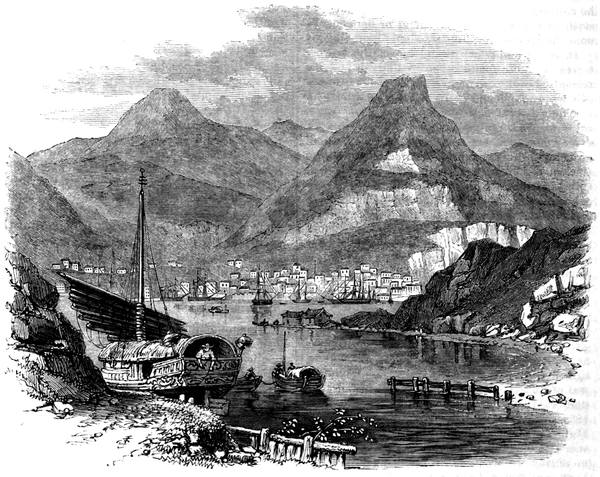
Hong-kong.
The English and French treaties, especially the former, being more comprehensive in their character, could not be settled so readily as the American. Commissioner Key-ing, who had concluded the treaty of Nankin with Sir Henry Pottinger in 1842, was sent from Pekin to Tien-sing to assist Kwei-hang and Hwa-sha-na in the present instance; but the Earl of Elgin, seeing that Key-ing was disposed for a course of cunning and trickery, refused to treat with him; and the negotiations were left to the other two commissioners. All difficulties being gradually removed by three weeks of negotiation, treaties were at length signed on the 26th and 27th of June respectively by the Earl of Elgin and Baron Gros, with the two Chinese commissioners. The provisions were nearly the same for England and for France, except an indemnity to be given to the former nation for the expenses of the war and for certain losses incurred by the merchants. The more important clauses of the English treaty may be thus thrown into a summary: Confirmation of the former Treaty of Nankin—Agreement to appoint British ambassador at Pekin, and Chinese ambassador at London—Family and suite of British ambassador to have residence and security at Pekin, and facilities for travelling, transaction of business, and transmission of letters—British ambassador to correspond on terms of equality with the Chinese minister for foreign affairs—Christianity, whether Protestant or Catholic, to be tolerated, and Christian missionaries protected throughout the Chinese Empire—British subjects permitted to trade and to travel in the interior—Chin-kiang, on the great river Yang-tsze-kiang; Niuchwang, in Manchooria; Tang-choo, in the Gulf of Pe-che-lee; Tae-wan, in the island of Formosa; Swatow and Kiung-choo, in the island of Hainan, to be declared free ports; in addition to Canton, Amoy, Fuh-choo-foo, Ning-po, and Shang-hae, the five already opened; and in addition, also, to three other ports on the Yang-tsze-kiang, as soon as they should be freed from rebels—An Anglo-Chinese commission to prepare a commercial tariff, which is to be revised every ten years—Inland transit dues to be commuted for 601an ad valorem rate—Official correspondence to be conducted in English as the text or original, with a Chinese translation as an accompaniment—The Chinese character or symbol denoting ‘barbarian’ to be in future omitted in Chinese official documents relating to foreigners—British ships-of-war permitted to visit any ports in the empire, and their commanders to be treated on terms of equality by the Chinese officials—Both nations to assist in suppressing piracy in Chinese waters—Amount of indemnity to be settled by a separate article.
The Earl of Elgin would not quit Tien-sing until he had clearly ascertained that the emperor understood and accepted the terms of the treaty: this done, he returned on the 6th of July to Shang-hae.
It is impossible to avoid seeing that such a treaty, if faithfully carried out, would greatly revolutionise the commercial and social institutions of China. If British ships-of-war be permitted to visit any of the ports, and trading-ships have free entry to nearly a dozen of the number; if the great Yang-tsze-kiang be made a channel up which British manufactures may penetrate; if Christian missionaries may teach and preach, print and distribute, without opposition from the government; if a British official may reside at the imperial city, and the Chinese emperor condescend to appoint an ambassador to London; finally, if the vain assumption of superiority be discontinued in Chinese official documents relating to the English—an immense advance will have been made towards bringing China into the fraternity of nations. The great doubt was, whether so vast a change would not be too extensive to be made at once—too humiliating, in the Chinese view, for the imperial government to adopt in its integrity: especially as the British did not offer to assist the emperor against the rebels who ravaged his dominions. It was not expected that the formalities of ratification could all be completed before the summer of 1859. The Hon. Mr Bruce, brother to the Earl of Elgin, conveyed the treaty to England. No sooner was the tenor of the treaty known, than English merchants began to make inquiries and calculations concerning increased exports, of salt and other commodities, to the China seas. The indemnity question was felt to be one which could not be settled without long delay, in treating with so peculiar a people as the Chinese. Commissioners on both sides were to decide how much should be paid by China, for injury inflicted on British property at Canton, and for the expenses of the British expedition; they were also to decide on the revised tariff for imports and exports.
While the terms of this treaty were being settled at Tien-sing, the state of Canton became more and more disturbed. Street-murders were very frequent; bags of gunpowder were exploded in the streets, at moments when patrols were expected to pass; and missiles were hurled, from unseen quarters, into all parts of the city where Europeans resided. Many of the more peaceful citizens left Canton, and their houses were at once seized by ruffians, who posted up proclamations of most ultra-Chinese character. One of these proclamations was to the effect that, ‘We have ascertained that there are only two or three thousand English and French dogs in the city; but our numbers are thousands on thousands; and if every one of us carry but a sword to kill every foreigner that we meet, we shall soon kill them all. If any one trade or supply provisions to the foreign dogs, we shall arrest and punish him according to the village regulations. All those who are in the employ of the foreign dogs must leave their employment in one month’—and terrible denunciations were hurled against all those who should disobey these behests. General Straubenzee and the other officials were much perplexed how to deal with this state of things; they began to fear that nothing less than a bombardment of the city would drive out the ‘braves,’ and restore peaceful trade; and yet it would be an anomaly to use cannon and muskets, beheading and imprisonment, against the subjects of an emperor with whom we had just made a treaty of peace. In this exigency, Sir John Bowring caused large posting-bills to be printed in Chinese—announcing that a treaty of peace had been signed between the two countries; that all animosity ought now to cease; that many Chinese, hitherto residing at Hong-kong as servants and traders, had been frightened away by threatening proclamations from some of the authorities on the mainland; that surreptitious attempts had been made to check the supply of provisions to Hong-kong; and that many inconveniences had thence arisen. The placard proceeded to warn all persons and communities against any interference with the peaceful resumption of commerce between the two nations. An attempt to distribute this placard or proclamation was clumsily made, and led to disaster. Two British officers, knowing the Chinese language, went with a few seamen in the gun-boat Starling, to the coast of the mainland nearly opposite the island of Hong-kong. Some difficulty being experienced in obtaining an interview with the official authorities, the sailors landed under a flag of truce, and attempted to post up the placards in the water-side suburbs of the town of Namtow; they were, however, attacked by Chinese soldiery, and driven back to the gun-boat, with the loss of one of their number and the wounding of another.
This untoward failure of course led to further fighting. As the attack made by the Chinese on the sailors was in defiance of a flag of truce, Sir John Bowring deemed himself justified in inflicting a punishment on the town. He made a requisition to General Straubenzee, who thereupon organised a small expeditionary force. He selected 700 men—59th foot, artillery, engineers, marines, and naval brigade—who were commanded by himself and Commodore Keith Stewart. They landed near Namtow on the 11th of August, and gave notice to the inhabitants that no injury would be done to 602them if they remained neutral; the attack being intended against the ‘braves’ or Chinese soldiers, who had originated the contest. Within a few hours a fort was attacked, the Chinese troops driven out, the fort destroyed, and two large brass guns brought away as trophies. The object in view was, not to injure the town or the inhabitants, but to prove to the authorities that any disregard of a flag of truce would subject them to a hostile demonstration.
Throughout these strange operations, in which war and peace were so oddly mingled—the one prevailing at Namtow, the other at Tien-sing—the city of Canton continued in a disturbed state. On the 21st of July, the ‘braves’ outside the city went so far as to plan an attack for the expulsion of the English and French altogether from the place. They were speedily beaten off. As before, however, it was a discomfiture, not a suppression; for the braves settled down in an encampment about four miles from Canton, ready for any exigencies. During a considerable time after the signing of the treaty at Tien-sing, Governor Whang either did not know of it, or else disregarded it; but in the course of the month of August, evidence gradually appeared that he had been officially informed of the treaty. He forbade the braves to make any further attacks. Many Chinese traders, who had been driven in disquietude from Canton, now returned; and Hong-kong began again to look out for Chinese servants and work-people. Governor Whang’s proclamation, dated August 17th, contained a statement which bore an aspect of considerable probability: ‘There are, both within and without the city, many villains and thieves who, pretending they are braves, take advantage of the state of affairs to create disturbances in order to plunder and rob, and from whose hands the citizens have suffered much. If such rascality be not speedily suppressed, how can the minds of the people be set at ease, or tranquillity restored? And unless the villains be apprehended, how can the districts be purged?’ Wherefore he gave orders for the suppression of violence and hostile manifestations.
During the months of September and October—with the exception of a stroke of diplomacy at Japan, presently to be adverted to—Lord Elgin remained in the China seas, chiefly at Shang-hae, waiting for the Chinese commissioners who were to settle with him the minor details supplementary to the treaty. Former experience having shewn that the Chinese authorities viewed the obligations of a treaty somewhat lightly, it was not deemed prudent either to give up Canton, or to withdraw the powerful naval force from the China coast, until all the conditions of the treaty had been put in a fair train for fulfilment. Canton gradually recovered its trade and quietude; Hong-kong gradually got back its Chinese servants and artisans; and the English fleet vigorously put in operation that clause of the treaty which related to the suppression of piracy. Expeditions were fitted out from Hong-kong, which captured and destroyed hundreds of piratical junks.
One of the most remarkable episodes in this remarkable Chinese war bore relation to Japan—an empire consisting of many islands, lying northeastward of China. Until a few years ago, the Japanese traded only with the Chinese and the Dutch. The Dutch were allowed to establish a trading station on the small island of Desima, which was connected with the larger island of Kiusiu or Kioosioo by a bridge. At the Kiusiu end of the bridge was the city of Nagasaki or Nangasaki, with the inhabitants of which only the Dutch were allowed to trade. One ship annually, and one only, was permitted to come to Desima from Java, bringing sugar, ivory, tin, lead, bar-iron, fine chintzes, and a few other commodities, and conveying away in exchange copper, camphor, lackered-wood ware, porcelain, rice, soy, &c. The Chinese, like the Dutch, were confined to the little island opposite Nagasaki, but their trading privileges were greater; at three different periods of the year they were wont to send laden junks from Amoy, Ning-po, and Shang-hae, and exchange Chinese commodities for Japanese. Such was the state of matters until a short time previous to the Russo-Turkish war; when the United States, taking advantage of an insult offered to American ships, induced or compelled the Japanese government to permit intercourse between the two countries, to be conducted at certain ports under certain regulations. Some time afterwards, similar privileges were accorded to Russia and England. The convention with England, signed at Nagasaki on the 9th of October 1855, provided for very little more than this—that British ships might resort to the three ports of Nagasaki, Simoda, and Hakodadi, for the purpose of effecting repairs, and obtaining fresh water, provisions, and such supplies as they might absolutely need. It was a denial of such aid to distressed ships that had led the United States to threaten the Japanese. France, not to be left behind by other nations, sent an expedition to obtain shipping privileges similar to those conceded to America, England, and Russia. On the 25th of May 1856, M. de Montravel presented himself before the governor of Nagasaki, accompanied by rather an imposing array of officers; he had no difficulty in procuring the desired concession. On the 11th of December in the same year, two British merchant-ships, about to enter the harbour at Nagasaki, to purchase certain supplies, were refused admission; whereupon the two captains sailed up close to the town, landed, and marched with a strong escort to the residence of the governor. He declined to receive them, but undertook that any letter from them should be conveyed to the emperor at Jedo or Yedo, the capital of Japan. This letter obtained the desired result; an imperial edict being issued on January 26, 1857, that ships from any of the four nations might enter Nagasaki as well as the other two ports—provided 603that none of the crews attempted to penetrate into the interior. This letter was, in fact, nothing more than the carrying out of an agreement, which the governor of Nagasaki had on a former occasion evaded. On the 17th of June 1857, Mr Townshend Harris, acting under the United States consul at Hong-kong, signed a treaty at Simoda with two Japanese commissioners. This treaty was a great advance, in commercial liberality, on anything previously known in that region.
Thus matters remained until the autumn of 1858; when, expeditions to China having been sent from England, France, Russia, and America, advantage was taken of the proximity of Japan to obtain by and for the first three countries the same trading privileges as had been granted to America. It was, throughout, a very singular race between four great nations, in which America obtained the first start. The Japanese had, during three or four years, seen much more of Europeans and Americans than at any former period, and had begun to acquire enlarged notions of international commerce; moreover, they had lately heard of the powerful armaments on the Canton and Pei-ho rivers, and of the treaties which those armaments had enforced; from whence the Earl of Elgin inferred that he might probably meet with success in an attempt to obtain an improved treaty of commerce. On the 3d of August he entered the port of Nagasaki, with the Furious, Retribution, and Lee—taking with him a steam-yacht as a present from Queen Victoria to the Emperor of Japan. On the following day he was joined by Sir Michael Seymour, with the Calcutta and Inflexible. It being deemed best that the yacht should be presented at Jedo if possible, the expedition set forth again, and proceeded to Simoda. Here it was ascertained that Mr Townshend Harris, United States consul, had just returned from Jedo with a new and very advantageous treaty of commerce between America and Japan; that Count Putiatine was at that very moment negotiating for a similar treaty between Russia and Japan; and that Mr Donker Curtius, Dutch consul, had been trying in a similar direction for Holland. The Earl at once saw that no time was to be lost, or he would be distanced by the other diplomatists. Procuring the aid of a Dutch interpreter, through the courtesy of Mr Harris, his lordship proceeded from Simoda towards Jedo on the 12th. Disregarding the rules laid down by the Japanese government concerning the anchoring-places of ships, the squadron, led by Captain Sherard Osborne, boldly pushed on to the vicinity of the city—to the utter astonishment of the natives, official and nonofficial. Boats approached, containing Japanese officers, who earnestly begged the British representative not to approach the great city, which had never yet been visited by a foreign ship; but as he was deaf to their entreaties, they prepared to give him a courteous reception on shore. Although the city was strongly protected by forts, there was no indication of a hostile repulsion of the strangers. During eight days did Elgin reside within the great city of Jedo, treated with every attention—possibly because there were British ships-of-war and a gun-boat just at hand. All the naval officers had opportunity of traversing the city during this interval, and met with signs of civilisation such as induced them to write home very glowing descriptions. The earl at first met with difficulties, arising from the circumstance that a conservative had just supplanted a liberal ministry (to use English terms) at Jedo, strengthening the prejudice against foreigners. Indeed, this change of ministry had arisen two or three days before, in consequence of the signing of the liberal treaty with America. Elgin, however, triumphed over this and all other difficulties; he arrived at Shang-hae again on the 3d of September, bringing with him a treaty of commerce between England and Japan, signed at Jedo on the 26th of August.
The treaty thus obtained was written in Dutch as the original, with English and Japanese translations. The chief clauses comprised the following provisions: England may appoint an ambassador to Jedo, and Japan an ambassador to London—The ambassadors to be free to travel in the respective empires—Each power may appoint consuls at the ports of the other—The ports of Hakodadi, Nanagawa, Nagasaki, Nee-e-gata, Hiogo, Jedo, and Osaca, to be opened to British traders at various times by the year 1863—British traders may lease ground and build dwellings and warehouses at those ports—The British may travel to distances within a certain radius of each port—In any dispute between British and Japanese, the British consuls to act as friendly arbitrators—If arbitration fail, British offenders to be tried by British laws, and Japanese by those of Japan—British residents may employ Japanese as servants or workmen—British may freely exercise their religion—Foreign and Japanese coin may be used indifferently for commercial purposes—Supplies for British vessels may be stored at certain ports free of duty—Japanese authorities to render aid to stranded British vessels—British captains may employ Japanese pilots—Goods may be imported at an ad valorem duty, without any transit or other dues, and may be re-exported duty free—British and Japanese to aid each other in preventing smuggling—Money, apparel, and household furniture of British subjects residing in Japan to be imported duty free—Munitions of war to be prohibited—All other articles to pay an ad valorem import-duty, varying from 5 to 35 per cent., according to a tariff to be specially prepared—Any trading privileges, granted hereafter to any other nation, to be granted equally to England.
This very important treaty—even more liberal in its provisions than that concluded with China—was to be ratified by the two courts, and the ratifications exchanged, within one year from the signature.
604
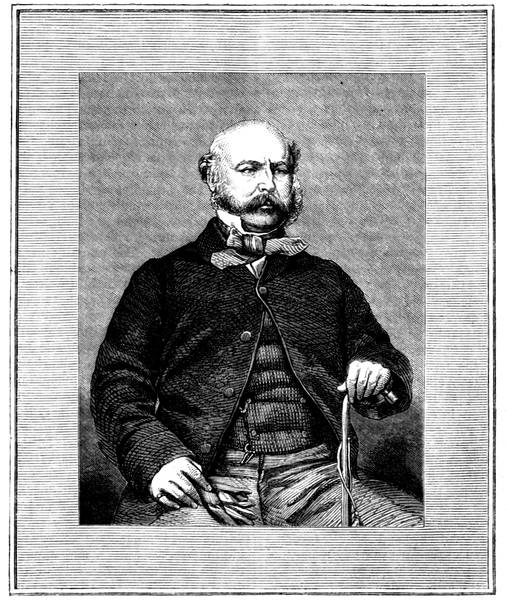
Sir Edward Lugard.
§ 3. ENGLISH PROSPECTS IN THE EAST.
When, by the month of October 1858, it was known that the object of the Persian expedition had been fulfilled by the complete withdrawal of the Persians from Herat; that the purpose of the Chinese expedition had been even more than fulfilled, supposing the advantageous treaty made by the Earl of Elgin to be faithfully observed; and that a remarkable commercial treaty had been signed with Japan—the English nation felt, not unjustly, that their prospects of advancement in the east were greatly heightened. All depended, however, or would depend, on the result of the struggle in India; if that ended satisfactorily, the power of England in Asia would be greater than ever. That the Indian struggle would have a favourable termination, few doubted. There was much to be done; but as the whole empire cheerfully supported the government in the preparations for doing it, and as those preparations had been widely spread and deeply considered, success was very confidently looked forward to.
The arrangements for the final discomfiture (if not extinction) of the mutineers, and for bringing back a misguided peasantry to habits of order and of industry, will be noticed presently; but it may be desirable first to glance at two important subjects which much occupied the attention of thoughtful men—namely, the probable causes of the Revolt; and, consequent on those causes, the general character of the reforms proper to be introduced into the government of India, as an accompaniment to the change from the Company’s régime to that of the Queen.
The complexity of Indian affairs was very remarkable; and in no instance more so than with reference to the first of the above two subjects of speculation. Down to the closing scene, men could 605not agree in their answers to the question—‘What was the cause of the mutiny?’ Military officers, cabinet ministers, commissioners, magistrates, missionaries, members of parliament, pamphleteers, writers in newspapers, as they had differed at first, so did they differ to the end. This discrepancy offers strong proof that the causes were many in number and varied in kind—that the Revolt was a resultant of several independent forces, all tending towards a common end. It may not be without value to shew in what directions public men sought for these causes. The following summaries present the views of a few among many who wrote on the subject:
Mr Gubbins,[195] who was financial commissioner of Oude (or Oudh) when the mutiny began, was requested by Mr Colvin, lieutenant-governor of the Northwest Provinces, to express his opinions concerning the causes of that catastrophe. He wrote out his opinions; and stated that Sir Henry Lawrence, shortly before his death, concurred mainly with them. In the first place, he did not attribute the mutiny to Russian intrigue—an explanation that had occurred to the minds of some persons. In the second place, he disbelieved that the mutiny was due to a Mohammedan conspiracy; the movement began among soldiers, of whom four-fifths or more were Hindoos; and certain Mohammedan sovereigns and leaders only joined it when they saw a probable chance of recovering dominion for their race and their religion. In the third place, Mr Gubbins equally denied that it was a national rebellion, a rising of a nation against its rulers; for, he urged, the villagers were throughout more disposed to remain neutral than to aid either side; we had no right to expect any great loyalty from them; and we received all that could fairly be looked for—the sympathy of some, the hostility of others, but the neutrality of the greater number. In the fourth place, he denied that the annexation of Oude caused the mutiny; there were certain persons—courtiers of the deposed king, shopkeepers at Lucknow, soldiers of the late king’s army, and budmashes—who had suffered by the change; but the mass of the population, he contended, had been benefited by us, and had neither ground nor wish for insurrection. Having thus expressed his dissent from many modes of explanation, Mr Gubbins proceeded to give his own views, which traced the mutiny to three concurrent causes: ‘I conceive that the native mind had been gradually alarmed on the vital subjects of caste and religion, when the spark was applied by the threatened introduction of the greased cartridge; that this spark fell upon a native army most dangerously organised, subject to no sufficient bonds of discipline, and discontented; and, above all, that this occurred at a time when Bengal and the Northwestern Provinces were so denuded of European troops as to leave the real power in the hands of the natives.’
Mr Rees,[196] confining his observations to the province with which he was best acquainted, attributed the mutiny to the mode of governing Oude by the English, superadded to the fierce hostility of the Mussulmans to Christians in general. Thousands of natives had been thrown out of employ by the change of government, and with them their retainers and servants; all alike were rendered impoverished and discontented. The shopkeepers of Lucknow, who had made large profits by supplying the palaces and harem of the king before his deposition, lost that advantage when an English commissioner took the king’s place. New taxes and duties were imposed, as a means of substituting a regular for an irregular revenue; and these taxes irritated the payers. The Mohammedan teachers and fanatics, he urged, enraged at the substitution of a Christian for a Moslem government, were ready for any reactionary measures. Lastly, there were innumerable vagabonds, bravos, and beggars in the city, who had found bread in it under native rule, but who nearly starved under the more systematic English government. Hence, Mr Rees contended, the great city of Lucknow had for a year or more been ripe for rebellion, come from what quarter and in what way it might.
Colonel Bourchier,[197] like many military officers, sought for no other origin of the mutiny than that which was due to the state of the native army. The enormous increase in that army—by the contingents raised to guard the newly acquired territories in Central India, the Punjaub, and Oude—with no corresponding increase in the European force, encouraged a belief on the part of many of the natives that they had a fair chance of being able to drive the English altogether from the country. The colonel quoted an opinion expressed by the gallant and lamented Brigadier Nicholson, who possessed an intimate knowledge of the native character—‘Neither greased cartridges, the annexation of Oude, nor the paucity of European officers, was the cause of the mutiny. For years I have watched the army, and felt sure they only wanted an opportunity to try their strength with us.’
Mr Ludlow[198] ridiculed the idea of the mutiny being sudden and unexpected. He pointed to the fact that Munro, Metcalfe, Napier, and other experienced men, had long ago predicted an eventual outbreak, arising mainly from the defective organisation of the military force. Mr Ludlow himself attributed the mutiny to many concurrent causes. The Brahmins were against us, because we were gradually sapping the foundations of their religion and power; the Mussulman leaders were against us, because we had reduced the Mogul rule to a shadow, and most of the nawabships likewise; the Mahrattas were against us, because we had gradually lessened the power of Scindia, Holkar, the Guicowar, the Peishwa, the Nena, and other leading men of their nation; the Oudians were against us, because, in addition to having 606deposed their king, we had greatly lessened the privileges and emoluments of the soldiery who had heretofore served him; and lastly, the Hindoo sepoys were turned against us, because they believed the rumour that the British government intended to degrade their caste and religion by the medium of greased cartridges. Mr Ludlow treated the cartridge grievance as the spark that had directly kindled the flame; but he believed there were sufficient inflammable materials for the outbreak even if this particular panic had not arisen.
Mr Mead,[199] who, in connection with the press of India, had been one of the fiercest assailants of the Company in general, and of Viscount Canning in particular, insisted that the mutiny was a natural result of a system of government wrong in almost every particular—cruel to the natives, insulting to Europeans not connected with the Company, and blind even in its selfishness. More especially, however, he referred it to ‘the want of discipline in the Bengal army; the general contempt entertained by the sepoys for authority; the absence of all power on the part of commanding officers to reward or punish; the greased cartridges; and the annexation of Oude.’ The ‘marvellous imbecility’ of the Calcutta government—a sort of language very customary with this writer—he referred to, not as a cause of the mutiny, but as a circumstance or condition which permitted the easy spread of disaffection.
Mr Raikes,[200] who, as judge of the Sudder Court at Agra, had an intimate knowledge of the Northwest Provinces, contended that, so far as concerned those provinces, there was one cause of the troubles, and one only—the mutiny of the sepoys. It was a revolt growing out of a military mutiny, not a mutiny growing out of a national discontent. Ever since the disasters at Cabool taught the natives that an English army might be annihilated, Mr Raikes had noticed a change in the demeanour of the Bengal sepoys. He believed that they indulged in dreams of ambition; and that they made use of the cartridge grievance merely as a pretext, in the beginning of 1857. The outbreak having once commenced, Mr Raikes traced all the rest as consequences, not as causes.—The villagers in many districts wavered, because they thought the power of England was really declining; the Goojurs, Mewatties, and other predatory tribes rose into activity, because the bonds of regular government were loosened; the Mussulman fanatics rose, because they deemed a revival of Moslem power just possible; but Mr Raikes denied that there was anything like general disaffection or national insurrection in the provinces with which he was best acquainted.
‘Indophilus’[201]—the nom de plume of a distinguished civilian, who had first served the Company in India, and then the imperial government in England—discountenanced the idea of any general conspiracy. He believed that the immediate exciting cause of the mutiny was the greased cartridges; but that the predisposing causes were two—the dangerous constitution of the Bengal sepoy army, and the Brahmin dread of reforms. On the latter point he said: ‘In the progress of reform, we are all accomplices. From the abolition of suttee, to the exemption of native Christian converts from the forfeiture of their rights of inheritance; from the formation of the first metalled road, to covering India with a network of railways and electric telegraphs—there is not a single good measure which has not contributed something to impress the military priests with the conviction that, if they were to make a stand, they must do so soon, else the opportunity would pass away for ever.’
The Rev. Dr Duff,[202] director of the Free Church Scotch Missions in India, differed, on the one hand, from those who treated the outbreak merely as a military revolt, and, on the other, from those who regarded it as a great national rebellion. It was, he thought, something between the two—a political conspiracy. He traced it much more directly to the Mohammedan leaders than to the Hindoos. He believed in a long-existing conspiracy among those leaders, to renew, if possible, the splendour of the ancient Mogul times by the utter expulsion of the Christian English; the Brahmins and Rajpoots of the Bengal army were gradually drawn into the plot, by wily appeals to their discontent on various subjects connected with caste and religion; while the cartridge grievance was used simply as a pretext when the conspiracy was nearly ripe. The millions of India, he contended, had no strong bias one way or the other; there was no such nationality or patriotic feeling among them as to lead them to make common cause with the conspirators; but on the other hand they displayed very little general sympathy or loyalty towards their English masters. Viewing the subject as a missionary, Dr Duff strongly expressed his belief that we neither did obtain, nor had a right to obtain, the aid of the natives, seeing that we had done so little as a nation to Christianise them.
Without extending the list of authorities referred to, it will be seen that nearly all these writers regarded the ‘cartridge grievance’ as merely the spark which kindled inflammable materials, and the state of the Bengal army as one of the predisposing causes of the mutiny; but they differed greatly on the questions whether the revolt was rather Mohammedan or Hindoo, and whether it was a national rebellion or only a military mutiny. It is probable that the affirmative opinions were sounder than the negative—in other words, that every one of the causes assigned had really something to do with this momentous outbreak.
We now pass to the second of the two subjects 607indicated above—the views of distinguished men, founded in part on past calamities, on the reforms necessary in Indian government. And here it will suffice to indicate the chief items of proposed reforms, leaving the reader to form his own opinions thereon. During the progress of the Revolt, and in reference to the future of British India, a most valuable and interesting correspondence came to light—valuable on account of the eminence of the persons engaged in it. These persons were Sir John Lawrence and Colonel Herbert Edwardes—the one chief-commissioner of the Punjaub, the other commissioner of the Peshawur division of that province. Both had the welfare of India deeply at heart; and yet they differed widely in opinion concerning the means whereby that welfare could be best secured—especially in relation to religious matters. Early in the year 1858, Colonel Edwardes published a Memorandum on the Elimination of all unchristian Principles from the Government of British India. About the same time Mr MacLeod, financial commissioner, published a letter on the same subject; as did also, some time afterwards, Mr Arnold, director-general of public instruction in the Punjaub. Sir John Lawrence, on the 21st of April, addressed a dispatch to Viscount Canning, explanatory of his views on the matters treated by these three gentlemen, especially by Colonel Edwardes. The colonel had placed under ten distinct headings the ‘unchristian elements’ (as he termed them) in the Indian government; and it will suffice for the present purpose to give here brief abstracts of the statements and the rejoinders—by which, at any rate, the subject is rendered intelligible to those who choose to study it:
1. Exclusion of the Bible and of Christian Teaching from the Government Schools and Colleges.—Edwardes insisted that the Bible ought to be introduced in all government schools, and its study made a part of the regular instruction. Lawrence was favourable to Bible diffusion, but pointed out certain necessary limits. He would not teach native religions in government schools; he would teach Christianity only (in addition to secular instruction), but would not make it compulsory on native children to attend that portion of the daily routine. He would wish to see the Bible in every village-school throughout the empire—with these two provisoes: that there were persons able to teach it, and pupils willing to hear it. Who the teachers should be—whether clergymen, missionaries, lay Bible-readers, or Christianised natives—is a problem that can only very gradually receive its solution. Lawrence insisted that there must be no compulsion in the matter of studying Christianity; it must be an invitation to the natives, not a command. The four authorities named in the last paragraph all differed in opinion on this Bible question. Colonel Edwardes advocated a determined and compulsory teaching of the Bible. Mr MacLeod joined him to a considerable extent, but not wholly. Mr Arnold strongly resisted the project of teaching the Bible at all—on the grounds that it would infringe the principle of religious neutrality; that it would not be fair to the natives unless native religions were taught also; that it would seem to them a proselyting and even a persecuting measure; that it might be politically dangerous; and that we should involve ourselves in the sea of theological controversy, owing to the diversities of religious sects among Christians. Sir John Lawrence, as we have seen, adopted a medium between these extremes.
2. Endowment of Idolatry and Mohammedanism by the Government.—In British India, many small items of revenue are paid by the government for the support of temples, priests, idols, and ceremonies pertaining to the Hindoo and Mohammedan religions. Edwardes urged that these payments should cease, as a disgrace to a Christian government. Lawrence pointed out that this withdrawal could not be effected without a gross breach of faith. The revenues in question belonged to those religious bodies before England ‘annexed’ the states, and were recognised as such at the time of the annexation. They are a property, a claim on the land, like tithes in England, or like conventual lands in Roman Catholic countries. They are not, and never have been, regarded as religious offerings or gifts. We seized the lands; but if we were to withhold the revenues derived from those lands, on the ground that the religious services are heathen, it would be a virtual persecution of heathenism, and, as such, repugnant to the mild principles of Christianity. Lawrence believed that the payments might so be made as not to appear to encourage idolatry; but he would not listen to any such breach of faith as withholding them altogether.
3. Recognition of Caste.—Colonel Edwardes, in common with many other persons, believed that the British government had pandered too much to the prejudices of caste, and that this system ought to be changed. Lawrence pointed out that it was mainly in the Bengal army that this prevailed, and that the custom arose out of very natural circumstances. Brahmins and Rajpoots were preferred for military service, because they were generally finer men than those of lower castes, because they were (apparently) superior in moral qualifications, and because they were descended from the old soldiers who had fought under Clive and our early generals. Our officers became so accustomed to them, that at length they would enlist no others. Being more easily obtained from Oude than from any other province, it came to pass that the Bengal army gradually assumed the character of a vast aggregate of brotherhoods and cousinhoods—consisting chiefly of men belonging to the same castes, speaking the same dialects, coming from the same districts, and influenced by the same associations. It was the gradual growth of a custom, which the Revolt suddenly put an end to. Lawrence denied that the government had shewn any great encouragement to caste prejudices, except in the Bengal army. He believed that an equal error would be 608committed by discouraging the higher and encouraging the lower castes. What is wanted is, a due admixture of all, from the haughty Brahmin and Rajpoot castes, down to the humble Trading and Sweeper castes. Whether all should be combined in one regiment, or different regiments be formed of different castes, would depend much on the part of India under notice. Christianised natives would probably constitute valuable regiments, as soon as their number becomes sufficiently great. On all these questions of caste, the two authorities differed chiefly thus—Edwardes would beat down and humble the higher castes; Lawrence would employ all, without especially encouraging any.
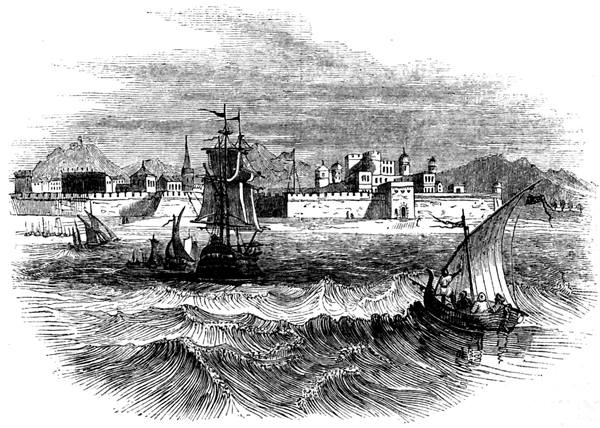
Fort St George, Madras; in 1780.
4. Observance of Native Holidays in State Departments.—Native servants of the government were usually allowed to absent themselves on days of festival or religious ceremony. Edwardes proposed to reform this, as being a pandering to heathen customs, unworthy of a Christian government. Lawrence contended that such a change would be a departure from the golden rule of ‘doing unto others that which we would they should do unto us.’ A Christian in a Mohammedan country would think it cruel if compelled to work on Sunday, Good Friday, or Christmas-day; and so would the Hindoo and Mussulman of India, if compelled to work on their days of religious festival. Lawrence thought that the number might advantageously be lessened, by restricting the list to such as were especial religious days in the native faiths; but beyond this he would not curtail the privilege of holiday (holy day). He adverted to the fact that the Christian Sunday is made obvious to the natives by the suspension of all public works.
5. Administration by the British of Hindoo and Mohammedan Laws.—Edwardes deemed it objectionable that England should to so great an extent suffer native laws to be administered in India. Lawrence replied that it is the policy of conquerors to interfere as little as possible in those native laws which operate only between man and man, and do not affect imperial policy. He drew attention to the fact that Indian legislation had already made two important steps, by legalising the re-marriage of Hindoo widows, and by removing all possible civil disabilities or legal disadvantages from Christian converts; and he looked forward to the time when it might perhaps be practicable to abolish polygamy, and the making of contracts of betrothal by parents on behalf of infant children; but he strenuously insisted on the importance of not changing any such laws until the government can carry the good-will of the natives with them.
6. Publicity of Hindoo and Mohammedan Processions.—It was urged by Edwardes that religious processions ought not to be allowed in the public streets, under protection of the police. Lawrence joined in this opinion—not, however, on religious grounds, but because the processions led to quarrelling and fighting between rival communions, and because the Hindoo idols and pictures are often of a character quite unfitted for exhibition in public thoroughfares.
7. Display of Prostitution in the Streets.—This aspect of social immorality is far more glaring in many parts of India than in European cities, bad as the latter may be. Edwardes recommended, 609and Lawrence concurred in the recommendation, that the police arrangements should be rendered more stringent in this matter.
8. Restrictions on Marriage of European Soldiers.—Great restrictions were, in bygone years, imposed by the Company on the marriage of European soldiers; and a shameful disregard shewn for the homes of those who were married. Edwardes condemned this state of things; and Lawrence shared his views to a great extent. He asserted that men are not better soldiers for being unmarried—rather the reverse; and that women and children, in moderate numbers, need not be any obstruction to military arrangements. Some change in this matter he recommended. He pointed out, however, that in reference to the comfort of married soldiers, great improvements had been introduced into the Punjaub, and improvements to a smaller extent in other parts of British India. He fully recognised the bounden duty of the government so to construct barracks as to provide for the proper domestic privacy of married soldiers and their families.
9. Connection of the Government with the Opium-trade.—Edwardes dwelt on the objectionable character of this connection. Lawrence replied that the English were not called upon to decide for the Chinese how far the use of opium is deleterious; and that, until we checked our own consumption of intoxicating liquors, we were scarcely in a position to take a high moral tone on this point. He nevertheless fully agreed that it was objectionable in any government to encourage the growth of this drug, actively supervising the storing and selling, and advancing money for this purpose to the cultivators. It was a revenue question, defensive wholly on financial grounds. How to provide a substitute for the £4,000,000 or £5,000,000 thus derived would be a difficult matter; but he thought the best course would be to sever the connection between the government and the opium-trade, and to lay a heavy customs duty on the export of opium from India.
10. Indian Excise Laws.—It was contended by Edwardes that the government encouraged intemperance by farming out to monopolists the right of manufacturing and selling intoxicating drugs and spirits. Lawrence contested this point. He asserted that there is less drunkenness in India, less spirit-drinking and drug-chewing, than under the former native rule, when the trade was open to all. As a question of morals, the Indian government does no more than that of the home country, in deriving a revenue from spirituous liquors; as a question of fact, the evils are lessened by the very monopoly complained of.
Sir John Lawrence, in a few concluding remarks, expressed a very strong belief that Christian civilisation may be introduced gradually into India if a temperate policy be pursued; but that rash zeal would produce great disaster. ‘It is when unchristian things are done in the name of Christianity, or when Christian things are done in an unchristian way, that mischief and danger are occasioned.’ He recommended that as soon as the supreme government had organised the details of a just and well-considered policy, ‘it should be openly avowed and universally acted on throughout British India; so that there may be no diversities of practice, no isolated or conflicting efforts, which would be the surest means of exciting distrust; so that the people may see that we have no sudden or sinister designs; and so that we may exhibit that harmony and uniformity of conduct which befits a Christian nation striving to do its duty.’ Finally, he expressed a singularly firm conviction that, so far as concerns the Punjaub, he could himself carry out ‘all those measures which are really matters of Christian duty on the part of the government:’ measures which ‘would arouse no danger, would conciliate instead of provoking, and would subserve the ultimate diffusion of the truth among the people.’
It wants no other evidence than is furnished by the above very remarkable correspondence, to shew that the future government of India must, if it be effective, be based on some system which has been well weighed and scrutinised on all sides. The problem is nothing less than that of governing a hundred and eighty millions of human beings, whose characteristics are very imperfectly known to us. It is a matter of no great difficulty to write out a scheme or plan of government, plentifully bestrewed with personalities and accusations; there have been many such; but the calm judgment of men filling different ranks in life, and conversant with different aspects of Indian character, can alone insure the embodiment of a scheme calculated to benefit both India and England. Whether the abolition of the governing powers of the East India Company will facilitate the solution of this great problem, the future alone can shew; it will at any rate simplify the departmental operations.
The Queen’s proclamation, announcing the great change in the mode of government, and offering an amnesty to evildoers under certain easily understood conditions, adverted cautiously to the future and its prospects. Before, however, touching on this important document, it may be well to say a few words concerning the military operations in the few weeks immediately preceding its issue.
These operations, large as they were, had resolved themselves into the hunting down of desperate bands, rather than the fighting of great battles with a military opponent. Throughout the whole of India, in the months of October and November, disturbances had been nearly quelled except in two regions—Oude, with portions of the neighbouring provinces of Rohilcund and Behar; and Malwah, with portions of Bundelcund and the Nerbudda provinces. Of the rest—Bengal, Assam and the Delta of the Ganges, Aracan and Pegu, the greater portion of Behar and the Northwest Provinces, the Doab, Sirhind and the hill regions, the Punjaub, Sinde, Cutch and Gujerat, Bombay 610and its vicinity, the Deccan under the Nizam, the Nagpoor territory, the Madras region, Mysore, the South Mahratta country, the south of the Indian peninsula—all were so nearly at peace as to excite little attention. Of the two excepted regions, a few details will shew that they were gradually falling more and more under British power.
In the Oude region the guiding spirit was still the Begum, one of the wives of the deposed king. She had the same kind of energy and ability as the Ranee of Jhansi, with less of cruelty; and was hence deserving of a meed of respect. Camp-gossip told that, under disappointment at the uniform defeat of the rebel troops whenever and wherever they encountered the English, she sent a pair of bangles (ankle-ornaments) to each of her generals or leaders—scoffingly telling him to wear those trinkets, and become a woman, unless he could vanquish and drive out the Feringhees. This had the effect of impelling some of her officers to make attacks on the British; but the attacks were utterly futile. There were many leaders in Oude who fought on their own account; a greater number, however, acknowledged a kind of suzerainty in the Begum. If she did not win battles, she at least headed armies, and carried on open warfare; whereas the despicable Nena Sahib, true to his cowardice from first to last, was hiding in jungles, and endeavouring to keep his very existence unknown to the English. The military operations in Oude during the month of October were not extensive in character. Sir Colin Campbell (Lord Clyde), waiting for the cessation of the autumnal rains, was collecting several columns, with a view of hemming in the rebels on all sides and crushing them. That they would ultimately be crushed, everything foretold; for in every encounter, large or small, they were so disgracefully beaten as to shew that the leaders commanded a mere predatory rabble rather than a brave disciplined soldiery. These encounters were mostly in Oude, but partly in Behar and Rohilcund. In the greater number of instances, however, the rebels ran instead of fighting, even though their number was tenfold that of their opponents. The skilled mutinied sepoys from the Bengal army were becoming daily fewer in number, so many having been struck down by war and by privation; their places were now taken by undisciplined ruffians, who, however strong for rapine and anarchy, were nearly powerless on the field of battle. Thousands of men in this part of India, who had become impoverished, almost houseless, during a year and a half of anarchy, had strong temptation to join the rebel leaders, from a hope of booty or plunder, irrespective of any national or patriotic motive. Sir Colin, when the month of November arrived, entered personally on his plan of operations; which was to bar the boundaries of Oude on three sides—the Ganges, Rohilcund, and Behar—and compel the various bodies of rebels either to fight or to flee; if they fought, their virtual annihilation would be almost certain; if they fled, it could only be to the jungle region on the Nepaul frontier of Oude, where, though they might carry on a hide-and-seek game for many months, their military importance as rebels would cease. In the dead of the night, between the 1st and 2d of November, the veteran commander-in-chief set forth from Allahabad with a well-selected force, crossed the Ganges, and advanced into Oude. His first work was to issue a proclamation,[203] sternly threatening all evildoers. A few days earlier, at Lucknow, Mr Montgomery, as chief-commissioner, had issued a proclamation for the disarming of Oude—requiring all thalookdars to surrender their guns, all persons whatever to surrender their arms, all leaders to refrain from building and arming forts; and threatening with fine and imprisonment those who should disobey. It was intended and believed that the three proclamations should all conduce towards a pacification—the Queen’s (presently to be noticed) offering pardon to mutineers who yielded; the Commander-in-chief’s, threatening destruction to all towns and villages which aided rebels; and the commissioners’, lessening the powers for mischief by depriving the inhabitants generally of arms. With Sir Colin advancing towards the centre of Oude by Pertabghur, troops from Seetapoor, Hope Grant from Salone, and Rowcroft from the Gogra at Fyzabad, the Begum and her supporters were gradually so hemmed in that they began to avail themselves of the terms of the Queen’s proclamation by surrender. It was to such a result that the authorities had from the first looked; but never until now had all the conditions for it been favourable. One of the first to surrender was Rajah Lall Madhoo Singh, a chieftain of great influence and energy, and one whose character had not been stained by deeds of cruelty.
In the Arrah or Jugdispore district, in like manner, the close of the scene was foreshadowed. Ummer Singh and his confederates had long baffled Brigadier Douglas; but now that troops were converging from all quarters upon the jungle-haunt, the rebels became more and more isolated from bands in other districts, their position more and more critical, and their final discomfiture more certain. Sir H. Havelock, son of the deceased general, and Colonel Turner, pressed them more and more with new columns, until their hopes were desperate. One excellent expedient was the cutting down of the Jugdispore 611jungle, 23 miles in length by 4 in breadth; this useful work was begun in November by Messrs Burn, railway contractors.
In the other region of India above adverted to—comprising those districts of Malwah, Bundelcund, &c., which are watered by the Betwah, the Chumbul, the Nerbudda, and their tributaries—the leading rebel was Tanteea Topee, one of the most remarkable men brought forward by the Revolt. He had most of the qualities for a good general—except courage. He would not fight if he could help it; but in avoiding the British generals opposed to him, he displayed a cunning of plan, a fertility of resource, and a celerity of movement, quite note-worthy. The truth seems to have been, that he held power over an enormous treasure, in money and jewels, which he had obtained by plundering Scindia’s palace at Gwalior; this treasure he carried with him wherever he went; and he shunned any encounters which might endanger it. He looked out for a strong city or fort, where he might settle down as a Mahratta prince, with a large store of available ready wealth at hand; but as the British did not choose to leave him in quietude, he marched from place to place. Between the beginning of June and the end of November he traversed with his army an enormous area of country, seizing guns from various towns and forts on the way, but usually escaping before the English could catch him. Former chapters have shewn by what strange circumvolutions he arrived at Julra Patteen; and a detail of operations would shew that his subsequent movements were equally erratic. He went to Seronj, then to Esagurh, then to Chunderee, then to Peshore, then arrived at the river Betwah, and wavered whether he should go southward to the Deccan or northward towards Jhansi. Everywhere he was either followed or headed, by columns and detachments under Michel, Mayne, Parkes, Smith, and other officers. Whenever they could bring him to an encounter, they invariably beat him most signally; but when, as generally happened, he escaped by forced marches, they tracked him. He picked up guns and men as he went; so that the amount of his force was never correctly known; it varied from three to fifteen thousand. One of the most severe defeats he received was at Sindwah, on the 19th of October, at the hands of General Michel; another, on the 25th, near Multhone, from the same active general. It was felt on all sides that this game could not be indefinitely continued. Tanteea Topee was like a hunted beast of prey, pursued by enemies who would not let him rest. When it had been clearly ascertained by General Roberts, in Rajpootana, that the fleet-footed and unencumbered rebel soldiery could escape faster than British troops could follow them, a new mode of strategy was adopted; columns from four different directions began to march towards a common centre, near which centre were Tanteea and his rebels; if one column could not catch him, another could head him and drive him back. Thus it was considered a military certainty that he must be run down at last. And if he fell, the great work of pacification in that part of India would be pretty well effected; for there was no rebel force of any account except that commanded by Tanteea Topee. After his defeat at Multhone, Tanteea was in great peril; Michel literally cut his army in two; and if he had pursued the larger instead of the smaller of these two sections, he might possibly have captured Tanteea himself. On the last day in October, the rebel leader crossed the Nerbudda river, thereby turning his back on the regions occupied by the columns of Roberts, Napier, Michel, Smith, and Whitlock. During November, he made some extraordinary marches in the country immediately southward of the Nerbudda—being heard of successively at Baitool, the Sindwara hills, and other little-known places in that region. He was no better off than before, however, for forces were immediately sent against him from Ahmednuggur, Kamptee, and other places; he had lost nearly all his guns and stores, his rebel followers, though laden with wealth, were footsore and desponding; and, for the first time, his companions began to look out for favourable terms of surrender. The Queen’s proclamation was eminently calculated to withdraw his misguided followers from him; and the Nawab of Banda, the most influential among them, was the first to give himself up to General Michel.
Not only was a large measure of forgiveness held out to those who would return to their allegiance; but the British troops in India were becoming so formidably numerous as to render still more certain than ever the eventual triumph of order and good government. The Queen’s troops in India at the beginning of November, those on the passage from England, and those told off for further shipment, amounted altogether to little short of one hundred thousand men. It affords a striking instance of triumph over difficulties, that between November 1857 and November 1858 the Peninsular and Oriental Steam-navigation Company conveyed no less than 8190 officers and soldiers to India by the overland route—in spite of the forebodings that that route would be unsuitable for whole regiments of soldiers; the burning Egyptian desert and the reef-bound Red Sea were traversed almost without disaster, under the watchful care of this company.
The 1st of November 1858 was a great day in India. On this day the transference of governing power from the East India Company to Queen Victoria was made known throughout the length and breadth of the empire. A royal proclamation[204] was issued, which many regarded as the Magna Charta of native liberty in India. At Calcutta, Bombay, Madras, Lahore, Kurachee, Delhi, Agra, Allahabad, Nagpoor, Mysore, Rangoon, and other great cities, this proclamation was read with every accompaniment of ceremonial splendour that could 612give dignity to the occasion in the eyes of the natives; and at every British station, large or small, it was read amid such military honours as each place afforded. It was translated into most of the languages, and many of the dialects of India. It was printed in tens of thousands, and distributed wherever natives were wont most to congregate—in order that all might know that Queen Victoria was now virtually Empress of India; that the governor-general was now her viceroy; that the native princes might rely on the observance by her of all treaties made with them by the Company; that she desired no encroachment on, or annexation of, the territories of those princes; that she would not interfere with the religion of the natives, or countenance any favouritism in matters of faith; that creed or caste should not be a bar to employment in her service; that the ancient legal tenures and forms of India should, as far as possible, be adhered to; and that all mutineers and rebels, except those whose hands were blood-stained by actual murder, should receive a full and gracious pardon on abandoning their acts of insurgency. When these words were uttered aloud at Bombay (and the ceremony was more or less similar at the other cities named) the spectacle was such as the natives of India had never before seen. The governor and all the chief civilians; the military officers and the troops; the clergy of all the various Christian denominations; the merchants, shipowners, and traders; the Mohammedans, Hindoos, Mahrattas, Parsees—all were represented among the throng around the spot from whence the proclamation was read, first in English, and then in Mahratta. And then the shouting, the music of military bands, the firing of guns, the waving of flags, the illuminations at night, the fireworks in the public squares, the blue-lights and manning of the ships, the banquets in the chief mansions—all rendered this a day to be borne in remembrance. Sir Jamsetjee Jejeebhoy, the Parsee baronet, vied with the Christians in the munificence of rejoicing; and indeed, so little did religious differences mar the harmony of the scene, that Catholic chapels, Mohammedan mosques, Hindoo pagodas, and Parsee temples were alike lighted up at night. It may not be that every one was enabled to assign good reasons for his rejoicing; but there was certainly a pretty general concurrence of opinion that the declared sovereignty of Queen Victoria, as a substitute for the ever-incomprehensible ‘raj’ of the East India Company, was a presage of good for British India. At Calcutta, the proclamation had the singular good-fortune of winning the approval of a community always very difficult to please. The Europeans consented to lay aside all minor considerations, in order to do honour to the great principles involved in the proclamation. The natives, too, took their share in the rejoicing. A public meeting was held early in the month, at which an influential Hindoo, Baboo Ramgopal Ghose, made an animated speech. He said, among other things: ‘If I had power and influence, I would proclaim through the length and breadth of this land—from the Himalayas to Cape Comorin, from the Brahmaputra to the Bay of Cambay—that never were the natives more grievously mistaken than they have been in adopting the notion foisted on them by designing and ambitious men—that their religion was at stake; for that notion I believe to have been at the root of the late rebellion.’ Some of the more intelligent natives rightly understood the nature of the great change made in the government of India; but among the ignorant, it remained a mystery—rendered, however, very palatable by the open avowal of a Queen regnant, and of a proclamation breathing sentiments of justice and kindness.
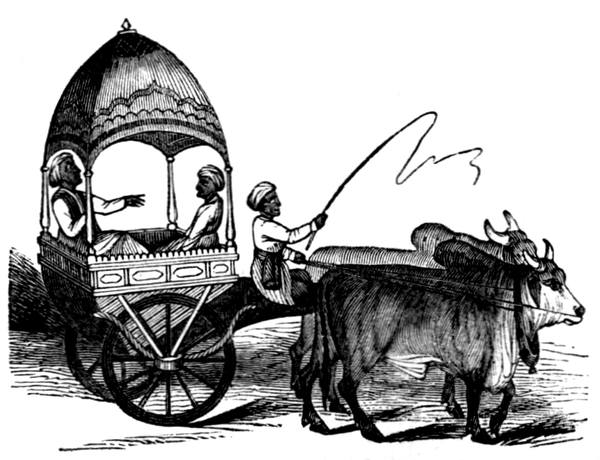
613