Chapter XII · EVENTS IN THE PUNJAUB AND SINDE. (continued 2)
Reading edition
BOMBAY ARMY, MAY 10, 1857.
Military Divisions. Europeans. Natives. Total.
Bombay Garrison, 695 3,394 4,089
Southern, 283 5,108 5,391
Poonah, 1,838 6,817 8,655
Northern, 1,154 6,452 7,606
Asseerghur Fortress, 2 446 448
Sinde, 1,087 6,072 7,159
Rajpootana, 50 3,312 3,362
————— —————— ——————
5,109 31,601 36,710
The Bombay army was so dislocated at that period, by the departure of nearly 14,000 troops to Persia and Aden, that the value of this table for purposes of comparison becomes much lessened. Nevertheless, it affords means of knowing how many troops were actually in India at the time when their services were most needed. On the other hand, about 5000 of the troops in the Bombay presidency belonged to the Bengal and Madras armies. The different kinds of troops were classified as in the Madras army. The regular military stations where troops took up their head-quarters, were about 20 in number; but the small stations where mere detachments were placed nearly trebled this number. The Europeans were to the native troops only as 16 to 100.
As a summary, then, we find that India contained, on the day when the mutinies began, troops to the number of 238,002 in the service of the Company, of whom 38,001 were Europeans, and 200,001 natives—19 Europeans to 100 natives. An opportunity will occur in a future page for enumerating the regiments of which these three armies were composed.
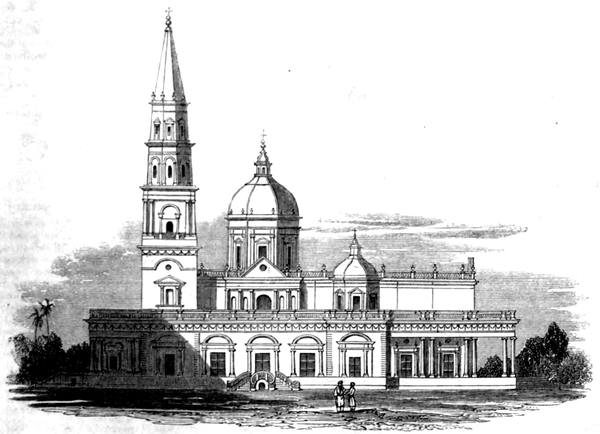
Catholic Church, Sirdhana.—Built by Begum Sumroo (See p. 57).
210
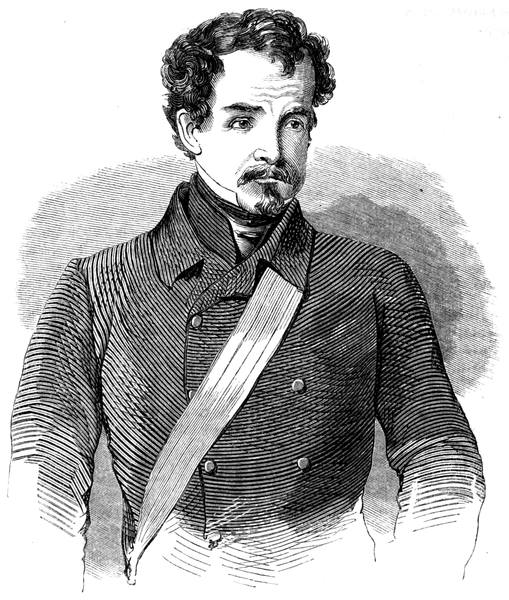
Sir Colin Campbell.