Chapter XIX · THE STORY OF THE LUCKNOW RESIDENCY. (continued 2)
Reading edition
This isolated position of the little garrison at Alum Bagh was, moreover, only one among many grave subjects that speedily presented themselves for consideration. After the first outburst of thankfulness at the arrival of the welcome deliverers, the residents in the Lucknow intrenchment had to ask themselves to what extent it was really a deliverance. Then did they find that, in effect, they were as close prisoners as ever. Havelock had lost nearly one-third of his small force during the desperate encounters of the past few days; and those who survived were far too weak for any considerable military operations. The one great, absorbing, sacred, deeply earnest object he had all along held in view, was to save his fellow-countrymen, their wives and children, from horrors such as had been perpetrated at Cawnpore. To his dying day he remained deeply grateful that 335he had been permitted to effect this; but what more could he do? Could he remain a conqueror in Lucknow, or could he bring away from that city all those who for four months had been exposed to such peril! He could do neither the one nor the other. The result of the fighting on the 25th and 26th of September had given to him the command of a larger portion of the city than the Residency enclosure, which had been so long and so gallantly maintained by Inglis; but he could neither gain another inch without struggling for it, nor retain the portion already acquired without incessant watchfulness and assiduity. Nor could he make the Residency and the Alum Bagh component parts of one great stronghold, seeing that the British were alike besieged in the one and the other, and could not hold intercommunication. Nor could he send the women and children to Allahabad or any other place of safety; they would all have been cut to pieces on the road, so small was the escort he could afford, and so overwhelming the force of the enemy. The whole of the immediate benefit consisted in an increase in the number of British for the defence-works; but as these hard-working and hard-fighting troops brought little or no supplies further than the Alum Bagh, there was an increase rather in the number of mouths to be fed than in the means of feeding them. The disappointment of Inglis’s garrison, after the first joy had passed, was very severe. Captivity and short commons were still to be their lot. Many councils of war were held, to determine what should be done. A party of volunteer cavalry on one day set out with the intention of cutting their way to the Alum Bagh, and perhaps to Cawnpore, to seek for reinforcements and to give notice of the exact state of affairs; but they were driven back almost immediately, by a body of rebels too large to be resisted. Sir James Outram sought to ascertain whether any of the influential natives in the city were disposed, by tempting offers, to render him and his companions aid in their difficulties; but here in like manner failure resulted. The scene was very miserable until something like order could be restored. The poor fellows who had fallen on the 25th and 26th had been brought into the intrenchment, some to be buried, some to be healed if possible. The authoress of the Lady’s Diary said: ‘The hospital is so densely crowded, that many have to lie outside in the open air, without bed or shelter. —— says he never saw such a heart-sickening scene. It is far worse than that after Chinhut—amputated arms and legs lying about in heaps all over the hospital, and the crowd and confusion such that little can be done to alleviate the intense discomfort and pain of the poor sufferers.’
It might be interesting to surviving friends, but would be tedious to general readers, to present here a list of all the persons mentioned by name in Brigadier Inglis’s dispatch as having distinguished themselves in this most gallant struggle. They amount to about ninety in number. Indeed, it may well be supposed that at such a time every soldier worthy of the name, every civilian with a drop of honest blood in him, would achieve things of which, at another time, he would scarcely deem himself capable. Not only British; for Captain Anderson mentions two gentlemen of foreign birth, a Frenchman and an Italian, who, shut up like the rest in the intrenchment, fought and worked as untiringly as their companions. In a foot-note we give the names of officers mentioned by Brigadier Inglis as having died during the siege;[103] and in another, of those who commanded eleven of the outposts or ‘garrisons,’ those fortified houses which were defended in so extraordinary a way.[104] Of all these he had a kindly word to say; as well as of the artillery and engineer officers, the infantry officers, the officers of the staff, the surgeons and the chaplains, the commissariat-officers, the gentlemen-volunteers, the humble rank and file, and the ladies who became the ‘Florence Nightingales’ of the garrison. Nothing, perhaps, in the whole course of the siege, was more remarkable than the conduct of the native troops. It will be remembered that when three native infantry regiments mutinied at the cantonment on the 30th of May, some of the sepoys in each remained faithful. This select band shared all the labours and sufferings of the British during the siege. With scanty food, little and broken sleep, harassing exertions, daily fightings, they remained steadfast to the last. Though sorely tempted by the mutineers, who would often converse with them over the palisades of the intrenchment, they never flinched from their duty. What they were on the 30th of May, they were on the 25th of September, soldiers ‘true to their salt.’ Few things are more embarrassing, in taking an estimate of the causes and progress of the Revolt, than to meet with such anomalies as this. Explain it how we may, it would be gross injustice to withhold from such men a tribute of admiration for their fidelity at so trying a time. May there not have been something of a moral grandeur, a sublimity of heroism, in the conduct of the devoted garrison, that touched the hearts of these sepoys, and appealed to their better nature?
Viscount Canning did not fail to give an official recognition of the merits of those who had made this glorious defence. In an ‘Order in Council,’ issued at Calcutta, after adverting to the receipt of a military account of the proceedings from Brigadier Inglis, his lordship said:
‘The governor-general in council believes that 336never has a tale been told which will so stir the hearts of Englishmen and Englishwomen.... There does not stand recorded in the annals of war an achievement more truly heroic than the defence of the Residency at Lucknow. That defence has not only called forth all the energy and daring which belong to Englishmen in the hour of active conflict, but it has exhibited continuously, and in the highest degree, that noble and sustained courage which against enormous odds and fearful disadvantages, against hope deferred, and through increasing toil and wear of body and mind, still holds on day after day, and triumphs. The heavy guns of the assailants, posted almost in security within fifty yards of the intrenchments—so near, indeed, that the solicitations, threats, and taunts which the rebels addressed to the native defenders of the garrison were easily heard by those true-hearted men; the fire of the enemy’s musketry, so searching that it penetrated the innermost retreat of the women and children and of the wounded; their desperate attempts, repeatedly made, to force an entry after blowing in the defences; the perpetual mining of the works; the weary night-watching for the expected signal of relief; and the steady waste of precious lives until the number of English gunners was reduced below that of the guns to be worked—all these constitute features in a history which the fellow-countrymen of the heroes of Lucknow will read with swelling hearts, and which will endure for ever as a lesson to those who shall hope, by treachery, numbers, or boldness in their treason, to overcome the indomitable spirit of Englishmen.’
The officer who so nobly held the command after Lawrence and Banks had been stricken down by death, well earned the honours which the Queen afterwards conferred upon him. He entered Lucknow as a lieutenant-colonel; he left it as Major-general Sir John Eardley Wilmot Inglis, K.C.B. Promotion in various ways awaited many of the other officers; but the immediate recognition by the governor-general of the services rendered by the garrison was embodied in the following general order: ‘Every officer and soldier, European and native, who has formed part of the garrison of the Residency between the 29th of June and the 25th of September last shall receive six months’ batta. Every civilian in the covenanted service of the East India Company who has taken part in the defence of the Residency within the above-named dates shall receive six months’ batta, at a rate calculated according to the military rank with which his standing corresponds. Every uncovenanted civil officer or volunteer who has taken a like part shall receive six months’ batta, at a rate to be fixed according to the functions and position which may have been assigned to him. Every native commissioned and non-commissioned officer and soldier who has formed part of the garrison shall receive the Order of Merit, with the increase of pay attached thereto, and shall be permitted to count three years of additional service. The soldiers of the 13th, 48th, and 71st regiments native infantry, who have been part of the garrison, shall be formed into a regiment of the line, to be called “the Regiment of Lucknow,” the further constitution of which, as regards officers and men, will be notified hereafter.’
What was done at Lucknow during October and November must be recorded in a future chapter. While Outram, Havelock, and Inglis were maintaining themselves, by indomitable resolution, in the Residency and the Alum Bagh, Sir Colin Campbell was collecting a force adequate, if not to the actual reconquest of Lucknow, at least to the rescue of all the British of every class residing in that hateful city. Those two concurrent lines of proceeding will be treated in intimate connection, a few pages on.
Note.
Brigadier Inglis’s Dispatch.—In order that the narrative contained in the foregoing chapter might not be interrupted by too many extracts from official documents, little has been said of the report which Brigadier Inglis drew up of the siege soon after the arrival of Outram and Havelock. So vividly, however, and in all respects so worthily, did that report or dispatch portray the trying difficulties of the position, and the heroic conduct of the garrison, that it may be well to give a portion of it in this place.
‘The right honourable the governor-general in council will feel that it would be impossible to crowd within the limits of a dispatch even the principal events, much less the individual acts of gallantry, which have marked this protracted struggle. But I can conscientiously declare my conviction, that few troops have ever undergone greater hardships, exposed as they have been to a never-ceasing musketry-fire and cannonade. They have also experienced the alternate vicissitudes of extreme wet and of intense heat, and that, too, with very insufficient shelter from either, and in many places without any shelter at all. In addition to having had to repel real attacks, they have been exposed night and day to the hardly less harassing false alarms which the enemy have been constantly raising. The insurgents have frequently fired very heavily, sounded the advance, and shouted for several hours together, though not a man could be seen: with the view, of course, of harassing our small and exhausted force. In this object they succeeded, for no part has been strong enough to allow of a portion only of the garrison being prepared in the event of a false attack being turned into a real one; all, therefore, had to stand to their arms and to remain at their posts until the demonstration had ceased; and such attacks were of almost nightly occurrence. The whole of the officers and men have been on duty night and day during the 87 days which the siege had lasted up to the arrival of Sir J. Outram, G.C.B. In addition to this incessant military duty, the force has been nightly employed 337in repairing defences, in moving guns, in burying dead animals, in conveying ammunition and commissariat stores from one place to another, and in other fatigue-duties too numerous and too trivial to enumerate here. I feel, however, that any words of mine will fail to convey any adequate idea of what the fatigue and labours have been—labours in which all ranks and all classes, civilians, officers, and soldiers, have all borne an equally noble part. All have together descended into the mine, and have together handled the shovel for the interment of the putrid bullocks; and all, accoutred with musket and bayonet, have relieved each other on sentry without regard to the distinctions of rank, civil or military. Notwithstanding all these hardships, the garrison has made no less than five sorties, in which they spiked two of the enemy’s heaviest guns, and blew up several of the houses from which they had kept up their most harassing fire. Owing to the extreme paucity of our numbers, each man was taught to feel that on his own individual efforts alone depended in no small measure the safety of the entire position. This consciousness incited every officer, soldier, and man, to defend the post assigned to him with such desperate tenacity, and to fight for the lives which Providence had intrusted to his care with such dauntless determination, that the enemy, despite their constant attacks, their heavy mines, their overwhelming numbers, and their incessant fire, could never succeed in gaining one single inch of ground within the bounds of this straggling position, which was so feebly fortified, that had they once obtained a footing in any of the outposts the whole place must inevitably have fallen.
‘If further proof be wanting of the desperate nature of the struggle which we have, under God’s blessing, so long and so successfully waged, I would point to the roofless and ruined houses, to the crumbled walls, to the exploded mines, to the open breaches, to the shattered and disabled guns and defences, and lastly, to the long and melancholy list of the brave and devoted officers and men who have fallen. These silent witnesses bear sad and solemn testimony to the way in which this feeble position has been defended.
‘During the early part of these vicissitudes, we were left without any information whatever regarding the posture of affairs outside. An occasional spy did indeed come in with the object of inducing our sepoys and servants to desert; but the intelligence derived from such sources was, of course, entirely untrustworthy. We sent our messengers, daily calling for aid, and asking for information, none of whom ever returned until the 26th day of the siege; when a pensioner named Ungud came back with a letter from General Havelock’s camp, informing us that they were advancing with a force sufficient to bear down all opposition, and would be with us in five or six days. A messenger was immediately despatched, requesting that on the evening of their arrival on the outskirts of the city two rockets might be sent up, in order that we might take the necessary measures for assisting them while forcing their way in. The sixth day, however, expired, and they came not; but for many evenings after, officers and men watched for the ascension of the expected rockets, with hopes such as make the heart sick. We knew not then, nor did we learn until the 29th of August—or 35 days later—that the relieving force, after having fought most nobly to effect our deliverance, had been obliged to fall back for reinforcements; and this was the last communication we received until two days before the arrival of Sir James Outram, on the 25th of September.
‘Besides heavy visitations of cholera and small-pox, we have also had to contend against a sickness which has almost universally pervaded the garrison. Commencing with a very painful eruption, it has merged into a low fever, combined with diarrhœa; and although few or no men have actually died from its effects, it leaves behind a weakness and lassitude which, in the absence of all material sustenance, save coarse beef, and still coarser flour, none have been able entirely to get over. The mortality among the women and children, and especially among the latter, from these diseases and from other causes, has been perhaps the most painful characteristic of the siege. The want of native servants has also been a source of much privation. Owing to the suddenness with which we were besieged, many of these people, who might perhaps have otherwise proved faithful to their employers, but who were outside the defences at the time, were altogether excluded. Very many more deserted, and several families were consequently left without the services of a single domestic. Several ladies have had to tend their children, and even to wash their own clothes, as well as to cook their scanty meals, entirely unaided. Combined with the absence of servants, the want of proper accommodation has probably been the cause of much of the disease with which we have been afflicted.
‘I cannot refrain from bringing to the prominent notice of his lordship in council the patient endurance and the Christian resignation which have been evinced by the women of this garrison. They have animated us by their example. Many, alas! have been made widows and their children fatherless in this cruel struggle. But all such seem resigned to the will of Providence; and many—among whom may be mentioned the honoured names of Birch, of Polehampton, of Barbor, and of Gall—have, after the example of Miss Nightingale, constituted themselves the tender and solicitous nurses of the wounded and dying soldiers in the hospital.’
[After enumerating the officers and civilians who had wrought untiringly in the good cause, Brigadier Inglis did ample justice to the humbler combatants.]
‘Lastly, I have the pleasure of bringing the splendid behaviour of the soldiers—namely, the men of her Majesty’s 32d foot, the small detachment of her Majesty’s 84th foot, the European and native artillery, the 13th, 48th, and 71st regiments of native infantry, and the Sikhs of the respective corps—to the notice of the government of India. The losses sustained by her Majesty’s 32d, which is now barely 300 strong, by her Majesty’s 84th, and by the European artillery, shew at least that they knew how to die in the cause of their countrymen. Their conduct under the fire, the exposure, and the privations which they have had to undergo, has been throughout most admirable and praiseworthy.
‘As another instance of the desperate character of our defence, and the difficulties we have had to contend with, I may mention that the number of our artillerymen was so reduced, that on the occasion of an attack, the gunners, aided as they were by men of her Majesty’s 32d foot, and by volunteers of all classes, had to run from one battery to another wherever the fire of the enemy was hottest, there not being nearly enough men to serve half the number of guns at the same time. In short, at last the number of European gunners was only 24, while we had, including mortars, no less than 30 guns in position.
‘With respect to the native troops, I am of opinion that their loyalty has never been surpassed. They were indifferently fed and worse housed. They were exposed, especially the 13th regiment, under the gallant Lieutenant Aitken, to a most galling fire of round-shot and musketry, which materially decreased their numbers. They were so near the enemy that conversation could be carried on between them; and every effort, persuasion, promise, and threat, was alternately resorted to in vain to seduce them from their allegiance to the handful of Europeans, who, in all probability, would have been sacrificed by their desertion.’
338
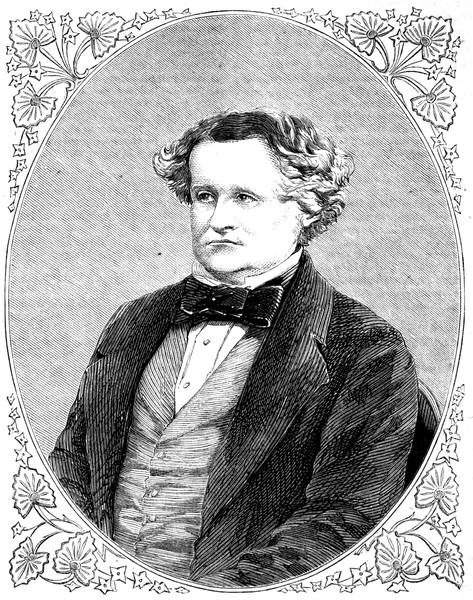
Mr Colvin, Lieutenant-governor of Northwest Provinces.