Chapter XXIX · PROGRESS OF EVENTS IN MAY. (continued 2)
Reading edition
The Nizam and his prime-minister kept the large territory of Hyderabad free from any extensive military disturbances; but the country districts were so harassed by bands of marauding Rohilla freebooters, that the Nizam requested the Bombay government to furnish a small force for putting down this evil. Accordingly a corps of a few hundred men were sent to the region between Aurungabad and Jaulnah—with very evident and speedy effect.
It will be remembered that, in connection with the events of the month of April, the intended disarming of the province of Gujerat was adverted to. This critical and important operation was carried out during May. Sir Richmond Shakespear, who held a military as well as a political position in that province, managed the enterprise so firmly and skilfully that village after village was disarmed, and rendered so far powerless for mischief. Many unruly chieftains regarded this affair as very unpalatable. It was a work of great peril, for the turbulent natives were out of all proportion more numerous than any troops Sir Richmond could command; but he brought to bear that wonderful influence which many Englishmen possessed over the natives—influence shewing the predominance of moral over physical power. The native sovereign of Gujerat, the Guicowar, had all along been faithful and friendly to the British; he trusted Sir Richmond Shakespear as fully as Scindia trusted Sir Robert Hamilton, and gave an eager assent to the disarming of his somewhat turbulent subjects. The Nizam, the Guicowar, Scindia, and Holkar—all remained true to the British alliance during the hour of trouble; if they had failed us, the difficulties of reconquest would have been immensely increased, if not insuperable.
Of the Bombay presidency mention may be postponed to the chapter relating to the month of June, so far as concerns the appearance and suppression of slight rebellious symptoms. One of the minor events in Bombay city at this period was the conferring of a baronetcy on a native gentleman, the high-minded liberal Jamsetjee Jejeebhoy. He had long before been knighted; but his continued and valuable assistance to the government through all trials and difficulties now won for him further honour. The Parsee merchant became Sir Jamsetjee Jejeebhoy, Bart.—perhaps the most remarkable among baronets, race and creed considered. Whatever he did, was done in princely style. In order that his new hereditary dignity might not be shamed by any paucity of wealth on the part of his descendants, he at once invested twenty-five lacs of rupees in the Bombay four per cents., to entail an income of ten thousand pounds a year on the holder of the baronetcy. A large mansion at Mazagon was for a like purpose entailed; and the old merchant-prince felt a commendable pride in thinking that Bombay might possibly, for centuries to come, count among its inhabitants a Sir Jamsetjee Jejeebhoy.
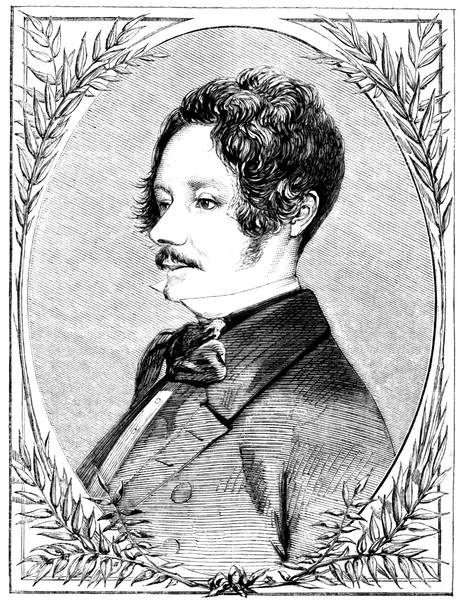
The reader will have observed that this chapter is silent concerning the brilliant campaign of Sir Hugh Rose in Central India, and of the subsidiary operations under Generals Roberts and Whitlock. It has been considered advantageous, on account of the great importance of Sir Hugh’s exploits, and of the intimate manner in which his proceedings in June were determined by those of May, to treat those transactions in a separate chapter, apart from those connected with the names of Campbell, Lugard, Douglas, Grant, Walpole, Jones, and Penny. The narrative will next, therefore, take up the affairs of Central India during the months of May and June.
Note.
Transport of Troops to India.—Early in the session of 1858, many members of the legislature, anxious to witness the adoption of the speediest mode of transporting troops to India, insisted not only that the overland route viâ Suez ought to have been adopted from the first, but also that the government and the East India Company ought to receive national censure for their real or supposed remissness on this point. In former chapters the fact has been rendered evident that, among the many important questions pressed upon the attention of the government, none was more imminent than that which related to the mode of strengthening the British army in India. England, not a military country in the continental estimate of that phrase, could ill spare troops to wage a great war in her Eastern possessions; and yet such a course was absolutely necessary. With ninety-nine regiments of line-infantry, and a proportionate number of troops of other kinds, she had to defend nearly thirty colonies besides the home country. Nay, at the very time when the mutiny began, she had barely finished a war with Persia, and had just commenced another with China—superadded to the defensive requirements just adverted to. Had the Persian expedition not been brought to a successful termination in the spring of 1857, and had the regiments destined for China become practically engaged in hostilities in that country at that time, it is difficult to imagine how the governor-general could have sent up any reinforcements from Calcutta, or Lord Elphinstone from Bombay, until summer had far advanced. Under the particular circumstances of time and place, however, Generals Outram and Havelock were released from their duties in Persia time enough to conduct the important operations at Lucknow and elsewhere—bringing with them the Queen’s troops and Company’s troops which had been engaged in the war in that country; while, on the other side, troops intended for service in China were rendered available for the needs of India. Still, this did not affect the strictures passed in the home country. Members of the legislature inquired, and journalists inquired: ‘Why was not the 502overland route adopted for or by troops sent from England?’ Hence the appointment of a committee of the House of Commons—‘To inquire concerning the measures resorted to, or which were available, and as to the lines of communication adopted for reinforcing our army during the pending Revolt in India, and report thereon to the House: with a view to ascertaining the arrangements which should be made towards meeting any future important emergencies involving the security of our Eastern dominions.’
As the report given in by the committee was comprised within a few paragraphs, we will present it unaltered here, and then touch upon a few matters of detail connected with the subject.
The committee agreed to report:
‘1. That the inquiry which this committee has been appointed to conduct may be divided into three branches: the first, relating to the overland route to India; the second, to the employment of steamers, as compared with sailing-vessels, for the transport of troops round the Cape of Good Hope; and the third, to the use made during the mutiny of the military resources of this country and of the colonies.
‘2. That the Court of Directors appear, from the first intelligence of the mutiny at Meerut, to have been sensible of the advantages of the overland route, and to have lost no time in recommending its adoption; but that political and other considerations deterred her Majesty’s ministers from at once assenting to that recommendation.
‘3. That the committee cannot judge of the validity of those political objections, as they felt themselves precluded from inquiring into them; but that they ceased to prevail in the first week of September, when the more serious character of the war and the lateness of the season for ships departing for Calcutta, led to a formal requisition from the Court of Directors, and to a compliance with it on the part of the cabinet.
‘4. That it would have been desirable, independently of political considerations, to have taken advantage of the overland route at the earliest possible period; and, apart from such considerations, it is much to be regretted that the steps that were taken in September to transmit small bodies of troops by this route were not resorted to at an earlier date. That the transport, however, of any large body of troops would have required previous arrangements, and that the evidence laid before the committee leaves great room to doubt whether any considerable reinforcements could have been sent in the months of July and August, with a prospect of their arrival in India so far in advance of those sent round the Cape as to give any great advantage in favour of this route.
‘5. That although the overland route may be advantageously employed in times of emergency, it would not be advisable that it should be relied upon as the ordinary route for the transmission of troops to India.
‘6. That if steamers had been used in greater numbers, the reinforcements would have reached India more quickly than they did by sailing-vessels; but that no evidence has been laid before the committee to shew that, at the time the emergency arose, a greater amount of steam-transport was attainable; whilst it has been shewn that grave doubts existed whether the supply of coal on the route would have been sufficient for a larger number of steam-vessels than were actually employed.
‘7. That steamers should for the future be always made use of, as far as possible, in urgent cases; but that, for the transmission of the ordinary reliefs, the committee would not recommend the adoption of so costly a mode of transport.
‘8. That the governors of Ceylon and the Mauritius gave early and valuable assistance to the government of India, and deserve great praise for the zeal and promptitude with which they acted; that the governor of the Cape, without loss of time, forwarded treasure and horses, together with a portion of the troops at his disposal, but that he did not send the whole amount of the force which he was instructed by the home government to transmit to India; that the committee have not the means of judging whether the circumstances of the colony did or did not justify Sir George Grey in taking this course.
‘9. That the committee observe with satisfaction that the people of Canada displayed great readiness to afford assistance to the mother-country, and that the committee are of opinion that it is highly desirable to give every encouragement to such demonstrations of loyalty on the part of the colonies.
‘10. That on the whole, considering the suddenness of the danger, and the distance to which the troops were to be sent, the committee are of opinion that great credit is due to the Court of Directors of the East India Company for the promptitude and efficiency with which they discharged the difficult task of transmitting reinforcements to the army in India during the past year.’
From the tenor of this report, it is evident that the East India directors were ready to adopt the overland route before the government gave in their adhesion. The ‘political reasons’ for avoiding that route were connected with the relations between Egypt and various European countries: relations often involving jealousy and diplomatic intrigue, and likely to be thrown into some perplexity by the passage of troops belonging to another nation. The ministers were unwilling to speak out plainly on this point, possibly for fear of giving offence to France; and the committee, though sorely against the wish of some of its members, refrained from pressing them on this point; hence the cautious phraseology of the report, throwing a sort of shield over the government.
In reference to the proceedings connected with the transport of troops to India, it may be well to advert to a few dates. The home government received, on the 9th of April, the first intimation that a disaffected spirit had made its appearance among the native troops at Barrackpore. On the 19th of May, Lord Ellenborough inquired in the House of Lords whether reinforcements were being sent to India; a reply in the affirmative was given, accompanied by an expression of opinion that the disaffection was of very minor character. Shortly afterwards, in the House of Commons, a similar belief was expressed by members of the government that the occurrences at Barrackpore were trifling, not likely to lead to serious results. At that period, as we have already seen,[175] the Bengal presidency, including the vast range of territory from Pegu to Peshawur, contained about 23,000 European troops and 119,000 native; the Madras presidency, 10,000 European and 50,000 native; the Bombay presidency, 5000 European and 31,000 native—making a total of about 38,000 Company’s and Queen’s European troops, and 200,000 native. These, the actual numbers, were exclusive of the large brigades of the Bombay army at that time engaged in, or not yet returned from, the Persian expedition. During May, the government and the East India directors decided that more European troops ought to be in India, in consideration both of the condition of India itself, and of the incidence of war in Persia and China; and the early dispatch of four regiments was decided on. At length, on the 27th of June, arrived a telegram announcing the revolt at Meerut and the seizure of Delhi by the mutineers. While Lord Elgin on the way to China, Lord Harris at Madras, Lord Elphinstone at Bombay, Sir Henry Ward at Ceylon, Sir James Higginson at Mauritius, and Sir George Grey at the Cape of Good Hope, were using their best exertions to send troops to aid Viscount Canning, the home authorities considered what best could be done in furnishing reinforcements from England. There were no less than 13,000 troops at the Cape of Good Hope at that time, including ten regiments of Queen’s infantry; it was fully believed in England that the governor might well have spared the greater portion of these troops; and the smallness of the number really contributed by him led to much disappointment in India, and much adverse criticism in England.
When the authorities at the War-office commenced their arrangements for despatching troops to India, they had to provide for a sea-voyage of about fourteen thousand miles. 503A question arose whether, without changing the route or shortening the distance, the duration of the voyage might not be lessened by the employment of steam-vessels instead of sailing-ships. The Admiralty, and most members of the government, opposed this change on various grounds, principally in relation to difficulties in the supply of fuel, but partly in relation to monsoons and other winds. By the 10th of July, out of 31 vessels chartered by the government and the Company for conveying troops to India, nearly all were sailing-ships. A change of feeling took place about that date; the nation estimated time to be so valuable, that the authorities were almost coerced into the chartering of some of the noble merchant-steamers, the rapid voyages of which were already known. Between the 10th of July and the 1st of December, 59 ships were chartered, of which 29 were screw-steamers. The autumnal averages of passages to India were greatly in favour of steamers. Within a certain number of weeks there were 62 troop-laden ships despatched from England to one or other of the ports, Calcutta, Madras, Bombay, Kurachee; the average duration of all the voyages was 120 days by sailing-vessels, and only 83 days by steamers—a diminution of nearly one-third. Extending the list of ships to a later date, so as to include a greater number, it was found that 82 ships carried 30,378 troops from the United Kingdom to India—thus divided: 66 sailing-ships carried 16,234 men, averaging 299 each; 27 steamers carried 14,144, averaging 522 each. It was calculated that 14,000 of these British soldiers arrived in India five weeks earlier, by the adoption of steam instead of sailing-vessels. It is impossible to estimate what amount of change might have been produced in the aspect of Indian affairs, had these steam-voyages been made in the summer rather than in the autumn; it might not have been permitted to the mutineers to rule triumphant at Lucknow till the spring of the following year, or the fidelity of wavering chieftains to give way under the long continuance of the struggle.
Besides the two inquiries concerning the promptness with which troops were sent, and the kind of vessels employed to convey them, there was a third relating to the route adopted. From the earliest news of the revolt at Meerut, many persons in and out of parliament strenuously recommended the use of the overland route, as being much shorter than any possible ocean-route. The Court of Directors viewed this proposal more favourably than the government. Until the month of September, ‘political difficulties’ were dimly hinted at by ministers, but without any candid explanations; and as the objections gave way in the month just named, the nation arrived at a pretty general conclusion that these difficulties had never been of a very insurmountable character. It is only fair to state, however, that many experienced men viewed the overland route with distrust, independently of any political considerations. They adverted to the incompleteness of the railway arrangements between Alexandria and Cairo; to the difficulty of troops marching or riding over the sandy desert from Cairo to Suez; to the wretchedness of Suez as a place of re-embarkation; and to the unhealthiness of a voyage down the Red Sea in hot summer weather. Nevertheless, it was an important fact that the East India directors, most of whom possessed personal knowledge concerning the routes to India, urged the government from the first to send at least a portion of the troops by the Suez route. It was not until the 19th of September that assent was given; and the 13th of October witnessed the arrival of the first detachment of English troops into the Indian Ocean viâ Suez. These started from Malta on the 1st of the month. On the 2d of October, the first regiment started from England direct, to take the overland route to India. The Peninsular and Oriental Steam-navigation Company, having practically almost a monopoly of the Suez route, conveyed the greater portion of the troops sent in this way; and it may be useful to note the length of journey in the principal instances. The following are tabulated examples giving certain items—such as, the name of the steamer, the date of leaving England, the number of troops conveyed, and the time of reaching Alexandria, to commence the overland portion of the journey:
Steamer. Left England. No. of Troops. Days to Alexandria.
Sultan, 1857. Oct. 2 248 13 days.
Dutchman, Oct. 14 256 17 days.
Sultan, Nov. 17 264 14 days.
Euxine, Dec. 2 236 15 days.
Indus, Dec. 4 83 14 days.
Abeona, Dec. 8 861 15 days.
Pera, 1858. Feb. 4 231 15 days.
Ripon, Feb. 11 242 15 days.
Sultan, Feb. 24 244 13 days.
Malabar, Mar. 11 264 14 days.
Ripon, Mar. 27 420 14 days.
Benares, Apr. 8 607 17 days.
Thus the voyage was made on an average in about 14½ days, from the shores of England to those of Egypt. The landing at Alexandria, the railway journey to Cairo, the journey by vans and donkeys across the desert, the short detention at Suez, and the embarkation in another steamer at that port, occupied a number of days varying from 2 to 17—depending chiefly on the circumstance whether or not a steamer was ready at Suez to receive the troops when they arrived from Alexandria; the average was about 5½ days. From Suez the voyages were made to Kurachee, Bombay, Ceylon, Madras, or Calcutta. The steamers took forward all the troops mentioned in the above list, as well as others which reached Alexandria by other means. Most of these troops were landed at Bombay or Kurachee, as being nearer than Calcutta; and the average length of voyage was just 16 days. The result, then, presented was this:
England to Alexandria, 14½ days’ average.
Alexandria to Suez, 5½ days’ average.
Suez to India, 16 days’ average.
———
36 days’ average.
Those which went to Calcutta instead of Bombay or Kurachee, were about 3 days longer. Comparing these figures with those before given, we arrive at the following remarkable conclusion:
Sailing-ships round Cape, 120 days’ average.
Steamers round Cape, 83 days’ average.
Suez route, 36 days’ average.
This, as a question of time, triumphantly justified all that had been said by the advocates of the shortest route; nor did it appear that there were any counterbalancing disadvantages experienced. Between the 6th of November 1857, and the 18th of May 1858, more than 5000 officers and soldiers landed in India, who had travelled by the Suez overland route from England.

504
Sir Hugh Rose.