Chapter XVIII · THE SIEGE OF DELHI: FINAL OPERATIONS. (continued 2)
Reading edition
Lieutenant Duncan Home, another hero of the Cashmere Gate, was not one of the wounded on that perilous occasion; he lived to receive the approval of his superior in the engineering department; but his death occurred even sooner than that of his companion in arms, for he was mortally wounded on the 1st of October while engaged with an expeditionary force in pursuit of the fleeing rebels. It was on that day, a few hours before he received the fatal bullet, that he wrote a letter to his mother in England; in which, after describing the operations at the Cashmere Gate, he said: ‘I was then continually on duty until the king evacuated the palace. I had never more than four hours’ sleep in the twenty-four, and then only by snatches. I had also the pleasure of blowing in the gate of the palace; luckily no one fired at me, there being so few men left in the palace.’
Salkeld and Home received the ‘Victoria Cross,’ a much-coveted honour among the British troops engaged in the Indian war. As did likewise Sergeant Smith, who so boldly risked, yet saved, his life; and also Bugler Hawthorne of the 52d, who blew his signal-blast in spite of the shots whistling around him. Poor Sergeant Carmichael and Corporal Burgess did not live to share in this honour; they fell bullet-pierced.
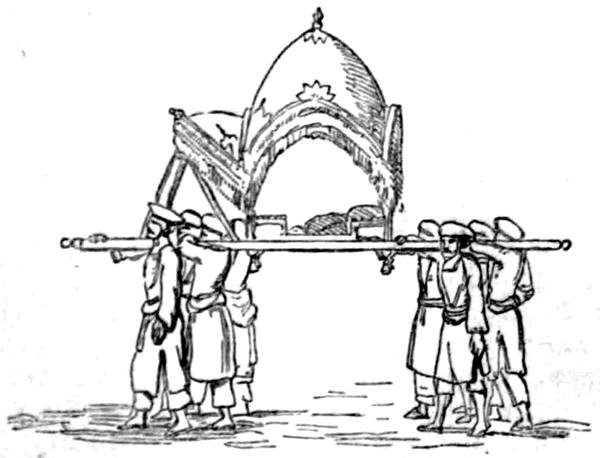
State Palanquin.
316
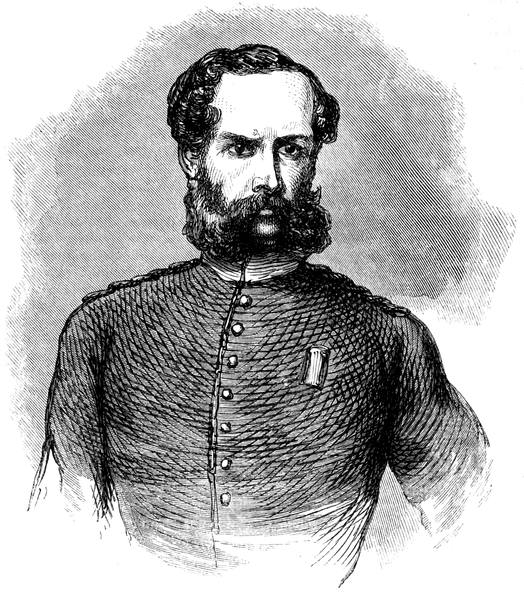
Sir J. E. W. Inglis, defender of Lucknow.