Act 4 — THROUGH THE OPERA GLASSES
Reading edition
THROUGH THE OPERA GLASSES
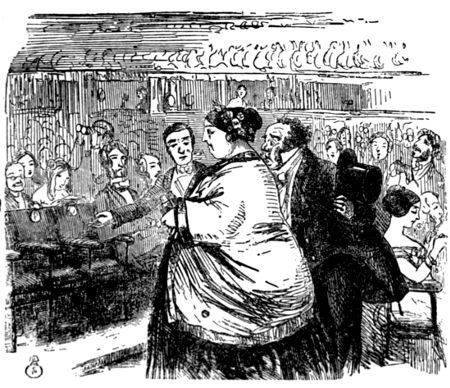
THE OPERA.
Box-Keeper. Stalls 216 and 217. This way, ma’am; last row, ma’am.
Won’t you like a book, ma’am?
THE BOHEMIAN GIRL ADAPTED TO THE MEANEST CAPACITY Miss Rainforth, one day Having gone out to play, (Then a very young lady) was hurried, By a shocking fierce man, From a vagabond clan, Away to the green-room, quite flurried! This abduction, so free, Was lamented in D, With a pathos quite like Catalani, By her father, Arnheim, Who sung out in slow time; (Count Arnheim was play’d by Borrani). But, lo! after act one, Without help of the “sun,” Or (as Wordsworth has said) of the “shower,” This damsel so nice, With a very sweet voice, Grew twelve inches in less than an hour! And, having now seen, Summers full seventeen, Her heart could not wholly withstand The very soft “sawder” Of a dashing marauder Named Harrison—one of the band. So the maid, in reply, After heaving a sigh, Sang a song—now the darling of Fame, Which, if not quite grammatical, Was very poetical, That Harrison “lov’d her the same.” As we’ve all heard a few Of the stories so new About gipsies and children, I ween, I need scarcely relate, How a fortunate fate Gave Borrani again his Arline.
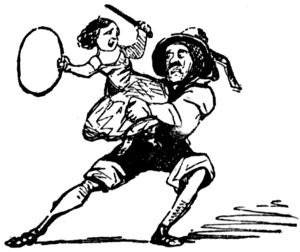
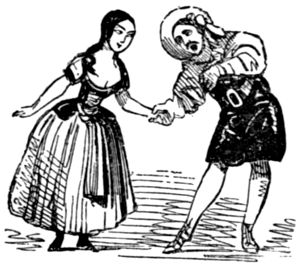
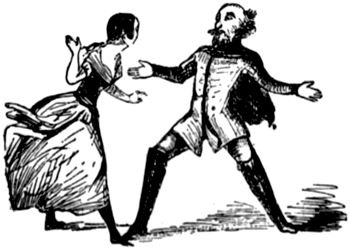
Suffice it to say, In a summary way, That a chain, round her neck which she wore, By a stern new policeman, Accustomed to seize men, Was carried a justice before: That she knew not the theft; That the chain was a gift From her supposititious mamma; And this damsel so nice, (With a very sweet voice) In the magistrate found her papa! We have then, a third act; A most curious fact; Which none understood, till they knew The author had thought, That in justice he ought A moral to add to the two. So a lesson he gave (This poet so grave,) To singers and men; and the fall Of Miss Betts, at the end, By the hand of a friend, Was felt as the moral by all. Punch, 1844.
“TURNED OUT”
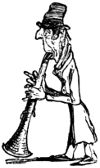
At a Cosmopolitan Club they were discussing the relative position of various countries as musical centres. Germany seemed to have the most votaries, much to the evident displeasure of one excitable Italian. “Italy is turning out the most musicians, and has always turned out the most,” he cried.
“Ach Gott!” exclaimed one of the Germans. “Can you blame her?”
WHAT INDEED?
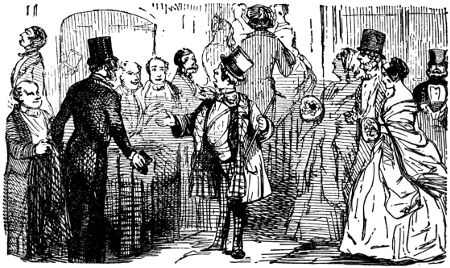
Door-Keeper. Beg your pardon, sir—but you must, indeed, sir, be in full dress!
Snob (excited). Full dress!! Why, what do yer call this?
“FRENCH WITHOUT A MASTER.”
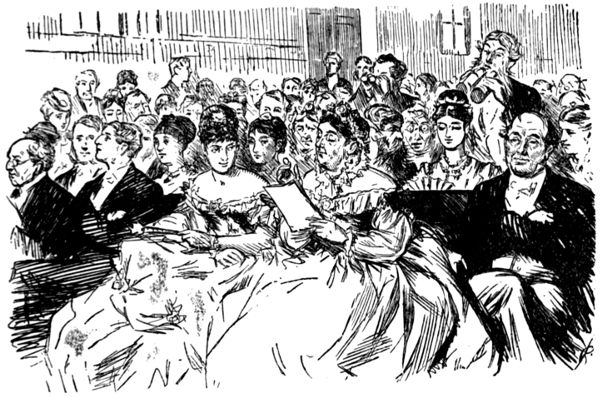
Matron in Stalls (reads from programme). “Overture to L’Ongfong Prod-eeg.” What does that mean? The prodigious child, eh?
Accomplished Daughter (shocked). Mamma, dear! No—“L’Enfant Prodigue”—it means the infant prodigy!!
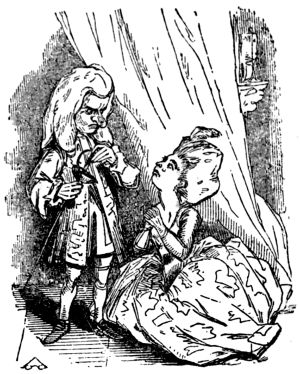
RECOLLECTIONS OF THE OPERA By W. M. Thackeray. I’ve known a god on clouds of gauze With patience hear a people’s prayer, And, bending to the pit’s applause, Wait while the priest repeats the air. I’ve seen a black-wigg’d Jove hurl down A thunderbolt along a wire, To burn some distant canvas town, Which—how vexatious!—won’t catch fire. I’ve known a tyrant doom a maid (With trills and roulades many a score) To instant death. She, sore afraid, Sings; and the audience cries encore. I’ve seen two warriors in a rage Draw glist’ning swords, and—awful sight!— Meet face to face upon the stage To sing a song, but not to fight! I’ve heard a king exclaim “To arms” Some twenty times, yet still remain; I’ve known his army ’midst alarms, Help by a bass their monarch’s strain. I’ve known a hero wounded sore With well-tuned voice his foes defy; And warbling stoutly on the floor, With the last flourish fall and die. I’ve seen a mermaid dress’d in blue; I’ve seen a Cupid burn a wing; I’ve known a Neptune lose a shoe; I’ve heard a guilty spectre sing. I’ve seen, spectators of a dance, Two Brahmins, Mahomet, the Cid, Four Pagan kings, four knights of France, Jove and the Muses—scene Madrid. Punch, 1843.
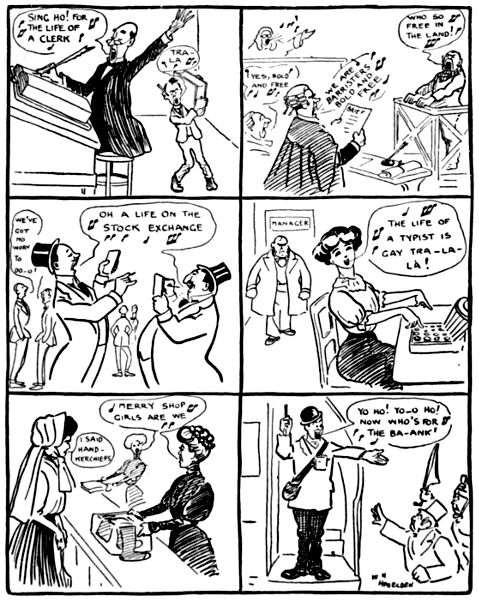
WE DON’T SING ENOUGH.
Sailors sing at their work. Why don’t clerks, lawyers, doctors, brokers, and shopkeepers? It would add to the variety of life.
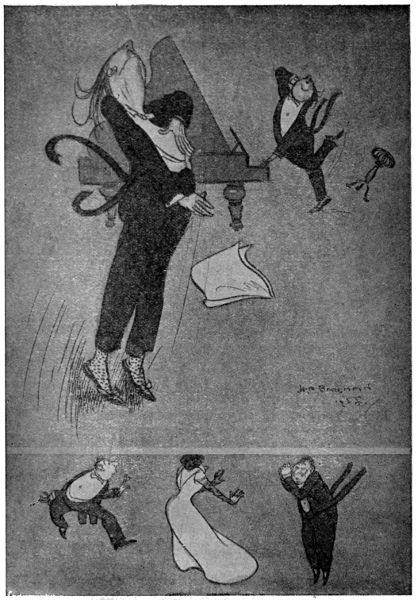
THE HIGH NOTE.
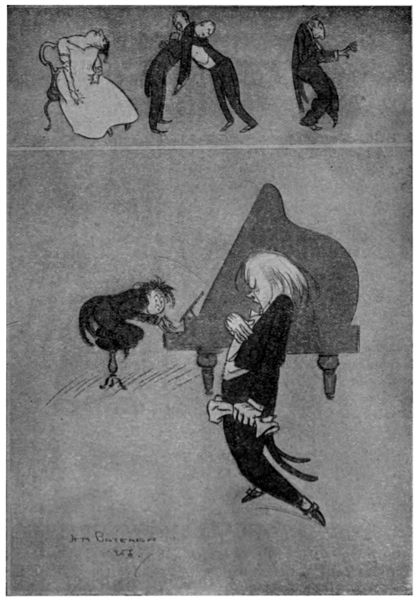
THE LOW NOTE.
A WOMAN’S THOUGHTS ABOUT WOMEN I think Miss Juliet in the play A forward little minx (And Mrs. Grundy likes to say What Mrs. Grundy thinks). Her conduct with R. Montague Seems perfectly absurd, Such bold and brazen language, too, I think I never heard. I think Othello led a tame And wretched kind of life, With Desdemona What’s-her-name— His namby-pamby wife. To run away—at such an age— And with a negro, too! Such conduct even on the stage, I think I never knew. I think that, as to Beatrice, Her husband was a flat For looking for a life of peace With such a wife as that. Her conduct wasn’t over strict For all her length of jaw; And such a muff as Benedict I think I never saw. I think, when Portia’s lovers came And played at pitch and toss, The gentleman who won that dame Contrived to gain a loss. I think Emilia was a shrew, And Rosalind ill-bred; (But “As you Like It,” entre nous, I think I never read). I think Macbeth was led astray By wicked Lady M. And those three witches. By the way, I don’t think much of them. I think Ophelia—that’s a fact— The best of all the set; But anybody quite so crack’d I think I never met. Fun, 1865.
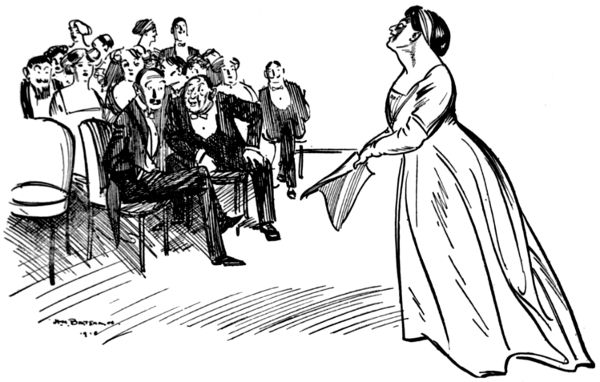
Brown (thinking of her age). Perfect voice that girl has—she’s only twenty-two.
Jones (thinking otherwise). Twenty-two what—stone?
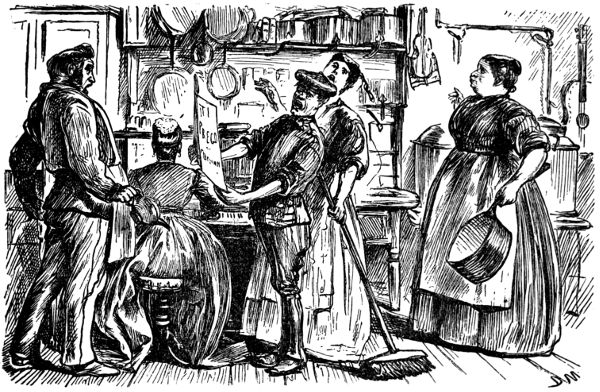
CULTURE FOR THE MILLION; or, SOCIETY AS IT MAY BE.
HIGH ART BELOW STAIRS.—Cook. Sh—sh—! Moderato, Susan! Affettuoso, Jim! Ben marcato il basso, Mr. Raffles! Bravi tutti! Da capo!
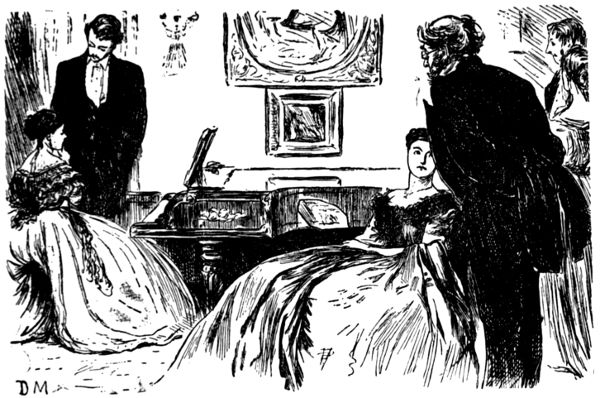
GENTLE REBUKE.
Old Gentleman. How charmingly that young lady sings! Pray, who composed the beautiful song she has just favoured us with?
Lady of the House. Oh, it is by Mendelssohn.
Old Gentleman. Ah! One of his famous “Songs without Words,” I suppose.
(Moral.—Young ladies, when you sing, pronounce your words carefully, and then you will not expose unmusical old gentlemen to making such a ridiculous mistake as the above.)
THE ONION GIRL (After Tennyson’s “Lady of Shalotte.”) PART I. On either side of Market-street Small stalls of vegetables meet Domestic eyes; and voices sweet And voices hoarse their hearing greet With cries of “Buy my fine shalots!” And up and down the million goes; Gazing where, in varied rows, Green stuff lies, and each nose knows The odour of shalots. Widows cheapen, urchins chatter, Little vagrants make much clatter; Vulgar boys cry, “Who’s your hatter?” And this time, the night of Satur- Day’s the joy of all the sots. Bright blue eyes, lips like the cherry, Rosy cheeks, that ringlets bury, Had an Irish girl, from Derry, A girl who sold shalots! To the market, peas and beans Heavy lumbering machines Bring thrice a week, also greens; And ’tis prime fun to watch the scenes At the biddings for the lots. But who hath seen her buy her stock Of onions, or white-headed broc- Oli, before four of the clock, That girl who sells shalots? Only peelers, walking early (One there is a great, big, burly Fellow, who is always surly, And wouldn’t even let a cur lie Down in shelter’d corner spots); Or, by the dawn, some loose young city Clerk, home reeling, hears the ditty She oft sings—says “’Tis that pretty Girl who sells shalots!”
THE ONION GIRL PART II. (A change comes o’er the spirit of the O.G.) Now she flaunts by night or day, In gorgeous dress and ribbons gay: Conscience often whispers “nay!” But love of finery cries “yea.” Calling conscience “horrid rot!” She knows not what the end may be, And so she hath a “jolly spree,” But little other care hath she— That girl who sold shalot! And now, before a mirror clear, She learns each wily glance and leer; Then puts an earring in each ear, And donning some fast, flashy gear, Starts for some den that London blots. There the vicious eddy whirls; And there is vice in gold and pearls; And there are jewelled, wretched girls, Who’d scorn to sell shalots! Sometimes a troop of swells—drunk—mad (Who’d call a sober man a cad)— Bring in a very verdant lad, And teach him everything that’s bad, And stain his soul with cank’ring spots. And there she sits, with eyes so blue, Loudly and lightly chatted to; Oh! she was brighter, happier too, When she cried, “Fine shalots!” For she must suffer many slights— May never more know home’s delights— Can scarcely claim a woman’s rights; Must writhe beneath the scorn that blights Such cheerless, weary, dreary lots; And dies, at last, by some road-side; Or, urged by sin’s despairing pride, She sinks beneath the murky tide— That girl who sold shalots! Fun, 1864.
END OF VOLUME VIII.
Butler & Tanner, Frome and London.