Front matter
Reading edition
STUDENT'S HAND-BOOK OF MUSHROOMS OF AMERICA
Part 1. Introduction. Cryptogams. Fungi. Classification. Structural Characteristics of the Agaricini. Mushroom Gills. The Volva. The Mushroom Veil. Mushroom Spores and Mycelium. Mycelium. Etymology of the Word "Mushroom." Food Value of Mushrooms. Cautionary Suggestions. Descriptions of Genera and Species. Appendix A. Preserving and Cooking Mushrooms. Receipts. Appendix B. Glossary of Terms used in Describing Mushrooms. Authorities Consulted.
Part 2. Ascomycetes. Discomycetes. Descriptions of Genera and Species (continued). Receipts For Cooking. Mushroom Growing. Directions for Preparing the Compost for the Beds. Compost for Mushroom Beds. Mushroom Culture in Canada. Cultivation of Mushrooms in Japan. Manufacture of Spawn. "Brick Spawn." "Mill Track" Spawn. Spawn Produced in a Manure Heap. Appendix A. Continuation of Glossary of Terms used in Describing Mushrooms. Appendix B.
Part 3. Descriptions of Genera and Species (continued). Analytical Table. Polyporei. Descriptions of Genera and Species (continued). Recipes for Cooking Mushrooms. List of the Genera of Hymenomycetes. Brefield's Classification of Fungi. Coniomycetes and Hyphomycetes. Hyphomycetes. Phycomycetes or Physomycetes. Bibliography. Continuation of Glossary of Terms used in Describing Mushrooms.
Part 4. Gasteromycetes. Descriptions of Genera and Species (continued). Myxomycetes or Myxogasters.—"Slime Fungi." Genera of Gasteromycetes, according to Saccardo. Bibliography. Descriptions of Genera and Species (continued). Appendix.
Part 5. Descriptions of Genera and Species (continued). Alkaloids of the Poisonous Mushrooms. Muscarin. Phallin. The Poisonous Alkaloid of Gyromitra Esculenta Fries (Helvella Esculenta Pers.) Helvellic Acid. Poisonous and Deleterious Mushrooms of the Lactar, Russula, and Boleus Groups. Poisonous Boleti. Recent Instances of Mushroom Poisoning. Bibliography. Fungi. Bibliography. Toxicology of Mushrooms. Index to Illustrations. Correction of Plates.
Transcriber's Notes.
STUDENT'S HAND-BOOK
OF
Mushrooms of America
EDIBLE AND POISONOUS.
BY THOMAS TAYLOR, M. D.
AUTHOR OF FOOD PRODUCTS, ETC.
Published in Serial Form—No. 1—Price, 50c. per number.
WASHINGTON, D. C.: A. R. Taylor, Publisher, 238 Mass. Ave. N.E. 1897.
HYMENOMYCETES. Agaricus (Psalliota) campester. T. Taylor, del.
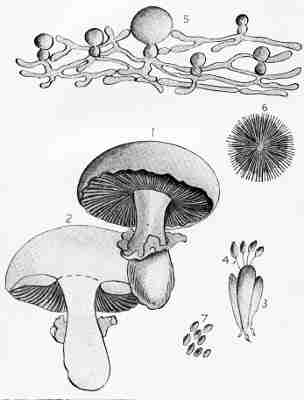
Plate A.
In Plate A is presented a sketch of the common field mushroom, Agaricus campester. Fig. 1 represents the mature plant; Fig. 2, a sectional view of the same; Fig. 3, the basidia, club-shaped cells from the summit of which proceed the slender tubes called sterigmata, which support the spores—highly magnified; Fig. 4, the sterigmata; Fig. 5, the mycelium, highly magnified, supporting immature mushrooms; Fig. 6, the spores as shed from an inverted mushroom cap; Fig. 7, spores magnified.
HYMENOMYCETES. Types of the Six Orders of Hymenomycetes. T. Taylor, del.
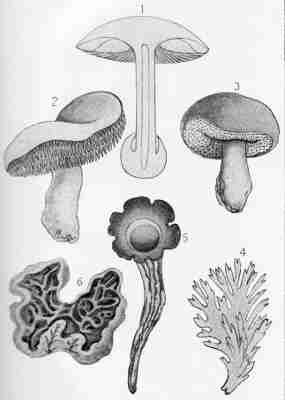
Plate B.
In Plate B is represented a leading type of each of the six orders of the family Hymenomycetes:
Fig. 1. Cap with radiating gills beneath. Agaricini.
Fig. 2. Cap with spines or teeth beneath. Hydnei.
Fig. 3. Cap with pores or tubes beneath. Polyporei.
Fig. 4. Cap with the under or spore-bearing surface even. Thelephorei.
Fig. 5. Whole plant, club-shaped, or bush-like and branched. Clavarei.
Fig. 6. Whole plant irregularly expanded, substance gelatinous. Tremellini.
Copyright, 1897, by Thomas Taylor, M. D., and A. R. Taylor.